
Chronic Kidney Disease Learning Objectives Recognize risk factors
Chronic Kidney Disease 환자에서 약물 처방
Learning Objectives • Recognize risk factors for drug-related adverse events in patients with CKD • Identify ways how drugs could lead to adverse events in patients with CKD • Recognize commonly used drugs that require dose adjustment or use with caution in patients with CKD
DRUG-RELATED ADVERSE SAFETY EVENTS IN CKD
How often? And Who’s at risk? • Occurs in ~50% of patients with estimated GFR (e. GFR) <60 ml/min • Risk factors • Older age • ACEi/ ARB use • Diabetes • More advanced CKD
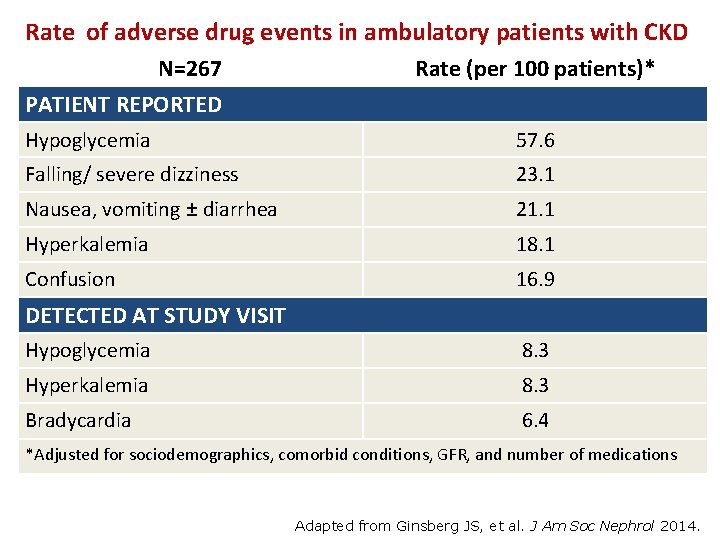
Rate of adverse drug events in ambulatory patients with CKD N=267 PATIENT REPORTED Rate (per 100 patients)* Hypoglycemia 57. 6 Falling/ severe dizziness 23. 1 Nausea, vomiting ± diarrhea 21. 1 Hyperkalemia 18. 1 Confusion 16. 9 DETECTED AT STUDY VISIT Hypoglycemia 8. 3 Hyperkalemia 8. 3 Bradycardia 6. 4 *Adjusted for sociodemographics, comorbid conditions, GFR, and number of medications Adapted from Ginsberg JS, et al. J Am Soc Nephrol 2014.
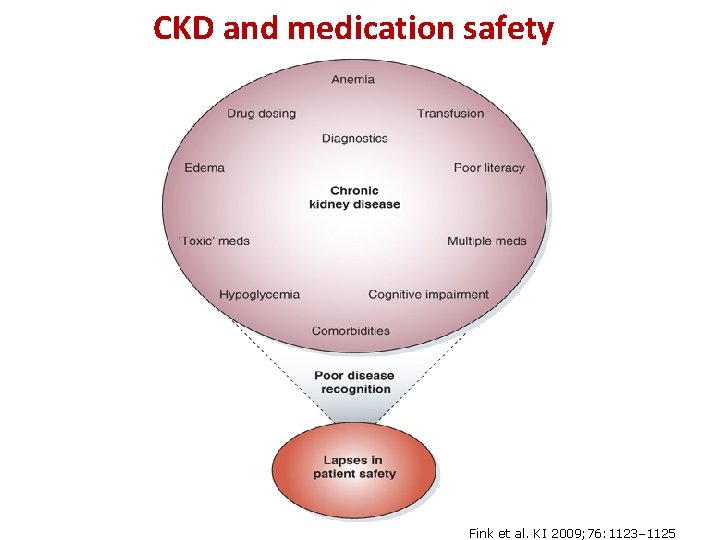
CKD and medication safety Fink et al. KI 2009; 76: 1123– 1125
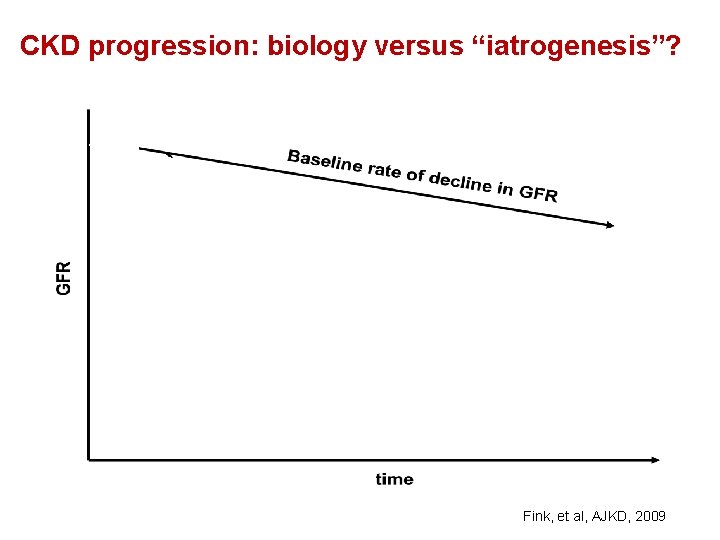
CKD progression: biology versus “iatrogenesis”? Fink, et al, AJKD, 2009
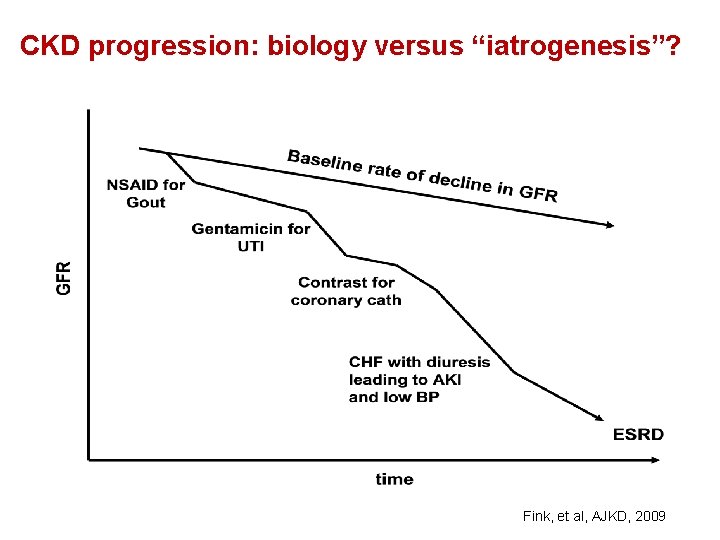
CKD progression: biology versus “iatrogenesis”? Fink, et al, AJKD, 2009
Modes of Drug-Related Adverse Events in CKD • Direct kidney injury • Dosing error • Drug-drug interaction

Drug Elimination in CKD • Adjustments usually needed when >25 -30% of active drug/metabolite eliminated renally: – Azithromycin 5 -12% – Moxifloxacin 15 -21% – Pioglitazone (Actos) 15 -30% – Ciprofloxacin 30 -57% – Amoxicillin 50 -70% – Digoxin 57 -80% • 10
DRUGS TO AVOID IN CKD PATIENTS
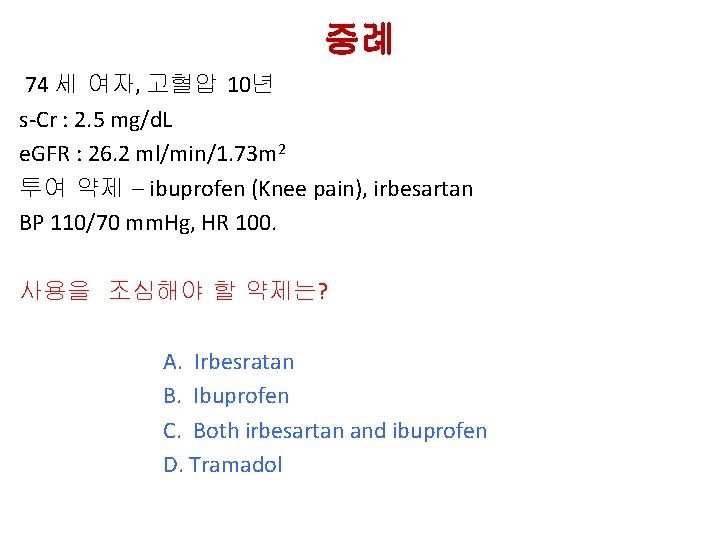
증례 74 세 여자, 고혈압 10년 s-Cr : 2. 5 mg/d. L e. GFR : 26. 2 ml/min/1. 73 m 2 투여 약제 – ibuprofen (Knee pain), irbesartan BP 110/70 mm. Hg, HR 100. 사용을 조심해야 할 약제는? A. Irbesratan B. Ibuprofen C. Both irbesartan and ibuprofen D. Tramadol
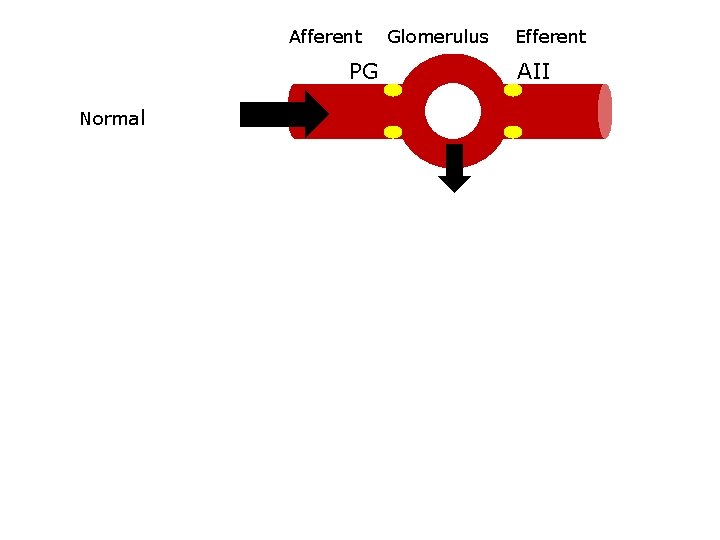
Afferent Glomerulus Efferent PG AII ↑PG ↑AII Normal ↓volume NSAIDS ↓PG ↓volume with ACEi + NSAID ACEi/ARB ↓AII
NSAIDs • Injure kidneys directly – Induce acute kidney injury (AKI) from “pre-renal” or ATN – Interstitial nephritis – Nephrotic syndrome • Decrease kidney potassium excretion → hyperkalemia • Decrease sodium excretion → HTN, edema
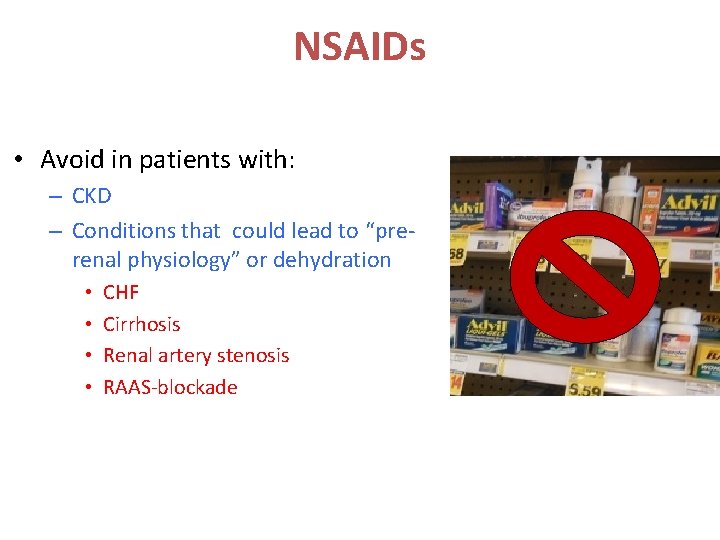
NSAIDs • Avoid in patients with: – CKD – Conditions that could lead to “prerenal physiology” or dehydration • • CHF Cirrhosis Renal artery stenosis RAAS-blockade

장청결제 종류에 따른 Phosphate 함량 Phosphate content (mmol) Fleets enema (133 ml) Visicol (40 tablets) 90 mmol 432 mmol Mean phosphate 48 / 33 mmol intake USA (men/women) polyethylene glycol 0 mmol OSMOPREP Package Insert, 2007
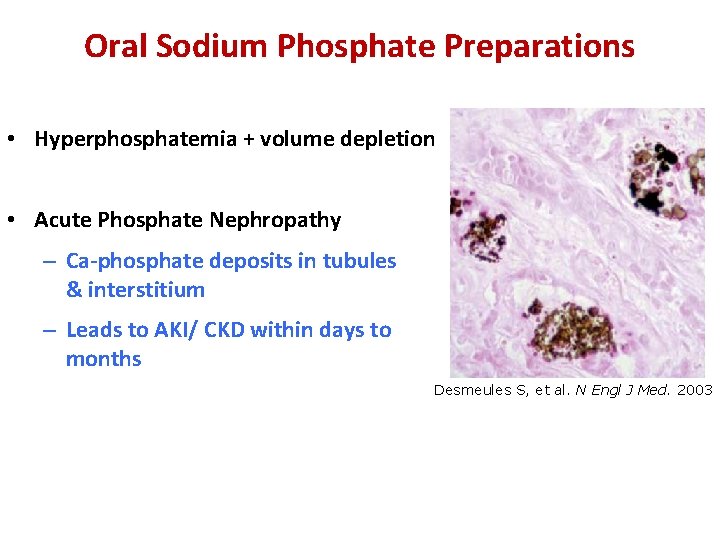
Oral Sodium Phosphate Preparations • Hyperphosphatemia + volume depletion • Acute Phosphate Nephropathy – Ca-phosphate deposits in tubules & interstitium – Leads to AKI/ CKD within days to months Desmeules S, et al. N Engl J Med. 2003

Iodinated Contrast • Leads to AKI • Risk factors – CKD (esp. e. GFR <30 ml/min/1. 73 m 2) – Diabetes, CHF, gout – Dehydration – Concurrent use of NSAIDs or RAAS-antagonists – High osmolality agents, large or repeated doses – Intra-arterial injection
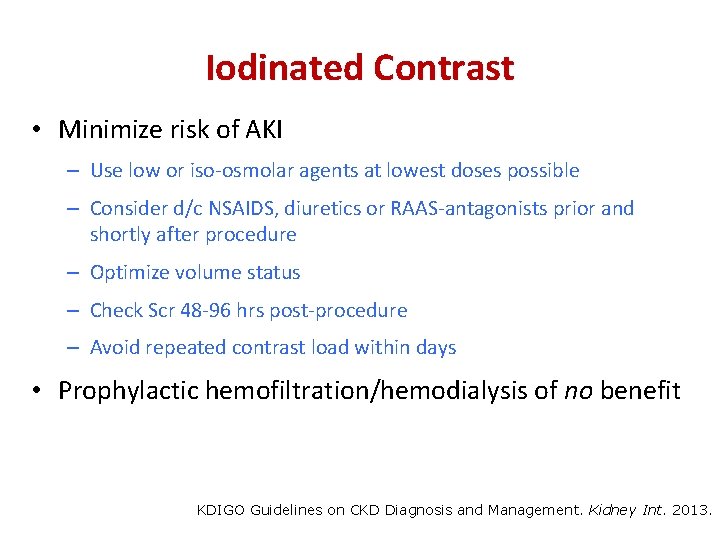
Iodinated Contrast • Minimize risk of AKI – Use low or iso-osmolar agents at lowest doses possible – Consider d/c NSAIDS, diuretics or RAAS-antagonists prior and shortly after procedure – Optimize volume status – Check Scr 48 -96 hrs post-procedure – Avoid repeated contrast load within days • Prophylactic hemofiltration/hemodialysis of no benefit KDIGO Guidelines on CKD Diagnosis and Management. Kidney Int. 2013.
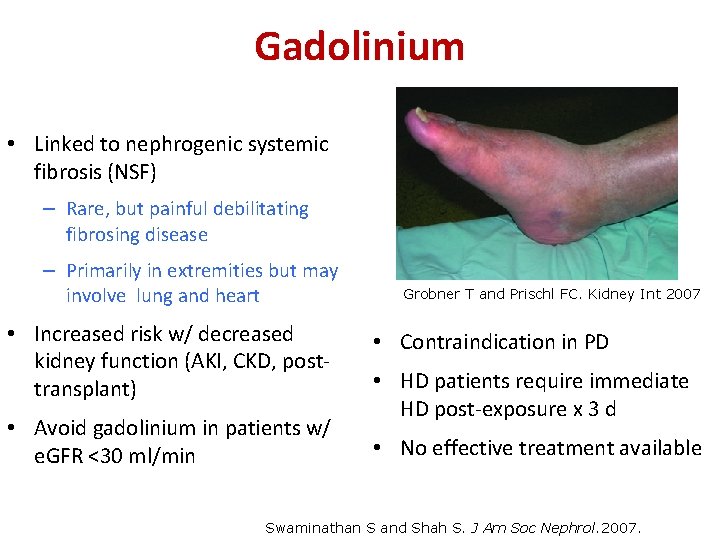
Gadolinium • Linked to nephrogenic systemic fibrosis (NSF) – Rare, but painful debilitating fibrosing disease – Primarily in extremities but may involve lung and heart • Increased risk w/ decreased kidney function (AKI, CKD, posttransplant) • Avoid gadolinium in patients w/ e. GFR <30 ml/min Grobner T and Prischl FC. Kidney Int 2007 • Contraindication in PD • HD patients require immediate HD post-exposure x 3 d • No effective treatment available Swaminathan S and Shah S. J Am Soc Nephrol. 2007.
DRUGS THAT REQUIRE CAUTION IN CKD PATIENTS
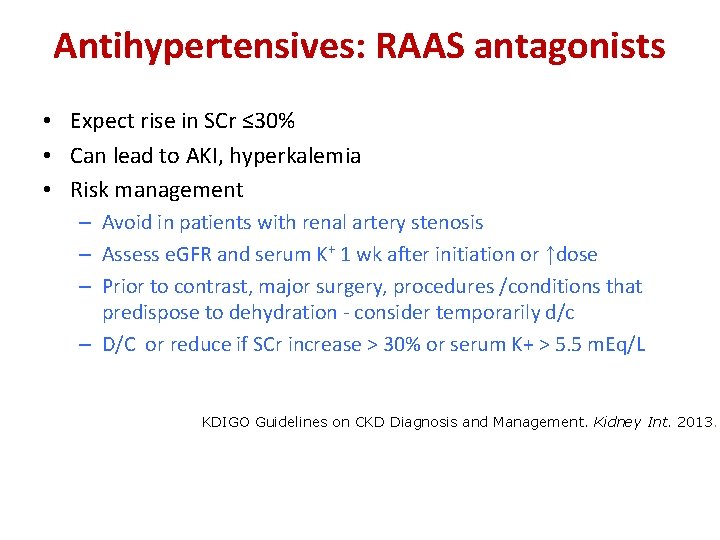
Antihypertensives: RAAS antagonists • Expect rise in SCr ≤ 30% • Can lead to AKI, hyperkalemia • Risk management – Avoid in patients with renal artery stenosis – Assess e. GFR and serum K+ 1 wk after initiation or ↑dose – Prior to contrast, major surgery, procedures /conditions that predispose to dehydration - consider temporarily d/c – D/C or reduce if SCr increase > 30% or serum K+ > 5. 5 m. Eq/L KDIGO Guidelines on CKD Diagnosis and Management. Kidney Int. 2013.

Antihypertensives: RAAS antagonists • In severe CKD, consider* but do not routinely stop RAAS blockers as there may be continued nephroprotection. . Ahmed AK et al. The impact of stopping inhibitors of the renin angiotensin system in patients with advanced chronic kidney disease. Nephrol Dial Transplant 2010; 25: 3977– 3982.
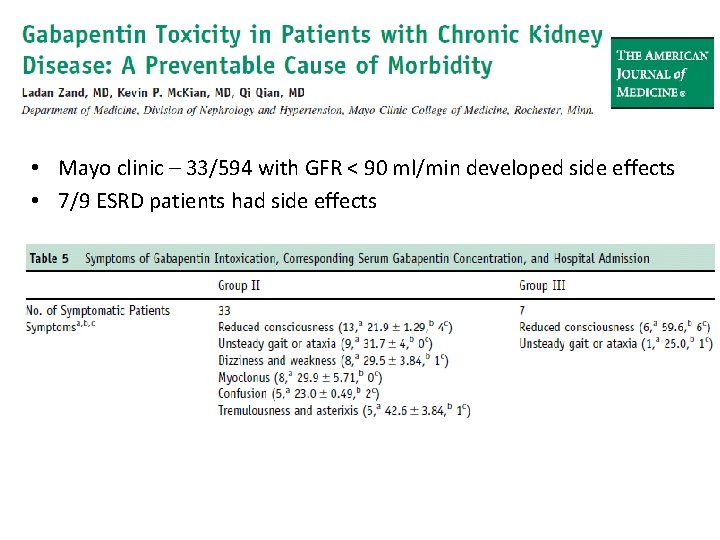
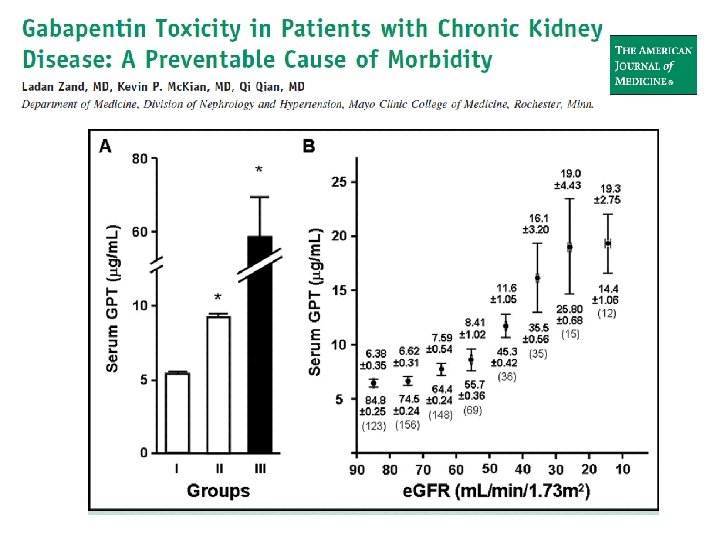
• Mayo clinic – 33/594 with GFR < 90 ml/min developed side effects • 7/9 ESRD patients had side effects
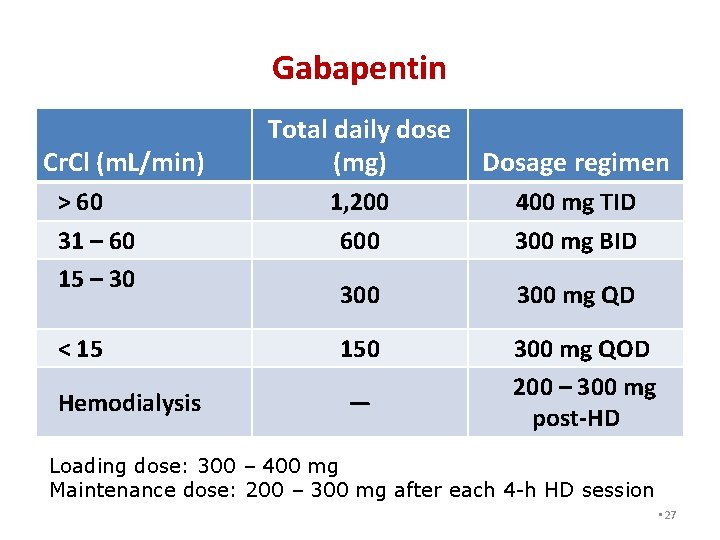
Gabapentin Cr. Cl (m. L/min) > 60 31 – 60 15 – 30 < 15 Hemodialysis Total daily dose (mg) Dosage regimen 1, 200 600 400 mg TID 300 mg BID 300 mg QD 150 300 mg QOD 200 – 300 mg post-HD — Loading dose: 300 – 400 mg Maintenance dose: 200 – 300 mg after each 4 -h HD session • 27
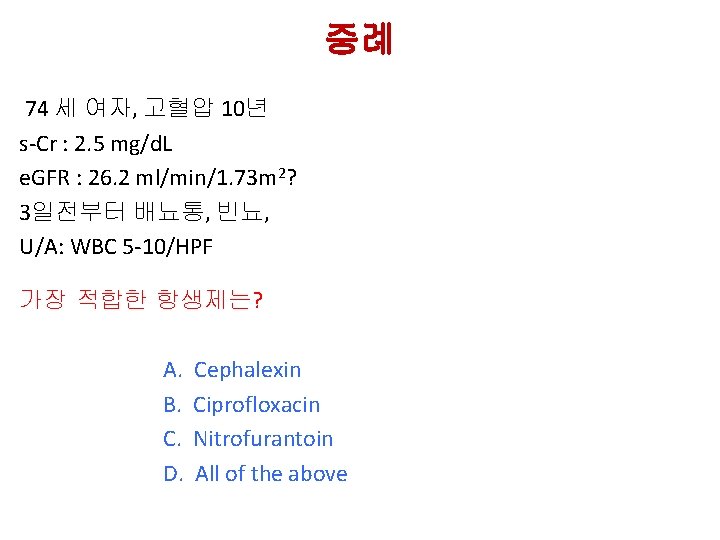
증례 74 세 여자, 고혈압 10년 s-Cr : 2. 5 mg/d. L e. GFR : 26. 2 ml/min/1. 73 m 2? 3일전부터 배뇨통, 빈뇨, U/A: WBC 5 -10/HPF 가장 적합한 항생제는? A. B. C. D. Cephalexin Ciprofloxacin Nitrofurantoin All of the above

Treatment Considerations in CKD Patients with UTI Ampicillin* • Achieve good urine concentration Cephalosporins* • Generally low urine concentrations • Exceptions: cefazolin and ceftriaxone, but not FDA approved for UTI treatment Carbepenems • <50% of active drug present in urine • Unknown efficacy for UTI in CKD patients Quinolones* • Ciprofloxacin and levofloxacin achieve good urine concentrations Nitrofurantoin • Low renal excretion, avoid if e. GFR <50 ml/min Trimethoprim* • Achieve good urine concentration Aminoglycosides* • Achieve high urine concentrations • Nephrotoxic *Requires dose adjustment in CKD Adapted from Gilbert DN, J Am Soc Nephrol. 2006
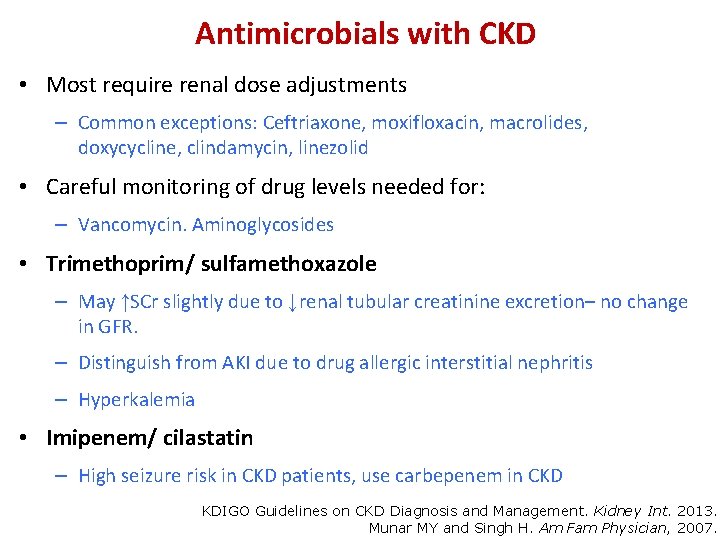
Antimicrobials with CKD • Most require renal dose adjustments – Common exceptions: Ceftriaxone, moxifloxacin, macrolides, doxycycline, clindamycin, linezolid • Careful monitoring of drug levels needed for: – Vancomycin. Aminoglycosides • Trimethoprim/ sulfamethoxazole – May ↑SCr slightly due to ↓renal tubular creatinine excretion– no change in GFR. – Distinguish from AKI due to drug allergic interstitial nephritis – Hyperkalemia • Imipenem/ cilastatin – High seizure risk in CKD patients, use carbepenem in CKD KDIGO Guidelines on CKD Diagnosis and Management. Kidney Int. 2013. Munar MY and Singh H. Am Fam Physician, 2007.

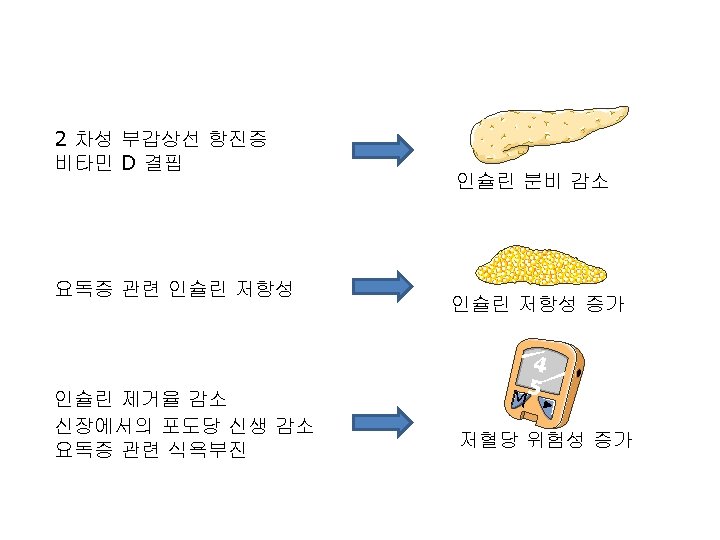
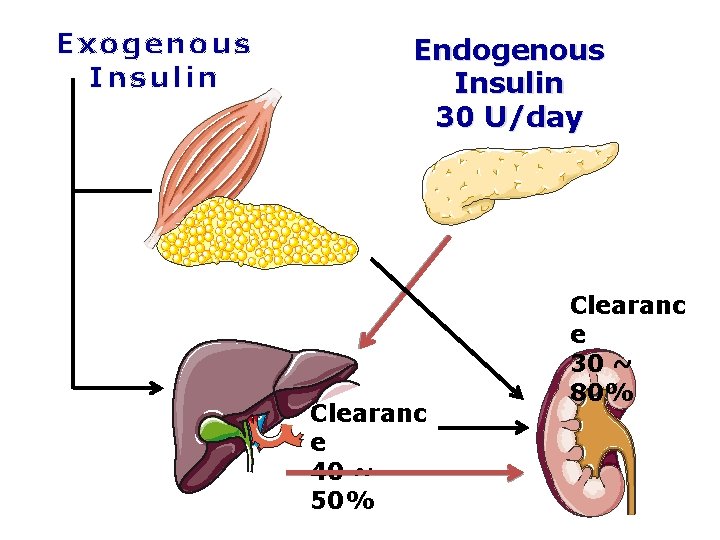
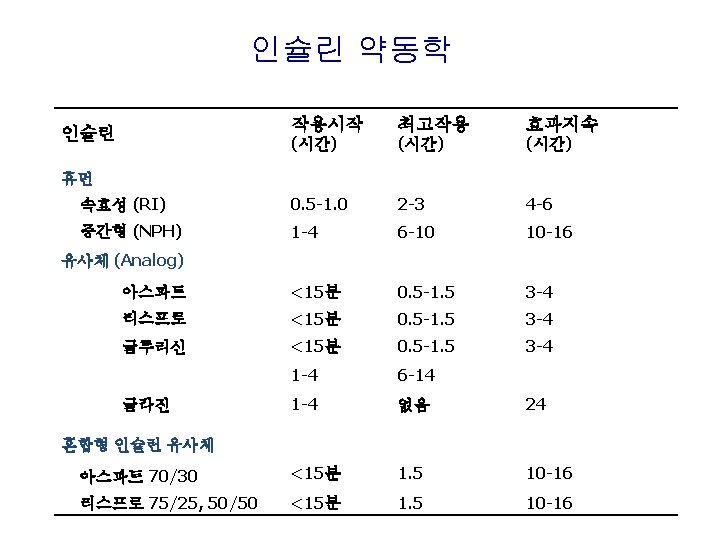
Exogenous Insulin Endogenous Insulin 30 U/day Clearanc e 40 ~ 50% Clearanc e 30 ~ 80%
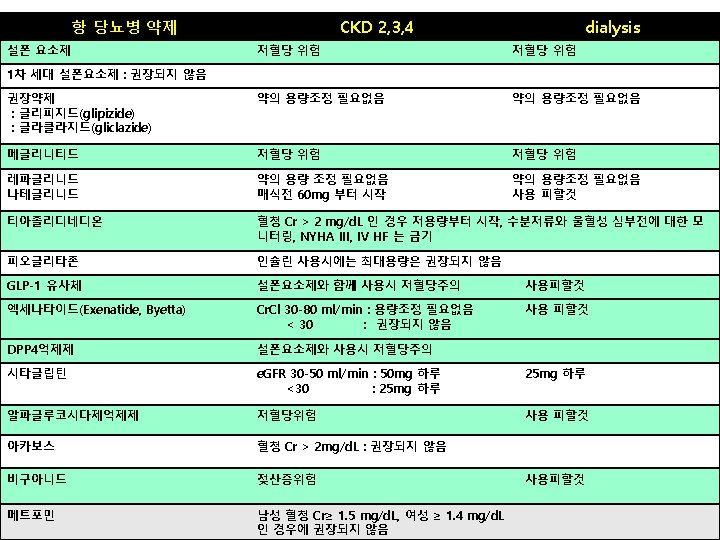
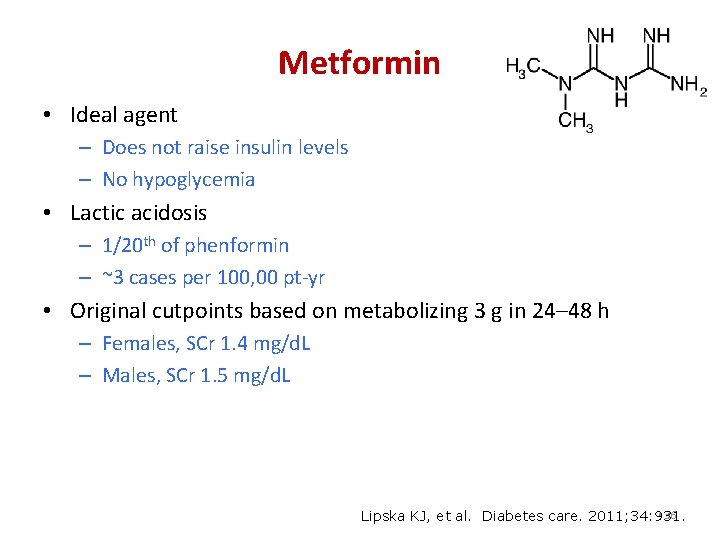
Metformin • Ideal agent – Does not raise insulin levels – No hypoglycemia • Lactic acidosis – 1/20 th of phenformin – ~3 cases per 100, 00 pt-yr • Original cutpoints based on metabolizing 3 g in 24– 48 h – Females, SCr 1. 4 mg/d. L – Males, SCr 1. 5 mg/d. L • 36 Lipska KJ, et al. Diabetes care. 2011; 34: 931.

Proposed Metformin Use in CKD • e. GFR 45 to 60 m. L/min/1. 73 m 2 – Continue metformin use and ↑ monitoring of e. GFR to every 3 - 6 months • e. GFR 30 to 45 m. L/min/1. 73 m 2 – Use metformin with caution with lower dose (50% maximal) • e. GFR < 30 m. L/min/1. 73 m 2 – Stop metformin Lipska KJ, et al. Use of Meformin in the Setting of Mild-to-Moderate Renal Insufficiency. Diabetes Care 2011; 34: 1431 -37.
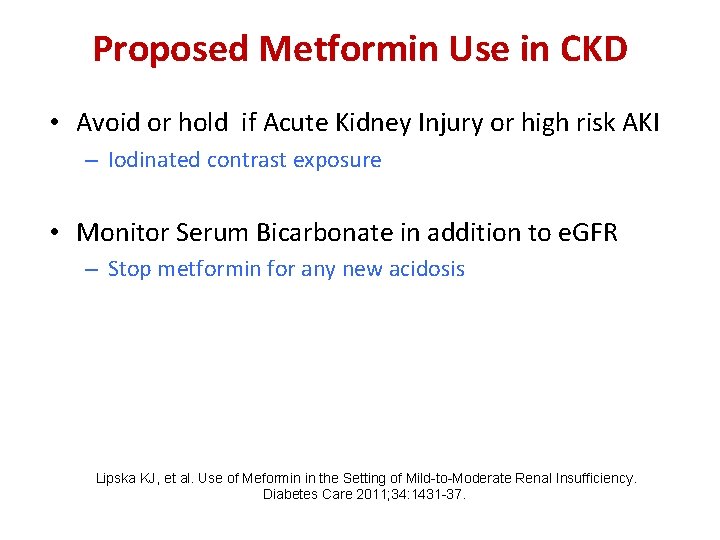
Proposed Metformin Use in CKD • Avoid or hold if Acute Kidney Injury or high risk AKI – Iodinated contrast exposure • Monitor Serum Bicarbonate in addition to e. GFR – Stop metformin for any new acidosis Lipska KJ, et al. Use of Meformin in the Setting of Mild-to-Moderate Renal Insufficiency. Diabetes Care 2011; 34: 1431 -37.

Lipid-lowering drugs • Statins – No renal dose adjustment needed for atorvastatin – Dose adjustments needed when e. GFR <30 ml/min for fluvastatin, lovastatin, pravastatin, rosuvastatin and simvistatin • Fibrates – Associated with AKI esp. in CKD patients – May transiently raise SCr by increased creatinine production rather than decreased GFR KDIGO Guidelines on CKD Diagnosis and Management. Kidney Int. 2013. Munar MY and Singh H. Am Fam Physician, 2007.
AVOIDING DRUG TOXICITY IN CKD PATIENTS
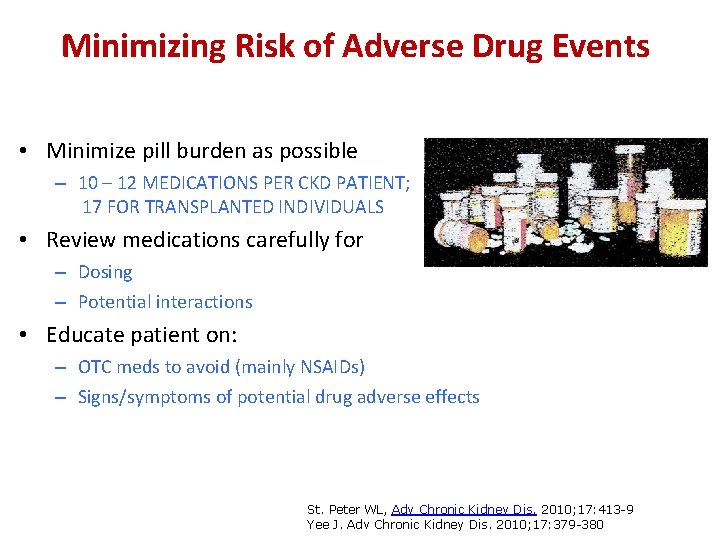
Minimizing Risk of Adverse Drug Events • Minimize pill burden as possible – 10 – 12 MEDICATIONS PER CKD PATIENT; 17 FOR TRANSPLANTED INDIVIDUALS • Review medications carefully for – Dosing – Potential interactions • Educate patient on: – OTC meds to avoid (mainly NSAIDs) – Signs/symptoms of potential drug adverse effects St. Peter WL, Adv Chronic Kidney Dis. 2010; 17: 413 -9 Yee J. Adv Chronic Kidney Dis. 2010; 17: 379 -380
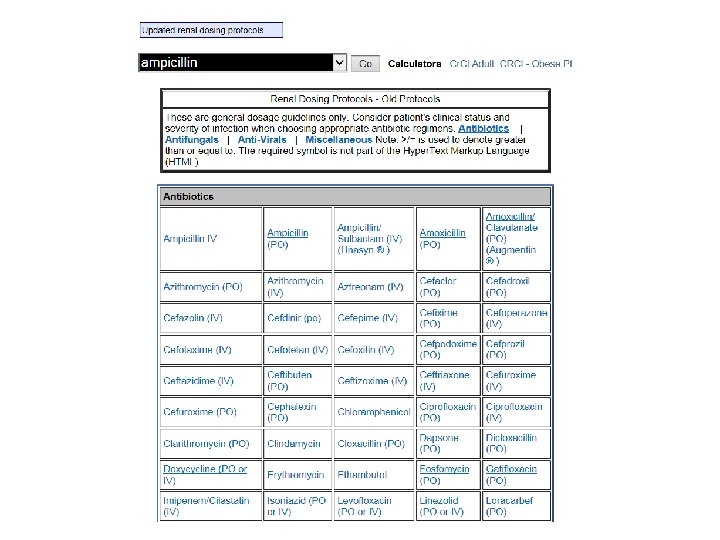
Dosing Adjustments • Don’t rely on SCr alone – calculate e. GFR or Cr clearance – SCr misleading in: extremes of body weight, poor nutrition • Cannot rely on e. GFR in AKI – If SCr rapidly rising, assume e. GFR <10 ml/min • When in doubt, look up dosing adjustment/ potential interactions or call pharmacy
Key Points • CKD patients at high risk for drug-related adverse events • Several classes of drugs renally eliminated • Consider kidney function and current e. GFR (not just SCr) when prescribing meds • Minimize pill burden as much as possible • Remind CKD patients to avoid NSAIDs
- Slides: 44