
Chronic Kidney Disease Jacqueline Annand CKD Nurse Mary

- Slides: 20
Chronic Kidney Disease Jacqueline Annand – CKD Nurse Mary Simpson – CKD Nurse Joyce Mackie – Pre Dialysis/Transplant liaison Sister
What is CKD? Chronic Kidney Disease (CKD), is a progressive loss of renal function over a period of months or years. Chronic Renal Failure/Established Renal Failure (CRF/ERF) is complete, or almost complete failure of the kidneys to function.
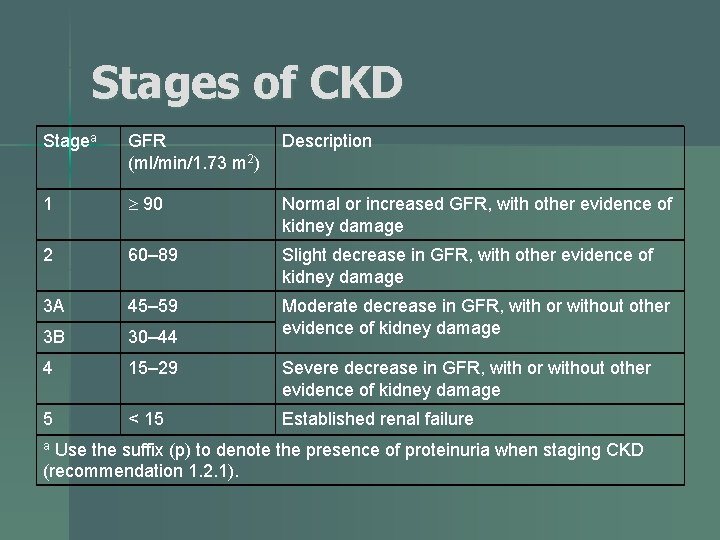
Stages of CKD Stagea GFR (ml/min/1. 73 m 2) Description 1 90 Normal or increased GFR, with other evidence of kidney damage 2 60– 89 Slight decrease in GFR, with other evidence of kidney damage 3 A 45– 59 3 B 30– 44 Moderate decrease in GFR, with or without other evidence of kidney damage 4 15– 29 Severe decrease in GFR, with or without other evidence of kidney damage 5 < 15 Established renal failure a Use the suffix (p) to denote the presence of proteinuria when staging CKD (recommendation 1. 2. 1).
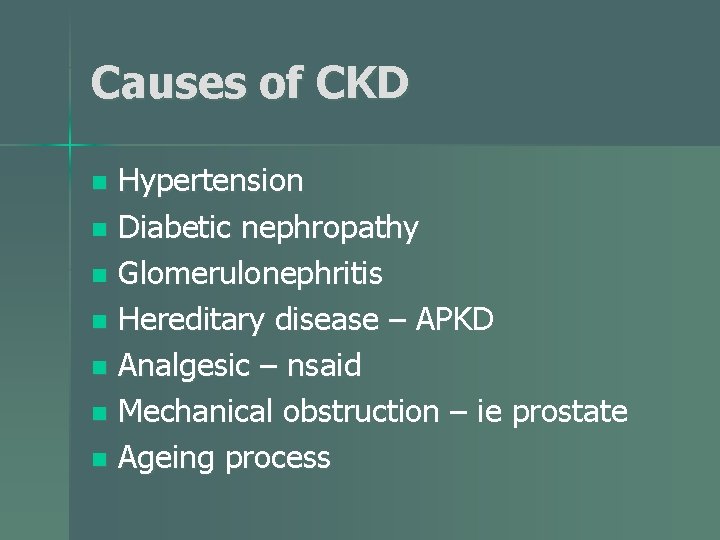
Causes of CKD Hypertension n Diabetic nephropathy n Glomerulonephritis n Hereditary disease – APKD n Analgesic – nsaid n Mechanical obstruction – ie prostate n Ageing process n
Scope and Range v The Renal Service provides 24 hr specialist Renal care to patients from Grampian, Orkney & Shetland. v It caters for those suffering from Acute Renal Failure (ARF) and Chronic Renal Failure (CRF), together with other nephrological problems, during investigation, diagnosis, treatment of their condition and offers specialist palliative care. v The main Dialysis Unit and Renal Medical Ward are situated within Aberdeen Royal Infirmary and there are Satellite Dialysis Units at Elgin, Peterhead, Portsoy & Inverurie. There also satellite facilities on Orkney & Shetland
v Pre-Dialysis & Transplant Clinics are held at within the main Dialysis Unit & Satellite Units and other Renal / Nephrology clinics are held at Woolmanhill v The Renal Transplant Service is provided by NHS Lothian. Joint Pre–transplant assessment clinics are held at Aberdeen Royal Infirmary, approximately every 6 weeks in conjunction with colleagues from NHS Lothian. v Conservative treatment and support is offered to patients, families and carers of those who decide not to undergo Renal Replacement Therapy (RRT).
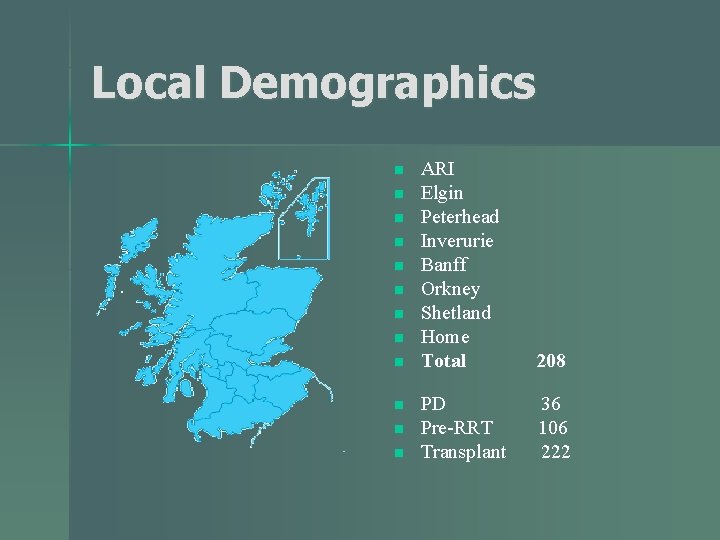
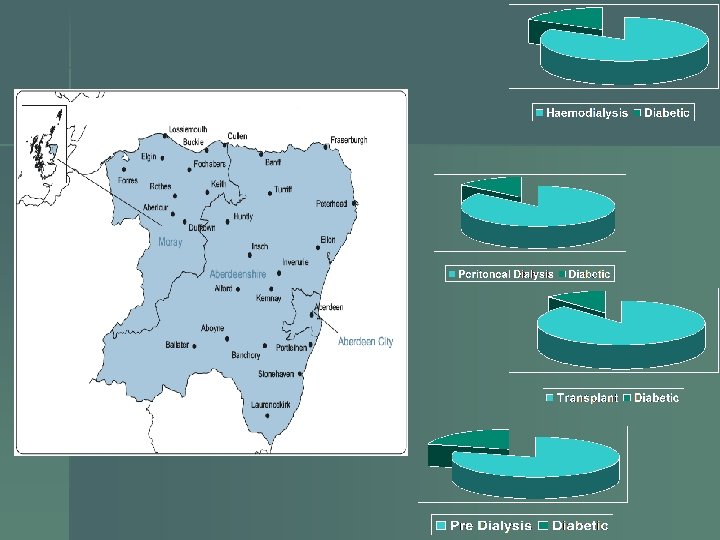
Local Demographics n n n ARI Elgin Peterhead Inverurie Banff Orkney Shetland Home Total 208 PD Pre-RRT Transplant 36 106 222
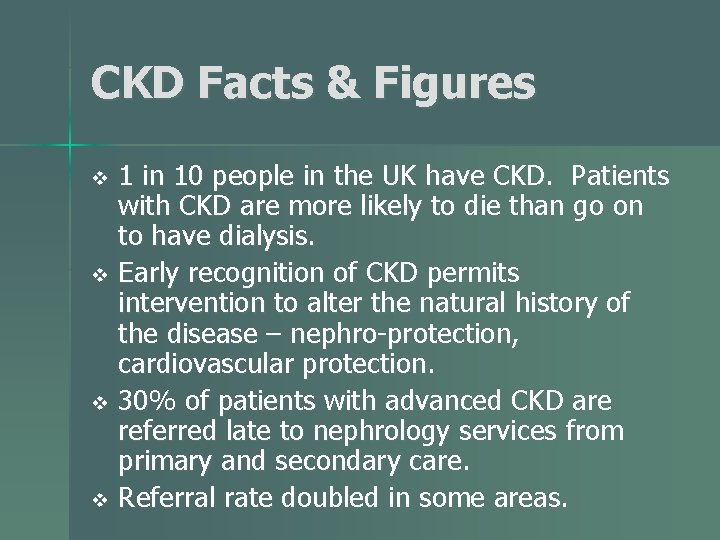
CKD Facts & Figures 1 in 10 people in the UK have CKD. Patients with CKD are more likely to die than go on to have dialysis. v Early recognition of CKD permits intervention to alter the natural history of the disease – nephro-protection, cardiovascular protection. v 30% of patients with advanced CKD are referred late to nephrology services from primary and secondary care. v Referral rate doubled in some areas. v
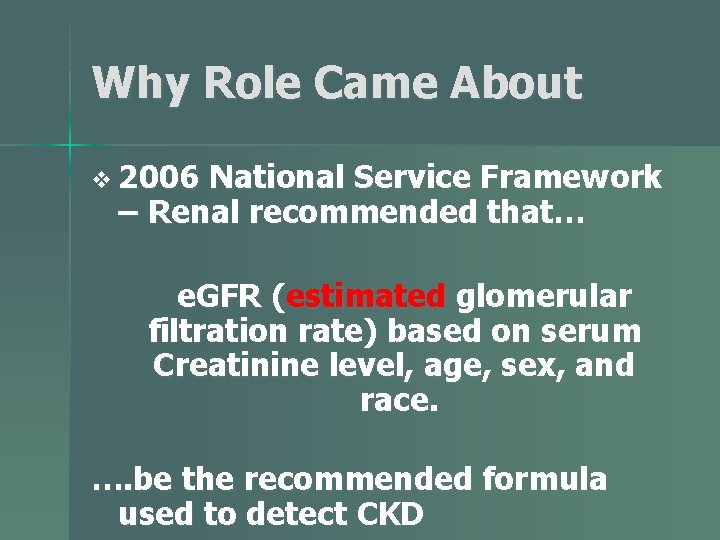
Why Role Came About v 2006 National Service Framework – Renal recommended that… e. GFR (estimated glomerular filtration rate) based on serum Creatinine level, age, sex, and race. …. be the recommended formula used to detect CKD
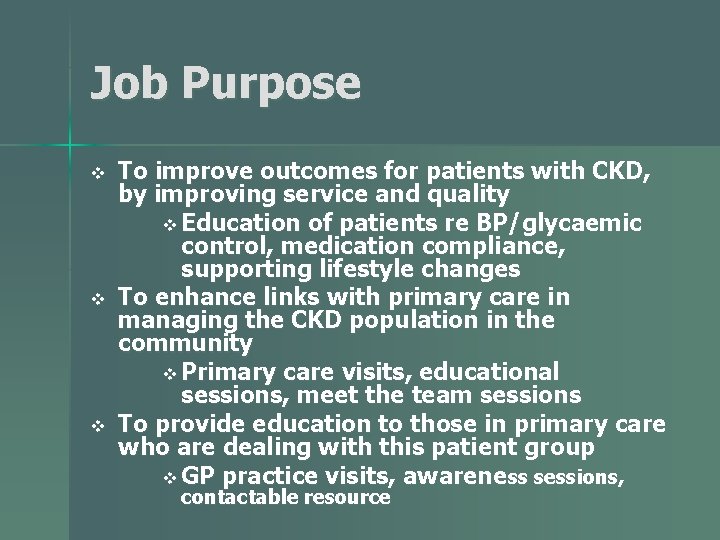
Job Purpose v v v To improve outcomes for patients with CKD, by improving service and quality v Education of patients re BP/glycaemic control, medication compliance, supporting lifestyle changes To enhance links with primary care in managing the CKD population in the community v Primary care visits, educational sessions, meet the team sessions To provide education to those in primary care who are dealing with this patient group v GP practice visits, awareness sessions, contactable resource
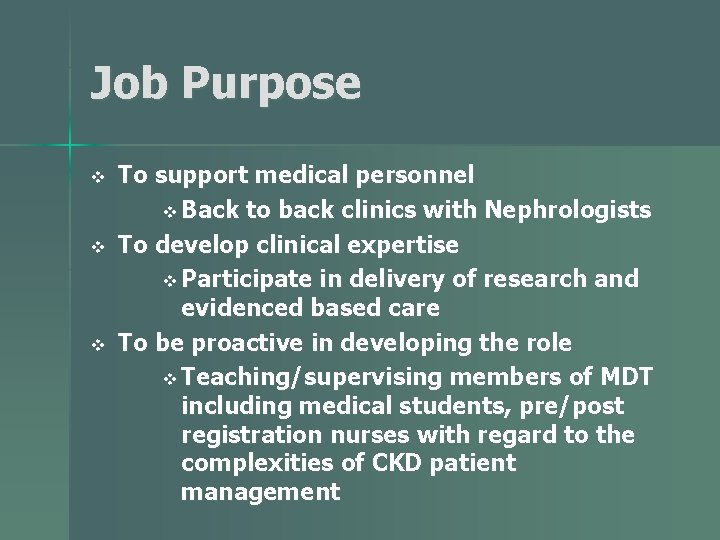
Job Purpose v v v To support medical personnel v Back to back clinics with Nephrologists To develop clinical expertise v Participate in delivery of research and evidenced based care To be proactive in developing the role v Teaching/supervising members of MDT including medical students, pre/post registration nurses with regard to the complexities of CKD patient management
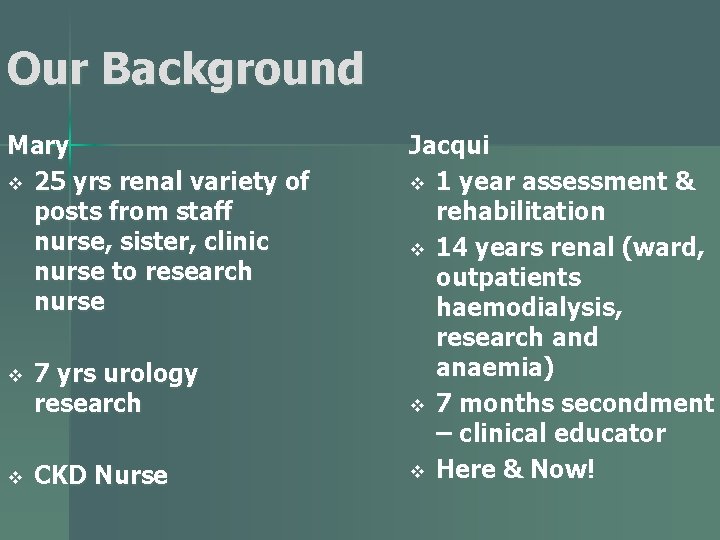
Our Background Mary v 25 yrs renal variety of posts from staff nurse, sister, clinic nurse to research nurse v 7 yrs urology research v CKD Nurse Jacqui v 1 year assessment & rehabilitation v 14 years renal (ward, outpatients haemodialysis, research and anaemia) v 7 months secondment – clinical educator v Here & Now!
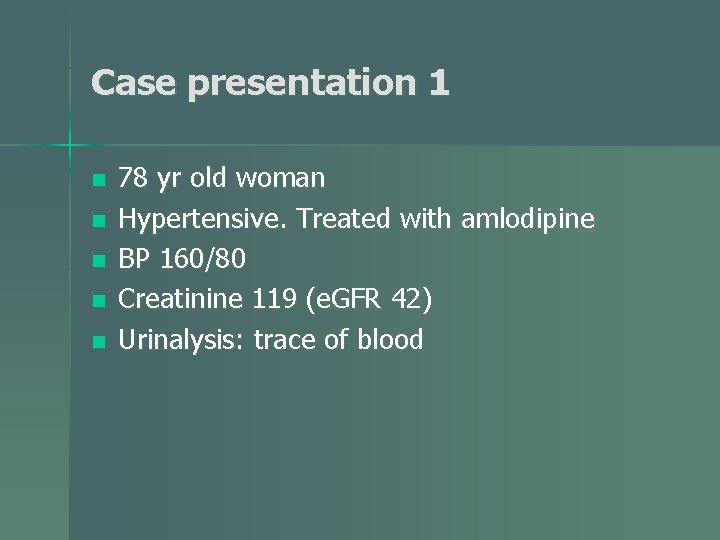
Case presentation 1 n n n 78 yr old woman Hypertensive. Treated with amlodipine BP 160/80 Creatinine 119 (e. GFR 42) Urinalysis: trace of blood
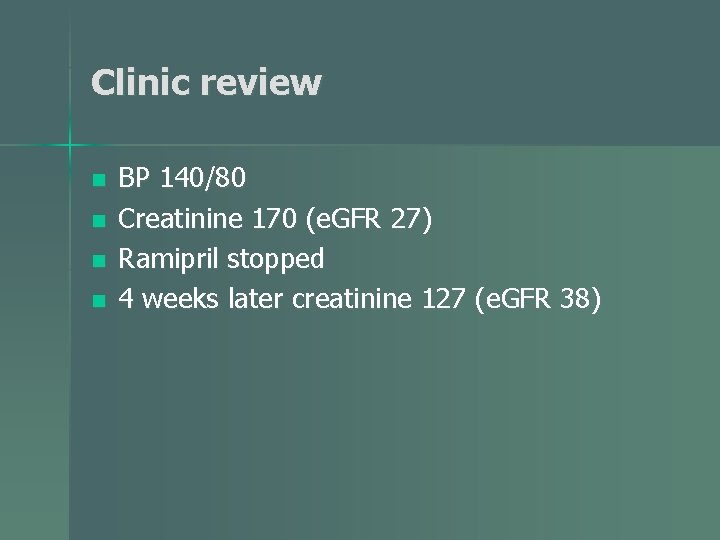
Clinic review n n BP 140/80 Creatinine 170 (e. GFR 27) Ramipril stopped 4 weeks later creatinine 127 (e. GFR 38)
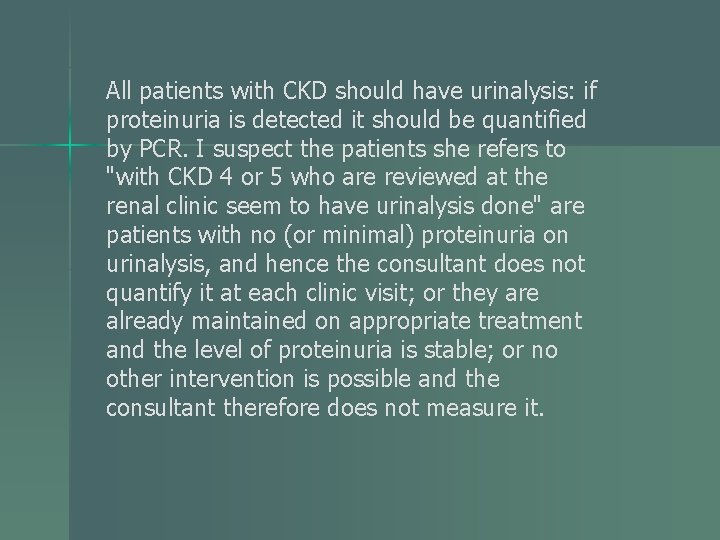
All patients with CKD should have urinalysis: if proteinuria is detected it should be quantified by PCR. I suspect the patients she refers to "with CKD 4 or 5 who are reviewed at the renal clinic seem to have urinalysis done" are patients with no (or minimal) proteinuria on urinalysis, and hence the consultant does not quantify it at each clinic visit; or they are already maintained on appropriate treatment and the level of proteinuria is stable; or no other intervention is possible and the consultant therefore does not measure it.
n n n 2) Quantifying proteinuria. As we discussed this is not straightforward. Our Lab gives an upper limit for a "normal" PCR of 20 mg/mmolcr - other hospitals may use 30 or 50. Therefore "proteinuria" is any level above an arbitary cut-off. In practice the higher it is the more significant, and I am happy to consider >50 mg/mmol as "significant". All patients with CKD & proteinuria should be considered for an ACE-I (but not appropriate for all). The key target should be BP reduction. As always the level of proteinuria must be taken in clinical context. I would want to see a 30 -year-old with a PCR of 80; but would not want to see a 80 year-old diabetic with a stable PCR of 80, without other relevant renal problems.
Some facts regarding CKD GFR is inversely related to hypertension and cardiovascular risk Symptoms are unusual until GFR is less than 30 mls/min/1. 73 m 2 Complications including renal anaemia and bone disease are unusual until GFR is less than 30 mls/min/1. 73 m 2 Early CKD is very common Advanced CKD is relatively uncommon The epidemiology and natural history of CKD is still largely unknown