
Chronic Injury of Locomotor System HUANG Shilong Department
- Slides: 45
Chronic Injury of Locomotor System HUANG, Shilong Department of Orthopedics, Tongji Hospital
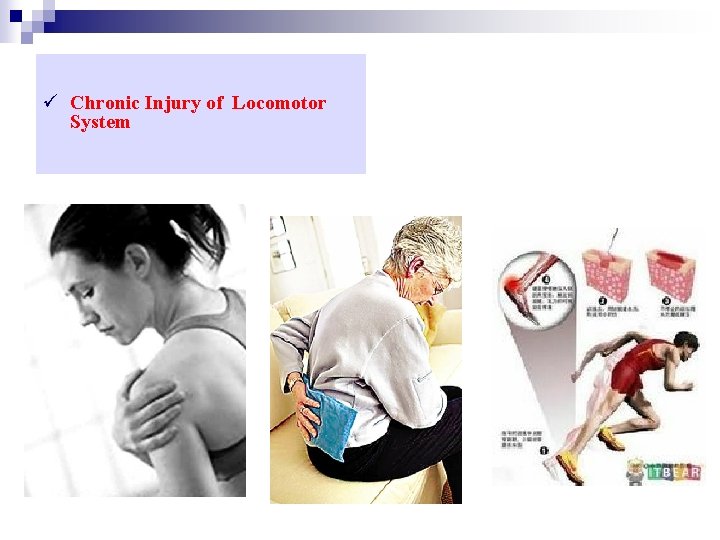
ü Chronic Injury of Locomotor System
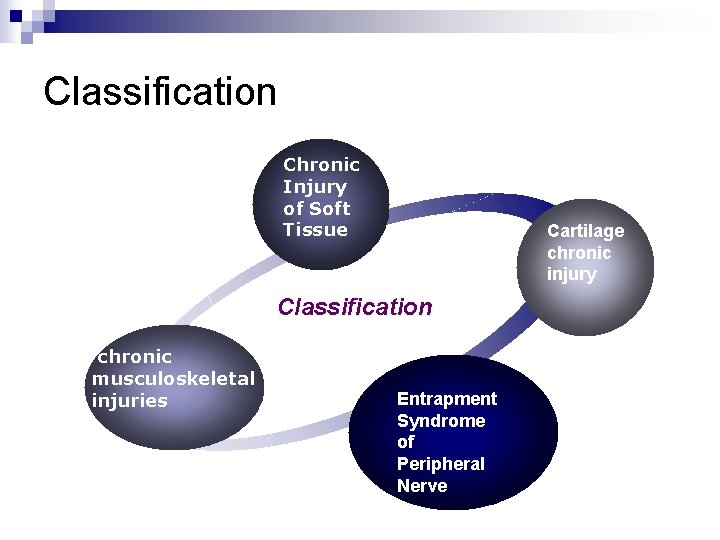
Classification Chronic Injury of Soft Tissue Cartilage chronic injury Classification chronic musculoskeletal injuries Entrapment Syndrome of Peripheral Nerve
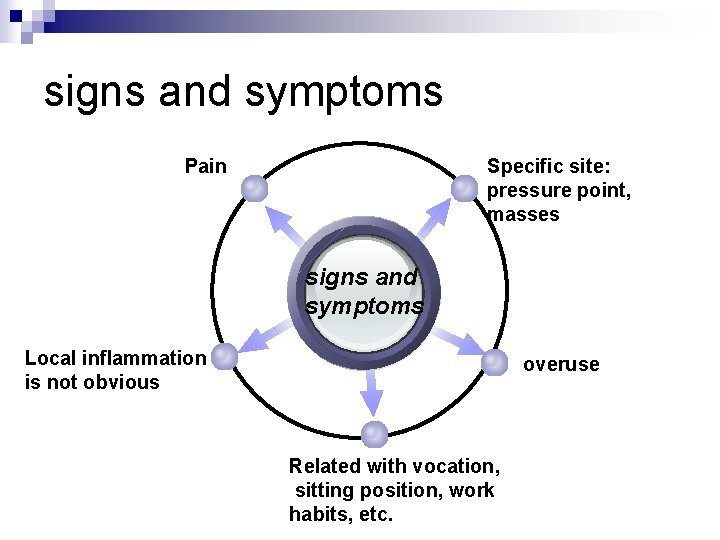
signs and symptoms Pain Specific site: pressure point, masses signs and symptoms Local inflammation is not obvious overuse Related with vocation, sitting position, work habits, etc.
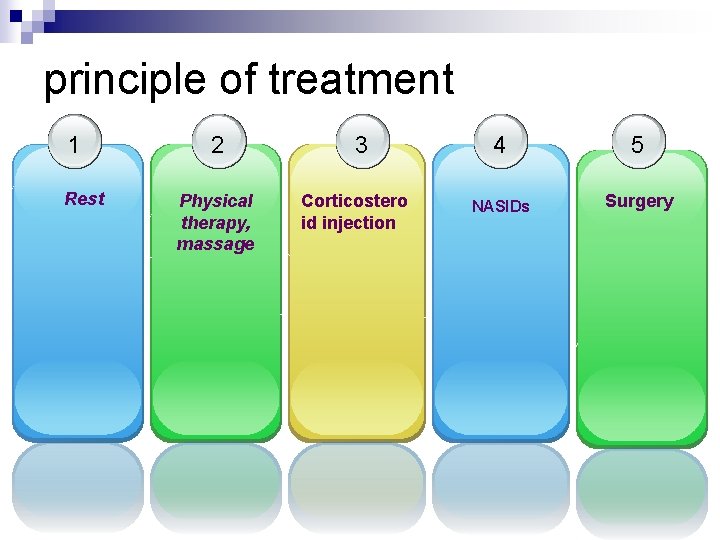
principle of treatment 1 Rest 2 Physical therapy, massage 3 Corticostero id injection 4 5 3 NASIDs Surgery
Chronic Injury of Soft Tissues
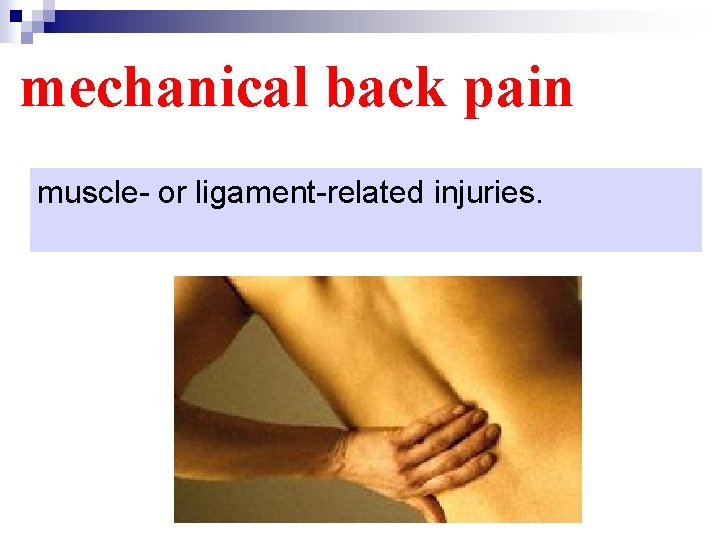
mechanical back pain muscle- or ligament-related injuries.
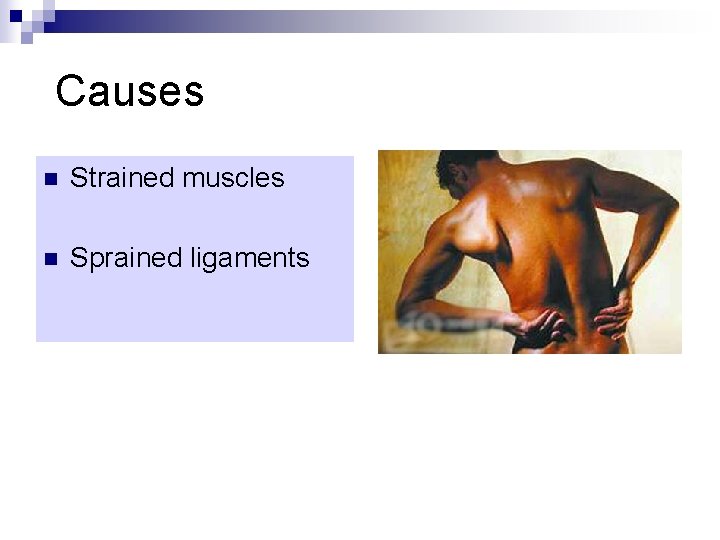
Causes n Strained muscles n Sprained ligaments
Signs and symptoms 1 pain 2 obvious pressure point 3 musculus sacrospinalis contracture sign 4 radiating pain
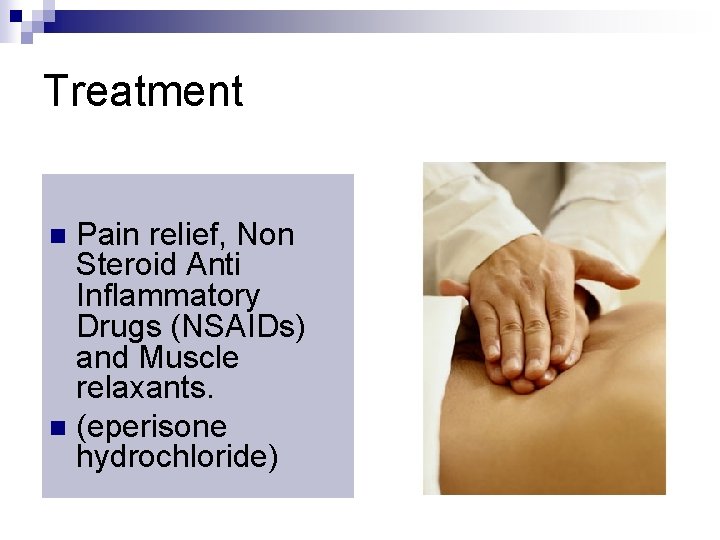
Treatment Pain relief, Non Steroid Anti Inflammatory Drugs (NSAIDs) and Muscle relaxants. n (eperisone hydrochloride) n
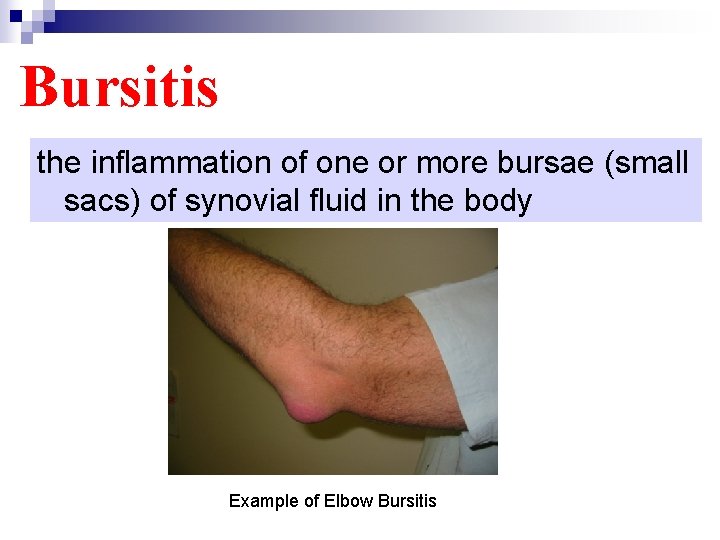
Bursitis the inflammation of one or more bursae (small sacs) of synovial fluid in the body Example of Elbow Bursitis
Signs and symptoms n Bursitis symptoms vary from local joint pain and stiffness, to stinging pain that surrounds the joint around the inflamed bursa. In this condition, the pain usually is worse during and after activity, and then the bursa and the surrounding joint become stiff the next morning.
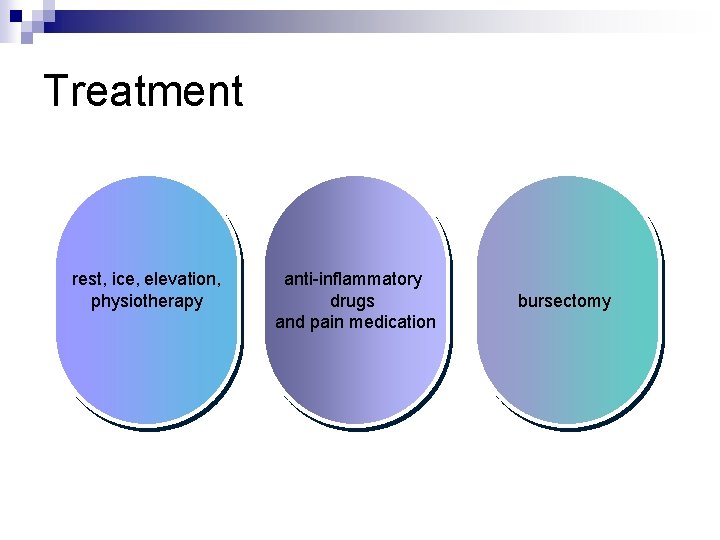
Treatment rest, ice, elevation, physiotherapy anti-inflammatory drugs and pain medication bursectomy
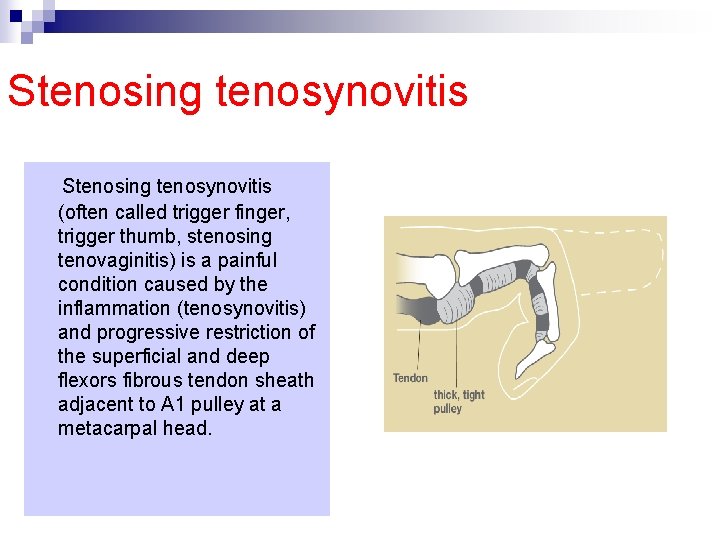
Stenosing tenosynovitis (often called trigger finger, trigger thumb, stenosing tenovaginitis) is a painful condition caused by the inflammation (tenosynovitis) and progressive restriction of the superficial and deep flexors fibrous tendon sheath adjacent to A 1 pulley at a metacarpal head.
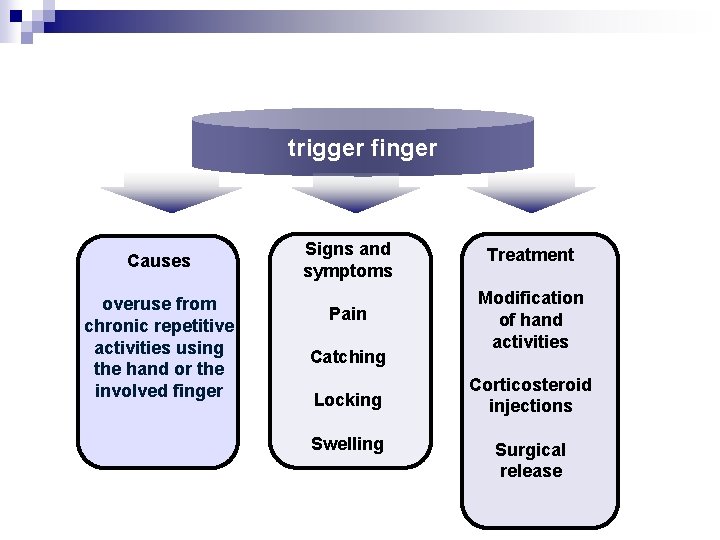
trigger finger Causes overuse from chronic repetitive activities using the hand or the involved finger Signs and symptoms Treatment Pain Modification of hand activities Catching Locking Swelling Corticosteroid injections Surgical release
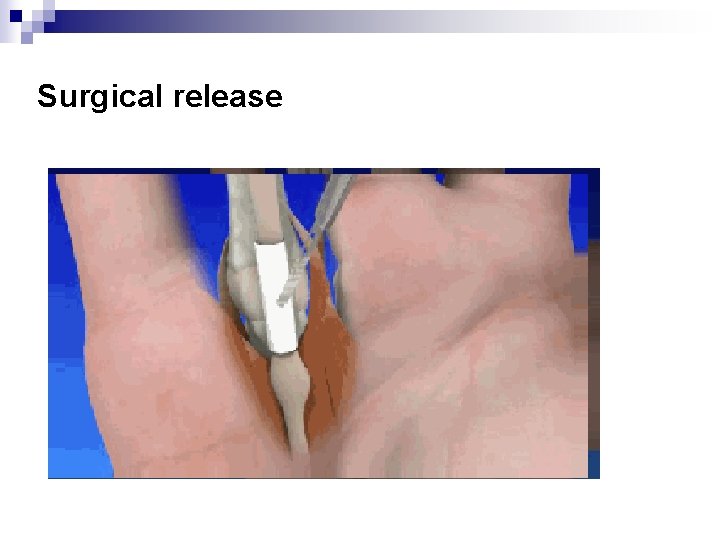
Surgical release
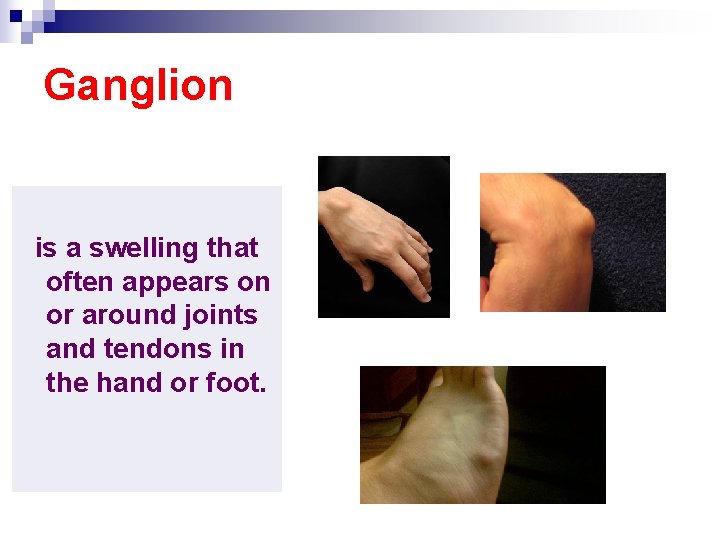
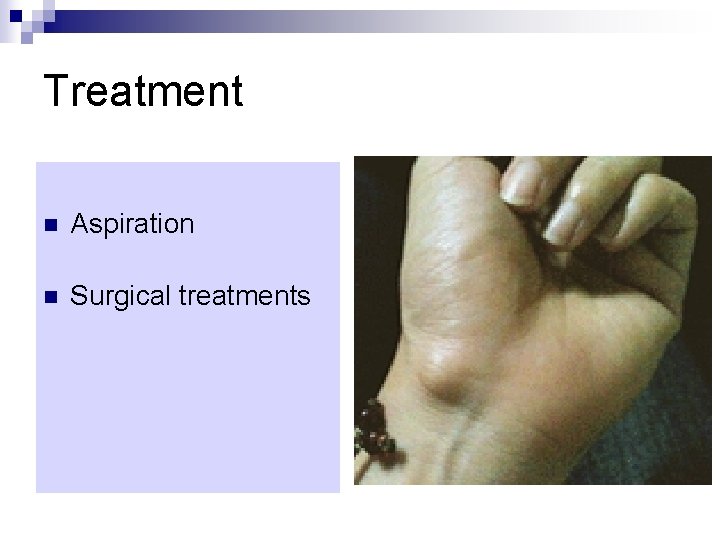
Ganglion is a swelling that often appears on or around joints and tendons in the hand or foot.
Treatment n Aspiration n Surgical treatments
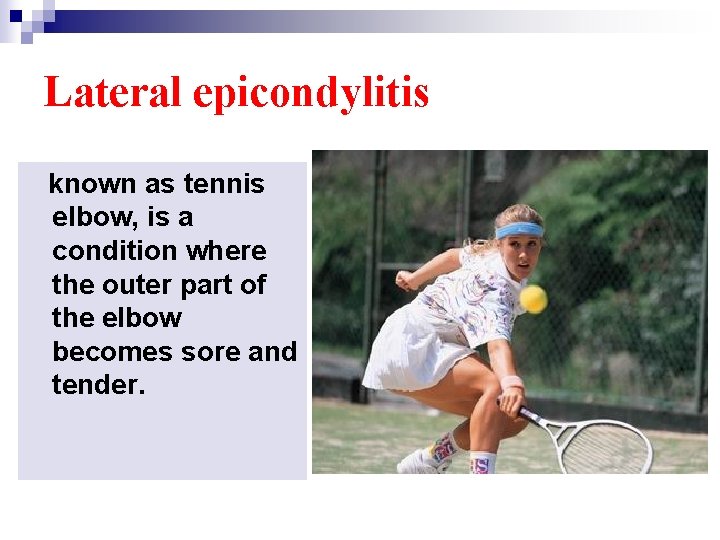
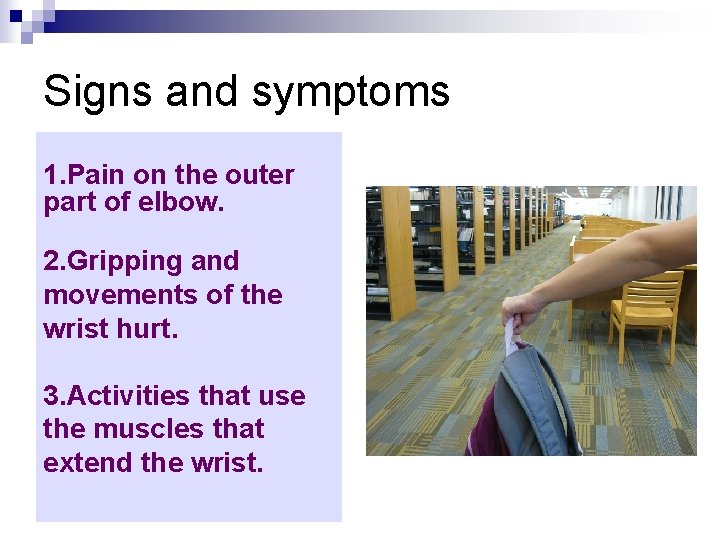
Lateral epicondylitis known as tennis elbow, is a condition where the outer part of the elbow becomes sore and tender.
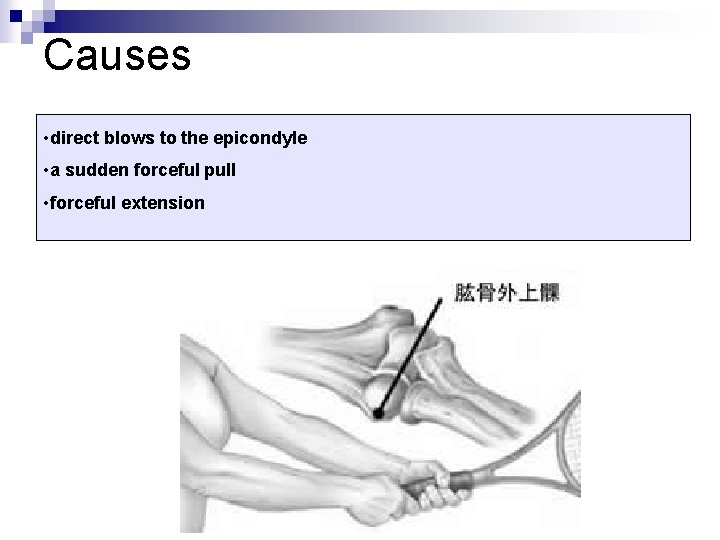
Causes • direct blows to the epicondyle • a sudden forceful pull • forceful extension
Signs and symptoms 1. Pain on the outer part of elbow. 2. Gripping and movements of the wrist hurt. 3. Activities that use the muscles that extend the wrist.
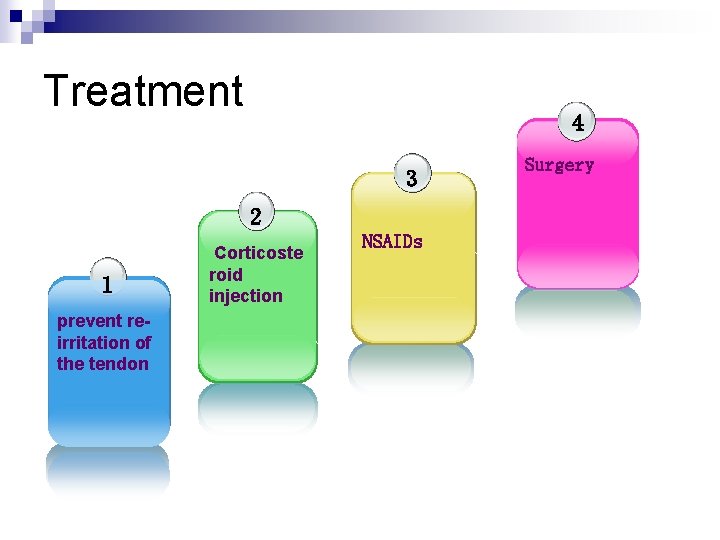
Treatment 4 3 2 1 prevent reirritation of the tendon Corticoste roid injection NSAIDs Surgery
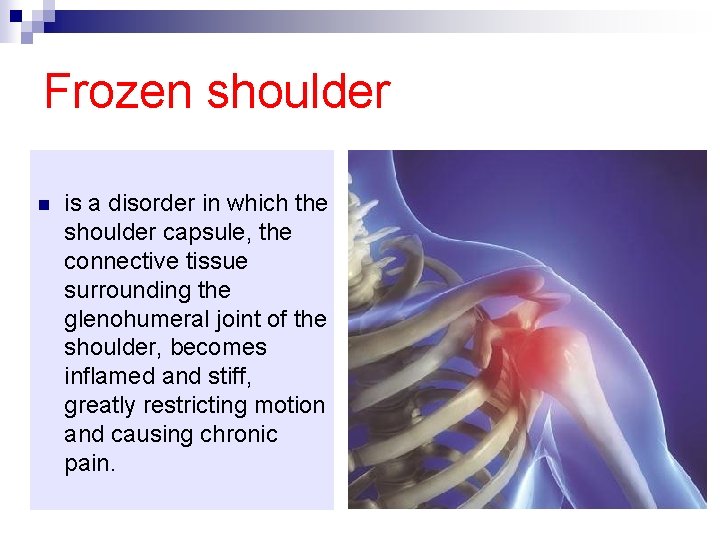
Frozen shoulder n is a disorder in which the shoulder capsule, the connective tissue surrounding the glenohumeral joint of the shoulder, becomes inflamed and stiff, greatly restricting motion and causing chronic pain.
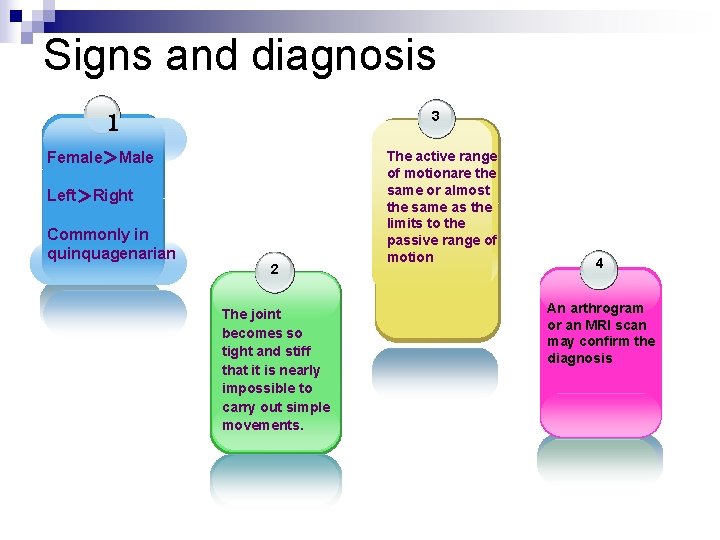
Signs and diagnosis 3 1 Female>Male Left>Right Commonly in quinquagenarian 2 The joint becomes so tight and stiff that it is nearly impossible to carry out simple movements. The active range of motionare the same or almost the same as the limits to the passive range of motion 4 An arthrogram or an MRI scan may confirm the diagnosis
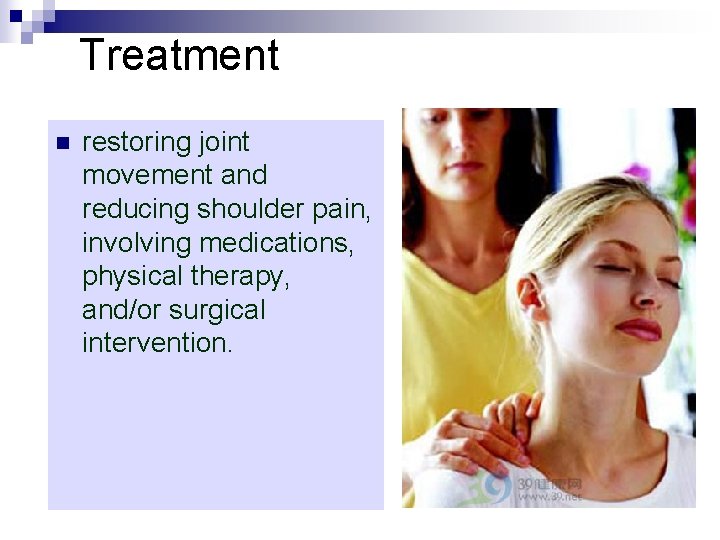
Treatment n restoring joint movement and reducing shoulder pain, involving medications, physical therapy, and/or surgical intervention.
Avascular Necrosis of Femoral Head
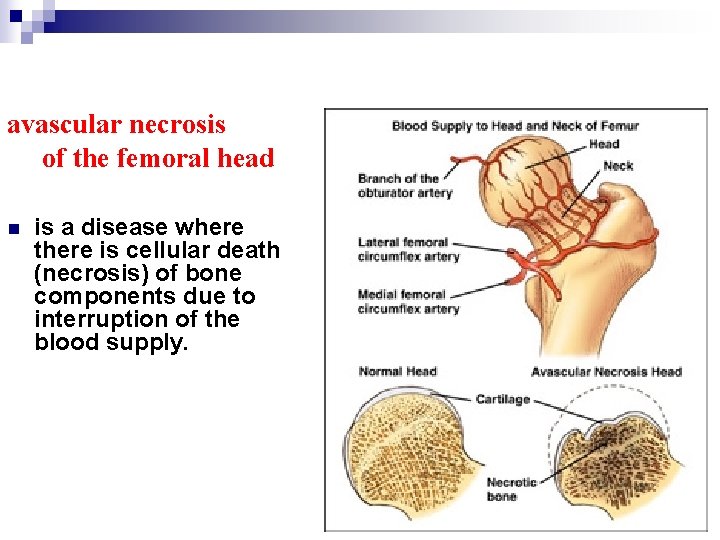
avascular necrosis of the femoral head n is a disease where there is cellular death (necrosis) of bone components due to interruption of the blood supply.
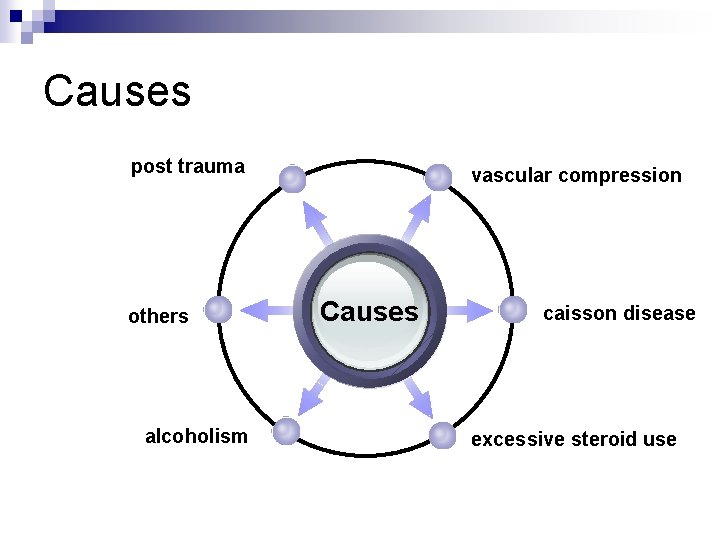
Causes post trauma others alcoholism vascular compression Causes caisson disease excessive steroid use
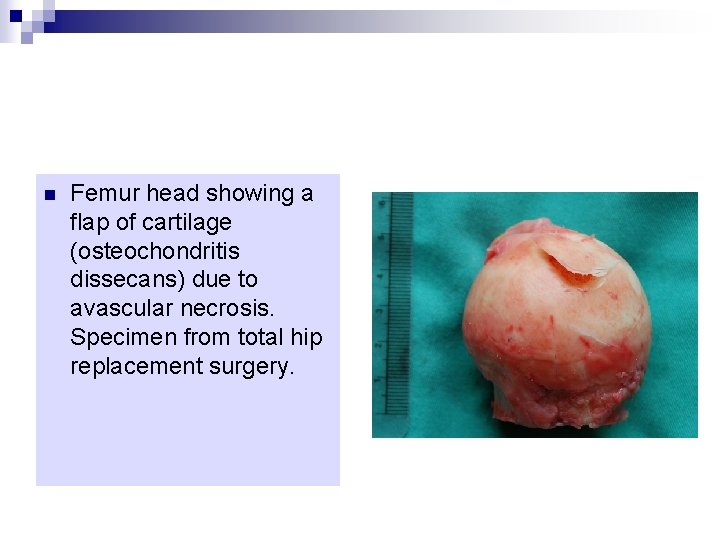
n Femur head showing a flap of cartilage (osteochondritis dissecans) due to avascular necrosis. Specimen from total hip replacement surgery.
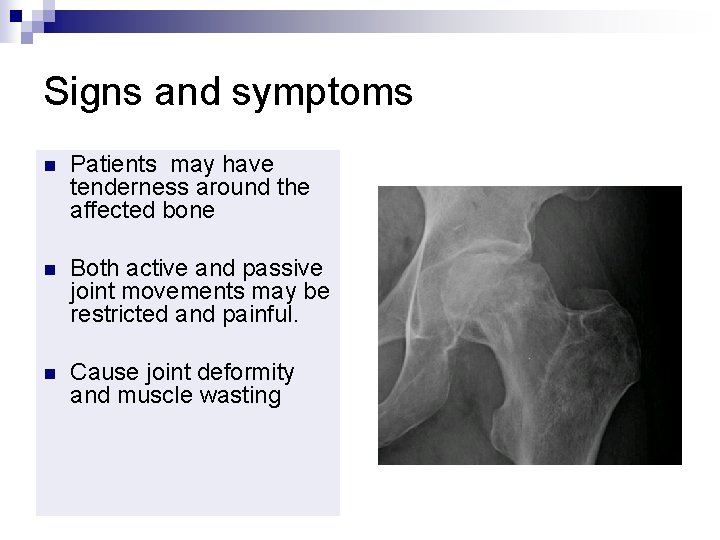
Signs and symptoms n Patients may have tenderness around the affected bone n Both active and passive joint movements may be restricted and painful. n Cause joint deformity and muscle wasting
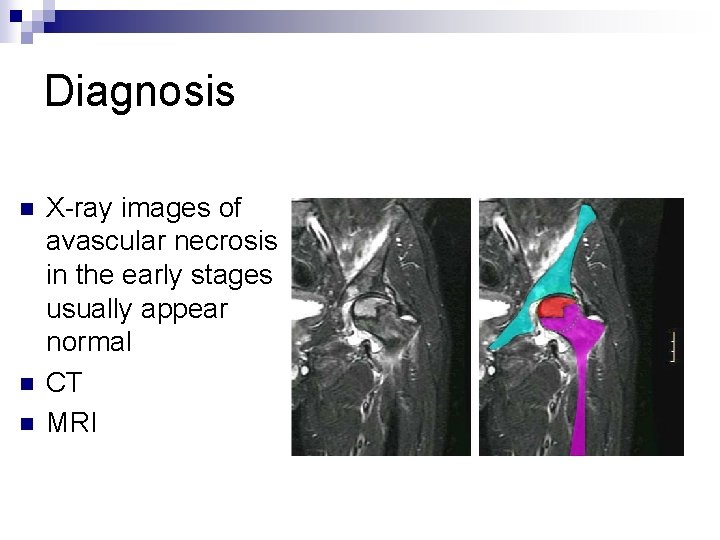
Diagnosis n n n X-ray images of avascular necrosis in the early stages usually appear normal CT MRI
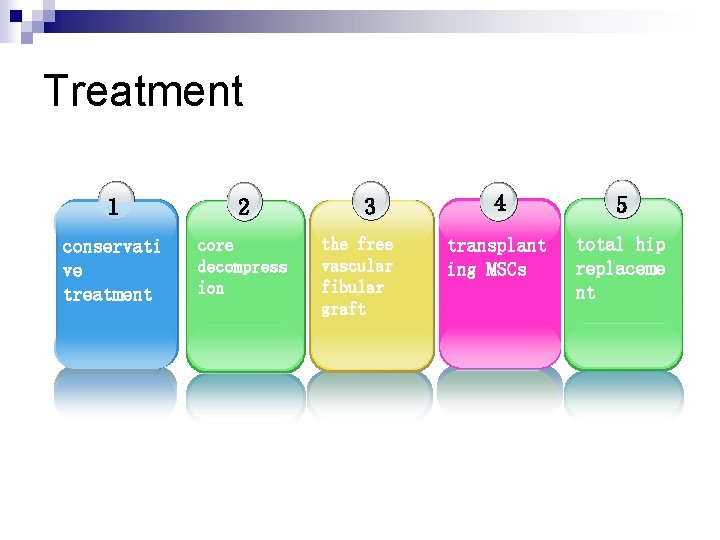
Treatment 1 2 conservati ve treatment core decompress ion 3 the free vascular fibular graft 4 5 transplant ing MSCs total hip replaceme nt
Chronic Trauma of Bone and Cartilage
chondromalacia patellae Chondromalacia is due to an irritation of the undersurface of the kneecap.
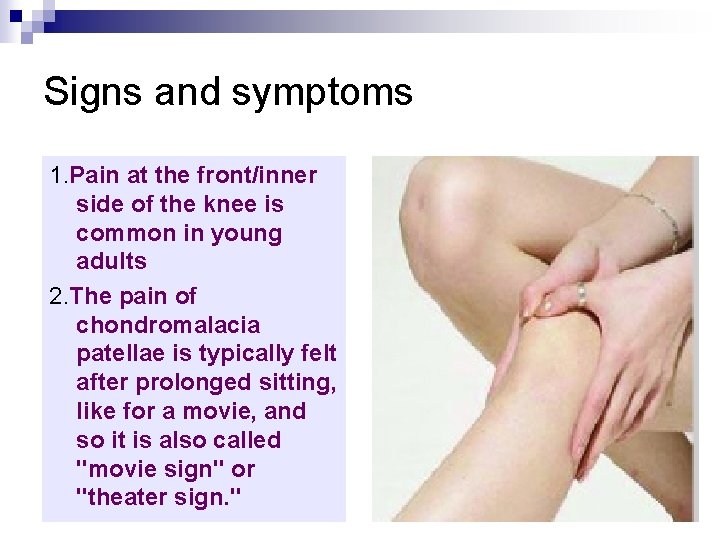
Signs and symptoms 1. Pain at the front/inner side of the knee is common in young adults 2. The pain of chondromalacia patellae is typically felt after prolonged sitting, like for a movie, and so it is also called "movie sign" or "theater sign. "
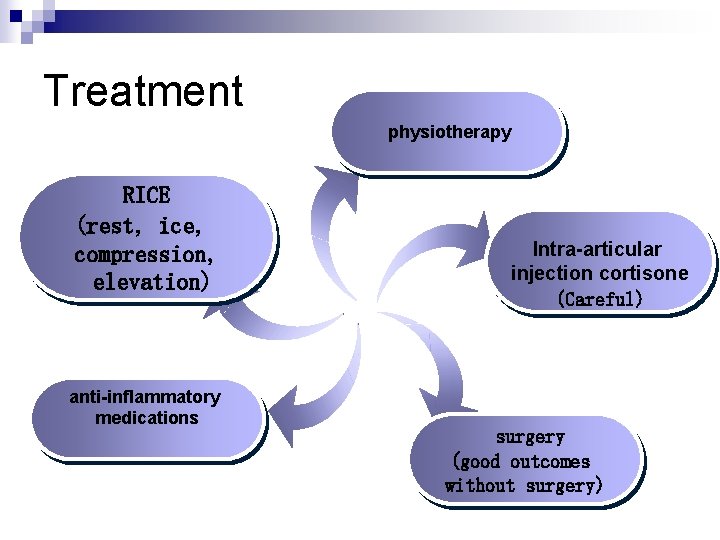
Treatment physiotherapy RICE (rest, ice, compression, elevation) anti-inflammatory medications Intra-articular injection cortisone (Careful) surgery (good outcomes without surgery)
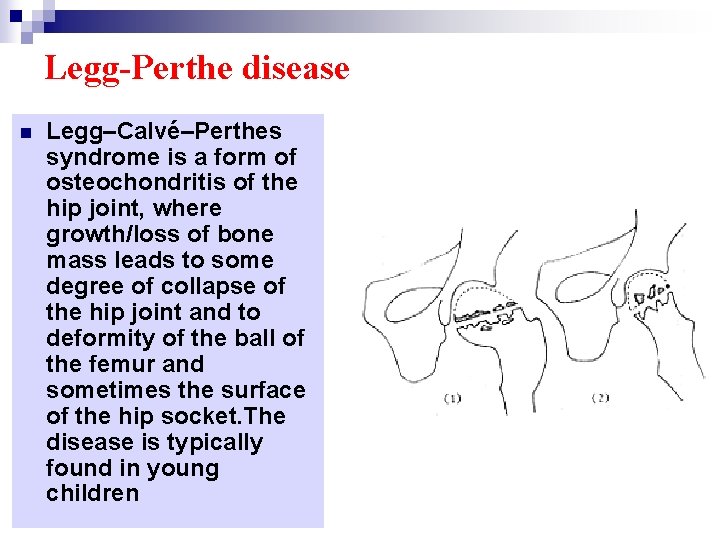
Legg-Perthe disease n Legg–Calvé–Perthes syndrome is a form of osteochondritis of the hip joint, where growth/loss of bone mass leads to some degree of collapse of the hip joint and to deformity of the ball of the femur and sometimes the surface of the hip socket. The disease is typically found in young children
Entrapment Syndrome of Peripheral Nerve
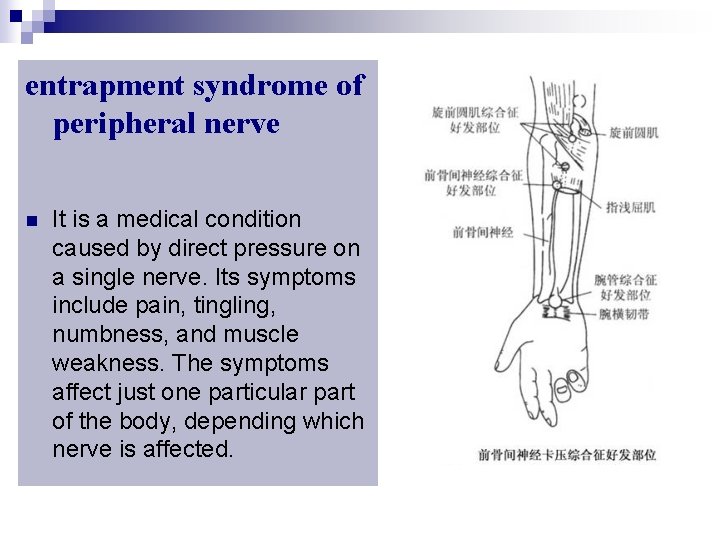
entrapment syndrome of peripheral nerve n It is a medical condition caused by direct pressure on a single nerve. Its symptoms include pain, tingling, numbness, and muscle weakness. The symptoms affect just one particular part of the body, depending which nerve is affected.
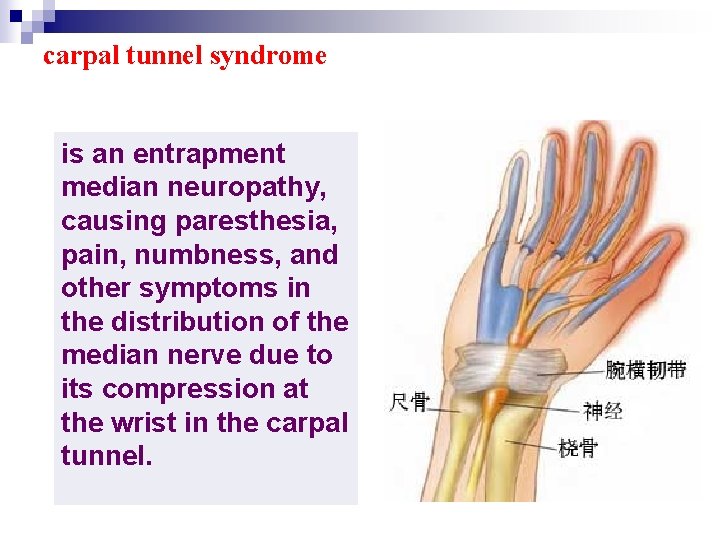
carpal tunnel syndrome is an entrapment median neuropathy, causing paresthesia, pain, numbness, and other symptoms in the distribution of the median nerve due to its compression at the wrist in the carpal tunnel.
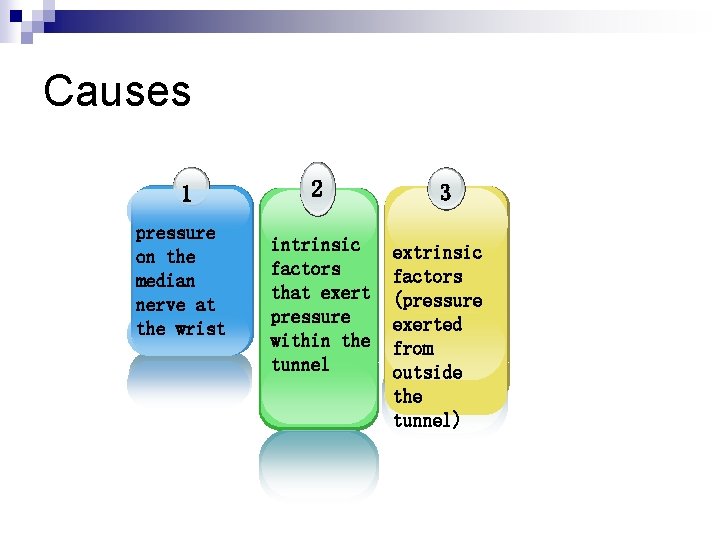
Causes 1 pressure on the median nerve at the wrist 2 intrinsic factors that exert pressure within the tunnel 3 extrinsic factors (pressure exerted from outside the tunnel)
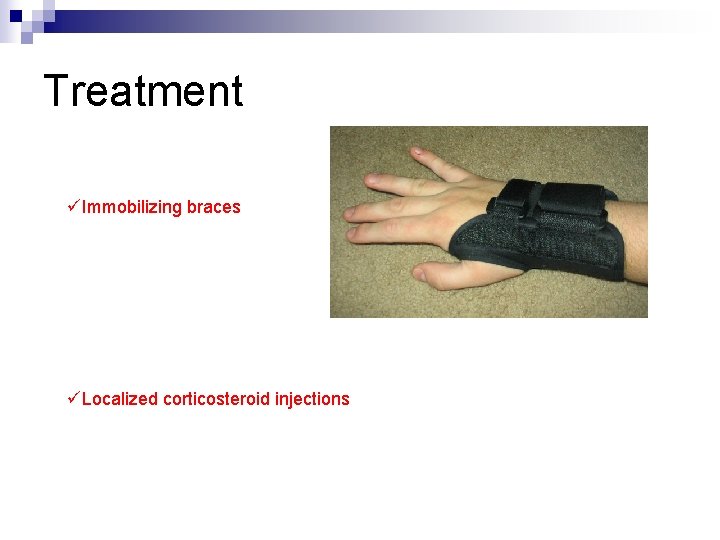
Treatment üImmobilizing braces üLocalized corticosteroid injections
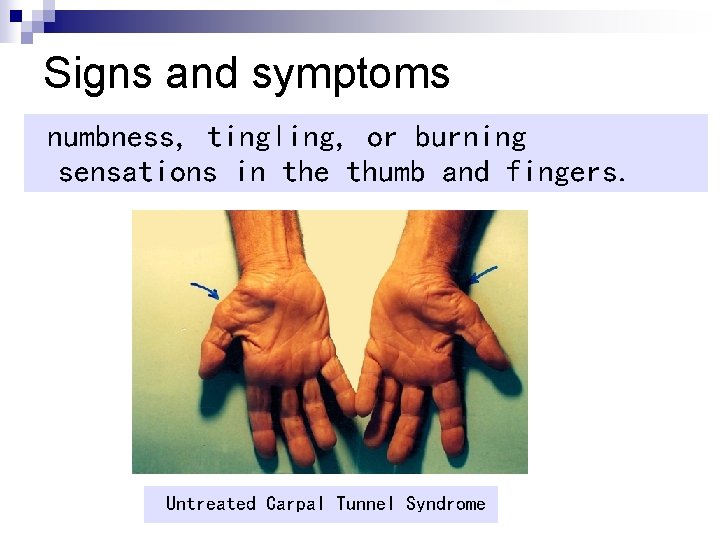
Signs and symptoms numbness, tingling, or burning sensations in the thumb and fingers. Untreated Carpal Tunnel Syndrome
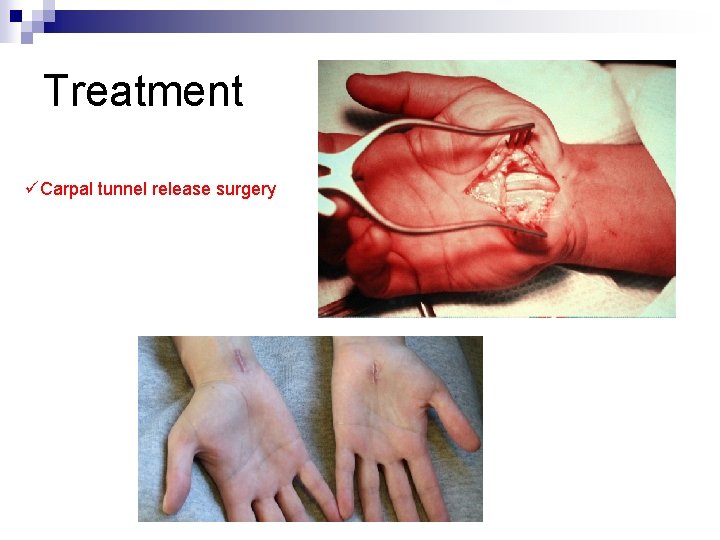
Treatment üCarpal tunnel release surgery
The End!