
Chronic inflammation Outcomes of acute inflammation progression to
- Slides: 30
Chronic inflammation
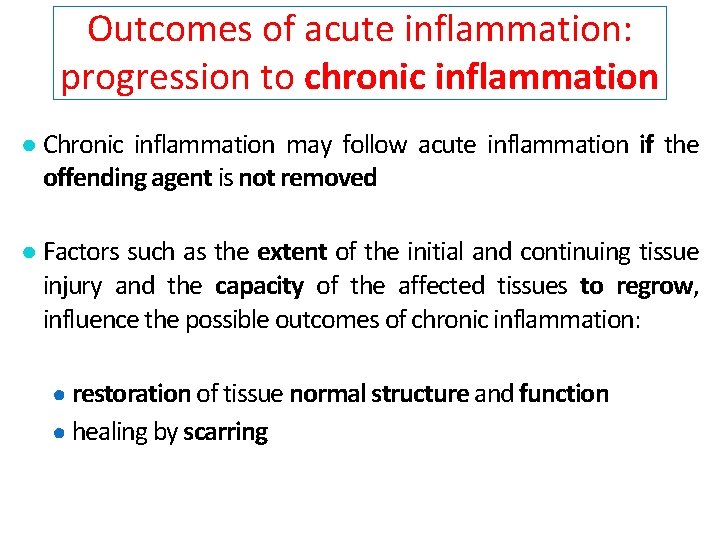
Outcomes of acute inflammation: progression to chronic inflammation ● Chronic inflammation may follow acute inflammation if the offending agent is not removed ● Factors such as the extent of the initial and continuing tissue injury and the capacity of the affected tissues to regrow, influence the possible outcomes of chronic inflammation: ● restoration of tissue normal structure and function ● healing by scarring
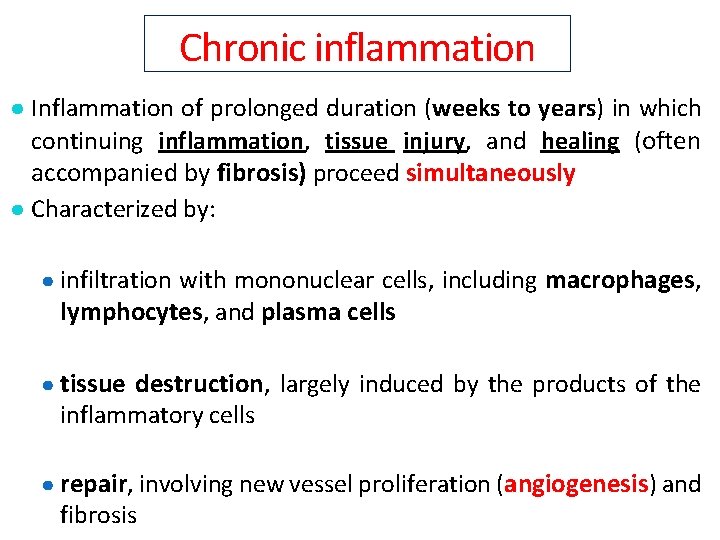
Chronic inflammation ● Inflammation of prolonged duration (weeks to years) in which continuing inflammation, tissue injury, and healing (often accompanied by fibrosis) proceed simultaneously ● Characterized by: ● infiltration with mononuclear cells, including macrophages, lymphocytes, and plasma cells ● tissue destruction, largely induced by the products of the inflammatory cells ● repair, involving new vessel proliferation (angiogenesis) and fibrosis
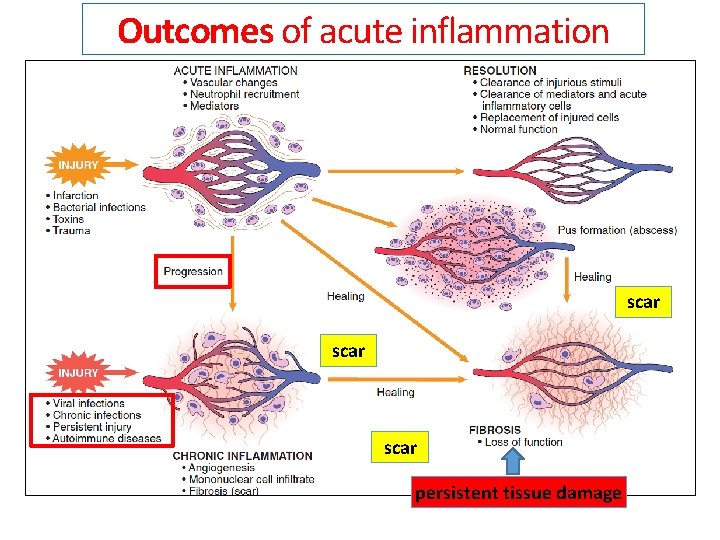
Outcomes of acute inflammation scar persistent tissue damage
Chronic inflammation ● Chronic inflammation often occurs if the acute response fails (progression) ● Alternatively, some forms of injury (e. g. , immunologic reactions, some viral and bacterial infections) engender a chronic inflammatory response from the outset [ab initio], showing mild, if any, signs of acute reaction
Chronic inflammation ● Mild forms of chronic inflammation may underlie the pathogenesis of many diseases that are not conventionally thought of as inflammatory disorders. Examples of such diseases include: ● neurodegenerative disorders, such as Alzheimer disease ● atherosclerosis ● metabolic syndrome and the associated type 2 diabetes ● some forms of cancer, in which the inflammatory reaction promotes tumor development
Pathologic situations showing features of chronic inflammation (1) 1. Persistent infections by microbes that are difficult to eradicate, such as Mycobacterium tuberculosis, Treponema pallidum (the causative organism of syphilis), and certain viruses and fungi 1. These microorganisms elicit a T lymphocyte– mediated immune response
Pathologic situations showing features of chronic inflammation (2) 2. Immune-mediated inflammatory diseases, such as: ● hypersensitivity diseases, including allergic diseases, caused by excessive activation of the immune system ● autoimmune diseases (immune reactions components of authologous tissues) against ● Immune-mediated diseases may show morphologic patterns of mixed acute and chronic inflammation Immune-mediated diseases will be treated later in the section «Immunopathology»
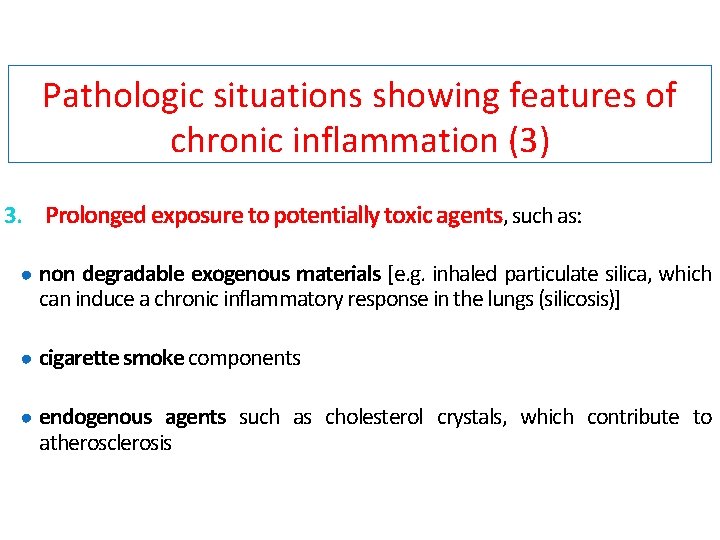
Pathologic situations showing features of chronic inflammation (3) 3. Prolonged exposure to potentially toxic agents, such as: ● non degradable exogenous materials [e. g. inhaled particulate silica, which can induce a chronic inflammatory response in the lungs (silicosis)] ● cigarette smoke components ● endogenous agents such as cholesterol crystals, which contribute to atherosclerosis
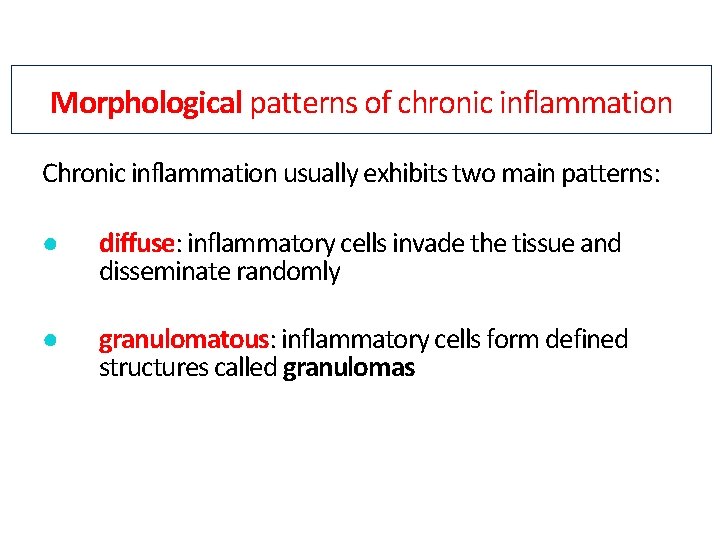
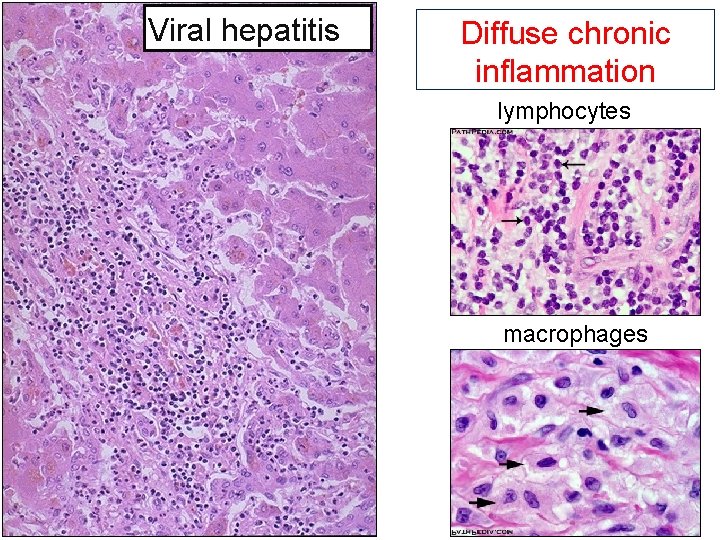
Morphological patterns of chronic inflammation Chronic inflammation usually exhibits two main patterns: ● diffuse: inflammatory cells invade the tissue and disseminate randomly ● granulomatous: inflammatory cells form defined structures called granulomas
Viral hepatitis Diffuse chronic inflammation lymphocytes macrophages
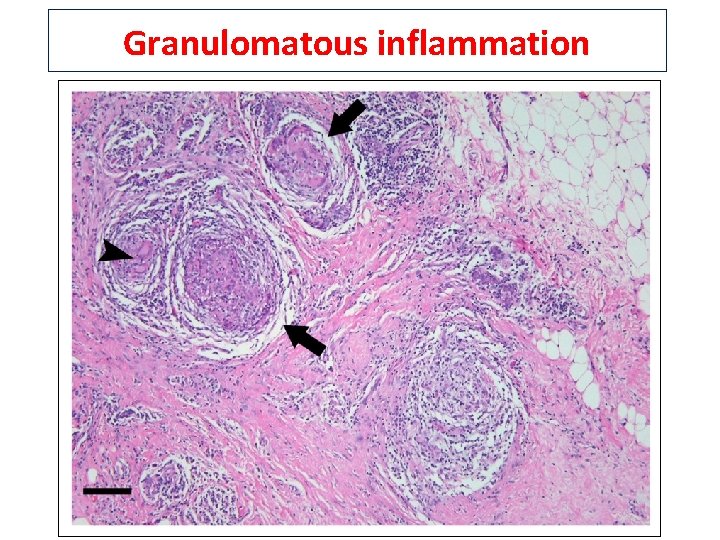
Granulomatous inflammation
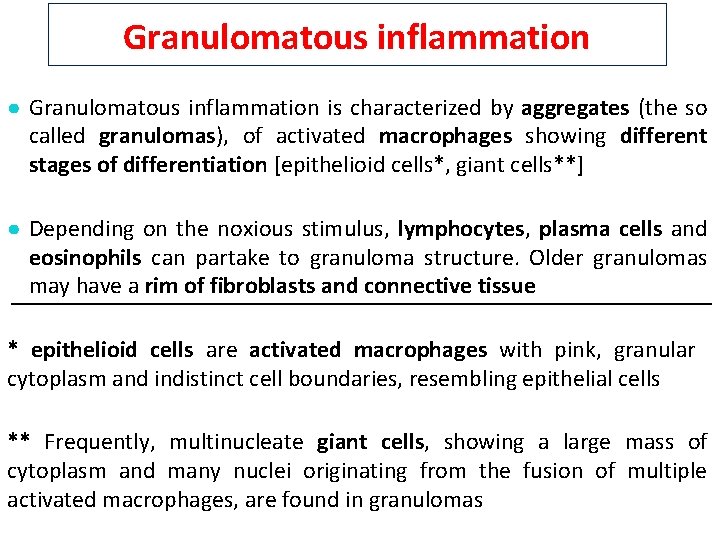
Granulomatous inflammation ● Granulomatous inflammation is characterized by aggregates (the so called granulomas), of activated macrophages showing different stages of differentiation [epithelioid cells*, giant cells**] ● Depending on the noxious stimulus, lymphocytes, plasma cells and eosinophils can partake to granuloma structure. Older granulomas may have a rim of fibroblasts and connective tissue * epithelioid cells are activated macrophages with pink, granular cytoplasm and indistinct cell boundaries, resembling epithelial cells ** Frequently, multinucleate giant cells, showing a large mass of cytoplasm and many nuclei originating from the fusion of multiple activated macrophages, are found in granulomas
Granulomatous inflammation ● The formation of a granuloma effectively “walls off” the offending agent and is therefore a useful defense mechanism ● Granuloma formation does not always lead to eradication of the causal agent, which is frequently resistant to killing or degradation ● Granulomatous inflammation, with subsequent fibrosis, may even be the major cause of organ dysfunction in some diseases, such as tuberculosis
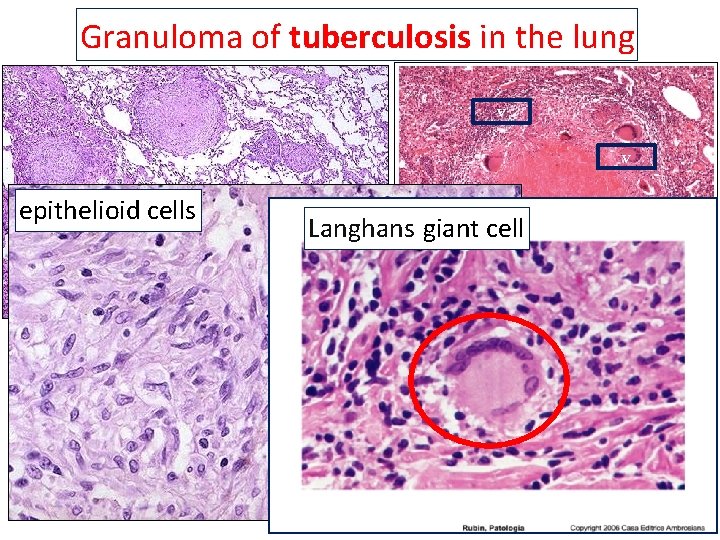
Types of granulomas ● (1) Immune granuloma: originates from persistent T-cell responses to certain microbes (such as Mycobacterium tuberculosis, Treponema pallidum, or fungi), in which T cell–derived cytokines (e. g. IFNγ) are responsible for chronic macrophage activation ● Tuberculosis is the prototype of a granulomatous disease caused by infection ● The aggregates of epithelioid macrophages are surrounded by a collar of lymphocytes; the necrotic material at the centre of the granuloma appears as structureless, with complete loss of cellular details (caseous necrosis)
Granuloma of tuberculosis in the lung v v epithelioid cells Langhans giant cell
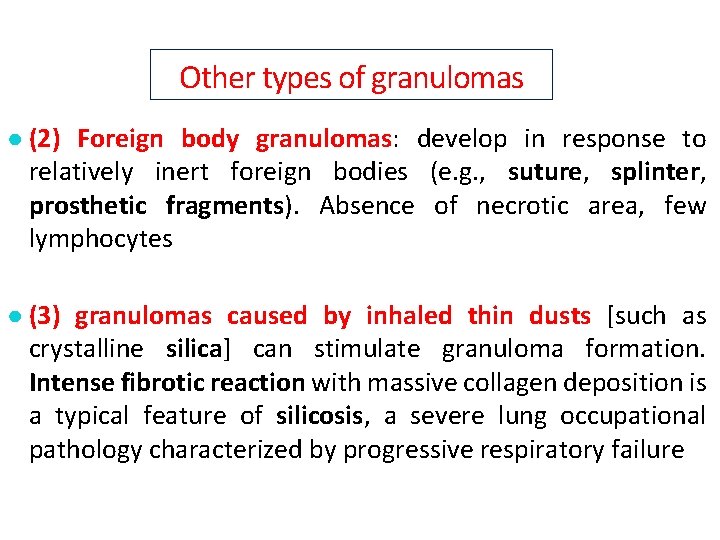
Other types of granulomas ● (2) Foreign body granulomas: develop in response to relatively inert foreign bodies (e. g. , suture, splinter, prosthetic fragments). Absence of necrotic area, few lymphocytes ● (3) granulomas caused by inhaled thin dusts [such as crystalline silica] can stimulate granuloma formation. Intense fibrotic reaction with massive collagen deposition is a typical feature of silicosis, a severe lung occupational pathology characterized by progressive respiratory failure
The “dark side” of inflammation: leukocyte-induced tissue injury ● Under several circumstances, the mechanisms that function to eliminate microbes and damaged tissues (the physiologic role of inflammation) are also capable of damaging normal tissues (the pathologic consequences of inflammation)
Leukocyte-induced tissue injury ● Leukocytes - mostly polymorphonuclear cells, monocytes and macrophages - are capable of secreting potentially harmful substances such as degradative enzymes and ROS ● Once the leukocytes are activated, their effector mechanisms do not distinguish between offender and host ● If unchecked, or inappropriately directed against host tissues, leukocytes themselves become the main offenders
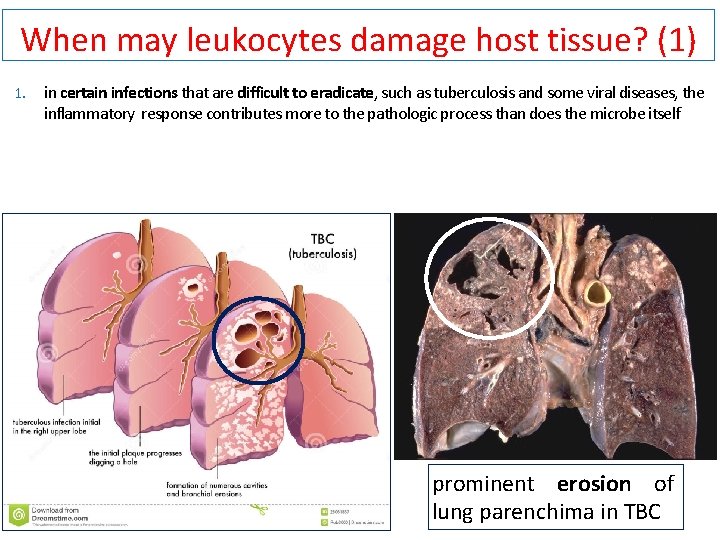
When may leukocytes damage host tissue? (1) 1. in certain infections that are difficult to eradicate, such as tuberculosis and some viral diseases, the inflammatory response contributes more to the pathologic process than does the microbe itself prominent erosion of lung parenchima in TBC
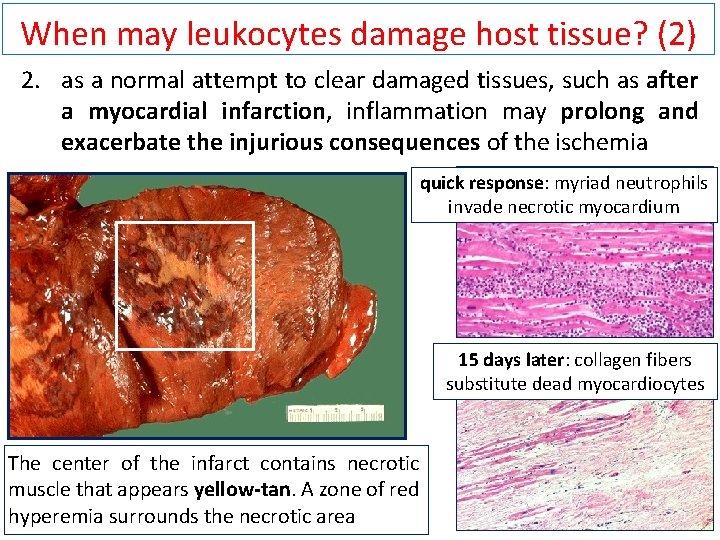
When may leukocytes damage host tissue? (2) 2. as a normal attempt to clear damaged tissues, such as after a myocardial infarction, inflammation may prolong and exacerbate the injurious consequences of the ischemia quick response: myriad neutrophils invade necrotic myocardium 15 days later: collagen fibers substitute dead myocardiocytes The center of the infarct contains necrotic muscle that appears yellow-tan. A zone of red hyperemia surrounds the necrotic area
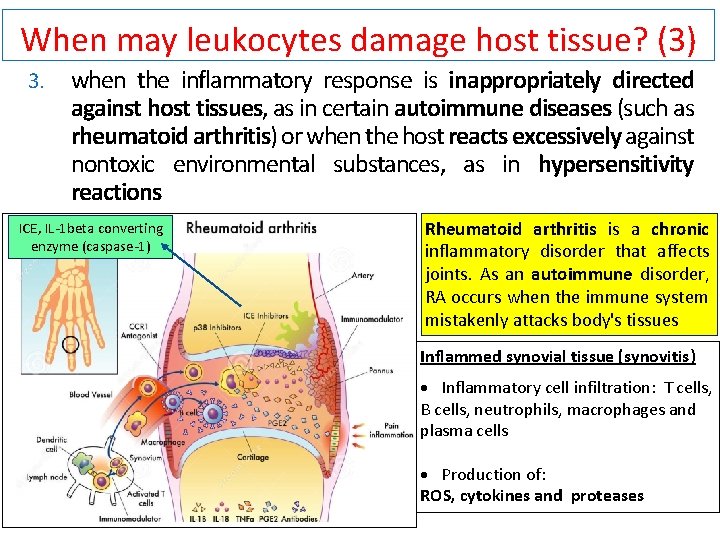
When may leukocytes damage host tissue? (3) 3. when the inflammatory response is inappropriately directed against host tissues, as in certain autoimmune diseases (such as rheumatoid arthritis) or when the host reacts excessively against nontoxic environmental substances, as in hypersensitivity reactions ICE, IL-1 beta converting enzyme (caspase-1) Rheumatoid arthritis is a chronic inflammatory disorder that affects joints. As an autoimmune disorder, RA occurs when the immune system mistakenly attacks body's tissues Inflammed synovial tissue (synovitis) · Inflammatory cell infiltration: T cells, B cells, neutrophils, macrophages and plasma cells · Production of: ROS, cytokines and proteases
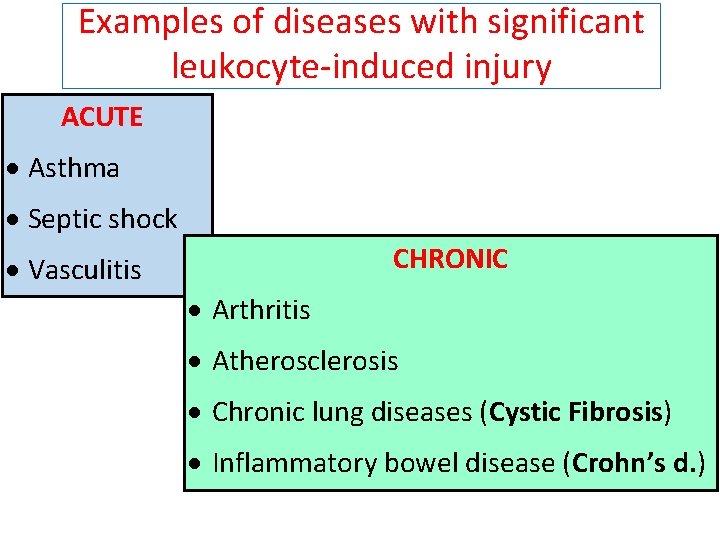
Examples of diseases with significant leukocyte-induced injury ACUTE · Asthma · Septic shock CHRONIC · Vasculitis · Arthritis · Atherosclerosis · Chronic lung diseases (Cystic Fibrosis) · Inflammatory bowel disease (Crohn’s d. )
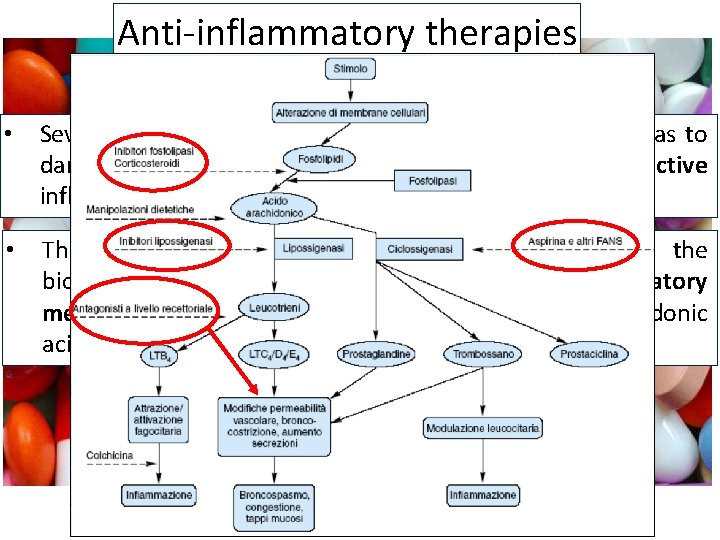
Anti-inflammatory therapies • Several dozens of anti-inflammatory drugs are available as to dampen the deleterious effects of prolonged and overactive inflammation • The vast majority of them act by interfering with the biochemical pathways that generate cell-derived inflammatory mediators, such as some powerful metabolites of arachidonic acid (e. g. steroidal and non steroidal drugs)
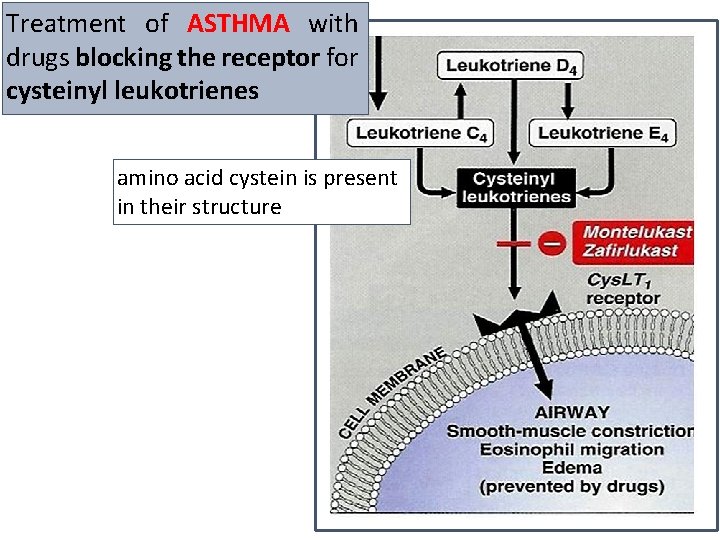
Treatment of ASTHMA with drugs blocking the receptor for cysteinyl leukotrienes amino acid cystein is present in their structure
Anti-inflammatory therapies • Several dozens of anti-inflammatory drugs are available as to dampen the deleterious effects of prolonged and overactive inflammation • The vast majority of them act by interfering with the biochemical pathways that generate cell-derived inflammatory mediators, such as some powerful metabolites of arachidonic acid (e. g. steroidal and non steroidal drugs) • By exploiting the continous improvements in pharmaceutical biotechnologies, new-generation of anti-inflammatory therapies are designed and many are already applied in clinical trials
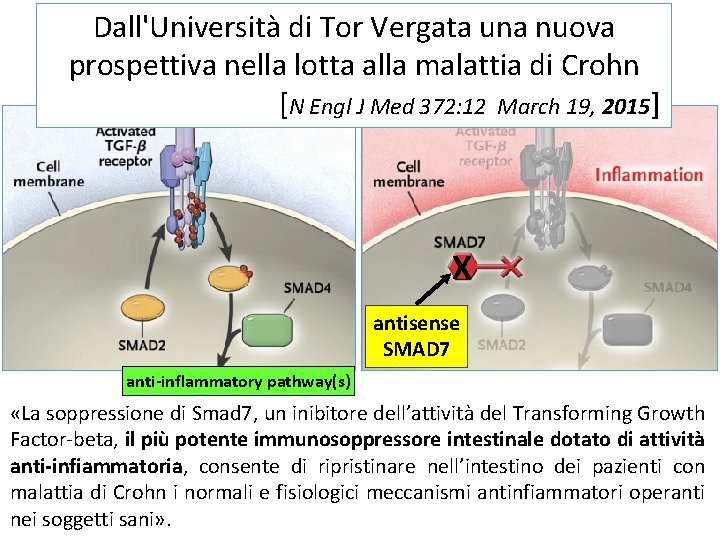
Anti-inflammatory therapies • Several novel drugs showed potent clinical effects in chronic inflammatory diseases. They include: • small molecules interfering with intracellular signaling pathways (e. g. , inhibitors of kinase-dependent synthesis of proinflammatory citokines, such as JNK, p 38) • therapeutic antibodies that are directed against extracellular targets, such as leukocyte adhesive molecules and proinflammatory cytokines and/or their receptors. • recently, an orally administered antisense nucleotide against SMAD 7, an endogenous inhibitor of the immunosuppressive, anti-inflammatory cytokine TGF-β 1, was successfully used in active chronic inflammations
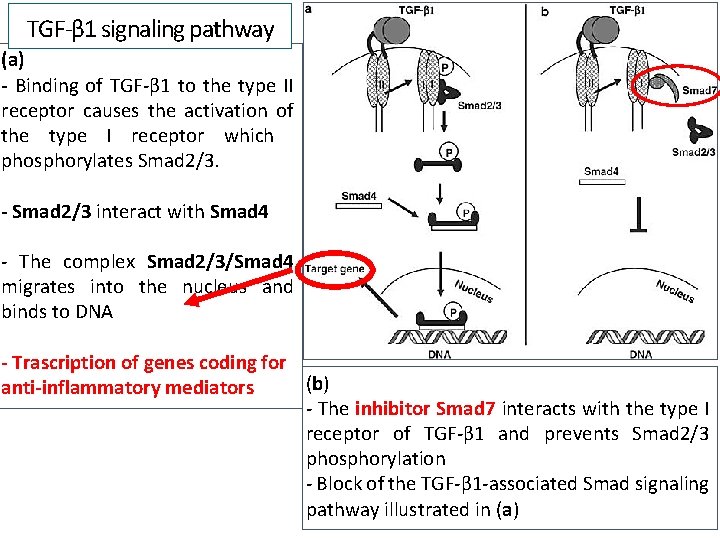
Transforming growth factor-β (TGF- β) ● Anti-inflammatory cytokine produced by and affecting many different cell types ● Homeostatic role in regulation of inflammation and wound healing following infection or injury ● Inhibits activity of many immune cell types
TGF-β 1 signaling pathway (a) - Binding of TGF-β 1 to the type II receptor causes the activation of the type I receptor which phosphorylates Smad 2/3. - Smad 2/3 interact with Smad 4 - The complex Smad 2/3/Smad 4 migrates into the nucleus and binds to DNA - Trascription of genes coding for (b) anti-inflammatory mediators - The inhibitor Smad 7 interacts with the type I receptor of TGF-β 1 and prevents Smad 2/3 phosphorylation - Block of the TGF-β 1 -associated Smad signaling pathway illustrated in (a)
Dall'Università di Tor Vergata una nuova prospettiva nella lotta alla malattia di Crohn [N Engl J Med 372: 12 March 19, 2015] X antisense SMAD 7 anti-inflammatory pathway(s) «La soppressione di Smad 7, un inibitore dell’attività del Transforming Growth Factor-beta, il più potente immunosoppressore intestinale dotato di attività anti-infiammatoria, consente di ripristinare nell’intestino dei pazienti con malattia di Crohn i normali e fisiologici meccanismi antinfiammatori operanti nei soggetti sani» .