
Chronic Idiopathic Urticaria A Primer on Identification and

- Slides: 33
Chronic Idiopathic Urticaria: A Primer on Identification and Treatment Moderator Allen P. Kaplan, MD Clinical Professor of Medicine Medical University of South Carolina Charleston, South Carolina
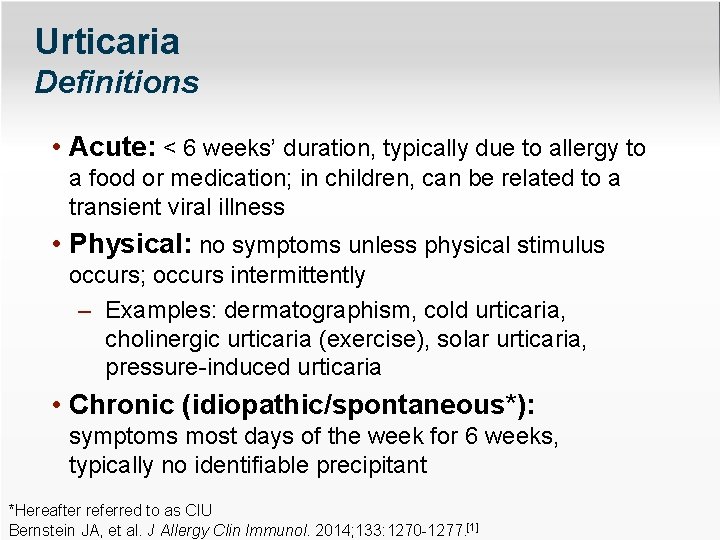
Urticaria Definitions • Acute: < 6 weeks’ duration, typically due to allergy to a food or medication; in children, can be related to a transient viral illness • Physical: no symptoms unless physical stimulus occurs; occurs intermittently – Examples: dermatographism, cold urticaria, cholinergic urticaria (exercise), solar urticaria, pressure-induced urticaria • Chronic (idiopathic/spontaneous*): symptoms most days of the week for 6 weeks, typically no identifiable precipitant *Hereafter referred to as CIU Bernstein JA, et al. J Allergy Clin Immunol. 2014; 133: 1270 -1277. [1]
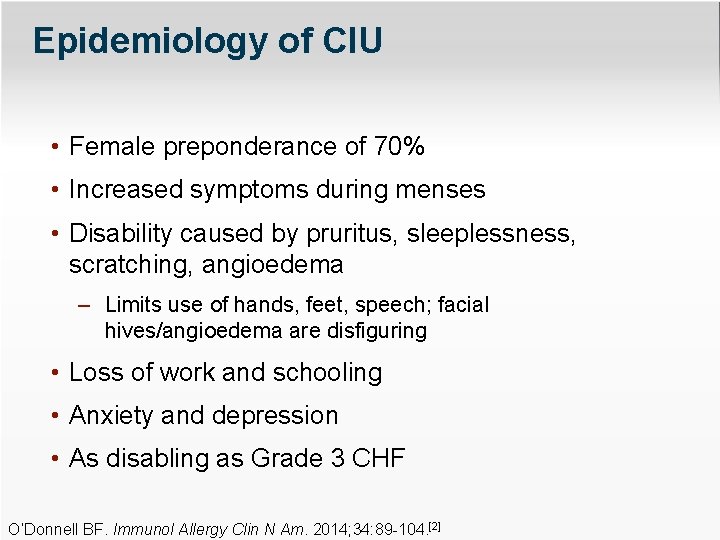
Epidemiology of CIU • Female preponderance of 70% • Increased symptoms during menses • Disability caused by pruritus, sleeplessness, scratching, angioedema – Limits use of hands, feet, speech; facial hives/angioedema are disfiguring • Loss of work and schooling • Anxiety and depression • As disabling as Grade 3 CHF O’Donnell BF. Immunol Allergy Clin N Am. 2014; 34: 89 -104. [2]
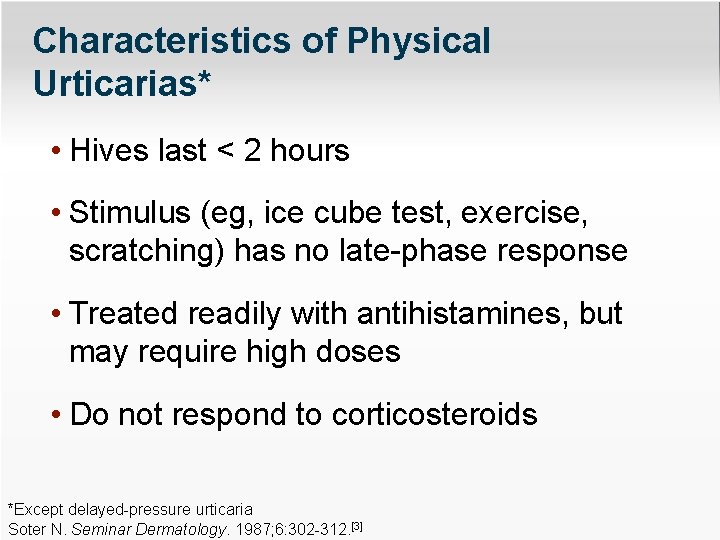
Characteristics of Physical Urticarias* • Hives last < 2 hours • Stimulus (eg, ice cube test, exercise, scratching) has no late-phase response • Treated readily with antihistamines, but may require high doses • Do not respond to corticosteroids *Except delayed-pressure urticaria Soter N. Seminar Dermatology. 1987; 6: 302 -312. [3]
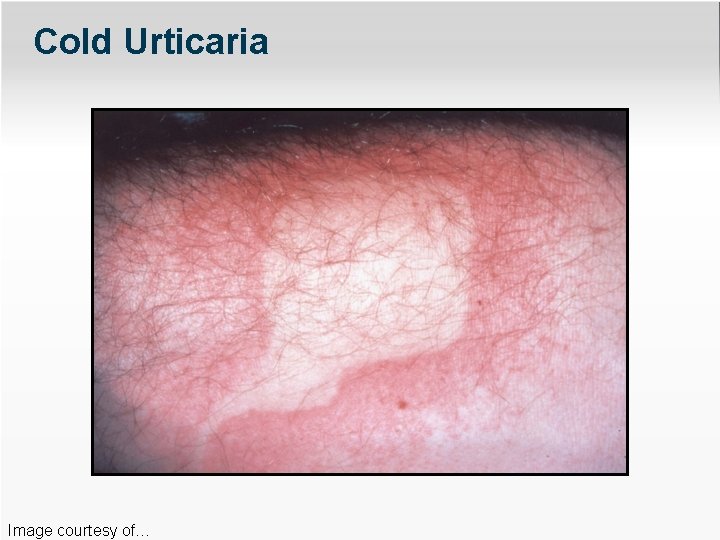
Cold Urticaria Image courtesy of…
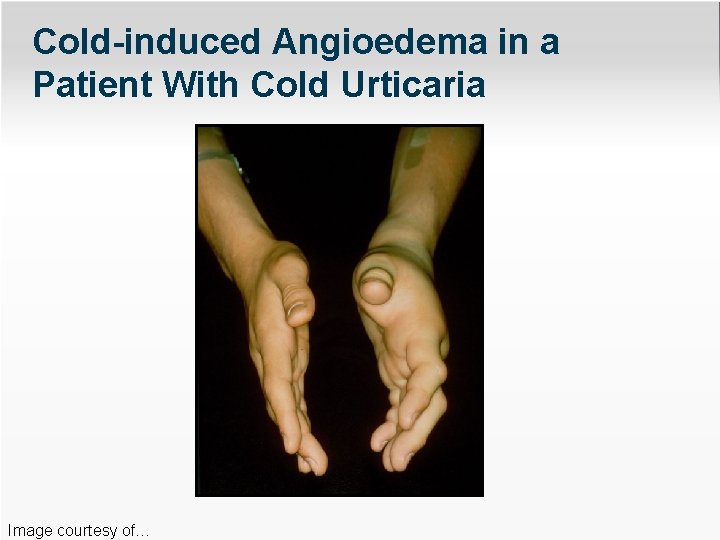
Cold-induced Angioedema in a Patient With Cold Urticaria Image courtesy of…
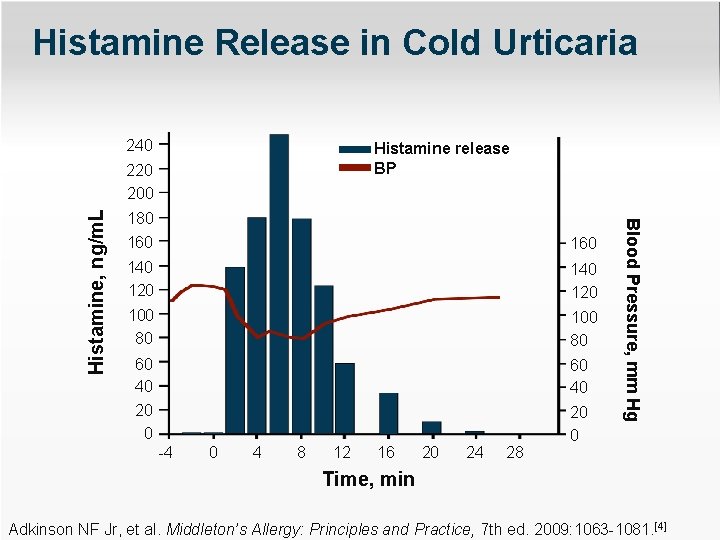
Histamine Release in Cold Urticaria 240 Histamine release BP 180 160 140 120 100 80 60 40 20 0 -4 0 4 8 12 16 20 24 28 Blood Pressure, mm Hg Histamine, ng/m. L 220 200 Time, min Adkinson NF Jr, et al. Middleton’s Allergy: Principles and Practice, 7 th ed. 2009: 1063 -1081. [4]
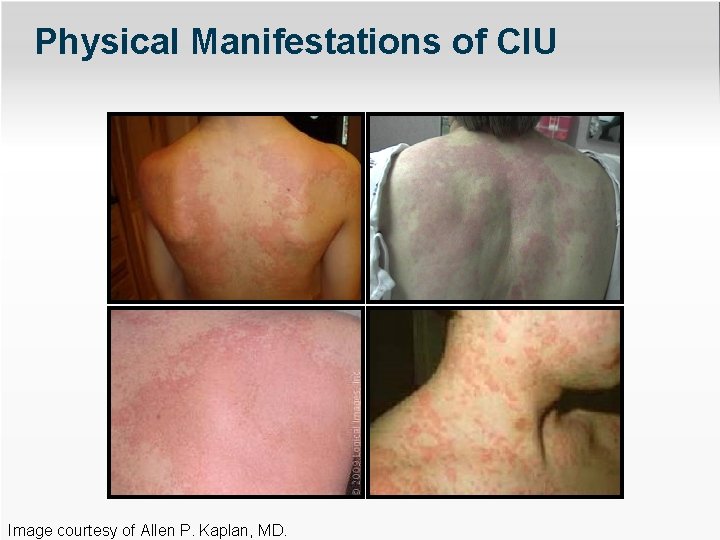
Physical Manifestations of CIU Image courtesy of Allen P. Kaplan, MD.
Recognized Associations With CIU • Angioedema: occurs in 40%-80% of patients in different series, mainly affecting the eyelids, lips, or tongue; although alarming, it is never fatala • Physical urticaria (usually symptomatic dermatographism, or delayed-pressure urticaria) occurs in about 50% of patientsb • Thyroid abnormalities (particularly antithyroid antibodies) occur in about 25% of patients and may be clinically evident hypothyroid – Hashimoto thyroiditis is frequently foundc a. Kaplan AP. J Allergy Clin Immunol. 2004; 114: 465 -474. [5] b. Greaves MW. N Eng J Med. 1995; 332: 1767 -1772. [6] c. Leznoff A, Sussman GL. J Allergy Clin Immunol. 1989; 84: 66 -71. [7]
Laboratory Evaluation of CIU • Initial testing includes CBC with differential, ESR, and CRP • Further testing only if suggested by history – Routine skin testing not necessary or recommended Zuberbier T, et al. Allergy. 2014; 69: 868 -887. [8]
Optional Laboratory Tests • Antithyroid antibodies and thyroid function tests • Antibody to high-affinity Ig. E receptor • Tests to rule out vasculitis (incidence < 1. 0%) only if symptoms are suggestive (eg, fever, purpura, arthralgia) – C 3, C 4, C 1 q binding assay for immune complexes and skin biopsy are reasonable Zuberbier T, et al. Allergy. 2014; 69: 868 -887. [8]
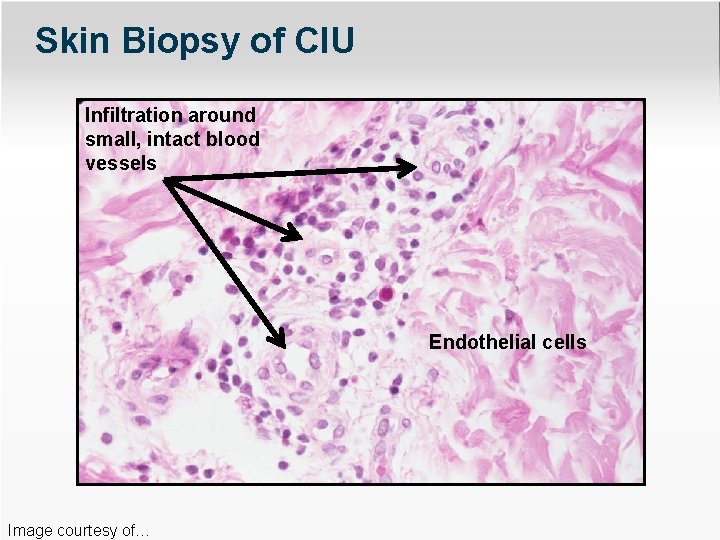
Skin Biopsy of CIU Infiltration around small, intact blood vessels Endothelial cells Image courtesy of…
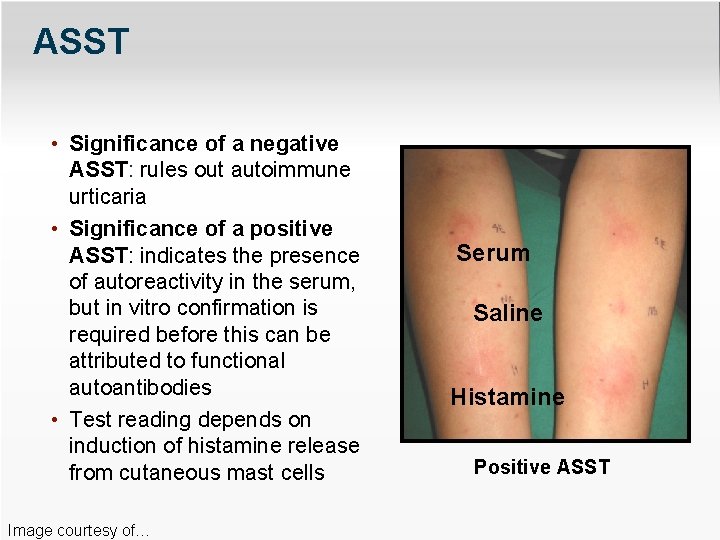
ASST • Significance of a negative ASST: rules out autoimmune urticaria • Significance of a positive ASST: indicates the presence of autoreactivity in the serum, but in vitro confirmation is required before this can be attributed to functional autoantibodies • Test reading depends on induction of histamine release from cutaneous mast cells Image courtesy of… Serum Saline Histamine Positive ASST
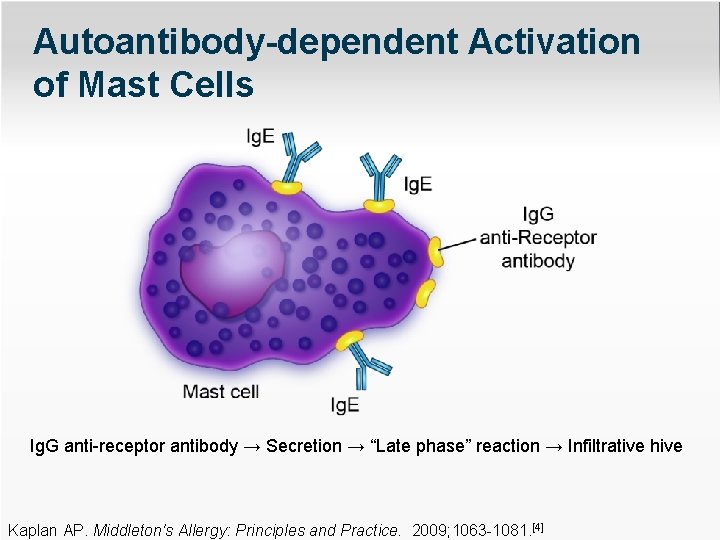
Autoantibody-dependent Activation of Mast Cells Ig. G anti-receptor antibody → Secretion → “Late phase” reaction → Infiltrative hive Kaplan AP. Middleton's Allergy: Principles and Practice. 2009; 1063 -1081. [4]
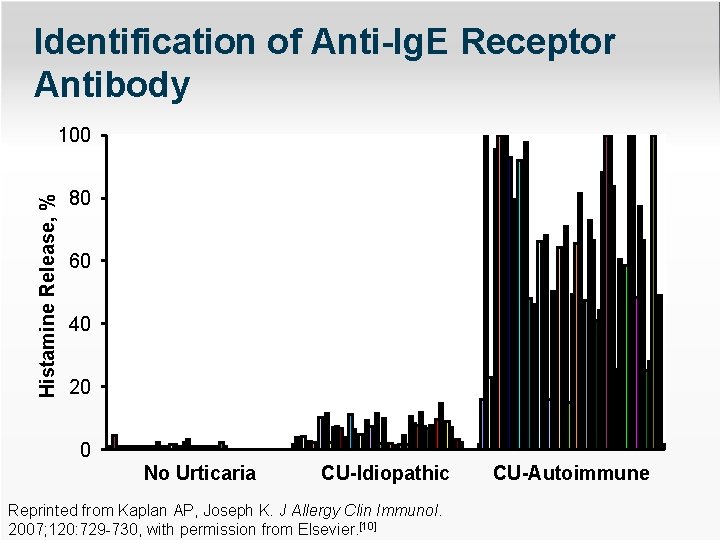
Identification of Anti-Ig. E Receptor Antibody Histamine Release, % 100 80 60 40 20 0 No Urticaria CU-Idiopathic Reprinted from Kaplan AP, Joseph K. J Allergy Clin Immunol. 2007; 120: 729 -730, with permission from Elsevier. [10] CU-Autoimmune
Autoimmunity and CIU • Cutaneous mast cells and basophils can be activated by Ig. G antibody to the α subunit of the Ig. E receptora • Basophil histamine release by purified Ig. G anti-Ig. E receptor is augmented by complementa • Augmentation of basophil histamine release is inhibited by removal of C 5 or blockade of the C 5 a receptor; thus, C 5 a augments the histamine releasea • Anti-receptor antibody (Ig. G) subclasses are predominantly Ig. G 1 and Ig. G 3, which are associated with complement fixation by the classical pathwayb a. Kikuchi Y, Kaplan AP. J Allergy Clin Immunol. 2002; 109: 114 -118. [11] b. Soundararjan S, et al. J Allergy Clin Immunol. 2005; 115: 815 -821. [12]
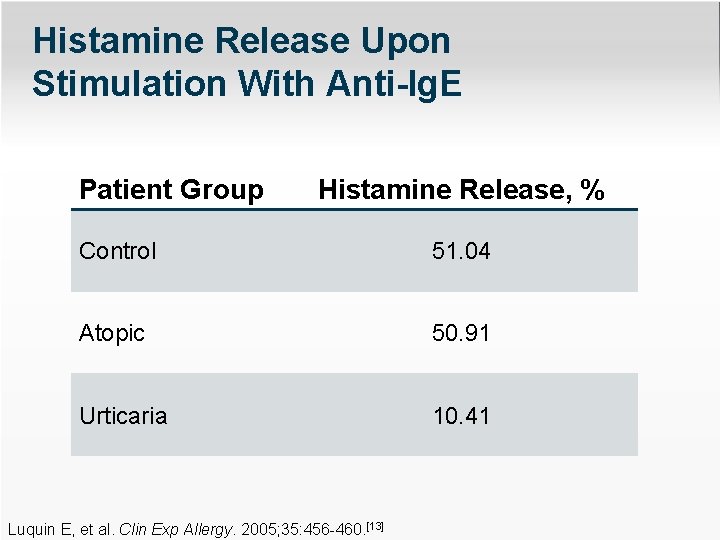
Histamine Release Upon Stimulation With Anti-Ig. E Patient Group Histamine Release, % Control 51. 04 Atopic 50. 91 Urticaria 10. 41 Luquin E, et al. Clin Exp Allergy. 2005; 35: 456 -460. [13]
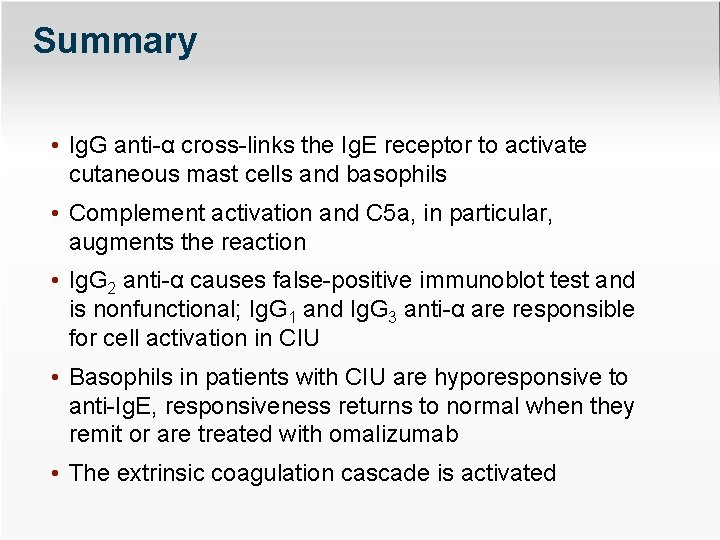
Summary • Ig. G anti-α cross-links the Ig. E receptor to activate cutaneous mast cells and basophils • Complement activation and C 5 a, in particular, augments the reaction • Ig. G 2 anti-α causes false-positive immunoblot test and is nonfunctional; Ig. G 1 and Ig. G 3 anti-α are responsible for cell activation in CIU • Basophils in patients with CIU are hyporesponsive to anti-Ig. E, responsiveness returns to normal when they remit or are treated with omalizumab • The extrinsic coagulation cascade is activated
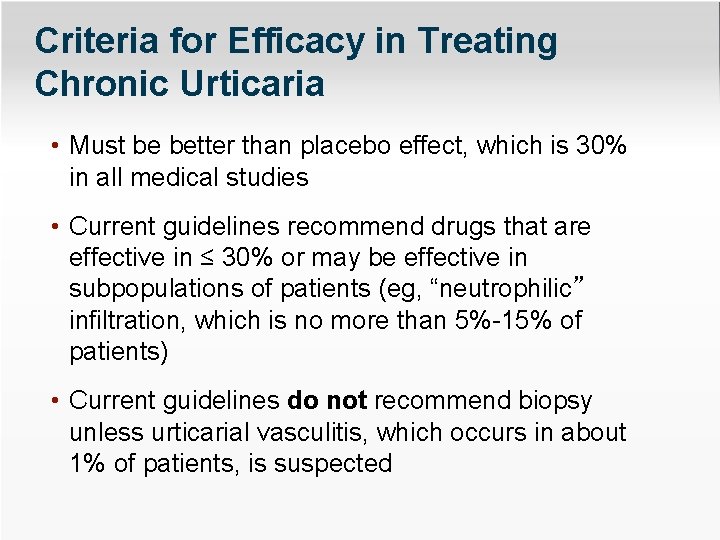
Criteria for Efficacy in Treating Chronic Urticaria • Must be better than placebo effect, which is 30% in all medical studies • Current guidelines recommend drugs that are effective in ≤ 30% or may be effective in subpopulations of patients (eg, “neutrophilic” infiltration, which is no more than 5%-15% of patients) • Current guidelines do not recommend biopsy unless urticarial vasculitis, which occurs in about 1% of patients, is suspected
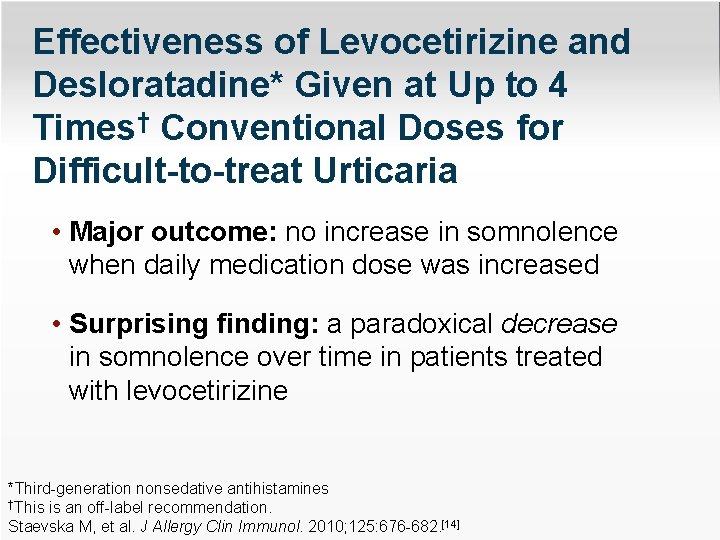
Effectiveness of Levocetirizine and Desloratadine* Given at Up to 4 Times† Conventional Doses for Difficult-to-treat Urticaria • Major outcome: no increase in somnolence when daily medication dose was increased • Surprising finding: a paradoxical decrease in somnolence over time in patients treated with levocetirizine *Third-generation nonsedative antihistamines †This is an off-label recommendation. Staevska M, et al. J Allergy Clin Immunol. 2010; 125: 676 -682. [14]
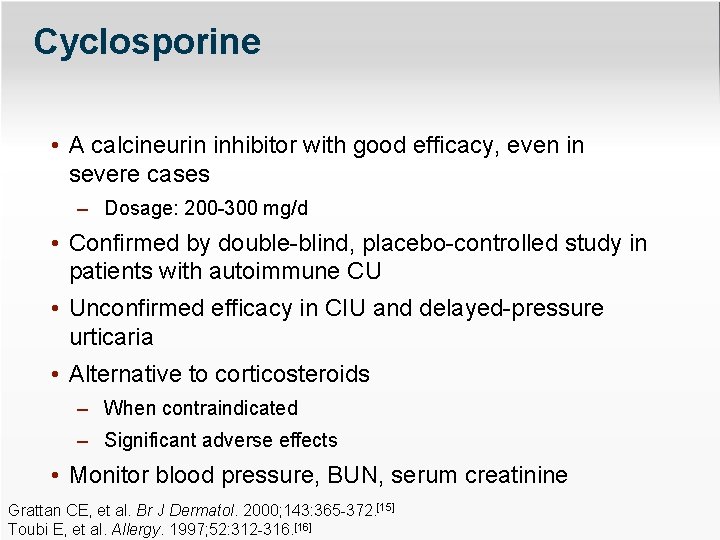
Cyclosporine • A calcineurin inhibitor with good efficacy, even in severe cases – Dosage: 200 -300 mg/d • Confirmed by double-blind, placebo-controlled study in patients with autoimmune CU • Unconfirmed efficacy in CIU and delayed-pressure urticaria • Alternative to corticosteroids – When contraindicated – Significant adverse effects • Monitor blood pressure, BUN, serum creatinine Grattan CE, et al. Br J Dermatol. 2000; 143: 365 -372. [15] Toubi E, et al. Allergy. 1997; 52: 312 -316. [16]
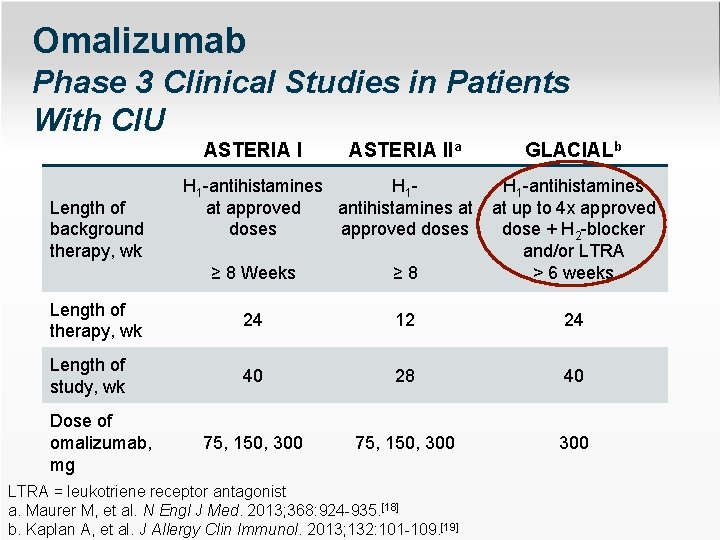
Omalizumab Phase 3 Clinical Studies in Patients With CIU ASTERIA IIa ≥ 8 Weeks ≥ 8 H 1 -antihistamines at up to 4 x approved dose + H 2 -blocker and/or LTRA > 6 weeks Length of therapy, wk 24 12 24 Length of study, wk 40 28 40 75, 150, 300 300 Length of background therapy, wk Dose of omalizumab, mg H 1 -antihistamines H 1 at approved antihistamines at doses approved doses GLACIALb LTRA = leukotriene receptor antagonist a. Maurer M, et al. N Engl J Med. 2013; 368: 924 -935. [18] b. Kaplan A, et al. J Allergy Clin Immunol. 2013; 132: 101 -109. [19]
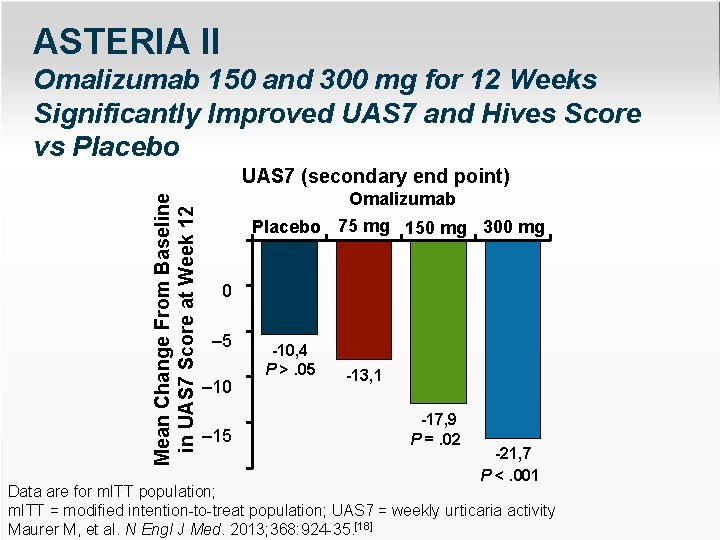
ASTERIA II Omalizumab 150 and 300 mg for 12 Weeks Significantly Improved UAS 7 and Hives Score vs Placebo Mean Change From Baseline in UAS 7 Score at Week 12 UAS 7 (secondary end point) Omalizumab Placebo 75 mg 150 mg 300 mg 0 – 5 – 10 – 15 -10, 4 P >. 05 -13, 1 -17, 9 P =. 02 -21, 7 P <. 001 Data are for m. ITT – 25 population; m. ITT = modified intention-to-treat population; UAS 7 = weekly urticaria activity Maurer M, et al. N Engl J Med. 2013; 368: 924 -35. [18]
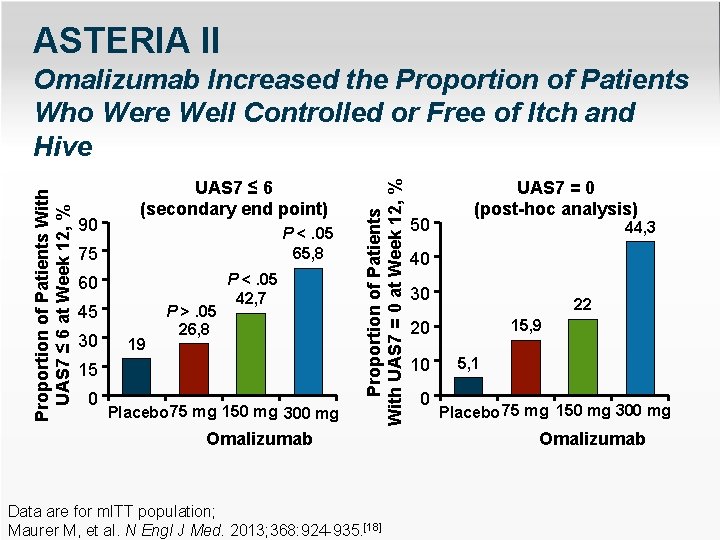
ASTERIA II 90 UAS 7 ≤ 6 (secondary end point) P <. 05 65, 8 75 60 45 30 19 P >. 05 26, 8 P <. 05 42, 7 15 0 Placebo 75 mg 150 mg 300 mg Proportion of Patients With UAS 7 = 0 at Week 12, % Proportion of Patients With UAS 7 ≤ 6 at Week 12, % Omalizumab Increased the Proportion of Patients Who Were Well Controlled or Free of Itch and Hive Omalizumab Data are for m. ITT population; Maurer M, et al. N Engl J Med. 2013; 368: 924 -935. [18] 50 UAS 7 = 0 (post-hoc analysis) 44, 3 40 30 22 15, 9 20 10 0 5, 1 Placebo 75 mg 150 mg 300 mg Omalizumab
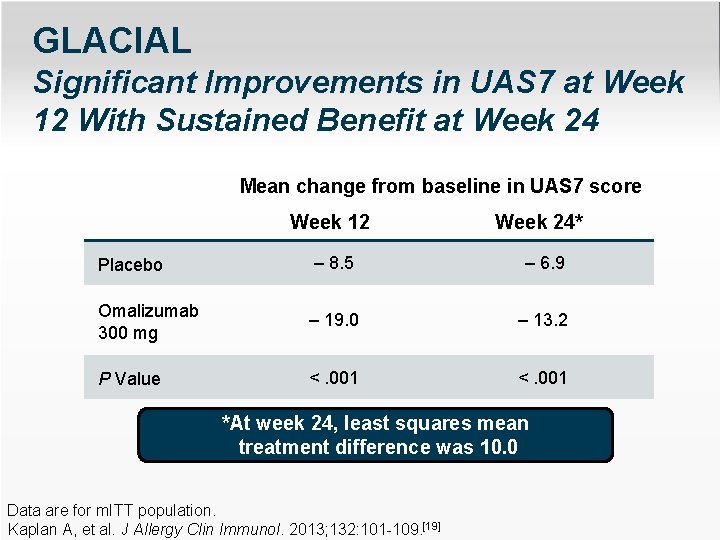
GLACIAL Significant Improvements in UAS 7 at Week 12 With Sustained Benefit at Week 24 Mean change from baseline in UAS 7 score Week 12 Week 24* Placebo – 8. 5 – 6. 9 Omalizumab 300 mg – 19. 0 – 13. 2 P Value <. 001 *At week 24, least squares mean treatment difference was 10. 0 Data are for m. ITT population. Kaplan A, et al. J Allergy Clin Immunol. 2013; 132: 101 -109. [19]
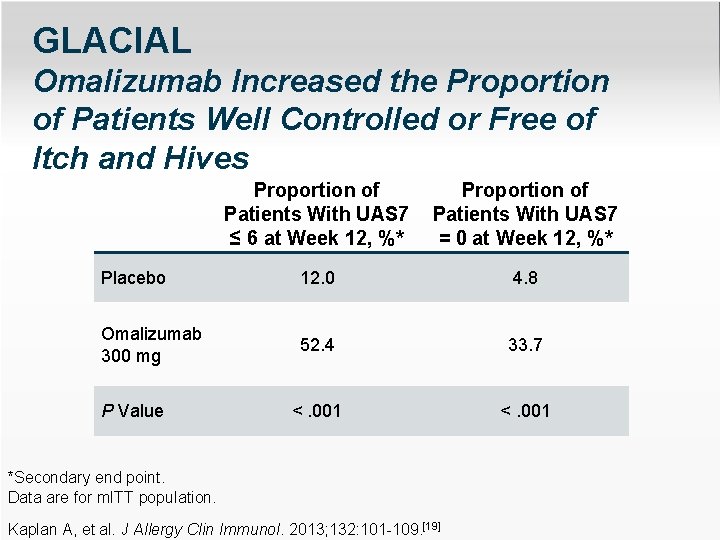
GLACIAL Omalizumab Increased the Proportion of Patients Well Controlled or Free of Itch and Hives Proportion of Patients With UAS 7 ≤ 6 at Week 12, %* Proportion of Patients With UAS 7 = 0 at Week 12, %* Placebo 12. 0 4. 8 Omalizumab 300 mg 52. 4 33. 7 <. 001 P Value *Secondary end point. Data are for m. ITT population. Kaplan A, et al. J Allergy Clin Immunol. 2013; 132: 101 -109. [19]
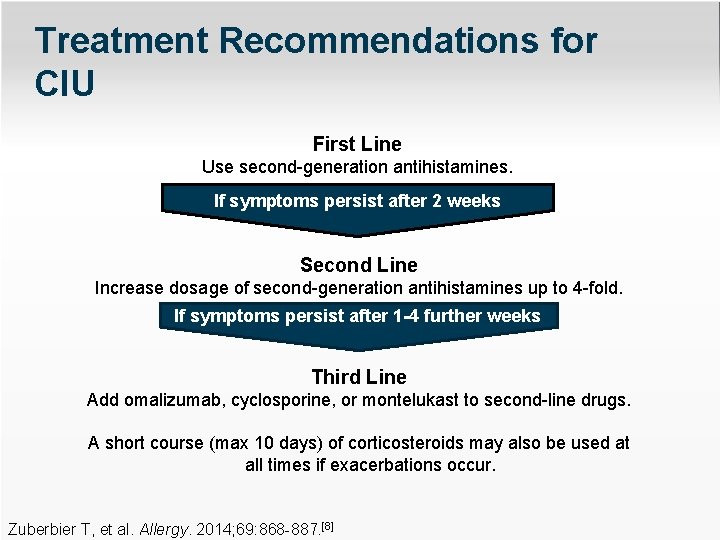
Treatment Recommendations for CIU First Line Use second-generation antihistamines. If symptoms persist after 2 weeks Second Line Increase dosage of second-generation antihistamines up to 4 -fold. If symptoms persist after 1 -4 further weeks Third Line Add omalizumab, cyclosporine, or montelukast to second-line drugs. A short course (max 10 days) of corticosteroids may also be used at all times if exacerbations occur. Zuberbier T, et al. Allergy. 2014; 69: 868 -887. [8]
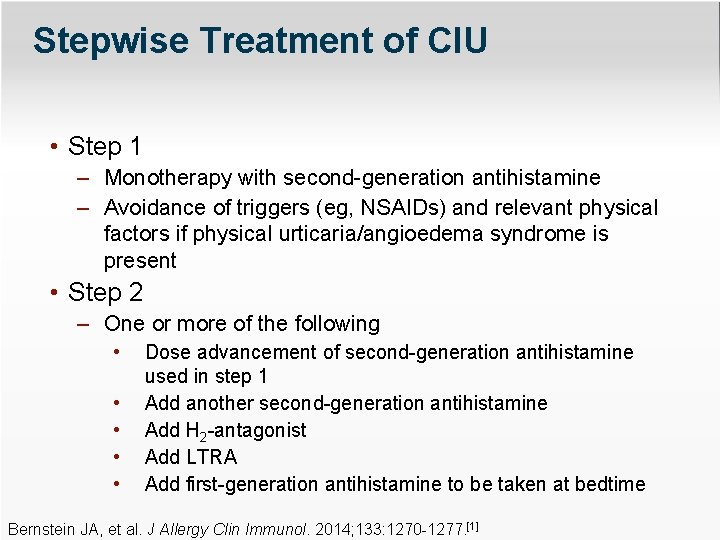
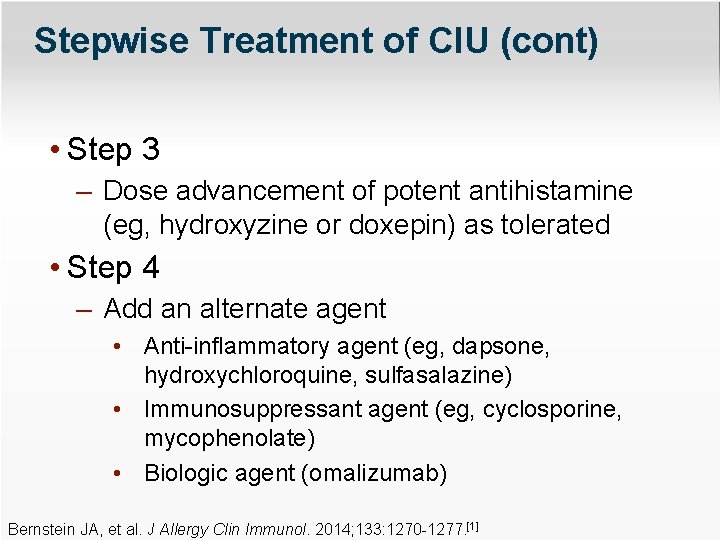
Stepwise Treatment of CIU • Step 1 – Monotherapy with second-generation antihistamine – Avoidance of triggers (eg, NSAIDs) and relevant physical factors if physical urticaria/angioedema syndrome is present • Step 2 – One or more of the following • • • Dose advancement of second-generation antihistamine used in step 1 Add another second-generation antihistamine Add H 2 -antagonist Add LTRA Add first-generation antihistamine to be taken at bedtime Bernstein JA, et al. J Allergy Clin Immunol. 2014; 133: 1270 -1277. [1]
Stepwise Treatment of CIU (cont) • Step 3 – Dose advancement of potent antihistamine (eg, hydroxyzine or doxepin) as tolerated • Step 4 – Add an alternate agent • Anti-inflammatory agent (eg, dapsone, hydroxychloroquine, sulfasalazine) • Immunosuppressant agent (eg, cyclosporine, mycophenolate) • Biologic agent (omalizumab) Bernstein JA, et al. J Allergy Clin Immunol. 2014; 133: 1270 -1277. [1]
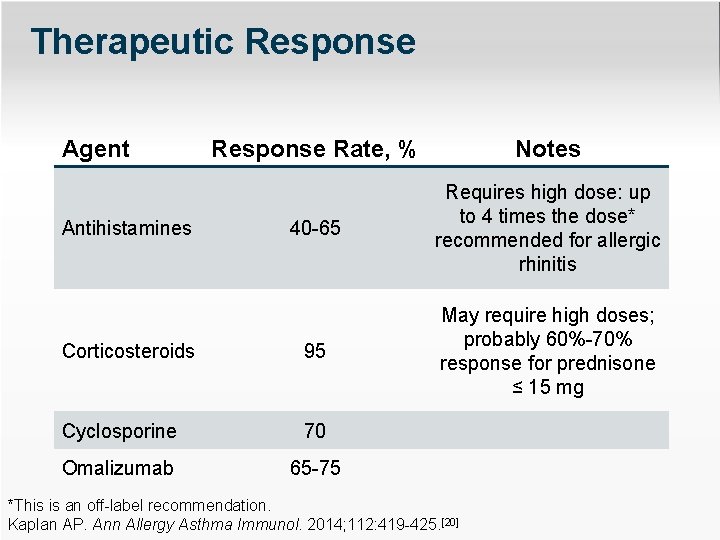
Therapeutic Response Agent Response Rate, % Notes 40 -65 Requires high dose: up to 4 times the dose* recommended for allergic rhinitis Corticosteroids 95 May require high doses; probably 60%-70% response for prednisone ≤ 15 mg Cyclosporine 70 Omalizumab 65 -75 Antihistamines *This is an off-label recommendation. Kaplan AP. Ann Allergy Asthma Immunol. 2014; 112: 419 -425. [20]
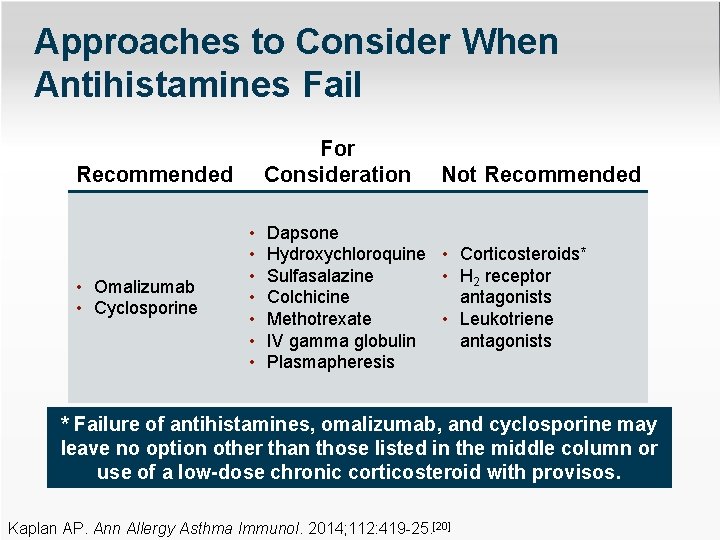
Approaches to Consider When Antihistamines Fail For Consideration Recommended • Omalizumab • Cyclosporine • • Not Recommended Dapsone Hydroxychloroquine • Corticosteroids* Sulfasalazine • H 2 receptor antagonists Colchicine • Leukotriene Methotrexate antagonists IV gamma globulin Plasmapheresis * Failure of antihistamines, omalizumab, and cyclosporine may leave no option other than those listed in the middle column or use of a low-dose chronic corticosteroid with provisos. Kaplan AP. Ann Allergy Asthma Immunol. 2014; 112: 419 -25. [20]
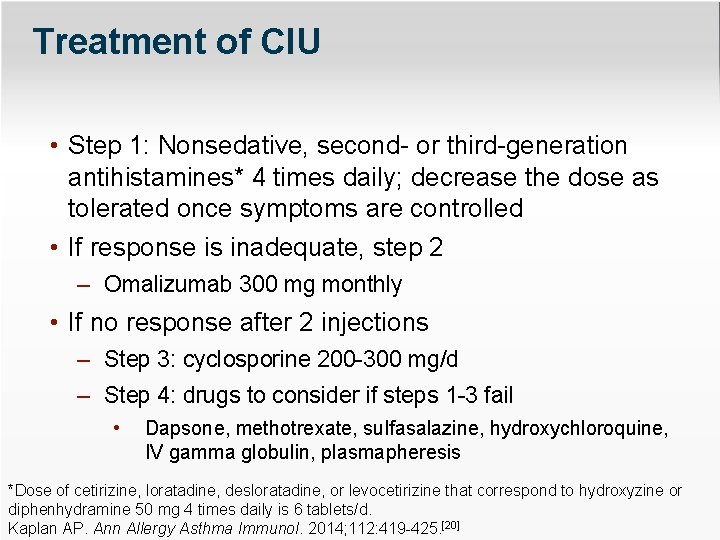
Treatment of CIU • Step 1: Nonsedative, second- or third-generation antihistamines* 4 times daily; decrease the dose as tolerated once symptoms are controlled • If response is inadequate, step 2 – Omalizumab 300 mg monthly • If no response after 2 injections – Step 3: cyclosporine 200 -300 mg/d – Step 4: drugs to consider if steps 1 -3 fail • Dapsone, methotrexate, sulfasalazine, hydroxychloroquine, IV gamma globulin, plasmapheresis *Dose of cetirizine, loratadine, desloratadine, or levocetirizine that correspond to hydroxyzine or diphenhydramine 50 mg 4 times daily is 6 tablets/d. Kaplan AP. Ann Allergy Asthma Immunol. 2014; 112: 419 -425. [20]
Thank you for participating in this activity. You may now revisit those questions presented at the beginning of the activity to see what you’ve learned by clicking on the Earn CME/CE Credit link. The CME posttest will follow. Please also take a moment to complete the program evaluation at the end.