
Chronic Hepatitis B Diagnosis When to refer Dr

Chronic Hepatitis B Diagnosis When to refer Dr Yeung Yat Wah 楊日華醫生
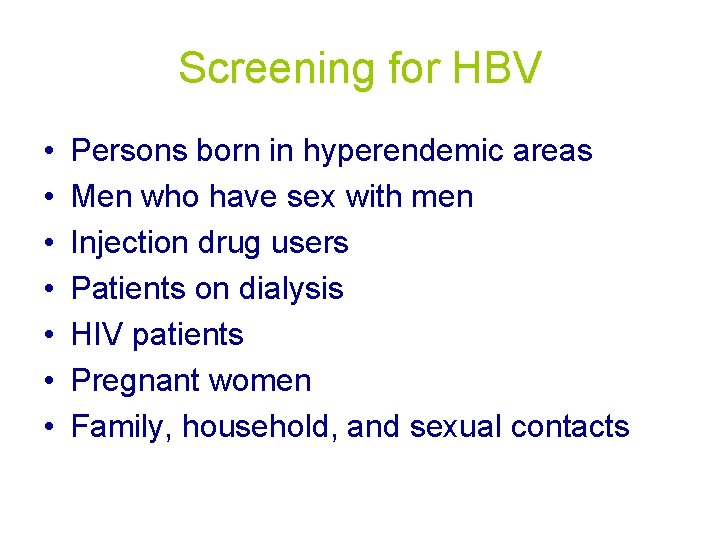
Screening for HBV • • Persons born in hyperendemic areas Men who have sex with men Injection drug users Patients on dialysis HIV patients Pregnant women Family, household, and sexual contacts
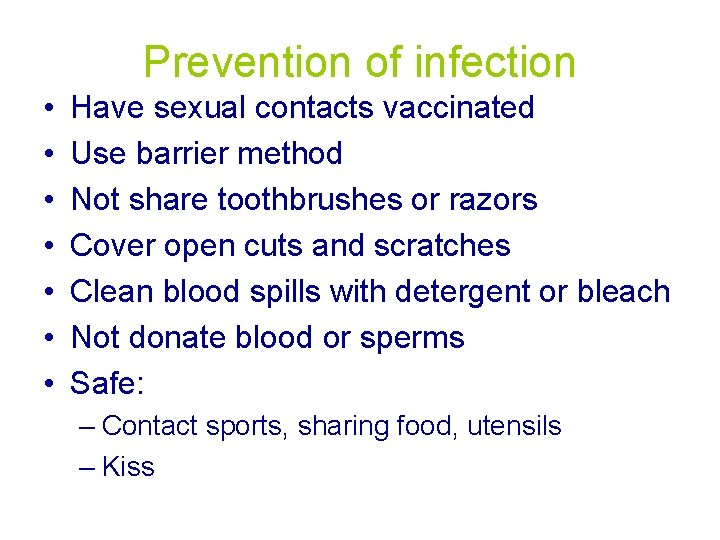
Prevention of infection • • Have sexual contacts vaccinated Use barrier method Not share toothbrushes or razors Cover open cuts and scratches Clean blood spills with detergent or bleach Not donate blood or sperms Safe: – Contact sports, sharing food, utensils – Kiss
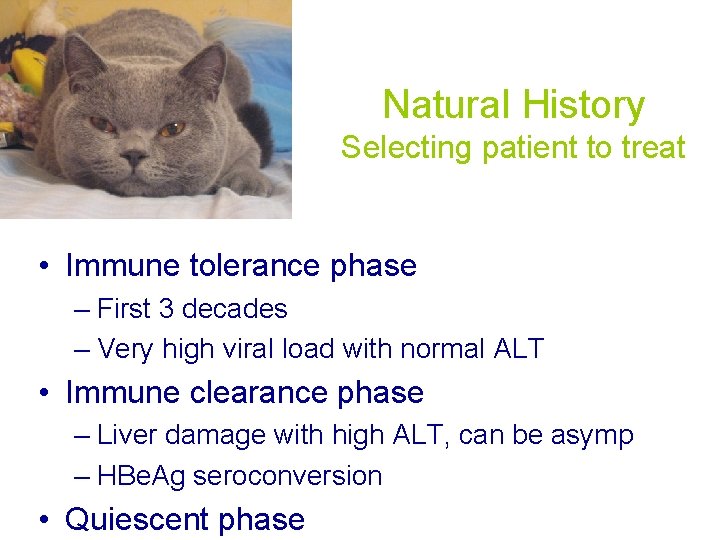
Natural History Selecting patient to treat • Immune tolerance phase – First 3 decades – Very high viral load with normal ALT • Immune clearance phase – Liver damage with high ALT, can be asymp – HBe. Ag seroconversion • Quiescent phase
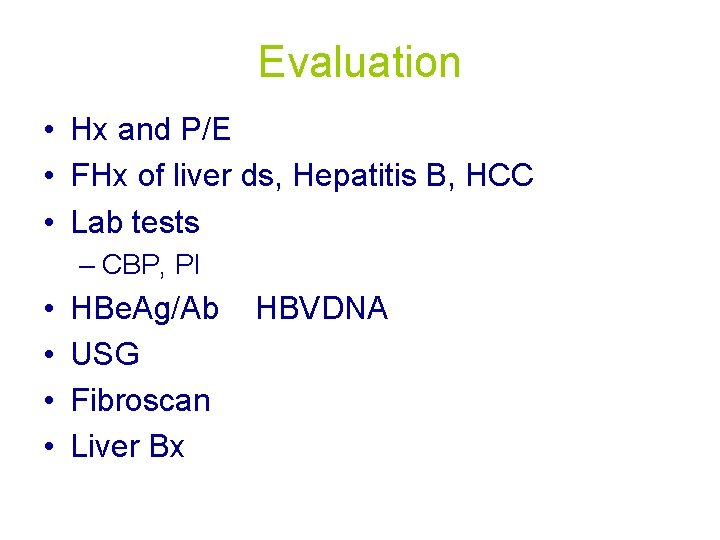
Evaluation • Hx and P/E • FHx of liver ds, Hepatitis B, HCC • Lab tests – CBP, PI • • HBe. Ag/Ab USG Fibroscan Liver Bx HBVDNA

Fibroscan – How it works Fibroscan is non-invasive, good reproductivity, and easy operations Patients need to lay down and put his right arm during the examination
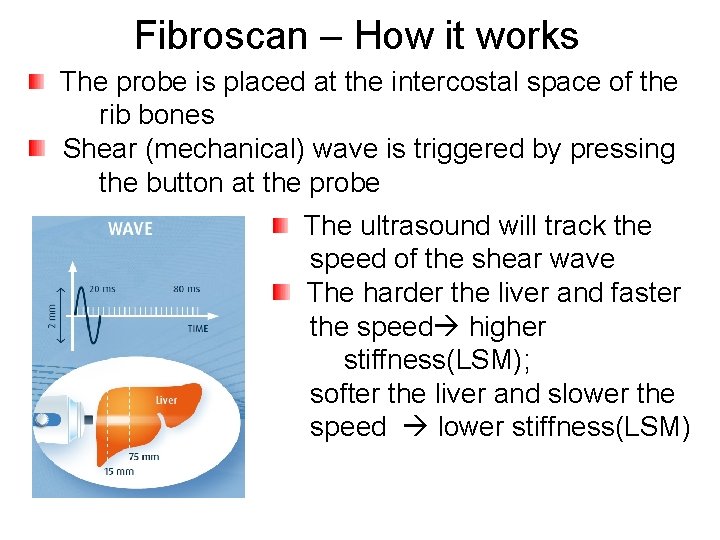
Fibroscan – How it works The probe is placed at the intercostal space of the rib bones Shear (mechanical) wave is triggered by pressing the button at the probe The ultrasound will track the speed of the shear wave The harder the liver and faster the speed higher stiffness(LSM); softer the liver and slower the speed lower stiffness(LSM)
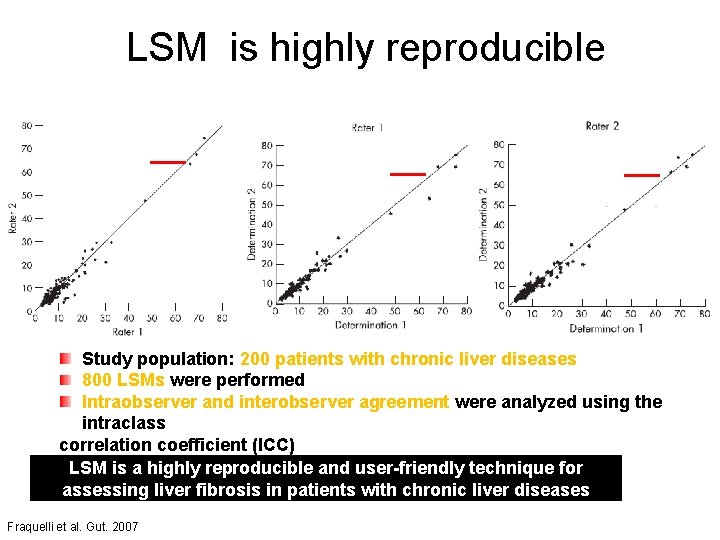
LSM is highly reproducible Overall interobserver agreement ICC: 0. 98 Intraobserver agreement ICC: 0. 98 Study population: 200 patients with chronic liver diseases 800 LSMs were performed Intraobserver and interobserver agreement were analyzed using the intraclass correlation coefficient (ICC) LSM is a highly reproducible and user-friendly technique for assessing liver fibrosis in patients with chronic liver diseases Fraquelli et al. Gut. 2007
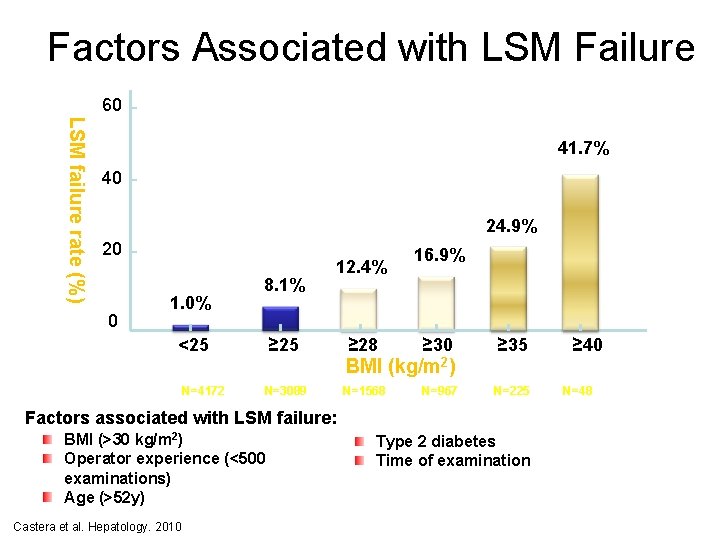
Factors Associated with LSM Failure 60 LSM failure rate (%) 41. 7% 40 24. 9% 20 0 1. 0% 8. 1% <25 N=4172 12. 4% ≥ 25 N=3089 16. 9% ≥ 28 ≥ 30 ≥ 35 N=1568 N=967 N=225 BMI (kg/m 2) Factors associated with LSM failure: BMI (>30 kg/m 2) Operator experience (<500 examinations) Age (>52 y) Castera et al. Hepatology. 2010 Type 2 diabetes Time of examination ≥ 40 N=48
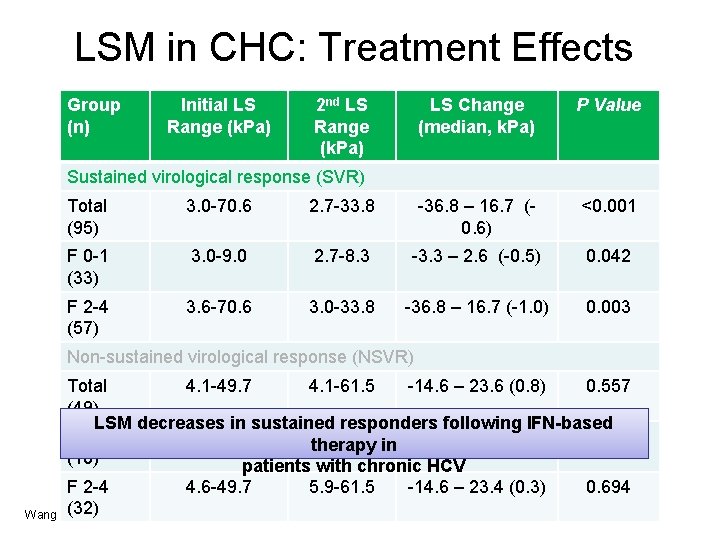
LSM in CHC: Treatment Effects Group (n) Initial LS Range (k. Pa) 2 nd LS Range (k. Pa) LS Change (median, k. Pa) P Value Sustained virological response (SVR) Total (95) 3. 0 -70. 6 2. 7 -33. 8 -36. 8 – 16. 7 (0. 6) <0. 001 F 0 -1 (33) 3. 0 -9. 0 2. 7 -8. 3 -3. 3 – 2. 6 (-0. 5) 0. 042 F 2 -4 (57) 3. 6 -70. 6 3. 0 -33. 8 -36. 8 – 16. 7 (-1. 0) 0. 003 Non-sustained virological response (NSVR) Wang Total 4. 1 -49. 7 4. 1 -61. 5 -14. 6 – 23. 6 (0. 8) 0. 557 (49) LSM decreases in sustained responders following IFN-based F 0 -1 5. 3 -17. 1 4. 1 -16. 0 0. 959 therapy in -4. 3 – 6. 4 (0. 9) (10) patients with chronic HCV F 2 -4 4. 6 -49. 7 5. 9 -61. 5 -14. 6 – 23. 4 (0. 3) 0. 694 et(32) al. J Gastroenterol Hepatol. 2010
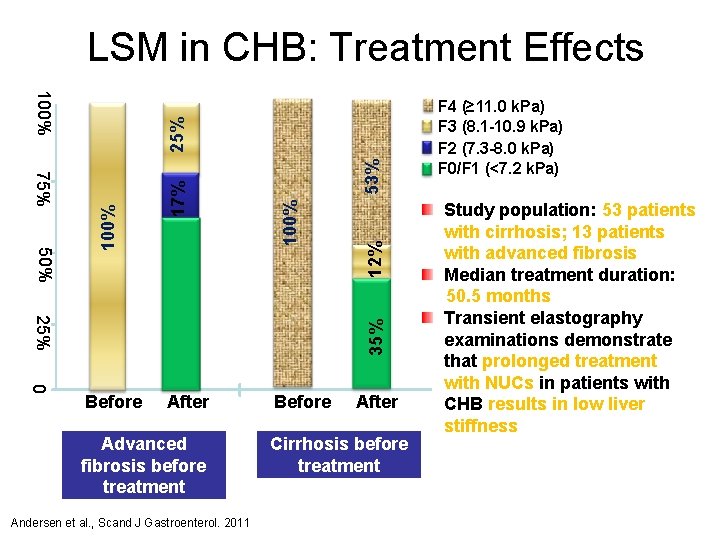
LSM in CHB: Treatment Effects 25% 0 Advanced fibrosis before treatment Andersen et al. , Scand J Gastroenterol. 2011 53% 12% 100% 17% After 35% 50% 58% 75% 100% 25% 100% Before After Cirrhosis before treatment F 4 (≥ 11. 0 k. Pa) F 3 (8. 1 -10. 9 k. Pa) F 2 (7. 3 -8. 0 k. Pa) F 0/F 1 (<7. 2 k. Pa) Study population: 53 patients with cirrhosis; 13 patients with advanced fibrosis Median treatment duration: 50. 5 months Transient elastography examinations demonstrate that prolonged treatment with NUCs in patients with CHB results in low liver stiffness
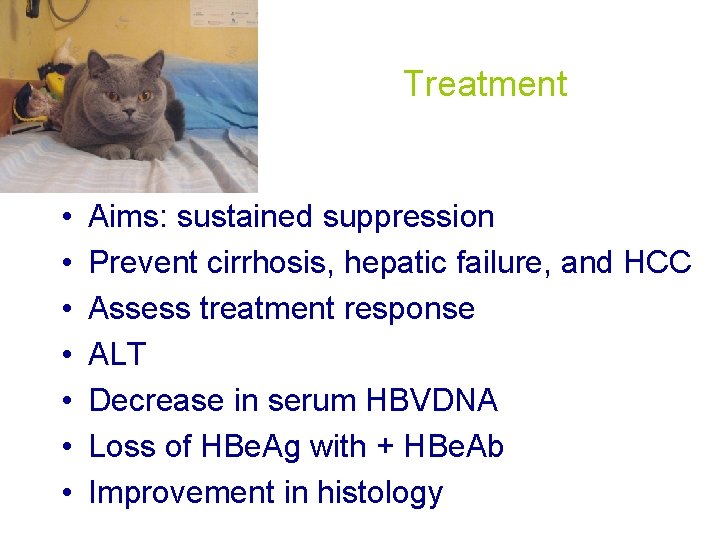
Treatment • • Aims: sustained suppression Prevent cirrhosis, hepatic failure, and HCC Assess treatment response ALT Decrease in serum HBVDNA Loss of HBe. Ag with + HBe. Ab Improvement in histology
Candidates for Referral • Cirrhosis • Chronic Hepatitis B – ALT above 2 x and HBVDNA 5 log copies – Any ALT elevations with HBVDNA 5 log • Above 40 • Liver bx showing active disease or sig fibrosis
Monitoring for those who do not need treatment • HBe. Ag+ with normal ALT – LFT every 3 -6 months – More frequent if ALT elevated – For persistent slightly high ALT, consider liver biopsy esp above 40 years of age – In young patients (below 30) liver biopsy is usually not necessary if ALT is persistently normal – HBe. Ag status every 6 -12 months
Monitoring for those who do not need treatment • HBe. Ag negative – Monitor LFT every 3 months during the first year to verify that they are truly inactive – Then every 6 -12 months
Case sharing (1) • • • HKU student, 20 years old Normal LFT Normal USG No need to check HBVDNA HBe. Ag status
Case sharing (2) • • • Young man, 22 years old Normal LFT Normal USG HBVDNA 9 logs HBe. Ag + Started on oral drugs and referred to HA
Case sharing (3) • Male 65 years old • Known HB years ago during regular blood check • No regular follow up and monitoring • Recently seen by his family physician and LFT showed ALT 200+, so referred to Medical
Case sharing (3) • As his ALT was high an early appointment was given (2 weeks) • New case assessment: P/E normal • Taking his age and deranged LFT into account, an early USG was arranged in a week which showed a 3 cm mass • Confirmed HCC with surgery done and received treatment for his HB
Case sharing (4) • 44 gentleman seen by GP for years • Known Hepatitis B for years • In recent 3 -4 years noted a slightly high ALT around 40+ to 50+ • USG showed fatty liver • Continue to monitor
Case sharing (4) • Came to seek a second opinion • USG showed moderate coarsening suggesting cirrhosis. Spleen was also enlarged to 11. 5 cm. Platelet count was low at 100+ • HBVDNA was 3 logs • Treated with oral drugs
Case sharing (5) • • • Male 55 years old Known HB during pre-marital check up No regular follow up Taking herbs for eczema for a year Noted ankle and scrotal oedema, seen by GP, noted deranged LFT with ALT 300+, RFT also abn with creatinine 130+, USG showed a few nodules below 1 cm • Adm PWH due to dizziness
Case sharing (5) • While waiting for hepatologist assessment came to see me • USG showed a vague large mass 6 cm but PV was patent, Alb normal • ? HCC but some element due to herbs? • CT scan confirmed several masses and extensive IVC infiltration and LN involvement
HCC screening • LFT AFP and USG every 6 months • • Male HB patients over 40 Female HB over 50 Any Cirrhosis FHx of HCC in HB patients
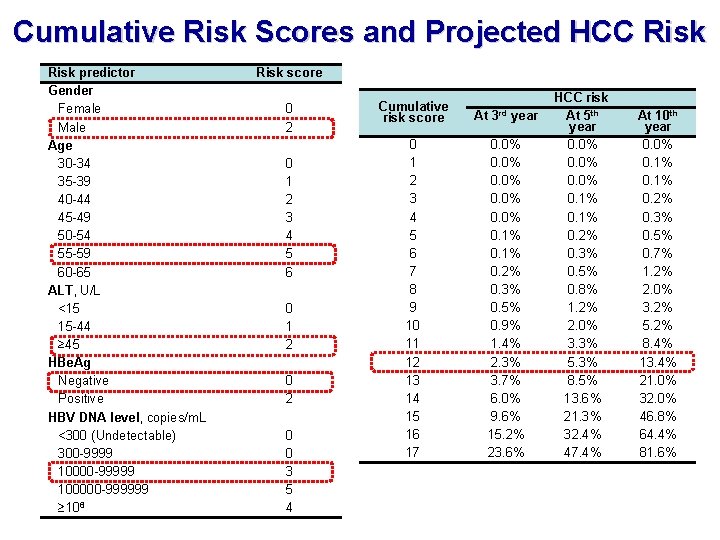
Cumulative Risk Scores and Projected HCC Risk predictor Gender Female Male Age 30 -34 35 -39 40 -44 45 -49 50 -54 55 -59 60 -65 ALT, U/L <15 15 -44 ≥ 45 HBe. Ag Negative Positive HBV DNA level, copies/m. L <300 (Undetectable) 300 -9999 10000 -99999 100000 -999999 106 Risk score 0 2 0 1 2 3 4 5 6 0 1 2 0 0 3 5 4 Cumulative risk score At 3 rd year 0 1 2 3 4 5 6 7 8 9 10 11 12 13 14 15 16 17 0. 0% 0. 1% 0. 2% 0. 3% 0. 5% 0. 9% 1. 4% 2. 3% 3. 7% 6. 0% 9. 6% 15. 2% 23. 6% HCC risk At 5 th year 0. 0% 0. 1% 0. 2% 0. 3% 0. 5% 0. 8% 1. 2% 2. 0% 3. 3% 5. 3% 8. 5% 13. 6% 21. 3% 32. 4% 47. 4% At 10 th year 0. 0% 0. 1% 0. 2% 0. 3% 0. 5% 0. 7% 1. 2% 2. 0% 3. 2% 5. 2% 8. 4% 13. 4% 21. 0% 32. 0% 46. 8% 64. 4% 81. 6%
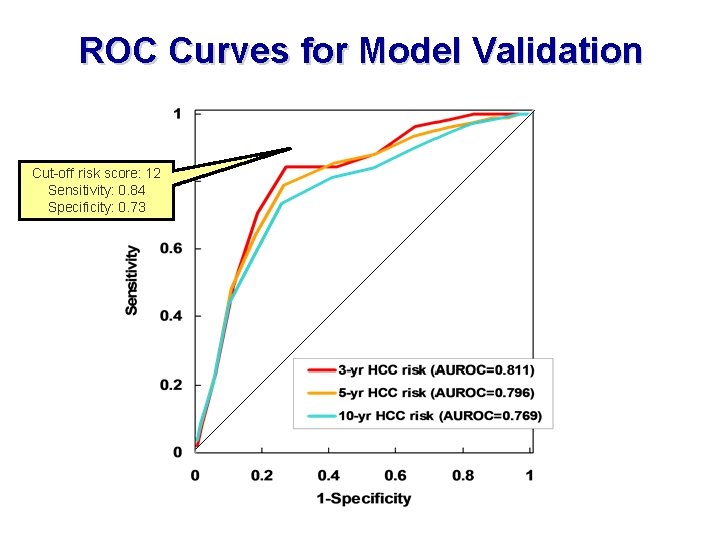
ROC Curves for Model Validation Cut-off risk score: 12 Sensitivity: 0. 84 Specificity: 0. 73

Thank You
- Slides: 27