
Chromosomes What Can Our Chromosomes Tell Us What
- Slides: 24
Chromosomes What Can Our Chromosomes Tell Us?
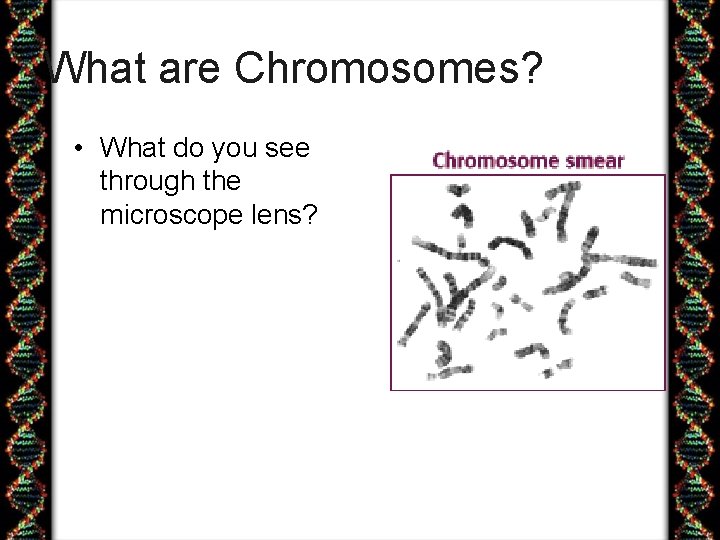
What are Chromosomes? • What do you see through the microscope lens?
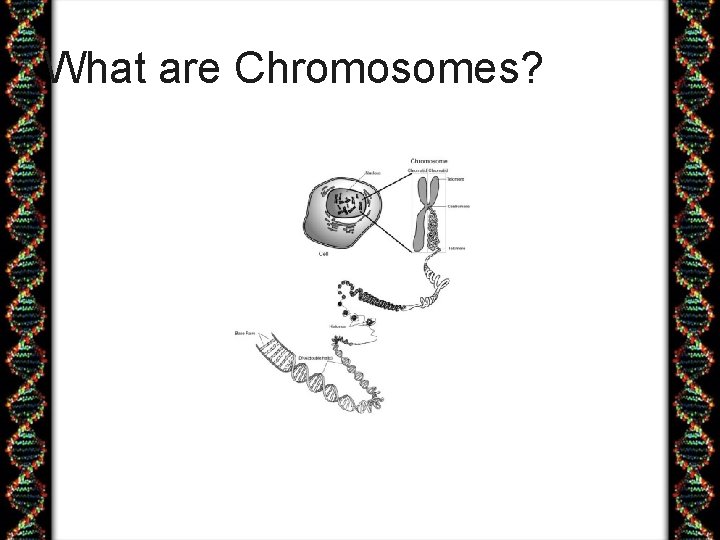
What are Chromosomes?
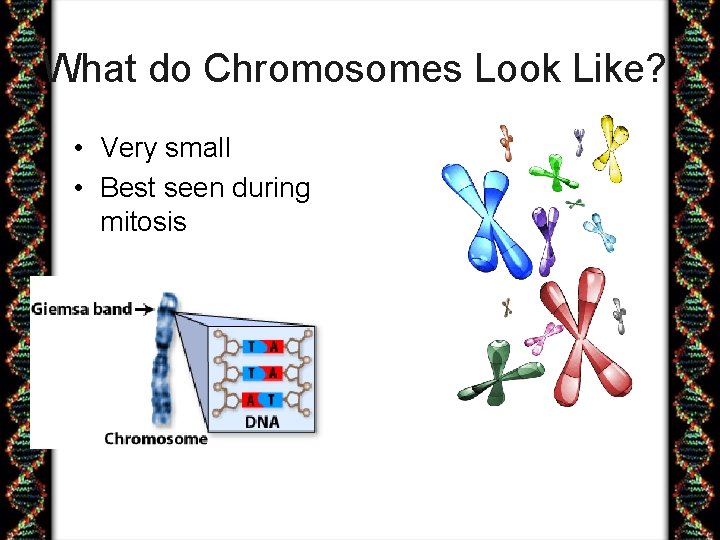
What are Chromosomes? • • • Compact spools of DNA. “DNA Packages” We have 46 “packages” in each cell 23 from Father 23 from Mother
What do Chromosomes Look Like? • Very small • Best seen during mitosis
Why do Scientists Look at Chromosomes? • Diagnose or predict genetic disorders • Prenatal testing • Diagnosis can help patients receive medical treatment
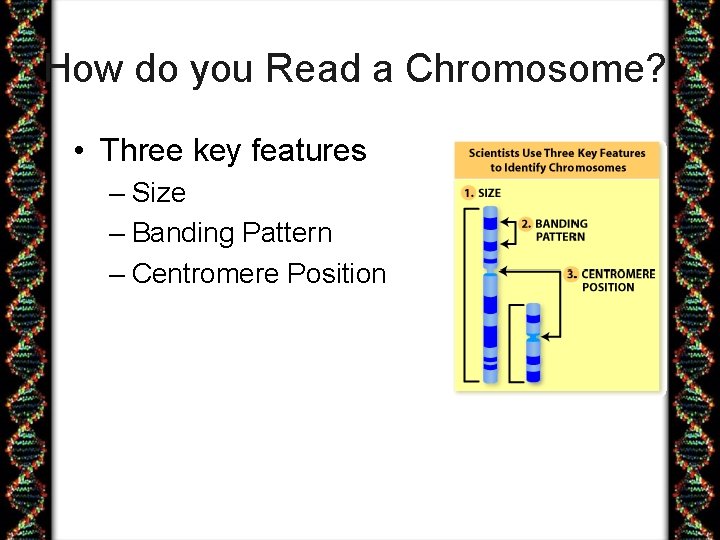
How do you Read a Chromosome? • Three key features – Size – Banding Pattern – Centromere Position
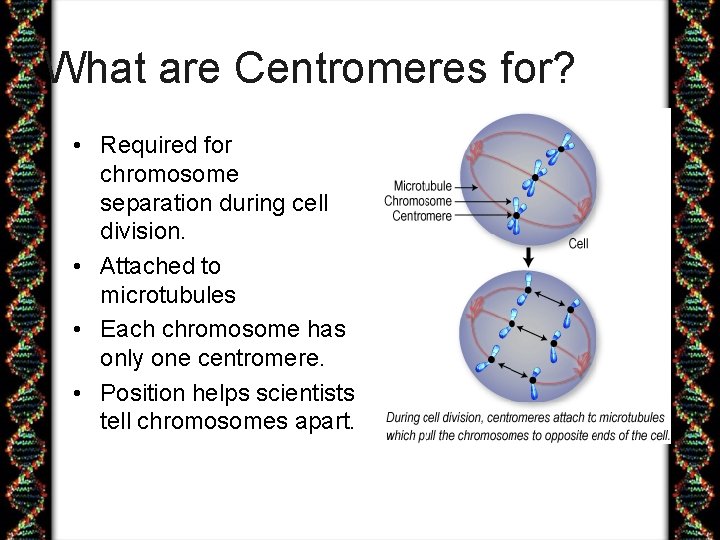
What are Centromeres for? • Required for chromosome separation during cell division. • Attached to microtubules • Each chromosome has only one centromere. • Position helps scientists tell chromosomes apart.
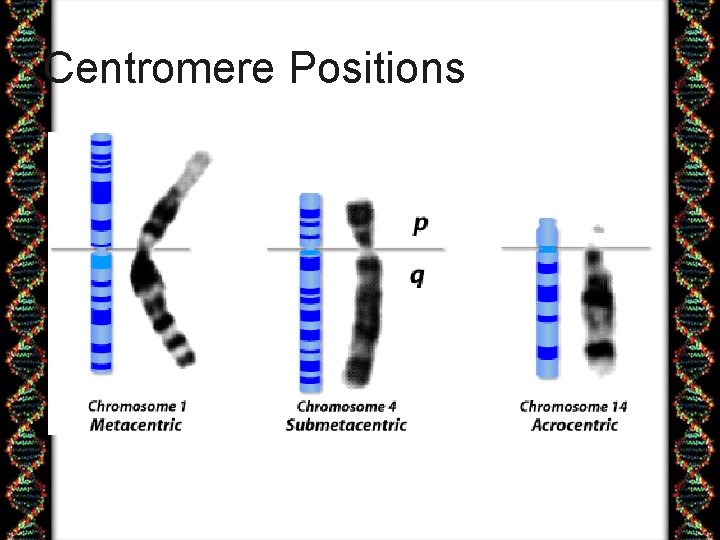
What are Centromeres For? • Position of centromere can be describe in three ways: – Metacentric = near the center – Submetacentric = off-center therefore one arm is longer than the other – Acrocentric = resides very near one end
Centromere Positions
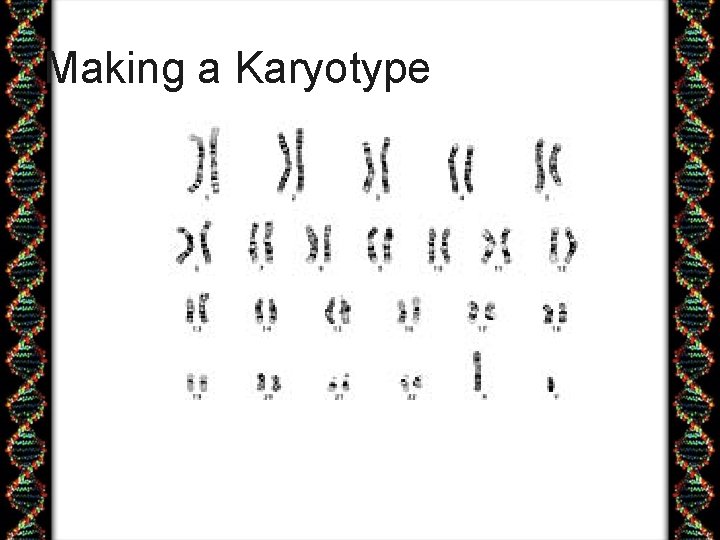
What is a Karyotype? • Organized profile of a persons chromosomes • Chromosomes are arranged by number and size, from largest to smallest
Making a Karyotype • Scientists take a picture of someone’s chromosomes • Each chromosome is then cut out and matched according to: – Size – Banding pattern – Centromere position
Making a Karyotype
Karyotypes and Genetic Disorders • Normal human karyotype – 46 chromosomes • 22 pairs of autosomes • 2 sex cromosomes • What happens if…. . – Too many or too few chromosomes? – Missing pieces of chromosomes? – Mixed up pieces of chromosomes?
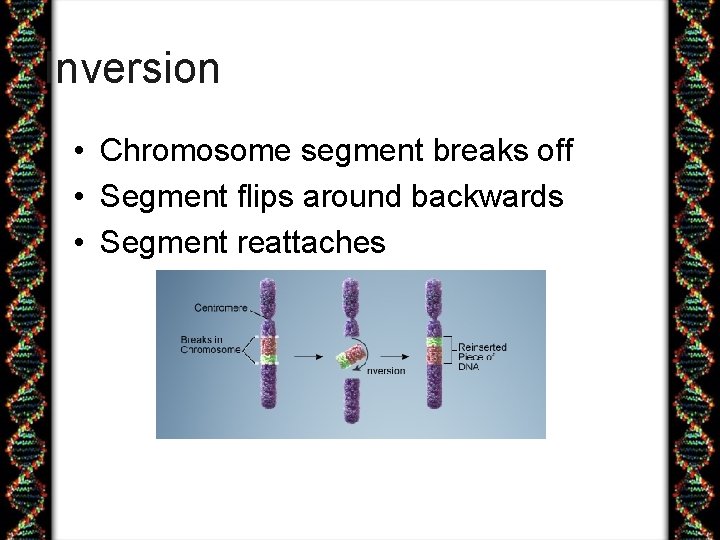
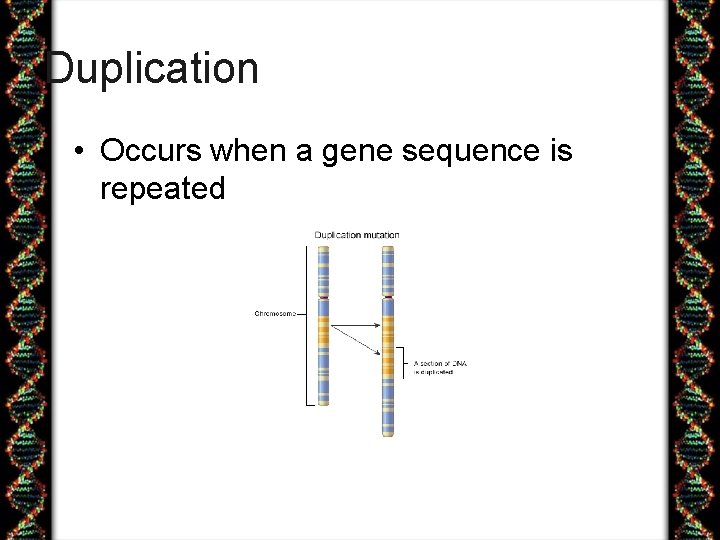
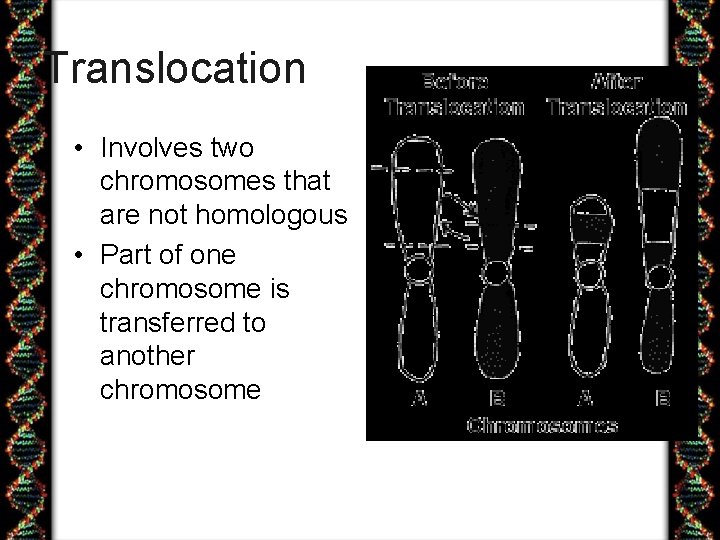
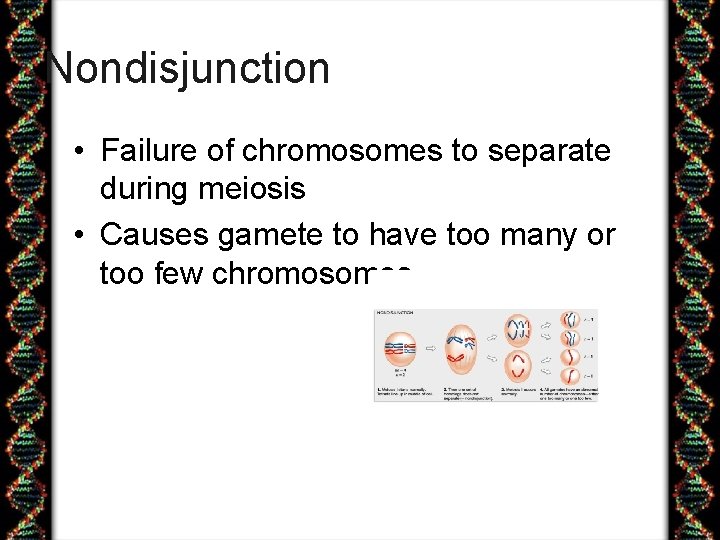
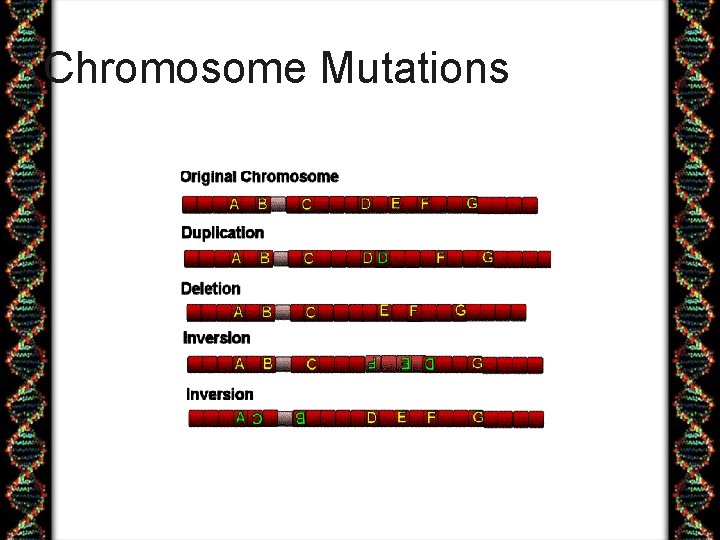
Types of Mutations • • • Deletion Inversion Translocation Nondisjunction Duplication
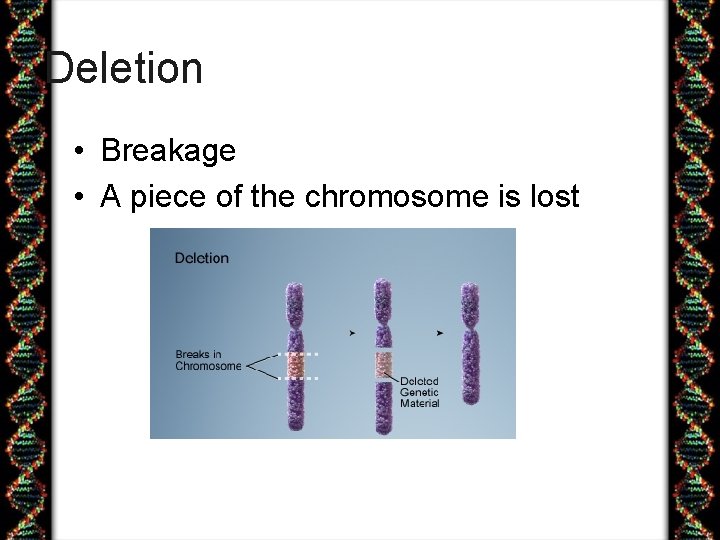
Deletion • Breakage • A piece of the chromosome is lost
Inversion • Chromosome segment breaks off • Segment flips around backwards • Segment reattaches
Duplication • Occurs when a gene sequence is repeated
Translocation • Involves two chromosomes that are not homologous • Part of one chromosome is transferred to another chromosome
Nondisjunction • Failure of chromosomes to separate during meiosis • Causes gamete to have too many or too few chromosomes
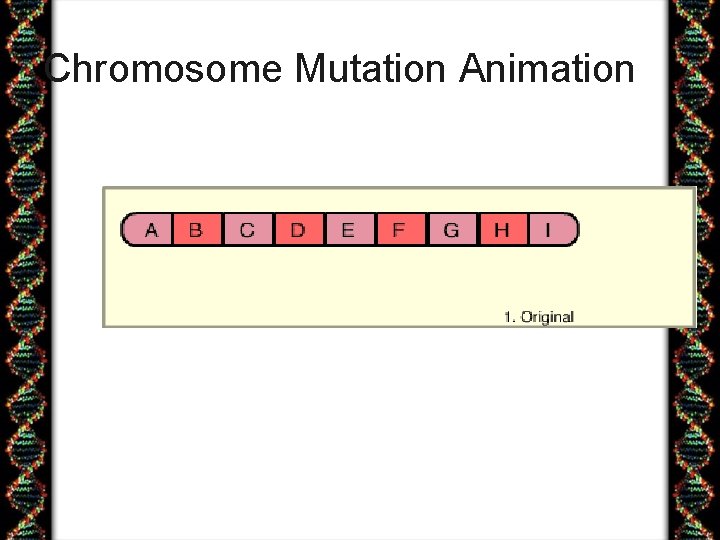
Chromosome Mutation Animation
Chromosome Mutations
What Can’t we see in a Karyotoype? • Individual DNA strands or genes. • The number of genes in any given area of a chromosome. • The presence or location of small mutations.
References http: //learn. genetics. utah. edu/units/disorders/karyotype http: //www. biologyjunction. com/pwpt_biology. htm