
Chromosomes Replicated doubled during this phase Interphase S
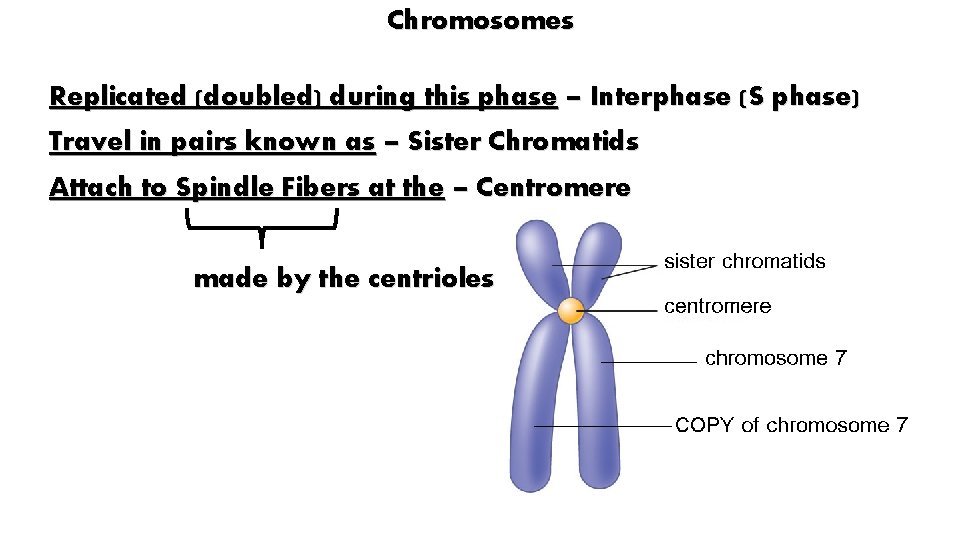
Chromosomes Replicated (doubled) during this phase – Interphase (S phase) Travel in pairs known as – Sister Chromatids Attach to Spindle Fibers at the – Centromere made by the centrioles
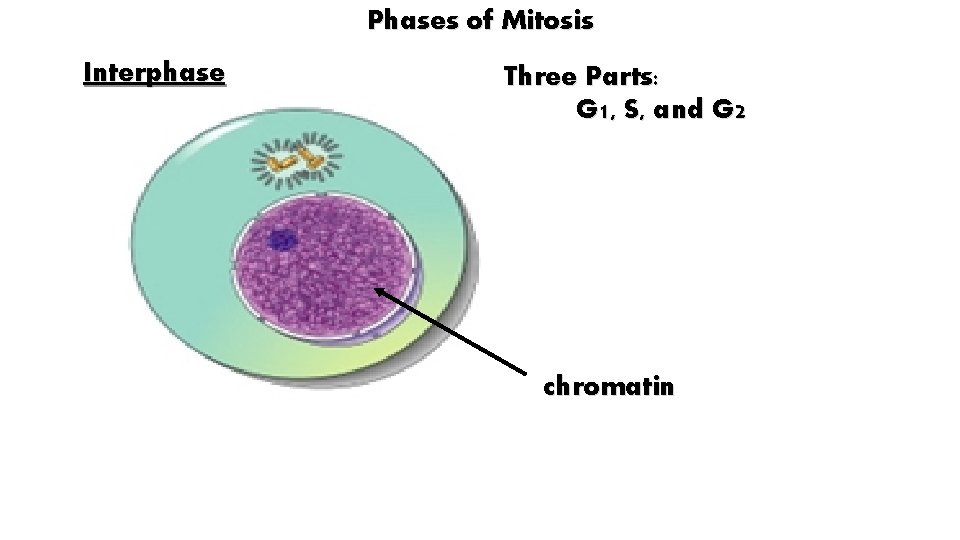
Phases of Mitosis Interphase Three Parts: G 1, S, and G 2 chromatin
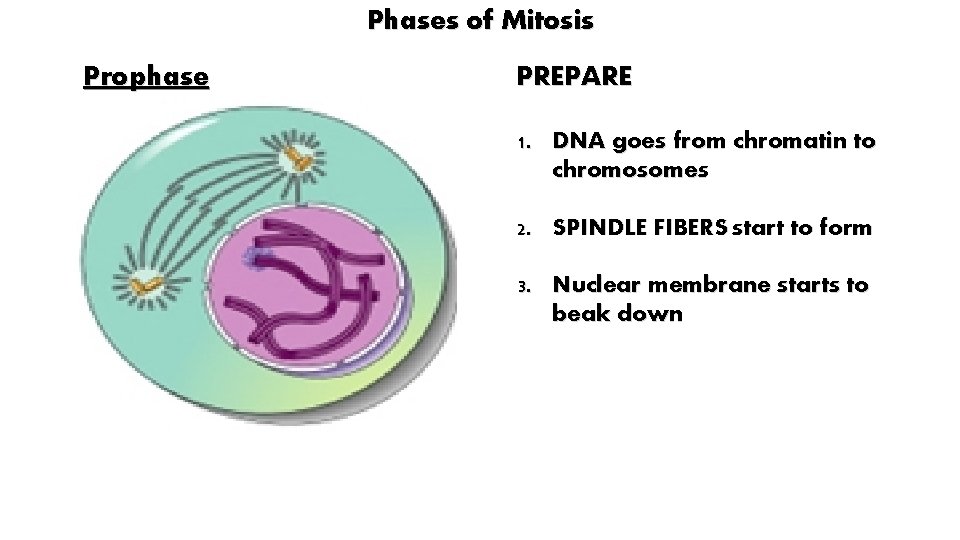
Phases of Mitosis Prophase PREPARE 1. DNA goes from chromatin to chromosomes 2. SPINDLE FIBERS start to form 3. Nuclear membrane starts to beak down
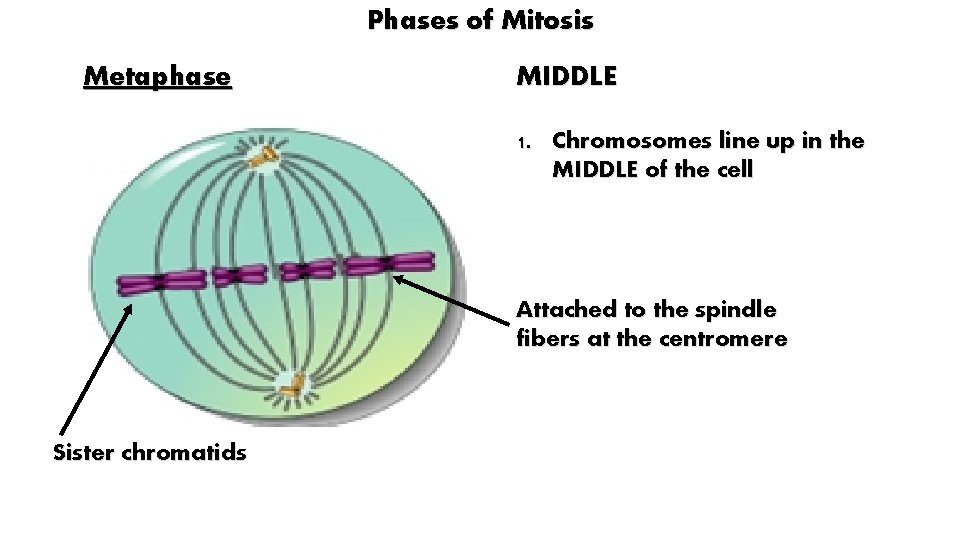
Phases of Mitosis Metaphase MIDDLE 1. Chromosomes line up in the MIDDLE of the cell Attached to the spindle fibers at the centromere Sister chromatids
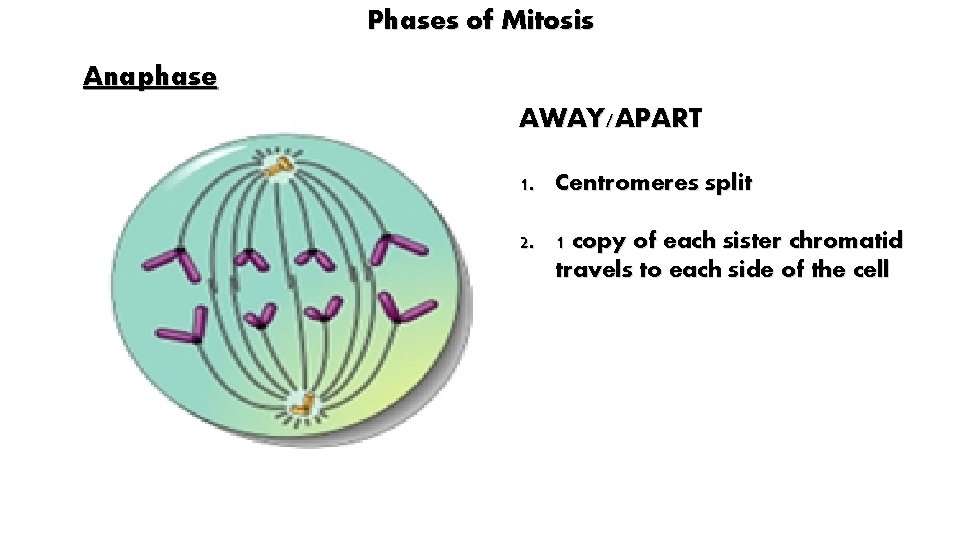
Phases of Mitosis Anaphase AWAY/APART 1. Centromeres split 2. 1 copy of each sister chromatid travels to each side of the cell
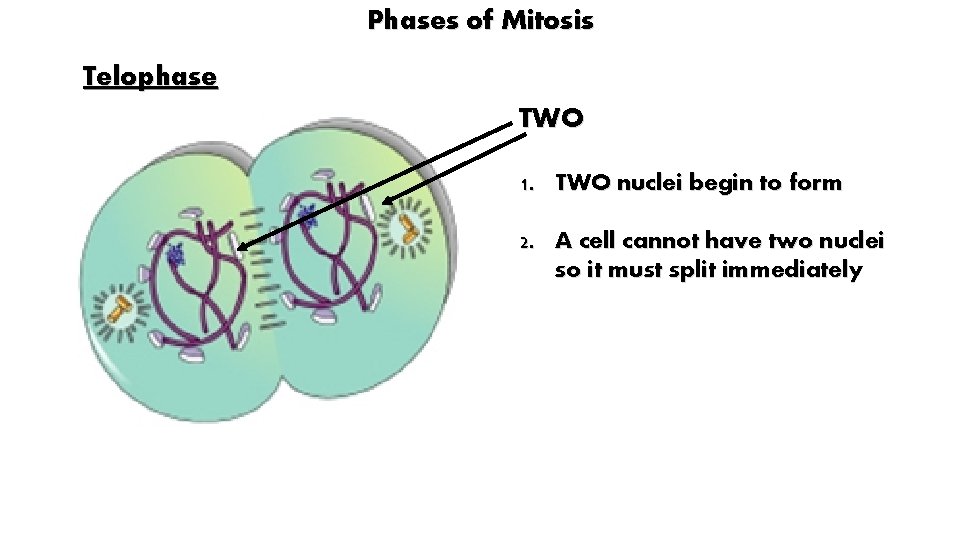
Phases of Mitosis Telophase TWO 1. TWO nuclei begin to form 2. A cell cannot have two nuclei so it must split immediately
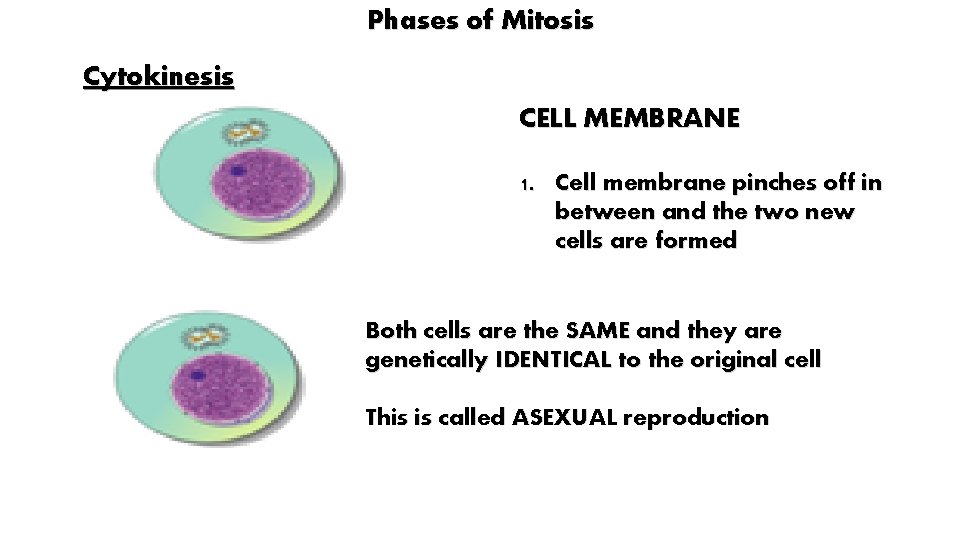
Phases of Mitosis Cytokinesis CELL MEMBRANE 1. Cell membrane pinches off in between and the two new cells are formed Both cells are the SAME and they are genetically IDENTICAL to the original cell This is called ASEXUAL reproduction
Mitosis vs. Meiosis There are 2 types of cells Human body cells have SEX/GAMETES cells and BODY/SOMATIC cells 46 chromosomes ( 23 PAIRS ) Human body cells are called DIPLOID ( 2 of every chromosome) 1 from MOM & 1 from DAD Human sex cells have 23 chromosomes Human sex cells are called HAPLOID chromosome) ( EGG & SPERM cells) ( 1 of every
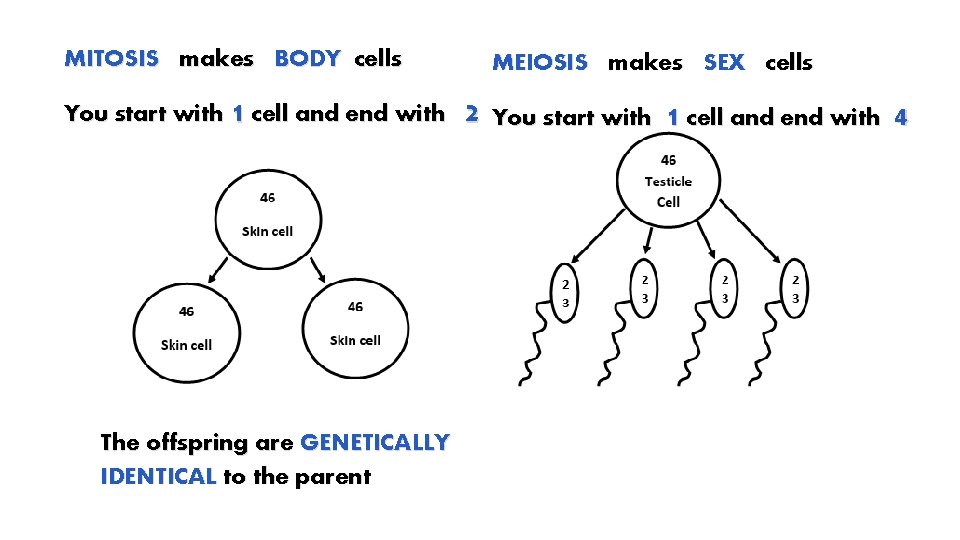
MITOSIS makes BODY cells You start with 1 cell and end with The offspring are GENETICALLY IDENTICAL to the parent MEIOSIS makes SEX cells 2 You start with 1 cell and end with 4
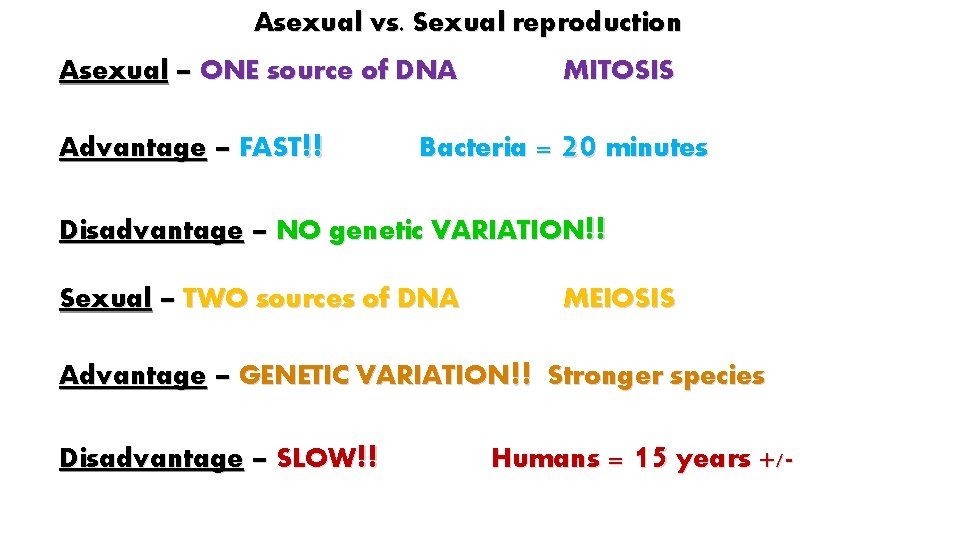
Asexual vs. Sexual reproduction Asexual – ONE source of DNA Advantage – FAST!! MITOSIS Bacteria = 20 minutes Disadvantage – NO genetic VARIATION!! Sexual – TWO sources of DNA MEIOSIS Advantage – GENETIC VARIATION!! Stronger species Disadvantage – SLOW!! Humans = 15 years +/-
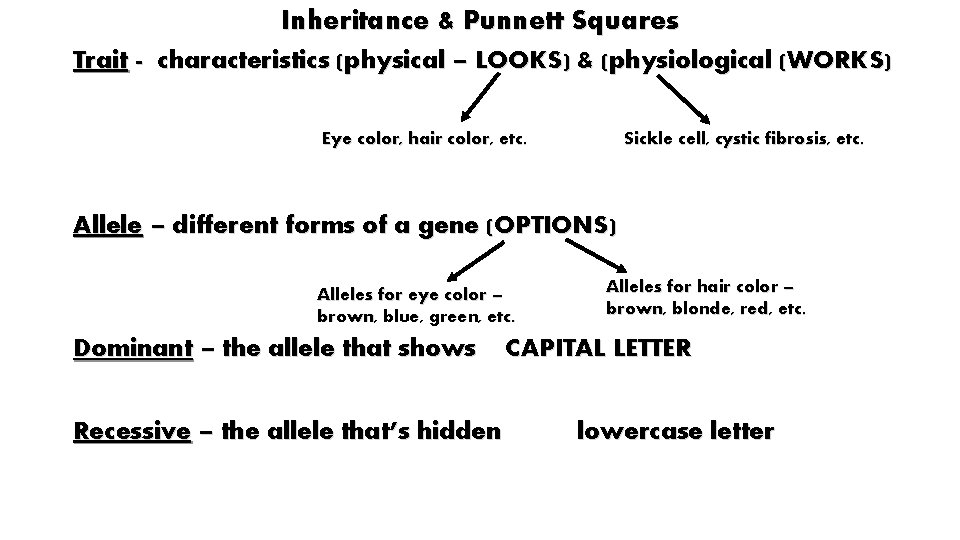
Inheritance & Punnett Squares Trait - characteristics (physical – LOOKS) & (physiological (WORKS) Eye color, hair color, etc. Sickle cell, cystic fibrosis, etc. Allele – different forms of a gene (OPTIONS) Alleles for eye color – brown, blue, green, etc. Dominant – the allele that shows Recessive – the allele that’s hidden Alleles for hair color – brown, blonde, red, etc. CAPITAL LETTER lowercase letter
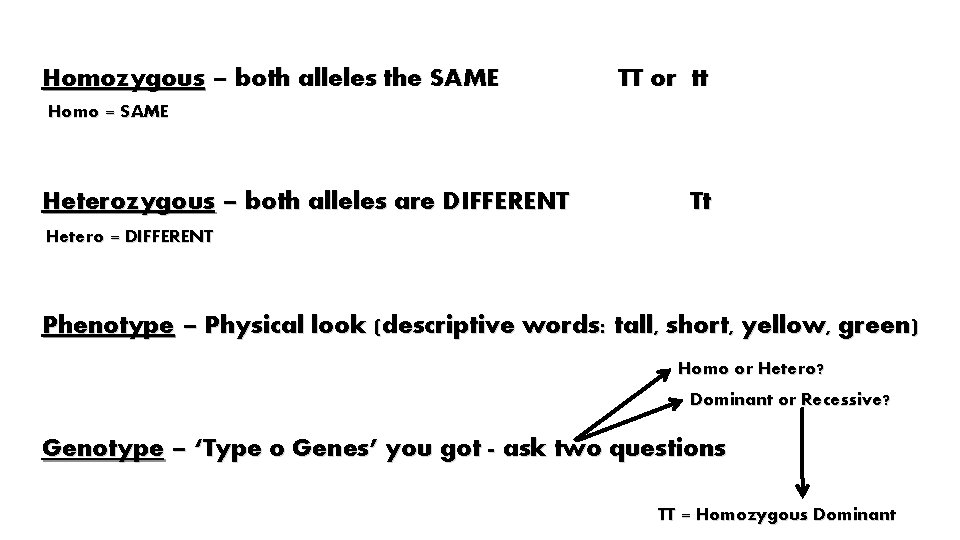
Homozygous – both alleles the SAME TT or tt Homo = SAME Heterozygous – both alleles are DIFFERENT Tt Hetero = DIFFERENT Phenotype – Physical look (descriptive words: tall, short, yellow, green) Homo or Hetero? Dominant or Recessive? Genotype – ‘Type o Genes’ you got - ask two questions TT = Homozygous Dominant
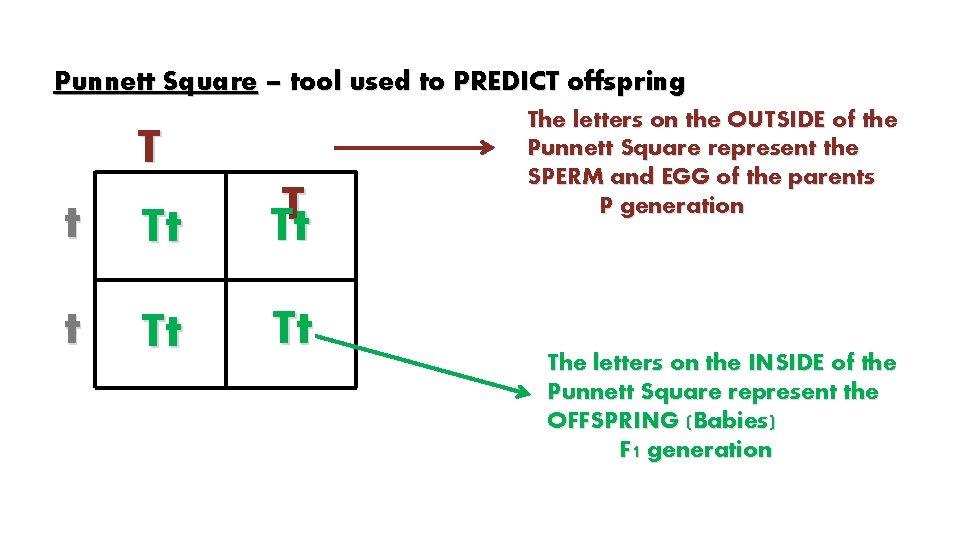
Punnett Square – tool used to PREDICT offspring T t Tt T Tt t Tt Tt The letters on the OUTSIDE of the Punnett Square represent the SPERM and EGG of the parents P generation The letters on the INSIDE of the Punnett Square represent the OFFSPRING (Babies) F 1 generation
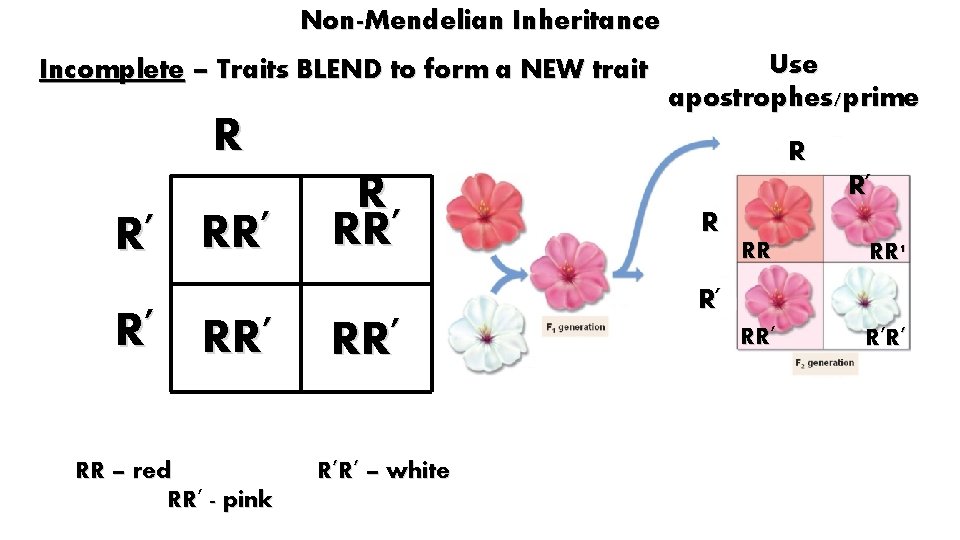
Non-Mendelian Inheritance Incomplete – Traits BLEND to form a NEW trait Use apostrophes/prime R ’ R RR’ ’ RR RR – red RR’ - pink R R’ RR R’R’ – white R’ R RR RR 1 RR’ R ’R ’ R’
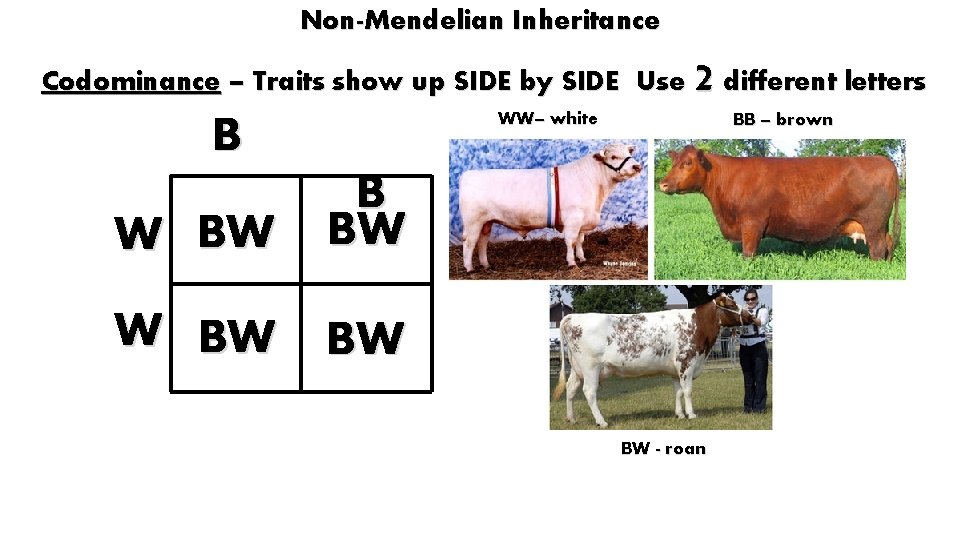
Non-Mendelian Inheritance Codominance – Traits show up SIDE by SIDE Use 2 different letters WW– white B W BW B BW W BW BW BB – brown BW - roan
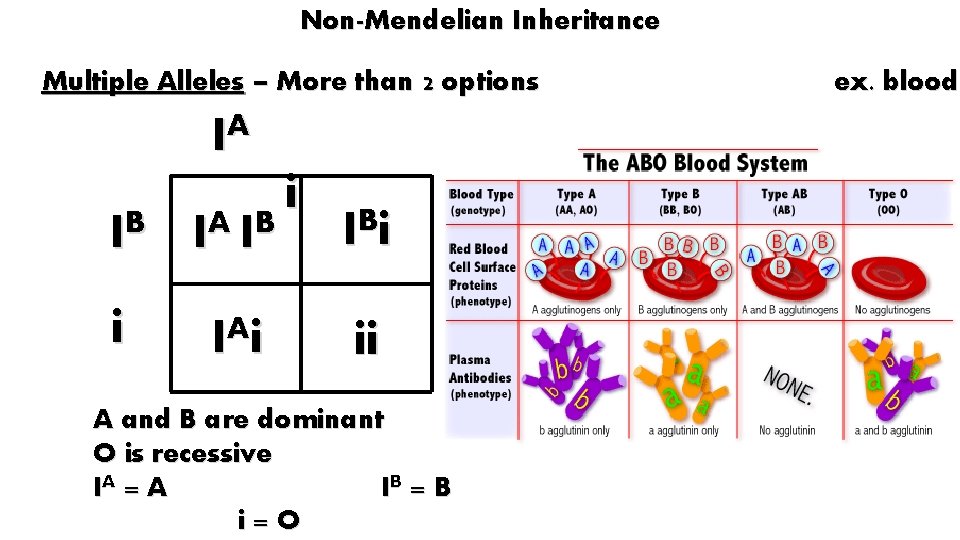
Non-Mendelian Inheritance Multiple Alleles – More than 2 options A I IB i i B IA IB I i A I i ii A and B are dominant O is recessive IA = A IB = B i=O ex. blood
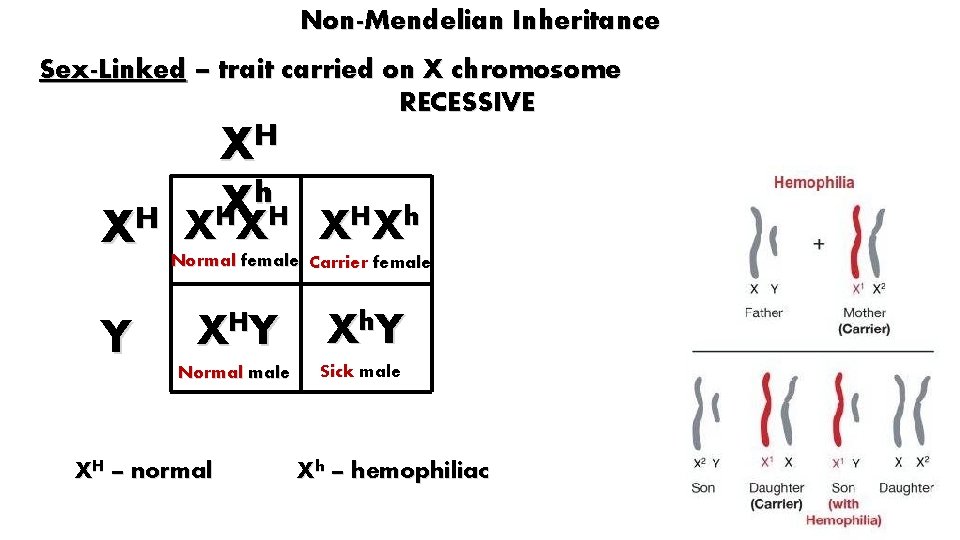
Non-Mendelian Inheritance Sex-Linked – trait carried on X chromosome RECESSIVE XH h X H H XHXh H X X X Normal female Carrier female Y H X Y Normal male XH – normal X h. Y Sick male Xh – hemophiliac
Females CARRY the trait but males suffer from them WHY? Because females are XX – they have an extra X chromosome if they get a ‘bad’ X Males don’t have an extra X – they are XY
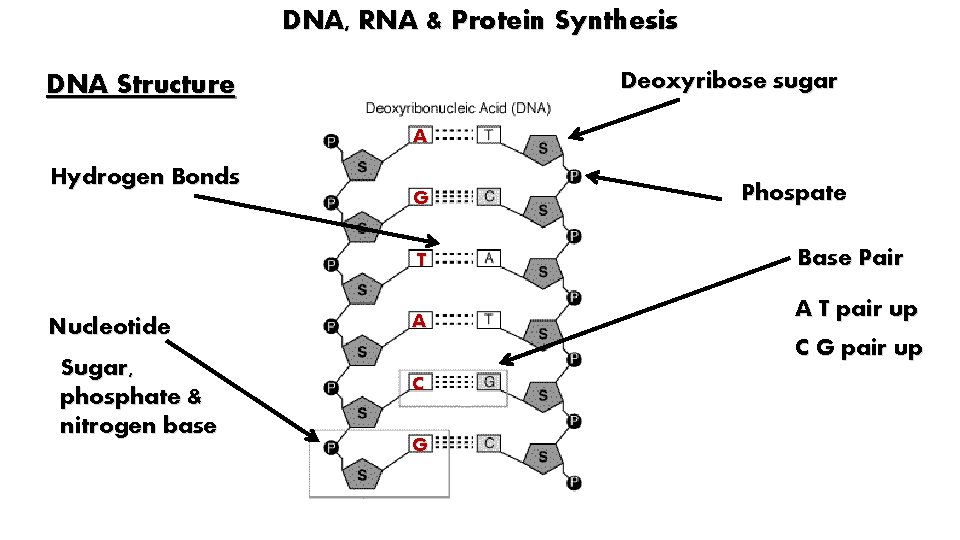
DNA, RNA & Protein Synthesis Deoxyribose sugar DNA Structure A Hydrogen Bonds Nucleotide Sugar, phosphate & nitrogen base G Phospate T Base Pair A A T pair up C G
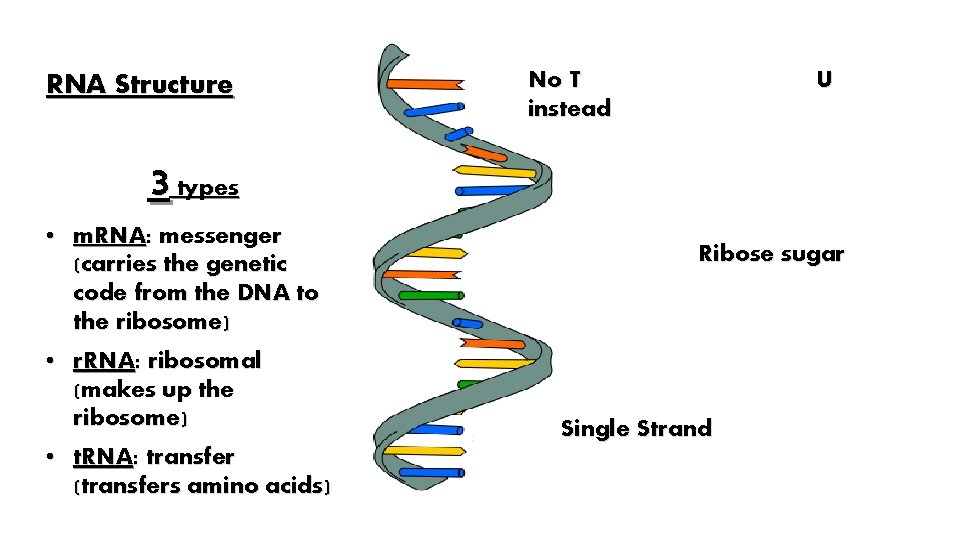
RNA Structure No T instead U 3 types • m. RNA: messenger (carries the genetic code from the DNA to the ribosome) • r. RNA: ribosomal (makes up the ribosome) • t. RNA: transfer (transfers amino acids) Ribose sugar Single Strand
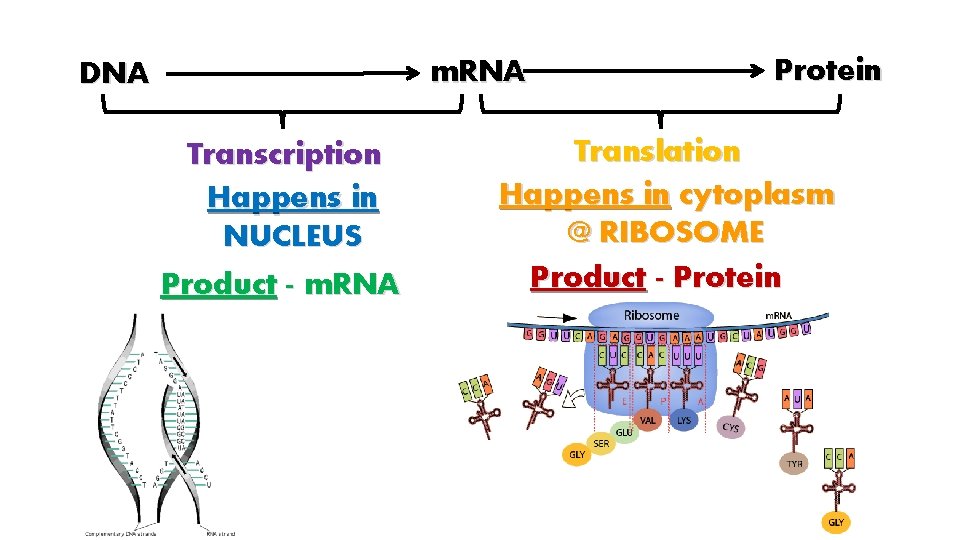
m. RNA DNA Transcription Happens in NUCLEUS Product - m. RNA Protein Translation Happens in cytoplasm @ RIBOSOME Product - Protein
DNA can’t leave the nucleus, but must get the protein recipe to the ribosome DNA makes m. RNA copy of recipe that leaves the nucleus DNA stays in the nucleus – safe and unchanged
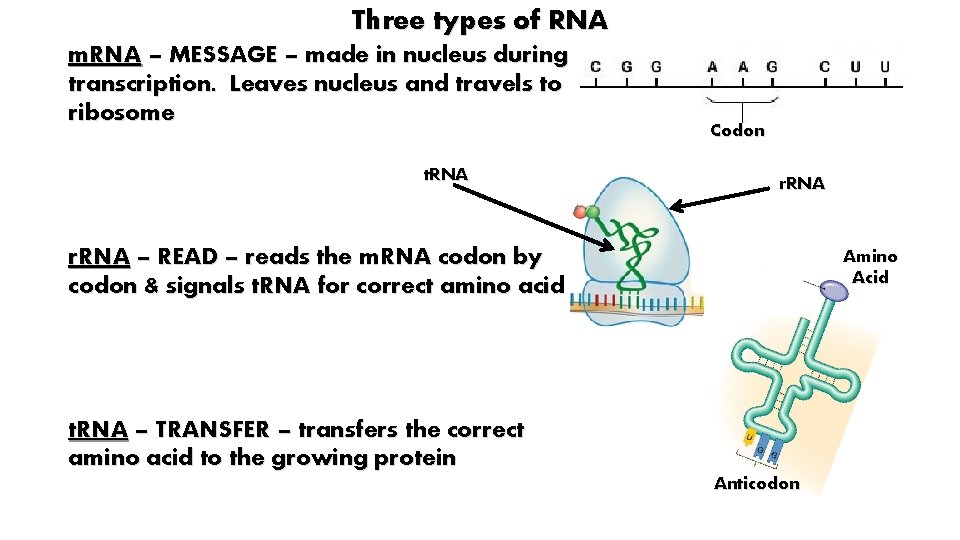
Three types of RNA m. RNA – MESSAGE – made in nucleus during transcription. Leaves nucleus and travels to ribosome t. RNA Codon r. RNA – READ – reads the m. RNA codon by codon & signals t. RNA for correct amino acid Amino Acid t. RNA – TRANSFER – transfers the correct amino acid to the growing protein Anticodon
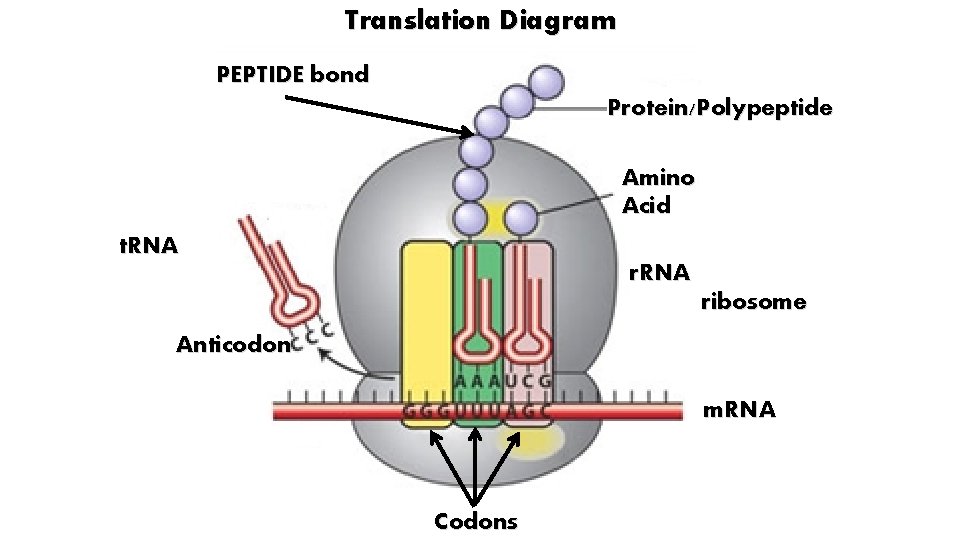
Translation Diagram PEPTIDE bond Protein/Polypeptide Amino Acid t. RNA ribosome Anticodon m. RNA Codons
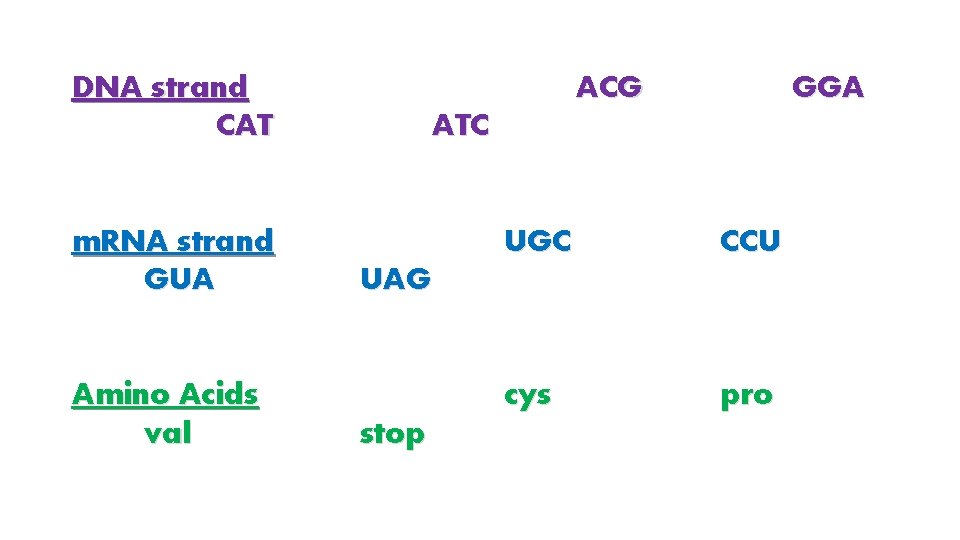
DNA strand CAT m. RNA strand GUA Amino Acids val ACG GGA ATC UGC CCU cys pro UAG stop
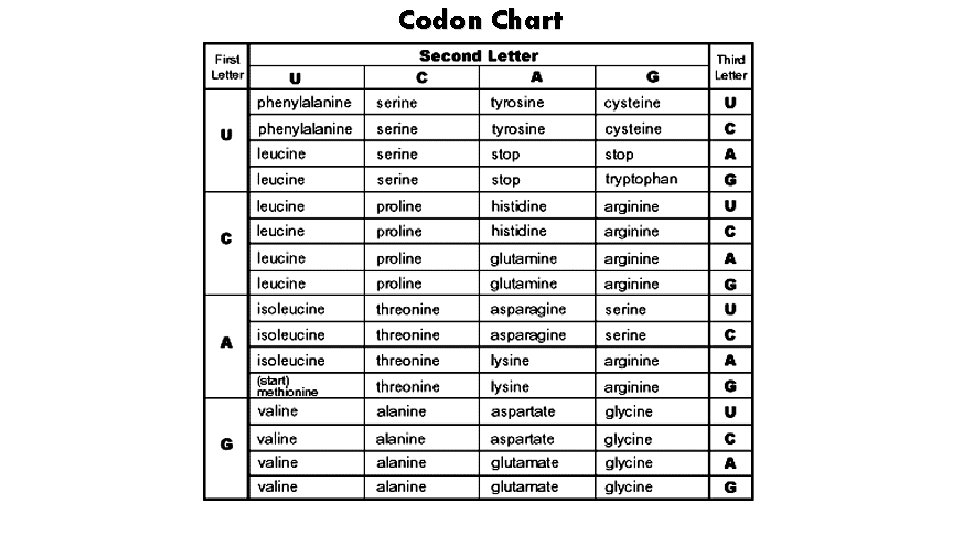
Codon Chart
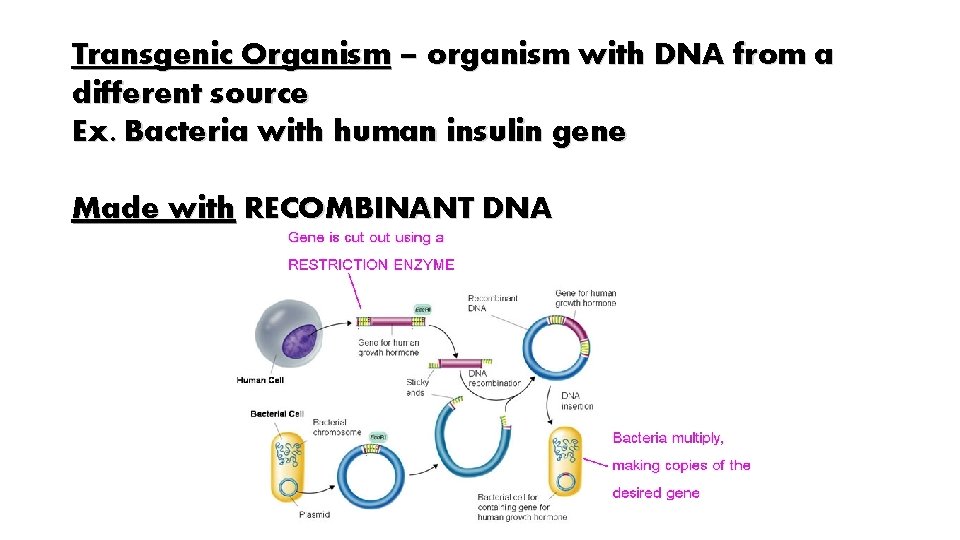
Transgenic Organism – organism with DNA from a different source Ex. Bacteria with human insulin gene Made with RECOMBINANT DNA
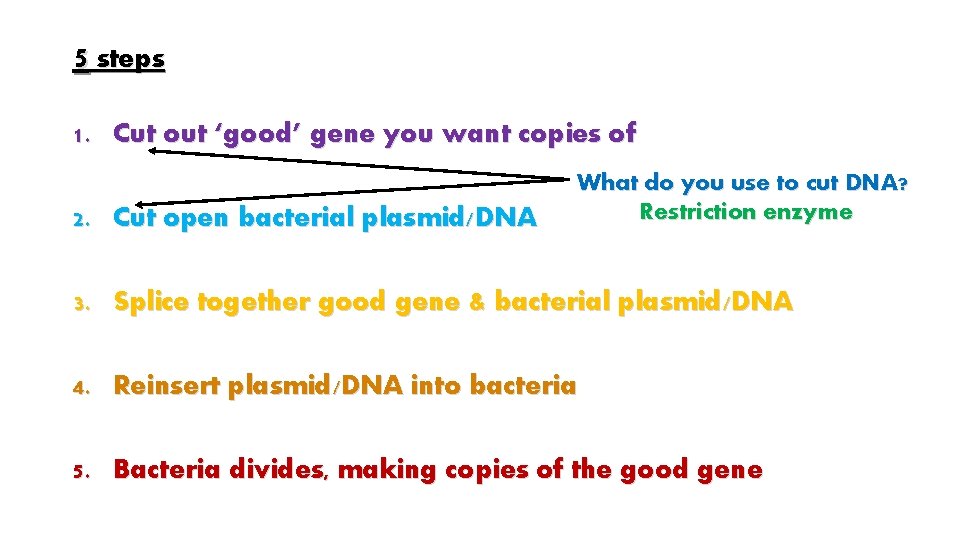
5 steps 1. Cut out ‘good’ gene you want copies of 2. Cut open bacterial plasmid/DNA What do you use to cut DNA? Restriction enzyme 3. Splice together good gene & bacterial plasmid/DNA 4. Reinsert plasmid/DNA into bacteria 5. Bacteria divides, making copies of the good gene
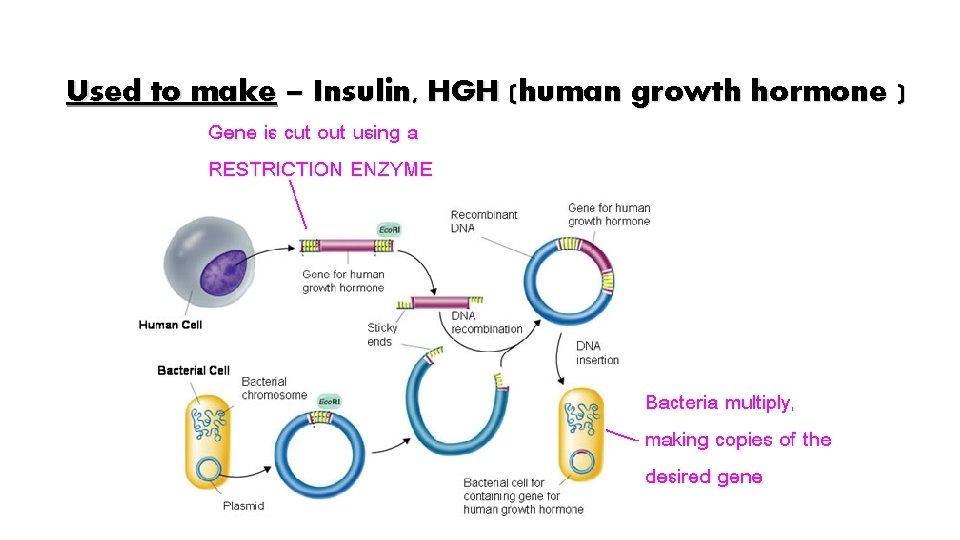
Used to make – Insulin, HGH (human growth hormone )
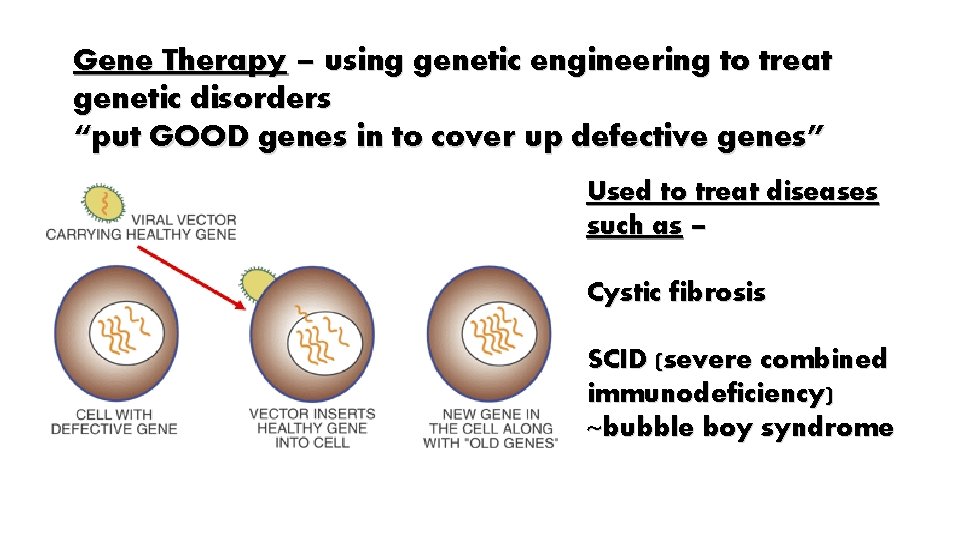
Gene Therapy – using genetic engineering to treat genetic disorders “put GOOD genes in to cover up defective genes” Used to treat diseases such as – Cystic fibrosis SCID (severe combined immunodeficiency) ~bubble boy syndrome
- Slides: 30