
CHROMOSOMES DNA REPLICATION THE SOURCE OF GENETIC INFORMATION
- Slides: 12
CHROMOSOMES & DNA REPLICATION THE SOURCE OF GENETIC INFORMATION
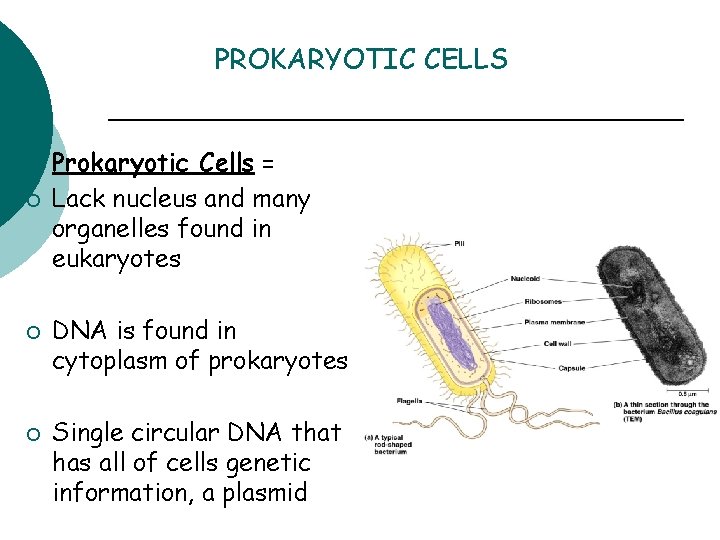
PROKARYOTIC CELLS ¡ ¡ Prokaryotic Cells = Lack nucleus and many organelles found in eukaryotes DNA is found in cytoplasm of prokaryotes Single circular DNA that has all of cells genetic information, a plasmid
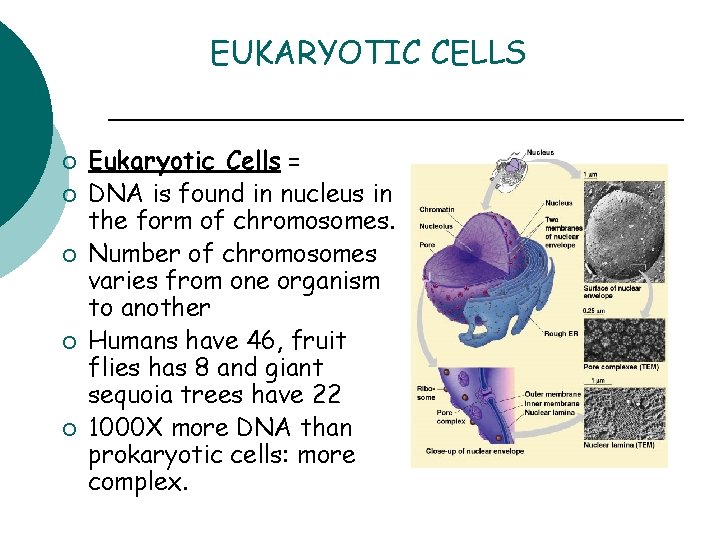
EUKARYOTIC CELLS ¡ ¡ ¡ Eukaryotic Cells = DNA is found in nucleus in the form of chromosomes. Number of chromosomes varies from one organism to another Humans have 46, fruit flies has 8 and giant sequoia trees have 22 1000 X more DNA than prokaryotic cells: more complex.
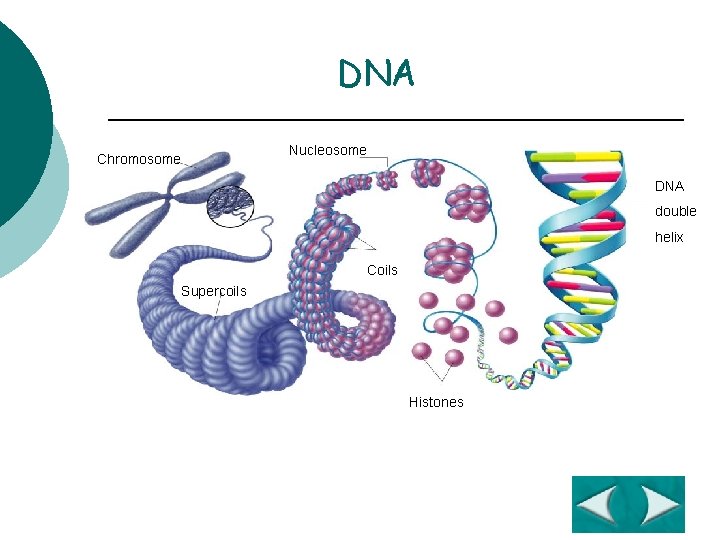
CHROMOSOME STRUCTURE ¡ ¡ ¡ DNA in Eukaryotes is packed tight. A human cell contain 1000 X more base pairs than 1 bacteria. Nucleus contains more than 6 feet of DNA. Eukaryotic chromosomes have both DNA and proteins packed together of from a substance called chromatin Chromatin consists of DNA that is tightly coiled around proteins called histones. Histones = proteins that DNA wraps around.
DNA Section 12 -2 Chromosome Nucleosome DNA double helix Coils Supercoils Histones Go to Section:
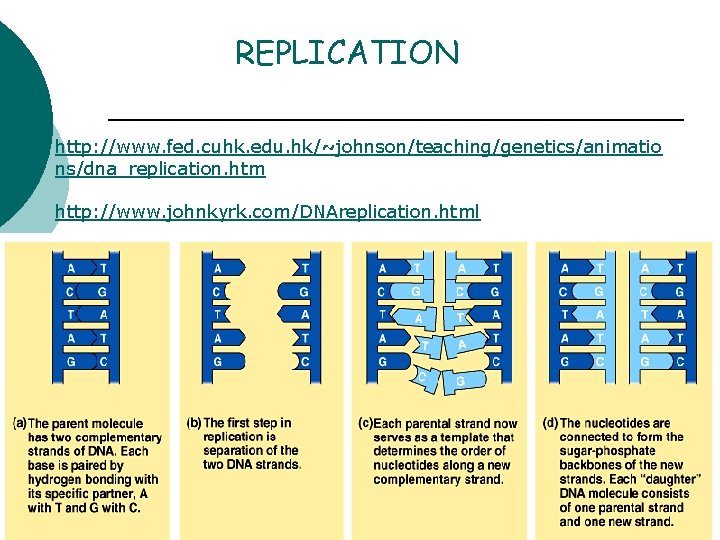
DNA REPLICATION ¡ ¡ ¡ Replication = duplicating or copying the DNA before the cell divides. How is it done? DNA separates into 2 strands Then forms new complementary strands (according to base rules). Complimentary strands of. DNA have opposite bases. For example: A always pairs with T. If one strand has the base A, then the complimentary strand has T.
Each strand of the double helix serves as a template, or model for the new strand. ¡ Replication is carried out by a series of enzyme reactions. ¡ They unzip the double helix and expose the complimentary bases on the inside. ¡ Now they can be copied ¡
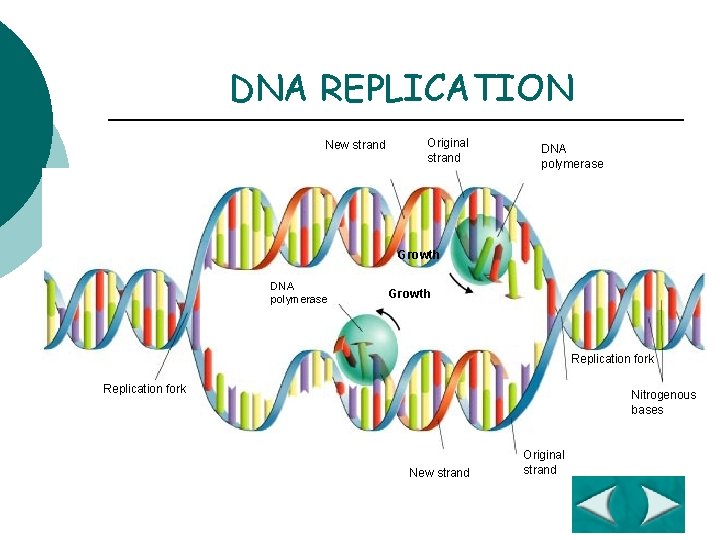
Section 12 -2 DNA REPLICATION New strand Original strand DNA polymerase Growth Replication fork Nitrogenous bases New strand Go to Section: Original strand
HOW DOES REPLICATION OCCUR? ¡ ¡ DNA polymerase - enzyme helps unzip DNA. Weak hydrogen bonds break and strands unwind. http: //www. dnatube. com/video/365/DNAReplication
REPLICATION http: //www. fed. cuhk. edu. hk/~johnson/teaching/genetics/animatio ns/dna_replication. htm http: //www. johnkyrk. com/DNAreplication. html
DNA replication interactive ¡ http: //www. pbs. org/wgbh/aso/tryit/ dna/#
In your own words: How is DNA replicated? ¡ ________________________________ ________________________________ ________________ ¡ BE READY TO SHARE WITH THE CLASS ¡