
Chromosomes DNA Replication In a prokaryotic cell the
- Slides: 12
Chromosomes & DNA Replication
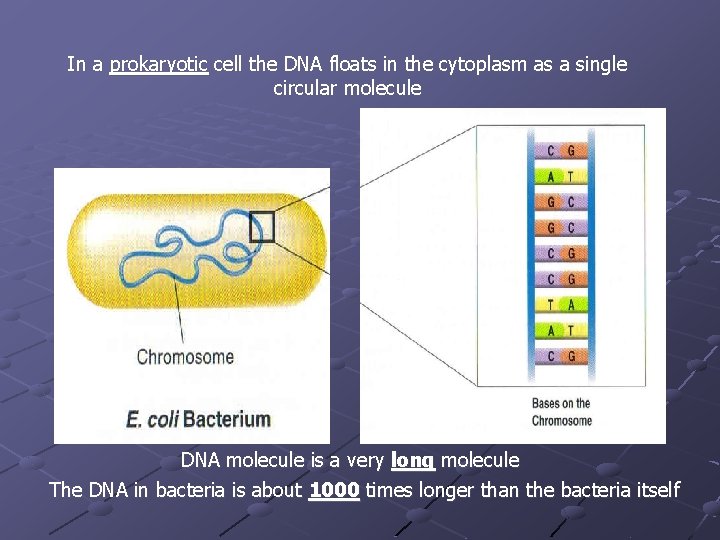
In a prokaryotic cell the DNA floats in the cytoplasm as a single circular molecule DNA molecule is a very long molecule The DNA in bacteria is about 1000 times longer than the bacteria itself
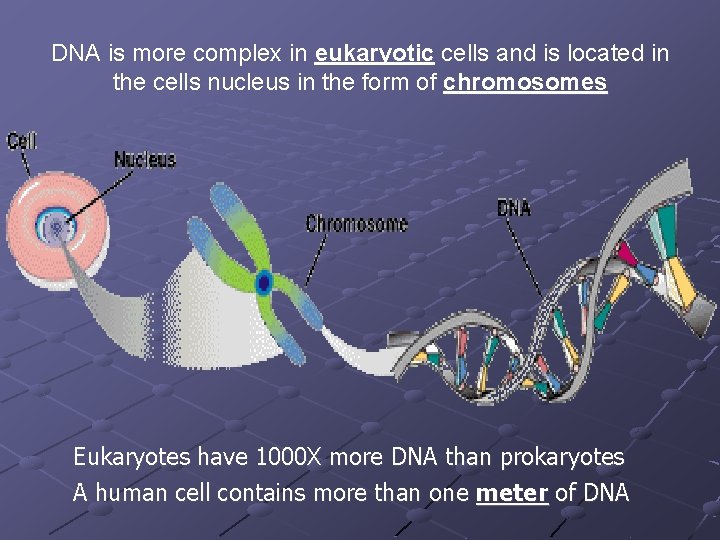
DNA is more complex in eukaryotic cells and is located in the cells nucleus in the form of chromosomes Eukaryotes have 1000 X more DNA than prokaryotes A human cell contains more than one meter of DNA
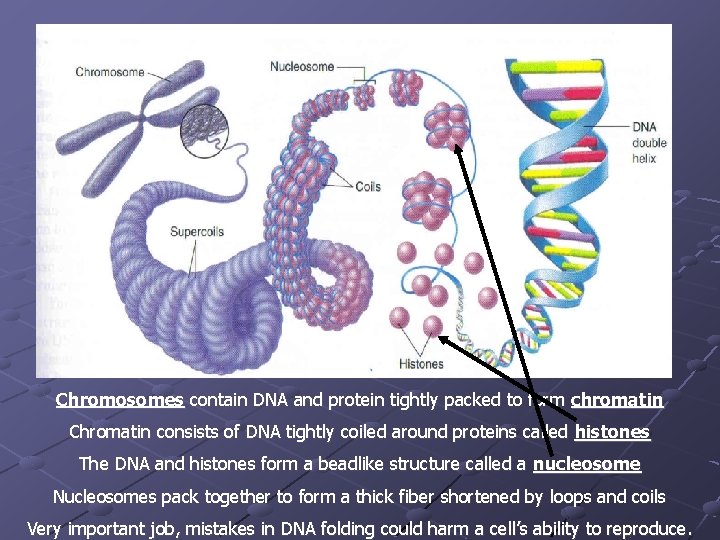
Chromosomes contain DNA and protein tightly packed to form chromatin Chromatin consists of DNA tightly coiled around proteins called histones The DNA and histones form a beadlike structure called a nucleosome Nucleosomes pack together to form a thick fiber shortened by loops and coils Very important job, mistakes in DNA folding could harm a cell’s ability to reproduce.
DNA Replication Double helix explains how DNA can be copied (replicated) Each strand has all the info needed to make the other half by base pairing Each strand can be used to make the other and is said to be complimentary If you know the sequence of nucleotides of one strand, you can make the sequence of the other A-C-C-G-T-T-A-C-A
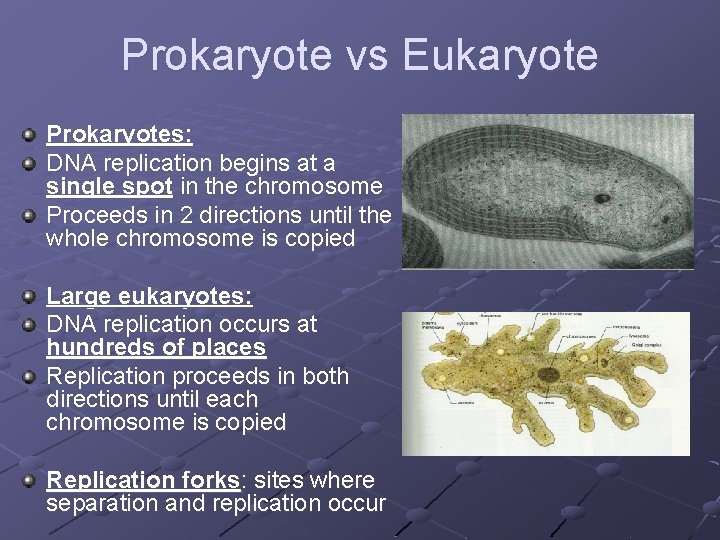
Prokaryote vs Eukaryote Prokaryotes: DNA replication begins at a single spot in the chromosome Proceeds in 2 directions until the whole chromosome is copied Large eukaryotes: DNA replication occurs at hundreds of places Replication proceeds in both directions until each chromosome is copied Replication forks: sites where separation and replication occur
Duplicating DNA Before cells divide, they copy their DNAreplication This process makes sure there is enough DNA for the new cell
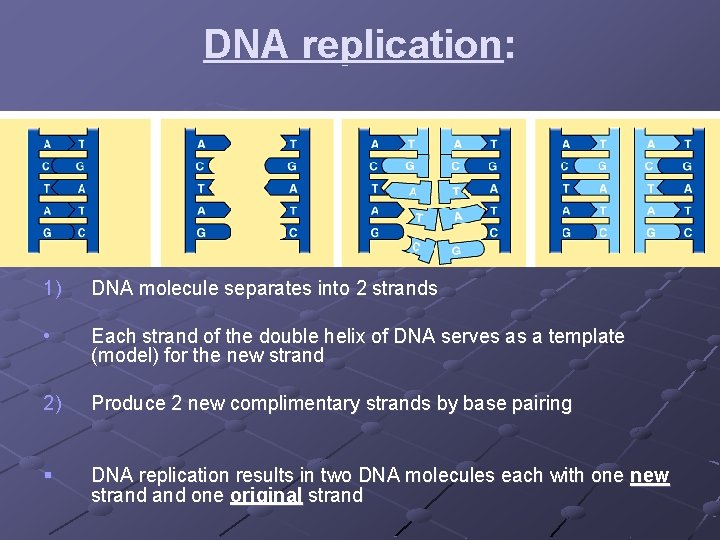
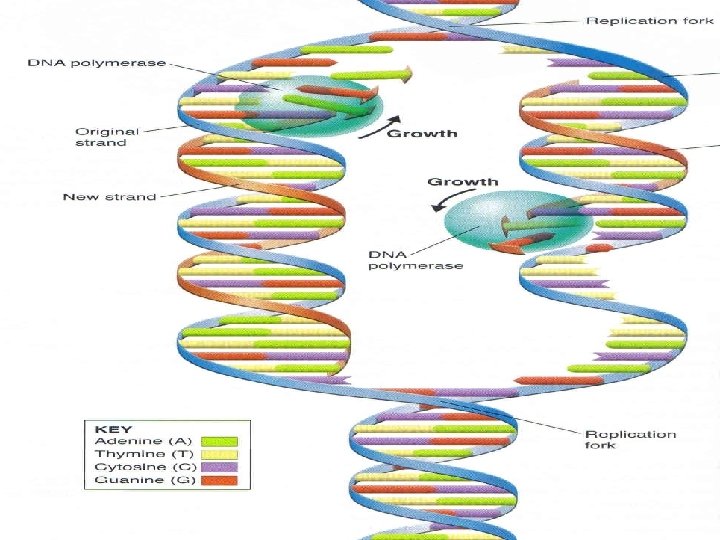
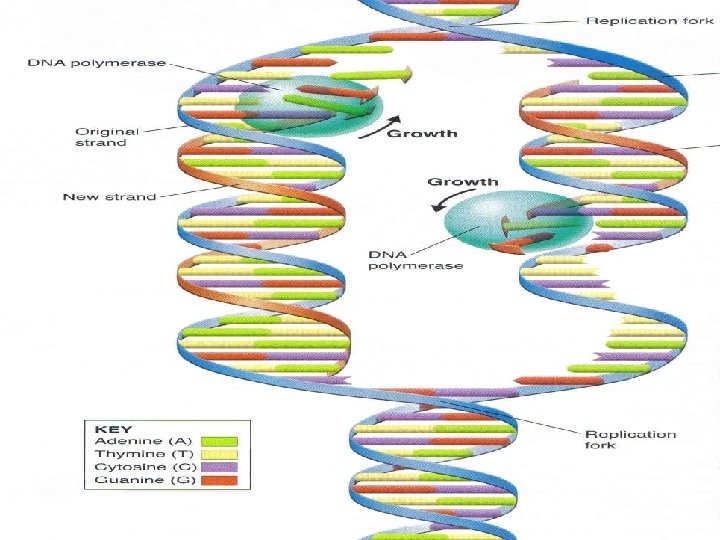
DNA replication: 1) DNA molecule separates into 2 strands • Each strand of the double helix of DNA serves as a template (model) for the new strand 2) Produce 2 new complimentary strands by base pairing § DNA replication results in two DNA molecules each with one new strand one original strand
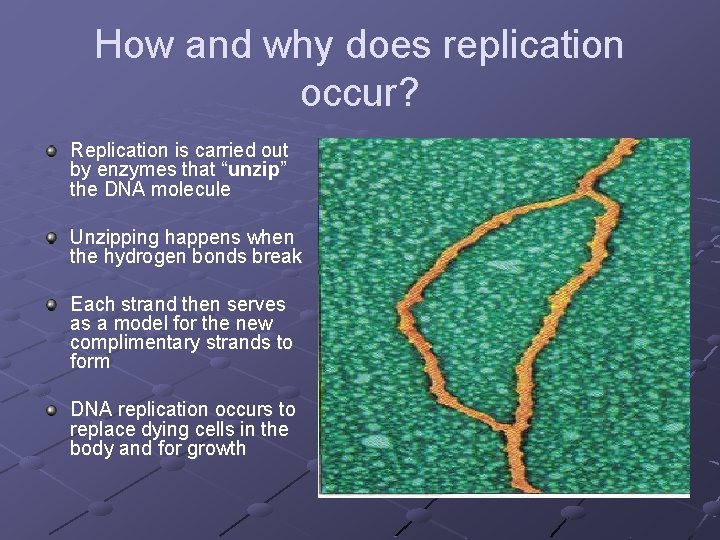
How and why does replication occur? Replication is carried out by enzymes that “unzip” the DNA molecule Unzipping happens when the hydrogen bonds break Each strand then serves as a model for the new complimentary strands to form DNA replication occurs to replace dying cells in the body and for growth
DNA Replication Involves Enzymes DNA polymerase: principal enzyme involved in DNA replication It joins single nucleotides to make a DNA molecule DNA polymerase also proofreads the new DNA strands to make sure that each is a perfect copy of the original