
Chromosomes DNA is a polymer made from many
- Slides: 36
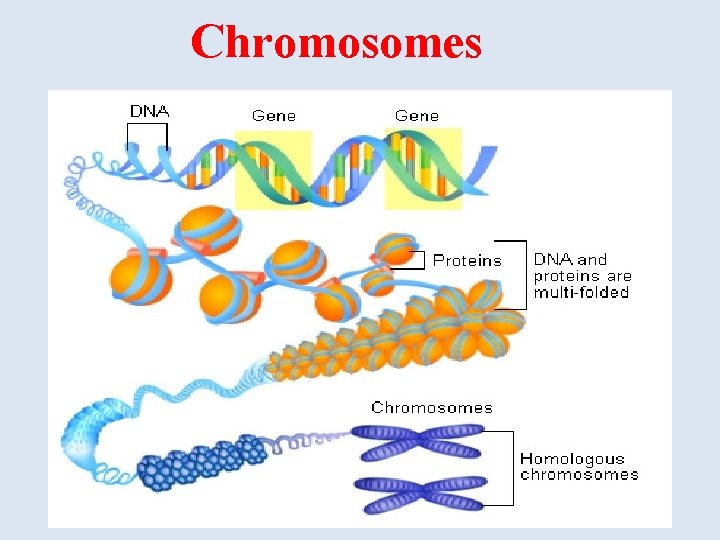
Chromosomes
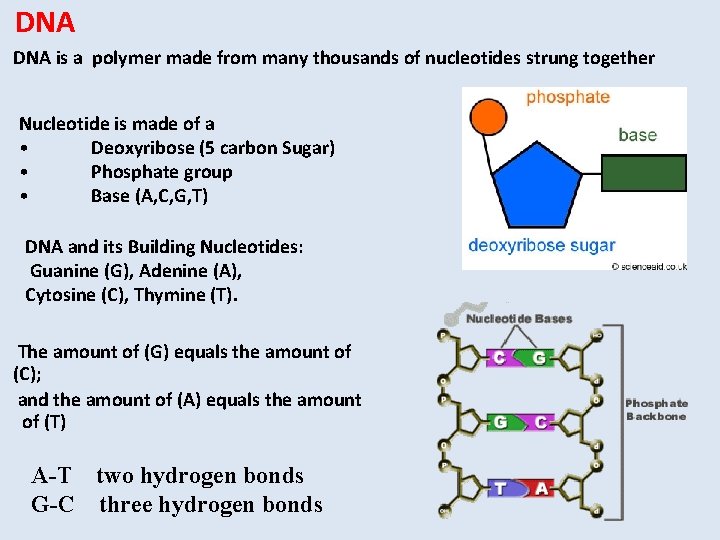
DNA is a polymer made from many thousands of nucleotides strung together Nucleotide is made of a • Deoxyribose (5 carbon Sugar) • Phosphate group • Base (A, C, G, T) DNA and its Building Nucleotides: Guanine (G), Adenine (A), Cytosine (C), Thymine (T). The amount of (G) equals the amount of (C); and the amount of (A) equals the amount of (T) A-T two hydrogen bonds G-C three hydrogen bonds
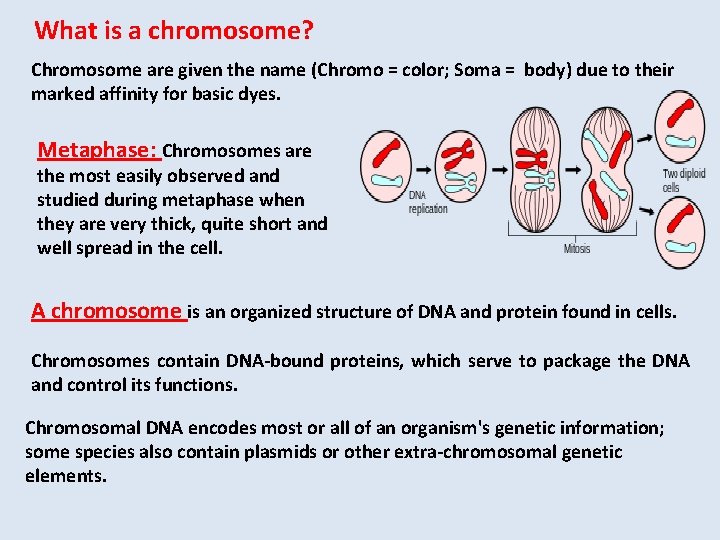
What is a chromosome? Chromosome are given the name (Chromo = color; Soma = body) due to their marked affinity for basic dyes. Metaphase: Chromosomes are the most easily observed and studied during metaphase when they are very thick, quite short and well spread in the cell. A chromosome is an organized structure of DNA and protein found in cells. Chromosomes contain DNA-bound proteins, which serve to package the DNA and control its functions. Chromosomal DNA encodes most or all of an organism's genetic information; some species also contain plasmids or other extra-chromosomal genetic elements.
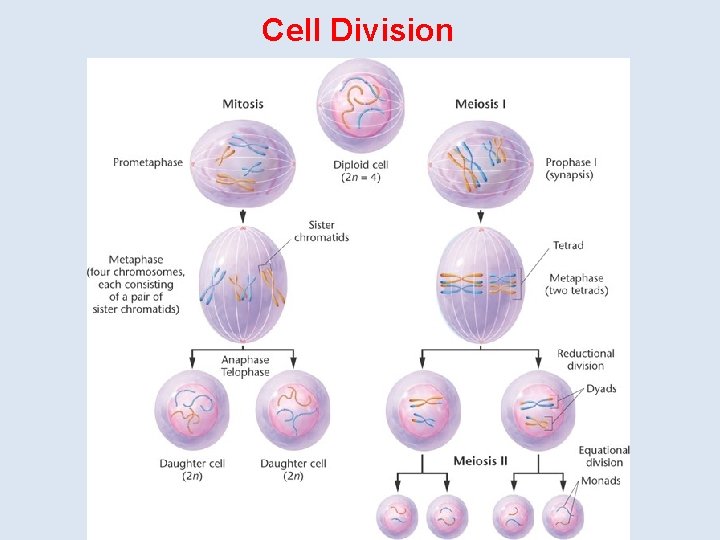
Cell Division
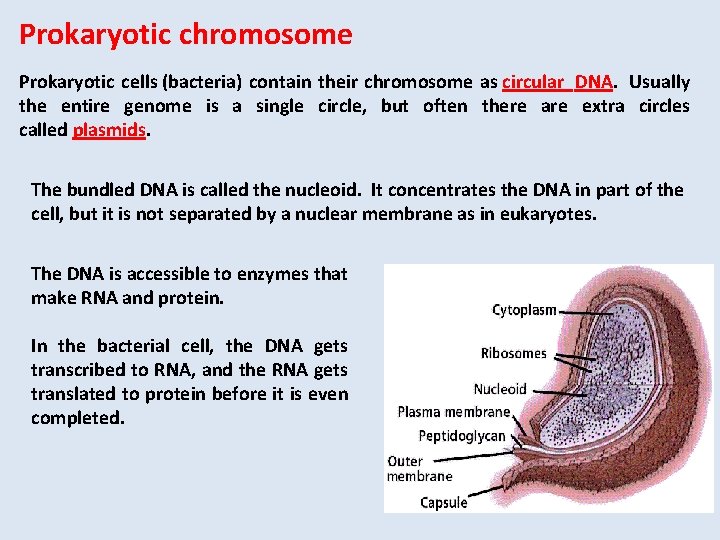
Prokaryotic chromosome Prokaryotic cells (bacteria) contain their chromosome as circular DNA. Usually the entire genome is a single circle, but often there are extra circles called plasmids. The bundled DNA is called the nucleoid. It concentrates the DNA in part of the cell, but it is not separated by a nuclear membrane as in eukaryotes. The DNA is accessible to enzymes that make RNA and protein. In the bacterial cell, the DNA gets transcribed to RNA, and the RNA gets translated to protein before it is even completed.
Plasmid A plasmid is a small ring of DNA that carries accessory genes. Usually these genes are for antibiotic resistance! Plasmids usually occur naturally in bacteria, but are sometimes found in eukaryotic organisms Plasmids used in genetic engineering are called vectors. Plasmids serve as important tools in genetics and biotechnology labs, where they are commonly used to multiply (make many copies of) or express particular genes Another major use of plasmids is to make large amounts of proteins. In this case, researchers grow bacteria containing a plasmid harboring the gene of interest.
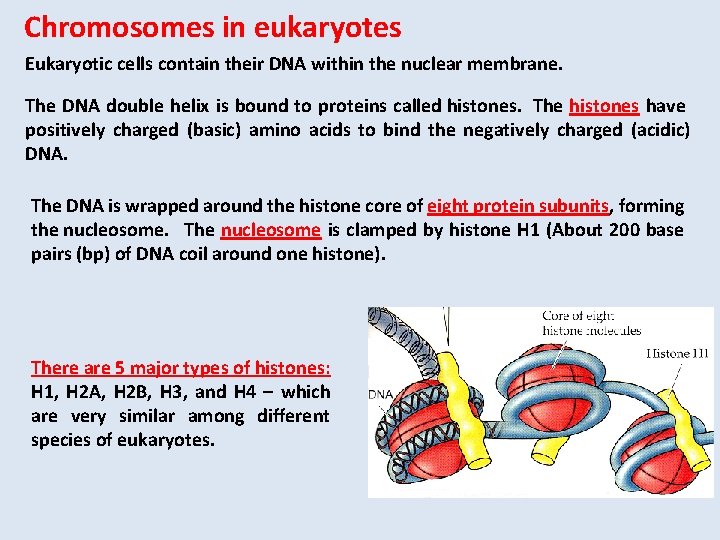
Chromosomes in eukaryotes Eukaryotic cells contain their DNA within the nuclear membrane. The DNA double helix is bound to proteins called histones. The histones have positively charged (basic) amino acids to bind the negatively charged (acidic) DNA. The DNA is wrapped around the histone core of eight protein subunits, forming the nucleosome. The nucleosome is clamped by histone H 1 (About 200 base pairs (bp) of DNA coil around one histone). There are 5 major types of histones: H 1, H 2 A, H 2 B, H 3, and H 4 – which are very similar among different species of eukaryotes.
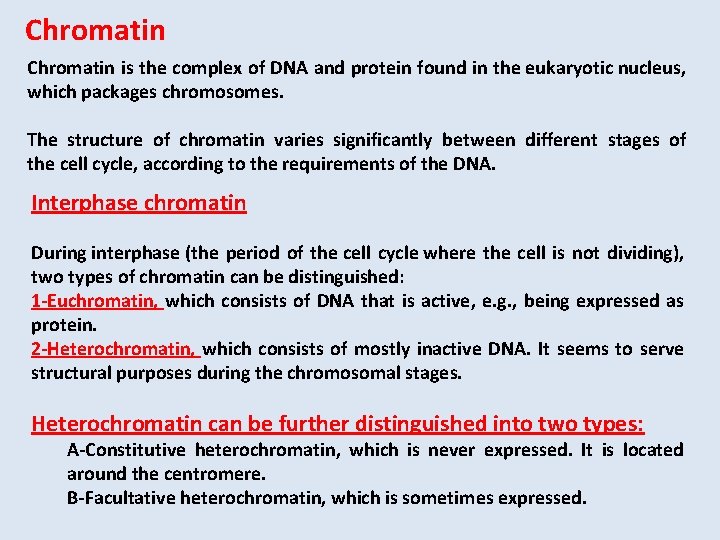
Chromatin is the complex of DNA and protein found in the eukaryotic nucleus, which packages chromosomes. The structure of chromatin varies significantly between different stages of the cell cycle, according to the requirements of the DNA. Interphase chromatin During interphase (the period of the cell cycle where the cell is not dividing), two types of chromatin can be distinguished: 1 -Euchromatin, which consists of DNA that is active, e. g. , being expressed as protein. 2 -Heterochromatin, which consists of mostly inactive DNA. It seems to serve structural purposes during the chromosomal stages. Heterochromatin can be further distinguished into two types: A-Constitutive heterochromatin, which is never expressed. It is located around the centromere. B-Facultative heterochromatin, which is sometimes expressed.
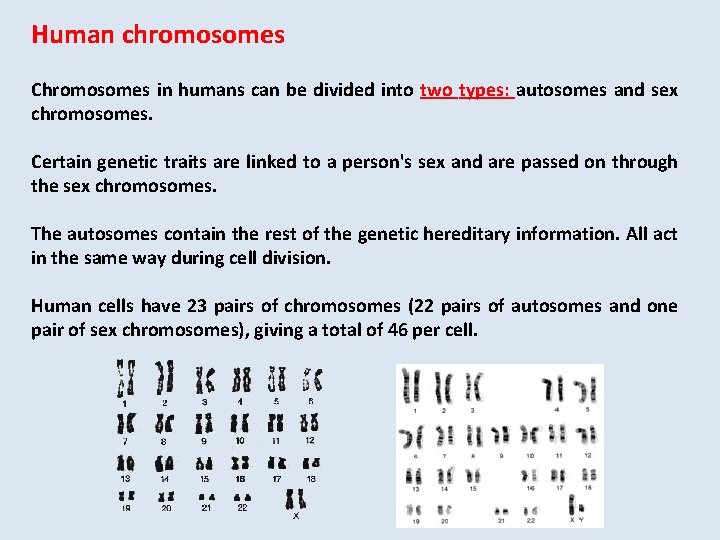
Human chromosomes Chromosomes in humans can be divided into two types: autosomes and sex chromosomes. Certain genetic traits are linked to a person's sex and are passed on through the sex chromosomes. The autosomes contain the rest of the genetic hereditary information. All act in the same way during cell division. Human cells have 23 pairs of chromosomes (22 pairs of autosomes and one pair of sex chromosomes), giving a total of 46 per cell.
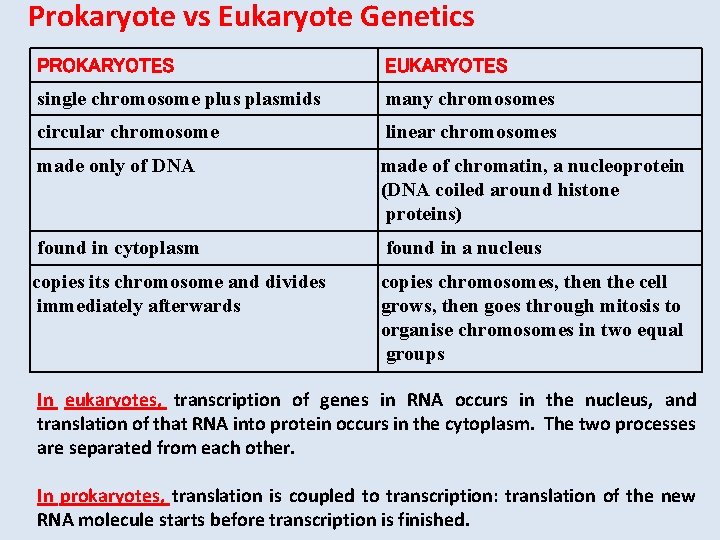
Prokaryote vs Eukaryote Genetics PROKARYOTES EUKARYOTES single chromosome plus plasmids many chromosomes circular chromosome linear chromosomes made only of DNA made of chromatin, a nucleoprotein (DNA coiled around histone proteins) found in cytoplasm found in a nucleus copies its chromosome and divides immediately afterwards copies chromosomes, then the cell grows, then goes through mitosis to organise chromosomes in two equal groups In eukaryotes, transcription of genes in RNA occurs in the nucleus, and translation of that RNA into protein occurs in the cytoplasm. The two processes are separated from each other. In prokaryotes, translation is coupled to transcription: translation of the new RNA molecule starts before transcription is finished.
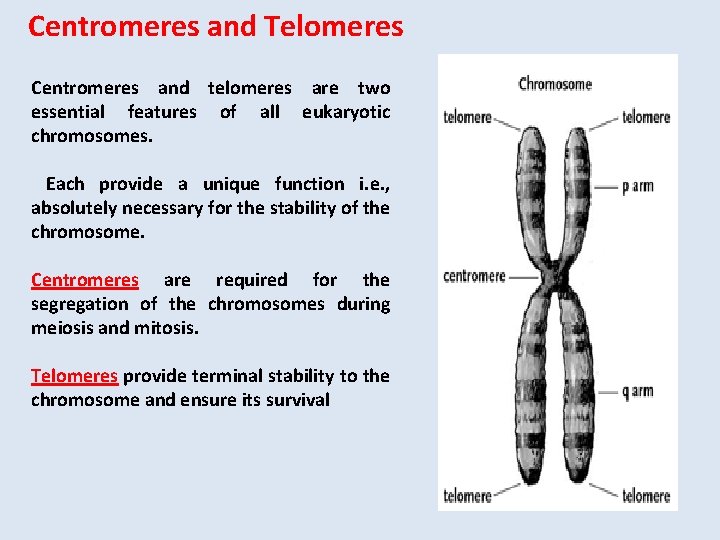
Centromeres and Telomeres Centromeres and telomeres are two essential features of all eukaryotic chromosomes. Each provide a unique function i. e. , absolutely necessary for the stability of the chromosome. Centromeres are required for the segregation of the chromosomes during meiosis and mitosis. Telomeres provide terminal stability to the chromosome and ensure its survival
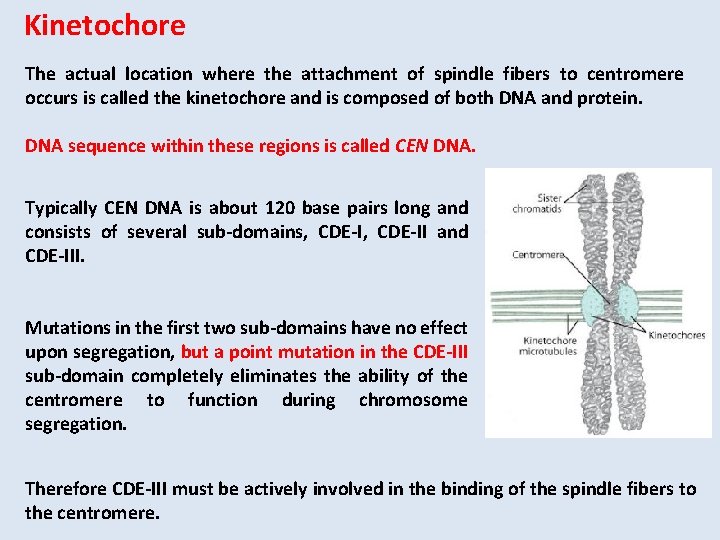
Centromere The region where two sister chromatids of a chromosome appear to be joined or “held together” during metaphase is called Centromere When chromosomes are stained they typically show a dark-stained region that is the centromere. During mitosis, the centromere that is shared by the sister chromatids must divide so that the chromatids can migrate to opposite poles of the cell. On the other hand, during the first meiotic division the centromere of sister chromatids must remain intact whereas during meiosis II they must act as they do during mitosis. As a result, centromeres are the first parts of chromosomes to be seen moving towards the opposite poles during anaphase.
Kinetochore The actual location where the attachment of spindle fibers to centromere occurs is called the kinetochore and is composed of both DNA and protein. DNA sequence within these regions is called CEN DNA. Typically CEN DNA is about 120 base pairs long and consists of several sub-domains, CDE-II and CDE-III. Mutations in the first two sub-domains have no effect upon segregation, but a point mutation in the CDE-III sub-domain completely eliminates the ability of the centromere to function during chromosome segregation. Therefore CDE-III must be actively involved in the binding of the spindle fibers to the centromere.
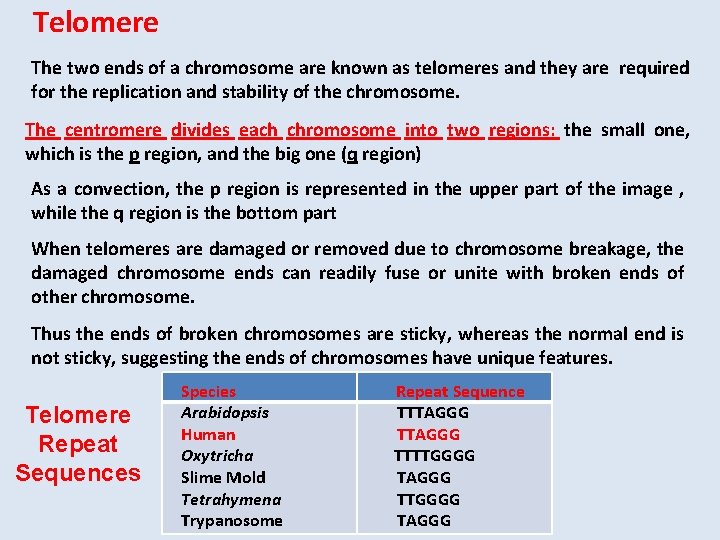
Telomere The two ends of a chromosome are known as telomeres and they are required for the replication and stability of the chromosome. The centromere divides each chromosome into two regions: the small one, which is the p region, and the big one (q region) As a convection, the p region is represented in the upper part of the image , while the q region is the bottom part When telomeres are damaged or removed due to chromosome breakage, the damaged chromosome ends can readily fuse or unite with broken ends of other chromosome. Thus the ends of broken chromosomes are sticky, whereas the normal end is not sticky, suggesting the ends of chromosomes have unique features. Telomere Repeat Sequences Species Arabidopsis Human Oxytricha Slime Mold Tetrahymena Trypanosome Repeat Sequence TTTAGGG TTTTGGGG TAGGG
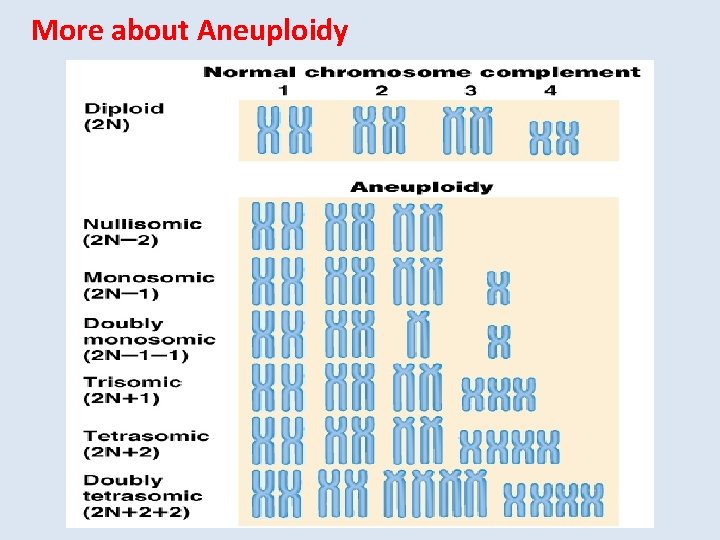
Numbers of chromosomes Constant for each cell in the body (except sex cells which only have half sets). Constant throughout the life of an individual (you don’t lose or gain chromosomes) Constant for all members of a species Normally, all the individuals of a species have the same number of chromosomes. Presence of a whole sets of chromosomes is called euploidy. It includes haploids, diploids, triploids, tetraploids etc. Gametes normally contain only one set of chromosome – this number is called Haploid (1 n) Somatic cells usually contain two sets of chromosome and is called Diploid (2 n) When a change in the chromosome number does not involve entire sets of chromosomes, but only a few of the chromosomes - is Aneuploidy. Monosomics (2 n-1) Trisomics (2 n+1) Nullisomics (2 n-2) Tetrasomics (2 n+2)
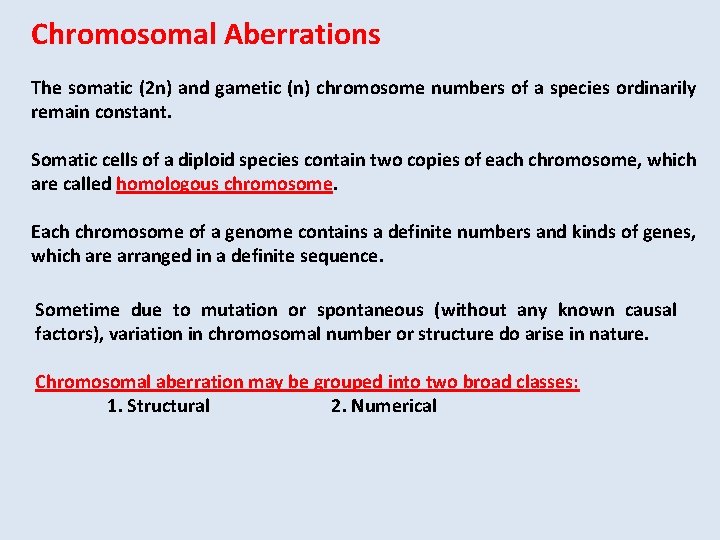
karyotypes A karyotype is the number and appearance of chromosomes in the nucleus of a eukaryotic cell. The term is also used for the complete set of chromosomes in a species, or an individual organism Karyotypes can be used for many purposes; such as, to study chromosomal aberrations, cellular function, and to gather information about past evolutionary events The basic number of chromosomes in the somatic cells of an individual or a species is called the somatic number and is designated 2 n. Thus, in humans 2 n = 46, while in the sex cells the chromosome number is n (humans: n = 23). So, in normal diploid organisms, autosomal chromosomes are present in two copies.
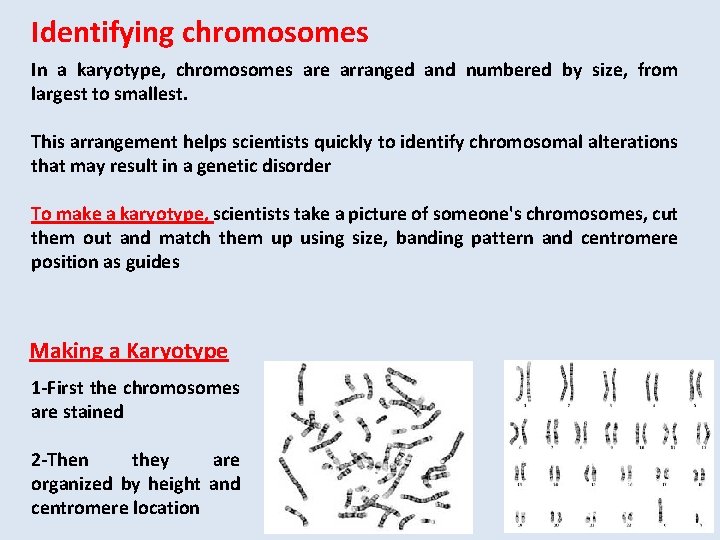
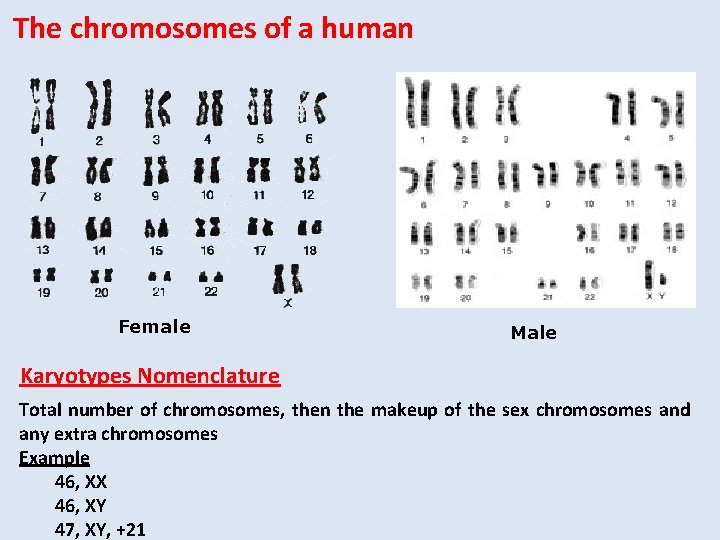
Identifying chromosomes In a karyotype, chromosomes are arranged and numbered by size, from largest to smallest. This arrangement helps scientists quickly to identify chromosomal alterations that may result in a genetic disorder To make a karyotype, scientists take a picture of someone's chromosomes, cut them out and match them up using size, banding pattern and centromere position as guides Making a Karyotype 1 -First the chromosomes are stained 2 -Then they are organized by height and centromere location
The chromosomes of a human Female Male Karyotypes Nomenclature Total number of chromosomes, then the makeup of the sex chromosomes and any extra chromosomes Example 46, XX 46, XY 47, XY, +21
Chromosomal Aberrations The somatic (2 n) and gametic (n) chromosome numbers of a species ordinarily remain constant. Somatic cells of a diploid species contain two copies of each chromosome, which are called homologous chromosome. Each chromosome of a genome contains a definite numbers and kinds of genes, which are arranged in a definite sequence. Sometime due to mutation or spontaneous (without any known causal factors), variation in chromosomal number or structure do arise in nature. Chromosomal aberration may be grouped into two broad classes: 1. Structural 2. Numerical
Structural Chromosomal Aberrations Chromosome structure variations result from chromosome breakage. Broken chromosomes tend to re-join; if there is more than one break, rejoining occurs at random and not necessarily with the correct ends. The result is structural changes in the chromosomes. Chromosome breakage is caused by X-rays, various chemicals, and can also occur spontaneously. There are four common type of structural aberrations: 1. Deletion or Deficiency 2. Duplication or Repeat 3. Inversion 4. Translocation.
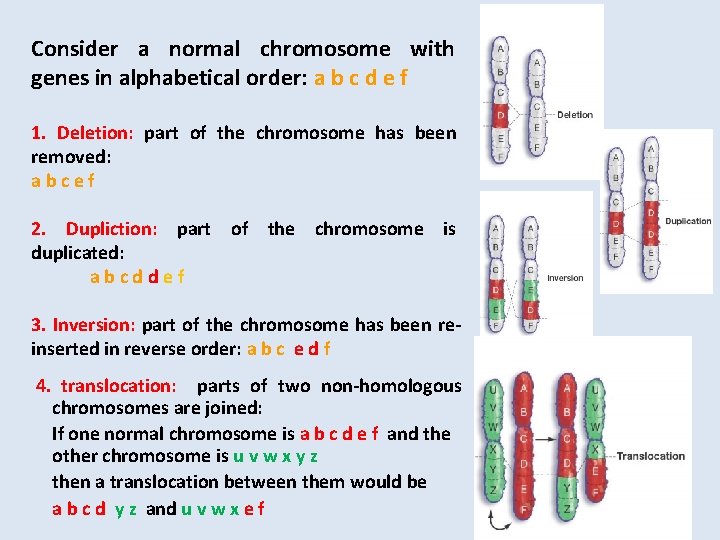
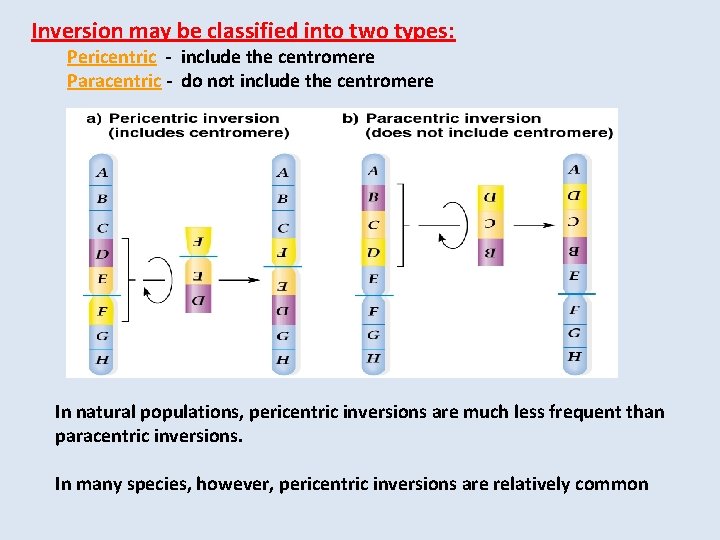
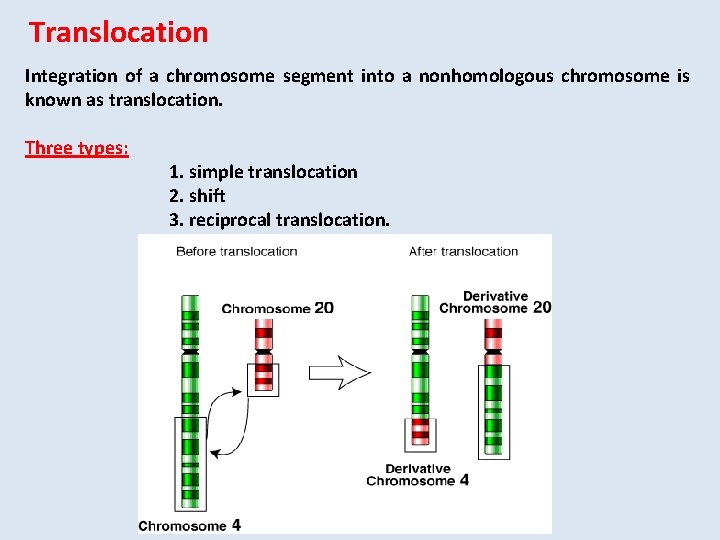
Consider a normal chromosome with genes in alphabetical order: a b c d e f 1. Deletion: part of the chromosome has been removed: abcef 2. Dupliction: part of the chromosome is duplicated: abcddef 3. Inversion: part of the chromosome has been reinserted in reverse order: a b c e d f 4. translocation: parts of two non-homologous chromosomes are joined: If one normal chromosome is a b c d e f and the other chromosome is u v w x y z then a translocation between them would be a b c d y z and u v w x e f
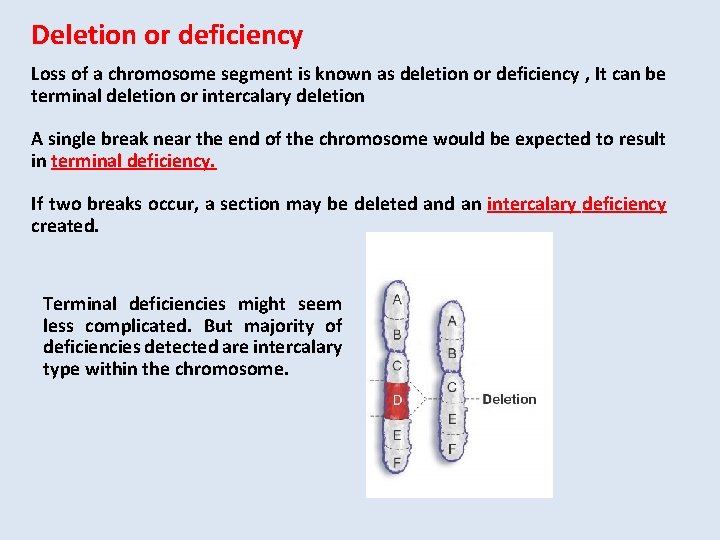
Deletion or deficiency Loss of a chromosome segment is known as deletion or deficiency , It can be terminal deletion or intercalary deletion A single break near the end of the chromosome would be expected to result in terminal deficiency. If two breaks occur, a section may be deleted an intercalary deficiency created. Terminal deficiencies might seem less complicated. But majority of deficiencies detected are intercalary type within the chromosome.
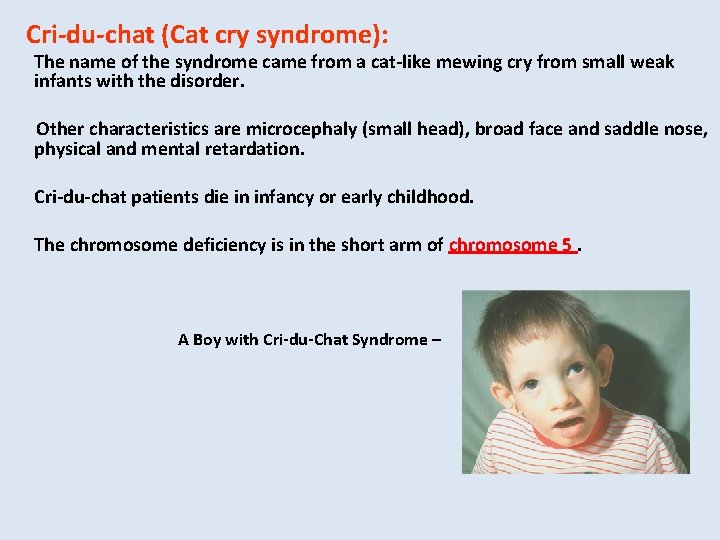
Cri-du-chat (Cat cry syndrome): The name of the syndrome came from a cat-like mewing cry from small weak infants with the disorder. Other characteristics are microcephaly (small head), broad face and saddle nose, physical and mental retardation. Cri-du-chat patients die in infancy or early childhood. The chromosome deficiency is in the short arm of chromosome 5. A Boy with Cri-du-Chat Syndrome –
Duplication The presence of an additional chromosome segment, as compared to that normally present in a nucleus is known as Duplication. In a diploid organism, presence of a chromosome segment in more than two copies per nucleus is called duplication. Four types of duplication: 1. Tandem duplication 2. Reverse tandem duplication 3. Displaced duplication 4. Translocation duplication The extra chromosome segment may be located immediately after the normal segment in precisely the same orientation forms the tandem When the gene sequence in the extra segment of a tandem in the reverse order i. e, inverted , it is known as reverse tandem duplication In some cases, the extra segment may be located in the same chromosome but away from the normal segment – termed as displaced duplication The additional chromosome segment is located in a non-homologous chromosome is translocation duplication.
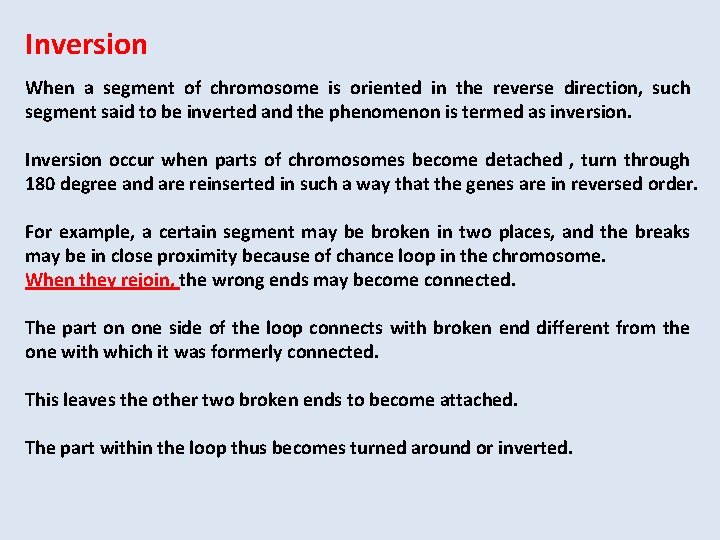
Inversion When a segment of chromosome is oriented in the reverse direction, such segment said to be inverted and the phenomenon is termed as inversion. Inversion occur when parts of chromosomes become detached , turn through 180 degree and are reinserted in such a way that the genes are in reversed order. For example, a certain segment may be broken in two places, and the breaks may be in close proximity because of chance loop in the chromosome. When they rejoin, the wrong ends may become connected. The part on one side of the loop connects with broken end different from the one with which it was formerly connected. This leaves the other two broken ends to become attached. The part within the loop thus becomes turned around or inverted.
Inversion may be classified into two types: Pericentric - include the centromere Paracentric - do not include the centromere In natural populations, pericentric inversions are much less frequent than paracentric inversions. In many species, however, pericentric inversions are relatively common
Translocation Integration of a chromosome segment into a nonhomologous chromosome is known as translocation. Three types: 1. simple translocation 2. shift 3. reciprocal translocation.
Variation in chromosomes number Organism with one complete set of chromosomes is said to be euploid (applies to haploid and diploid organisms). Aneuploidy - variation in the number of individual chromosomes The discovery of aneuploidy dates back to 1916 when Bridges discovered XO male and XXY female Drosophila, which had 7 and 9 chromosomes respectively, instead of normal 8. Nullisomy - loss of one homologous chromosome pair. Monosomy – loss of a single chromosome. Trisomy - one extra chromosome. Tetrasomy - one extra chromosome pair.
More about Aneuploidy
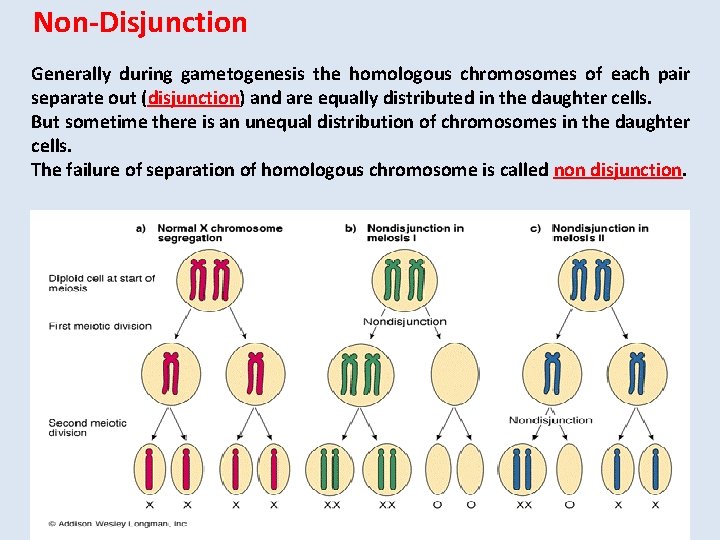
Non-Disjunction Generally during gametogenesis the homologous chromosomes of each pair separate out (disjunction) and are equally distributed in the daughter cells. But sometime there is an unequal distribution of chromosomes in the daughter cells. The failure of separation of homologous chromosome is called non disjunction.
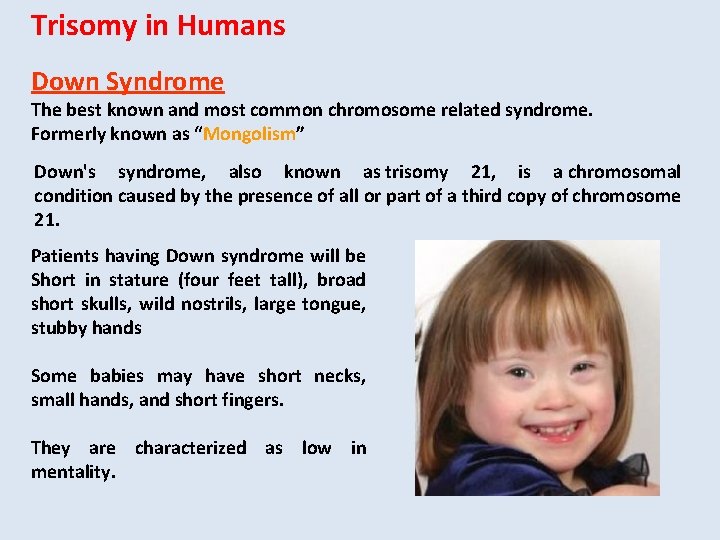
Trisomy in Humans Down Syndrome The best known and most common chromosome related syndrome. Formerly known as “Mongolism” Down's syndrome, also known as trisomy 21, is a chromosomal condition caused by the presence of all or part of a third copy of chromosome 21. Patients having Down syndrome will be Short in stature (four feet tall), broad short skulls, wild nostrils, large tongue, stubby hands Some babies may have short necks, small hands, and short fingers. They are characterized as low in mentality.
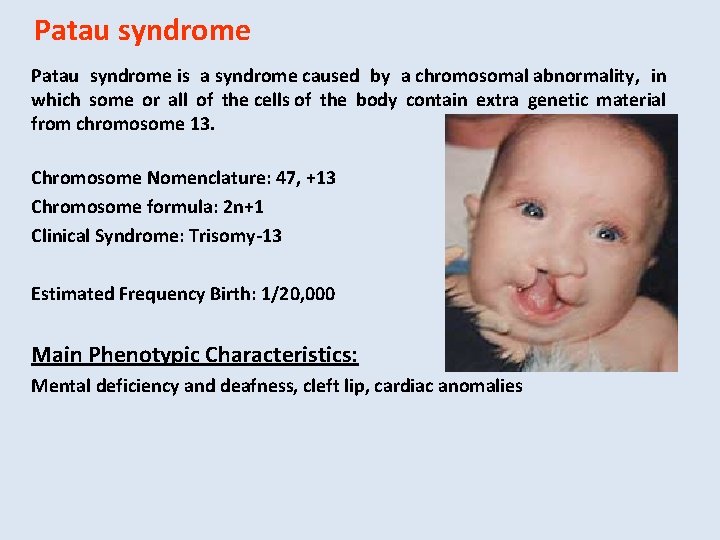
Patau syndrome is a syndrome caused by a chromosomal abnormality, in which some or all of the cells of the body contain extra genetic material from chromosome 13. Chromosome Nomenclature: 47, +13 Chromosome formula: 2 n+1 Clinical Syndrome: Trisomy-13 Estimated Frequency Birth: 1/20, 000 Main Phenotypic Characteristics: Mental deficiency and deafness, cleft lip, cardiac anomalies
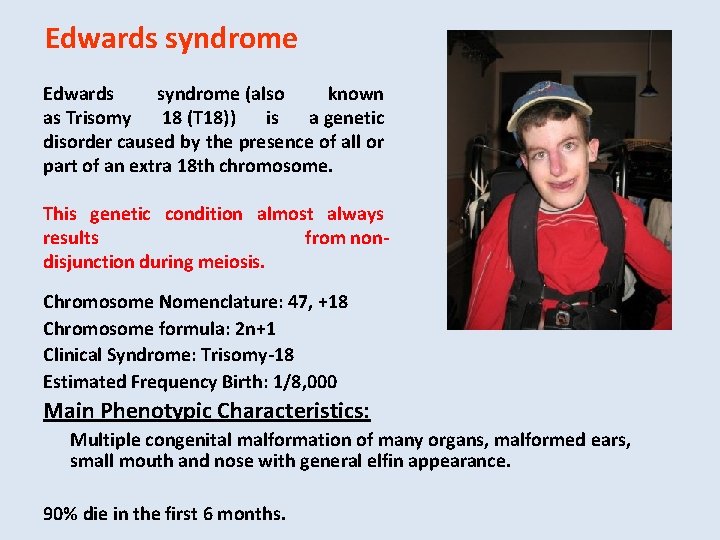
Edwards syndrome (also known as Trisomy 18 (T 18)) is a genetic disorder caused by the presence of all or part of an extra 18 th chromosome. This genetic condition almost always results from nondisjunction during meiosis. Chromosome Nomenclature: 47, +18 Chromosome formula: 2 n+1 Clinical Syndrome: Trisomy-18 Estimated Frequency Birth: 1/8, 000 Main Phenotypic Characteristics: Multiple congenital malformation of many organs, malformed ears, small mouth and nose with general elfin appearance. 90% die in the first 6 months.
Amniocentesis for Detecting Aneuploidy Chromosomal abnormalities are sufficiently well understood to permit genetic counseling. A fetus may be checked in early stages of development by karyotyping the cultured cells obtained by a process called amniocentesis. A sample of fluid will taken from mother and fetal cells are cultured and after a period of two to three weeks, chromosomes in dividing cells can be stained and observed. If three No. 21 chromosomes are present, Down syndrome confirmed. The risk for mothers less than 25 years of age to have the trisomy is about 1 in 1500 births. At 40 years of age, 1 in 100 births At 45 years 1 in 40 births.
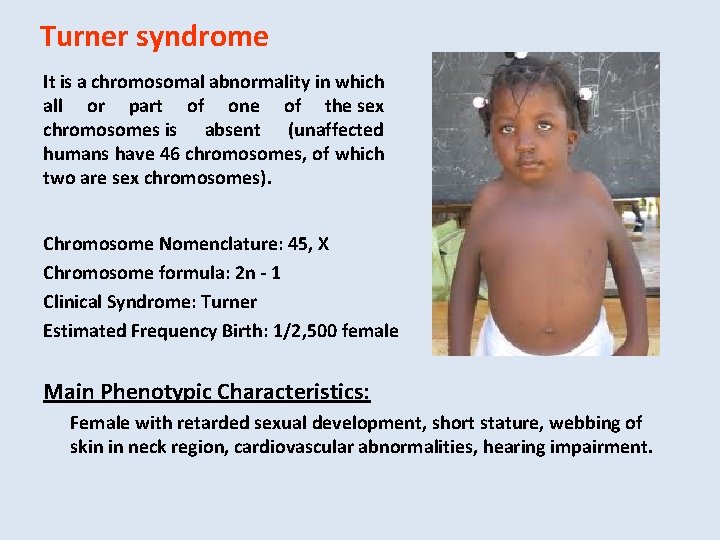
Turner syndrome It is a chromosomal abnormality in which all or part of one of the sex chromosomes is absent (unaffected humans have 46 chromosomes, of which two are sex chromosomes). Chromosome Nomenclature: 45, X Chromosome formula: 2 n - 1 Clinical Syndrome: Turner Estimated Frequency Birth: 1/2, 500 female Main Phenotypic Characteristics: Female with retarded sexual development, short stature, webbing of skin in neck region, cardiovascular abnormalities, hearing impairment.
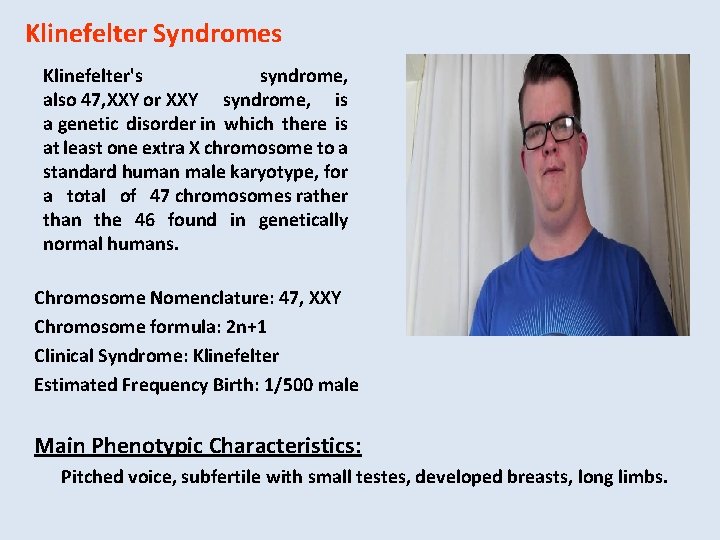
Klinefelter Syndromes Klinefelter's syndrome, also 47, XXY or XXY syndrome, is a genetic disorder in which there is at least one extra X chromosome to a standard human male karyotype, for a total of 47 chromosomes rather than the 46 found in genetically normal humans. Chromosome Nomenclature: 47, XXY Chromosome formula: 2 n+1 Clinical Syndrome: Klinefelter Estimated Frequency Birth: 1/500 male Main Phenotypic Characteristics: Pitched voice, subfertile with small testes, developed breasts, long limbs.