
Chromosomes and Cell Reproduction Chapter 6 7 I
- Slides: 28
Chromosomes and Cell Reproduction Chapter 6 & 7
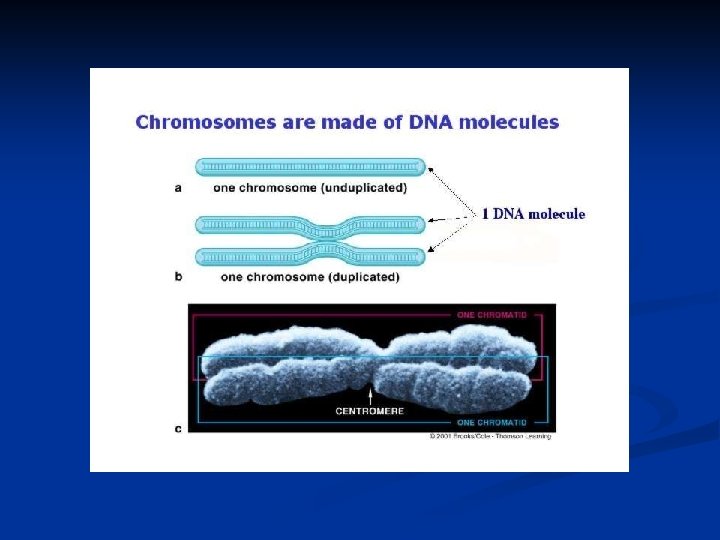
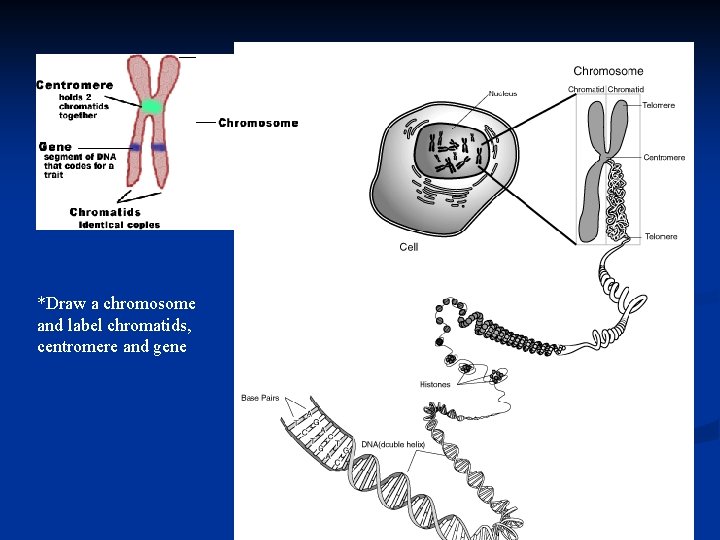
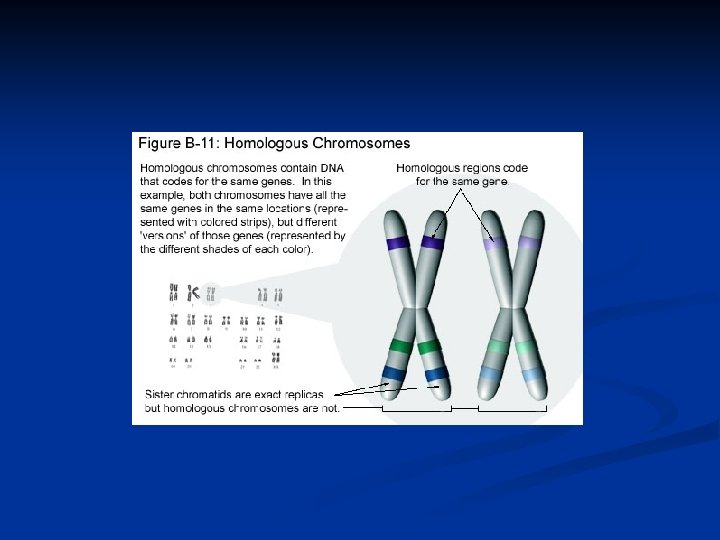
I. Chromosomes Chromosome- made of 2 exact copies of DNA coiled around proteins (*this is after replication but before cell division) B. Chromatid- each copy of the DNA on a chromosome C. Centromere- place where the chromatids attach to make a chromosome D. Genes- Segments of DNA on a chromosome that code for a specific protein/trait A.
*Draw a chromosome and label chromatids, centromere and gene
II. Chromosome Number A. B. C. Each human somatic cell (body cell) has 2 copies of 23 different chromosomes for a total of 46 chromosomes We inherit 1 of each chromosome from mom and 1 from dad Homologous Chromosomes- similar in size, shape and genetic content
D. Diploid cells- contain 2 sets of chromosomes, all somatic cells are diploid (ex. Somatic cells in humans have a total of 46 chromosomes) E. Haploid Cells- contain only 1 set of chromosomes, only gametes can be haploid (ex. Gametes in humans have 23 chromosomes)
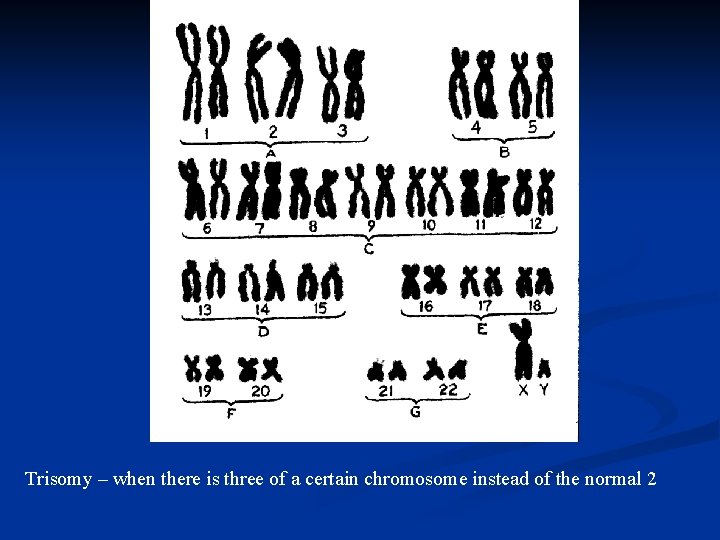
III. Karyotypes A. B. C. A picture of the chromosomes of an organism arranged by size Used to examine an individuals chromosomes: Karyotypes can determine only 2 things about the organism: 1. 2. Sex of individual Any abnormalities in the chromosomes (number or shape
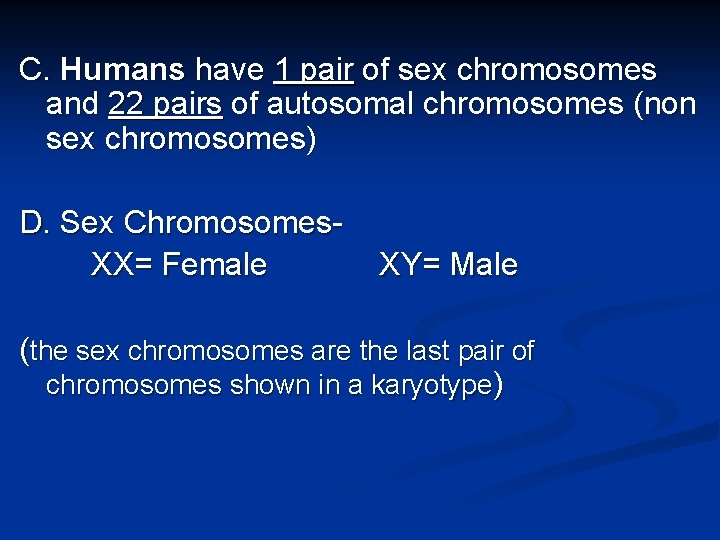
C. Humans have 1 pair of sex chromosomes and 22 pairs of autosomal chromosomes (non sex chromosomes) D. Sex Chromosomes. XX= Female XY= Male (the sex chromosomes are the last pair of chromosomes shown in a karyotype)
Trisomy – when there is three of a certain chromosome instead of the normal 2
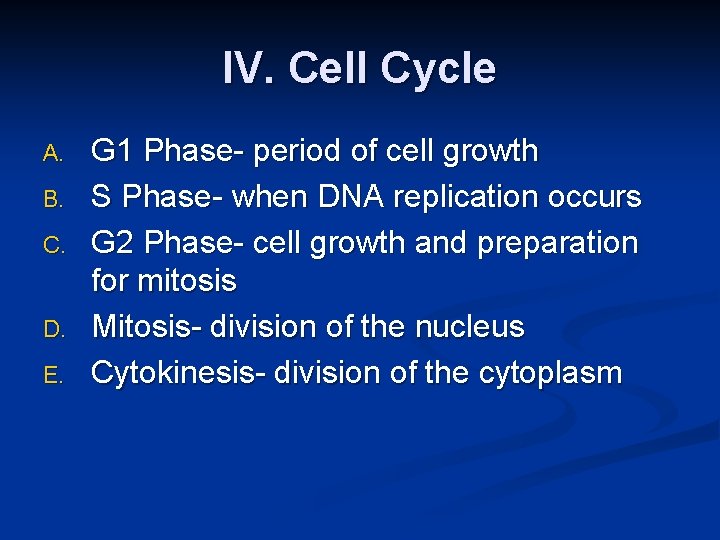
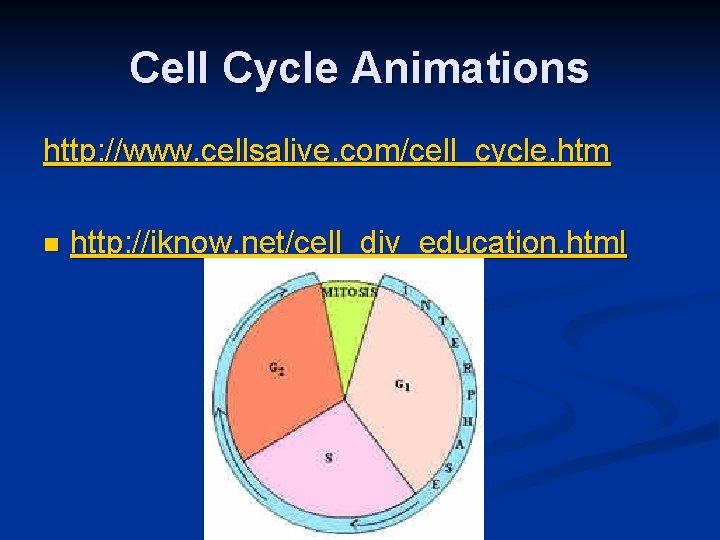
IV. Cell Cycle A. B. C. D. E. G 1 Phase- period of cell growth S Phase- when DNA replication occurs G 2 Phase- cell growth and preparation for mitosis Mitosis- division of the nucleus Cytokinesis- division of the cytoplasm
Cell Cycle Animations http: //www. cellsalive. com/cell_cycle. htm n http: //iknow. net/cell_div_education. html
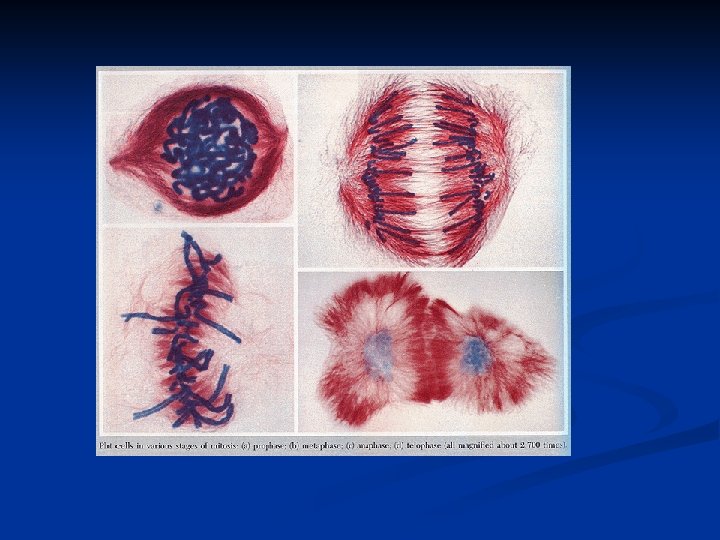
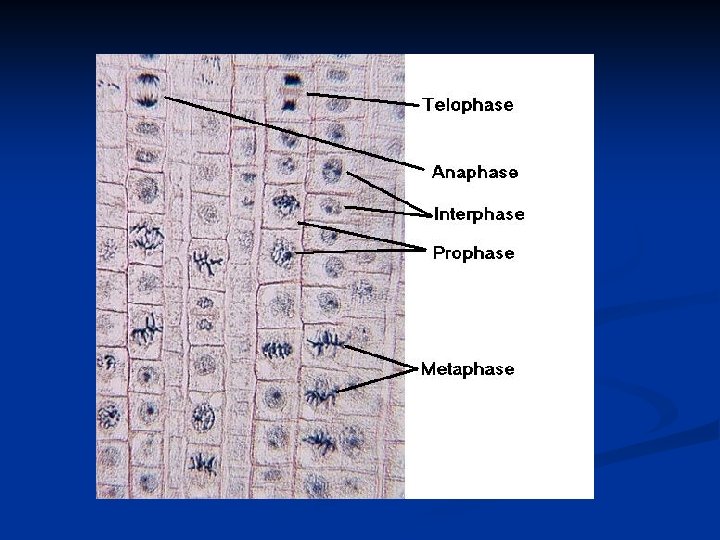
V. Mitosis A. B. C. D. The division of the nucleus in somatic cells Chromosomes have replicated prior to the start of mitosis Produces 2 identical daughter cells 4 phases
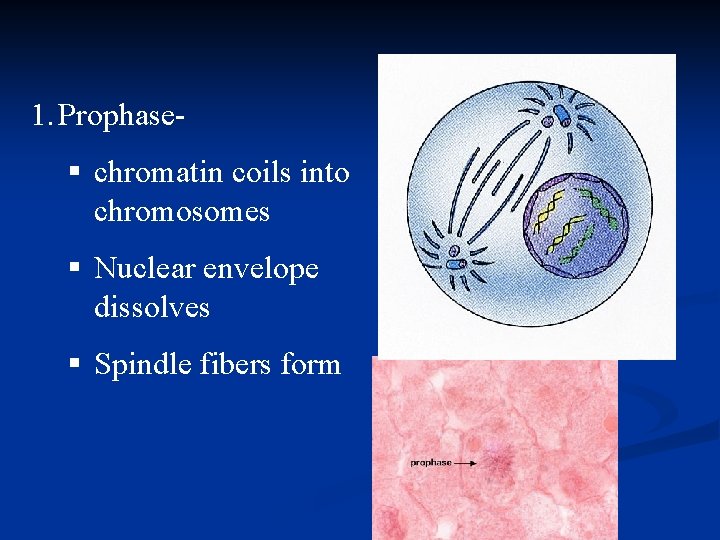
1. Prophase§ chromatin coils into chromosomes § Nuclear envelope dissolves § Spindle fibers form
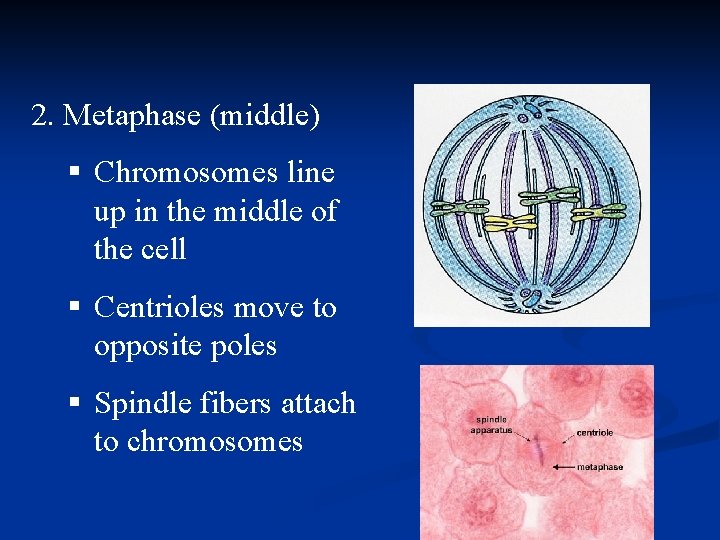
2. Metaphase (middle) § Chromosomes line up in the middle of the cell § Centrioles move to opposite poles § Spindle fibers attach to chromosomes
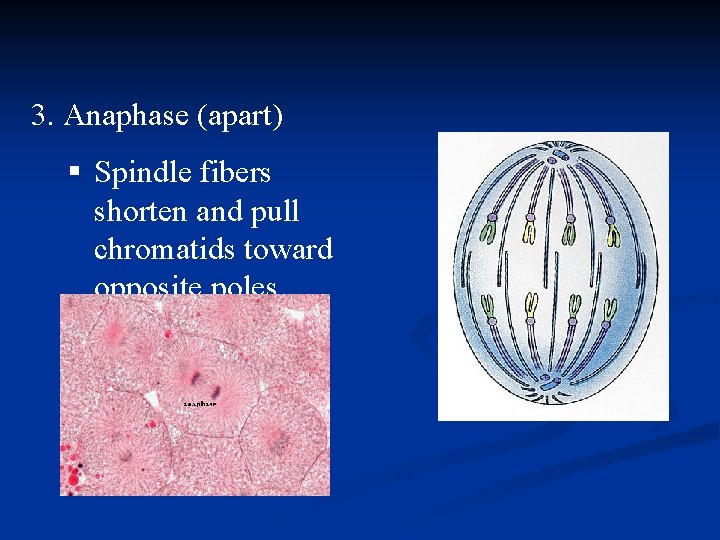
3. Anaphase (apart) § Spindle fibers shorten and pull chromatids toward opposite poles
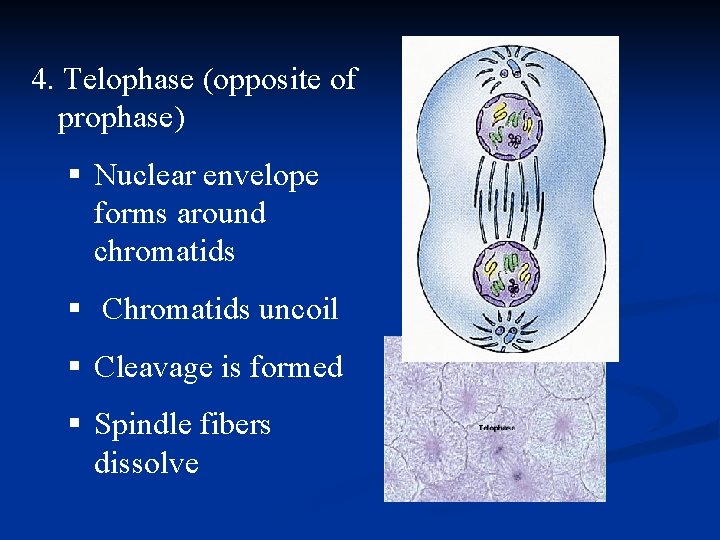
4. Telophase (opposite of prophase) § Nuclear envelope forms around chromatids § Chromatids uncoil § Cleavage is formed § Spindle fibers dissolve
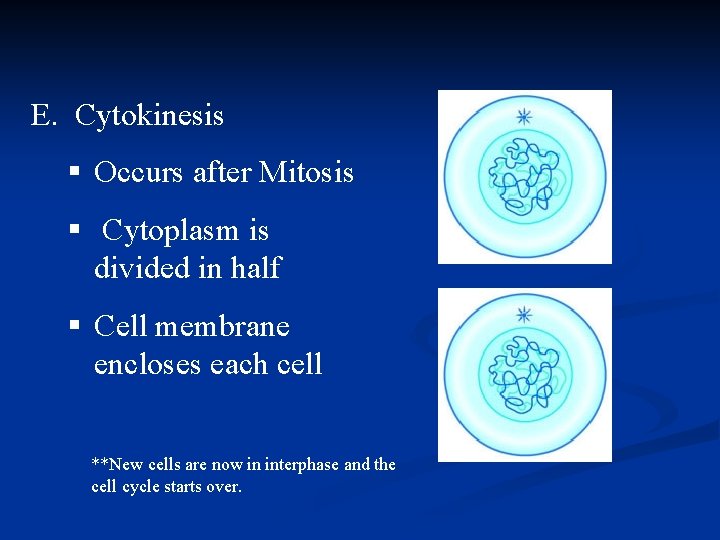
E. Cytokinesis § Occurs after Mitosis § Cytoplasm is divided in half § Cell membrane encloses each cell **New cells are now in interphase and the cell cycle starts over.
Mitosis Animation n http: //iknow. net/cell_div_education. html http: //www. loci. wisc. edu/outreach/bioclips/CDBio. html
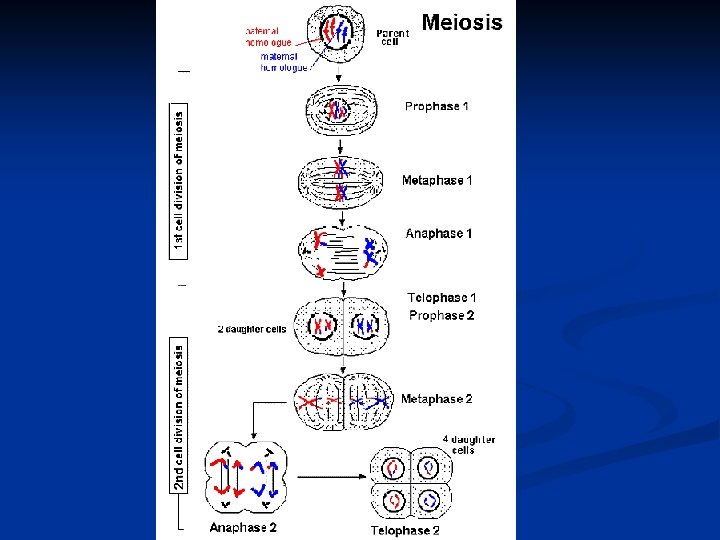
VI. Meiosis A. B. C. Two divisions of the nucleus Results in the formation of 4 gametes (egg, sperm) Halves the number of chromosomes (in humans from 46 to 23)
Stages of Meiosis I 1. *Prophase I- crossing over occurs, (portions of one chromosome are broken and exchanged with portions of the other homologue)**results in genetic variability 2. Metaphase I- homologous chromosome pair up together at the equator 3. Anaphase I- centromeres do not divide 4. Telophase I and Cytokinesis
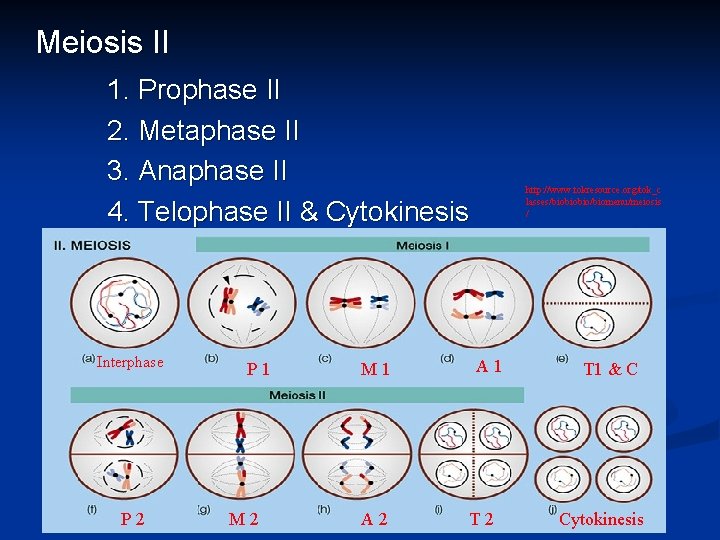
Meiosis II 1. Prophase II 2. Metaphase II 3. Anaphase II 4. Telophase II & Cytokinesis Interphase P 2 P 1 M 2 M 1 A 2 http: //www. tokresource. org/tok_c lasses/biobiobio/biomenu/meiosis / A 1 T 2 T 1 & C Cytokinesis
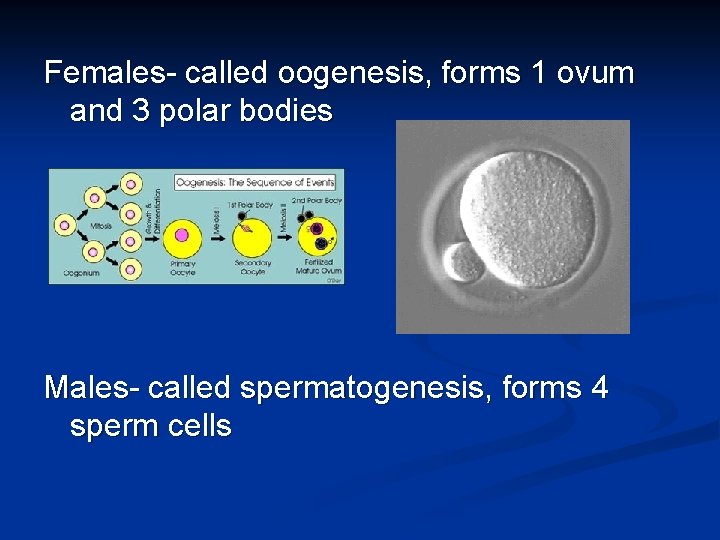
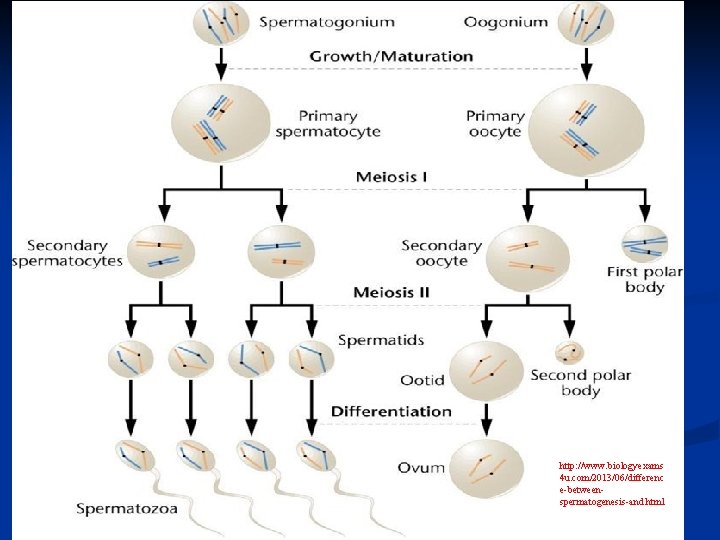
Females- called oogenesis, forms 1 ovum and 3 polar bodies Males- called spermatogenesis, forms 4 sperm cells
http: //www. biologyexams 4 u. com/2013/06/differenc e-betweenspermatogenesis-and. html
Meiosis Animations n Meiosis Animation n Meiosis Square Dance Video