
Chromosomes 1 Prokaryotic chromosomes The prokaryotic DNA bacterias
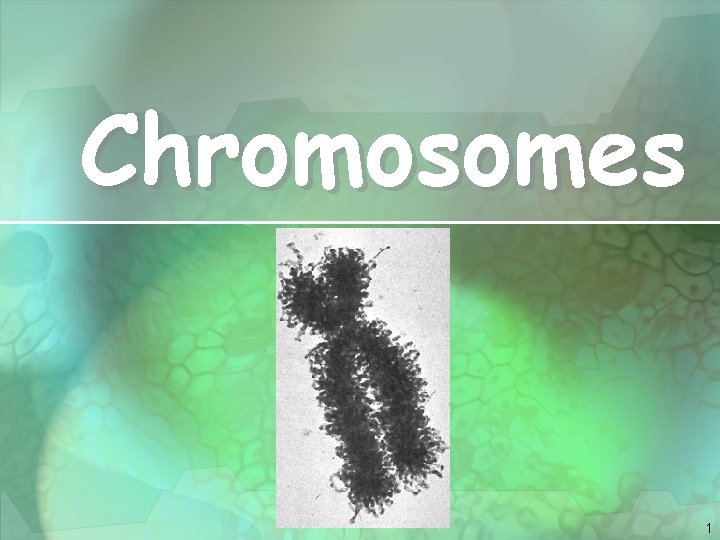
Chromosomes 1
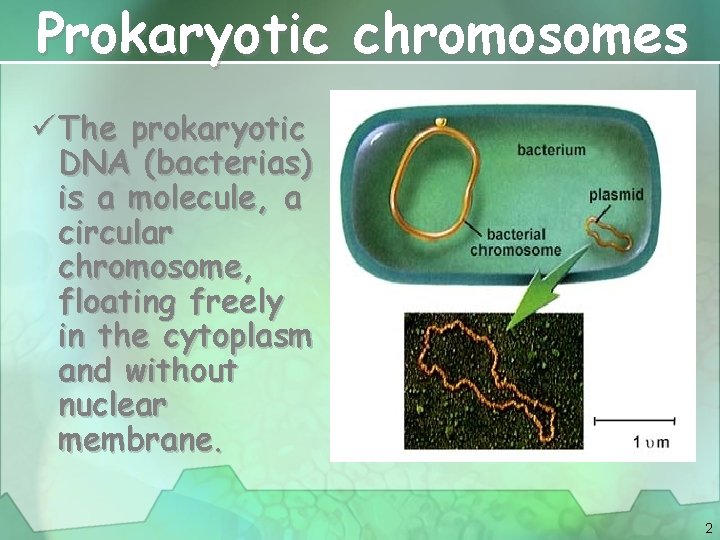
Prokaryotic chromosomes ü The prokaryotic DNA (bacterias) is a molecule, a circular chromosome, floating freely in the cytoplasm and without nuclear membrane. 2
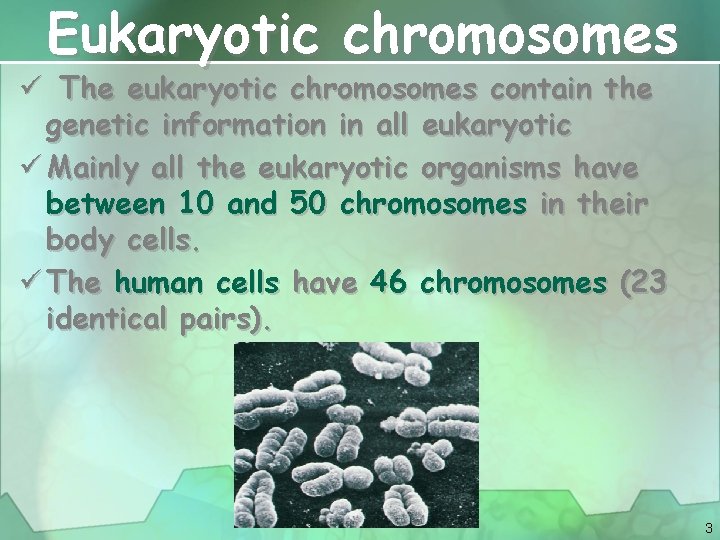
Eukaryotic chromosomes ü The eukaryotic chromosomes contain the genetic information in all eukaryotic ü Mainly all the eukaryotic organisms have between 10 and 50 chromosomes in their body cells. ü The human cells have 46 chromosomes (23 identical pairs). 3
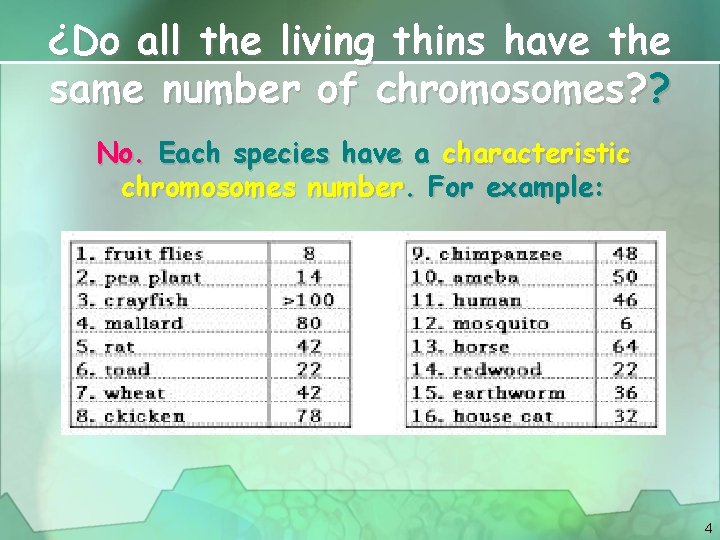
¿Do all the living thins have the same number of chromosomes? ? No. Each species have a characteristic chromosomes number. For example: 4
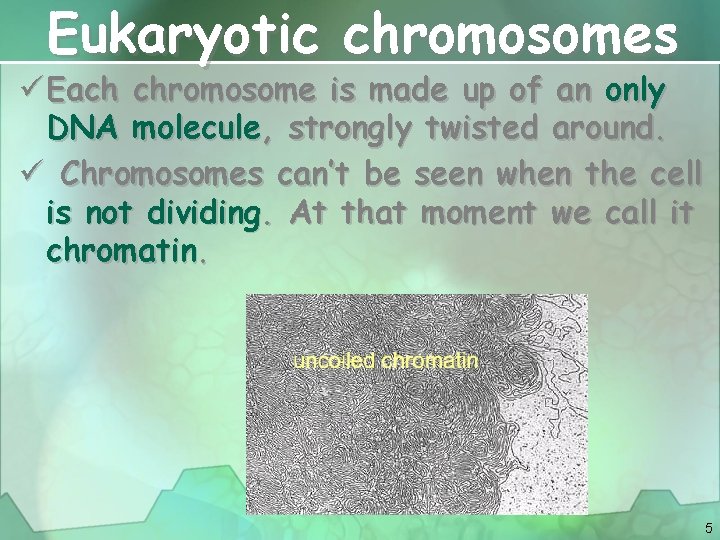
Eukaryotic chromosomes ü Each chromosome is made up of an only DNA molecule, strongly twisted around. ü Chromosomes can’t be seen when the cell is not dividing. At that moment we call it chromatin. 5
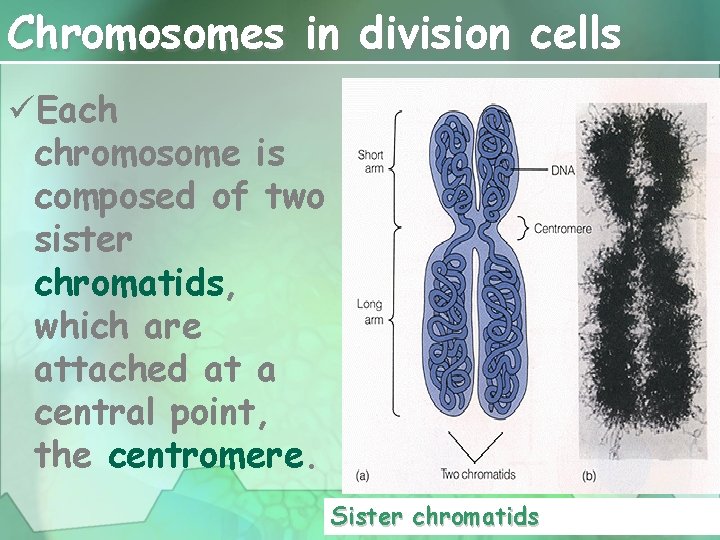
Chromosomes in division cells üEach chromosome is composed of two sister chromatids, which are attached at a central point, the centromere. Sister chromatids 6
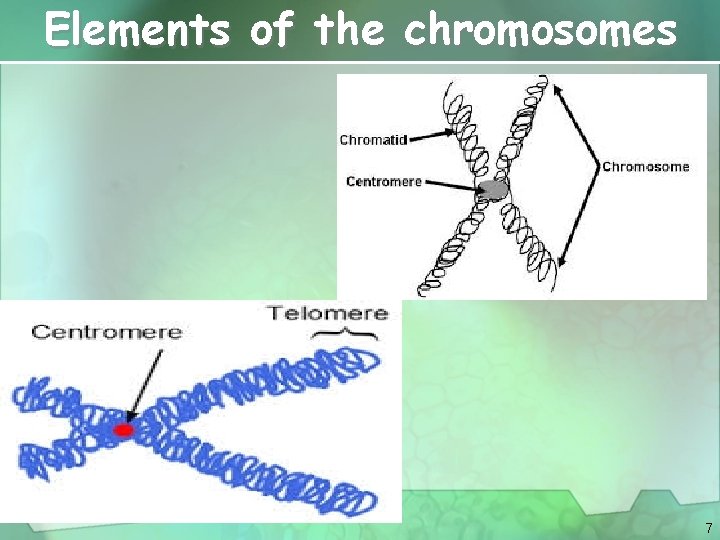
Elements of the chromosomes 7
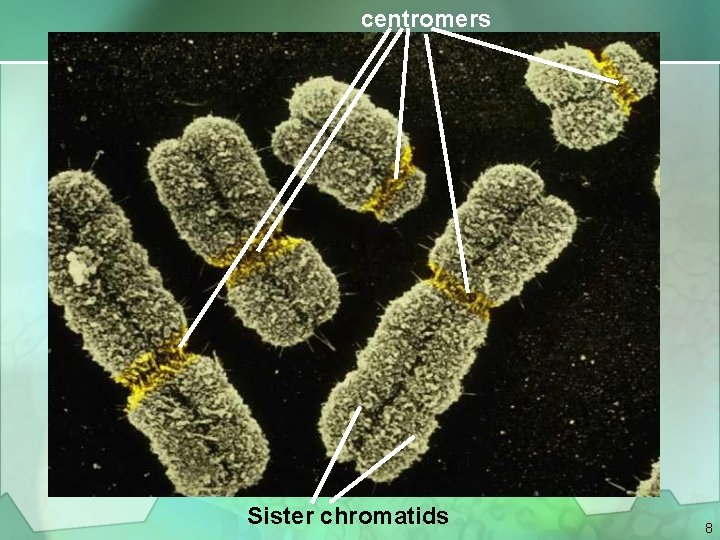
centromers Sister chromatids 8
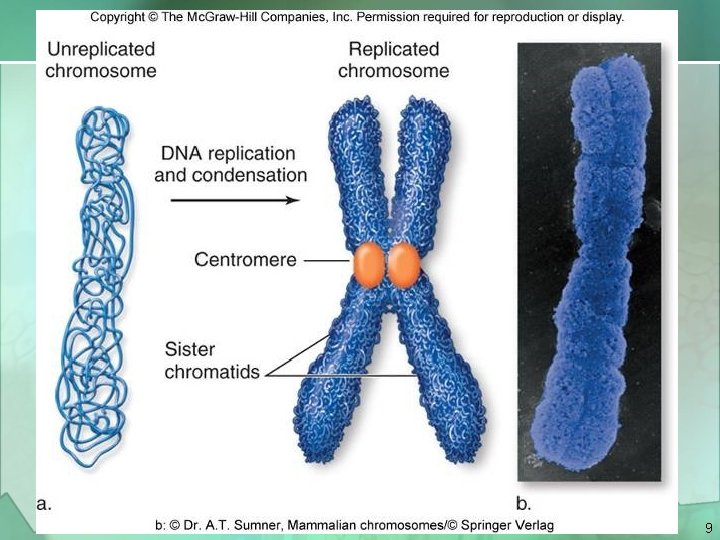
9
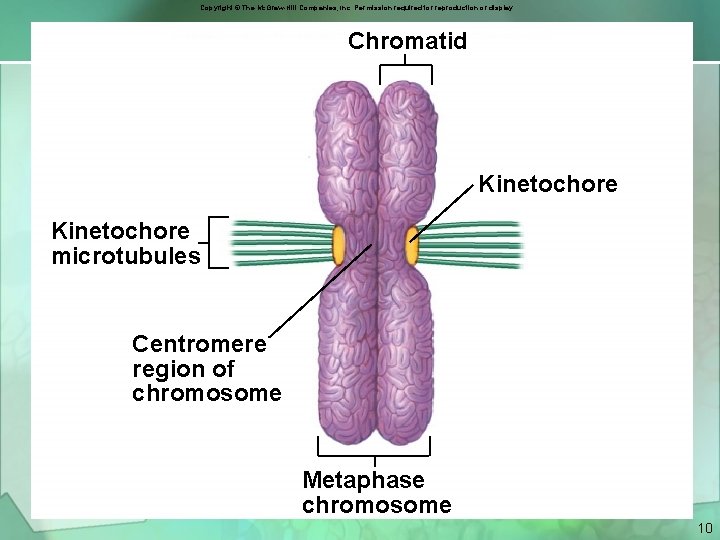
Copyright © The Mc. Graw-Hill Companies, Inc. Permission required for reproduction or display. Chromatid Kinetochore microtubules Centromere region of chromosome Metaphase chromosome 10
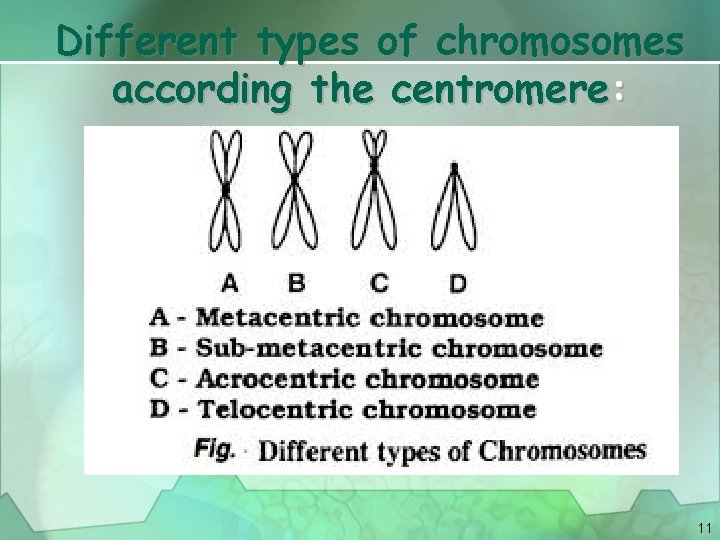
Different types of chromosomes according the centromere: 11
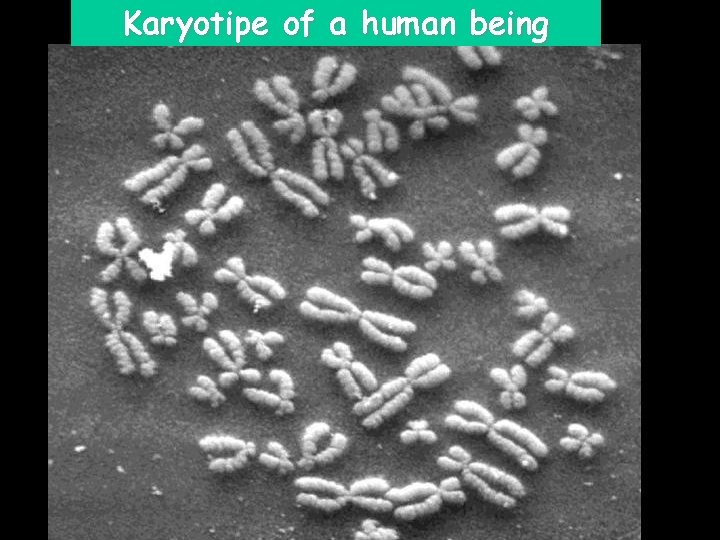
Karyotipe of a human being 12
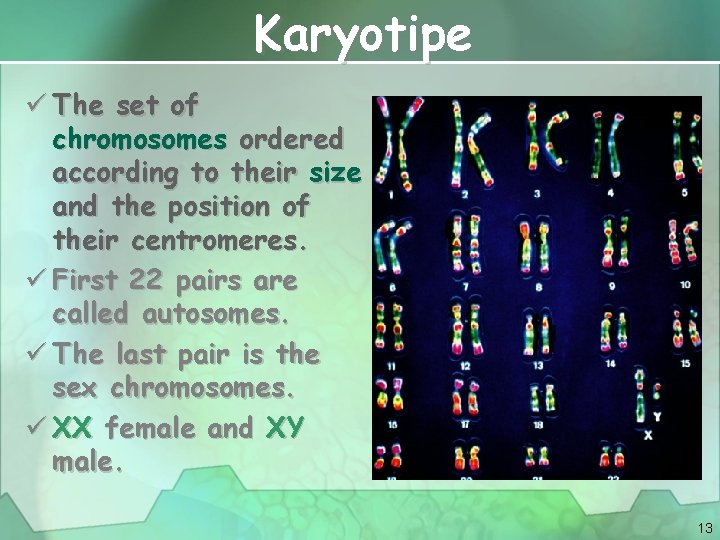
Karyotipe ü The set of chromosomes ordered according to their size and the position of their centromeres. ü First 22 pairs are called autosomes. ü The last pair is the sex chromosomes. ü XX female and XY male. 13
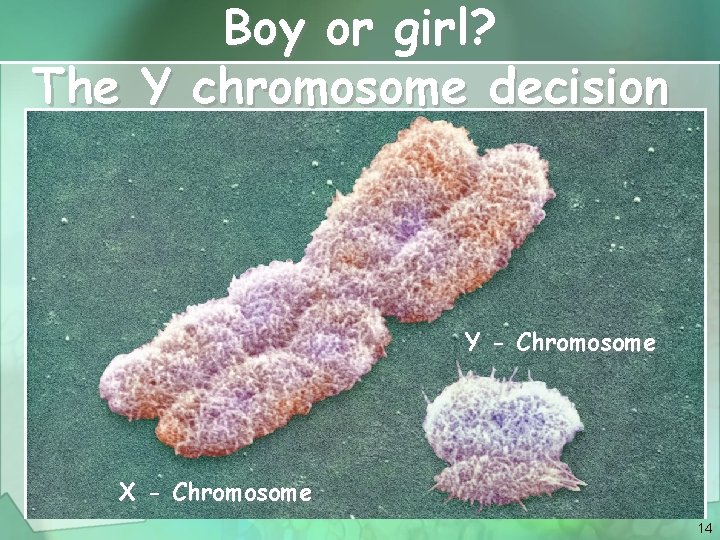
Boy or girl? The Y chromosome decision Y - Chromosome X - Chromosome 14
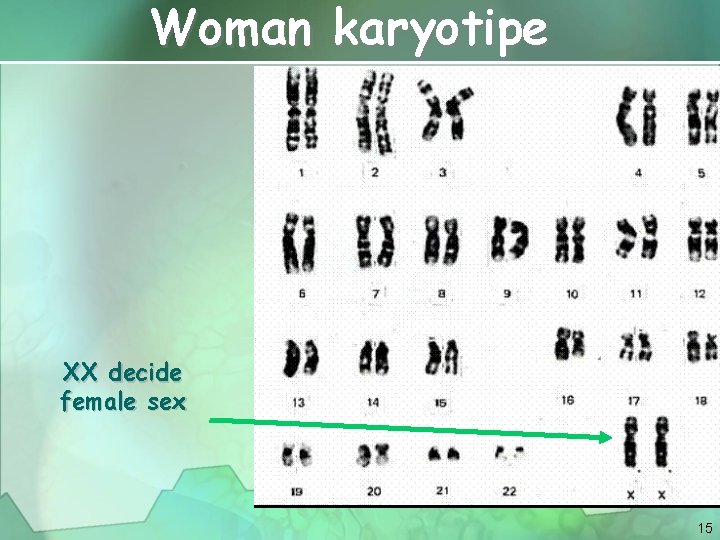
Woman karyotipe XX decide female sex 15
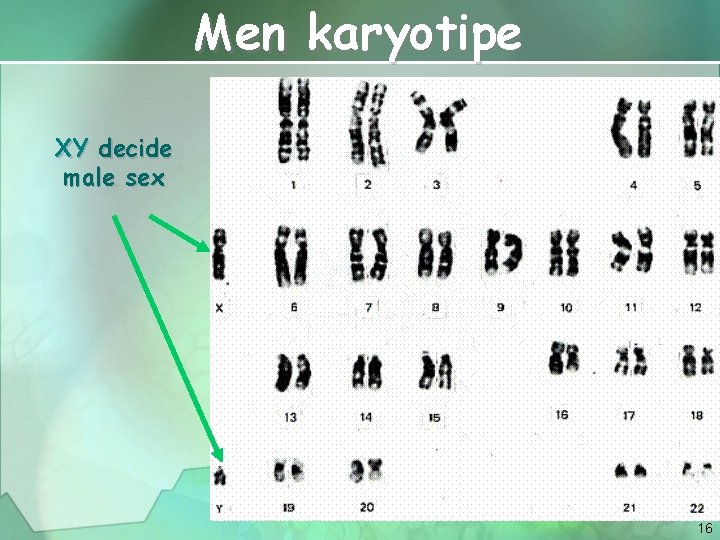
Men karyotipe XY decide male sex 16
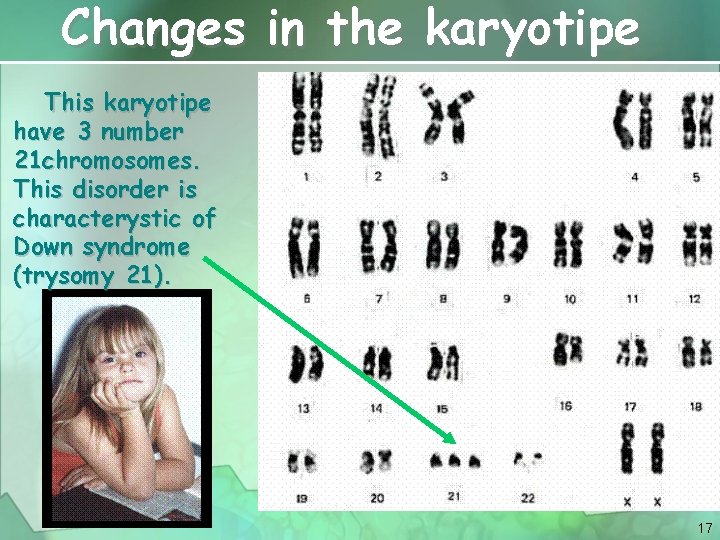
Changes in the karyotipe This karyotipe have 3 number 21 chromosomes. This disorder is characterystic of Down syndrome (trysomy 21). 17
- Slides: 17