
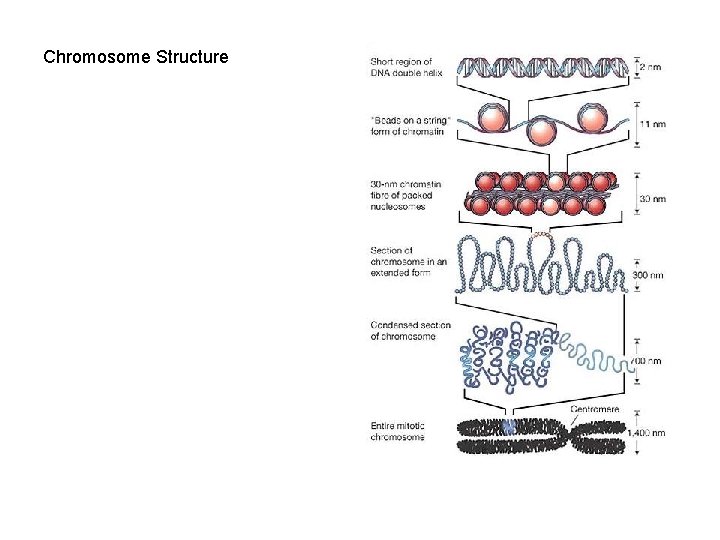
Chromosome Structure III Spending Energy I PROTEIN SYNTHESIS
- Slides: 25
Chromosome Structure
III. "Spending" Energy I: PROTEIN SYNTHESIS A. DNA and RNA Structure B. DNA and RNA Function 1. Information Storage - these nucleic acids are recipes for proteins. . . the linear sequence of A, T, C, and G's in these molecules determines the linear sequence of amino acids that will be linked together to form a protein.
III. "Spending" Energy I: PROTEIN SYNTHESIS A. DNA and RNA Structure B. DNA and RNA Function 1. Information Storage - these nucleic acids are recipes for proteins. . . the linear sequence of A, T, C, and G's in these molecules determines the linear sequence of amino acids that will be linked together to form a protein. 2. Catalytic Action - some RNA molecules catalyze reactions; they act like proteinaceous enzymes. (Ribozymes)
III. "Spending" Energy I: PROTEIN SYNTHESIS A. DNA and RNA Structure B. DNA and RNA Function 1. Information Storage - these nucleic acids are recipes for proteins. . . the linear sequence of A, T, C, and G's in these molecules determines the linear sequence of amino acids that will be linked together to form a protein. 2. Catalytic Action - some RNA molecules catalyze reactions; they act like proteinaceous enzymes. (Ribozymes) 3. Some RNA molecules bind to RNA or RNA and regulate the expression of these molecules, turning them off.
III. "Spending" Energy I: PROTEIN SYNTHESIS A. DNA and RNA Structure B. DNA and RNA Function C. HOW they work - Protein Synthesis
III. "Spending" Energy I: PROTEIN SYNTHESIS A. DNA and RNA Structure B. DNA and RNA Function C. HOW they work - Protein Synthesis 1. Overview: a. Two step process transcription: DNA is read, RNA is made
III. "Spending" Energy I: PROTEIN SYNTHESIS A. DNA and RNA Structure B. DNA and RNA Function C. HOW they work - Protein Synthesis 1. Overview: a. Two step process transcription: DNA is read, RNA is made translation: RNA is read, protein is made
III. "Spending" Energy I: PROTEIN SYNTHESIS A. DNA and RNA Structure B. DNA and RNA Function C. HOW they work - Protein Synthesis 1. Overview: a. Two step process transcription: DNA is read, RNA is made translation: RNA is read, protein is made b. Why two steps? Isn't that inefficient?
III. "Spending" Energy I: PROTEIN SYNTHESIS A. DNA and RNA Structure B. DNA and RNA Function C. HOW they work - Protein Synthesis 1. Overview: a. Two step process transcription: DNA is read, RNA is made translation: RNA is read, protein is made b. Why two steps? Isn't that inefficient? historical effect of how the system evolved
III. "Spending" Energy I: PROTEIN SYNTHESIS A. DNA and RNA Structure B. DNA and RNA Function C. HOW they work - Protein Synthesis 1. Overview: a. Two step process transcription: DNA is read, RNA is made translation: RNA is read, protein is made b. Why two steps? Isn't that inefficient? historical effect of how the system evolved greater productivity
III. "Spending" Energy I: PROTEIN SYNTHESIS A. DNA and RNA Structure B. DNA and RNA Function C. HOW they work - Protein Synthesis 2. Transcription - DNA is "read" and RNA is made
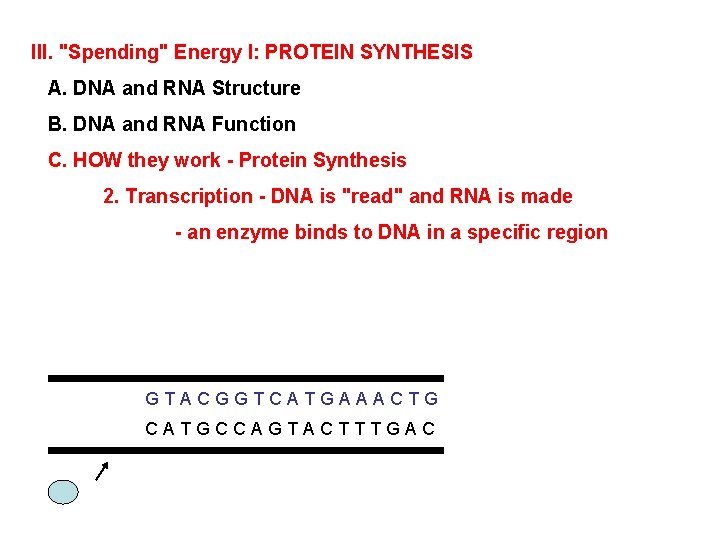
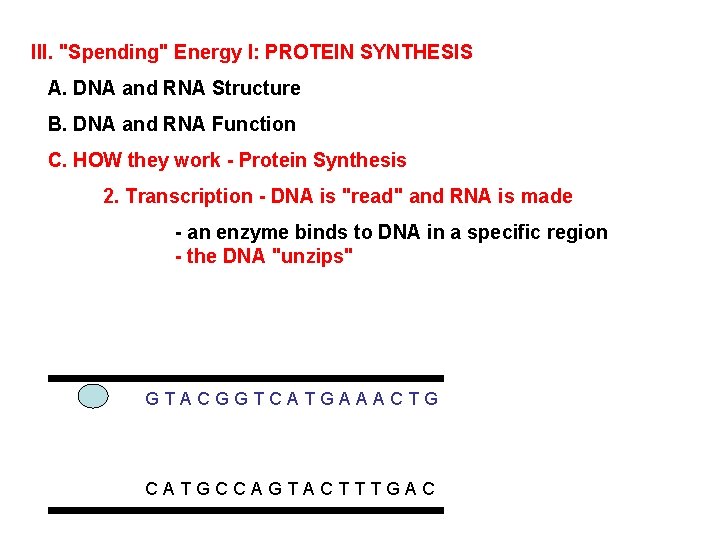
III. "Spending" Energy I: PROTEIN SYNTHESIS A. DNA and RNA Structure B. DNA and RNA Function C. HOW they work - Protein Synthesis 2. Transcription - DNA is "read" and RNA is made - an enzyme binds to DNA in a specific region GTACGGTCATGAAACTG CATGCCAGTACTTTGAC
III. "Spending" Energy I: PROTEIN SYNTHESIS A. DNA and RNA Structure B. DNA and RNA Function C. HOW they work - Protein Synthesis 2. Transcription - DNA is "read" and RNA is made - an enzyme binds to DNA in a specific region - the DNA "unzips" GTACGGTCATGAAACTG CATGCCAGTACTTTGAC
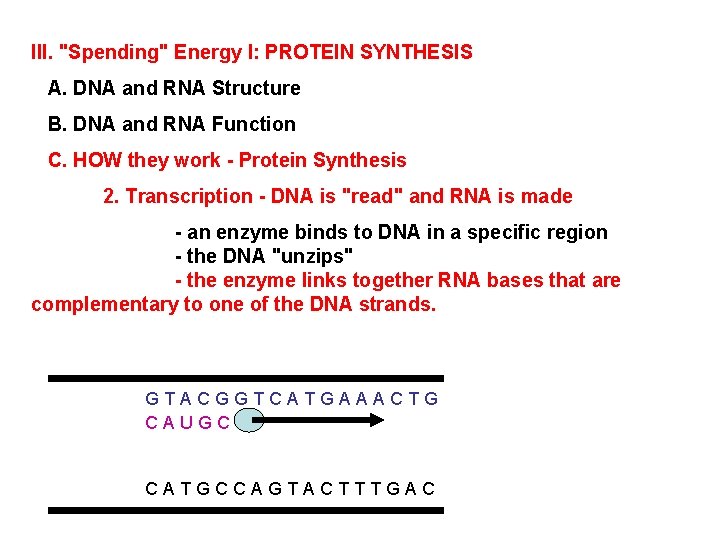
III. "Spending" Energy I: PROTEIN SYNTHESIS A. DNA and RNA Structure B. DNA and RNA Function C. HOW they work - Protein Synthesis 2. Transcription - DNA is "read" and RNA is made - an enzyme binds to DNA in a specific region - the DNA "unzips" - the enzyme links together RNA bases that are complementary to one of the DNA strands. GTACGGTCATGAAACTG CAUGC CATGCCAGTACTTTGAC
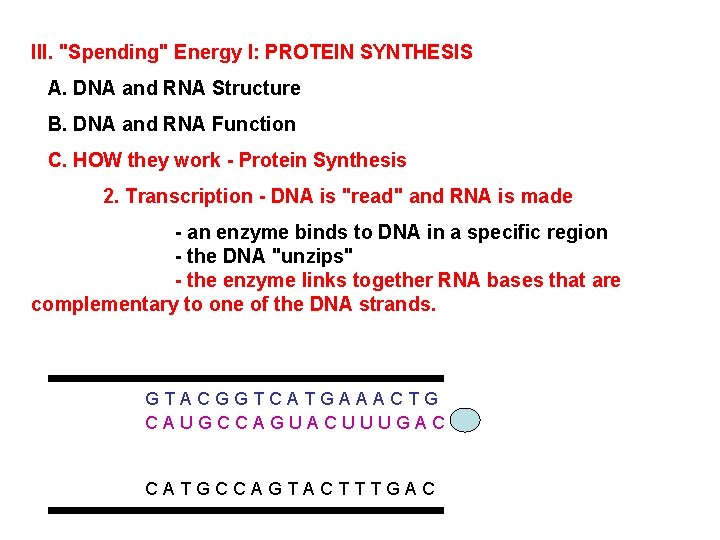
III. "Spending" Energy I: PROTEIN SYNTHESIS A. DNA and RNA Structure B. DNA and RNA Function C. HOW they work - Protein Synthesis 2. Transcription - DNA is "read" and RNA is made - an enzyme binds to DNA in a specific region - the DNA "unzips" - the enzyme links together RNA bases that are complementary to one of the DNA strands. GTACGGTCATGAAACTG CAUGCCAGUACUUUGAC CATGCCAGTACTTTGAC
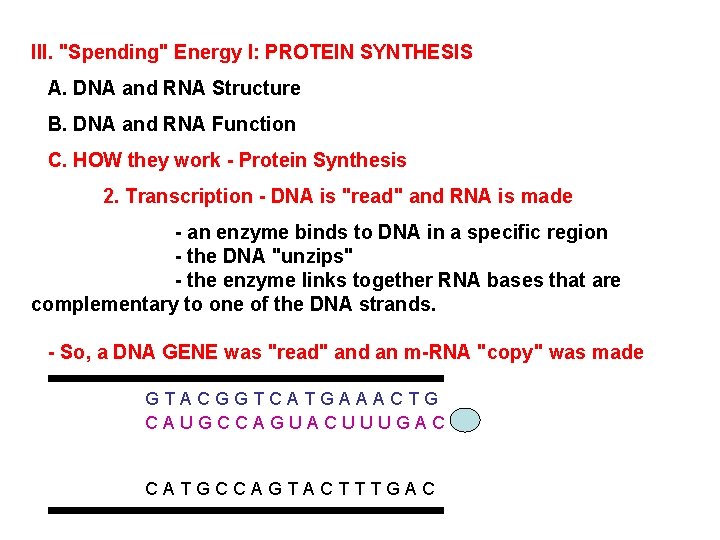
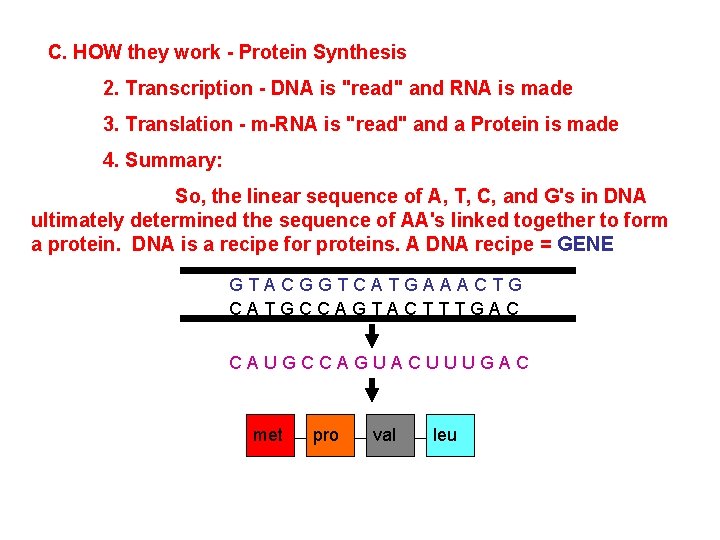
III. "Spending" Energy I: PROTEIN SYNTHESIS A. DNA and RNA Structure B. DNA and RNA Function C. HOW they work - Protein Synthesis 2. Transcription - DNA is "read" and RNA is made - an enzyme binds to DNA in a specific region - the DNA "unzips" - the enzyme links together RNA bases that are complementary to one of the DNA strands. - So, a DNA GENE was "read" and an m-RNA "copy" was made GTACGGTCATGAAACTG CAUGCCAGUACUUUGAC CATGCCAGTACTTTGAC
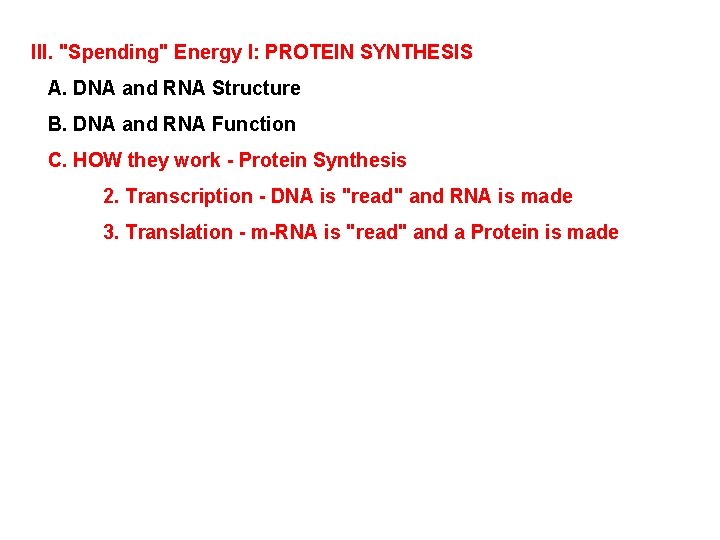
III. "Spending" Energy I: PROTEIN SYNTHESIS A. DNA and RNA Structure B. DNA and RNA Function C. HOW they work - Protein Synthesis 2. Transcription - DNA is "read" and RNA is made 3. Translation - m-RNA is "read" and a Protein is made
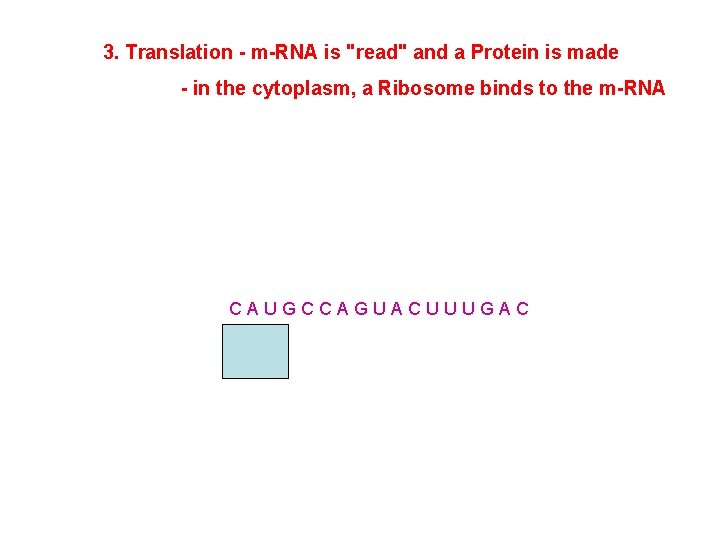
3. Translation - m-RNA is "read" and a Protein is made - in the cytoplasm, a Ribosome binds to the m-RNA CAUGCCAGUACUUUGAC
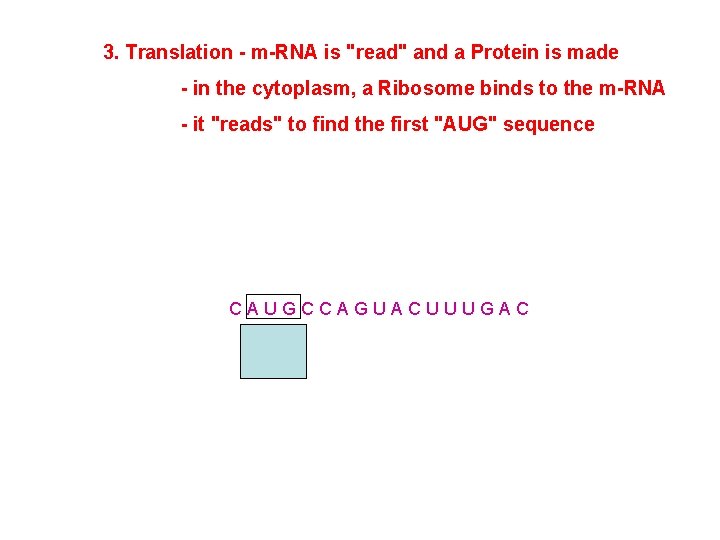
3. Translation - m-RNA is "read" and a Protein is made - in the cytoplasm, a Ribosome binds to the m-RNA - it "reads" to find the first "AUG" sequence CAUGCCAGUACUUUGAC
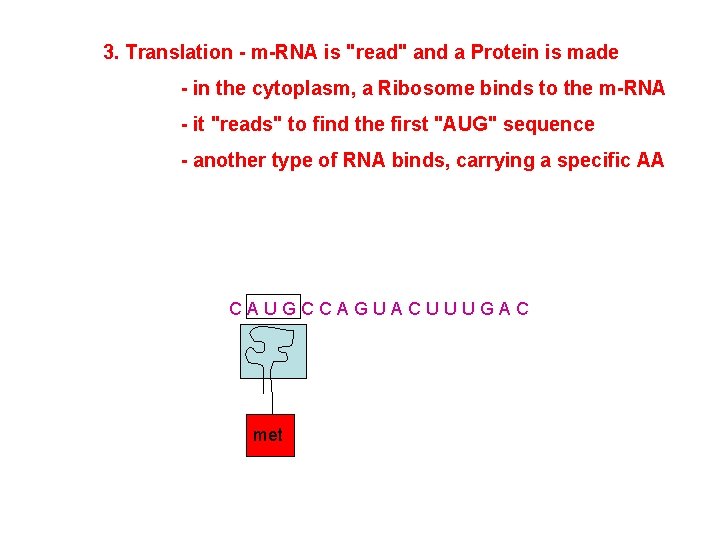
3. Translation - m-RNA is "read" and a Protein is made - in the cytoplasm, a Ribosome binds to the m-RNA - it "reads" to find the first "AUG" sequence - another type of RNA binds, carrying a specific AA CAUGCCAGUACUUUGAC met
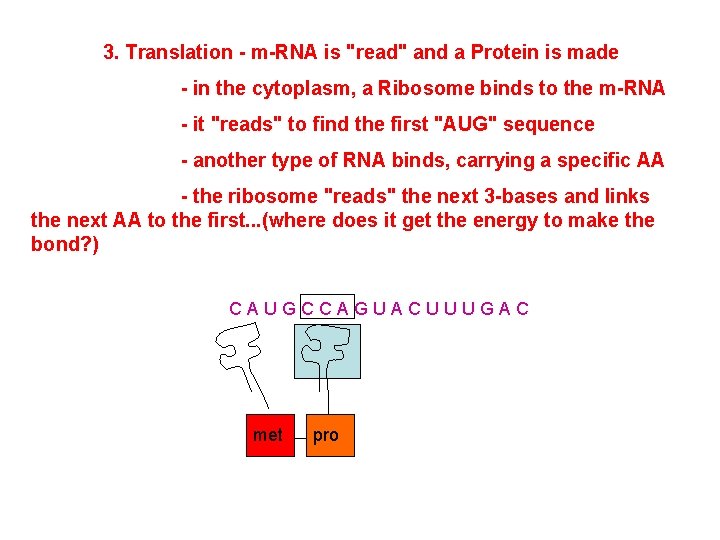
3. Translation - m-RNA is "read" and a Protein is made - in the cytoplasm, a Ribosome binds to the m-RNA - it "reads" to find the first "AUG" sequence - another type of RNA binds, carrying a specific AA - the ribosome "reads" the next 3 -bases and links the next AA to the first. . . (where does it get the energy to make the bond? ) CAUGCCAGUACUUUGAC met pro
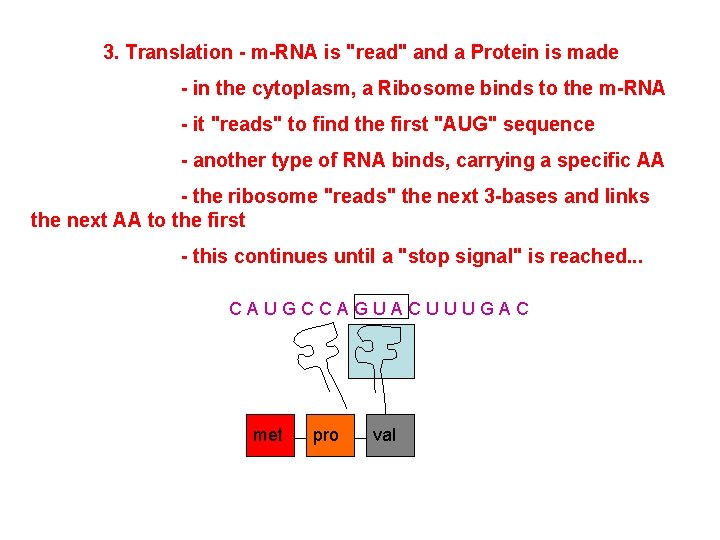
3. Translation - m-RNA is "read" and a Protein is made - in the cytoplasm, a Ribosome binds to the m-RNA - it "reads" to find the first "AUG" sequence - another type of RNA binds, carrying a specific AA - the ribosome "reads" the next 3 -bases and links the next AA to the first - this continues until a "stop signal" is reached. . . CAUGCCAGUACUUUGAC met pro val
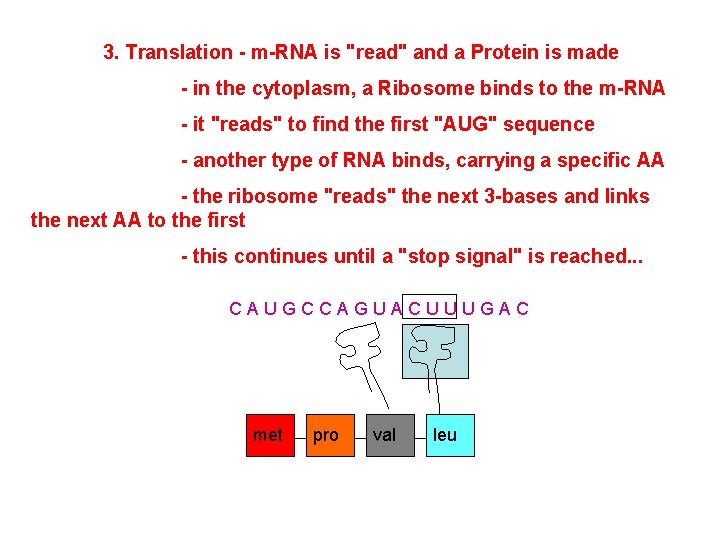
3. Translation - m-RNA is "read" and a Protein is made - in the cytoplasm, a Ribosome binds to the m-RNA - it "reads" to find the first "AUG" sequence - another type of RNA binds, carrying a specific AA - the ribosome "reads" the next 3 -bases and links the next AA to the first - this continues until a "stop signal" is reached. . . CAUGCCAGUACUUUGAC met pro val leu
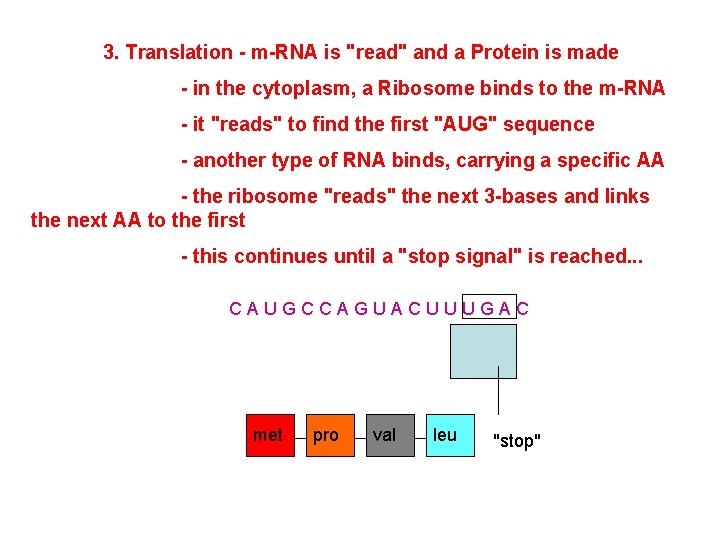
3. Translation - m-RNA is "read" and a Protein is made - in the cytoplasm, a Ribosome binds to the m-RNA - it "reads" to find the first "AUG" sequence - another type of RNA binds, carrying a specific AA - the ribosome "reads" the next 3 -bases and links the next AA to the first - this continues until a "stop signal" is reached. . . CAUGCCAGUACUUUGAC met pro val leu "stop"
C. HOW they work - Protein Synthesis 2. Transcription - DNA is "read" and RNA is made 3. Translation - m-RNA is "read" and a Protein is made 4. Summary: So, the linear sequence of A, T, C, and G's in DNA ultimately determined the sequence of AA's linked together to form a protein. DNA is a recipe for proteins. A DNA recipe = GENE GTACGGTCATGAAACTG CATGCCAGTACTTTGAC CAUGCCAGUACUUUGAC met pro val leu