
Chromosome structure and chemical modifications can affect gene

- Slides: 20
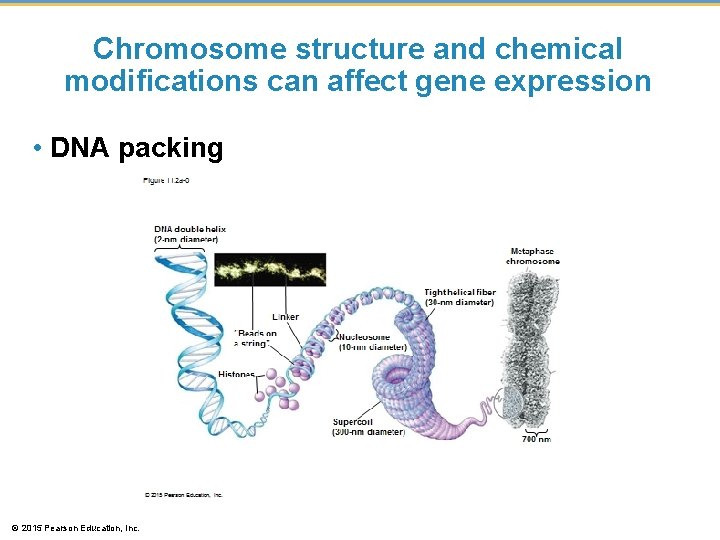
Chromosome structure and chemical modifications can affect gene expression • DNA packing © 2015 Pearson Education, Inc.
Chromosome structure and chemical modifications can affect gene expression • Methylation- Chemical modification of DNA bases or histone proteins can result in epigenetic inheritance © 2015 Pearson Education, Inc.
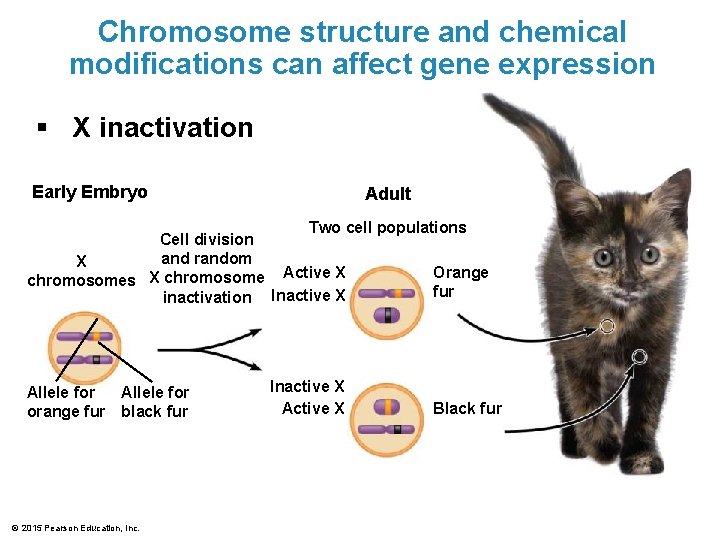
Chromosome structure and chemical modifications can affect gene expression § X inactivation Early Embryo Adult Two cell populations Cell division and random X Orange chromosomes X chromosome Active X fur inactivation Inactive X Allele for orange fur black fur © 2015 Pearson Education, Inc. Inactive X Active X Black fur
The Control of Gene Expression n n Each cell in the human contains all the genetic material for the growth and development of a human. Some of these genes will be need to be expressed all the time. These are the genes that are involved in of vital biochemical processes such as respiration. Other genes are not expressed all the time. They are switched on an off at need.
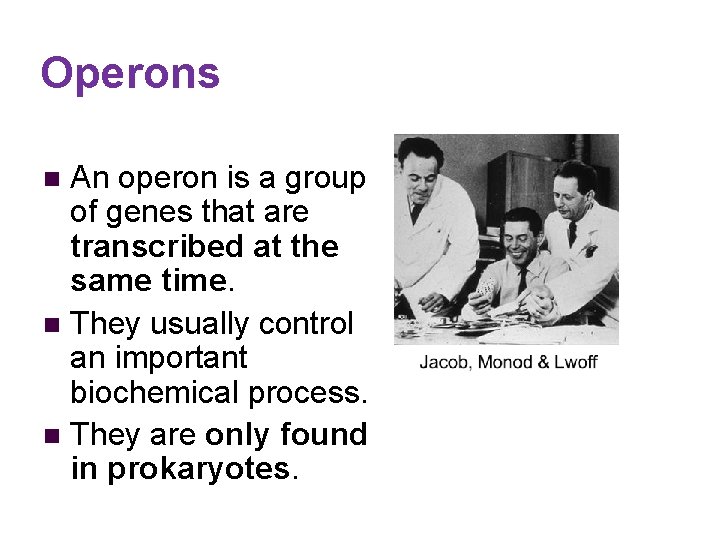
Operons An operon is a group of genes that are transcribed at the same time. n They usually control an important biochemical process. n They are only found in prokaryotes. n
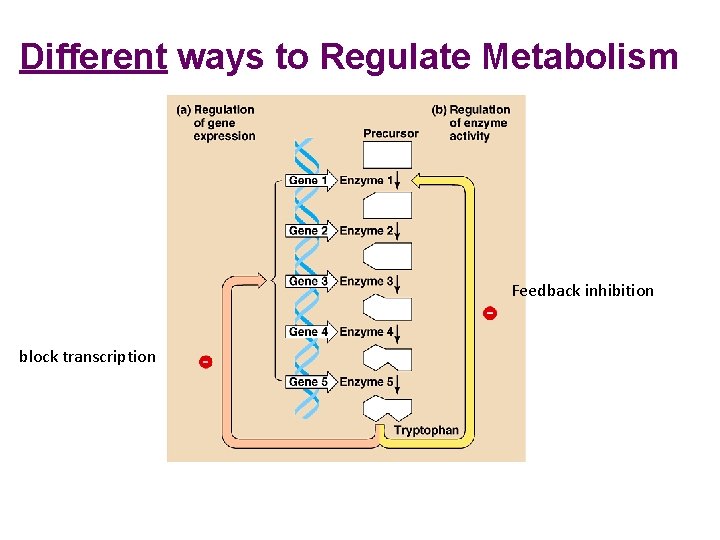
Different ways to Regulate Metabolism Feedback inhibition block transcription
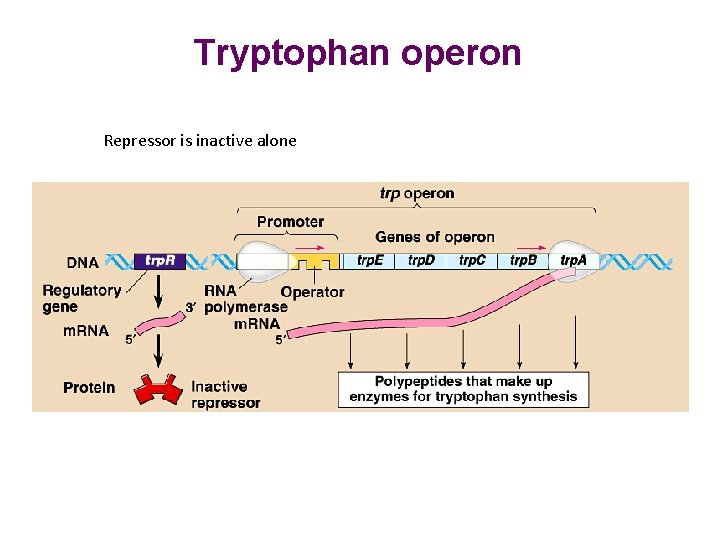
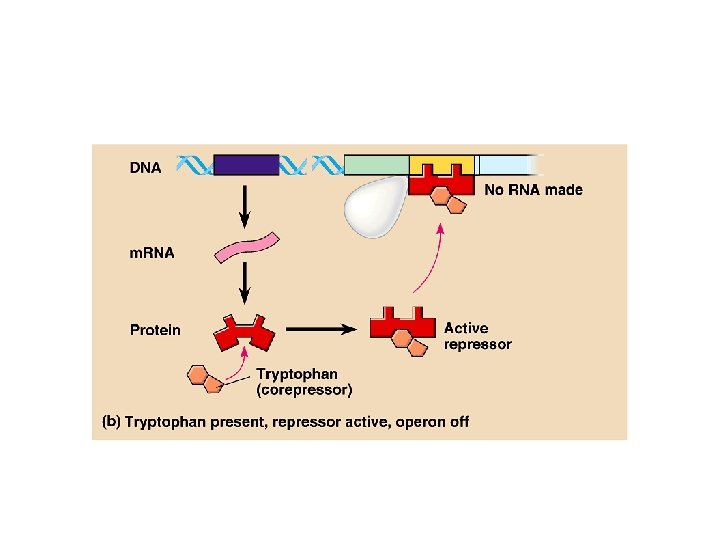
Tryptophan operon Repressor is inactive alone
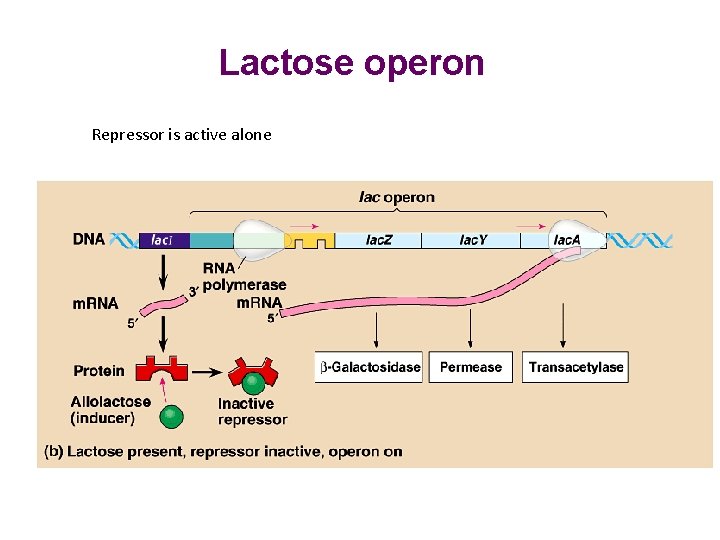
Lactose operon Repressor is active alone
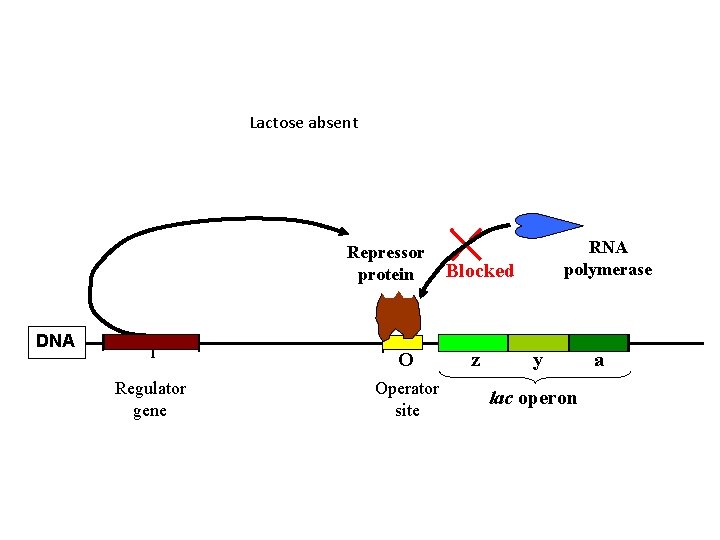
Lactose absent Repressor protein DNA I O Regulator gene Operator site RNA polymerase Blocked z y lac operon a
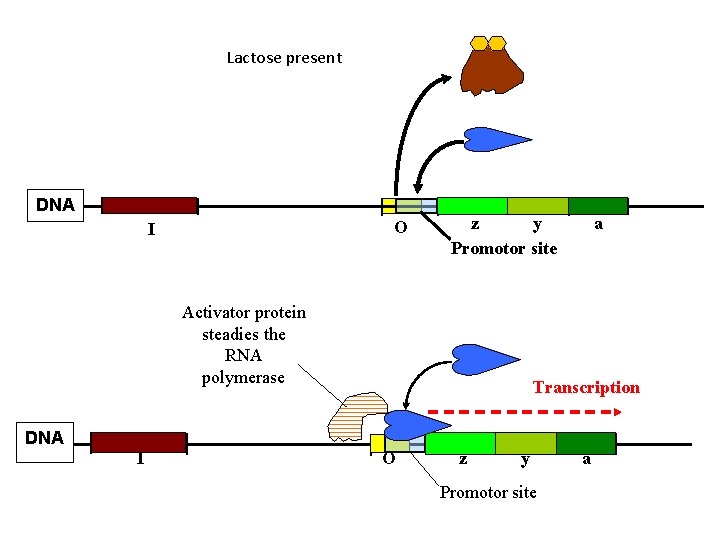
Lactose present DNA O I z y Promotor site Activator protein steadies the RNA polymerase a Transcription DNA I O z y Promotor site a
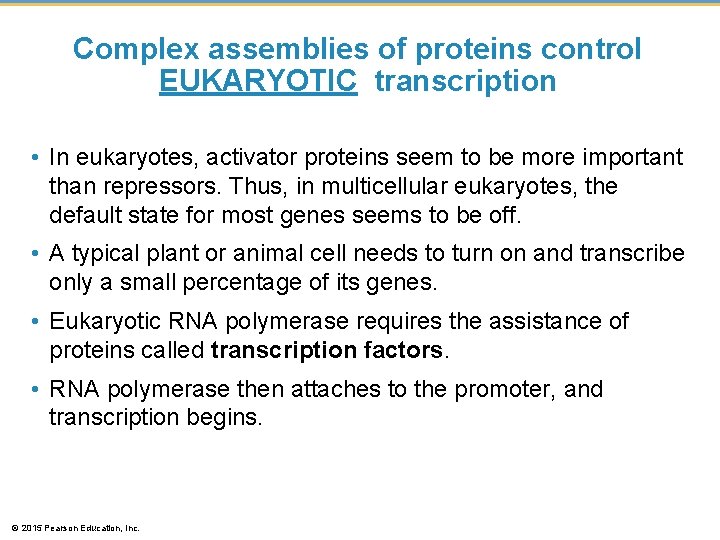
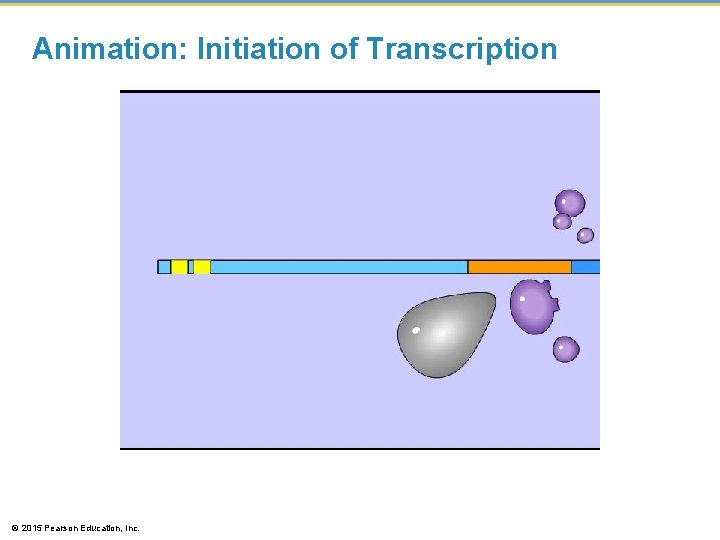
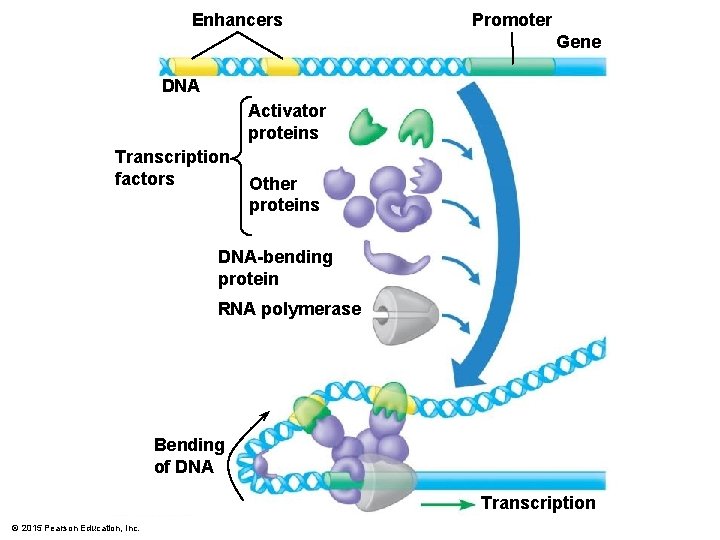
Complex assemblies of proteins control EUKARYOTIC transcription • In eukaryotes, activator proteins seem to be more important than repressors. Thus, in multicellular eukaryotes, the default state for most genes seems to be off. • A typical plant or animal cell needs to turn on and transcribe only a small percentage of its genes. • Eukaryotic RNA polymerase requires the assistance of proteins called transcription factors. • RNA polymerase then attaches to the promoter, and transcription begins. © 2015 Pearson Education, Inc.
Animation: Initiation of Transcription © 2015 Pearson Education, Inc.
Enhancers Promoter Gene DNA Activator proteins Transcription factors Other proteins DNA-bending protein RNA polymerase Bending of DNA Transcription © 2015 Pearson Education, Inc.
Eukaryotic RNA may be spliced in more than one way • Alternative RNA splicing • produces different m. RNAs from the same transcript and • results in the production of more than one polypeptide from the same gene. • In humans, more than 90% of protein-coding genes appear to undergo alternate splicing. © 2015 Pearson Education, Inc.
Animation: RNA Processing © 2015 Pearson Education, Inc.
Small RNAs play multiple roles in controlling gene expression • Only about 1. 5% of the human genome codes for proteins. (This is also true of many other multicellular eukaryotes. ) • Another small fraction of DNA consists of genes for ribosomal RNA and transfer RNA. • A flood of recent data suggests that a significant amount of the remaining genome is transcribed into functioning but non-protein-coding RNAs, including a variety of small RNAs. © 2015 Pearson Education, Inc.
Small RNAs play multiple roles in controlling gene expression • micro. RNAs (mi. RNAs) can bind to complementary sequences on m. RNA molecules either • degrading the target m. RNA or • blocking its translation. • RNA interference (RNAi) is the use of mi. RNA to artificially control gene expression by injecting mi. RNAs into a cell to turn off a specific gene sequence. © 2015 Pearson Education, Inc.
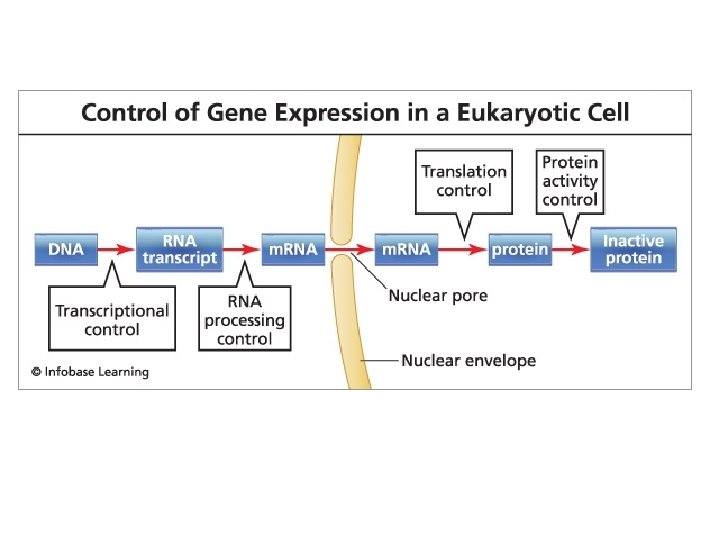
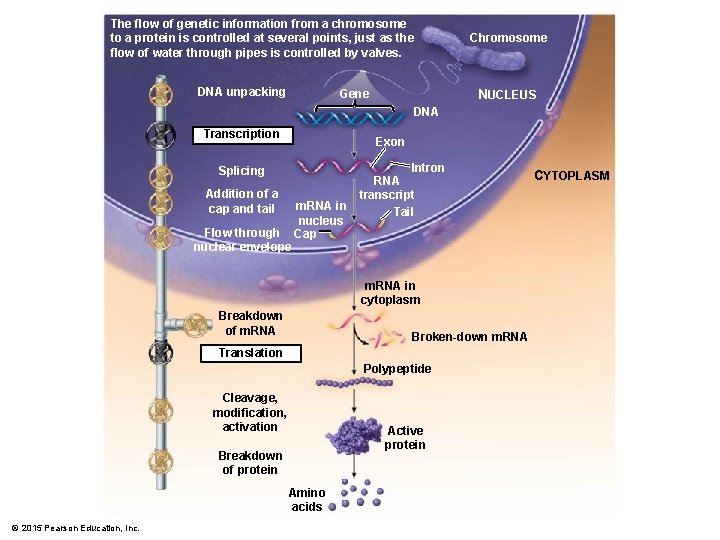
The flow of genetic information from a chromosome to a protein is controlled at several points, just as the flow of water through pipes is controlled by valves. DNA unpacking Chromosome NUCLEUS Gene DNA Transcription Exon Splicing Addition of a cap and tail Flow through nuclear envelope m. RNA in nucleus Cap Intron RNA transcript Tail m. RNA in cytoplasm Breakdown of m. RNA Broken-down m. RNA Translation Polypeptide Cleavage, modification, activation Active protein Breakdown of protein Amino acids © 2015 Pearson Education, Inc. CYTOPLASM