
CHROMOSOMAL ABERRATION BIRTH DEFECTS OBJECTIVES To know what
CHROMOSOMAL ABERRATION; BIRTH DEFECTS
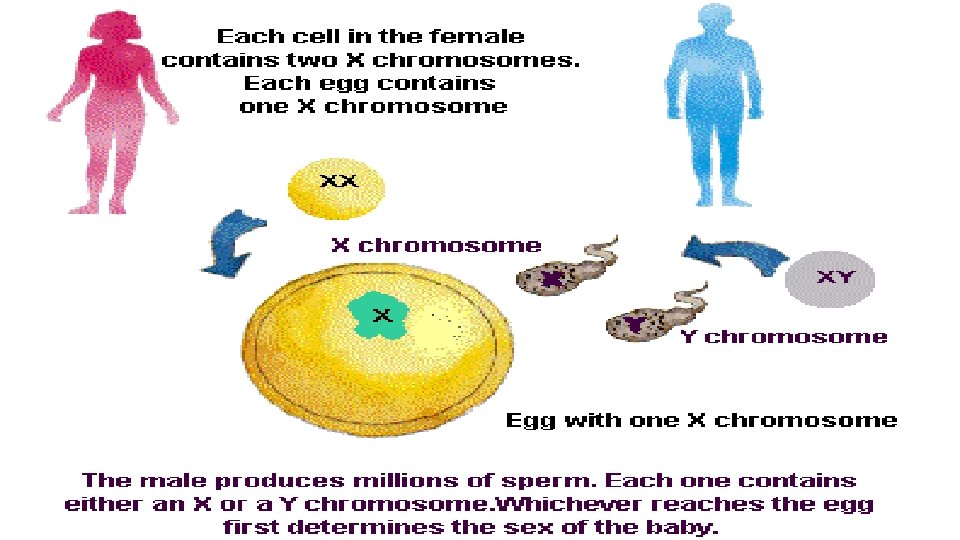
OBJECTIVES • To know what chromosomes and genes are • To know how the sex/gender of a child is determined • To know what chromosomal aberration is • To know the types of chromosomal aberration • Statistical information about chromosomal aberration • Risk factors • Some birth defects associated with chromosomal aberrations • Precautions
CHROMOSOMES AND GENES • What are they? • The chromosomes are the largest molecules in the cell. They are nucleic acids which are the repository of genetic information of an organism. • A gene is a segment of the DNA that codes for a polypeptide • The DNA is a double stranded nucleotide that carries the genetic information that makes as who we are and it is part of a chromosome.
THE STRUCTURE OF THE CHROMOSOME • Fundamental unit • Nucleosome • histones and a 200 base pairs segment of DNA. • A core protein • Eight histone • Segment of DNA • Left-handed solenoidal supercoil
CHROMOSOMAL ABERRATION
CHROMOSOME ABERRATION • Involves large chromosomal regions • Alters the structure of individual chromosomes • Incompatible with survival
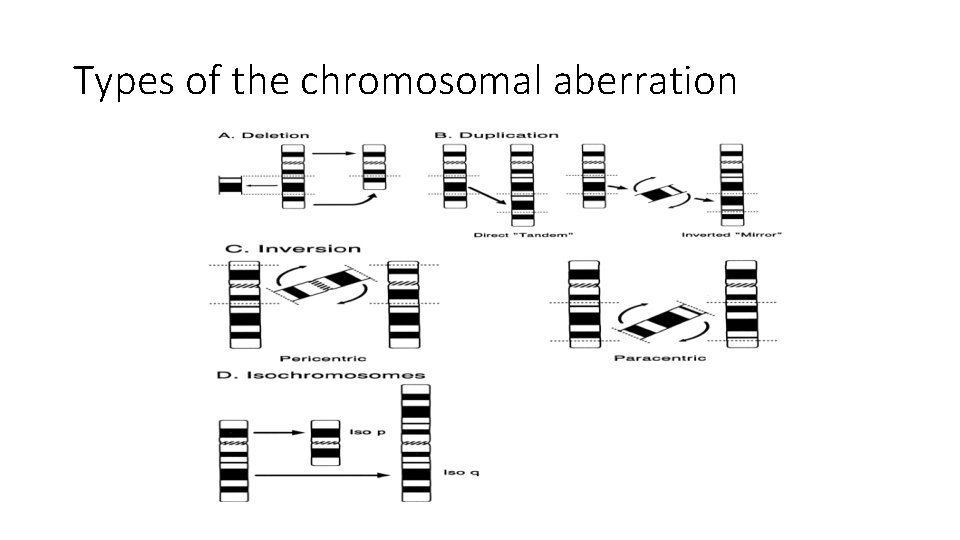
Types of the chromosomal aberration
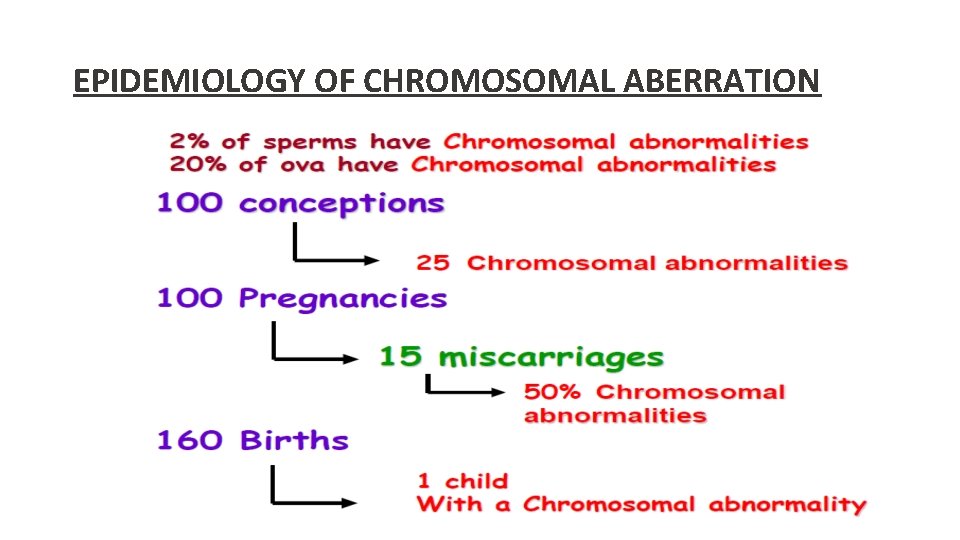
EPIDEMIOLOGY OF CHROMOSOMAL ABERRATION
SOME RISK FACTORS ASSOCIATED WITH CHROMOSOMAL ABERRATIONS • Old age • Exposure to radiation • The use certain medicines around the time one becomes pregnant • The use of recreational drugs(e. g. heroine) or drinking alcohol during pregnancy
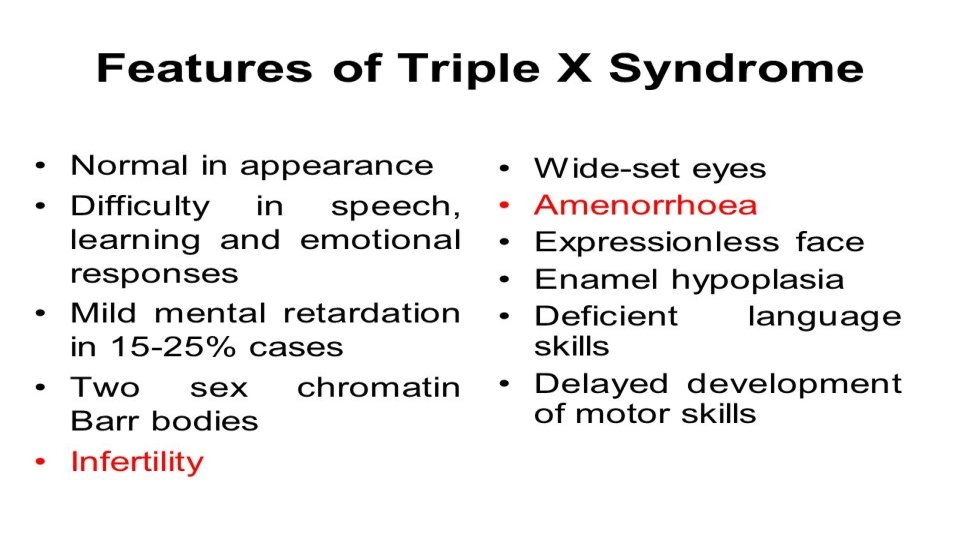
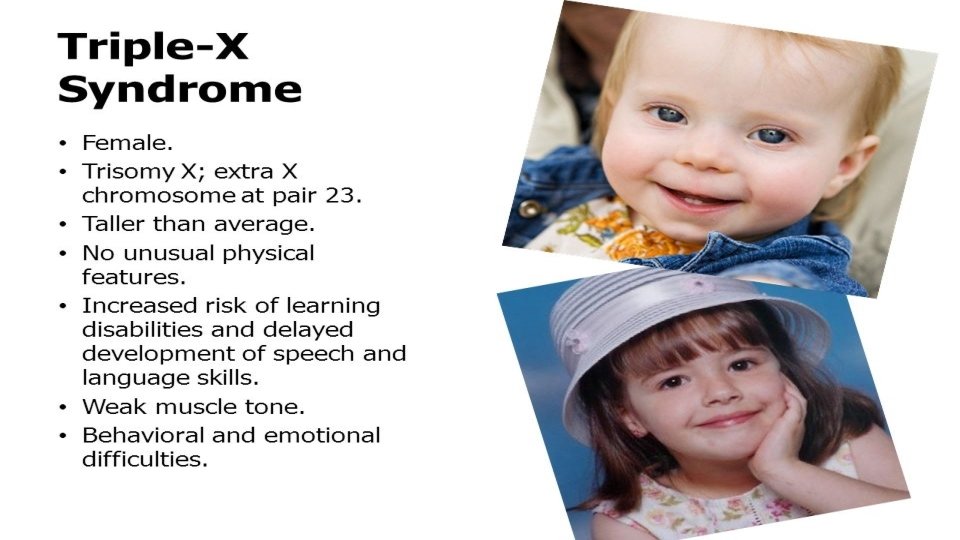
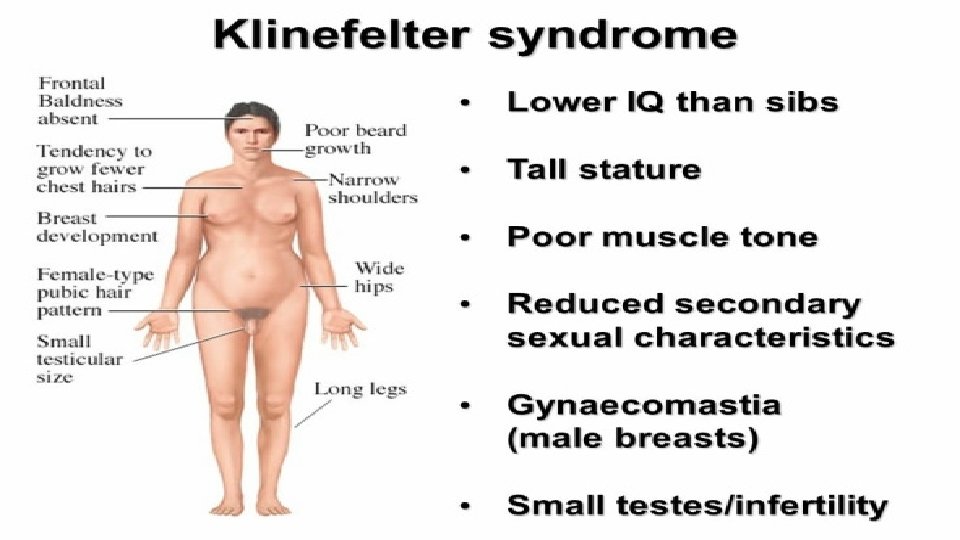
BIRTH DEFECTS AS ASSOCIATED WITH THE CHROMOSOME • Triple X • Cri du chat • Turner's syndrome • Klinefelter syndrome • Down syndrome
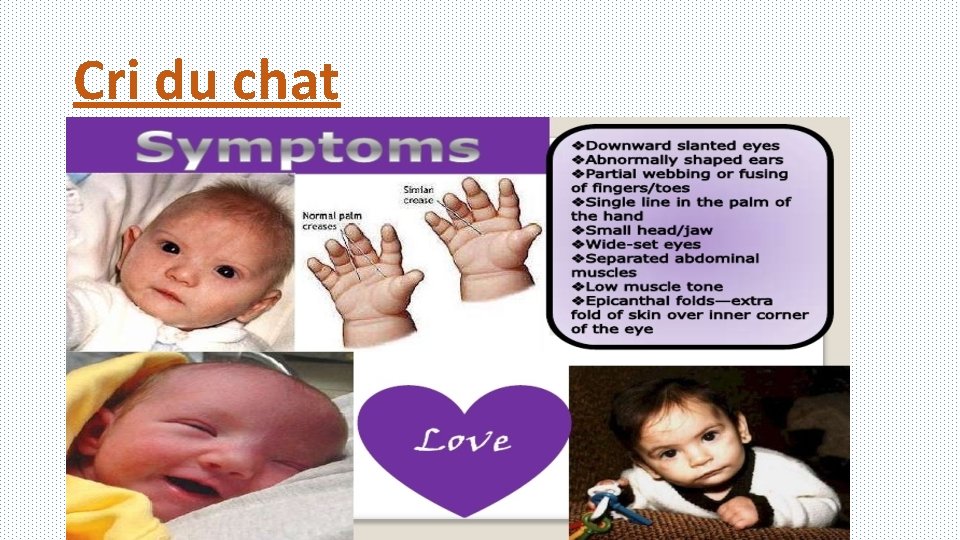
Cri du chat
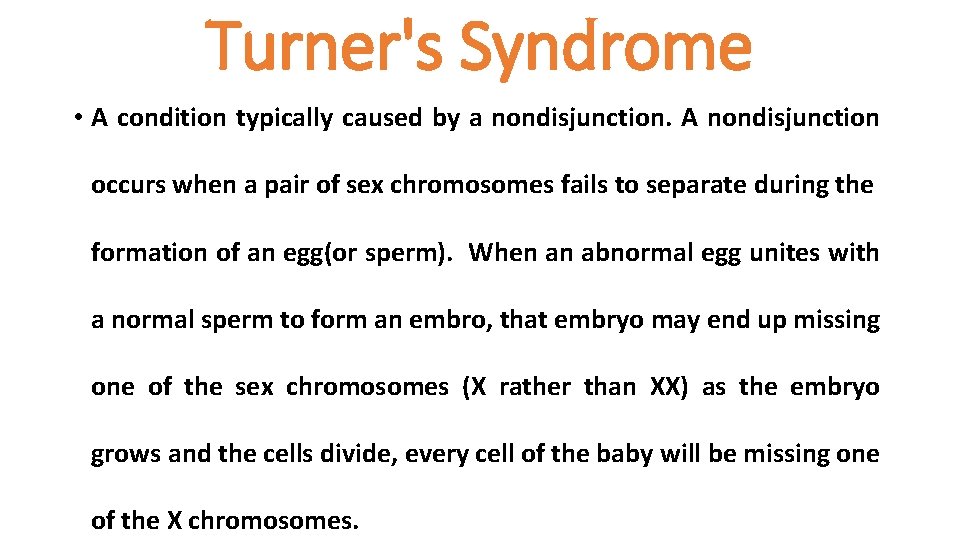
Turner's Syndrome • A condition typically caused by a nondisjunction. A nondisjunction occurs when a pair of sex chromosomes fails to separate during the formation of an egg(or sperm). When an abnormal egg unites with a normal sperm to form an embro, that embryo may end up missing one of the sex chromosomes (X rather than XX) as the embryo grows and the cells divide, every cell of the baby will be missing one of the X chromosomes.
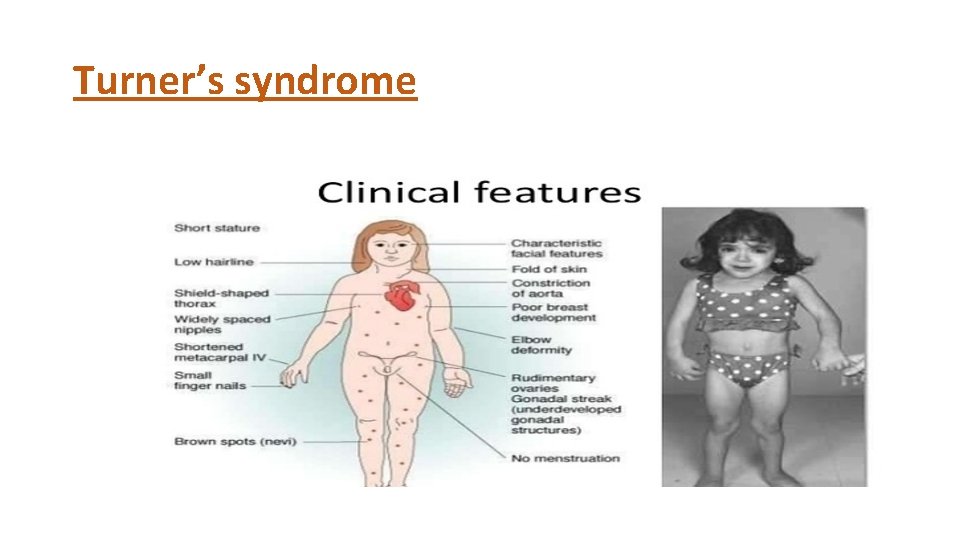
Turner’s syndrome
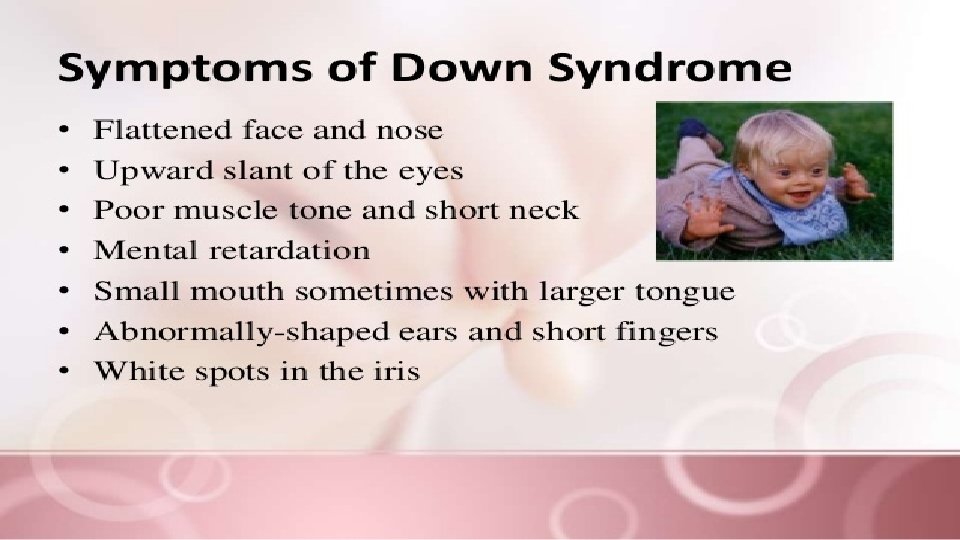
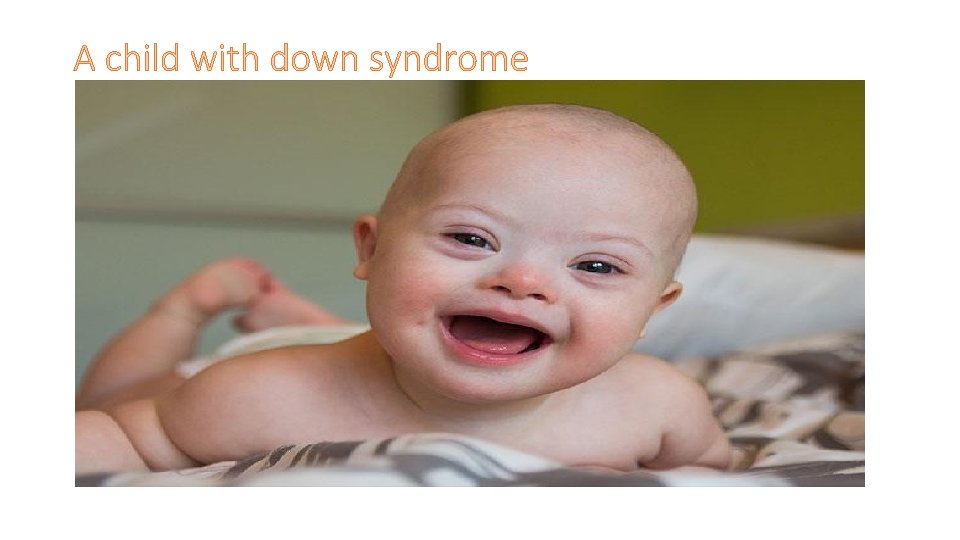
A child with down syndrome
PRECAUTIONS TO TAKE TO REDUCE RISKS • See your doctor for advise before becoming pregnant • Do not use alcohol or illegal drugs • Use medications wisely • Avoid known harmful agents • Visit the hospital regularly for antenatal care services
RECOMMENDATIONS &CONCLUSION • So in the light of our presentation we recommend that, we try our possible best to go for antenatal care and avoid all the don’ts in pregnancy. • As books suggests, pregnant women should try their possible best to avoid of radiation like, X-ray. Finally, in conclusion, we say abnormalities with birth are mostly genetic and there is no spiritual regime behind it. We ourselves are capable of bringing it upon ourselves. Every decision we take count to what will become of our children.
REFERENCES • Nelson, david l. , & Cox, michael m. (n. d. ). genes and chromosomes. In lehninger principles of biochemistry (pp. 924– 938). • Kirsch, R. I The Causes of Chromosomal Aberattions; CRC Press (December 21, 1992) • https: www 2. le. ac. uk/ugec/health prof/topics/patterns. of. inheritance/chromosomal_abnormalities • https: //en. m. wikpedia. org/wiki/bith_defects
- Slides: 22