
Chromatography Chromatographic separation is based on distribution of
Chromatography Chromatographic separation is based on distribution of separated compound (analyte) between mobile phase and stationary phase Richard Vytášek 2009 Presentation is only for internal purposes of 2 nd Medical faculty
The principle of separatation Concentration of separated compound in these phases (stationary and mobile) is determined by distribution coeficient Kd Kd = c s / c m Compounds are sepatared when their distribution koeficients in choosen mobile and stationary phase are different
Chromatography and mobile phase • gas chromatography (mobile phase and analytes are gaseous) • liquid chromatography (mobile phase is liquid analytes are disolved in it)
Liquid chromatography 1. an adsorption equilibrium (between statinary solid phase and mobile liquid phase) - adsorption chromatography, hydrophobic chromatography 2. a partition equilibrium (between stationary liquid phase and mobile liquid phase) - partition chromatography, reversed-phase liquid chromatography
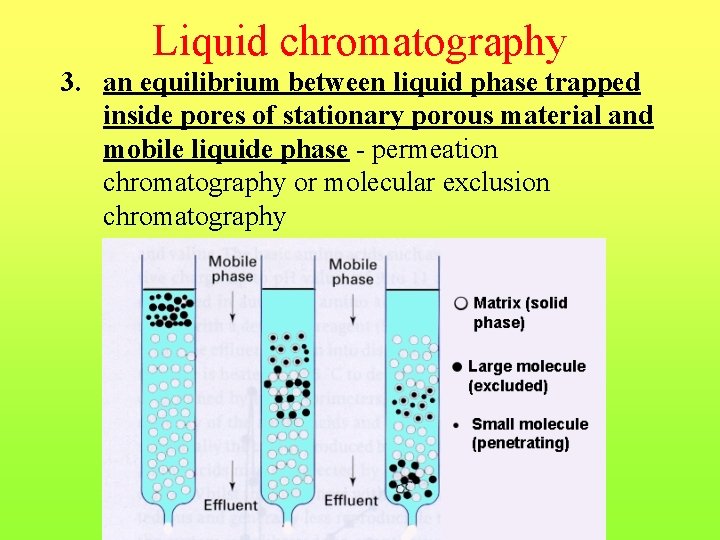
Liquid chromatography 3. an equilibrium between liquid phase trapped inside pores of stationary porous material and mobile liquide phase - permeation chromatography or molecular exclusion chromatography
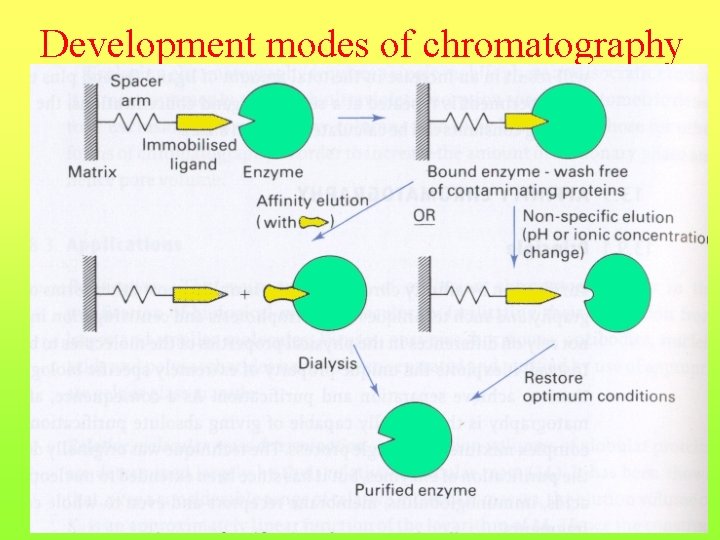
Liquid chromatography 4. an ion-exchange equilibrium (between stationary ion exchanger and mobile electrolyte phase) - ion-exchange chromatography 5. an affinity equilibrium (between stationary immobilised ligand mobile liquid phase) - affinity chromatography ( e. g. immunoaffinity chromatography, lectin affinity chromatography, dye-ligand chromatography)
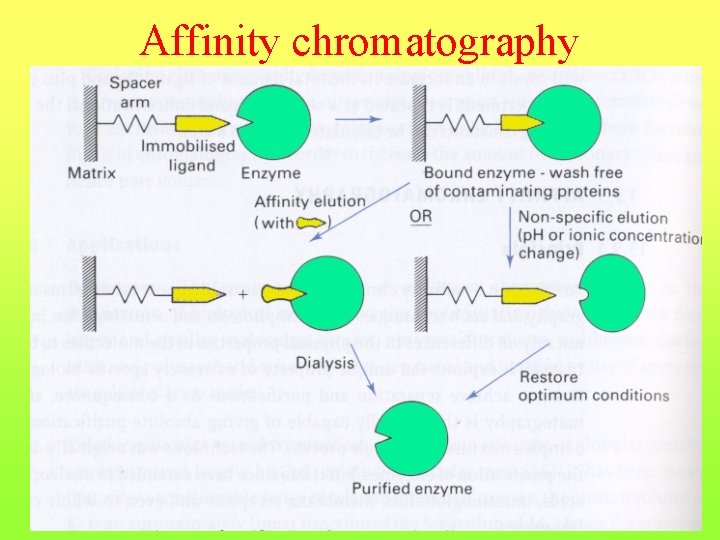
Affinity chromatography
Models of liquid chromatography • column chromatography - stationary phase attached to suitable matrix (insoluble support) is packed in glass or metal column and mobile phase is passed through column by gravity or pump • planar chromatography - suitable matrix is coated in thin layer onto a glass, plastic or metal plate (special case is a filter paper) and mobile phase is passes across the thin layer by capillary action thin-layer chromatography, paper chromatography
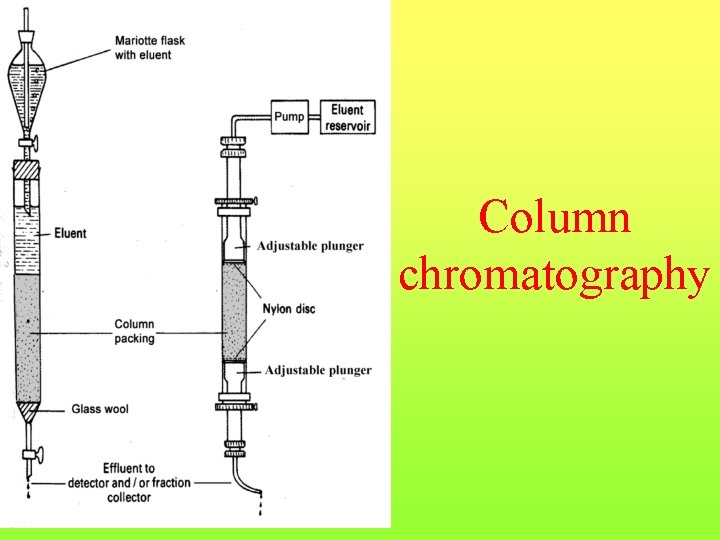
Column chromatography
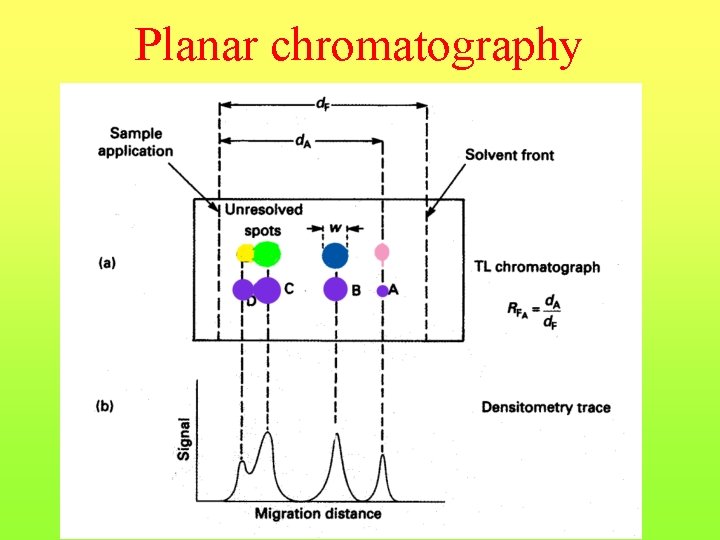
Planar chromatography
Development modes of chromatography Sample is dissolved in a suitable solvent and applied to stationary phase as a narrow dicrete band. Sample component is called analytes. • elution (zonal) development - mobile phase called elluent flows continously over the stationary phase and the analytes with higher solubility in the mobile phase move along the stationary phase more rapidly. Analytes are eluted when they have been removed from column. • displacement (affinity) development - mobile phase contains specific solutes with higher affinity for stationary phase than separated analytes
Development modes of chromatography
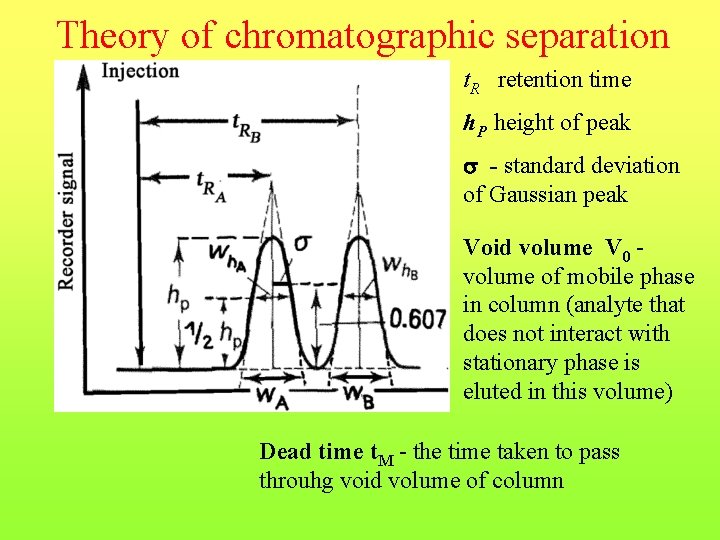
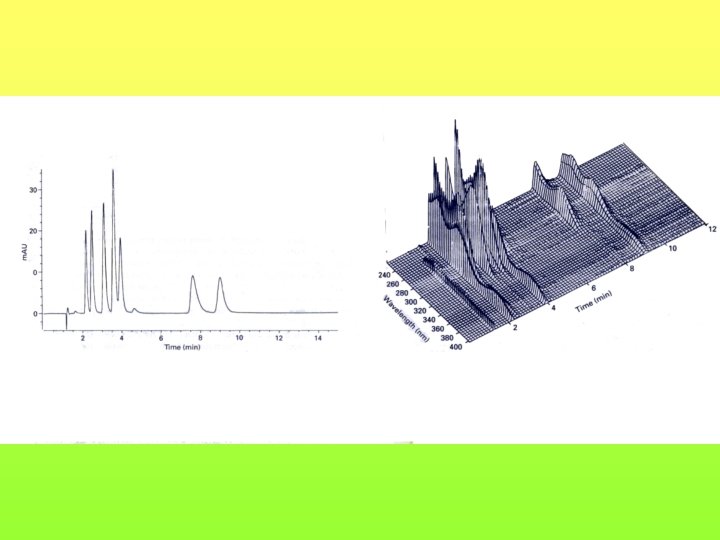
Theory of chromatographic separation t. R retention time h. P height of peak - standard deviation of Gaussian peak Void volume V 0 volume of mobile phase in column (analyte that does not interact with stationary phase is eluted in this volume) Dead time t. M - the time taken to pass throuhg void volume of column
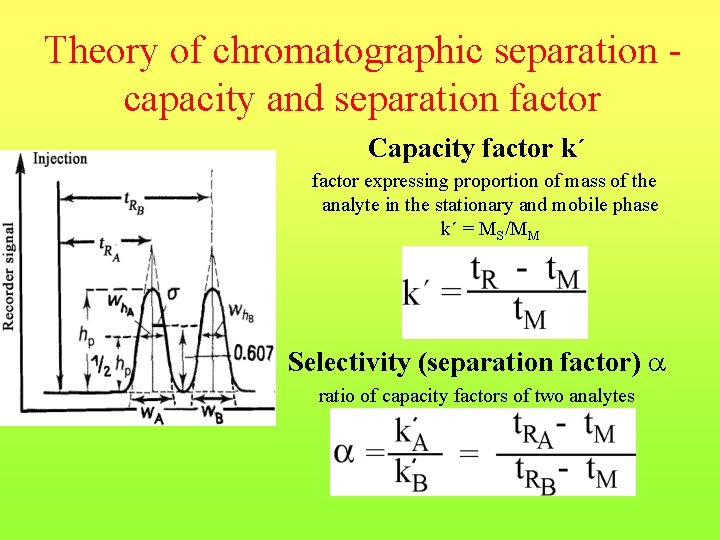
Theory of chromatographic separation capacity and separation factor Capacity factor k´ factor expressing proportion of mass of the analyte in the stationary and mobile phase k´ = MS/MM Selectivity (separation factor) ratio of capacity factors of two analytes
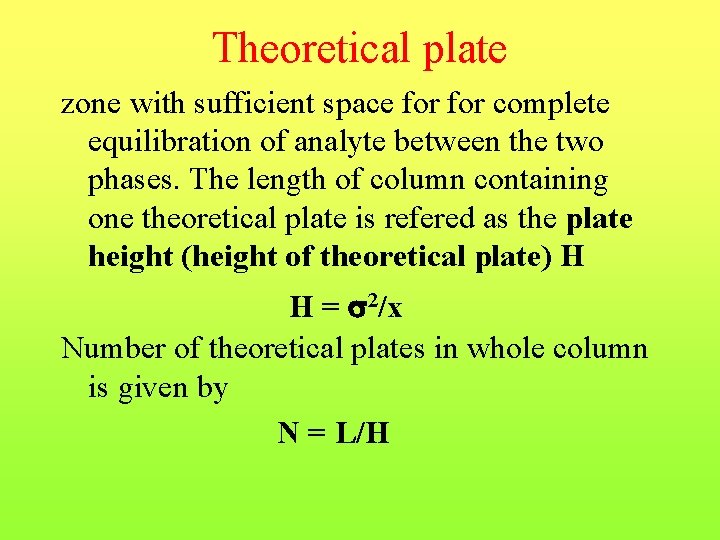
Theoretical plate zone with sufficient space for complete equilibration of analyte between the two phases. The length of column containing one theoretical plate is refered as the plate height (height of theoretical plate) H H = 2/x Number of theoretical plates in whole column is given by N = L/H
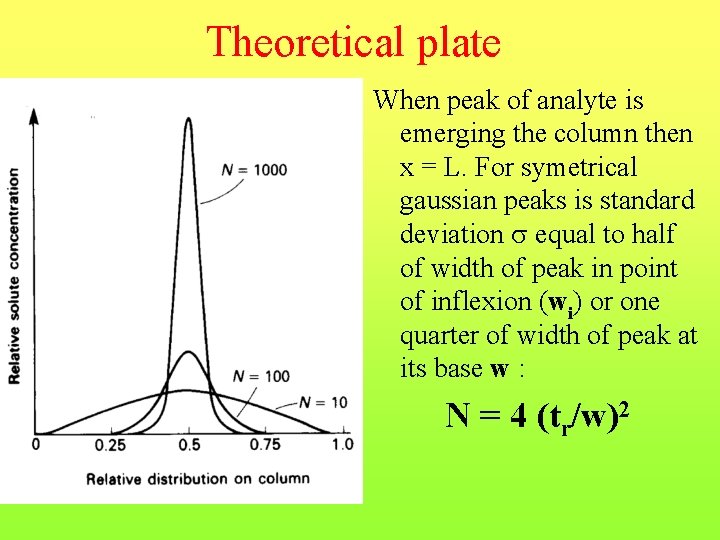
Theoretical plate When peak of analyte is emerging the column then x = L. For symetrical gaussian peaks is standard deviation equal to half of width of peak in point of inflexion (wi) or one quarter of width of peak at its base w : N = 4 (tr/w)2
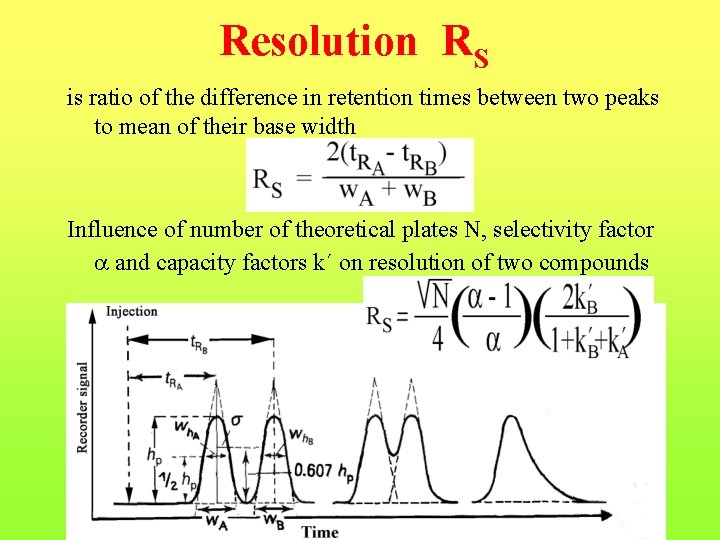
Resolution RS is ratio of the difference in retention times between two peaks to mean of their base width Influence of number of theoretical plates N, selectivity factor and capacity factors k´ on resolution of two compounds
- Slides: 18