
Chromalveolata V Rhizariae Rhizariae Two different topologies for
- Slides: 9
Chromalveolata V Rhizariae
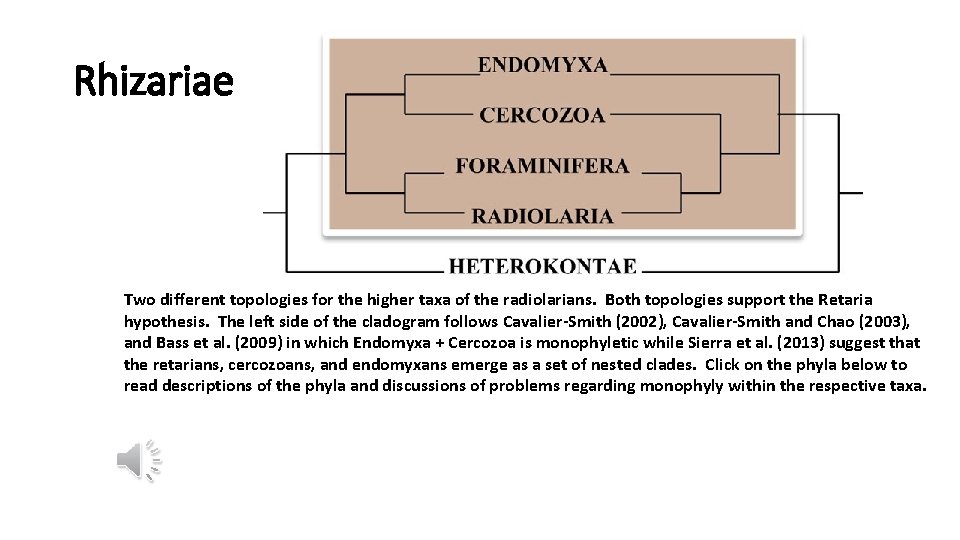
Rhizariae Two different topologies for the higher taxa of the radiolarians. Both topologies support the Retaria hypothesis. The left side of the cladogram follows Cavalier-Smith (2002), Cavalier-Smith and Chao (2003), and Bass et al. (2009) in which Endomyxa + Cercozoa is monophyletic while Sierra et al. (2013) suggest that the retarians, cercozoans, and endomyxans emerge as a set of nested clades. Click on the phyla below to read descriptions of the phyla and discussions of problems regarding monophyly within the respective taxa.
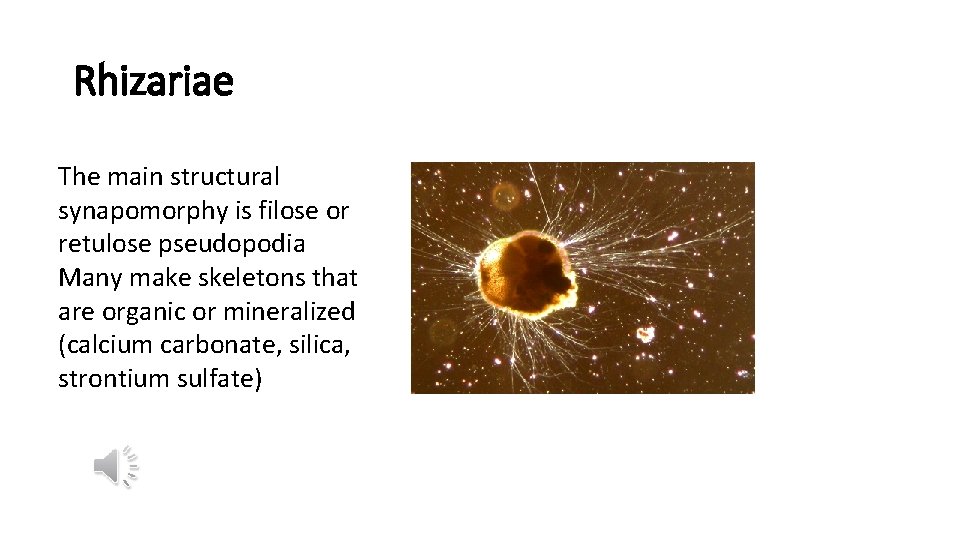
Rhizariae The main structural synapomorphy is filose or retulose pseudopodia Many make skeletons that are organic or mineralized (calcium carbonate, silica, strontium sulfate)
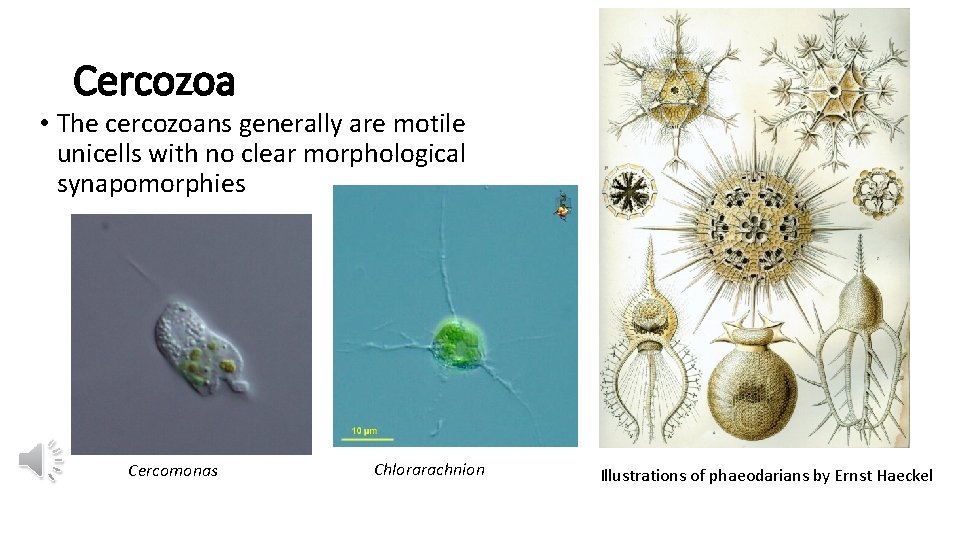
Cercozoa • The cercozoans generally are motile unicells with no clear morphological synapomorphies Cercomonas Chlorarachnion Illustrations of phaeodarians by Ernst Haeckel
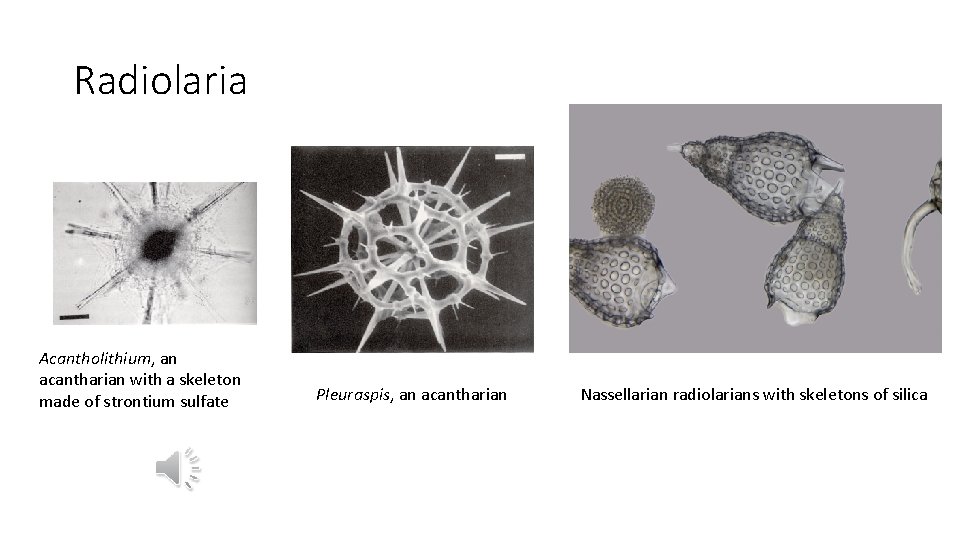
Radiolaria Acantholithium, an acantharian with a skeleton made of strontium sulfate Pleuraspis, an acantharian Nassellarian radiolarians with skeletons of silica
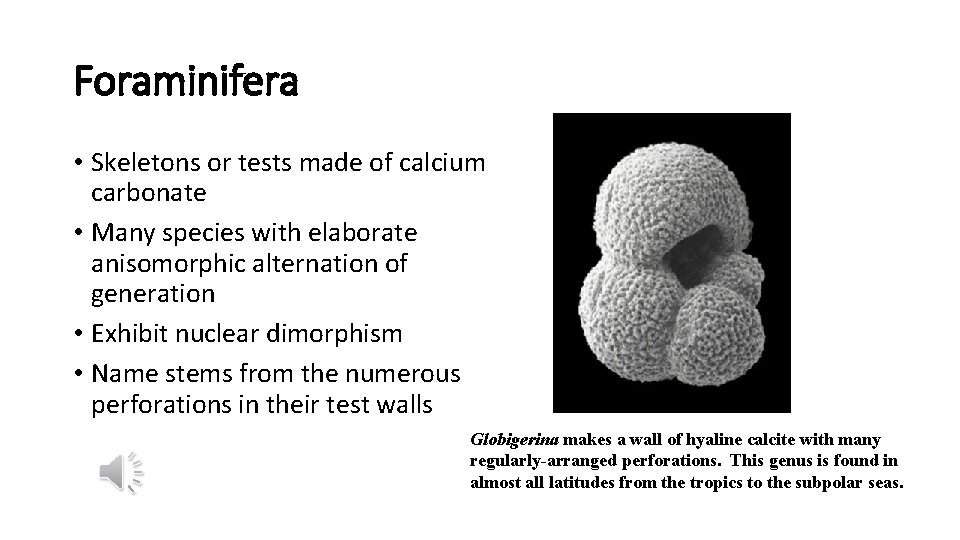
Foraminifera • Skeletons or tests made of calcium carbonate • Many species with elaborate anisomorphic alternation of generation • Exhibit nuclear dimorphism • Name stems from the numerous perforations in their test walls Globigerina makes a wall of hyaline calcite with many regularly-arranged perforations. This genus is found in almost all latitudes from the tropics to the subpolar seas.
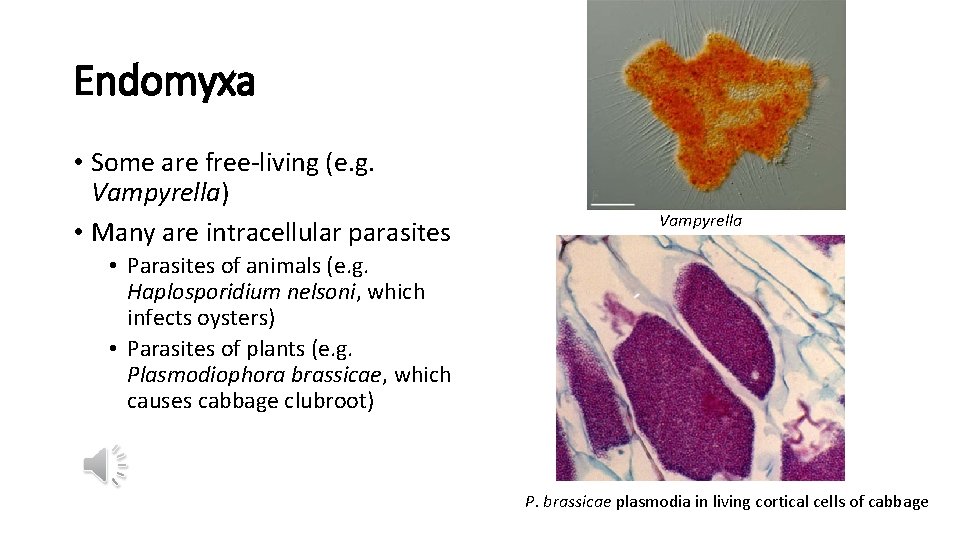
Endomyxa • Some are free-living (e. g. Vampyrella) • Many are intracellular parasites Vampyrella • Parasites of animals (e. g. Haplosporidium nelsoni, which infects oysters) • Parasites of plants (e. g. Plasmodiophora brassicae, which causes cabbage clubroot) P. brassicae plasmodia in living cortical cells of cabbage