
Chris Yung Elementary School 4 th Grade Mr
- Slides: 28
Chris Yung Elementary School 4 th Grade Mr. Breuer Mrs. Harrison Mrs. Krueger Mrs. Starkey September 28, 2017
First, we will view a video from our Superintendent, Dr. Waltz.
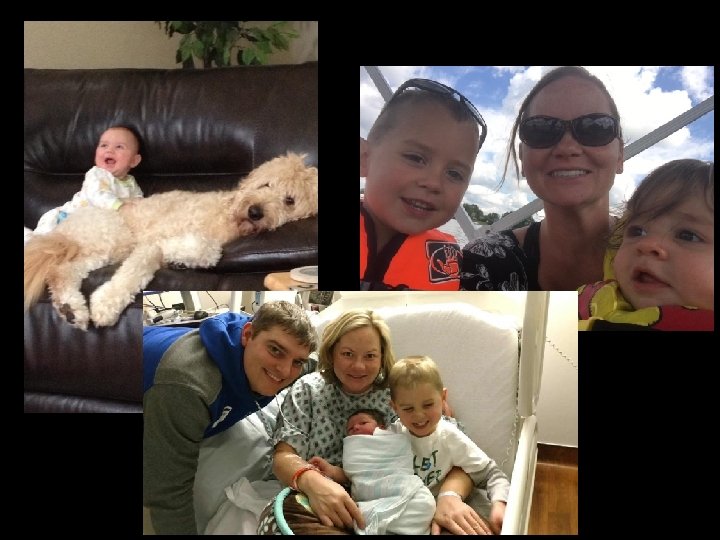
About Mrs. Krueger q Hometown – Kalamazoo, Michigan q Education – Western Michigan University & University of Mary Washington q 13 th year teaching, 10 th year of 4 th grade q Previously taught in Stafford Co. , Montgomery Co. MD, Bahrain and Monterey, CA. q Family – Married and a mom to 2 boys and our fur baby, Wilson
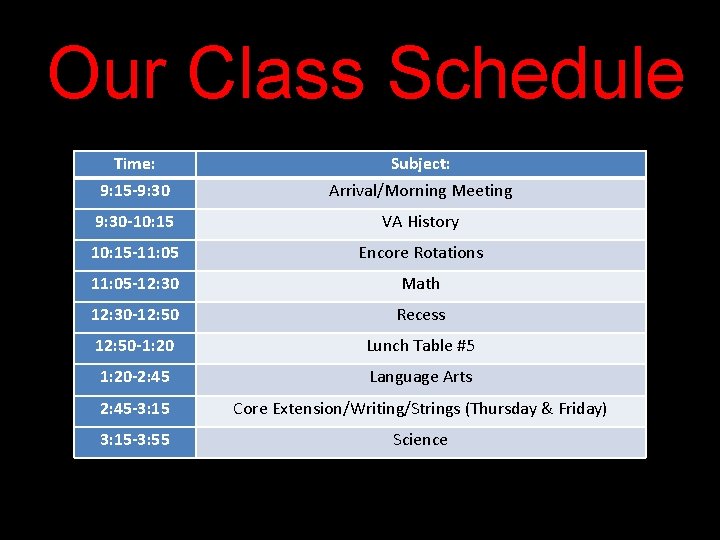
Our Class Schedule Time: Subject: 9: 15 -9: 30 Arrival/Morning Meeting 9: 30 -10: 15 VA History 10: 15 -11: 05 Encore Rotations 11: 05 -12: 30 Math 12: 30 -12: 50 Recess 12: 50 -1: 20 Lunch Table #5 1: 20 -2: 45 Language Arts 2: 45 -3: 15 Core Extension/Writing/Strings (Thursday & Friday) 3: 15 -3: 55 Science
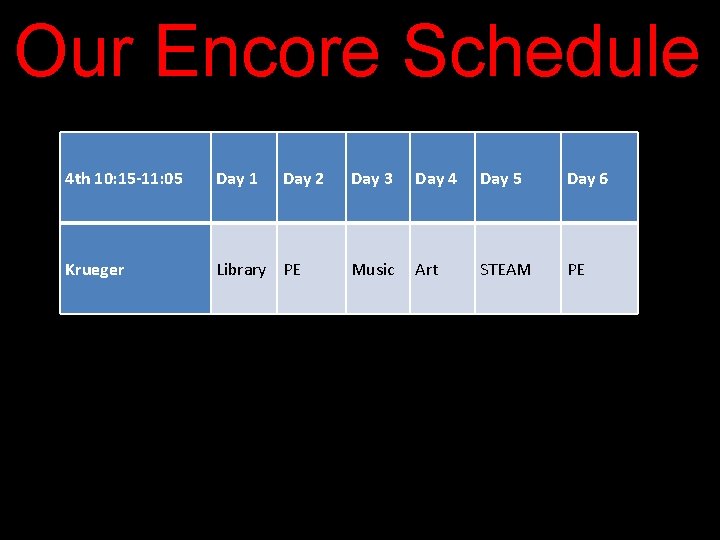
Our Encore Schedule 4 th 10: 15 -11: 05 Day 1 Day 2 Krueger Library PE Day 3 Day 4 Day 5 Day 6 Music Art STEAM PE
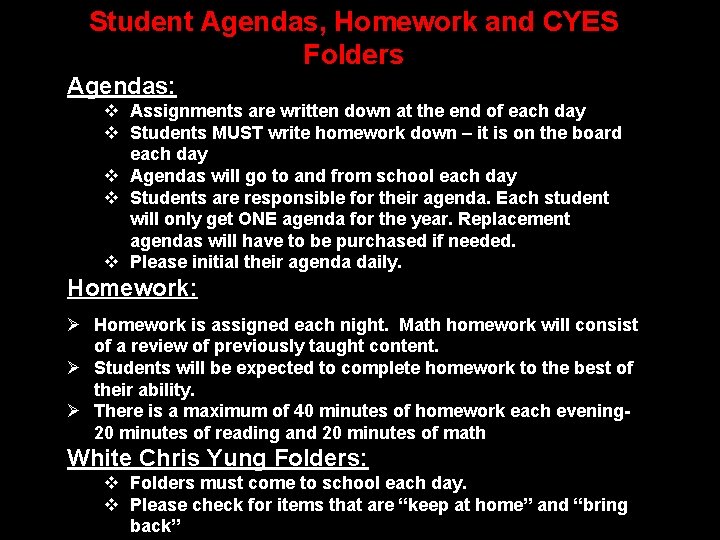
Student Agendas, Homework and CYES Folders Agendas: v Assignments are written down at the end of each day v Students MUST write homework down – it is on the board each day v Agendas will go to and from school each day v Students are responsible for their agenda. Each student will only get ONE agenda for the year. Replacement agendas will have to be purchased if needed. v Please initial their agenda daily. Homework: Ø Homework is assigned each night. Math homework will consist of a review of previously taught content. Ø Students will be expected to complete homework to the best of their ability. Ø There is a maximum of 40 minutes of homework each evening 20 minutes of reading and 20 minutes of math White Chris Yung Folders: v Folders must come to school each day. v Please check for items that are “keep at home” and “bring back”
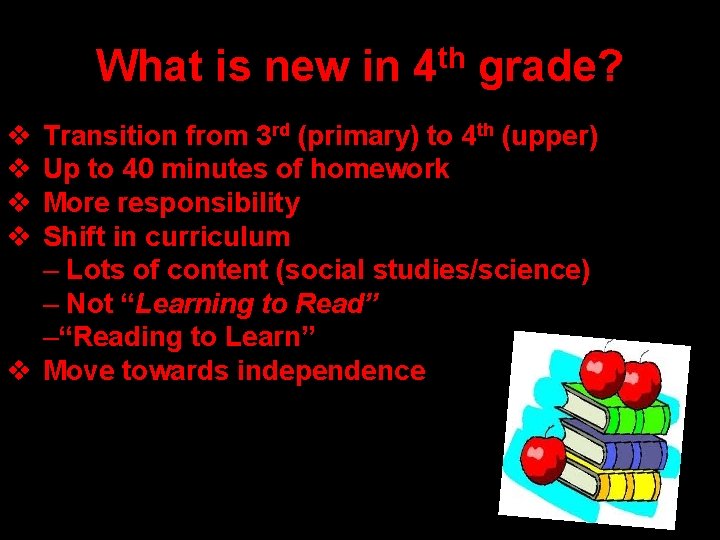
What is new in v v th 4 grade? Transition from 3 rd (primary) to 4 th (upper) Up to 40 minutes of homework More responsibility Shift in curriculum – Lots of content (social studies/science) – Not “Learning to Read” –“Reading to Learn” v Move towards independence
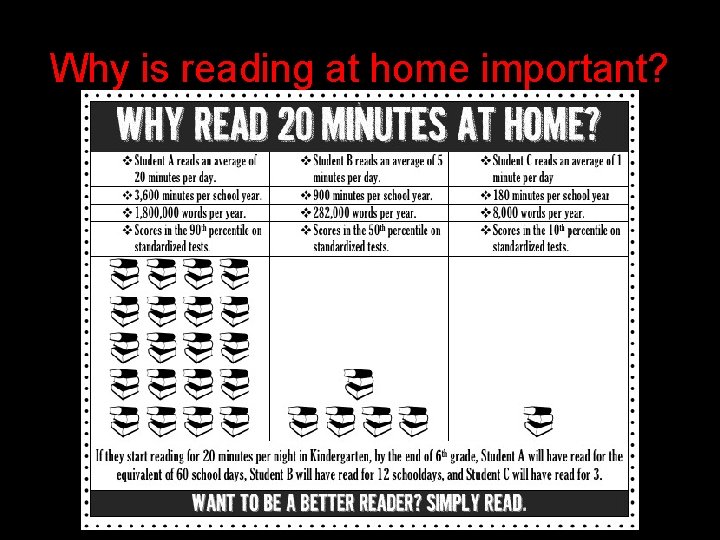
Why is reading at home important?
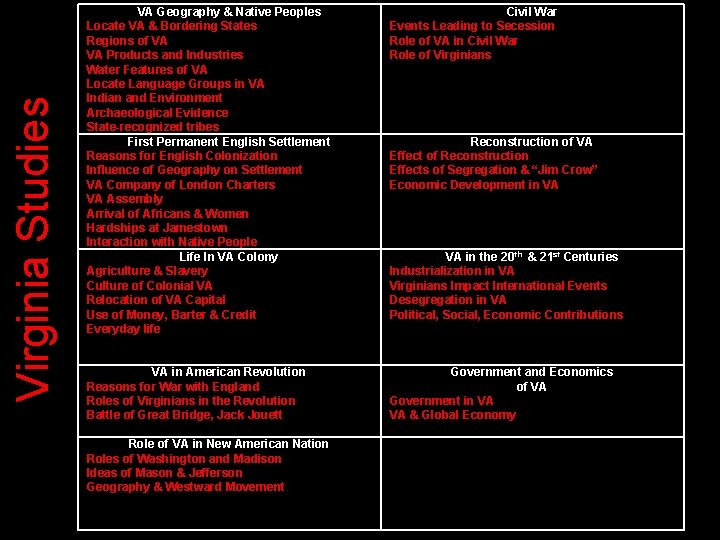
Virginia Studies VA Geography & Native Peoples Locate VA & Bordering States Regions of VA VA Products and Industries Water Features of VA Locate Language Groups in VA Indian and Environment Archaeological Evidence State-recognized tribes First Permanent English Settlement Reasons for English Colonization Influence of Geography on Settlement VA Company of London Charters VA Assembly Arrival of Africans & Women Hardships at Jamestown Interaction with Native People Life In VA Colony Agriculture & Slavery Culture of Colonial VA Relocation of VA Capital Use of Money, Barter & Credit Everyday life Civil War Events Leading to Secession Role of VA in Civil War Role of Virginians VA in American Revolution Reasons for War with England Roles of Virginians in the Revolution Battle of Great Bridge, Jack Jouett Government and Economics of VA Government in VA VA & Global Economy Role of VA in New American Nation Roles of Washington and Madison Ideas of Mason & Jefferson Geography & Westward Movement Reconstruction of VA Effect of Reconstruction Effects of Segregation & “Jim Crow” Economic Development in VA VA in the 20 th & 21 st Centuries Industrialization in VA Virginians Impact International Events Desegregation in VA Political, Social, Economic Contributions
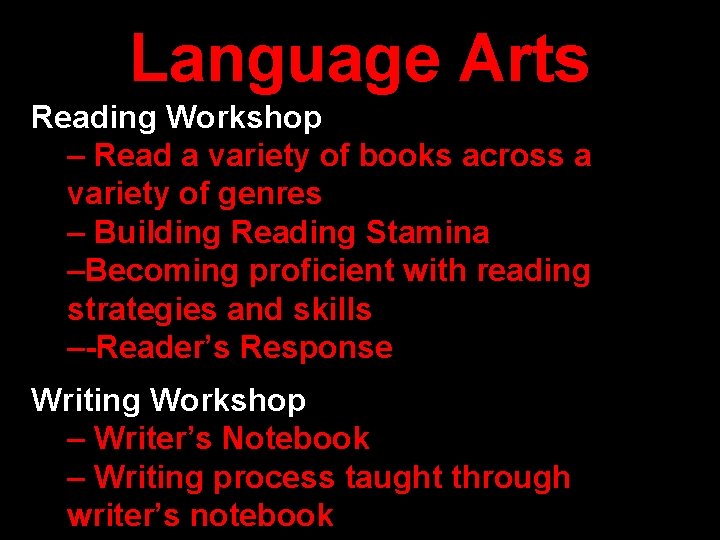
Language Arts Reading Workshop – Read a variety of books across a variety of genres – Building Reading Stamina –Becoming proficient with reading strategies and skills –-Reader’s Response Writing Workshop – Writer’s Notebook – Writing process taught through writer’s notebook
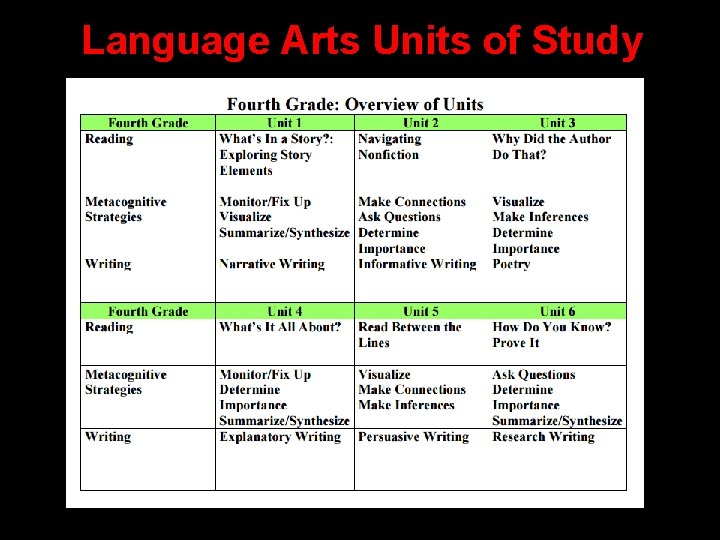
Language Arts Units of Study
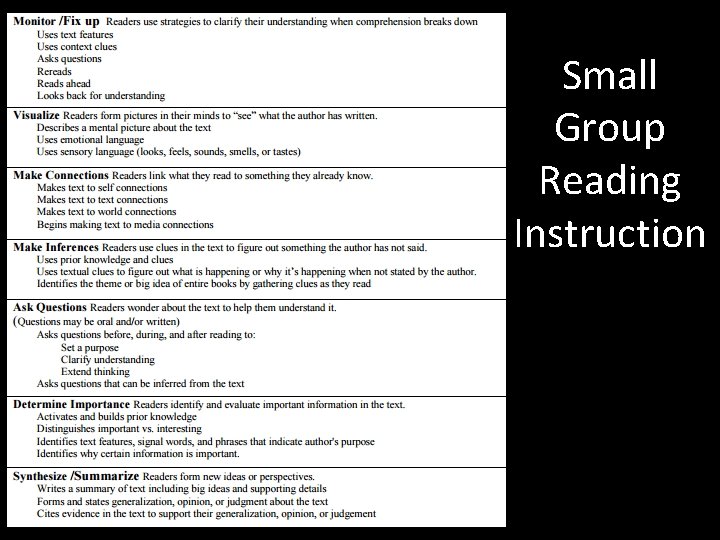
Small Group Reading Instruction
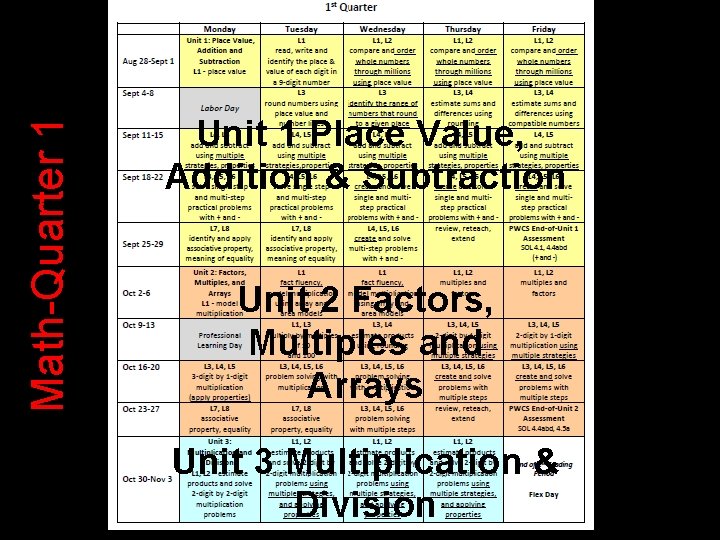
Math-Quarter 1 Unit 1 Place Value, Addition & Subtraction Unit 2 Factors, Multiples and Arrays Unit 3 Multiplication & Division
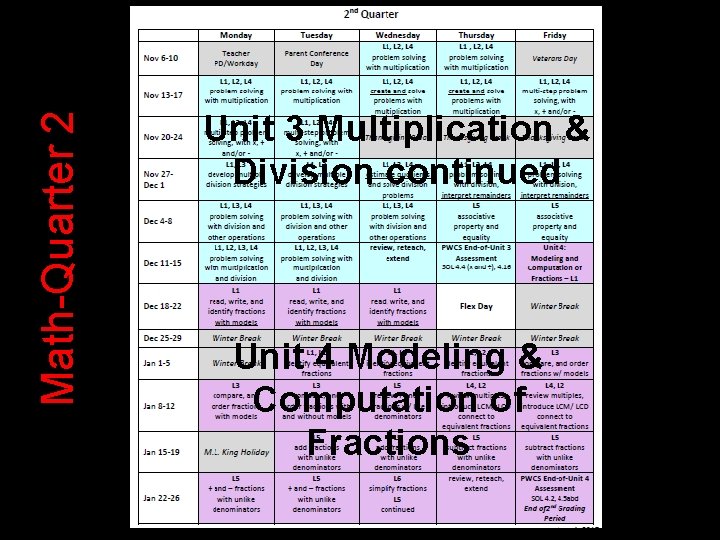
Math-Quarter 2 Unit 3 Multiplication & Division continued Unit 4 Modeling & Computation of Fractions
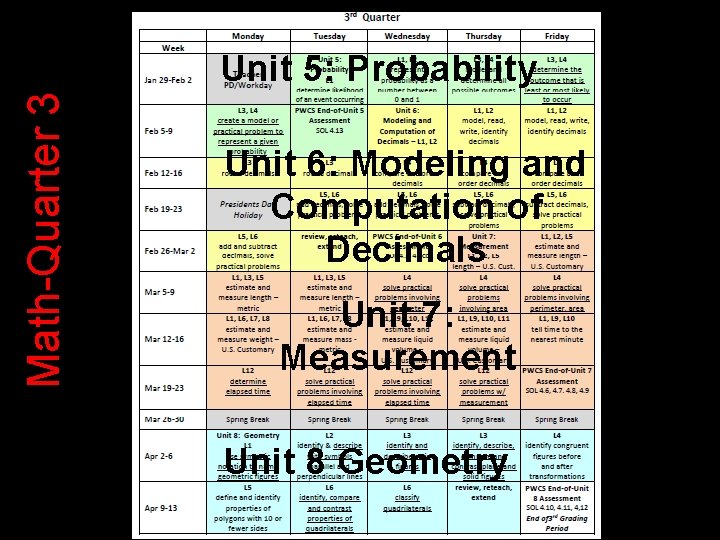
Math-Quarter 3 Unit 5: Probability Unit 6: Modeling and Computation of Decimals Unit 7: Measurement Unit 8 Geometry
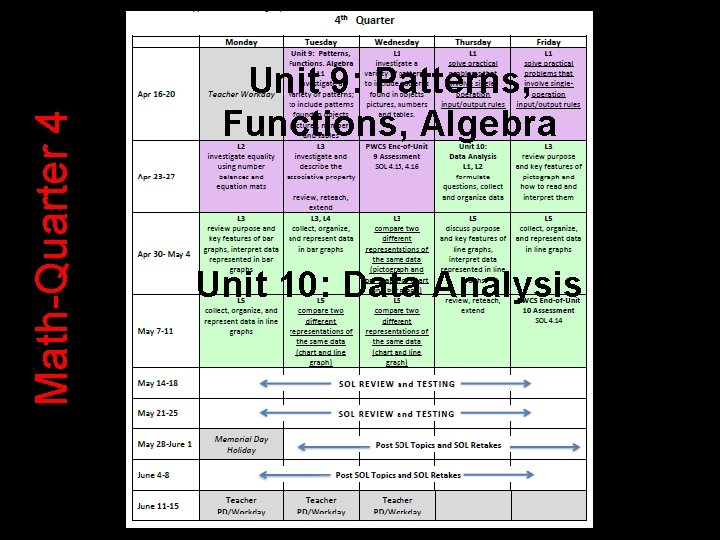
Math-Quarter 4 Unit 9: Patterns, Functions, Algebra Unit 10: Data Analysis
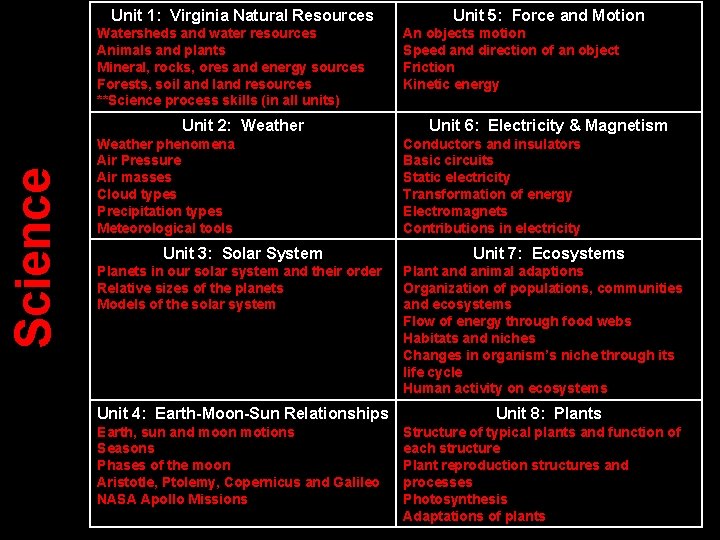
Unit 1: Virginia Natural Resources Watersheds and water resources Animals and plants Mineral, rocks, ores and energy sources Forests, soil and land resources **Science process skills (in all units) Science Unit 2: Weather phenomena Air Pressure Air masses Cloud types Precipitation types Meteorological tools Unit 3: Solar System Planets in our solar system and their order Relative sizes of the planets Models of the solar system Unit 4: Earth-Moon-Sun Relationships Earth, sun and moon motions Seasons Phases of the moon Aristotle, Ptolemy, Copernicus and Galileo NASA Apollo Missions Unit 5: Force and Motion An objects motion Speed and direction of an object Friction Kinetic energy Unit 6: Electricity & Magnetism Conductors and insulators Basic circuits Static electricity Transformation of energy Electromagnets Contributions in electricity Unit 7: Ecosystems Plant and animal adaptions Organization of populations, communities and ecosystems Flow of energy through food webs Habitats and niches Changes in organism’s niche through its life cycle Human activity on ecosystems Unit 8: Plants Structure of typical plants and function of each structure Plant reproduction structures and processes Photosynthesis Adaptations of plants
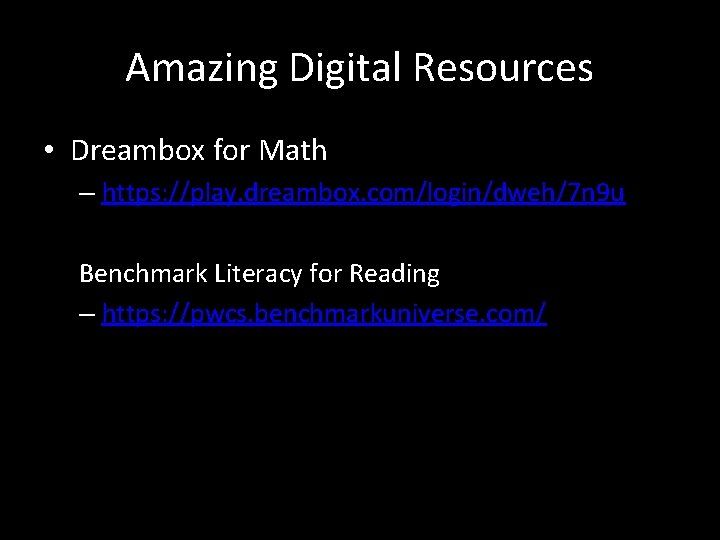
Amazing Digital Resources • Dreambox for Math – https: //play. dreambox. com/login/dweh/7 n 9 u Benchmark Literacy for Reading – https: //pwcs. benchmarkuniverse. com/
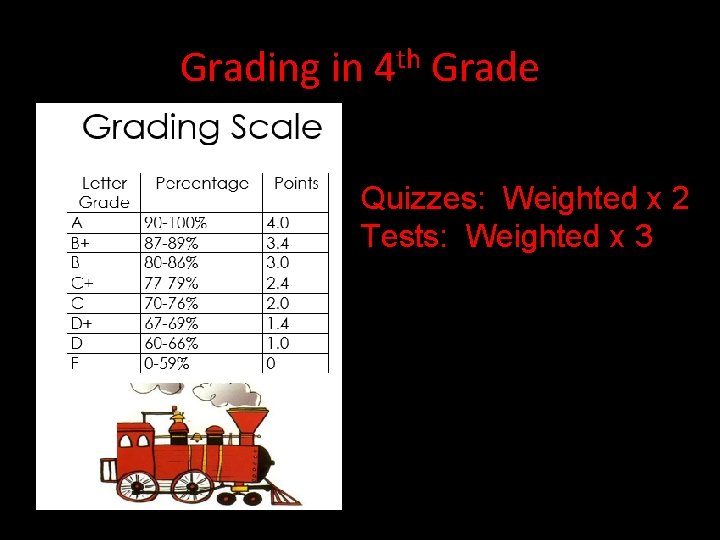
Grading in 4 th Grade Quizzes: Weighted x 2 Tests: Weighted x 3
Student Led Conferences What is a student-led conference? • As a learning community we firmly believe in the value of parents as partners and keeping children in the CENTER! • Students will have an opportunity to communicate to the adults, self-reflect, and set goals • Conferences will be scheduled via Sign Up Genius • Each conference will be allotted 20 minutes
Student Led Conferences During the conference, the students will share… • Data Binder • Writer’s Notebook • Reader’s Notebook/Reader’s Response • Book(s) they are currently reading • Virginia Studies Notebook The teacher will then provide an update on strengths and areas to grow.
SOL Test Information What are SOL tests? SOL (Standards of Learning) tests assess students’ mastery of the Virginia Department of Education objectives for student learning. Who takes SOL tests and what subjects will be tested? The state of Virginia and Prince William County Public Schools require the following tests: 4 th Grade: Reading, Math, and Social Studies What information will be tested? To view the specific objectives for each grade and subject, go to the Virginia Department of Education website and click on “For Students” on the left side panel When will the tests be given? Tests will be given late spring
How can YOU get involved at CYES? PTO Advisory Council Who: Parents and Teachers What: The Parent Teacher Organization helps create, plan and execute fun events for the whole family! Where: CYES library When: Third Tuesdays of each month How do you join: Come to our next meeting on Tuesday, October 17 th at 7: 00 pm. There is a $20 membership fee but all families are welcome! Who: Parents, teachers, community members, and even students What: Work with the principal to develop a yearly plan for school programs and budget. They serve as a representative between the community and the school. When: Third Tuesday of each month. Where: Chris Yung Library How to join: Come to our next meeting on Tuesday, October 17 th at 6: 00 pm!
PEP/Rosetta Stone is coming to CYES!! PEP Means Parents as Educational Partners. It is an outreach program offered at CYES and is coordinated by the Office of English Learners. The class is designed to help families learn English while helping them become more involved in their student’s education. There is a table by the cafeteria where you can get more information about classes. Information will eb available in various languages. You will also be able to register before leaving tonight. Classes begin the first week Of October. Be sure to register early! ALLPPT. com _ Free Power. Point Templates, Diagrams and Charts
Birthdays Due to a HUGE increase in the number of students with allergies, it is necessary that we all work together to keep our students safe! Here are some ways you can help keep our kids safe… • Send in a token for each student such as a pencil, bookmark, sticker, eraser, etc. • Send in a game for the classroom • Donate a book to our classroom library. You can send in a $15 check for a name plate ad birthday message to be added to the book. (takes about 3 weeks) If you choose to send in an edible, NUT-FREE treat please let us know ahead of time. • Label the treat with your child and the teachers name • Treats will be served in the cafeteria • At NO time may a child with food allergies be given a food item • Treats may only be given out to our class.
Communication v. Class DOJO v. Monthly Newsletters v. Dismissal Changes through email or note (cc Mrs. Corder & Mrs. Wells) v. Twitter #CYESSteam. Engines v. Website https: //chrisyunges. pwcs. edu/ v. Email kruegema@pwcs. edu v. Chris Yung Phone (571) 598 -3500
Wrap Up v Conferences: Sign-up Genius v Field Trips v October 12 to Farm Field Days v April 18 Jamestown v Questions