
Chris Goulden Joseph Rowntree Foundation Cycles of poverty
![Limited opportunities in workplace � “[I’ve been] trying to feel out what would be](https://slidetodoc.com/presentation_image_h/a07fe99978918ab9e6edbfa6a0824138/image-8.jpg "Limited opportunities in workplace � “[I’ve been] trying to feel out what would be")
- Slides: 14
Chris Goulden Joseph Rowntree Foundation Cycles of poverty, unemployment and low pay
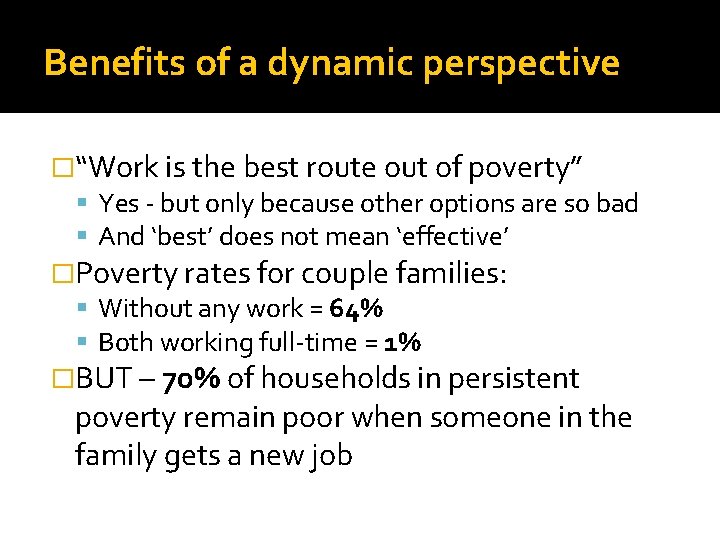
Benefits of a dynamic perspective �“Work is the best route out of poverty” Yes - but only because other options are so bad And ‘best’ does not mean ‘effective’ �Poverty rates for couple families: Without any work = 64% Both working full-time = 1% �BUT – 70% of households in persistent poverty remain poor when someone in the family gets a new job
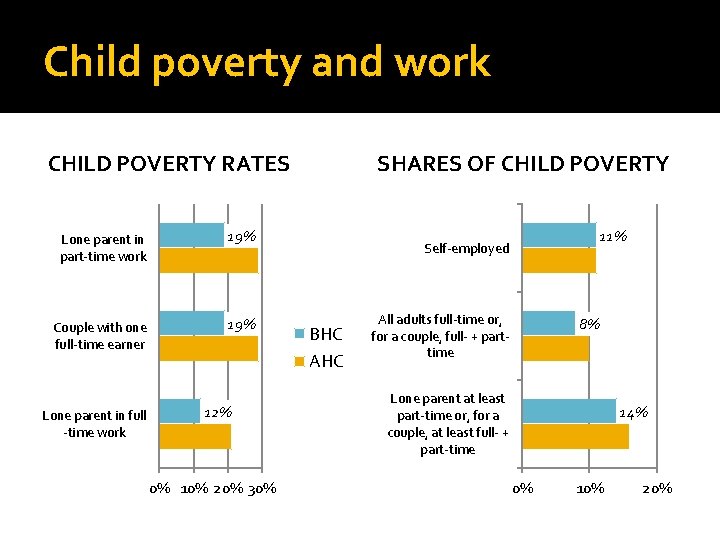
Child poverty and work CHILD POVERTY RATES Lone parent in part-time work 19% Couple with one full-time earner 19% Lone parent in full -time work SHARES OF CHILD POVERTY BHC AHC 12% 0% 10% 20% 30% 11% Self-employed All adults full-time or, for a couple, full- + parttime 8% Lone parent at least part-time or, for a couple, at least full- + part-time 14% 0% 10% 20%
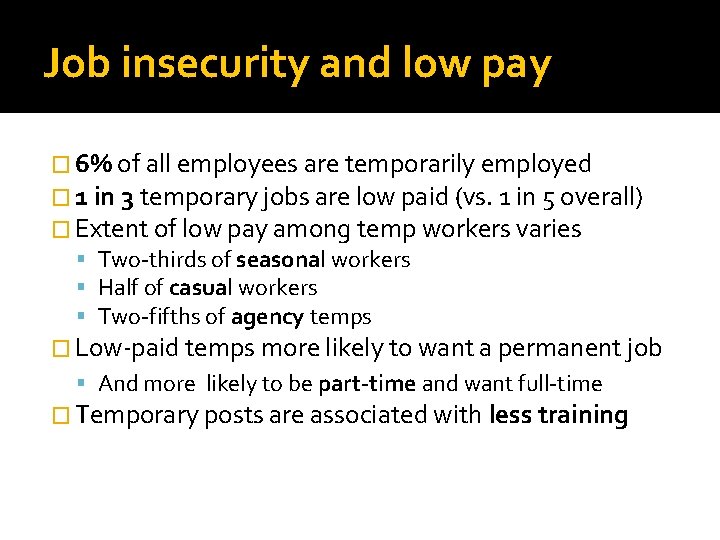
Job insecurity and low pay � 6% of all employees are temporarily employed � 1 in 3 temporary jobs are low paid (vs. 1 in 5 overall) � Extent of low pay among temp workers varies Two-thirds of seasonal workers Half of casual workers Two-fifths of agency temps � Low-paid temps more likely to want a permanent job And more likely to be part-time and want full-time � Temporary posts are associated with less training
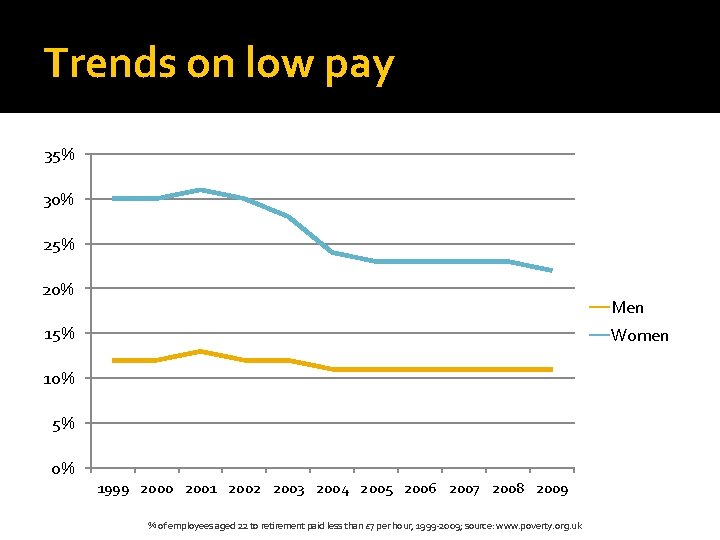
Trends on low pay 35% 30% 25% 20% Men 15% Women 10% 5% 0% 1999 2000 2001 2002 2003 2004 2005 2006 2007 2008 2009 % of employees aged 22 to retirement paid less than £ 7 per hour, 1999 -2009; source: www. poverty. org. uk
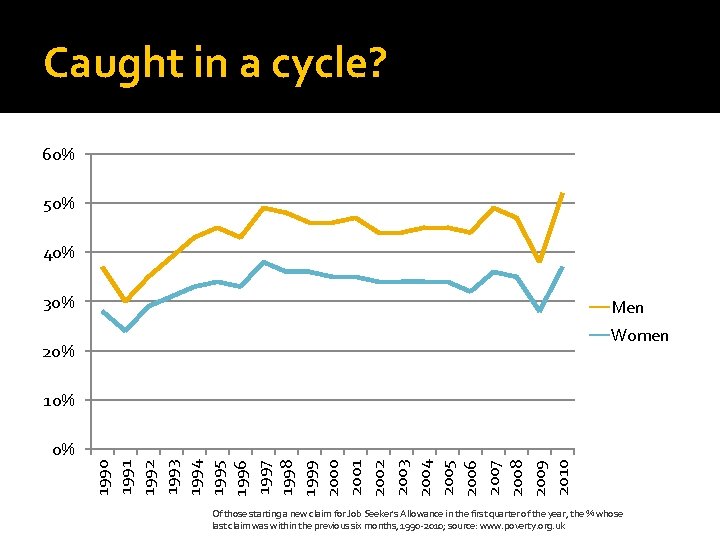
Caught in a cycle? 60% 50% 40% 30% Men Women 20% 1990 1991 1992 1993 1994 1995 1996 1997 1998 1999 2000 2001 2002 2003 2004 2005 2006 2007 2008 2009 2010 0% Of those starting a new claim for Job Seeker's Allowance in the first quarter of the year, the % whose last claim was within the previous six months, 1990 -2010; source: www. poverty. org. uk
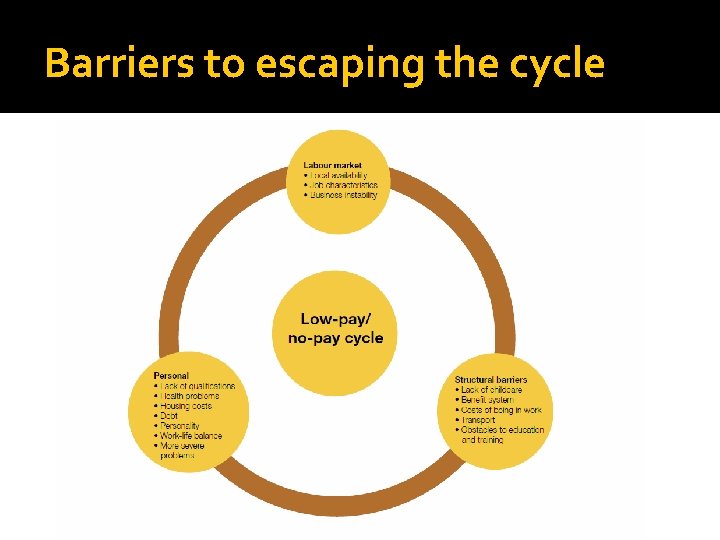
Barriers to escaping the cycle
Limited opportunities in workplace � “[I’ve been] trying to feel out what would be a good career move for us, try and get a permanent job. [I] kind of end up getting temporary work a lot, and end up thinking, it’s work, but obviously would be better permanent. . . I never seem to get any further forward on what I want to actually achieve. ”
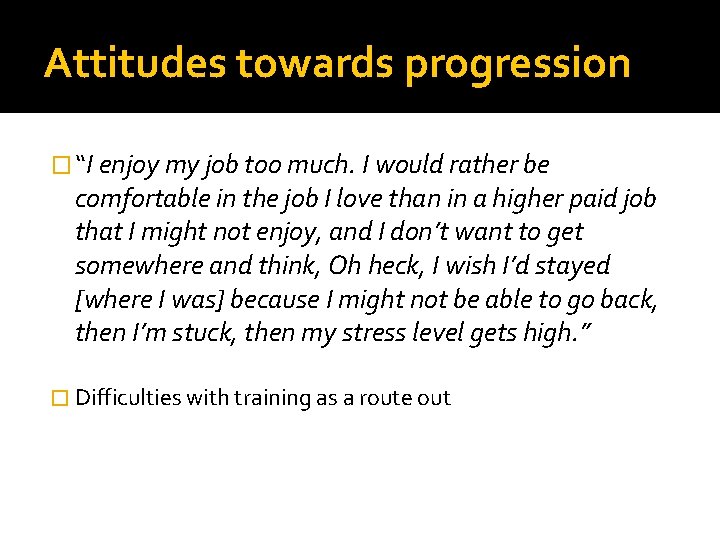
Attitudes towards progression � “I enjoy my job too much. I would rather be comfortable in the job I love than in a higher paid job that I might not enjoy, and I don’t want to get somewhere and think, Oh heck, I wish I’d stayed [where I was] because I might not be able to go back, then I’m stuck, then my stress level gets high. ” � Difficulties with training as a route out
A role model � “I think it’s really important that both my children learn what is the right way to do things, that you work. My children think that everybody goes to college when they leave school because they’ve seen me studying on constantly. I want them to have those values that you work for a living and you earn money and you reach your potential, so I think it’s important as a role model to them for them to see that. ” � Rachel, lone parent with 2 children, unemployed
Childcare � “Basically it is not being able to say to the employer when I can start, what hours I can do, until you have childcare in place … but you can’t get childcare until you are working, so you just go round in circles. ” � Jane, lone parent with 4 children, unemployed
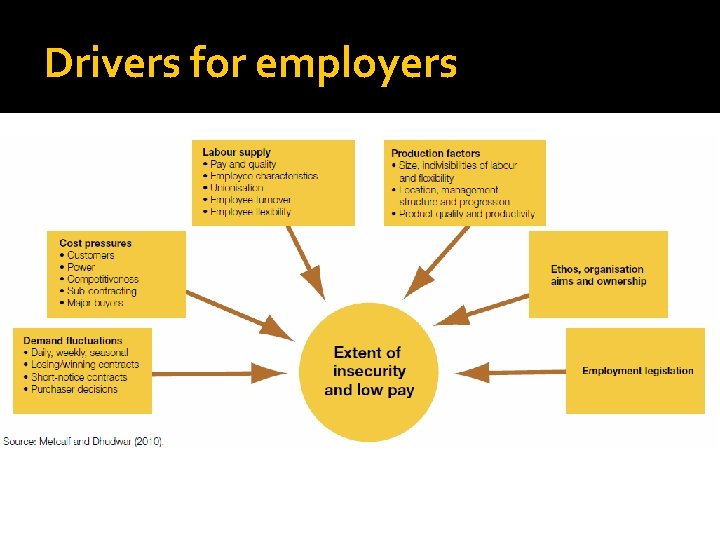
Drivers for employers
Employer’s role in the cycle � Causes of use of temporary labour in search of lower costs: Competitive pressures; demand fluctuations; low skill requirements and a ready labour supply � Dominant purchaser power may worsen fluctuations and cost pressures on suppliers � Emphasis on cost in public sector purchasing has encouraged temporary/ insecure employment Conflict between purchasing policy and anti-poverty policy? � But economic pressures do not wholly determine employment organisation - employers’ responses differ � ‘Living wage’ policies change production techniques, leading to more secure employment as well as higher wages
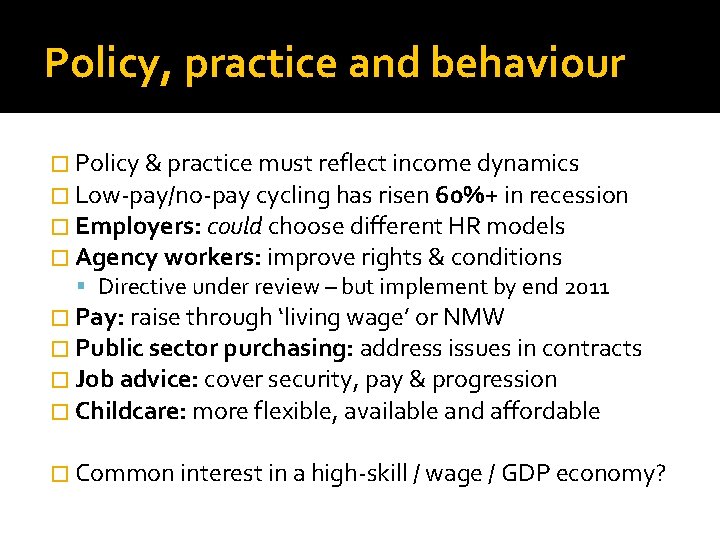
Policy, practice and behaviour � Policy & practice must reflect income dynamics � Low-pay/no-pay cycling has risen 60%+ in recession � Employers: could choose different HR models � Agency workers: improve rights & conditions Directive under review – but implement by end 2011 � Pay: raise through ‘living wage’ or NMW � Public sector purchasing: address issues in contracts � Job advice: cover security, pay & progression � Childcare: more flexible, available and affordable � Common interest in a high-skill / wage / GDP economy ?