
Chris Baerveldt Marijtje van Duijn Lotte Vermeij Dianne

Chris Baerveldt, Marijtje van Duijn, Lotte Vermeij, Dianne van Hemert Ethnic Boundaries and Personal Choice NOSMO, Nijmegen, November 25, 2005.
Research question Do high school pupils socially discriminate between ethnic groups (in favor of their own)?
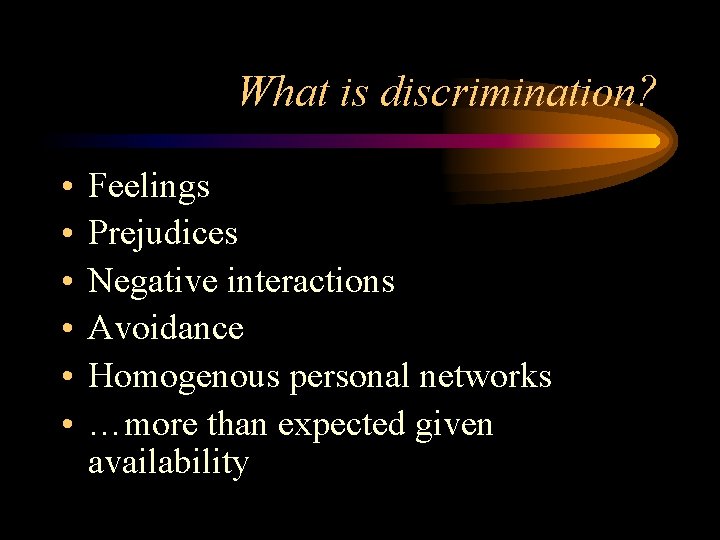
What is discrimination? • • • Feelings Prejudices Negative interactions Avoidance Homogenous personal networks …more than expected given availability
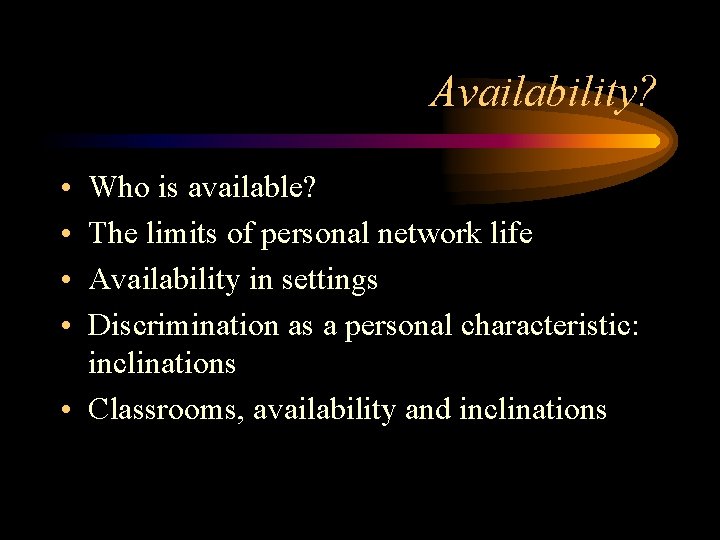
Availability? • • Who is available? The limits of personal network life Availability in settings Discrimination as a personal characteristic: inclinations • Classrooms, availability and inclinations
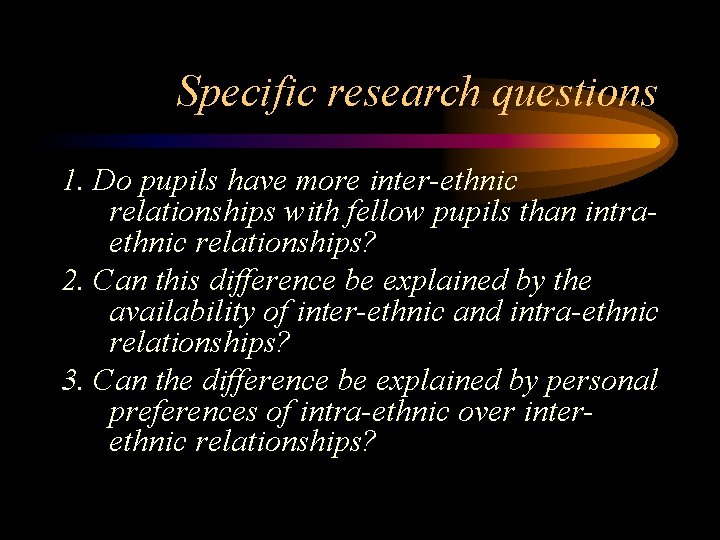
Specific research questions 1. Do pupils have more inter-ethnic relationships with fellow pupils than intraethnic relationships? 2. Can this difference be explained by the availability of inter-ethnic and intra-ethnic relationships? 3. Can the difference be explained by personal preferences of intra-ethnic over interethnic relationships?
Data • Project Baerveldt et al. : Dutch Social Behavior Study (1996) • 881 MAVO 4 pupils (approx. . age 16) at 19 schools • questionnaire with individual (pupil) and network variables • school variables also available → 19 school networks (with 41 -102 actors)
Variables • Network variables – 10 items on type of relation with other pupils • Main pupil variables – ethnicity, acculturation – gender – importance friends at school, SES parents • School variables – number of pupils, composition of year group
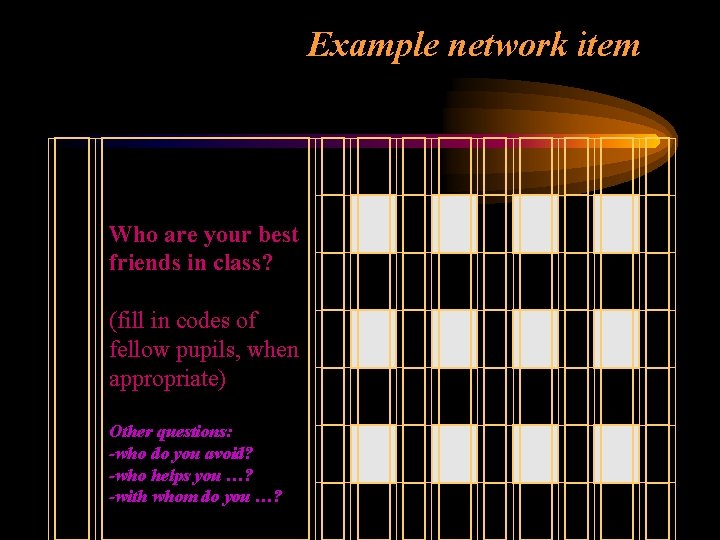
Example network item Who are your best friends in class? (fill in codes of fellow pupils, when appropriate) Other questions: -who do you avoid? -who helps you …? -with whom do you …?
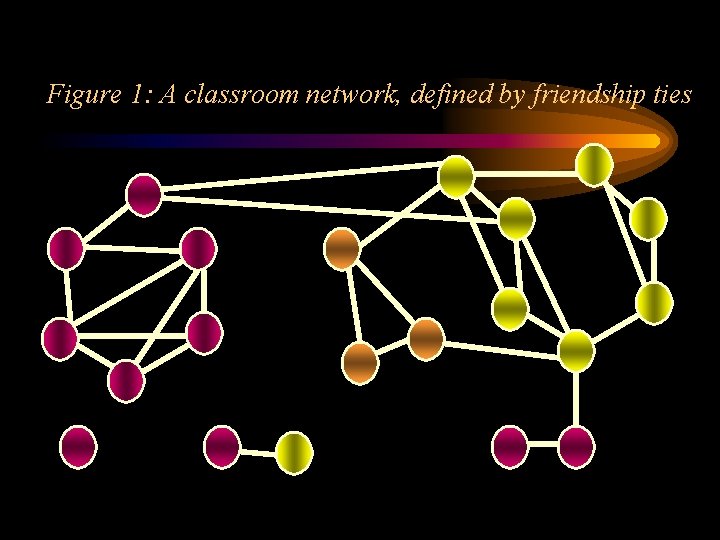
Figure 1: A classroom network, defined by friendship ties
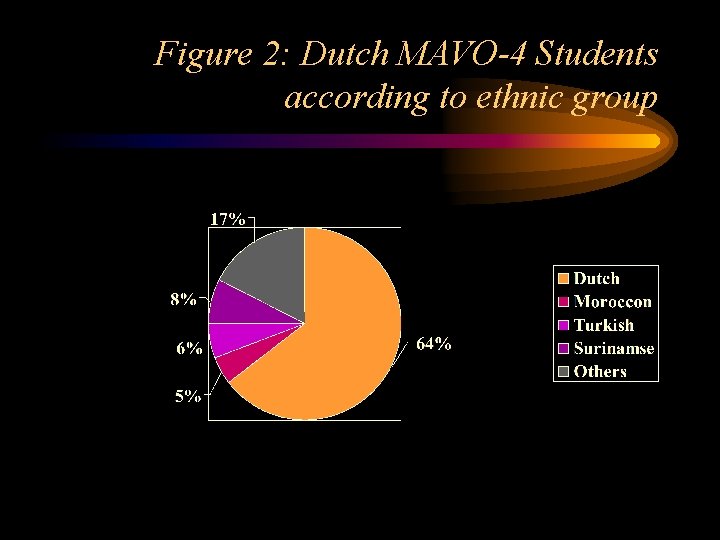
Figure 2: Dutch MAVO-4 Students according to ethnic group
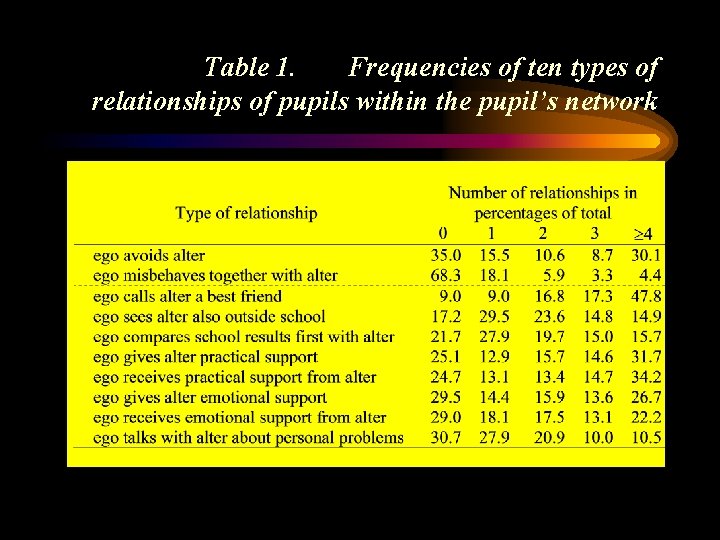
Table 1. Frequencies of ten types of relationships of pupils within the pupil’s network
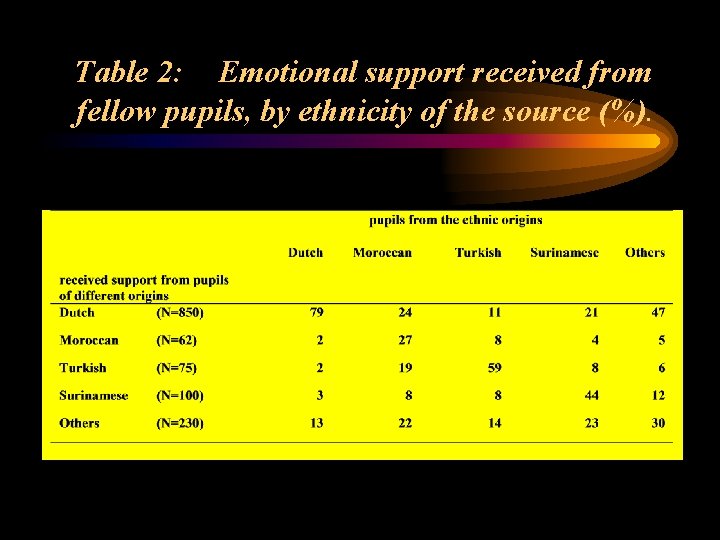
Table 2: Emotional support received from fellow pupils, by ethnicity of the source (%).
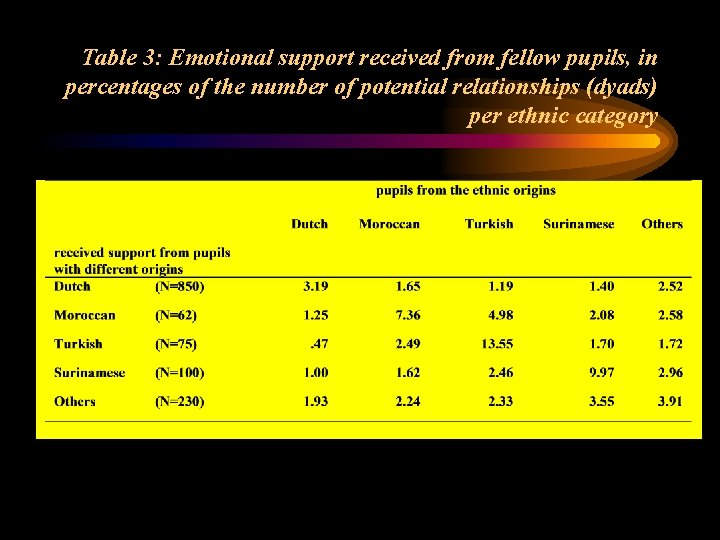
Table 3: Emotional support received from fellow pupils, in percentages of the number of potential relationships (dyads) per ethnic category
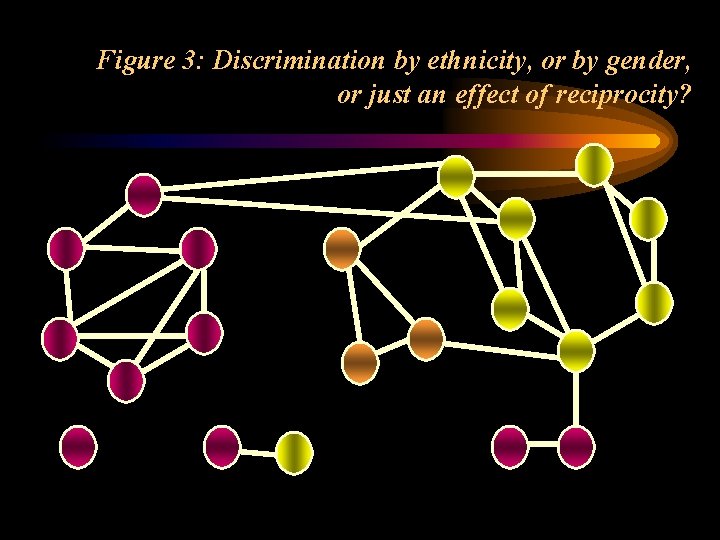
Figure 3: Discrimination by ethnicity, or by gender, or just an effect of reciprocity?
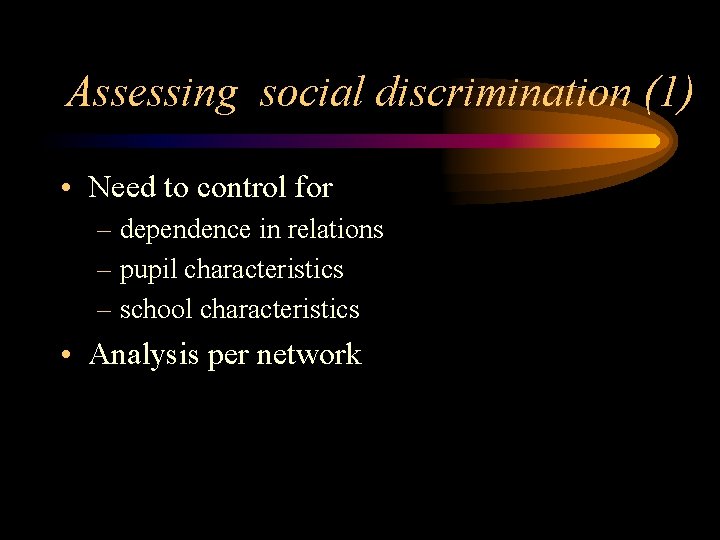
Assessing social discrimination (1) • Need to control for – dependence in relations – pupil characteristics – school characteristics • Analysis per network
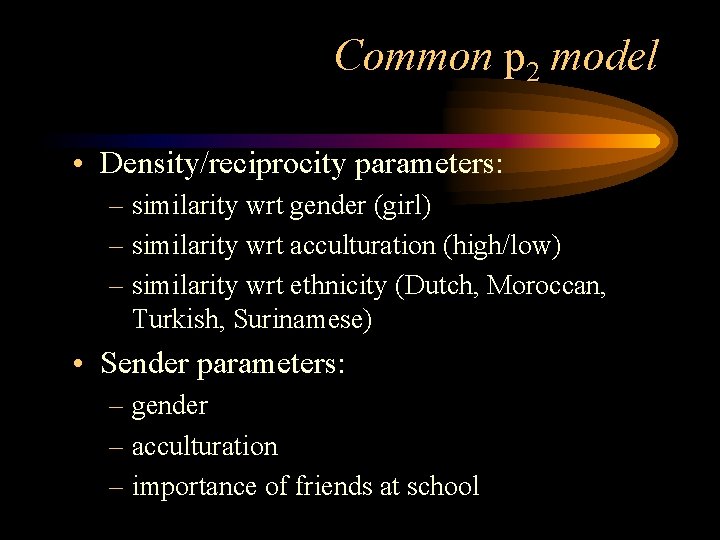
Common p 2 model • Density/reciprocity parameters: – similarity wrt gender (girl) – similarity wrt acculturation (high/low) – similarity wrt ethnicity (Dutch, Moroccan, Turkish, Surinamese) • Sender parameters: – gender – acculturation – importance of friends at school
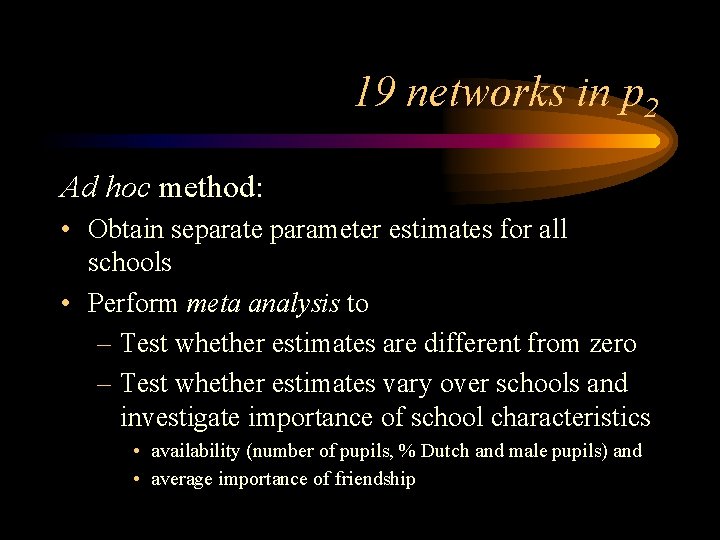
19 networks in p 2 Ad hoc method: • Obtain separate parameter estimates for all schools • Perform meta analysis to – Test whether estimates are different from zero – Test whether estimates vary over schools and investigate importance of school characteristics • availability (number of pupils, % Dutch and male pupils) and • average importance of friendship

Table 5: Major results of p 2 analysis
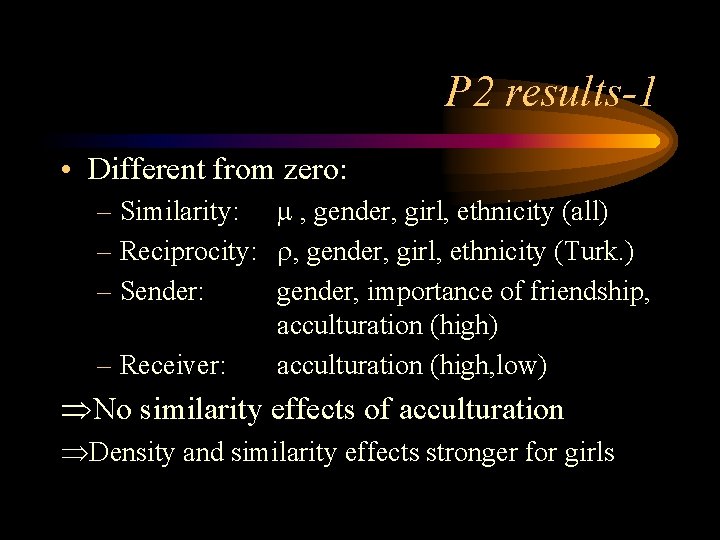
P 2 results-1 • Different from zero: – Similarity: , gender, girl, ethnicity (all) – Reciprocity: , gender, girl, ethnicity (Turk. ) – Sender: gender, importance of friendship, acculturation (high) – Receiver: acculturation (high, low) ÞNo similarity effects of acculturation ÞDensity and similarity effects stronger for girls
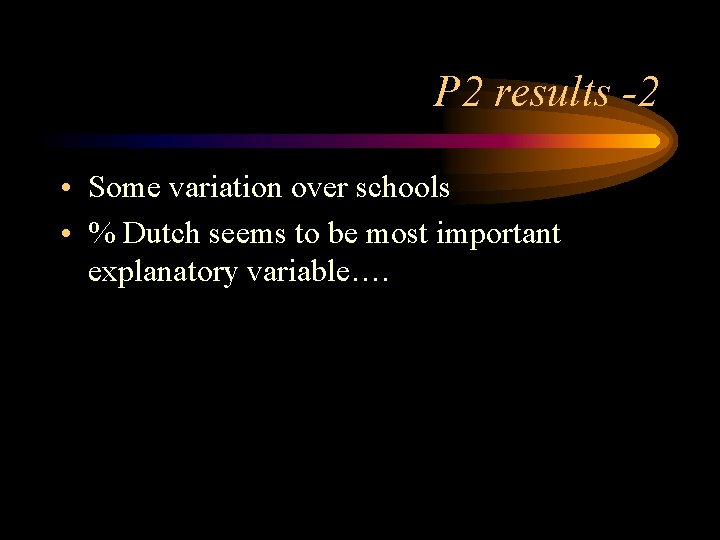
P 2 results -2 • Some variation over schools • % Dutch seems to be most important explanatory variable….
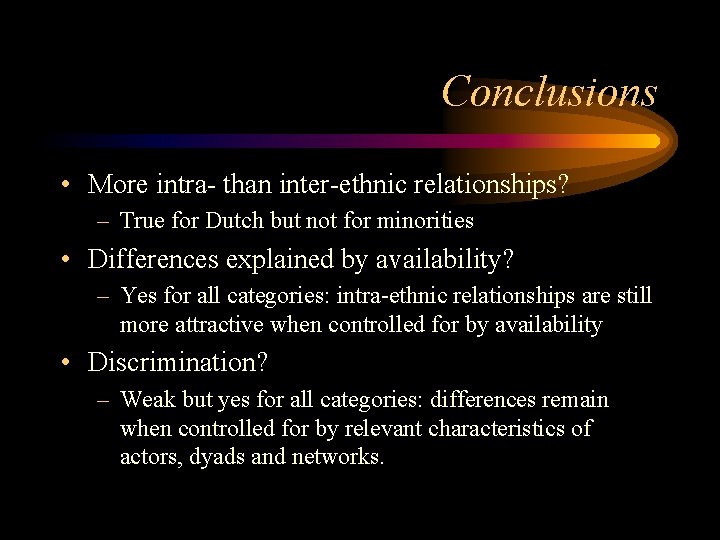
Conclusions • More intra- than inter-ethnic relationships? – True for Dutch but not for minorities • Differences explained by availability? – Yes for all categories: intra-ethnic relationships are still more attractive when controlled for by availability • Discrimination? – Weak but yes for all categories: differences remain when controlled for by relevant characteristics of actors, dyads and networks.
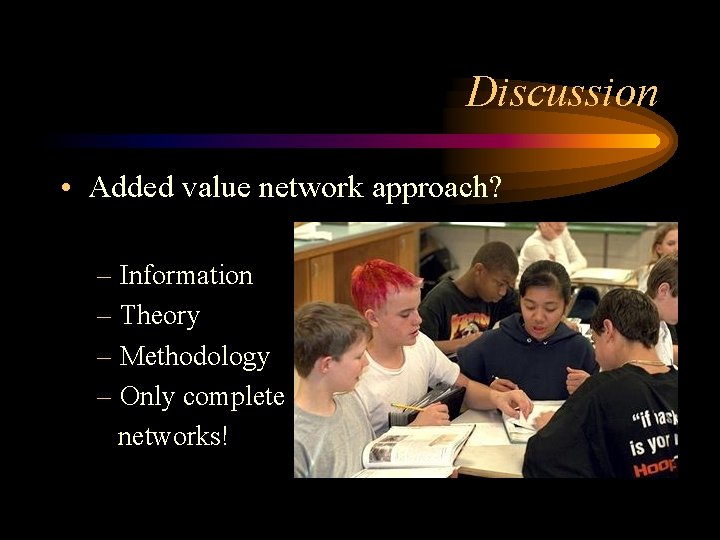
Discussion • Added value network approach? – Information – Theory – Methodology – Only complete networks!

The End
- Slides: 23