
Chp 3 Ecosystem Ecology Ecosystem Boundaries Boundaries can
Chp 3: Ecosystem Ecology
Ecosystem Boundaries • Boundaries can be well defined (example: __) or they can be subjective (example: ____ ). • Boundaries: – can cross borders of states or countries – can be vast (pg 59) – can be “micro”
Energy Flow in Ecosystems 1. 2. 3. 4. Photosynthesis and Respiration Trophic Levels Food Chains Food Webs
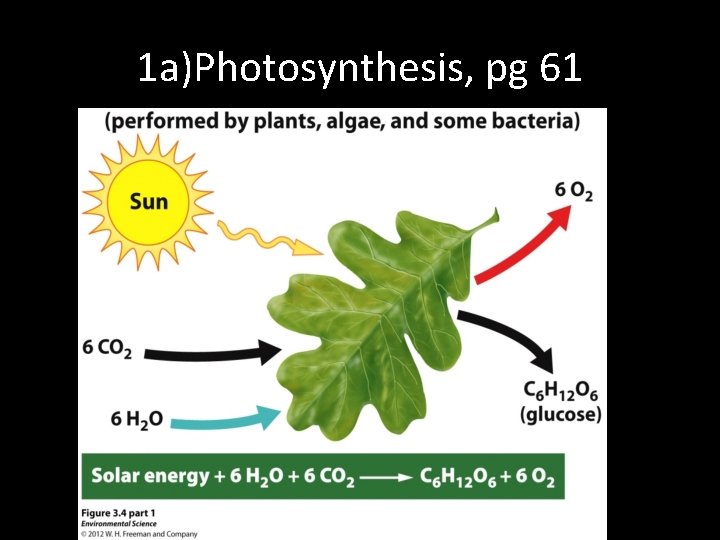
1 a)Photosynthesis, pg 61
• Law of conservation of mass upheld? • Organisms that undergo photosynthesis are ____________. They are the foundation of all food webs and chains. • Examples: – terrestrial--– aquatic---

1 b) Cellular Respiration
• Law of conservation of mass upheld? • All organisms must use energy to carry out life functions. ____ organisms undergo respiration. • What will happen if more cellular respiration than photosynthesis occurs?
2. Trophic Levels • Organisms that can only get energy by consuming other organisms are______ or _________. • Consumers can further be categorized: herbivore, omnivore, carnivore. – Examples of each:
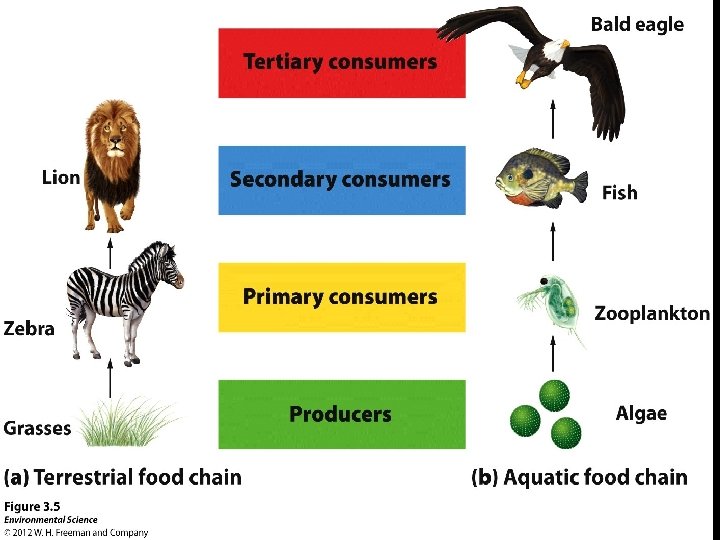
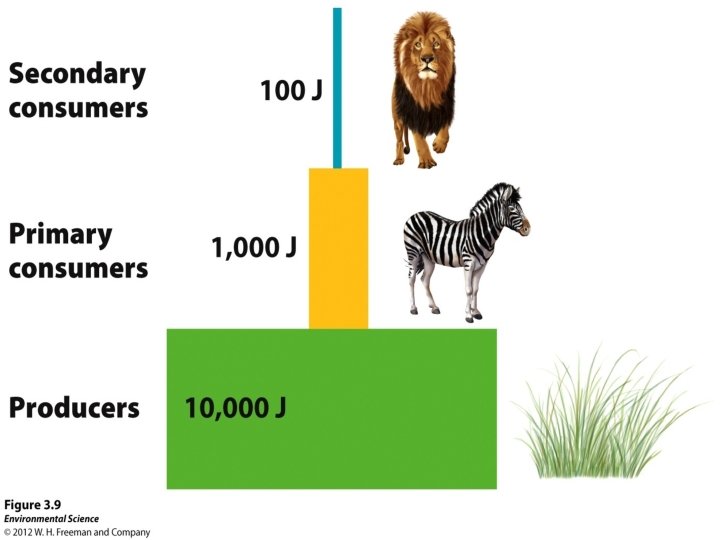
These successive levels of organisms consuming one another are ______. Energy moves up the trophic levels, but usually only ___% gets transferred. Where does it go? Another way to show energy moves from one organism to another is a _______are more realistic. Why? In both, the arrows point towards _______.
• Some organisms don’t fit so neatly into a trophic level. – _______ eat dead organisms and can be at any level. – _______ break down dead tissue. – _______ breakdown nutrients and do the final recycling.
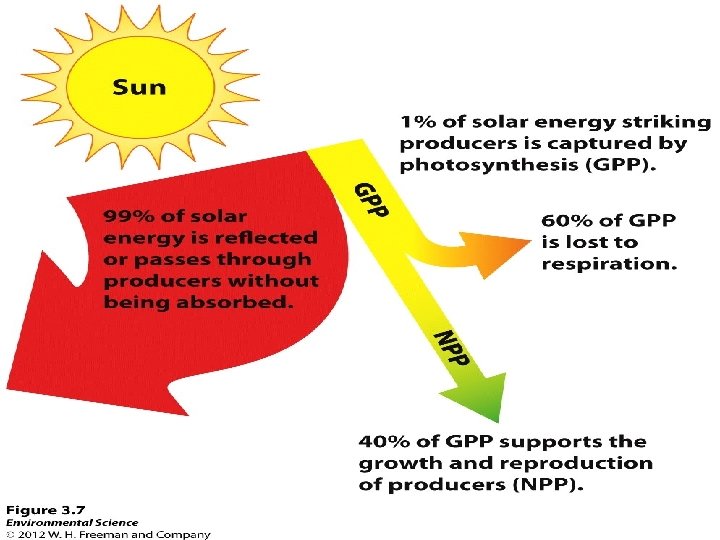
Ecosystem Productivity Since most energy enters an ecosystem through autotrophs, they determine how much life can be supported by that ecosystem. The __________ is how much solar energy the producers in an ecosystem capture in a given year. The unit is kcal/m 2/yr.
What does “gross” mean? Why is this not a true reflection of the energy available to the next level? ________takes into account that autotrophs undergo cellular respiration. NPP = GPP – respiration by producers Only the ______ (dry organic material) represented by the NPP is available as nutrients to the next trophic level.
Trophic Pyramids How does the 2 nd law of thermodynamics affect the amount and quality of energy available to each successive trophic level? It is a general assumption that only 10% of energy available at one level makes it to the next. Actual ________can range from 5% to 20%.
Read the last two paragraphs on pg 65. How is the notion that “vegetarians are better for the environment” supported by ecological efficiency?
Matter Cycling in an Ecosystem: Biogeochemical Cycles Use pages 66 to 73 to complete the Biogeochemical Cycles Organizer
Long-term Carbon Storage Sleipner Field http: //www. amnh. org/explore/sciencebulletins/(watch)/earth/documentaries/storingco 2 -to-protect-the-climate Shell video http: //www. youtube. com/watch? v=cohg. QZql 1 w
Ecosystem Response to Disturbance • A _____ is an event that causes a change in population size or community composition. – natural and anthropogenic examples – short-term and long-term examples – Are all disturbances disasters?
Resistance and Resilience • _______ – Measure of how much a disturbance affects the flow of energy and matter – High resistance or low resistance depends on if the net primary productivity is affected. (wildfires) • _______ – Rate at which an ecosystem returns to its original state • These ideas refer to flows of energy and matter and not necessarily species numbers.
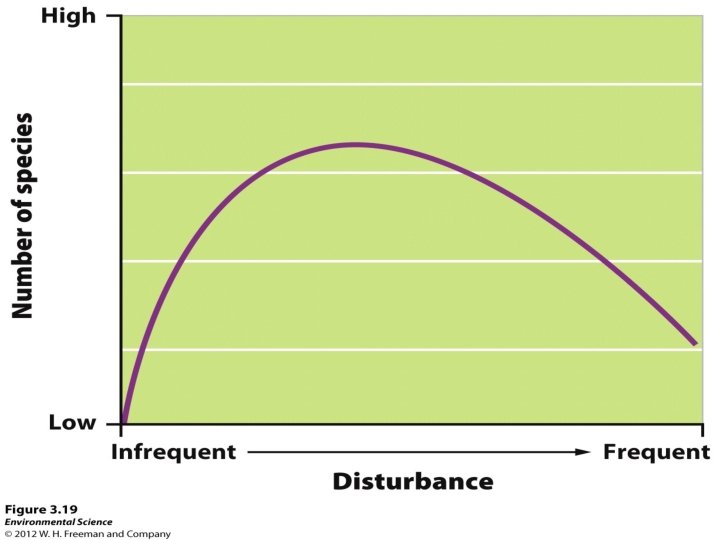
_____________ • Disturbances are a natural part of life. • Ecosystems experiencing intermediate levels of disturbance are usually the most ________. • Pg 76, fig 3. 19
Ecosystem Services • _________—ecosystem worth because it is useful as an instrument or tool – _____ (goods) – __________ -production of oxygen; fixing of nitrogen – Support systems- filtering water; pollination of food crops; natural pest control; habitat for animals – _______ research; gain knowledge; beauty
- Slides: 24