
Chorioamnionitis Michael Mc Namara DO Sanford Maternal Fetal


- Slides: 23
Chorioamnionitis Michael Mc. Namara, DO Sanford Maternal Fetal Medicine
No Disclosures
Infections in Pregnancy Chorioamnionitis Historical term Infection of the chorion, amnion or both Intra amniotic infections (AIA) More common term Infection of chorion, amnion Infection also to include amniotic fluid, fetus, umbilical cord, placenta Intra amniotic infection or inflammation (Triple I) 2015 National Institute of Child Health and Human Development Workshop Intrauterine infection or inflammation or both Strict diagnostic criteria
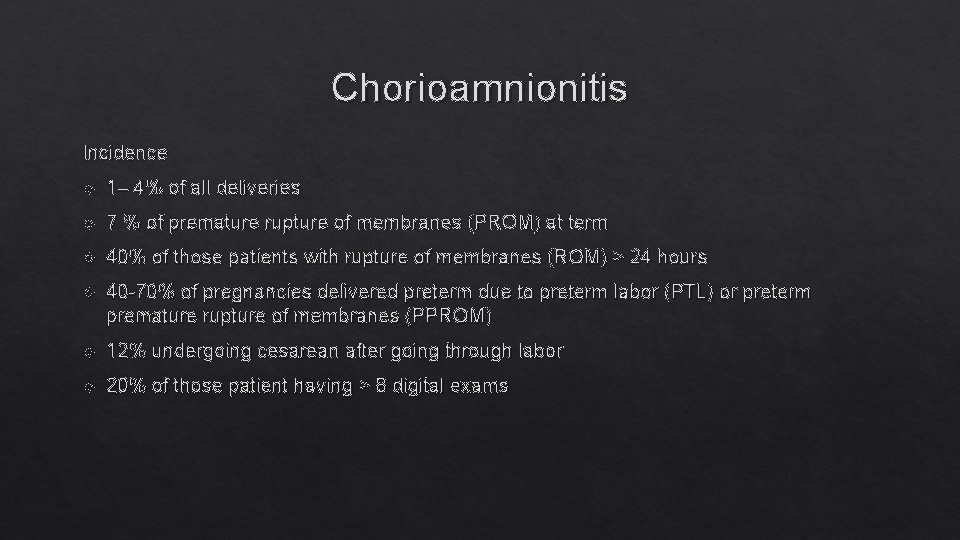
Chorioamnionitis Incidence 1– 4% of all deliveries 7 % of premature rupture of membranes (PROM) at term 40% of those patients with rupture of membranes (ROM) > 24 hours 40 -70% of pregnancies delivered preterm due to preterm labor (PTL) or preterm premature rupture of membranes (PPROM) 12% undergoing cesarean after going through labor 20% of those patient having > 8 digital exams
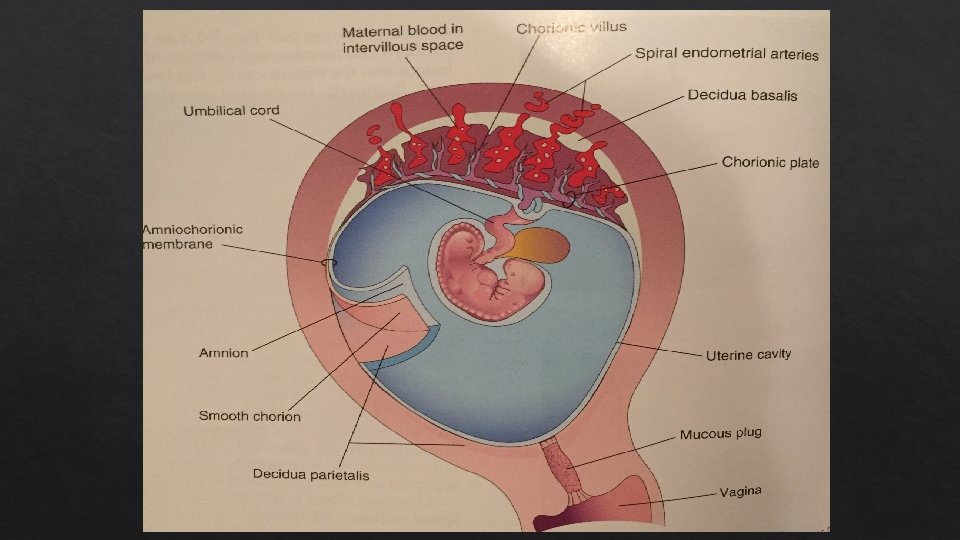
Protection Against Infection Mucus plug Membranes Placenta
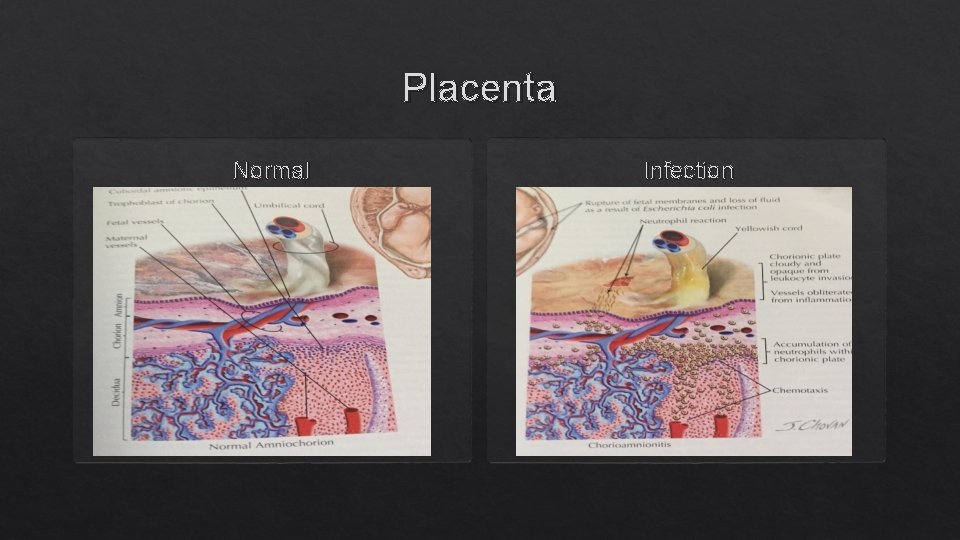
Placenta Normal Infection
Risk Factors Length of labor Duration of ruptured membranes Number of digital exams following rupture of membranes Nulliparity Meconium stained amniotic fluid Internal monitoring Presence of bacterial pathogens Alcohol and tobacco use Previous pregnancy with same
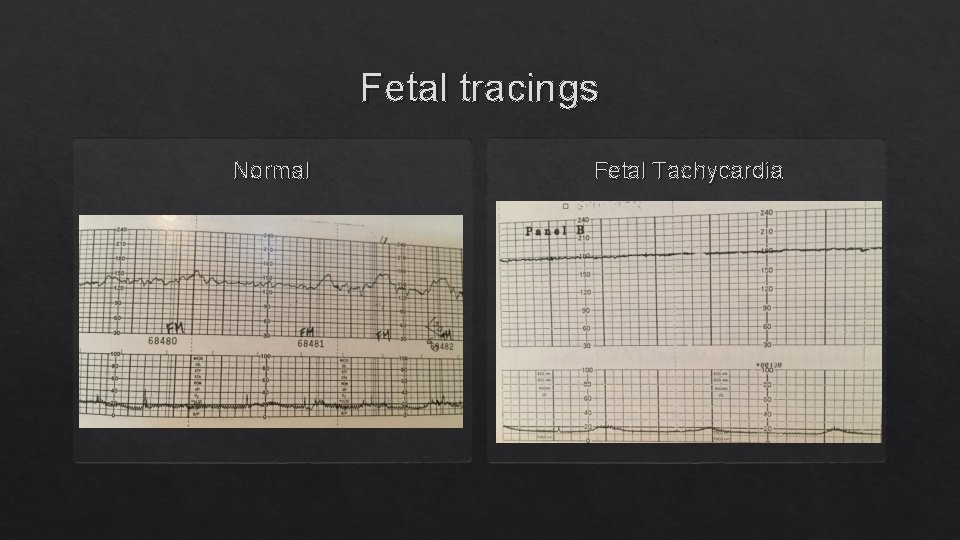
Diagnosis Presumptive Fever – 100. 4 F (38 C) or greater x 2 or 102. 2 F (39 C) one time Fetal tachycardia (baseline > 160 bpm) Maternal leukocytosis (WBC > 15, 000) absence of steroids, presence of left shift Purulent appearing amniotic fluid
Fetal tracings Normal Fetal Tachycardia
Diagnosis Confirmed Fever – 100. 4 F (38 C) or greater x 2 or 102. 2 F (39 C) one time Fetal tachycardia (baseline > 160 bpm) Maternal leukocytosis (WBC > 15, 000) absence of steroids, presence of left shift Purulent appearing amniotic fluid Positive gram stain of amniotic fluid Low glucose in amniotic fluid (< 15) Positive amniotic fluid culture High white count in amniotic fluid Pathology evidence of infection or inflammation (or both) of placenta, membranes or umbilical cord
Etiology Usually polymicrobial Genital mycoplasmas (Mycoplasma or Ureaplasma) Anaerobes (Gardnerella vaginalis) Enteric gram negative bacteria (E coli) Group B streptococcus Listeria monocytogenes
Treatment Intrapartum Delivery (except special circumstances) Antipyretics Antibiotics (remember the organisms) Gentamicin Ampicillin (switch from penicillin if that is being used for GBS prophylaxis) Penicillin allergy – vancomycin
Treatment Post partum Vaginal delivery – Not clear Continue antibiotics for short course, afebrile No antibiotics Cesarean Add clindamycin or flagyl at time of surgery for anaerobic coverage Continue antibiotics post partum for at least 24 hours post op without fever No need for oral medications after intravenous course
Complications Maternal Dysfunctional labor Cesarean Post partum hemorrhage and transfusion Uterine atony Sepsis 18% of maternal sepsis due to AIA Post operative complications to include wound infections, endometritis, septic pelvic thrombophlebitis, pelvic abscess
Endometritis JH 36 y/o G 2, P 0 admitted for induction at 38+2 weeks Type 2 DM, gestational hypertension GBS +, penicillin allergy (anaphylaxis), clindamycin resistant Ripened day #1, begun on vancomycin on admission Day #2, after misoprostol and Cook’s catheter, begun on Pitocin Spontaneous rupture membranes as 1440 (day #2) Inadequate labor pattern at 6 cm, unable to obtain adequate contractions due to fetal intolerance Cesarean at 2213, Gentamicin and Clindamycin for prophylaxis
Endometritis Routine post op course, scheduled to be discharged POD#2 though baby with elevated bilirubin so stayed an extra day 46 hours post op, fever 100. 9 F, tender uterus, otherwise non focal exam WBC 15. 2 k with left shift Begun on Gentamicin, Clindamycin, Vancomycin Blood cultures positive for E. coli, pan sensitive at 11 hours (Infectious Disease Consult) After afebrile x 48 hours, home on ciprofloxacin to complete 10 day course
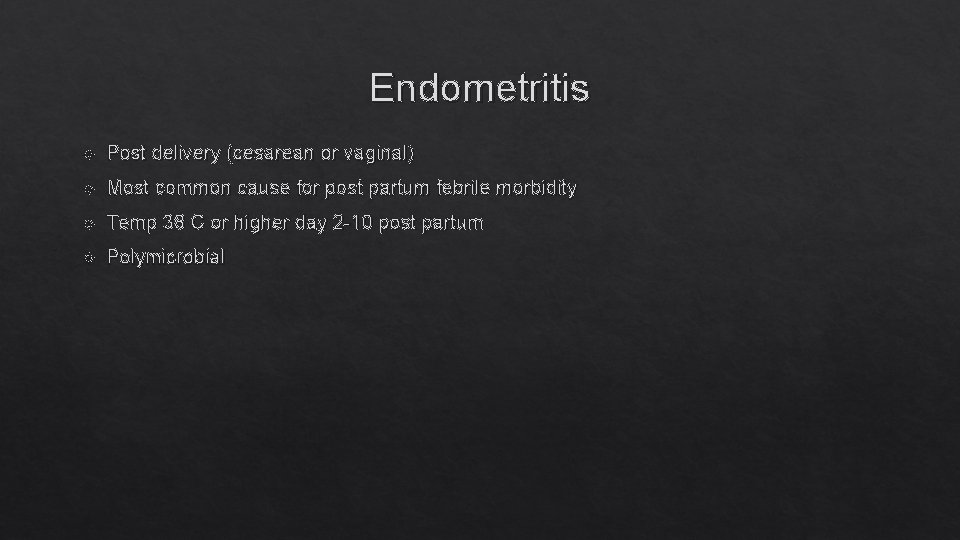
Endometritis Post delivery (cesarean or vaginal) Most common cause for post partum febrile morbidity Temp 38 C or higher day 2 -10 post partum Polymicrobial
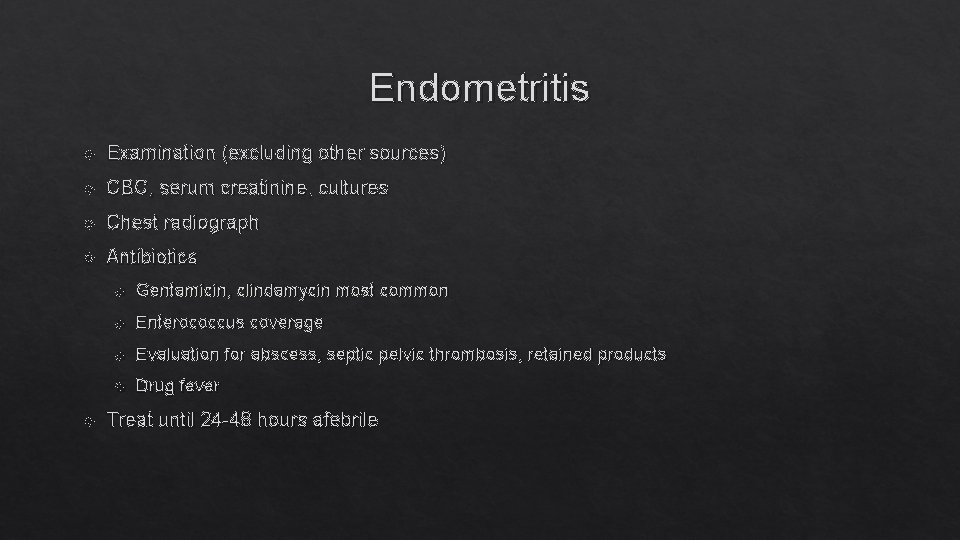
Endometritis Examination (excluding other sources) CBC, serum creatinine, cultures Chest radiograph Antibiotics Gentamicin, clindamycin most common Enterococcus coverage Evaluation for abscess, septic pelvic thrombosis, retained products Drug fever Treat until 24 -48 hours afebrile
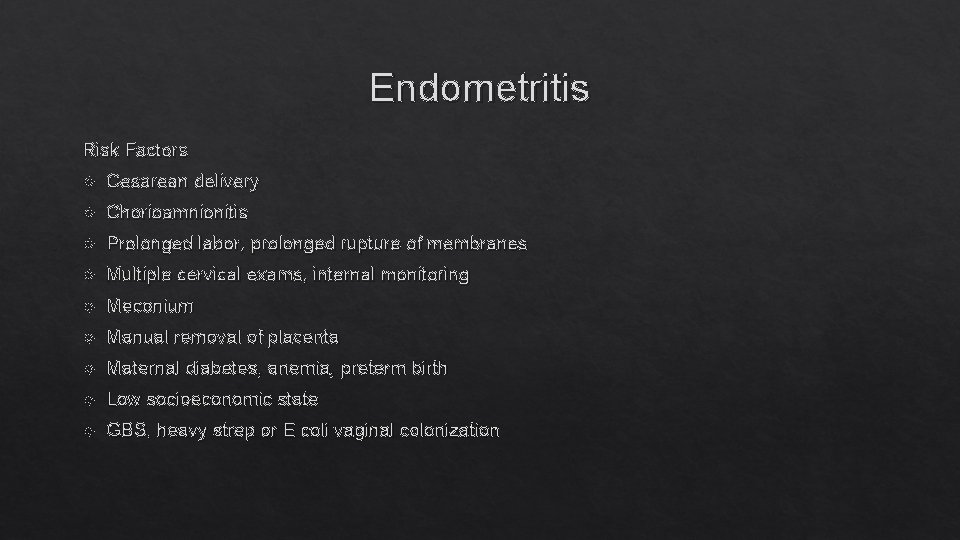
Endometritis Risk Factors Cesarean delivery Chorioamnionitis Prolonged labor, prolonged rupture of membranes Multiple cervical exams, internal monitoring Meconium Manual removal of placenta Maternal diabetes, anemia, preterm birth Low socioeconomic state GBS, heavy strep or E coli vaginal colonization
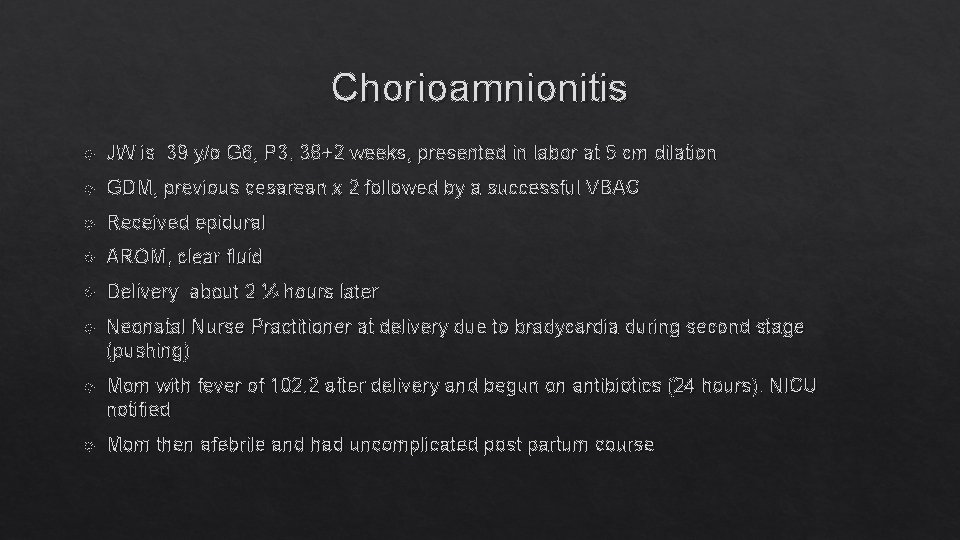
Chorioamnionitis JW is 39 y/o G 6, P 3, 38+2 weeks, presented in labor at 5 cm dilation GDM, previous cesarean x 2 followed by a successful VBAC Received epidural AROM, clear fluid Delivery about 2 ½ hours later Neonatal Nurse Practitioner at delivery due to bradycardia during second stage (pushing) Mom with fever of 102. 2 after delivery and begun on antibiotics (24 hours), NICU notified Mom then afebrile and had uncomplicated post partum course
Complications Fetal / Neonatal