
Chordates Chordates are Deuterostomes Protostome vs Deuterostome Echinoderms
- Slides: 29
Chordates
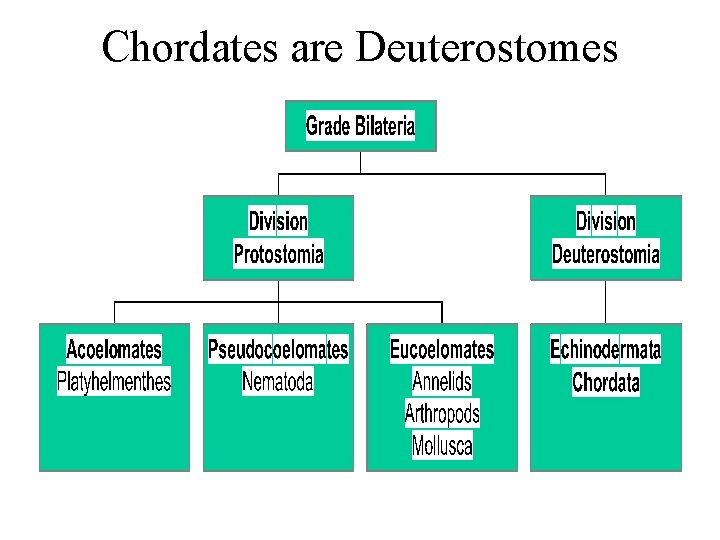
Chordates are Deuterostomes
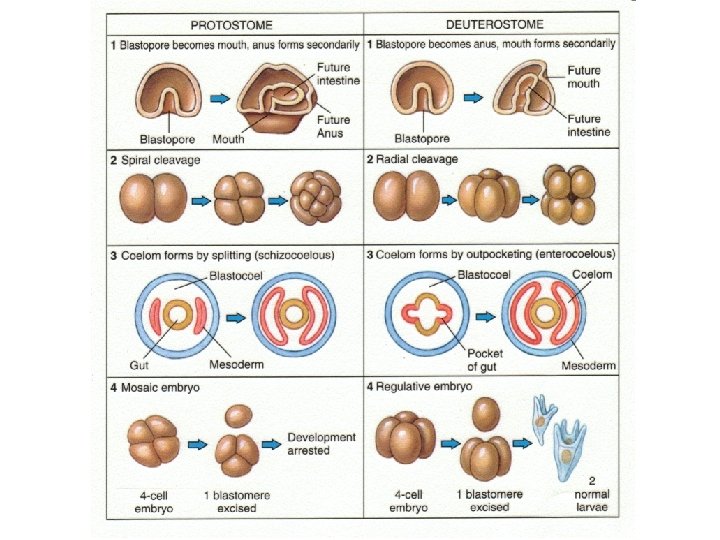
Protostome vs. Deuterostome
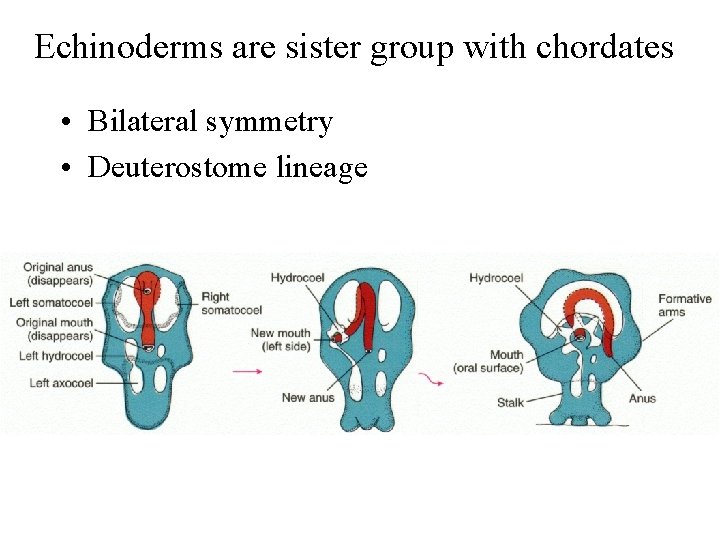
Echinoderms are sister group with chordates • Bilateral symmetry • Deuterostome lineage
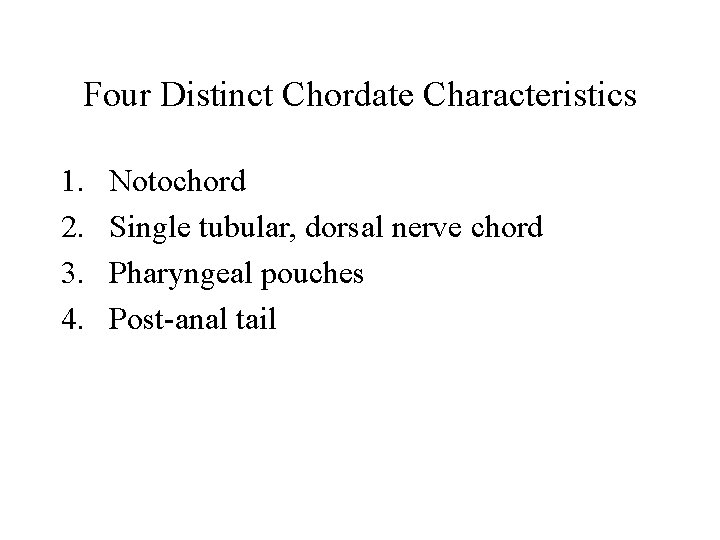
Four Distinct Chordate Characteristics 1. 2. 3. 4. Notochord Single tubular, dorsal nerve chord Pharyngeal pouches Post-anal tail
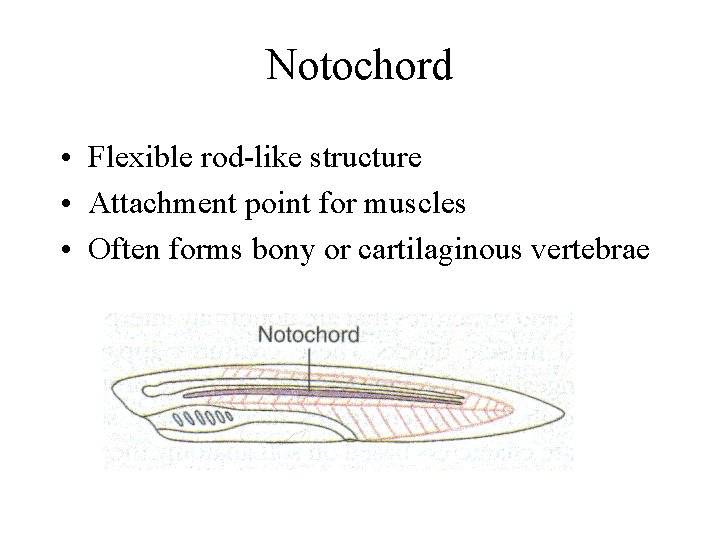
Notochord • Flexible rod-like structure • Attachment point for muscles • Often forms bony or cartilaginous vertebrae
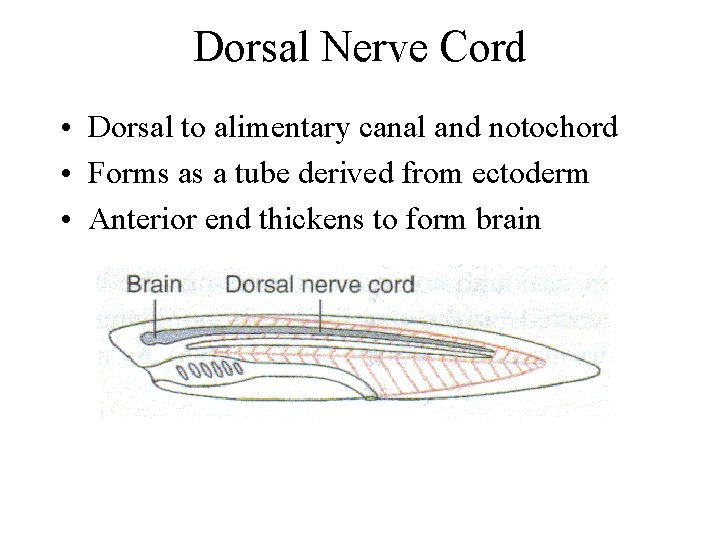
Dorsal Nerve Cord • Dorsal to alimentary canal and notochord • Forms as a tube derived from ectoderm • Anterior end thickens to form brain
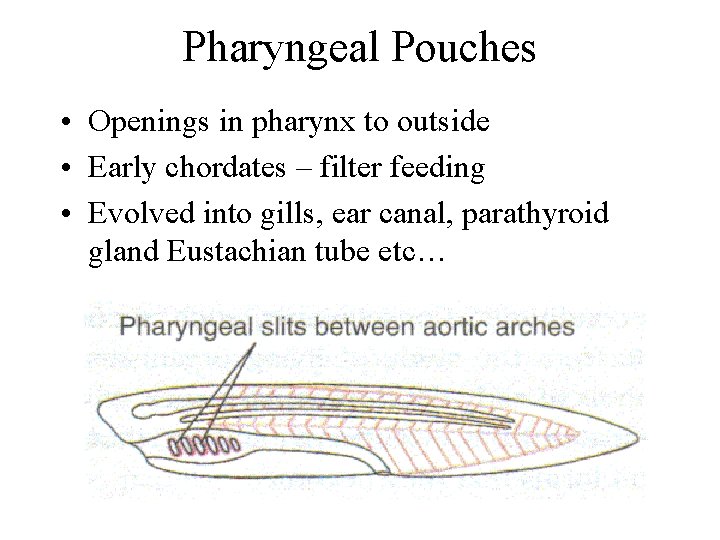
Pharyngeal Pouches • Openings in pharynx to outside • Early chordates – filter feeding • Evolved into gills, ear canal, parathyroid gland Eustachian tube etc…
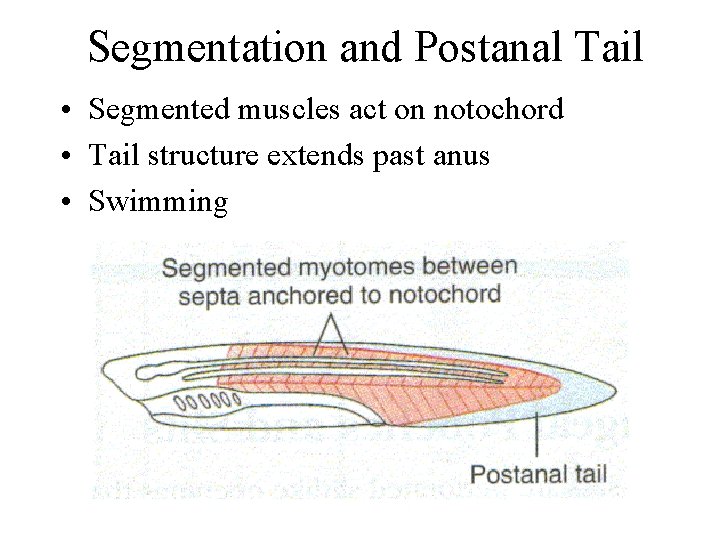
Segmentation and Postanal Tail • Segmented muscles act on notochord • Tail structure extends past anus • Swimming
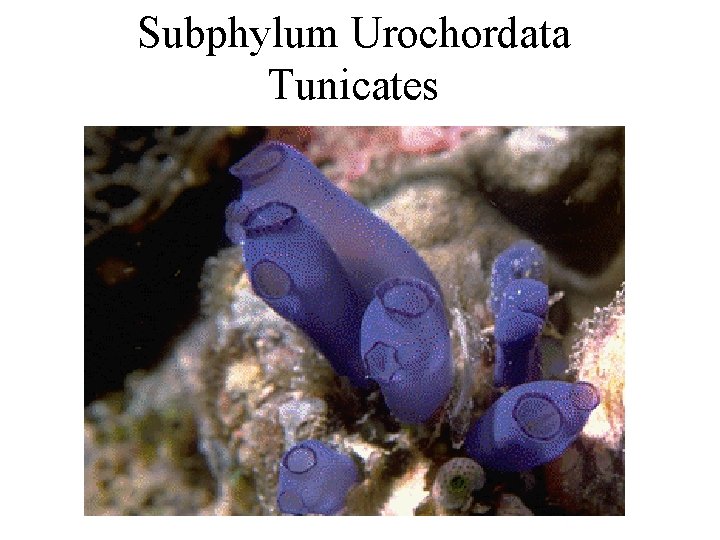
Subphylum Urochordata Tunicates
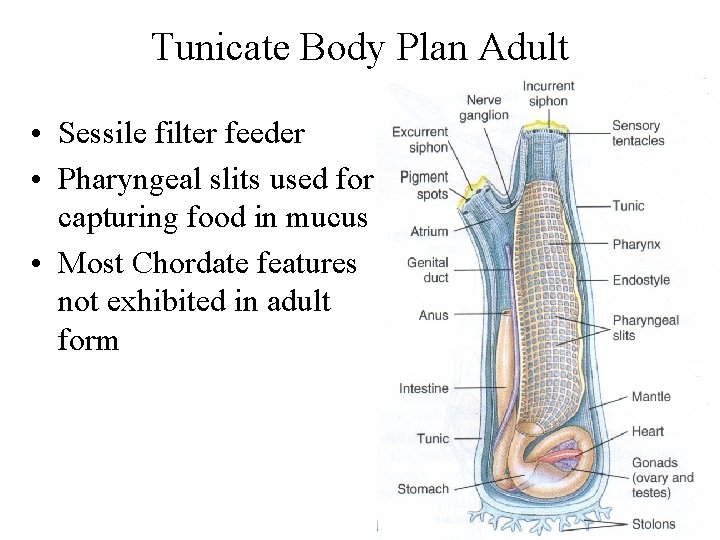
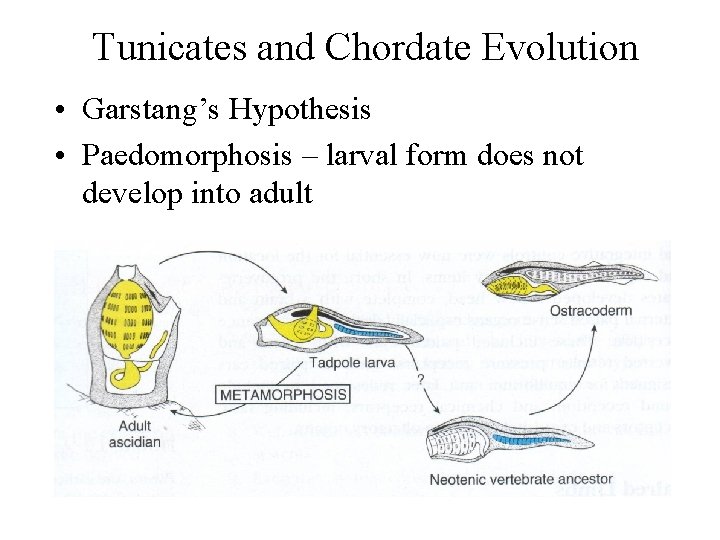
Tunicate Body Plan Adult • Sessile filter feeder • Pharyngeal slits used for capturing food in mucus • Most Chordate features not exhibited in adult form
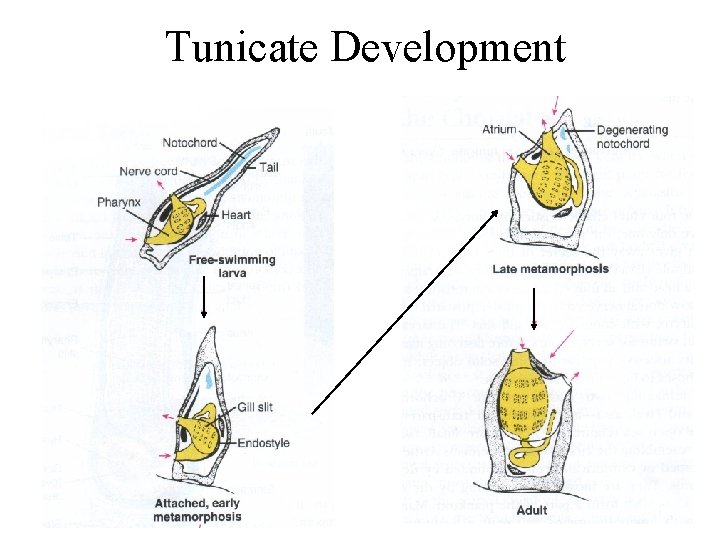
Tunicate Development
Competing hypotheses • Cephalochordate hypothesis: vertebrates evolved from essentially lancelet-like ancestors • Calcichordate hypothesis: vertebrates evolved from armored bilateral echinoderms which were early chordates, distantly related to modern echinoderms.
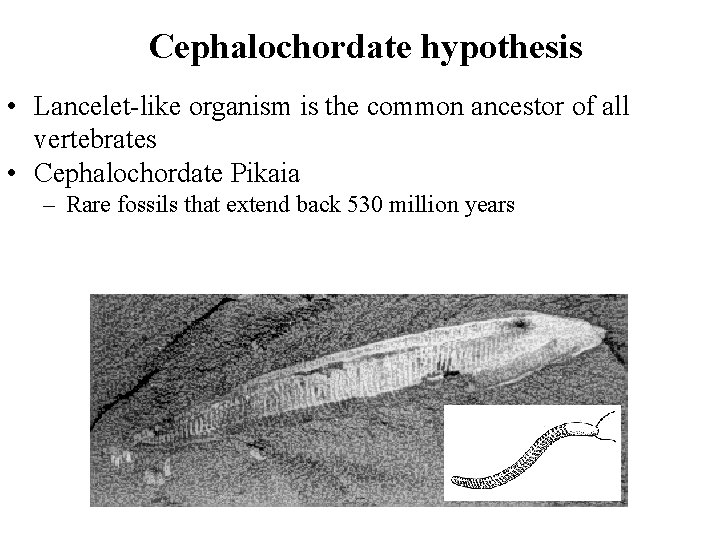
Cephalochordate hypothesis • Lancelet-like organism is the common ancestor of all vertebrates • Cephalochordate Pikaia – Rare fossils that extend back 530 million years
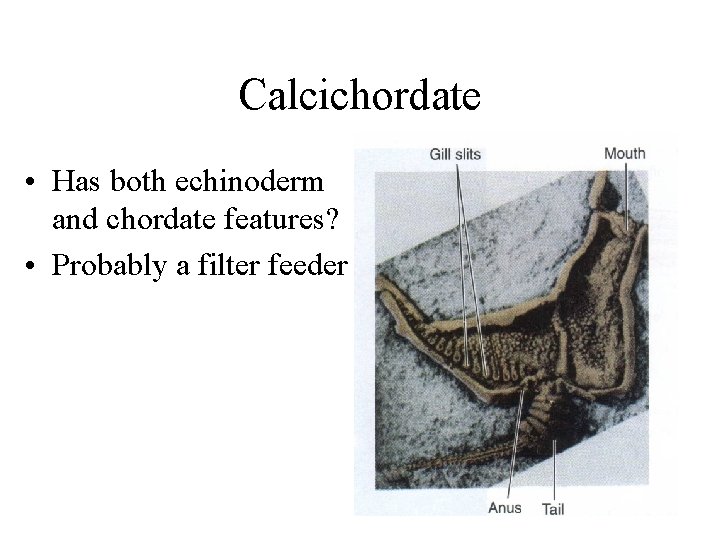
Calcichordate hypothesis • The calcichordate hypothesis – Not widely accepted • Calcichordates – Echinoderm-like skeletons – Ambiguous chordate-like features • Chordate features may be homologous with echinoderm structures – May be too young to be direct vertebrate ancestors
Calcichordate • Has both echinoderm and chordate features? • Probably a filter feeder
Tunicates and Chordate Evolution • Garstang’s Hypothesis • Paedomorphosis – larval form does not develop into adult
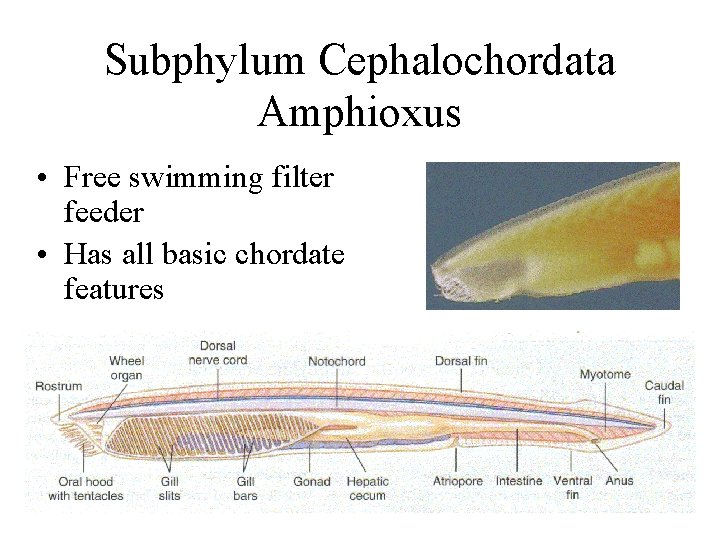
Subphylum Cephalochordata Amphioxus • Free swimming filter feeder • Has all basic chordate features
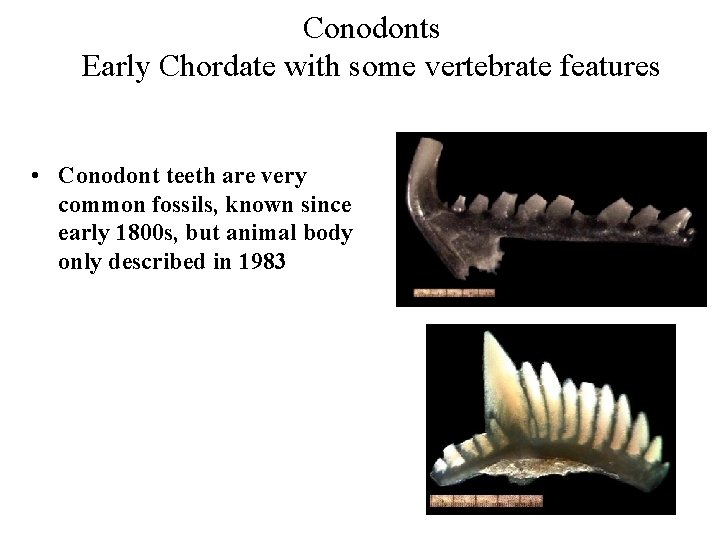
Conodonts Early Chordate with some vertebrate features • Conodont teeth are very common fossils, known since early 1800 s, but animal body only described in 1983
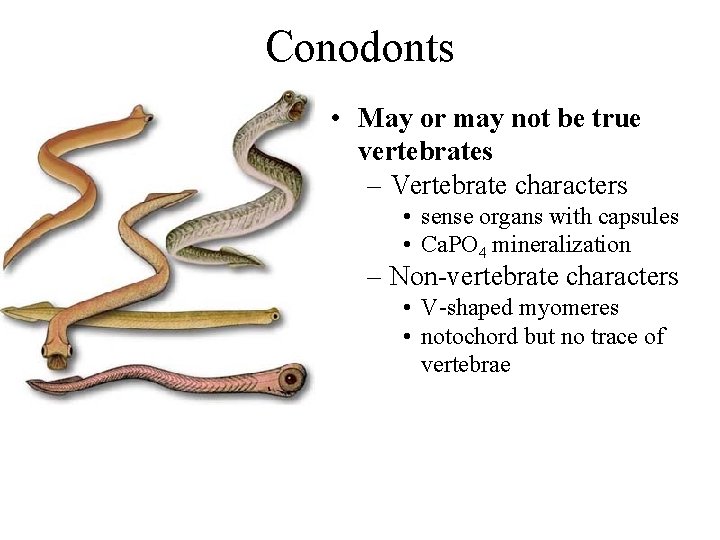
Conodonts • May or may not be true vertebrates – Vertebrate characters • sense organs with capsules • Ca. PO 4 mineralization – Non-vertebrate characters • V-shaped myomeres • notochord but no trace of vertebrae
Subphylum Vertebrata • Features – Cranium – brain encased in cartilage or bone – Most have cartilage or bone endoskeleton – Complex nervous system
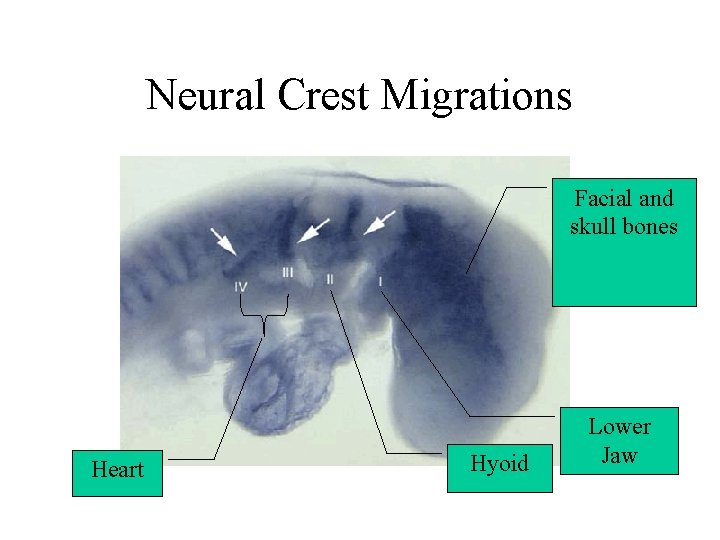
Development of Head Structures • Derived from neural crest cells • Cells that migrate during early development and form various structures
Neural Crest Migrations Facial and skull bones Heart Hyoid Lower Jaw
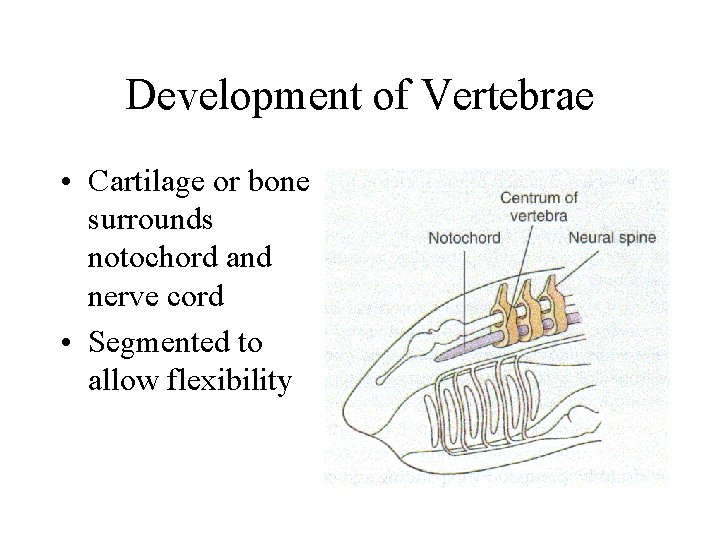
Development of Vertebrae • Cartilage or bone surrounds notochord and nerve cord • Segmented to allow flexibility
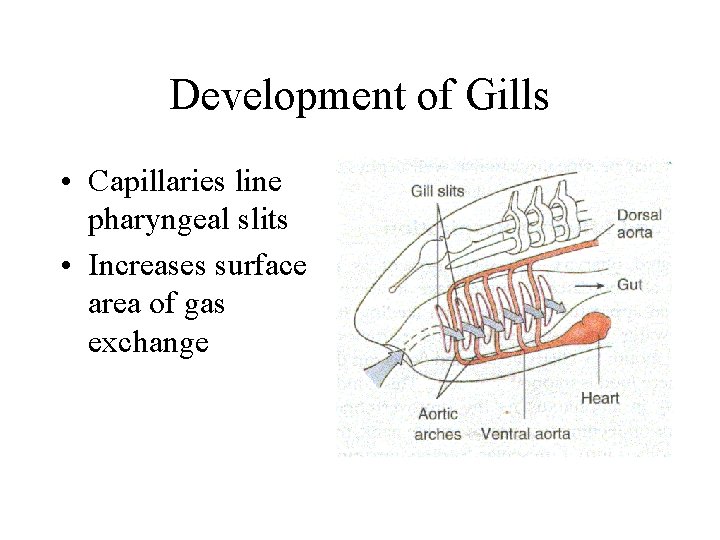
Development of Gills • Capillaries line pharyngeal slits • Increases surface area of gas exchange
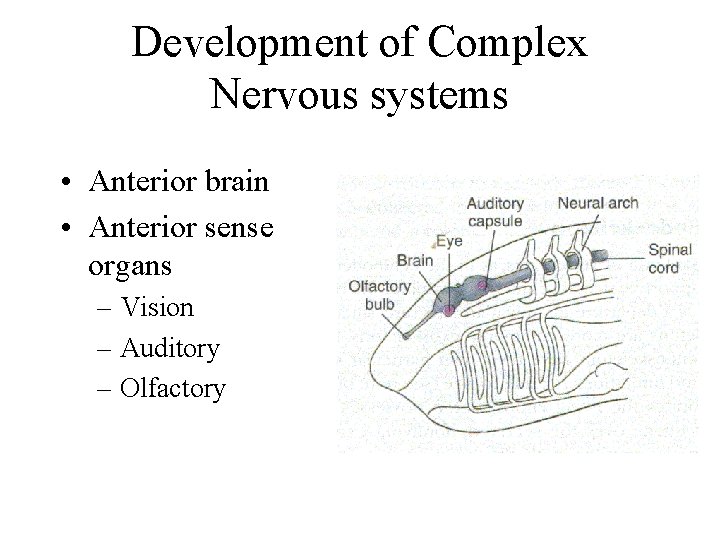
Development of Complex Nervous systems • Anterior brain • Anterior sense organs – Vision – Auditory – Olfactory
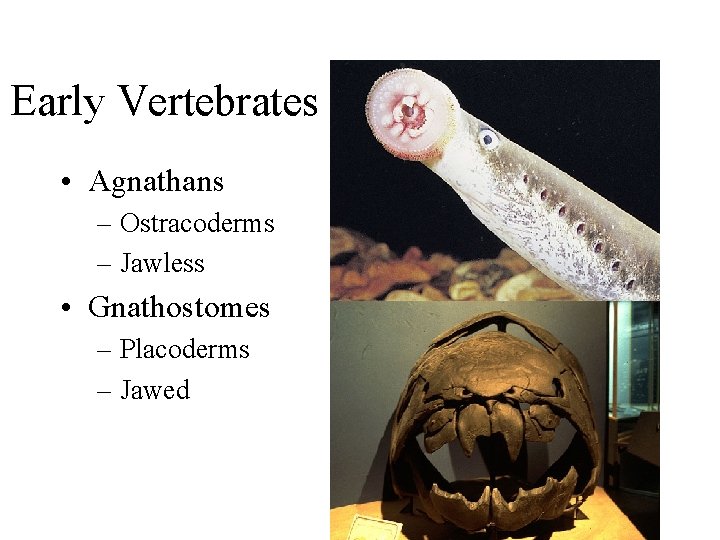
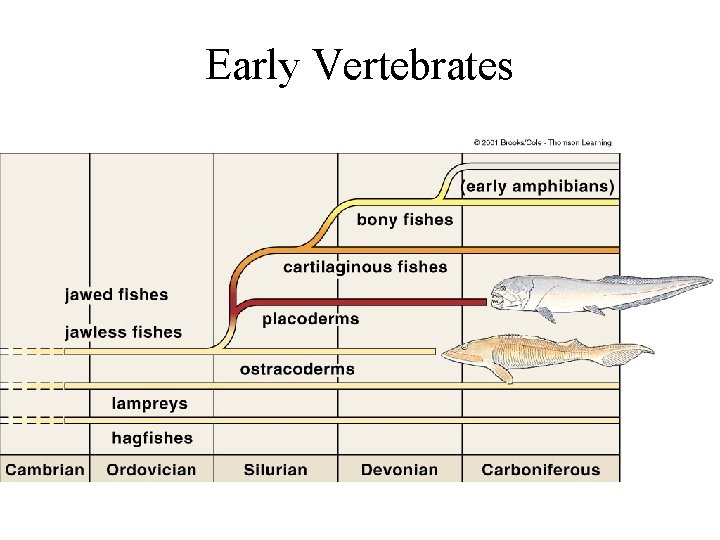
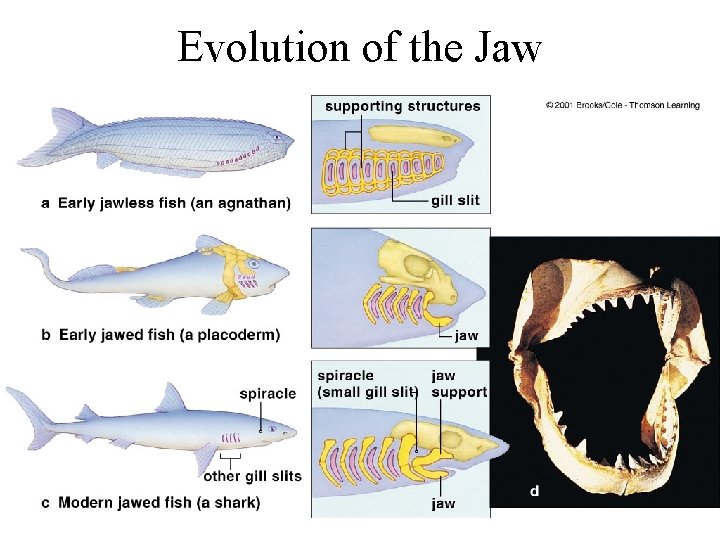
Early Vertebrates • Agnathans – Ostracoderms – Jawless • Gnathostomes – Placoderms – Jawed
Early Vertebrates
Evolution of the Jaw