
Chordate Phylogeny Xenoturbellida Echinodermata Craniata Hemichordata Cephalochordata CC
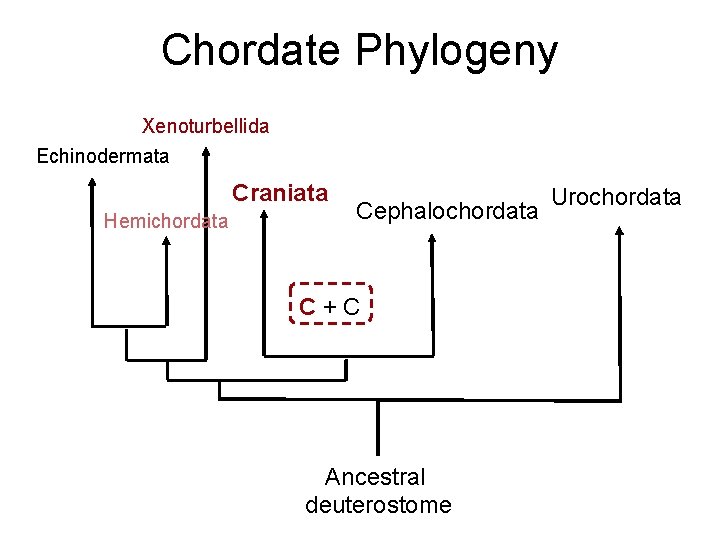
Chordate Phylogeny Xenoturbellida Echinodermata Craniata Hemichordata Cephalochordata C+C Ancestral deuterostome Urochordata
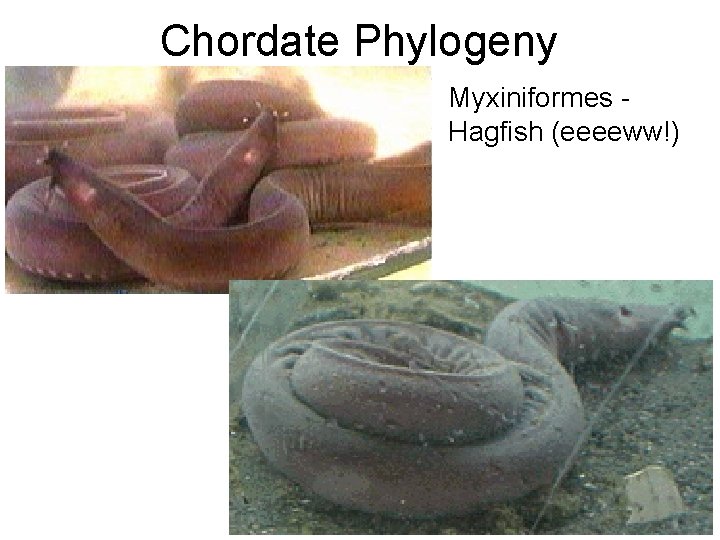
Chordate Phylogeny Myxiniformes Hagfish (eeeeww!)
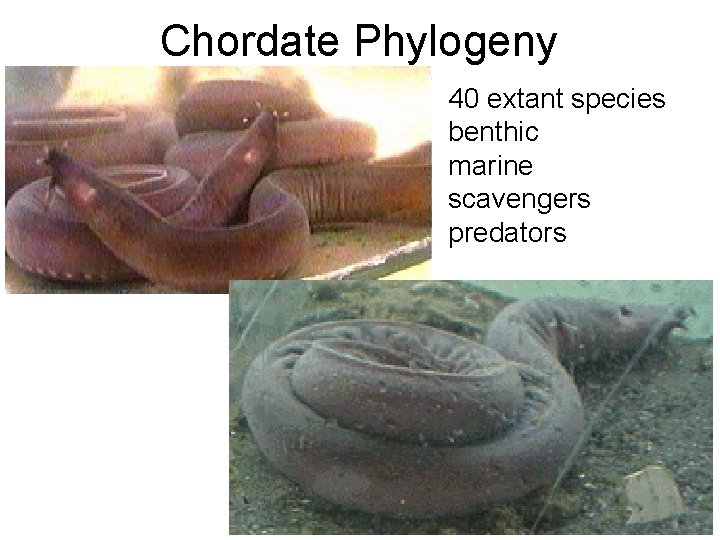
Chordate Phylogeny 40 extant species benthic marine scavengers predators
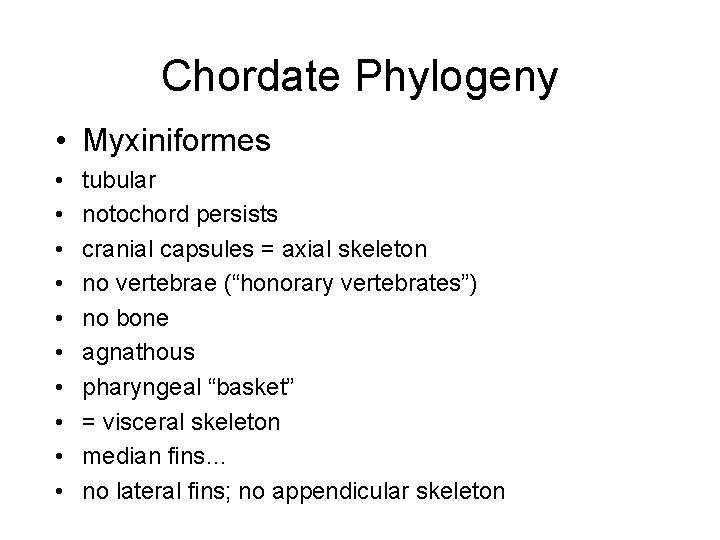
Chordate Phylogeny • Myxiniformes • • • tubular notochord persists cranial capsules = axial skeleton no vertebrae (“honorary vertebrates”) no bone agnathous pharyngeal “basket” = visceral skeleton median fins… no lateral fins; no appendicular skeleton
Chordate Phylogeny • Myxiniformes • • • brain and sense organs poorly developed eyes lack lenses and extrinsic musculature optic tectum of midbrain poorly developed lack lateral line system (no neuromasts) lack electrosensitivity single semicircular canal cerebellum poorly developed single median nostril circulatory system has sinuses in addition to vessels osmoconforming
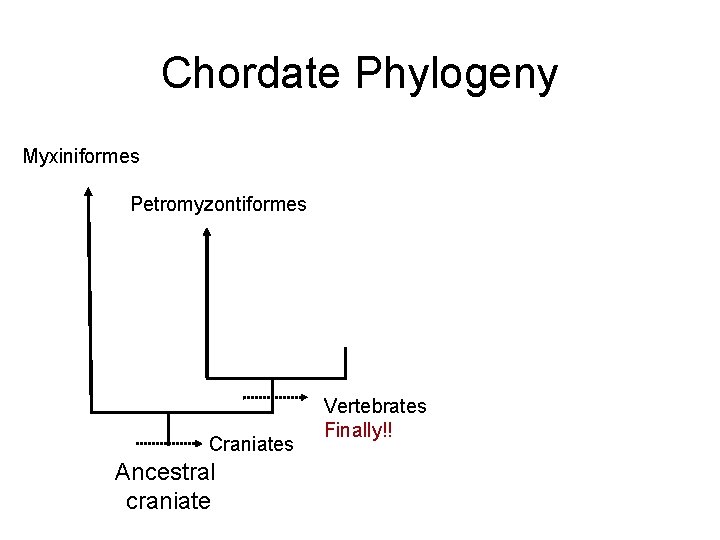
Chordate Phylogeny Myxiniformes Petromyzontiformes Craniates Ancestral craniate Vertebrates Finally!!
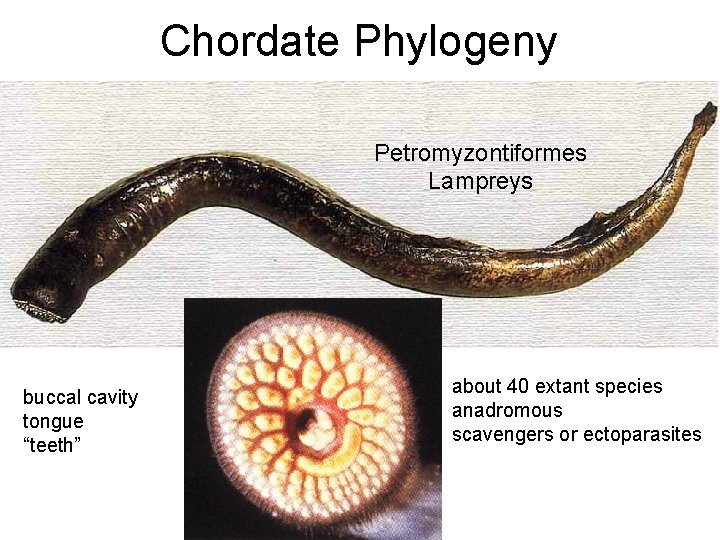
Chordate Phylogeny Petromyzontiformes Lampreys buccal cavity tongue “teeth” about 40 extant species anadromous scavengers or ectoparasites
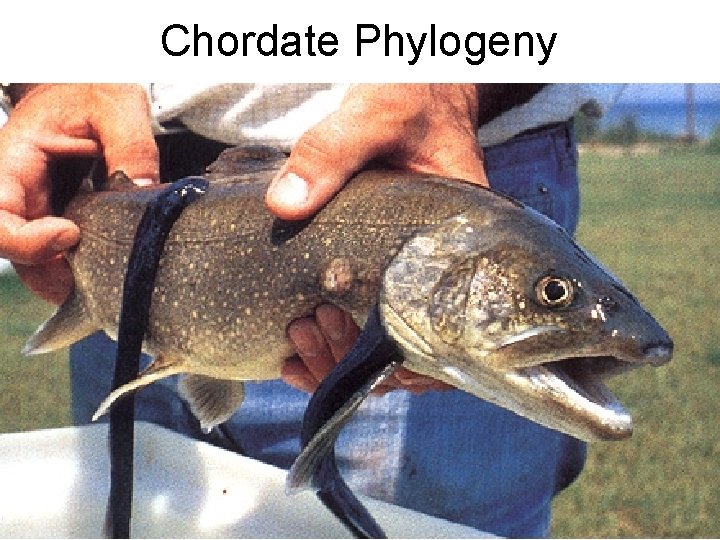
Chordate Phylogeny
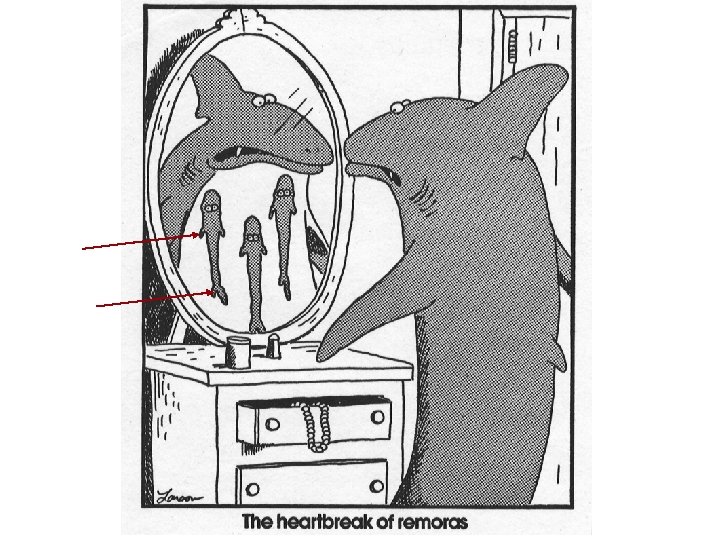
remoras
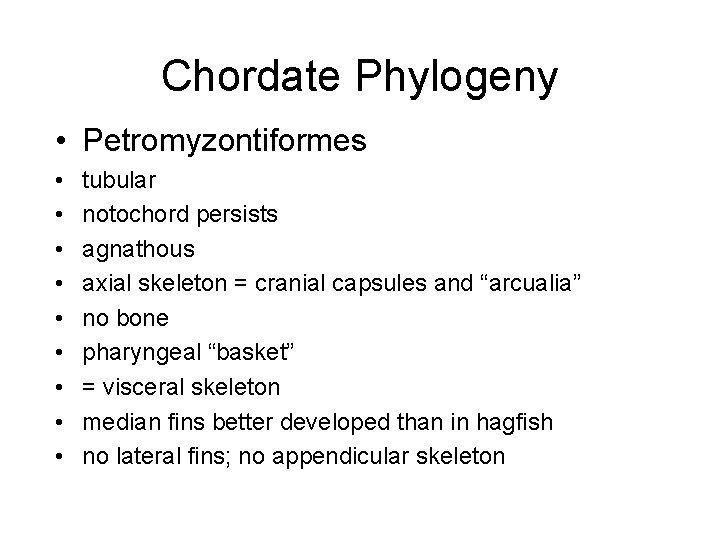
Chordate Phylogeny • Petromyzontiformes • • • tubular notochord persists agnathous axial skeleton = cranial capsules and “arcualia” no bone pharyngeal “basket” = visceral skeleton median fins better developed than in hagfish no lateral fins; no appendicular skeleton
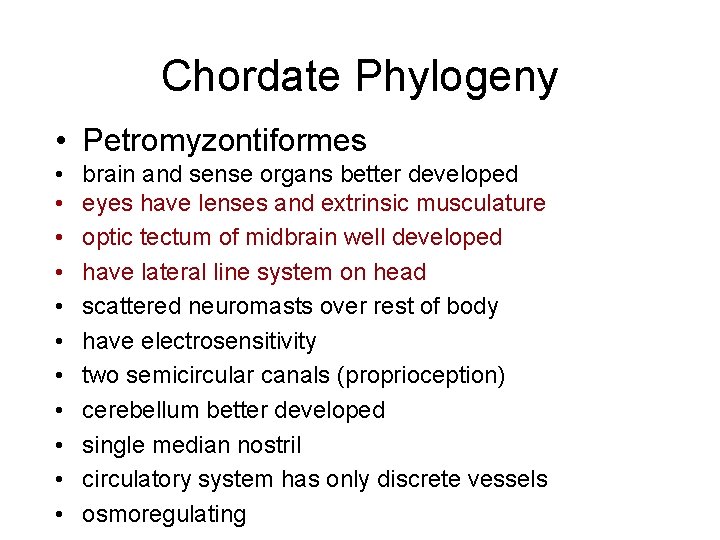
Chordate Phylogeny • Petromyzontiformes • • • brain and sense organs better developed eyes have lenses and extrinsic musculature optic tectum of midbrain well developed have lateral line system on head scattered neuromasts over rest of body have electrosensitivity two semicircular canals (proprioception) cerebellum better developed single median nostril circulatory system has only discrete vessels osmoregulating
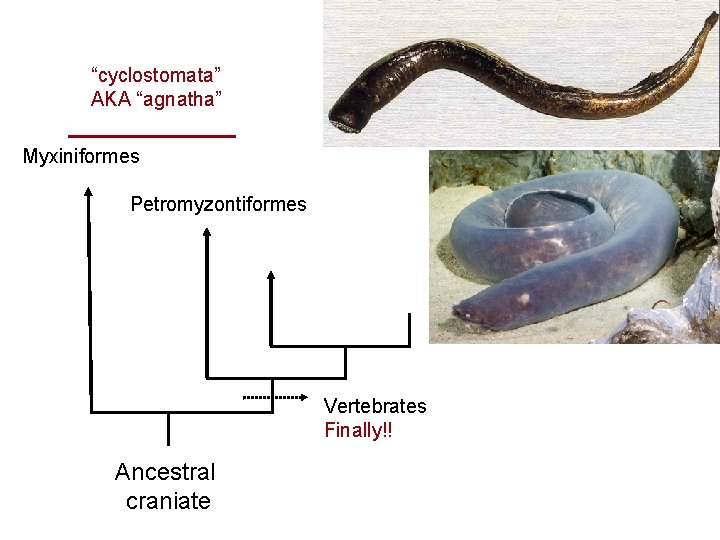
“cyclostomata” AKA “agnatha” Myxiniformes Petromyzontiformes Vertebrates Finally!! Ancestral craniate
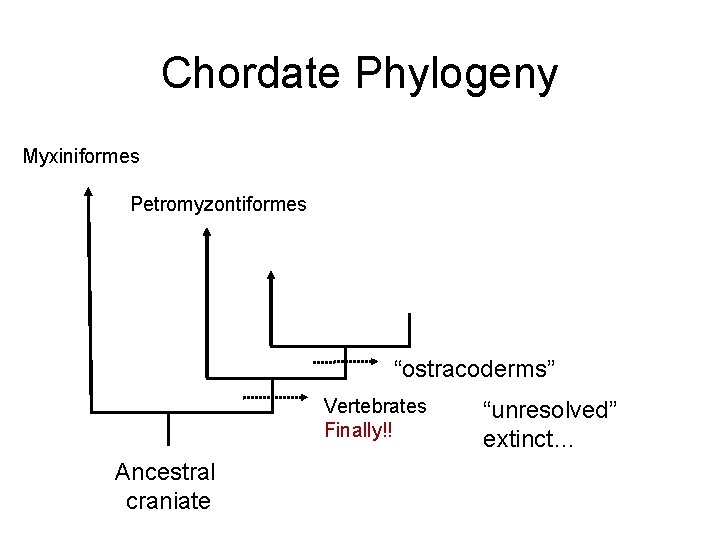
Chordate Phylogeny Myxiniformes Petromyzontiformes “ostracoderms” Vertebrates Finally!! Ancestral craniate “unresolved” extinct…
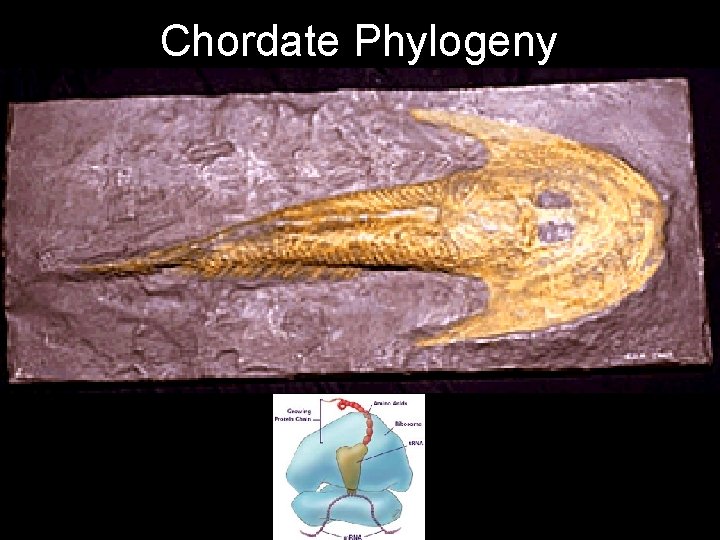
Chordate Phylogeny ostracoderm pics
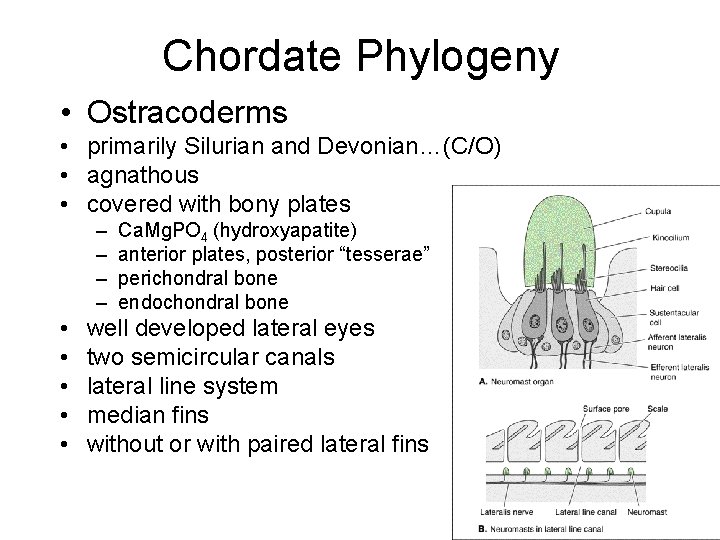
Chordate Phylogeny • Ostracoderms • primarily Silurian and Devonian…(C/O) • agnathous • covered with bony plates – – • • • Ca. Mg. PO 4 (hydroxyapatite) anterior plates, posterior “tesserae” perichondral bone endochondral bone well developed lateral eyes two semicircular canals lateral line system median fins without or with paired lateral fins
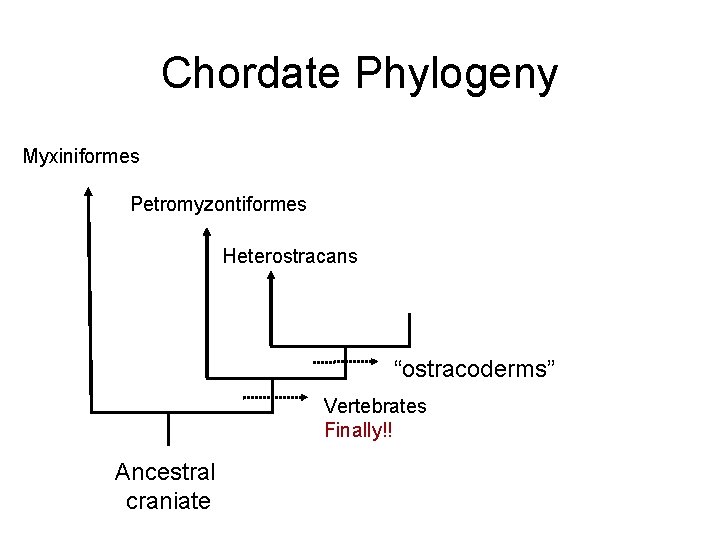
Chordate Phylogeny Myxiniformes Petromyzontiformes Heterostracans “ostracoderms” Vertebrates Finally!! Ancestral craniate
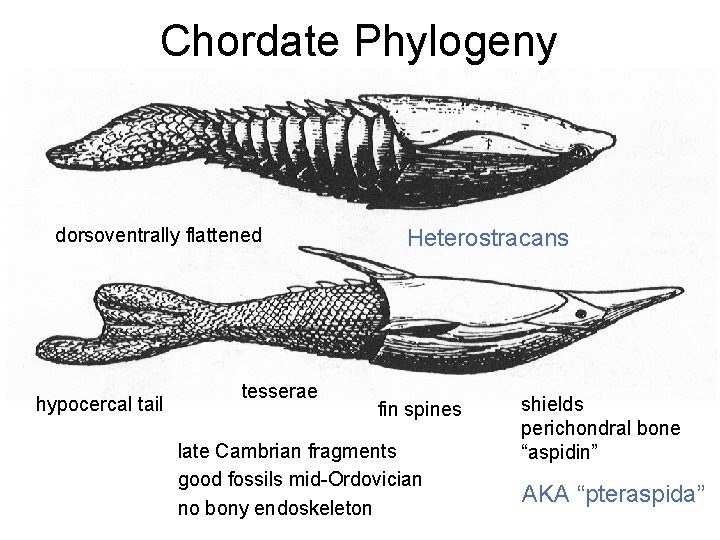
Chordate Phylogeny dorsoventrally flattened hypocercal tail tesserae Heterostracans fin spines late Cambrian fragments good fossils mid-Ordovician no bony endoskeleton shields perichondral bone “aspidin” AKA “pteraspida”
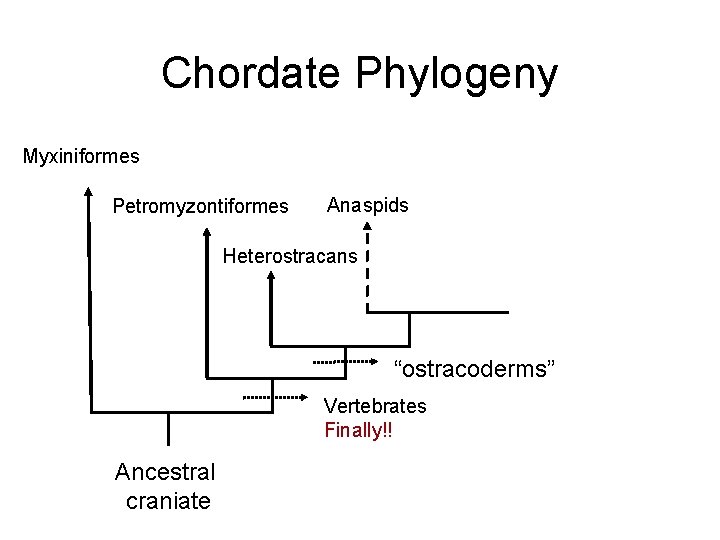
Chordate Phylogeny Myxiniformes Petromyzontiformes Anaspids Heterostracans “ostracoderms” Vertebrates Finally!! Ancestral craniate
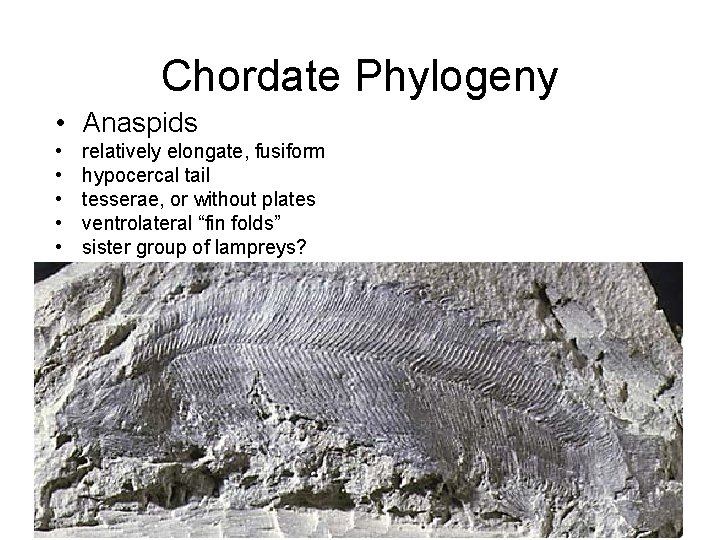
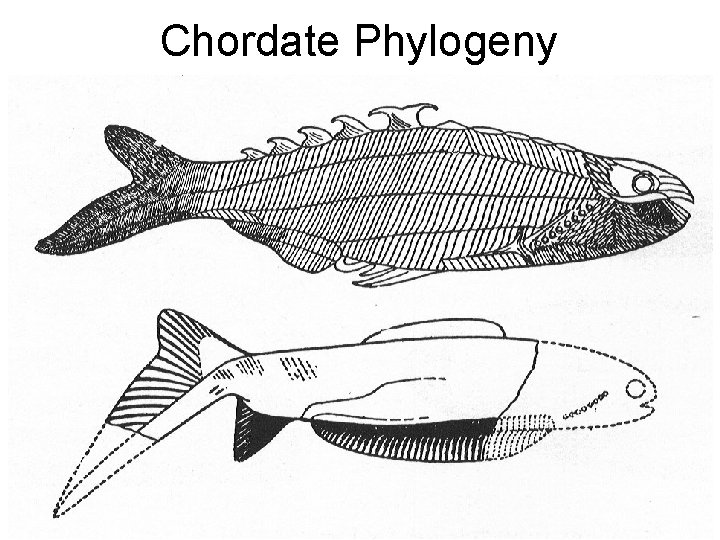
Chordate Phylogeny • Anaspids • • • relatively elongate, fusiform hypocercal tail tesserae, or without plates ventrolateral “fin folds” sister group of lampreys?
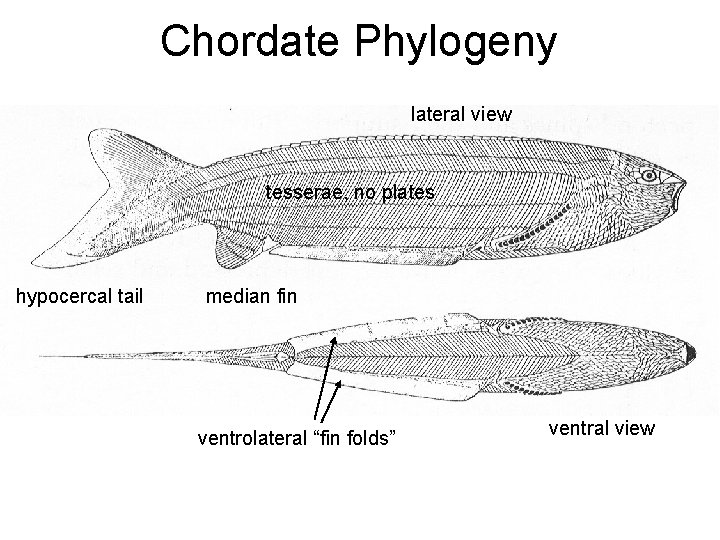
Chordate Phylogeny lateral view tesserae, no plates hypocercal tail median fin ventrolateral “fin folds” ventral view
Chordate Phylogeny
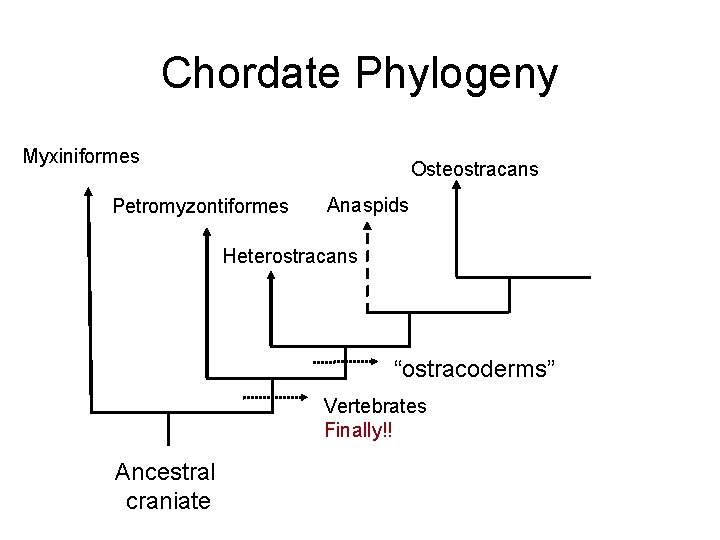
Chordate Phylogeny Myxiniformes Osteostracans Petromyzontiformes Anaspids Heterostracans “ostracoderms” Vertebrates Finally!! Ancestral craniate
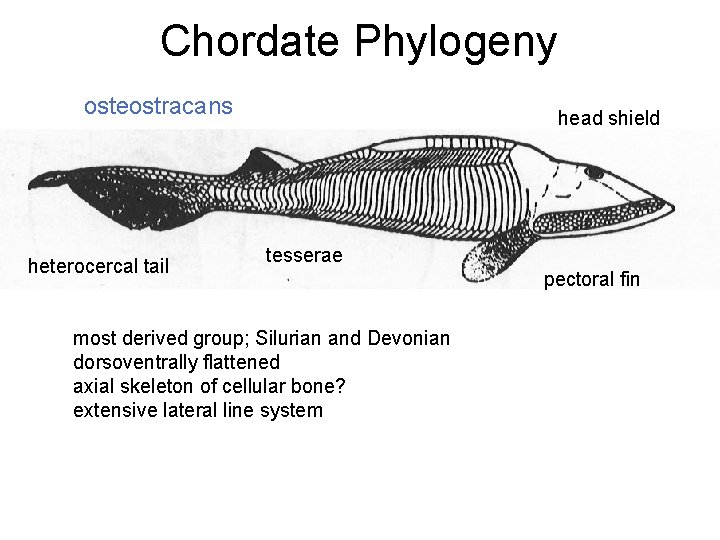
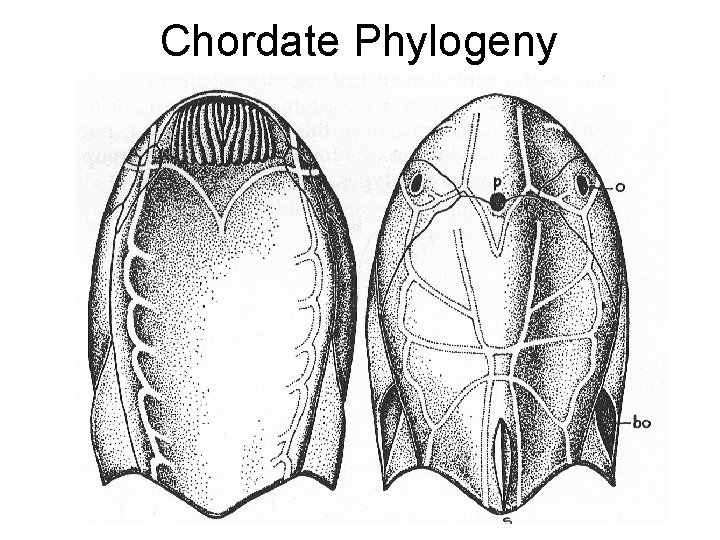
Chordate Phylogeny osteostracans heterocercal tail head shield tesserae most derived group; Silurian and Devonian dorsoventrally flattened axial skeleton of cellular bone? extensive lateral line system pectoral fin
Chordate Phylogeny
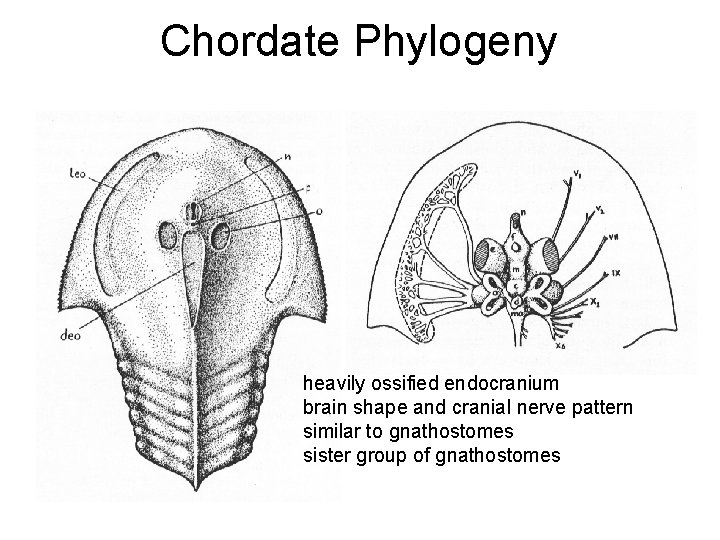
Chordate Phylogeny heavily ossified endocranium brain shape and cranial nerve pattern similar to gnathostomes sister group of gnathostomes
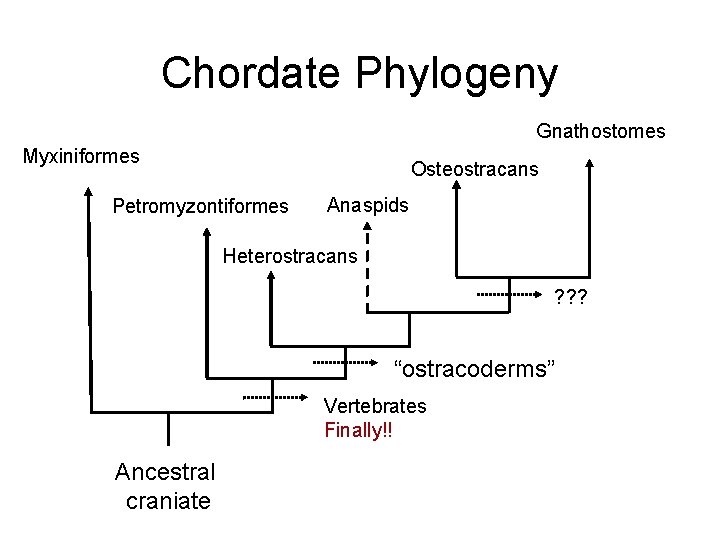
Chordate Phylogeny Gnathostomes Myxiniformes Osteostracans Petromyzontiformes Anaspids Heterostracans ? ? ? “ostracoderms” Vertebrates Finally!! Ancestral craniate
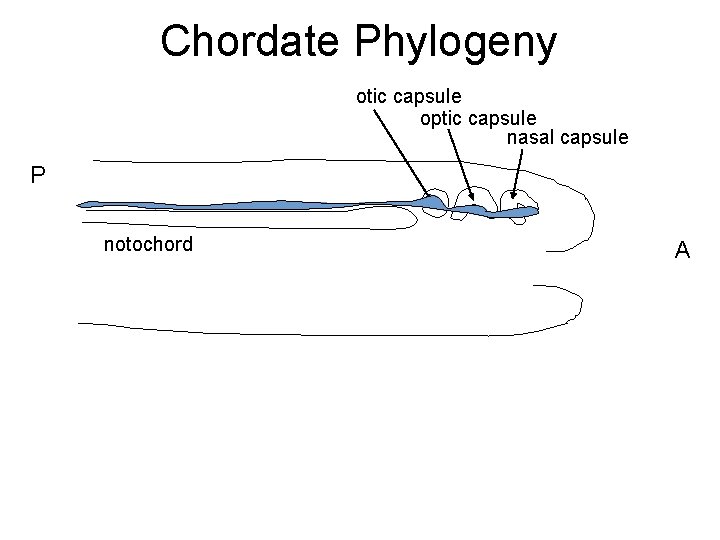
Chordate Phylogeny otic capsule optic capsule nasal capsule P notochord A

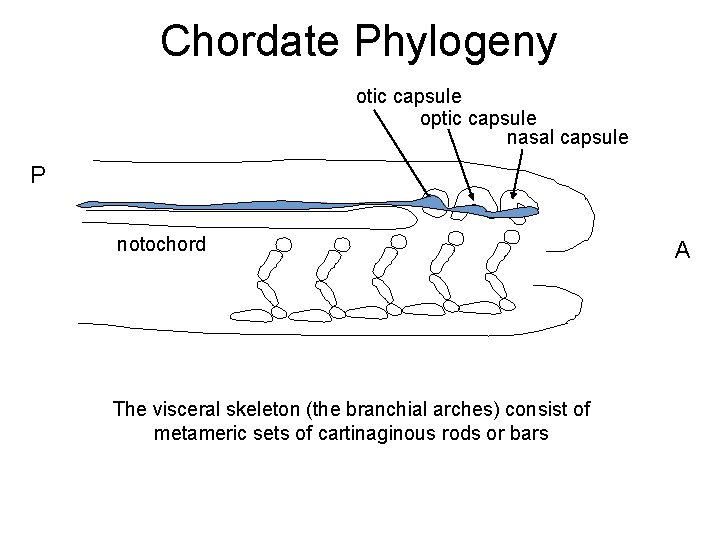
Chordate Phylogeny otic capsule optic capsule nasal capsule P notochord The visceral skeleton (the branchial arches) consist of metameric sets of cartinaginous rods or bars A
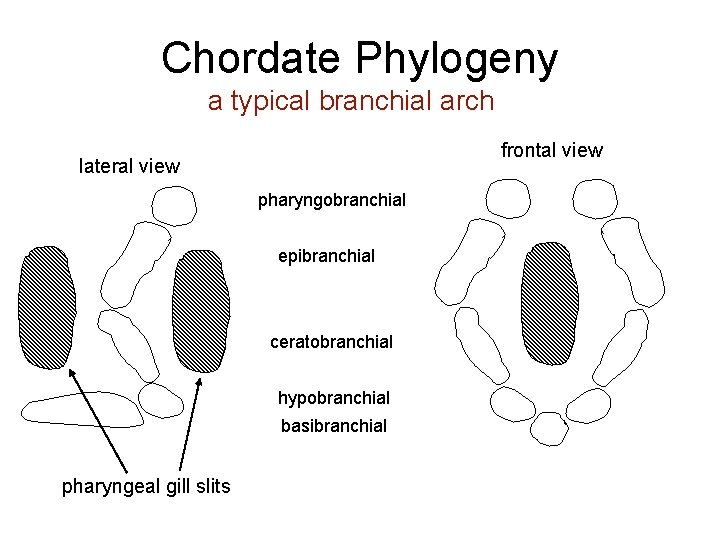
Chordate Phylogeny a typical branchial arch frontal view lateral view pharyngobranchial epibranchial ceratobranchial hypobranchial basibranchial pharyngeal gill slits
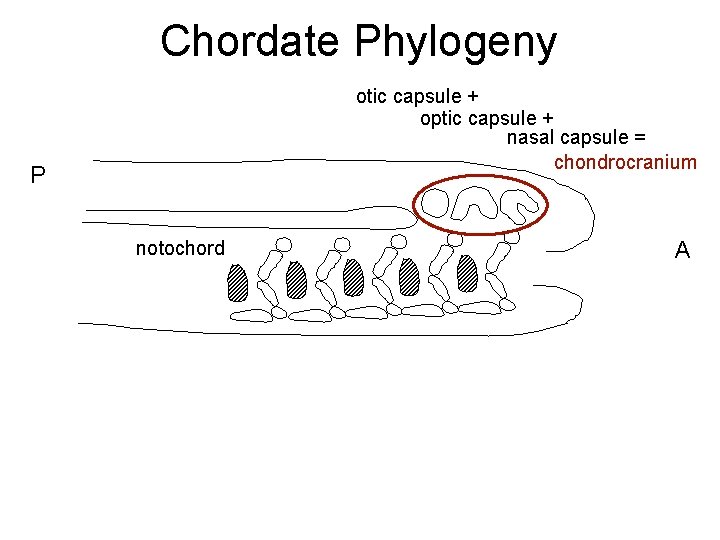
Chordate Phylogeny otic capsule + optic capsule + nasal capsule = chondrocranium P notochord A
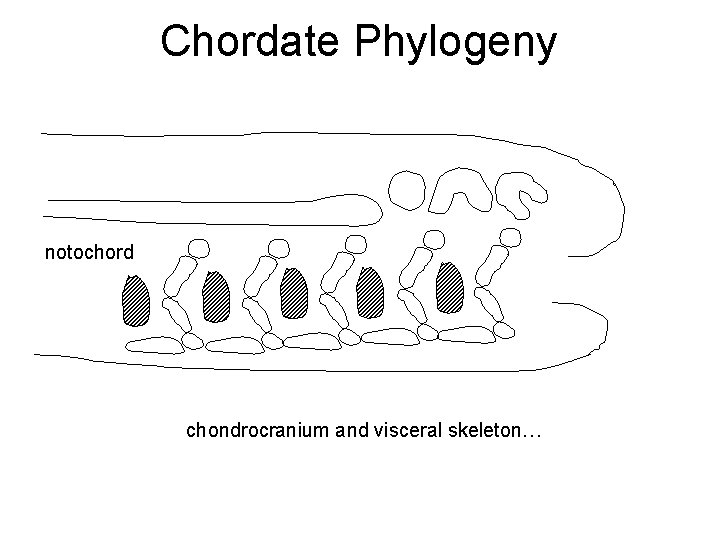
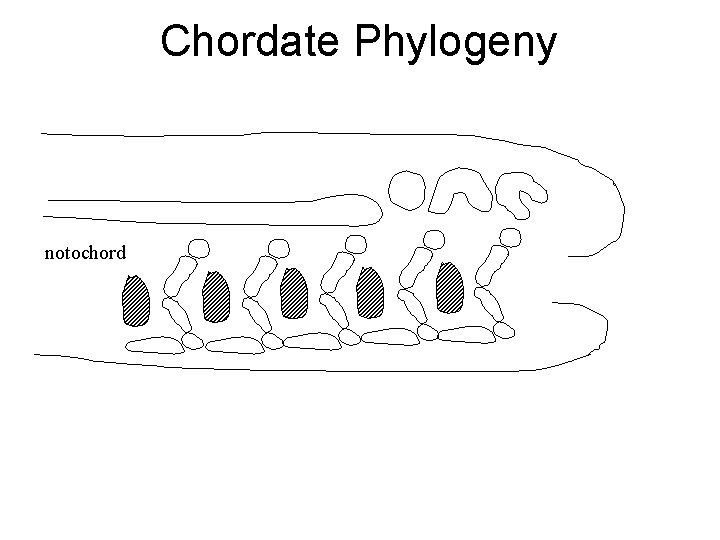
Chordate Phylogeny notochord chondrocranium and visceral skeleton…
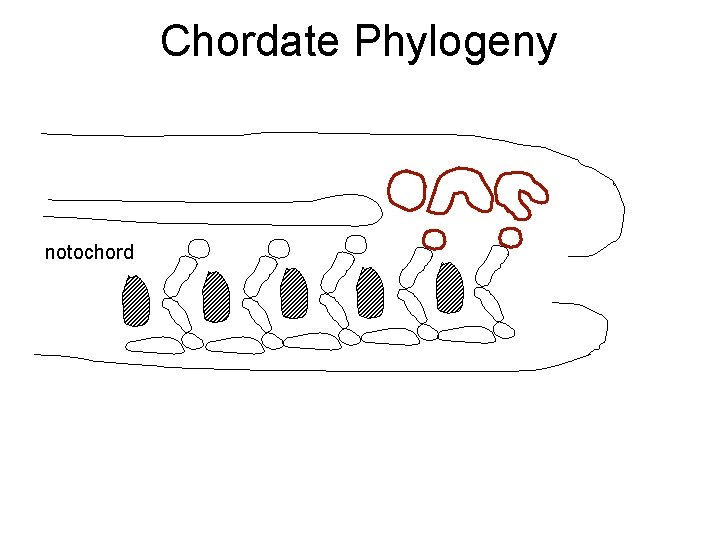
Chordate Phylogeny notochord
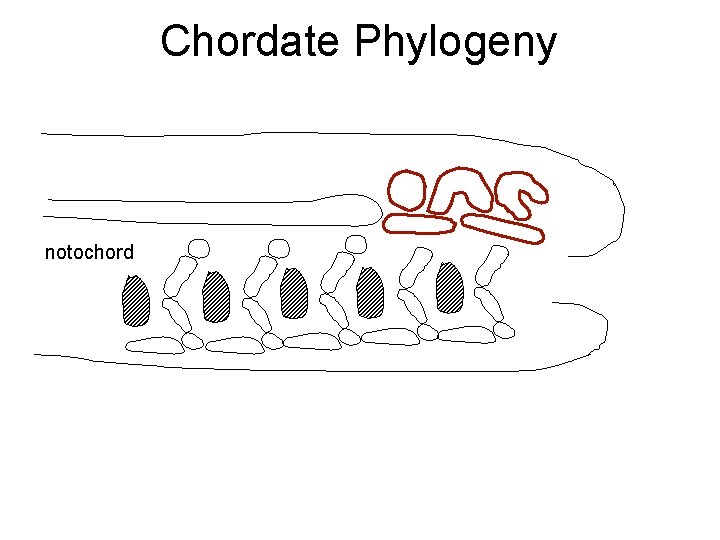
Chordate Phylogeny notochord
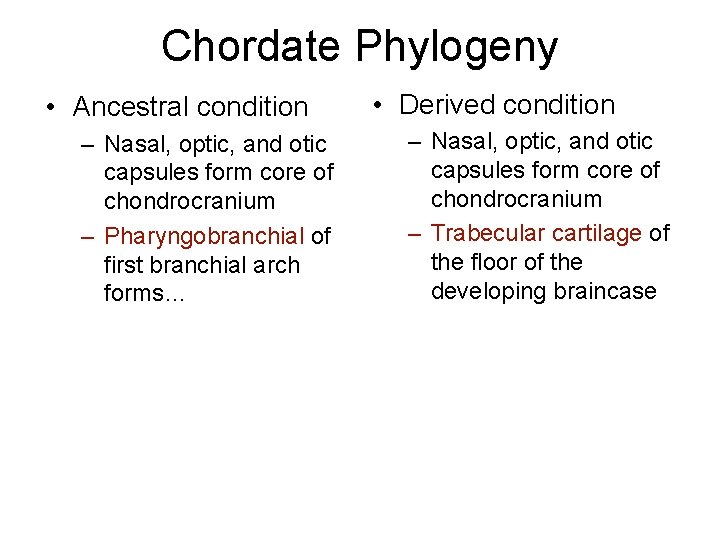
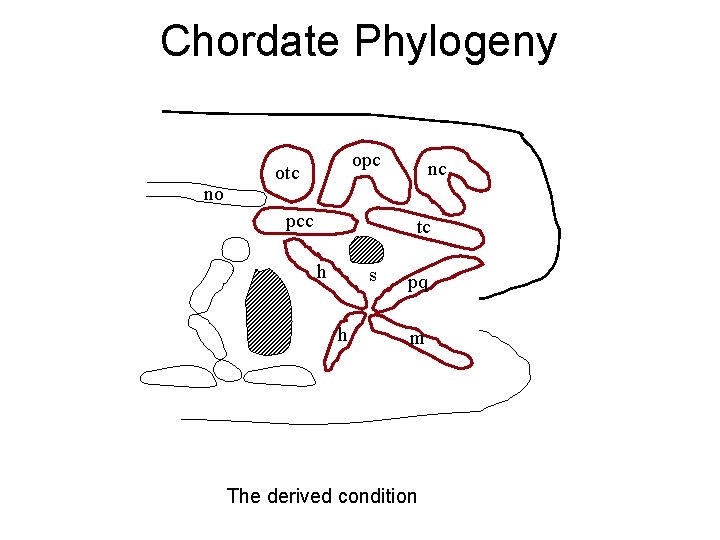
Chordate Phylogeny • Ancestral condition – Nasal, optic, and otic capsules form core of chondrocranium – Pharyngobranchial of first branchial arch forms… • Derived condition – Nasal, optic, and otic capsules form core of chondrocranium – Trabecular cartilage of the floor of the developing braincase
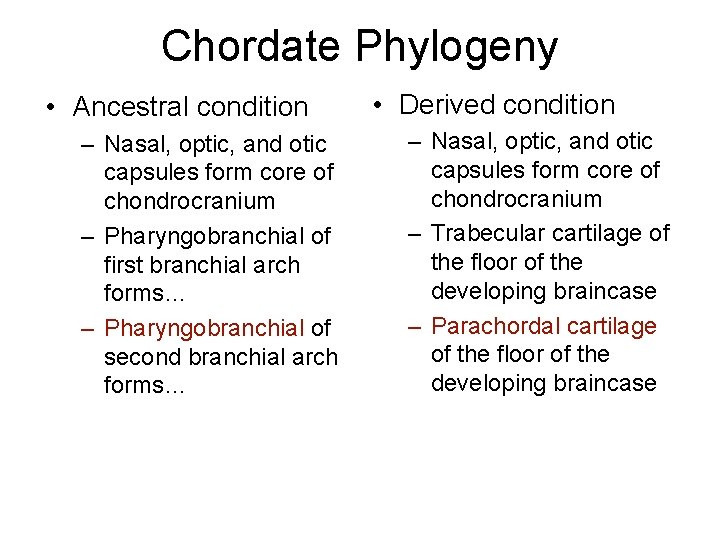
Chordate Phylogeny • Ancestral condition – Nasal, optic, and otic capsules form core of chondrocranium – Pharyngobranchial of first branchial arch forms… – Pharyngobranchial of second branchial arch forms… • Derived condition – Nasal, optic, and otic capsules form core of chondrocranium – Trabecular cartilage of the floor of the developing braincase – Parachordal cartilage of the floor of the developing braincase
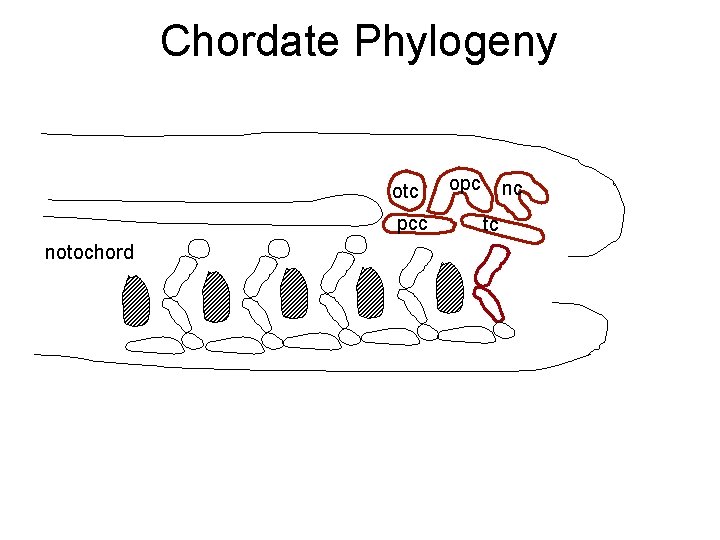
Chordate Phylogeny otc pcc notochord opc nc tc
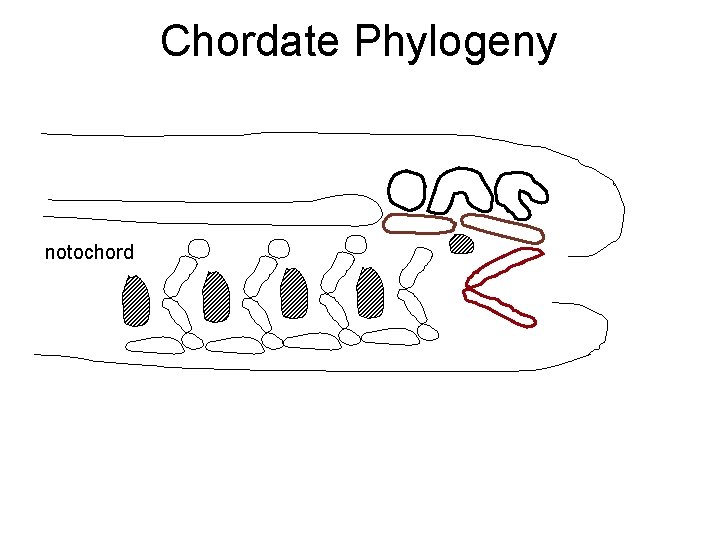
Chordate Phylogeny notochord
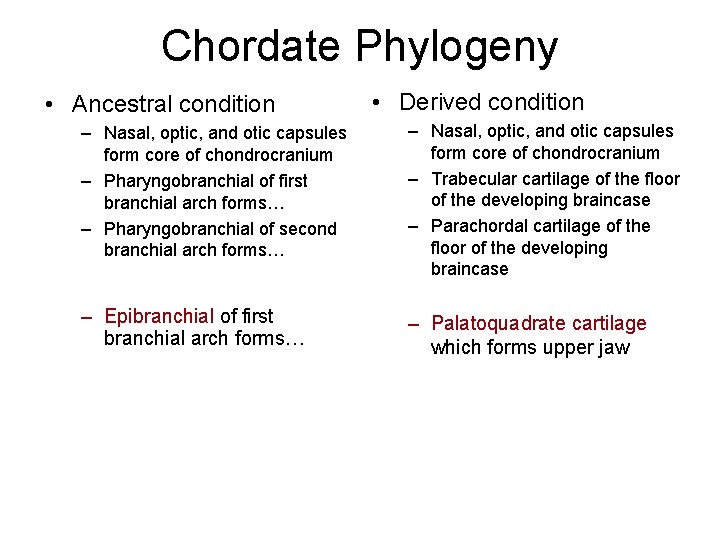
Chordate Phylogeny • Ancestral condition • Derived condition – Nasal, optic, and otic capsules form core of chondrocranium – Pharyngobranchial of first branchial arch forms… – Pharyngobranchial of second branchial arch forms… – Nasal, optic, and otic capsules form core of chondrocranium – Trabecular cartilage of the floor of the developing braincase – Parachordal cartilage of the floor of the developing braincase – Epibranchial of first branchial arch forms… – Palatoquadrate cartilage which forms upper jaw
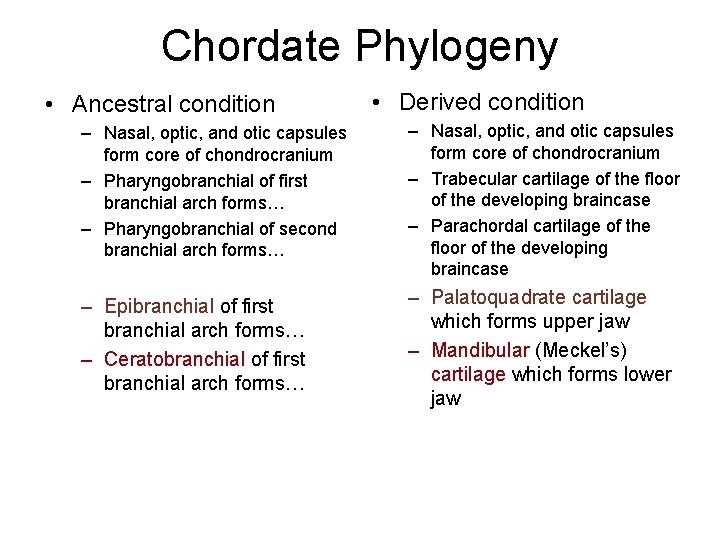
Chordate Phylogeny • Ancestral condition • Derived condition – Nasal, optic, and otic capsules form core of chondrocranium – Pharyngobranchial of first branchial arch forms… – Pharyngobranchial of second branchial arch forms… – Nasal, optic, and otic capsules form core of chondrocranium – Trabecular cartilage of the floor of the developing braincase – Parachordal cartilage of the floor of the developing braincase – Epibranchial of first branchial arch forms… – Ceratobranchial of first branchial arch forms… – Palatoquadrate cartilage which forms upper jaw – Mandibular (Meckel’s) cartilage which forms lower jaw
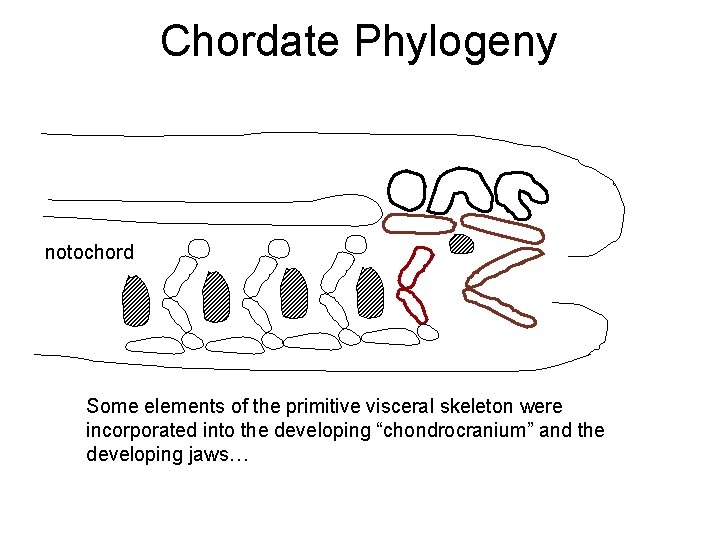
Chordate Phylogeny notochord Some elements of the primitive visceral skeleton were incorporated into the developing “chondrocranium” and the developing jaws…
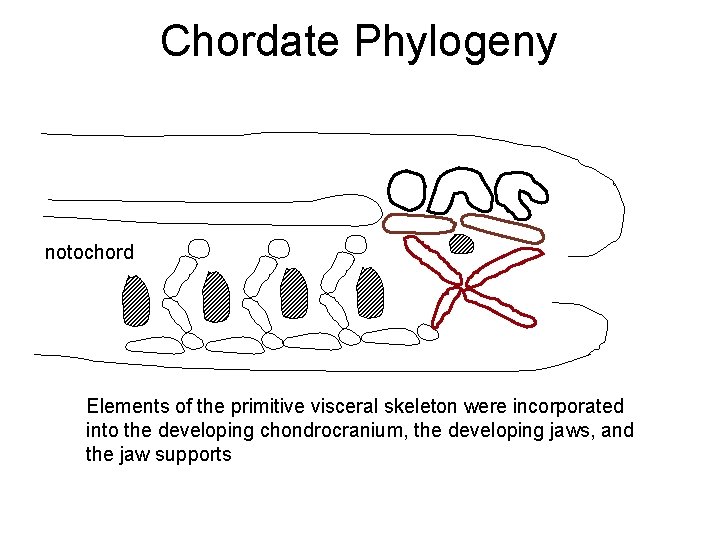
Chordate Phylogeny notochord Elements of the primitive visceral skeleton were incorporated into the developing chondrocranium, the developing jaws, and the jaw supports
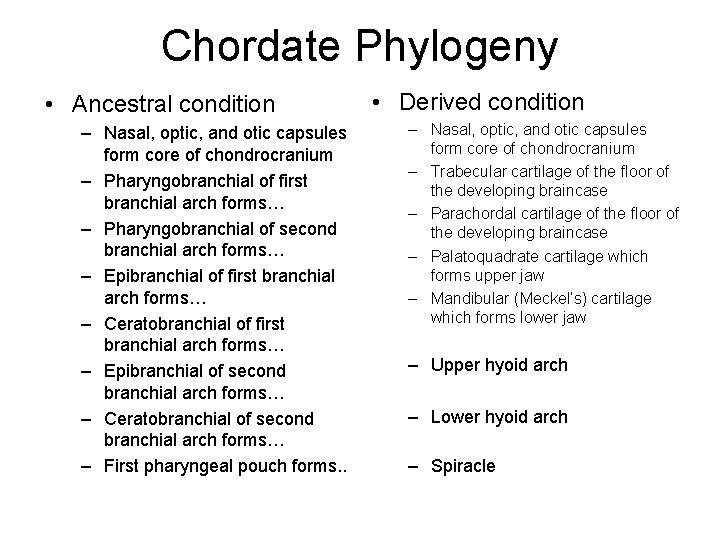
Chordate Phylogeny • Ancestral condition – Nasal, optic, and otic capsules form core of chondrocranium – Pharyngobranchial of first branchial arch forms… – Pharyngobranchial of second branchial arch forms… – Epibranchial of first branchial arch forms… – Ceratobranchial of first branchial arch forms… – Epibranchial of second branchial arch forms… – Ceratobranchial of second branchial arch forms… – First pharyngeal pouch forms. . • Derived condition – Nasal, optic, and otic capsules form core of chondrocranium – Trabecular cartilage of the floor of the developing braincase – Parachordal cartilage of the floor of the developing braincase – Palatoquadrate cartilage which forms upper jaw – Mandibular (Meckel’s) cartilage which forms lower jaw – Upper hyoid arch – Lower hyoid arch – Spiracle
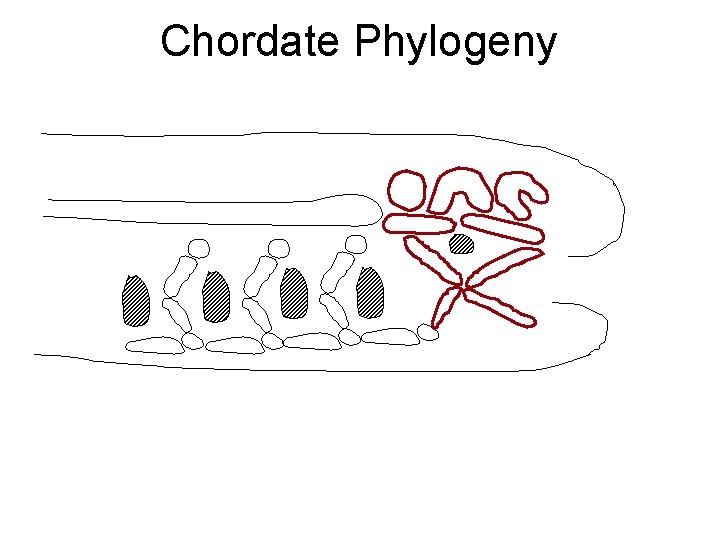
Chordate Phylogeny
Chordate Phylogeny notochord
Chordate Phylogeny no opc otc pcc nc tc h s h pq m The derived condition
- Slides: 47