
Chordata 2 loop circulatory system 4 chamber heart
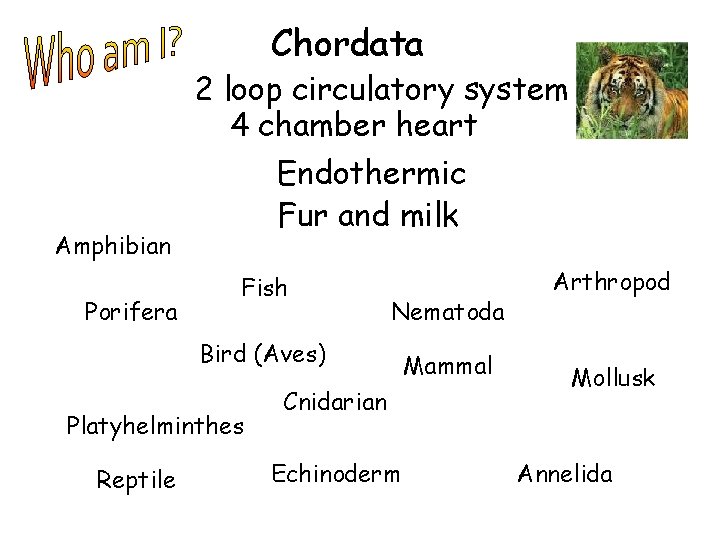
Chordata 2 loop circulatory system 4 chamber heart Endothermic Fur and milk Amphibian Porifera Fish Nematoda Bird (Aves) Platyhelminthes Reptile Cnidarian Echinoderm Mammal Arthropod Mollusk Annelida
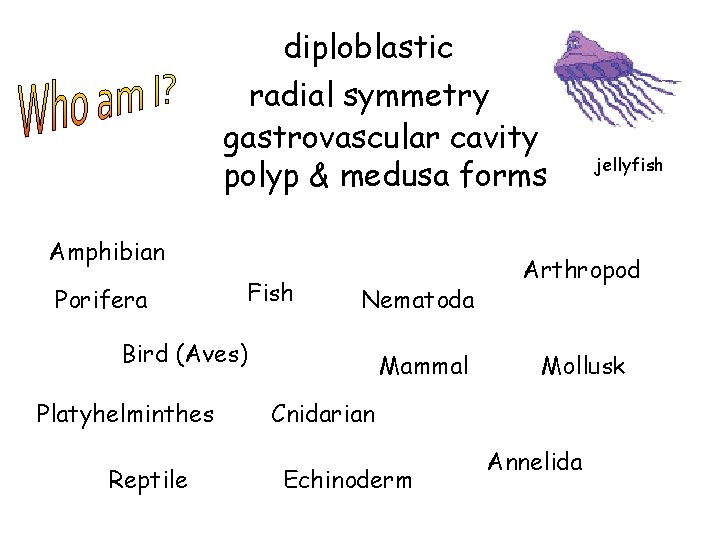
diploblastic radial symmetry gastrovascular cavity polyp & medusa forms Amphibian Porifera Fish Nematoda Bird (Aves) Platyhelminthes Reptile Mammal Arthropod Mollusk Cnidarian Echinoderm jellyfish Annelida
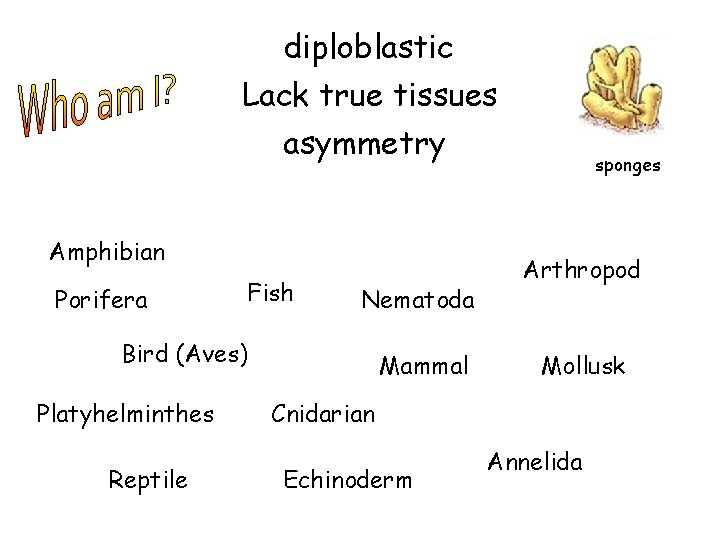
diploblastic Lack true tissues asymmetry Amphibian Porifera Fish Nematoda Bird (Aves) Platyhelminthes Reptile Mammal sponges Arthropod Mollusk Cnidarian Echinoderm Annelida
Chordata 2 loop circulatory system 4 chamber heart Endothermic Excrete uric acid Amphibian Porifera Fish Nematoda Bird (Aves) Platyhelminthes Reptile Cnidarian Echinoderm Mammal Arthropod Mollusk Annelida
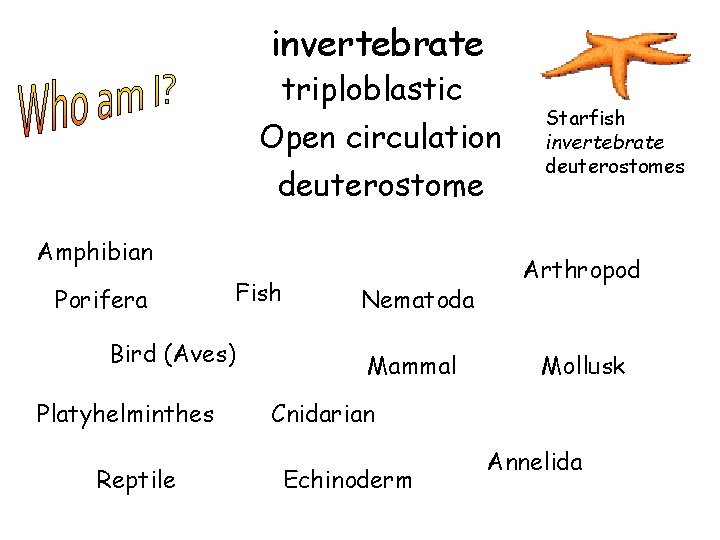
invertebrate triploblastic Open circulation deuterostome Amphibian Porifera Fish Bird (Aves) Platyhelminthes Reptile Nematoda Mammal Starfish invertebrate deuterostomes Arthropod Mollusk Cnidarian Echinoderm Annelida

Vertebrate deuterostomes Amphibian Porifera 2 loop circulatory system 3 chamber heart Amniotic eggs excrete uric acid dry scaly skin Fish Nematoda Bird (Aves) Platyhelminthes Reptile Cnidarian Echinoderm Mammal Arthropod Mollusk Annelida
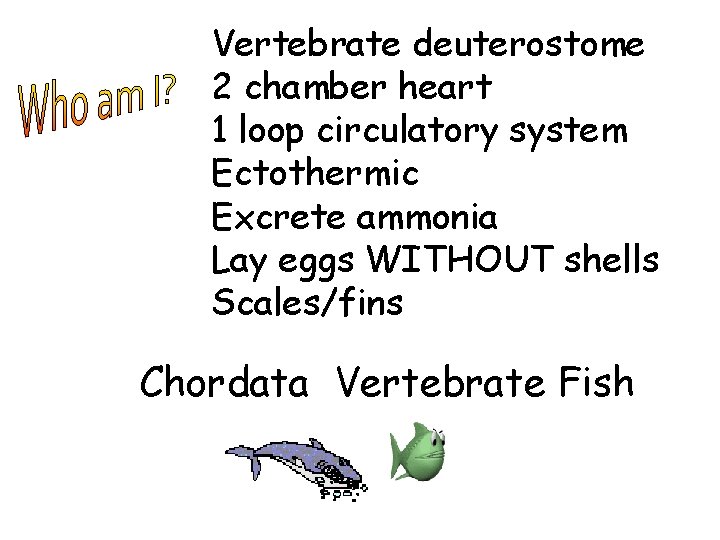
Vertebrate deuterostome 2 chamber heart 1 loop circulatory system Ectothermic Excrete ammonia Lay eggs WITHOUT shells Scales/fins Chordata Vertebrate Fish
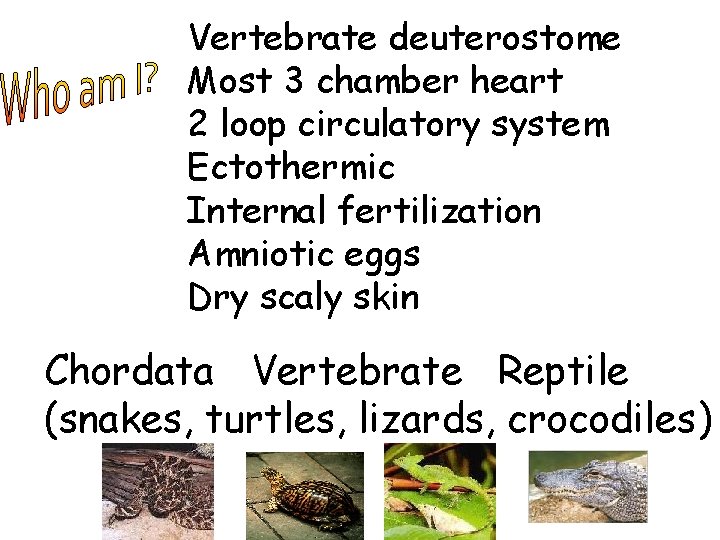
Vertebrate deuterostome Most 3 chamber heart 2 loop circulatory system Ectothermic Internal fertilization Amniotic eggs Dry scaly skin Chordata Vertebrate Reptile (snakes, turtles, lizards, crocodiles)
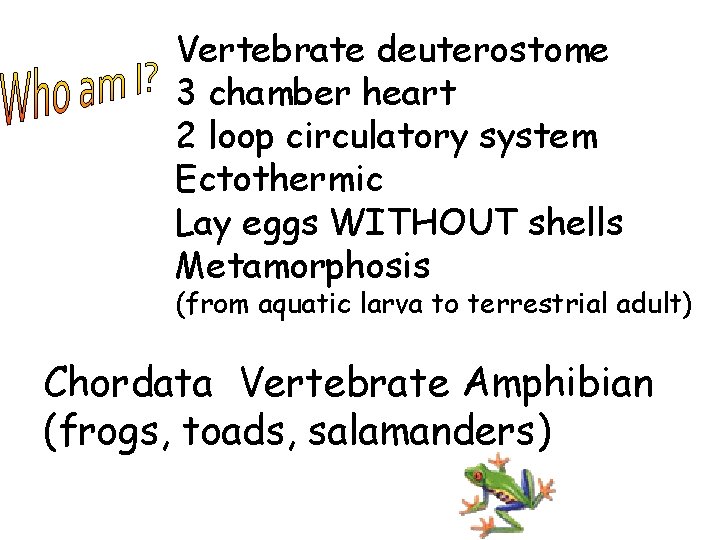
Vertebrate deuterostome 3 chamber heart 2 loop circulatory system Ectothermic Lay eggs WITHOUT shells Metamorphosis (from aquatic larva to terrestrial adult) Chordata Vertebrate Amphibian (frogs, toads, salamanders)
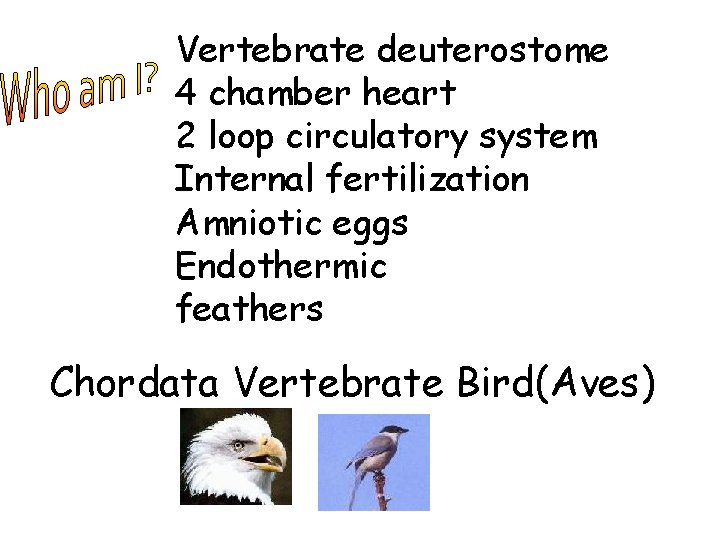
Vertebrate deuterostome 4 chamber heart 2 loop circulatory system Internal fertilization Amniotic eggs Endothermic feathers Chordata Vertebrate Bird(Aves)
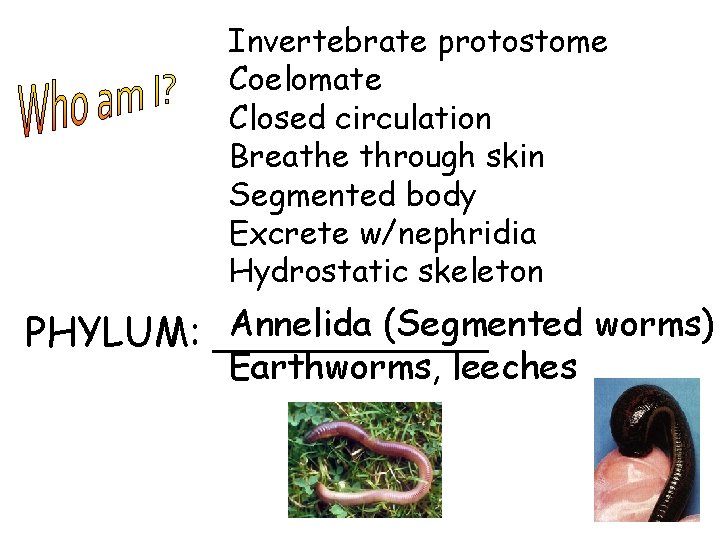
Invertebrate protostome Coelomate Closed circulation Breathe through skin Segmented body Excrete w/nephridia Hydrostatic skeleton Annelida (Segmented worms) PHYLUM: ______ Earthworms, leeches
Invertebrate protostome Open circulation Exoskelton Jointed appendages Cephalothorax/abdomen Excrete w/ Malpighian tubules Book lungs 8 legs Arthropods arachnids (Spiders)
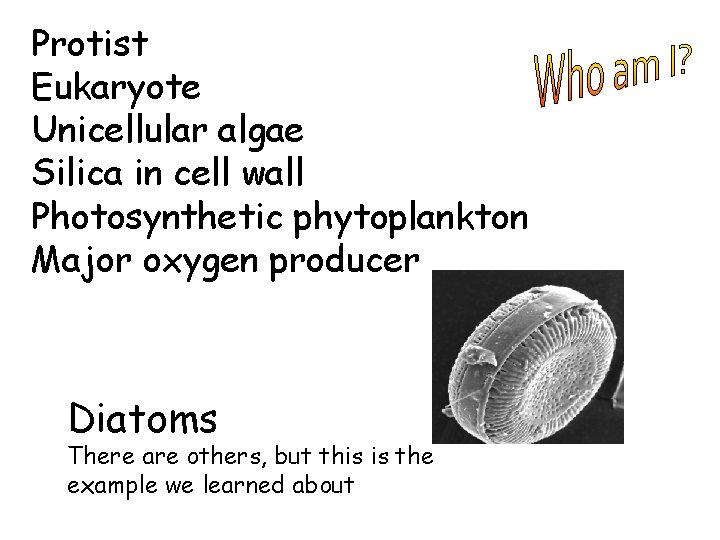
Protist Eukaryote Unicellular algae Silica in cell wall Photosynthetic phytoplankton Major oxygen producer Diatoms There are others, but this is the example we learned about
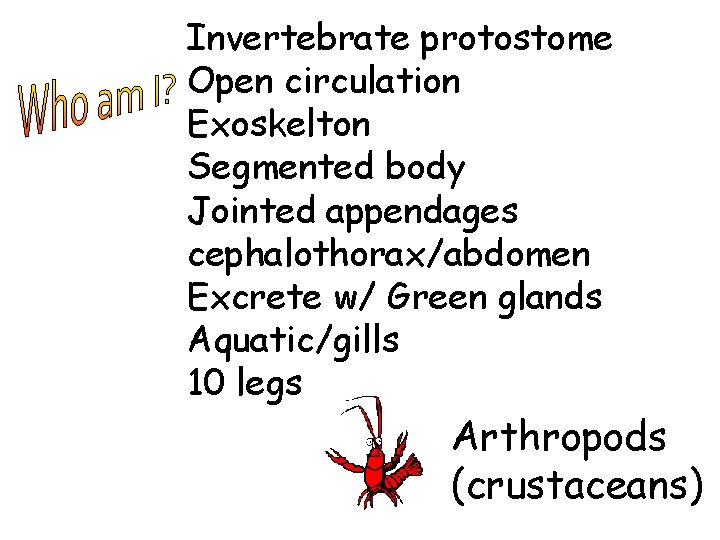
Invertebrate protostome Open circulation Exoskelton Segmented body Jointed appendages cephalothorax/abdomen Excrete w/ Green glands Aquatic/gills 10 legs Arthropods (crustaceans)
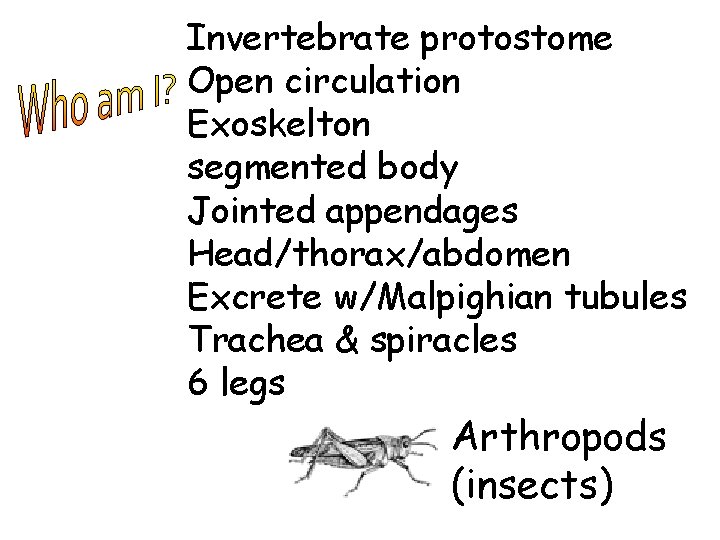
Invertebrate protostome Open circulation Exoskelton segmented body Jointed appendages Head/thorax/abdomen Excrete w/Malpighian tubules Trachea & spiracles 6 legs Arthropods (insects)
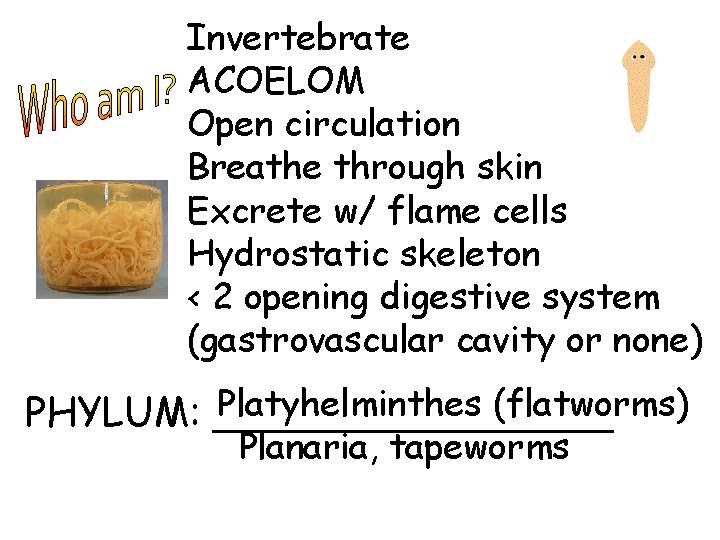
Invertebrate ACOELOM Open circulation Breathe through skin Excrete w/ flame cells Hydrostatic skeleton < 2 opening digestive system (gastrovascular cavity or none) Platyhelminthes (flatworms) PHYLUM: ________ Planaria, tapeworms
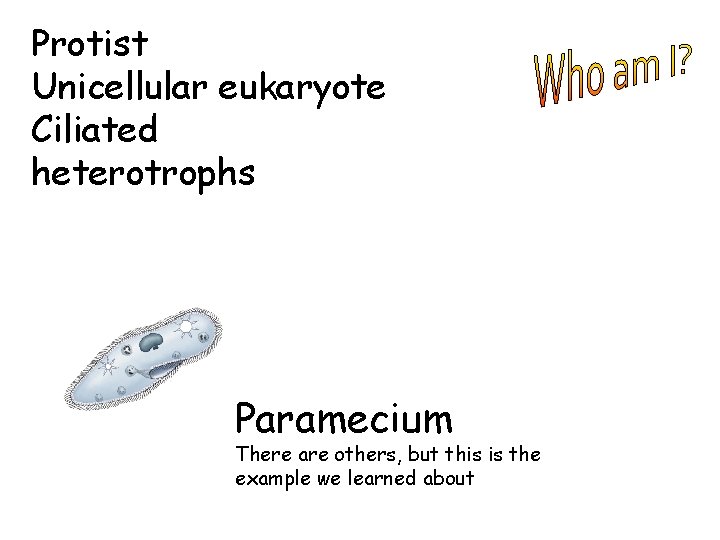
Protist Unicellular eukaryote Ciliated heterotrophs Paramecium There are others, but this is the example we learned about
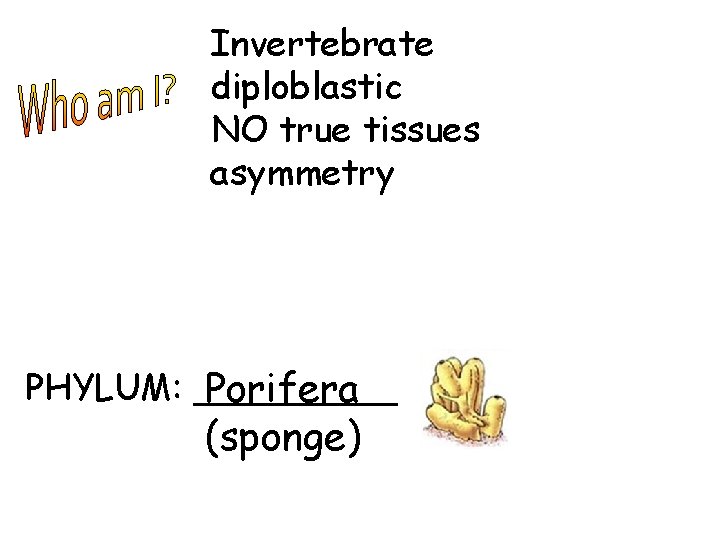
Invertebrate diploblastic NO true tissues asymmetry PHYLUM: _____ Porifera (sponge)
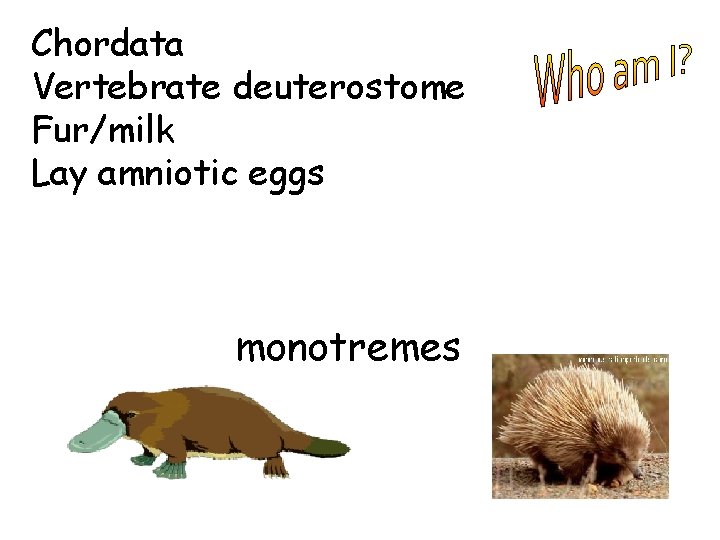
Chordata Vertebrate deuterostome Fur/milk Lay amniotic eggs monotremes
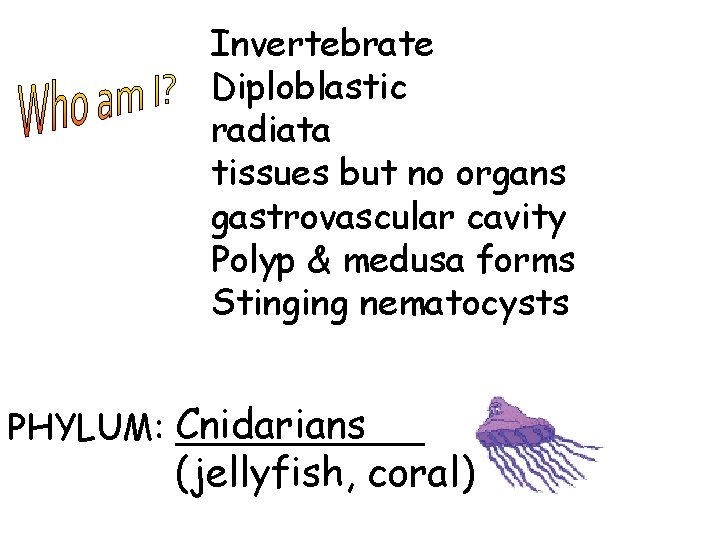
Invertebrate Diploblastic radiata tissues but no organs gastrovascular cavity Polyp & medusa forms Stinging nematocysts PHYLUM: Cnidarians ______ (jellyfish, coral)
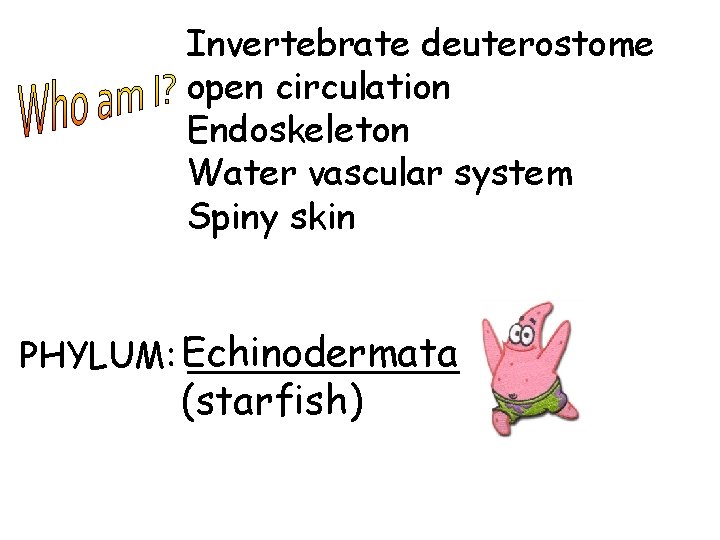
Invertebrate deuterostome open circulation Endoskeleton Water vascular system Spiny skin PHYLUM: Echinodermata ______ (starfish)
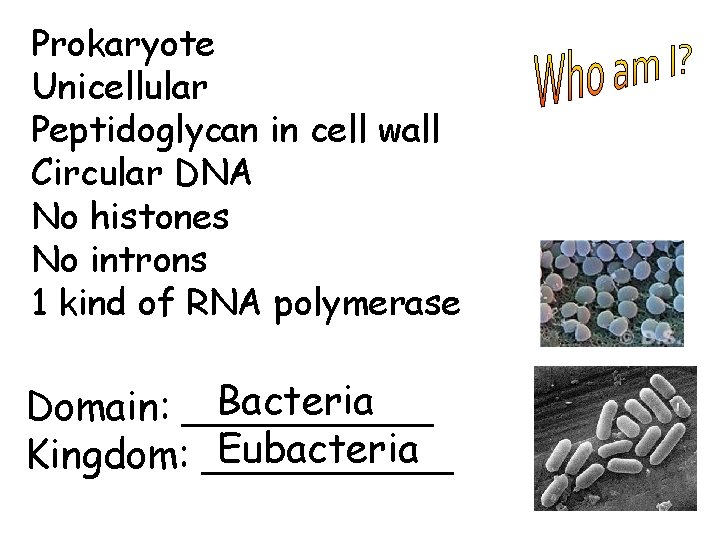
Prokaryote Unicellular Peptidoglycan in cell wall Circular DNA No histones No introns 1 kind of RNA polymerase Bacteria Domain: _____ Eubacteria Kingdom: _____
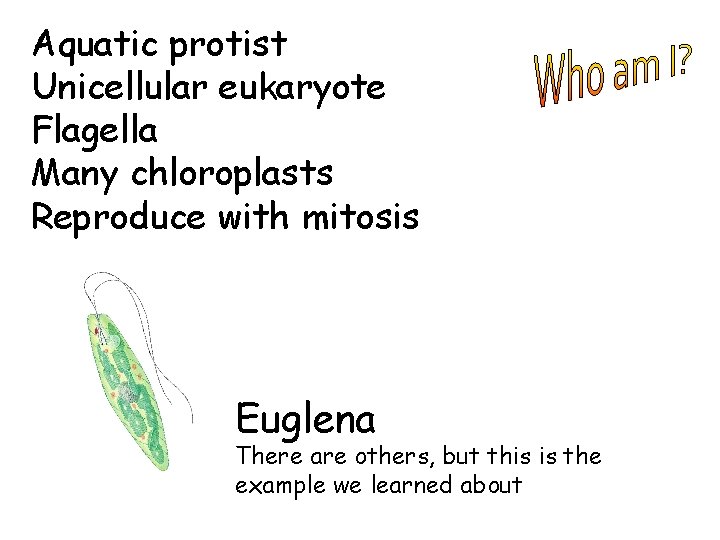
Aquatic protist Unicellular eukaryote Flagella Many chloroplasts Reproduce with mitosis Euglena There are others, but this is the example we learned about
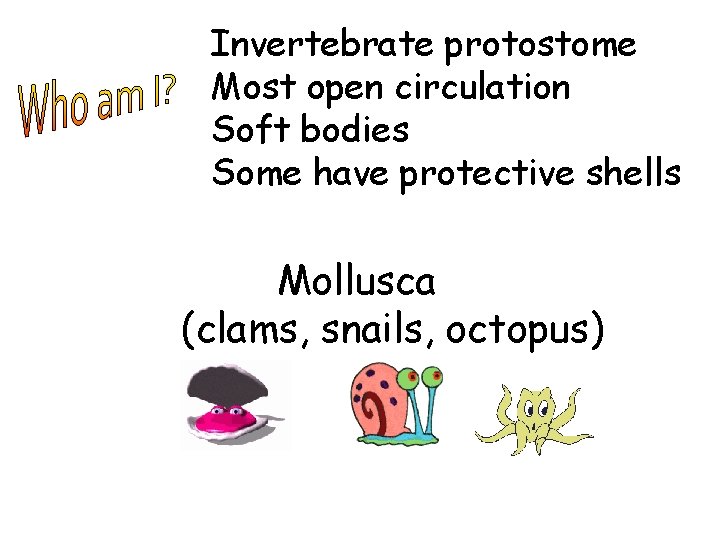
Invertebrate protostome Most open circulation Soft bodies Some have protective shells Mollusca (clams, snails, octopus)
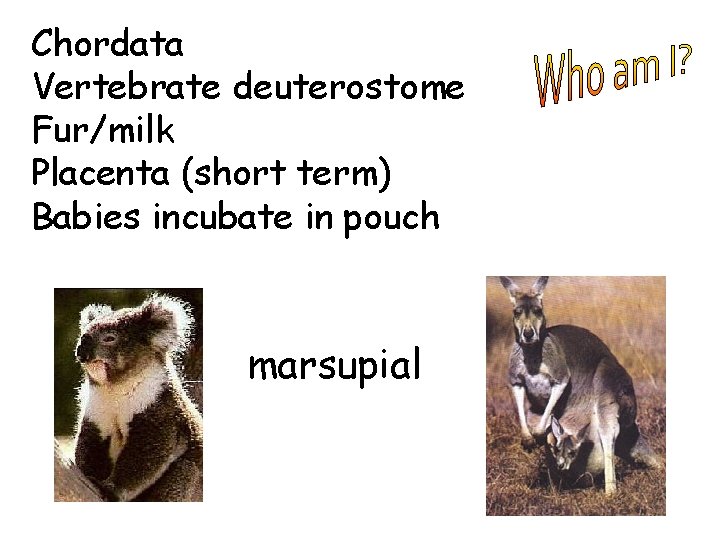
Chordata Vertebrate deuterostome Fur/milk Placenta (short term) Babies incubate in pouch marsupial
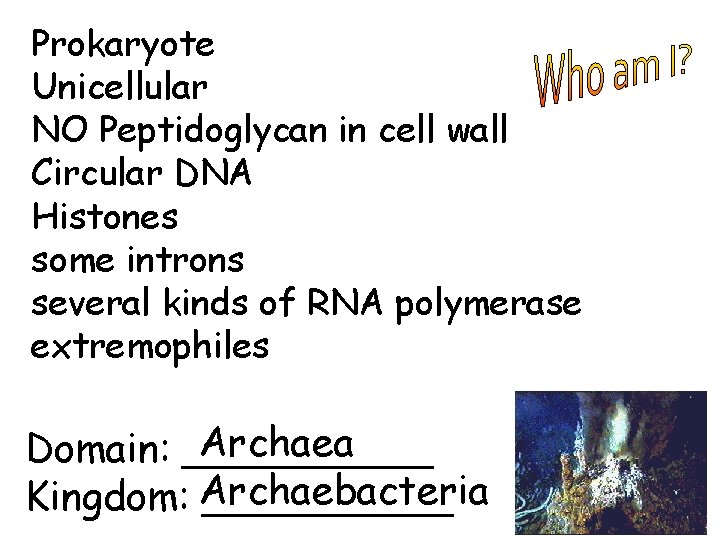
Prokaryote Unicellular NO Peptidoglycan in cell wall Circular DNA Histones some introns several kinds of RNA polymerase extremophiles Archaea Domain: _____ Kingdom: Archaebacteria _____
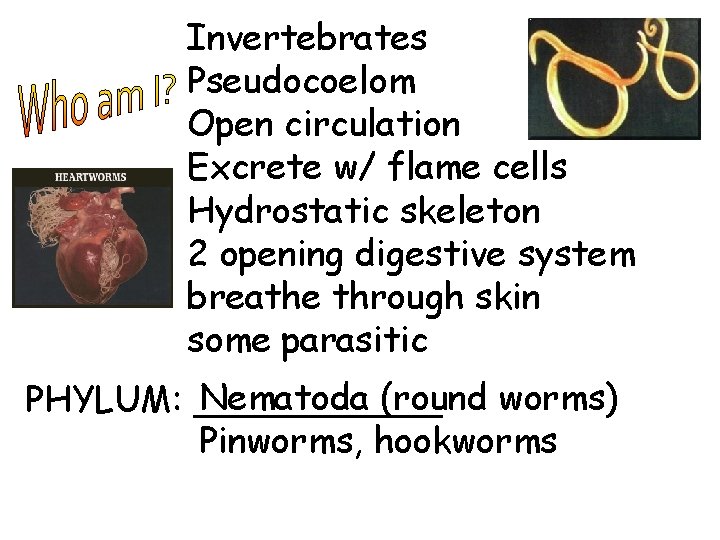
Invertebrates Pseudocoelom Open circulation Excrete w/ flame cells Hydrostatic skeleton 2 opening digestive system breathe through skin some parasitic Nematoda (round worms) PHYLUM: ______ Pinworms, hookworms
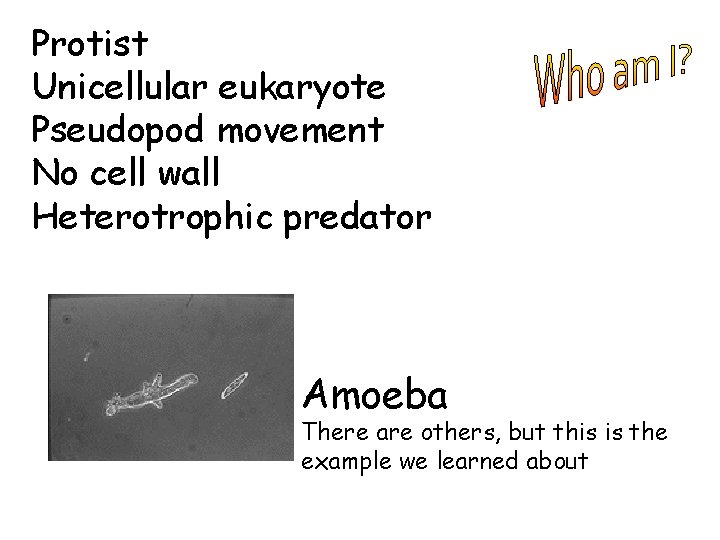
Protist Unicellular eukaryote Pseudopod movement No cell wall Heterotrophic predator Amoeba There are others, but this is the example we learned about
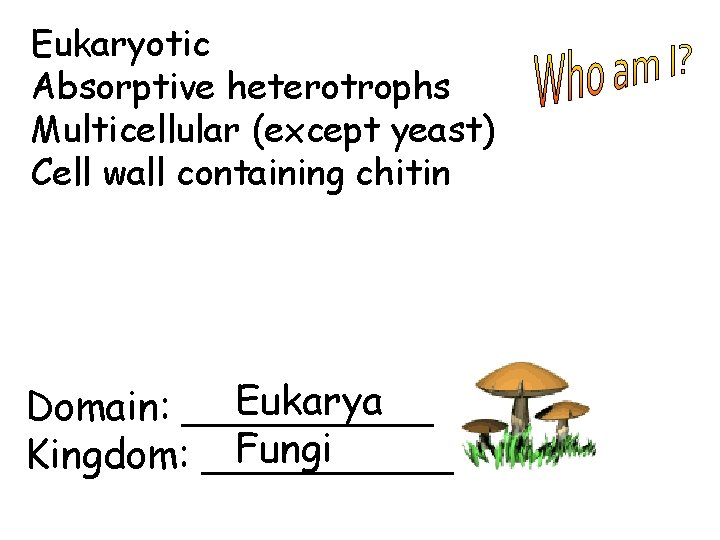
Eukaryotic Absorptive heterotrophs Multicellular (except yeast) Cell wall containing chitin Eukarya Domain: _____ Fungi Kingdom: _____
- Slides: 30