
Choosing the Appropriate Student Assistance Program SAP Model



- Slides: 41
Choosing the Appropriate Student Assistance Program (SAP) Model in the K-12 Environment Cynthia Peck, BA, Four Wings Inc. Charity Cason, MS, West. Ed
Overview of this Paper Brief history on the development and evolution of SAPs in schools today What are the influences supporting the expansion of SAPs in schools Provide a working definition for SAP How that definition plays out in different implementation models What variables influence SAP construction How do these affect staffing, training & resources Some promising findings and SAP resources
Evolution of SAPs 1980 s- SAPs were modeled after EAP’s identification objective documentation confidential communications referrals and advocacy for health and community services ongoing support in the workplace
1980 -1990 Adolescent treatment facilities train school personnel Children of Alcoholics (COAs) Movement gained momentum Book by Gary Anderson – When Chemicals Come to School (1987) typifies SAP National Student Assistance Organization Federal Anti-Drug Omnibus Act funds schools– Safe and Drug Free Schools & Communities
Students affected by alcohol and drug use – theirs or someone else’s, were now served in integrated school counseling services with community referral networks (Emert, 1988)
SAPs develop structure for addressing non-academic concerns identification referral services follow-up (case management in many cases)
Counselors and non-counselor staffed schools are able to address student mental health needs and behaviors of concern outside of disciplinary responses. SAP staffing varies widely from individuals to multidisciplinary teams
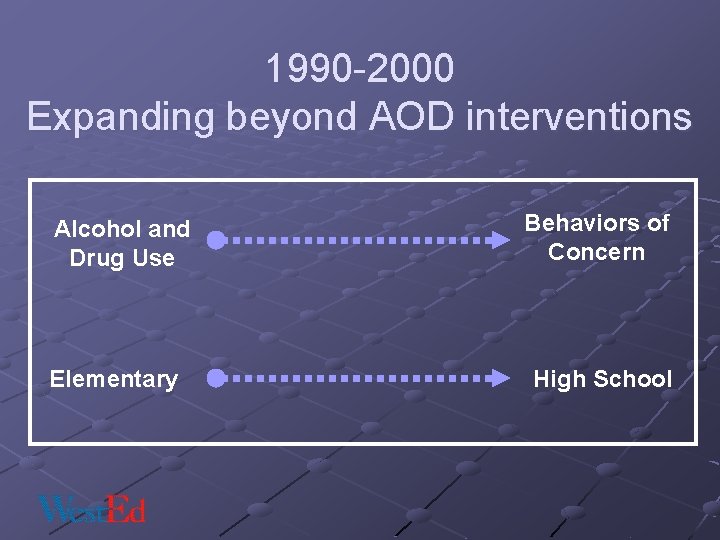
1990 -2000 Expanding beyond AOD interventions Alcohol and Drug Use Elementary Behaviors of Concern High School
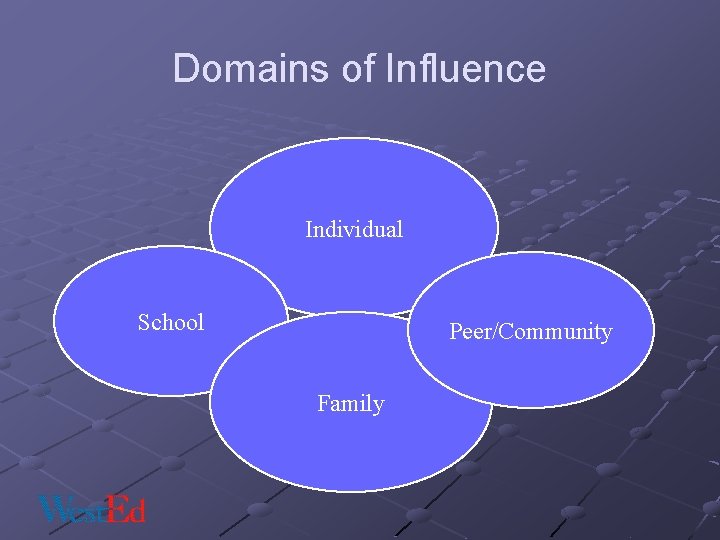
Domains of Influence Individual School Peer/Community Family
Factors Impacting School Failure Interpersonal and relational experiences with peers and teachers (Marsh & Yeung, 1997; Wentzel & Caldewell, 1997) Motivation (Kaplan, Peck & Kaplan, 1997) Beliefs about importance of school (Hilty, 1998; House, 1999) Early academic failure (Hawkins, et. al, 1997) High levels of interpersonal conflict (Altenbaugh, 1998)
Factors Impacting School Failure Lack of prosocial behavior in elementary school (Wentzel & Caldwell, 1997) Learning disabilities, behavior difficulties, attention deficit disorders, mental health problems (Deschenes et al. , 2001) Belief about their abilities (Marsh, 1987) Self concept and self-esteem (Marsh & Parker, 1984)
SAPs Expand Mental Health Services in Schools Higher utilization rate of school based mental health services than national figures for use of hospital and clinic services (Anglien, et. al. 1996) Minority children perceived them more acceptable (Armbruster et. al. 1997) SAP may be a more acceptable term than mental health clinic among parents and school boards
Special Education Assessments Mandated by law, Multidisciplinary Teams (MDTs) must assess student’s referred for assessment within specific time frames, with appropriate documentation to determine what if any special education services should be provided.
Multidisciplinary Teams for Special Education Assessment A student’s problems in the classroom lead to a teacher’s initial referral to a “prereferral team” The team tries to understand the student’s functioning and suggests interventions. If the classroom interventions don’t work, the student is then referred for special education assessment.
SAPs Could Address Problems for MDTs With no other referral source to access teachers over utilize the MDTs. The literature clearly documents referral bias of student’s who “bother” the teacher. Their concerns thus support their subjective perceptions (Gerber & Semmel, 1984). Students are not recommended for special education assessment or placement until the conclusion of the pre-referral process and documentation of previously tried strategies
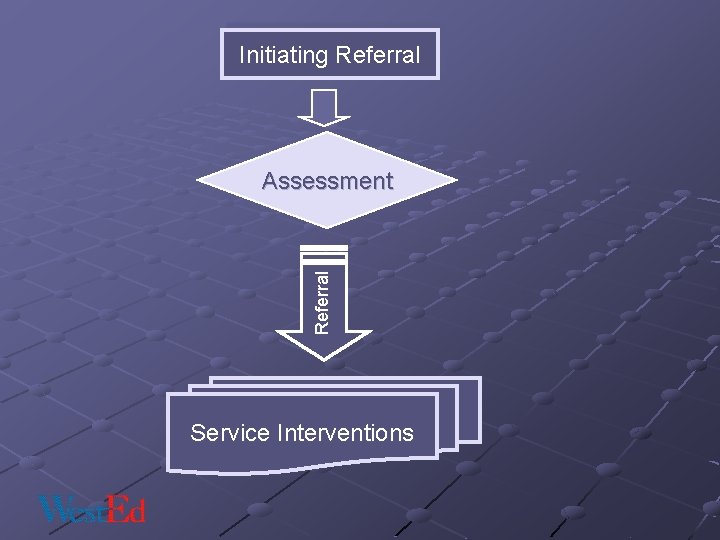
Definition of SAP “A process by which students who exhibit behaviors of concern are identified, referred for assessment and/or services, and followed up”.
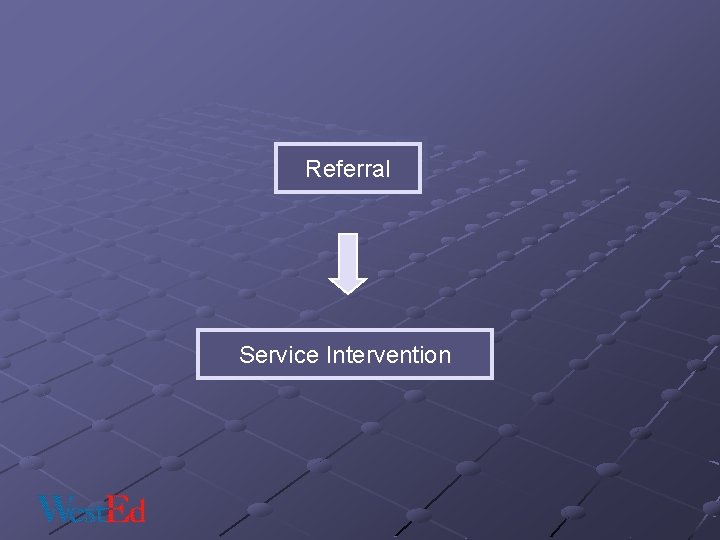
Referral Service Intervention
Initiating Referral Assessment Service Interventions
School Policy Influenced by state and federal mandates IDEA Public Law 94. 142 State Education Code Title IV Zero Tolerance
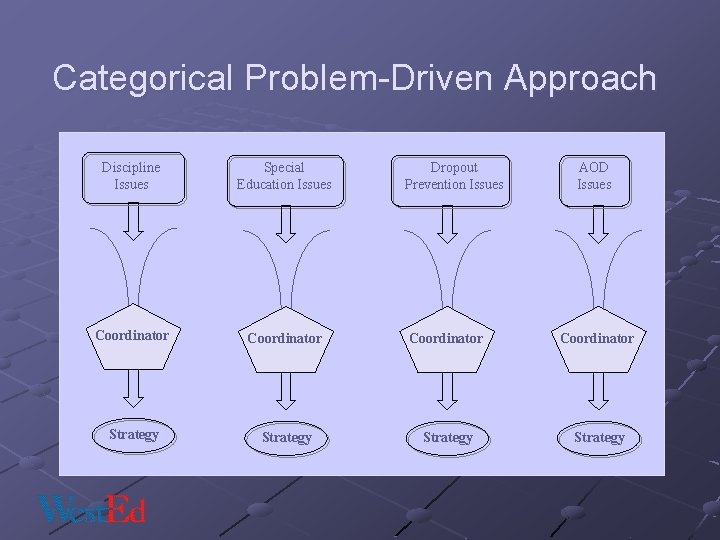
Categorical Problem-Driven Approach Discipline Issues Special Education Issues Dropout Prevention Issues AOD Issues Coordinator Strategy
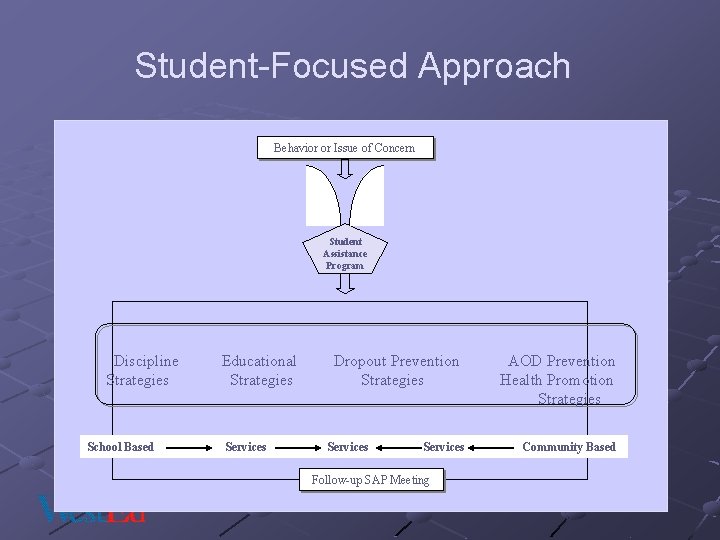
Student-Focused Approach Behavior or Issue of Concern Student Assistance Program Discipline Strategies School Based Educational Strategies Services Dropout Prevention Strategies Services Follow-up SAP Meeting AOD Prevention Health Promotion Strategies Community Based
Philosophical Variables Defining an SAP
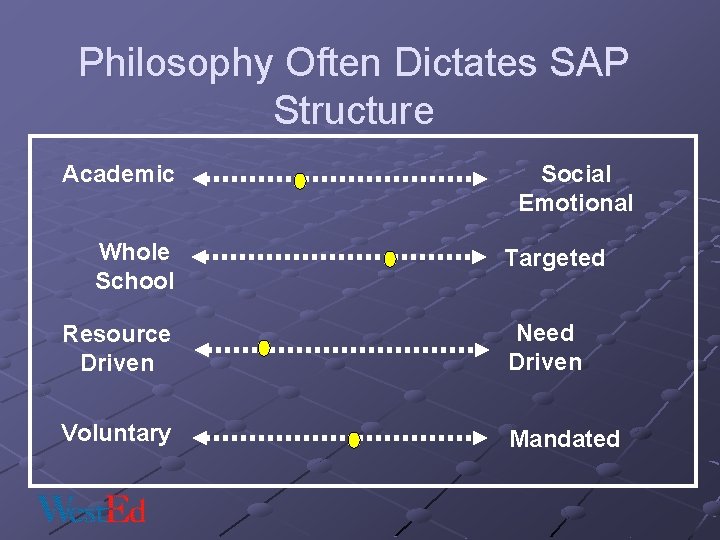
Philosophy Often Dictates SAP Structure Academic Whole School Social Emotional Targeted Resource Driven Need Driven Voluntary Mandated
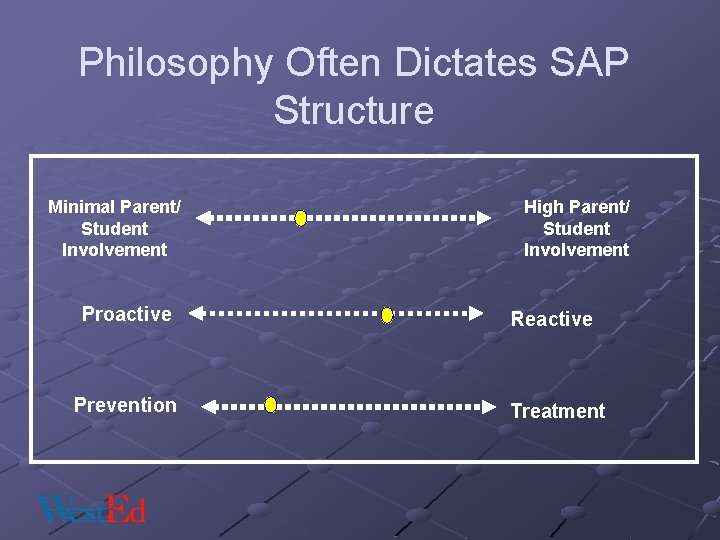
Philosophy Often Dictates SAP Structure Minimal Parent/ Student Involvement High Parent/ Student Involvement Proactive Reactive Prevention Treatment
Program Operations The philosophy of the SAP determines many of the program operations
Operational Questions What will be the referral sources? What will be the SAP team structure? Who will be included in staff development activities? What will be the tracking system for identification, referral, service provision and follow up? Will there be community links to the SAP? What will be the role of non and referred SAP students?
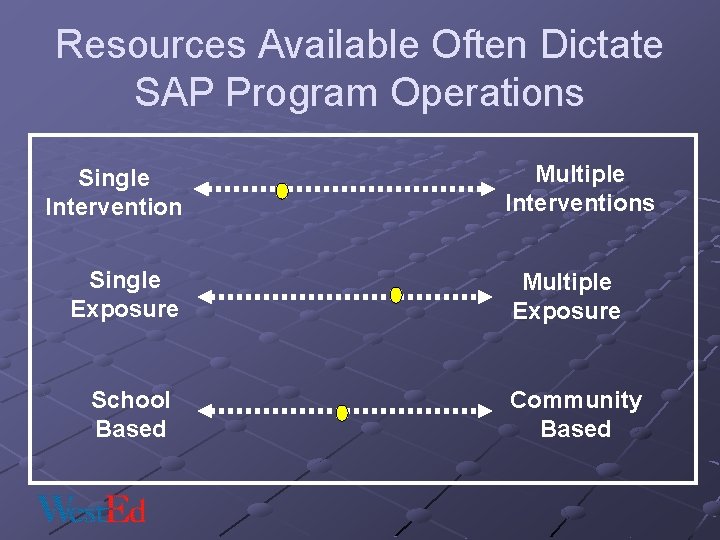
Resources Available Often Dictate SAP Program Operations Single Intervention Single Exposure School Based Multiple Interventions Multiple Exposure Community Based
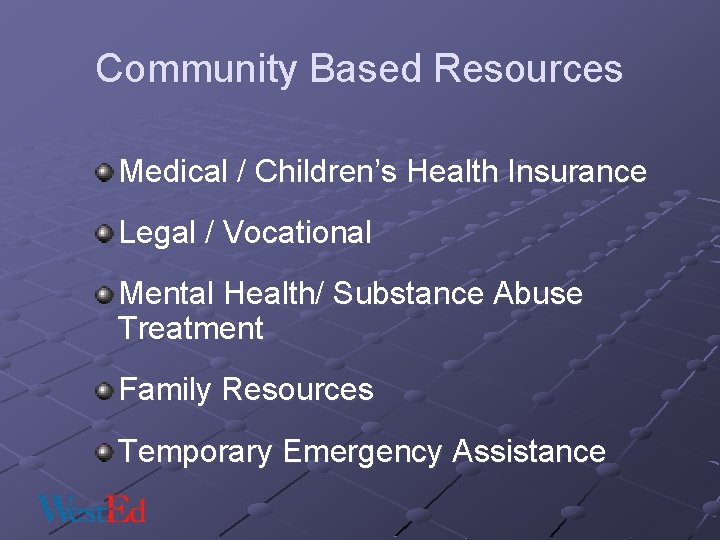
Community Based Resources Medical / Children’s Health Insurance Legal / Vocational Mental Health/ Substance Abuse Treatment Family Resources Temporary Emergency Assistance
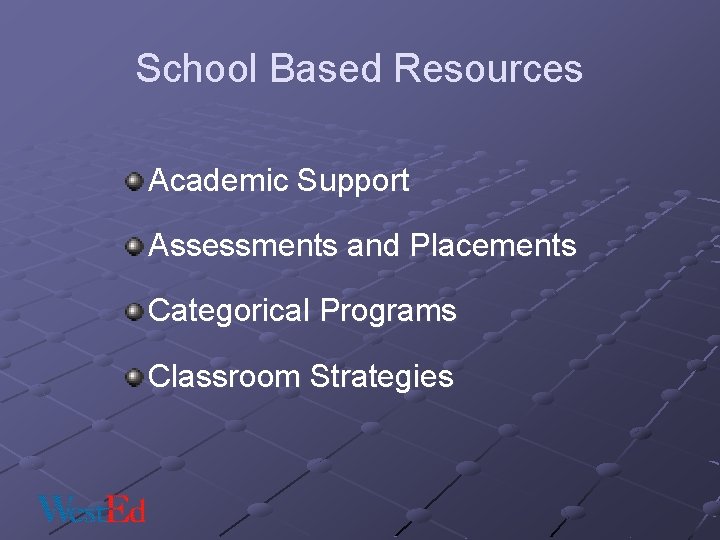
School Based Resources Academic Support Assessments and Placements Categorical Programs Classroom Strategies
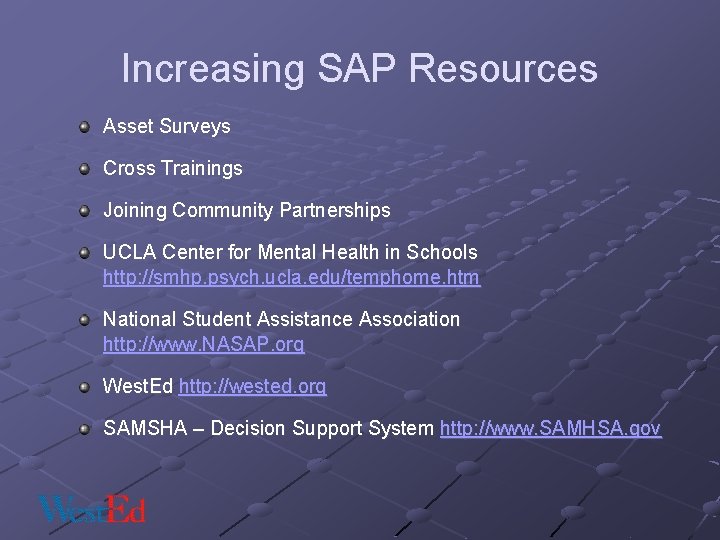
Increasing SAP Resources Asset Surveys Cross Trainings Joining Community Partnerships UCLA Center for Mental Health in Schools http: //smhp. psych. ucla. edu/temphome. htm National Student Assistance Association http: //www. NASAP. org West. Ed http: //wested. org SAMSHA – Decision Support System http: //www. SAMHSA. gov
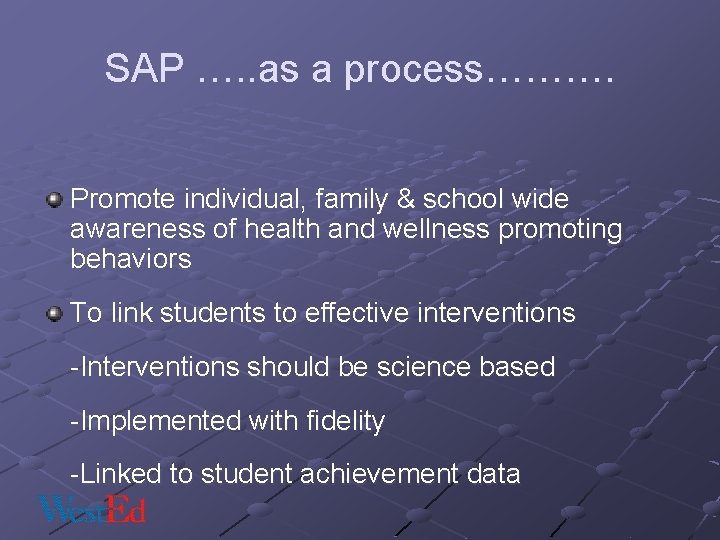
SAP …. . as a process………. Promote individual, family & school wide awareness of health and wellness promoting behaviors To link students to effective interventions -Interventions should be science based -Implemented with fidelity -Linked to student achievement data
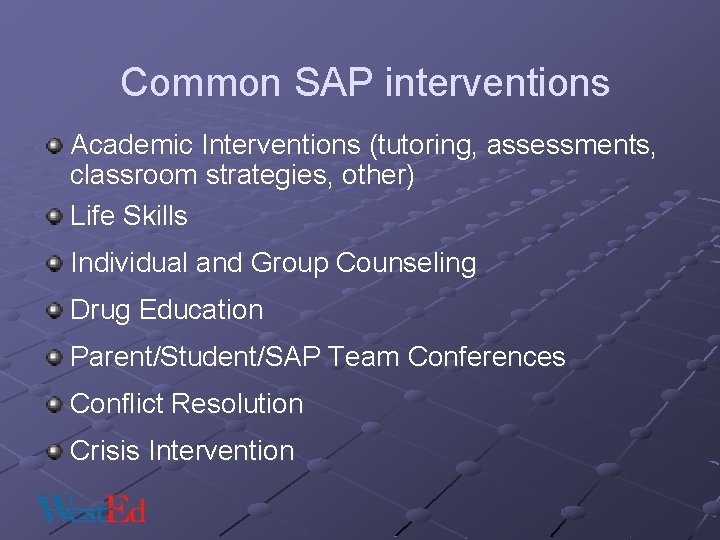
Common SAP interventions Academic Interventions (tutoring, assessments, classroom strategies, other) Life Skills Individual and Group Counseling Drug Education Parent/Student/SAP Team Conferences Conflict Resolution Crisis Intervention
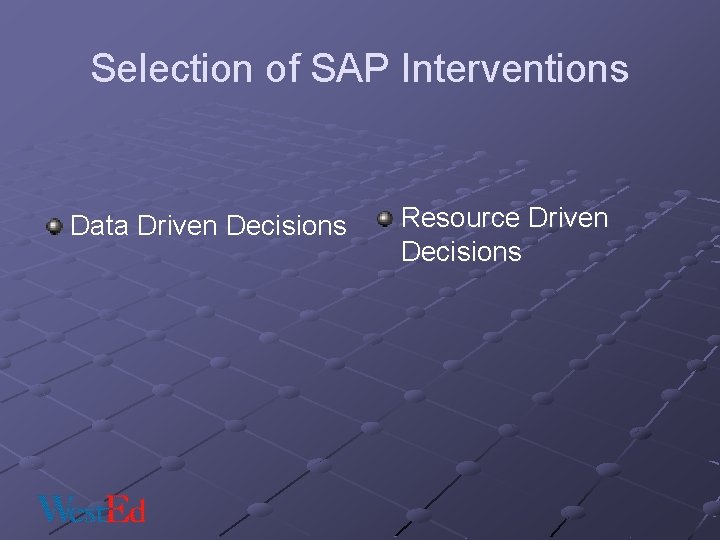
Selection of SAP Interventions Data Driven Decisions Resource Driven Decisions
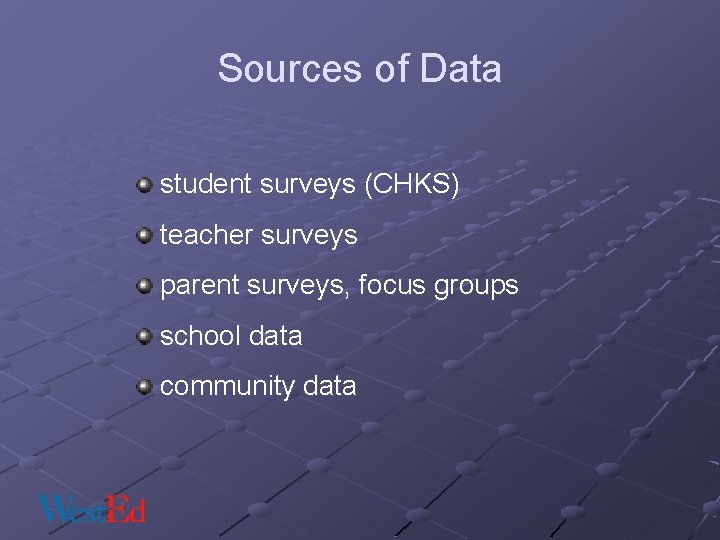
Sources of Data student surveys (CHKS) teacher surveys parent surveys, focus groups school data community data
Promising Findings on SAP as process
Contact Information Cynthia Peck cpeck@wested. org Charity Cason Ccason@wested. org 801 North Parkcenter Drive Suite A 7 Santa Ana, California 92705 714 -972 -5900
Presentation Handouts Available on APHA conference website
West. Ed Exhibitors Booth # 1055