
Cholinergic Pharmacology Dr Arlene Williams Pharmacology unit Para
- Slides: 27
Cholinergic Pharmacology. Dr. Arlene Williams Pharmacology unit Para Clinical Sciences, FMS The University of the West Indies St. Augustine
Objectives • Brief overview of ANS • Generalized cholinergic and adrenergic junctions • Autonomic innervation of the eye (Emphasis on cholinergic responses) INTERACTIVE SESSION • Cases (with at least one eye with a problem) • To determine probable deficits: • Parasympathetic • Sympathetic Horner’s syndrome: • Preganglionic • Postganglionic • Two screens: • light intensity (form hypotheses) • drug application (test hypotheses using 2 drugs) • Cases with urge incontinence and pesticide poisoning.
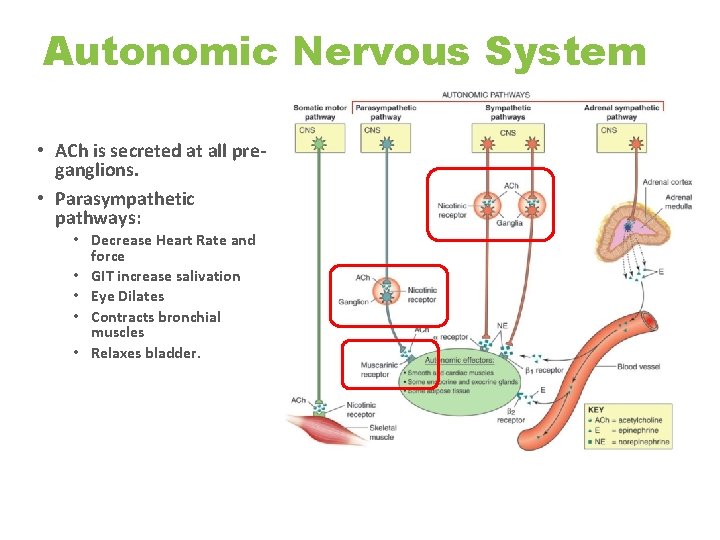
Autonomic Nervous System • ACh is secreted at all preganglions. • Parasympathetic pathways: • Decrease Heart Rate and force • GIT increase salivation • Eye Dilates • Contracts bronchial muscles • Relaxes bladder.
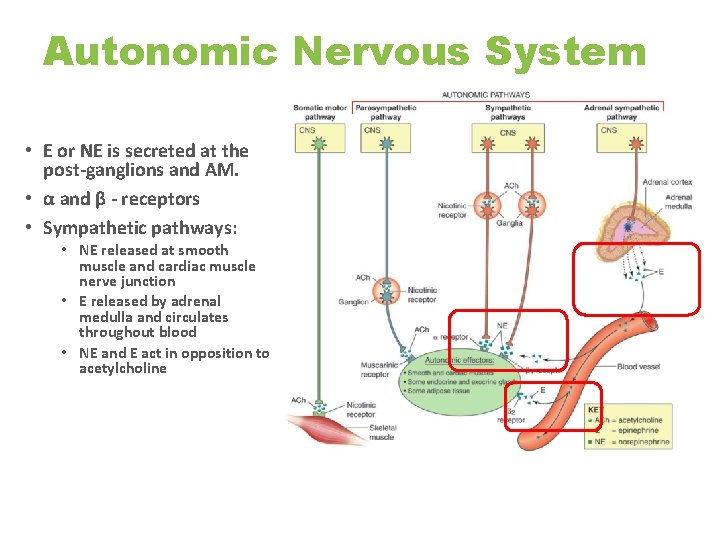
Autonomic Nervous System • E or NE is secreted at the post-ganglions and AM. • α and β - receptors • Sympathetic pathways: • NE released at smooth muscle and cardiac muscle nerve junction • E released by adrenal medulla and circulates throughout blood • NE and E act in opposition to acetylcholine
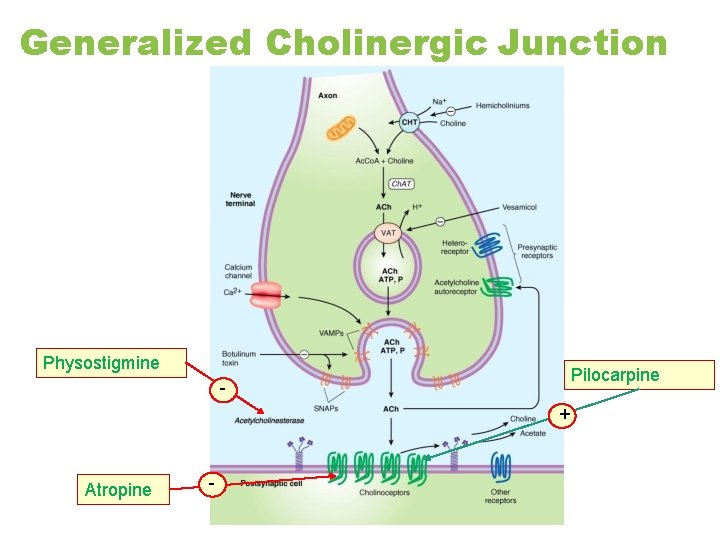
Generalized Cholinergic Junction Physostigmine Pilocarpine + Atropine -
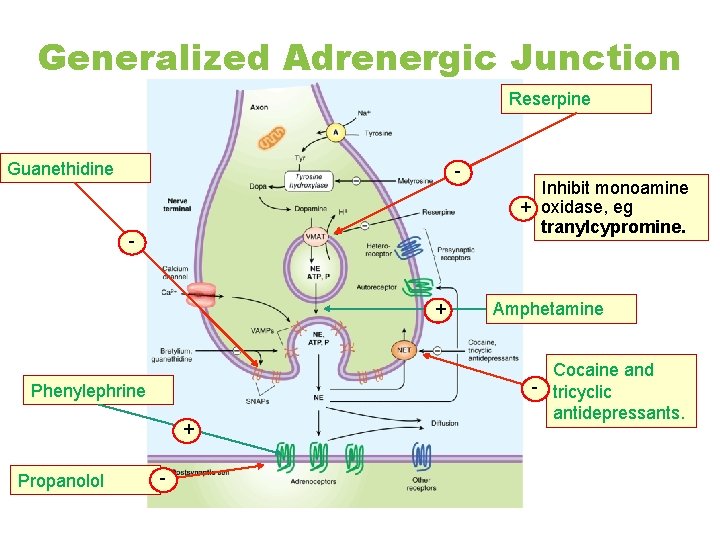
Generalized Adrenergic Junction Reserpine Guanethidine - - + Phenylephrine + Propanolol - Inhibit monoamine + oxidase, eg tranylcypromine. Amphetamine Cocaine and - tricyclic antidepressants.
ANS control of iris - University of Melbourne URL: [https: //youtu. be/-vx 0 c 0 l 1 hi. I]
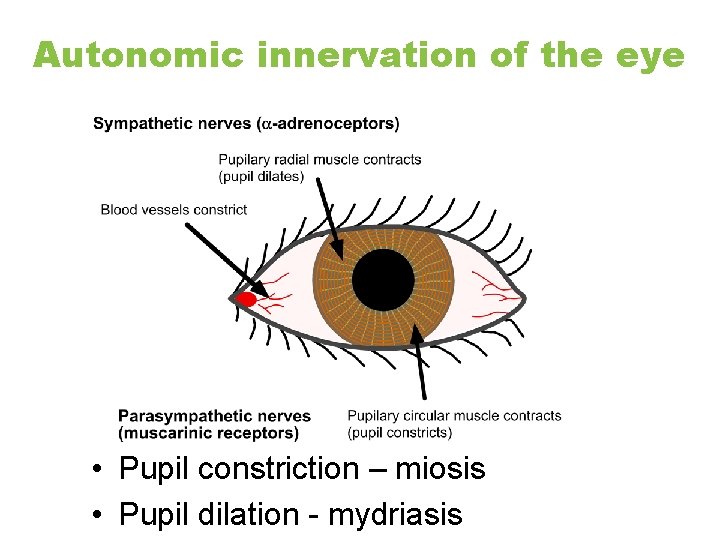
Autonomic innervation of the eye • Pupil constriction – miosis • Pupil dilation - mydriasis
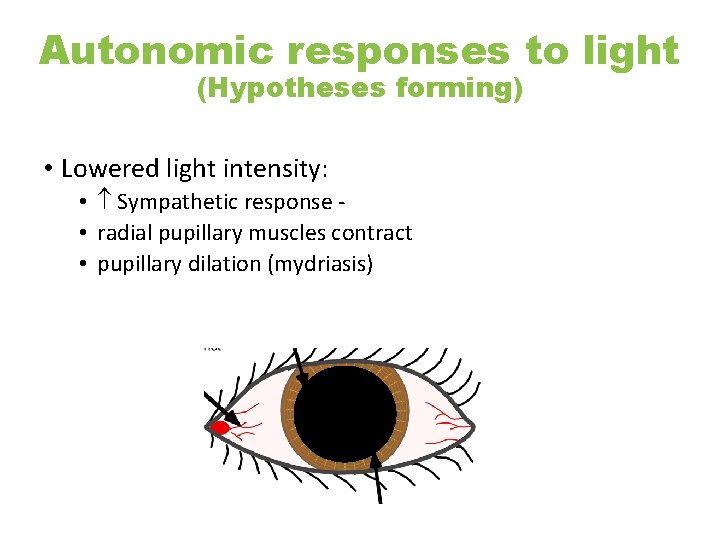
Autonomic responses to light (Hypotheses forming) • Lowered light intensity: • Sympathetic response • radial pupillary muscles contract • pupillary dilation (mydriasis)
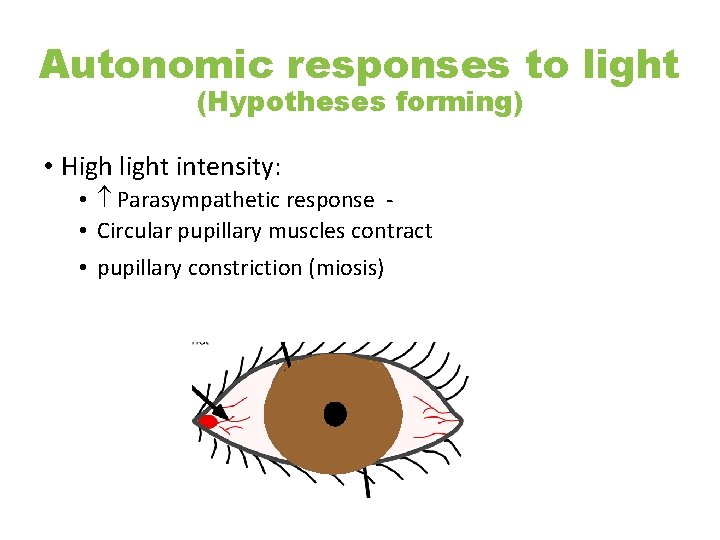
Autonomic responses to light (Hypotheses forming) • High light intensity: • Parasympathetic response • Circular pupillary muscles contract • pupillary constriction (miosis)
Drugs acting on sympathetic system (Hypotheses testing) Phenylephrine: agonist Cocaine: inhibits NE uptake Amphetamine: releases NE
Sympathetic drug effect (normal eye) Phenylephrine: mydriasis Cocaine: mydriasis Amphetamine: mydriasis
Drugs acting on parasympathetic system (Hypotheses testing) Pilocarpine: Atropine: Physostigmine:
Parasympathetic drug effect (normal eye) Pilocarpine: Atropine: Physostigmine:
Case 1: Miss. Peters Rubbed her left eye, smudged makeup making it a bit red. In addition, she has physiological anischoria (one pupil is simply smaller than the other); we are all a bit asymmetric. Are there any autonomic deficits?
Case 2: Mr. Mulligan Contaminated his eye with an atropine-like plant alkaloid. Are there any autonomic deficits? Is it sympathetic or parasympathetic?
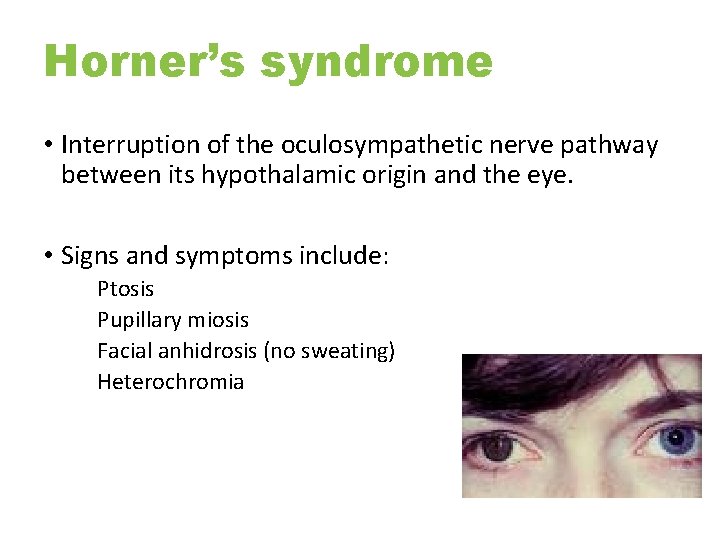
Horner’s syndrome • Interruption of the oculosympathetic nerve pathway between its hypothalamic origin and the eye. • Signs and symptoms include: Ptosis Pupillary miosis Facial anhidrosis (no sweating) Heterochromia
Horner’s syndrome https: //youtu. be/JBVGh 0 gyy. Yc
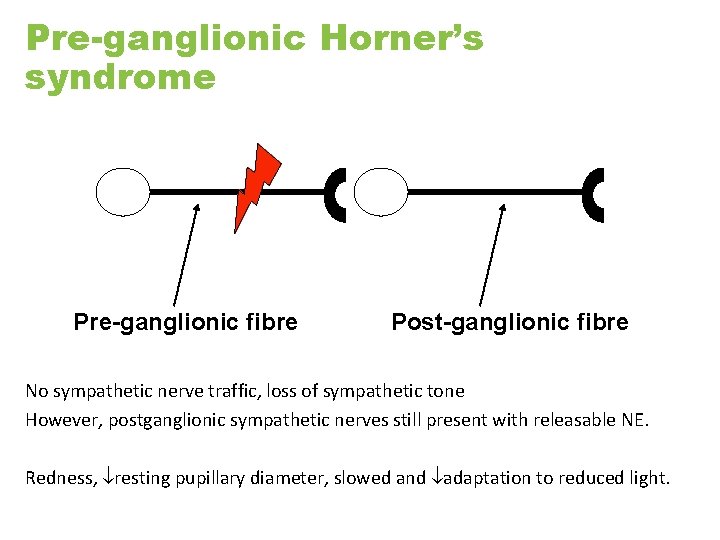
Pre-ganglionic Horner’s syndrome Pre-ganglionic fibre Post-ganglionic fibre No sympathetic nerve traffic, loss of sympathetic tone However, postganglionic sympathetic nerves still present with releasable NE. Redness, resting pupillary diameter, slowed and adaptation to reduced light.
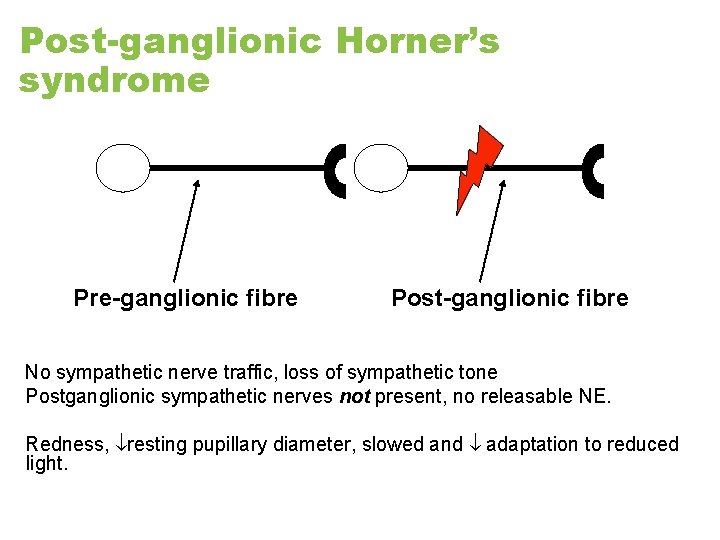
Post-ganglionic Horner’s syndrome Pre-ganglionic fibre Post-ganglionic fibre No sympathetic nerve traffic, loss of sympathetic tone Postganglionic sympathetic nerves not present, no releasable NE. Redness, resting pupillary diameter, slowed and adaptation to reduced light.
Case 3: Mr. Brown Has Horner’s syndrome in his left eye. What is the evidence? Administration of cocaine caused no response. Is it sympathetic or parasympathetic? Is it pre-ganglionic or post-ganglionic?
Case 4: Mr. Black • Has Horner’s syndrome in the left eye. • What is the evidence? Administration of cocaine defective pupil dilated. • Is it sympathetic or parasympathetic? • Is it pre-ganglionic or post-ganglionic?
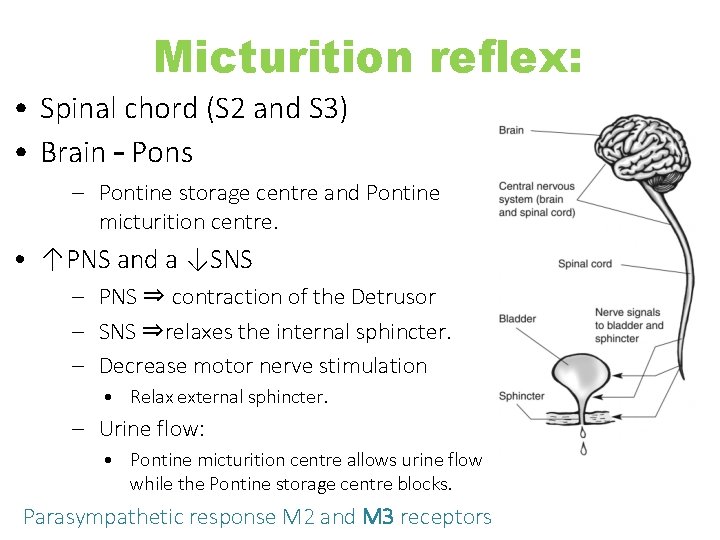
Micturition reflex: • Spinal chord (S 2 and S 3) • Brain – Pons – Pontine storage centre and Pontine micturition centre. • ↑PNS and a ↓SNS – PNS ⇒ contraction of the Detrusor – SNS ⇒relaxes the internal sphincter. – Decrease motor nerve stimulation • Relax external sphincter. – Urine flow: • Pontine micturition centre allows urine flow while the Pontine storage centre blocks. Parasympathetic response M 2 and M 3 receptors
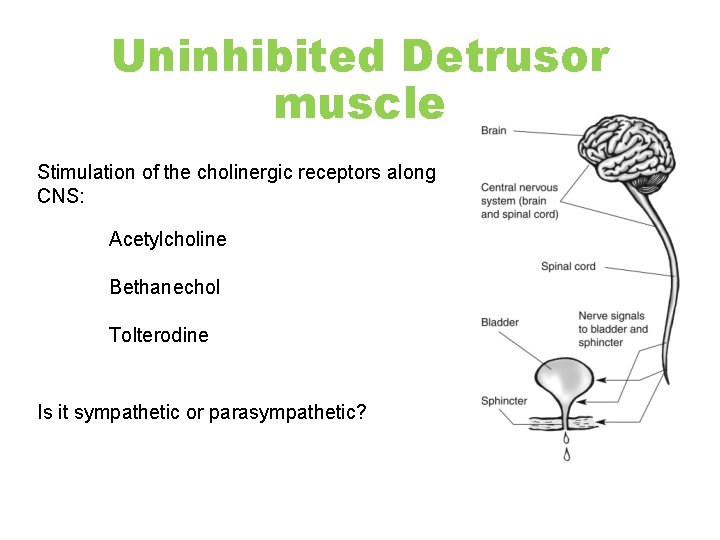
Uninhibited Detrusor muscle Stimulation of the cholinergic receptors along CNS: Acetylcholine agonist Bethanechol agonist Tolterodine antagonist Is it sympathetic or parasympathetic? Parasympathetic
PNS stimulation of Mouse-model • What effect would a slow IV infused of bethanechol have on the parasympathetic nervous system of the mouse? • Increase Urination • Bronchial constriction • Miosis • Negligible change in heart rate
Careless Gardner • A gardener unable to breathe after inhaling organophosphate compounds present in the pesticide. • What could be the mechanism of action of this organophosphate? • Give an example of a drug in this class:
The end Get ready for your first Quiz. Follow the instructions of the invigilators.