
Cholinergic Antagonists parasympatholytics Atropine Tertiary amine belladonna alkaloid
Cholinergic Antagonists (parasympatholytics)
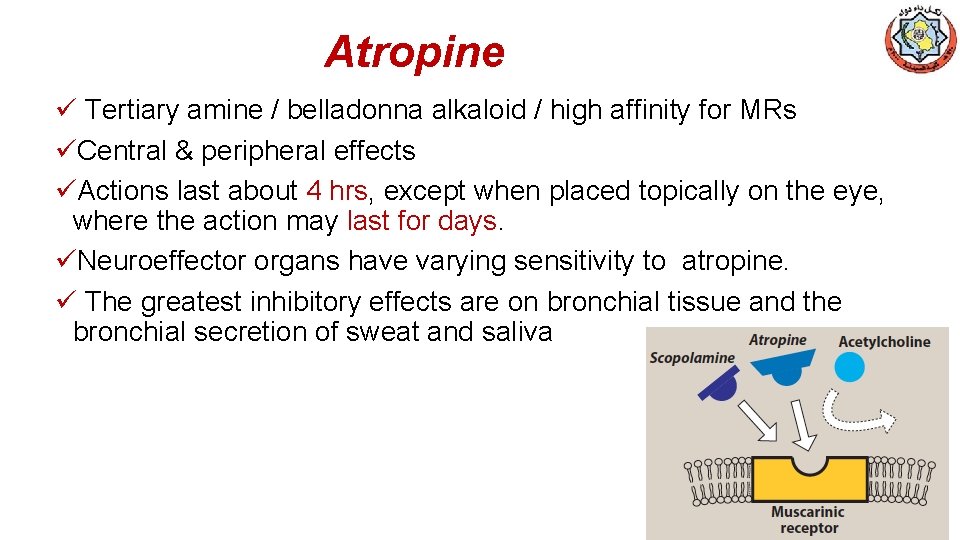
Atropine ü Tertiary amine / belladonna alkaloid / high affinity for MRs üCentral & peripheral effects üActions last about 4 hrs, except when placed topically on the eye, where the action may last for days. üNeuroeffector organs have varying sensitivity to atropine. ü The greatest inhibitory effects are on bronchial tissue and the bronchial secretion of sweat and saliva
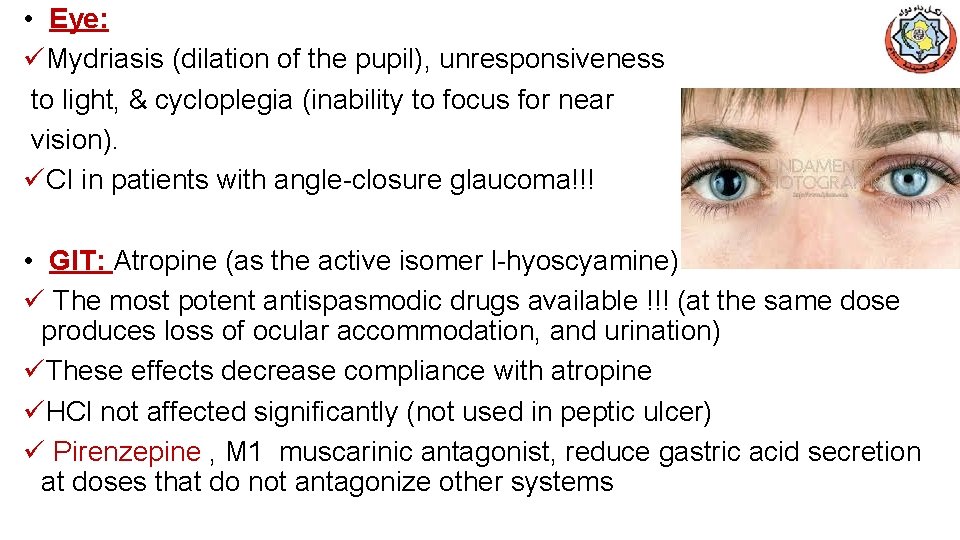
• Eye: üMydriasis (dilation of the pupil), unresponsiveness to light, & cycloplegia (inability to focus for near vision). üCI in patients with angle-closure glaucoma!!! • GIT: Atropine (as the active isomer l-hyoscyamine) ü The most potent antispasmodic drugs available !!! (at the same dose produces loss of ocular accommodation, and urination) üThese effects decrease compliance with atropine üHCl not affected significantly (not used in peptic ulcer) ü Pirenzepine , M 1 muscarinic antagonist, reduce gastric acid secretion at doses that do not antagonize other systems
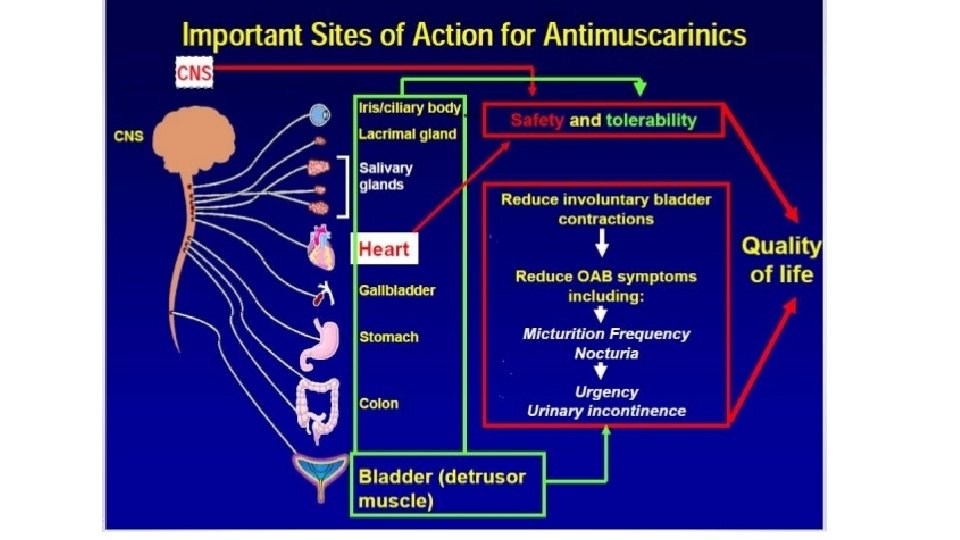
• CVS: üDepending on the dose üAt low doses, the predominant effect is a slight decrease HR? ? ? ü Higher doses of atropine cause a increase in HR by blocking the M 2 Rs on the SA node. • Secretions: Atropine blocks MRs in the salivary glands, producing dryness of the mouth (xerostomia) • Salivary, sweat & lacrimal glands are exquisitely sensitive to atropine. • [Note: Inhibition of secretions by sweat glands can cause elevated body temperature, which can be dangerous in children and the elderly. ]

Therapeutic Uses of Atropine • Ophthalmic: mydriatic and cycloplegic effects, and it permits the measurement of • • • refractive errors Shorter-acting antimuscarinics (cyclopentolate and tropicamide) replaced atropine (7 to 14 days vs. 6 to 24 hours with other agents). Phenylephrine or similar α-adrenergic drugs are preferred for pupillary dilation if cycloplegia is not required Antidote for cholinergic agonists: used for the treatment of organophosphate (insecticides, nerve gases) poisoning, of overdose of clinically used anticholinesterases such as physostigmine, and in some types of mushroom poisoning, (high doses required over a long period of time to counteract the poisons CNS: is of particular importance in treating central toxic effects of Ch. EIs Antispasmodic: !!! CVS: The drug is used to treat bradycardia of varying etiologies. .
Cont. • Antisecretory: block secretions in the upper and lower respiratory tracts prior to surgery. • Antidote for cholinergic agonists: treatment of organophosphate (insecticides, nerve gases) poisoning • Overdose of clinically used anticholinesterases such as physostigmine, and some types of mushroom poisoning (certain mushrooms contain cholinergic substances that block cholinesterases). • Massive doses of atropine may be required over a long period of time to counteract the poisons. • Readily absorbed, partially metabolized by the liver, and eliminated primarily in urine. It has a t 1/2 of about 4 hours. • Adverse effects: ? ? ?
Scopolamine • Tertiary amine plant alkaloid, similar to atropine • Greater action on the CNS, longer duration of action • One of the most effective anti–motion sickness drugs available • Blocking short-term memory & produces sedation • Use of scopolamine is limited to prevention of motion sickness and postoperative nausea and vomiting. • Kinetics: similar to atropine • Tropicamide and cyclopentolate • Ophthalmic solutions for mydriasis and cycloplegia. • Tropicamide produces mydriasis for 6 hrs and cyclopentolate for 24 hrs
• Ipratropium and Tiotropium • Quaternary derivatives of atropine. • Approved as bronchodilators for maintenance treatment of bronchospasm associated with chronic obstructive pulmonary disease (COPD). • Used in the acute management of bronchospasm in asthma. • Both agents are given via inhalation. • Tiotropium / once daily, a major advantage over ipratropium, which requires dosing up to four times daily
• Benztropine and trihexyphenidyl • useful as adjuncts with other antiparkinsonian agents to treat Parkinson’s disease and other types of parkinsonian syndromes, including antipsychotic- induced extrapyramidal symptoms. • Darifenacin, Oxybutynin, Solifenacin, Tolterodine, and Trospium Synthetic atropine-like Ds / treat overactive bladder. • Oxybutynin available as a transdermal system (topical patch), which is better tolerated because it causes less dry mouth than oral formulations. • The overall efficacies of these antimuscarinic drugs are similar.
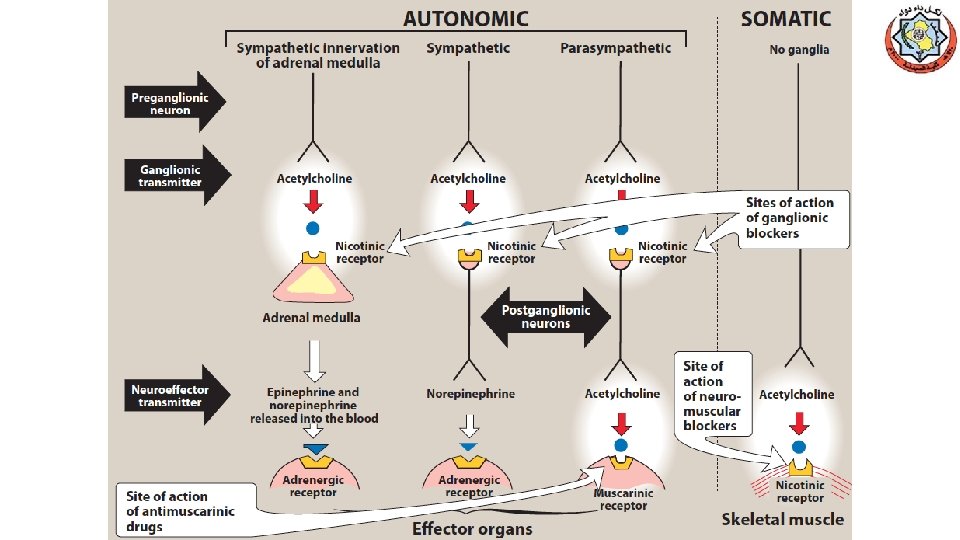
Ganglionic blockers ØAct on NRs of both parasympathetic and sympathetic auton. ganglia ØNo selectivity toward the parasympathetic or sympathetic ganglia & are not effective as NM antagonists ØBlock the entire output of the autonomic nervous system at the nicotinic receptor ØRarely used therapeutically, but often serves as a tool in experimental pharmacology. ØNicotine: component of cigarette smoke / poisonous ØNo therapeutic benefit and is deleterious to health. ØDepending on the dose, nicotine depolarizes autonomic ganglia, resulting first in stimulation and then in paralysis of all ganglia.
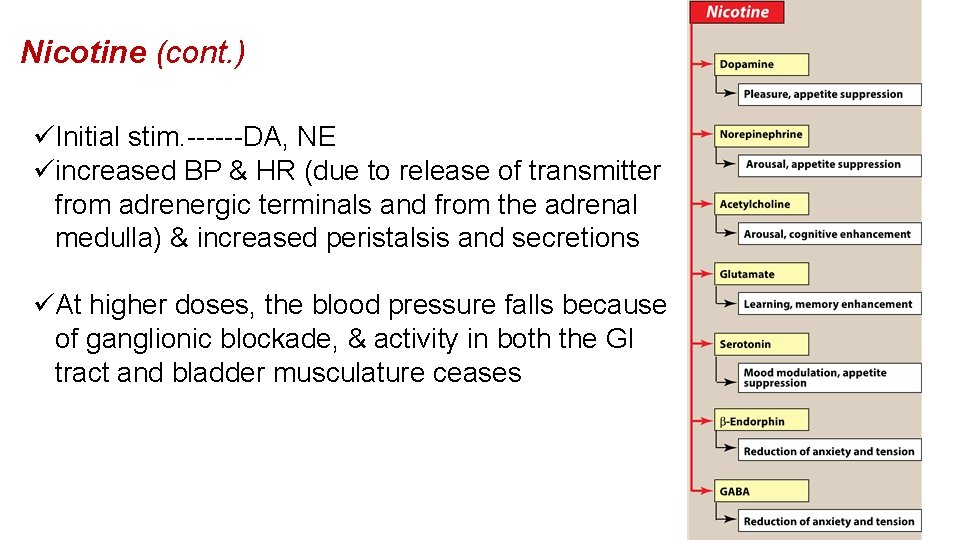
Nicotine (cont. ) üInitial stim. ------DA, NE üincreased BP & HR (due to release of transmitter from adrenergic terminals and from the adrenal medulla) & increased peristalsis and secretions üAt higher doses, the blood pressure falls because of ganglionic blockade, & activity in both the GI tract and bladder musculature ceases
Neuromuscular Blocking Agents ØBlock cholinergic transmission between motor N endings & NRs on Sk. M ØAct either as antagonists (Nondepolarizing) or as agonists (depolarizing type) at the NMJ ØUseful during surgery to facilitate tracheal intubation and provide complete muscle relaxation at lower anesthetic doses, allowing more rapid recovery from anesthesia and reducing postoperative respiratory depression
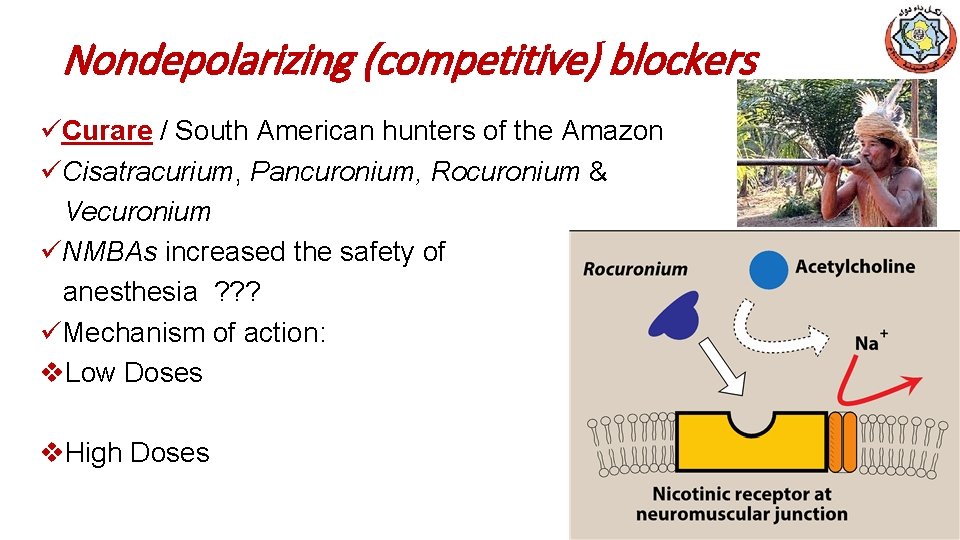
Nondepolarizing (competitive) blockers üCurare / South American hunters of the Amazon üCisatracurium, Pancuronium, Rocuronium & Vecuronium üNMBAs increased the safety of anesthesia ? ? ? üMechanism of action: v. Low Doses v. High Doses
Nondepolarizing (competitive) blockers (cont. ) üNot all Ms are equally sensitive to blockade NMBA üSmall, rapidly contracting muscles of the face and eye are most susceptible and are paralyzed first, followed by fingers, limbs, neck, & trunk Ms üNext, intercostal Ms &, lastly, the diaphragm üThe muscles recover in the reverse manner üGiven IV not orally? ? ? üExcretion? ? ? üAtracurium releases histamine and is metabolized to laudanosine, which can provoke seizures / Cisatracurium is less üVecuronium and rocuronium are deacetylated in the liver, ----üThe choice of an agent depends on the desired onset & duration of the muscle relaxation
Drug Interaction ØACh. EIs: neostigmine, physostigmine, pyridostigmine, & edrophonium can overcome the action of nondepol. NMBAs ü Increase ACh at the endplate membrane. üIf NMBA has entered the ion channel? ? ? ØHalogenated hydrocarbon anesthetics: ü (Desflurane) enhance NM blockade by stabilizing action at the NMJ. ü sensitize the NMJ to the effects of neuromuscular blockers. ØAminoglycoside antibiotics: üGentamicin and tobramycin inhibit ACh release from cholinergic Ns by competing with Ca+2 üThey synergize with pancuronium and other competitive blockers ØCalcium channel blockers: increase NM blockade of competitive blockers.
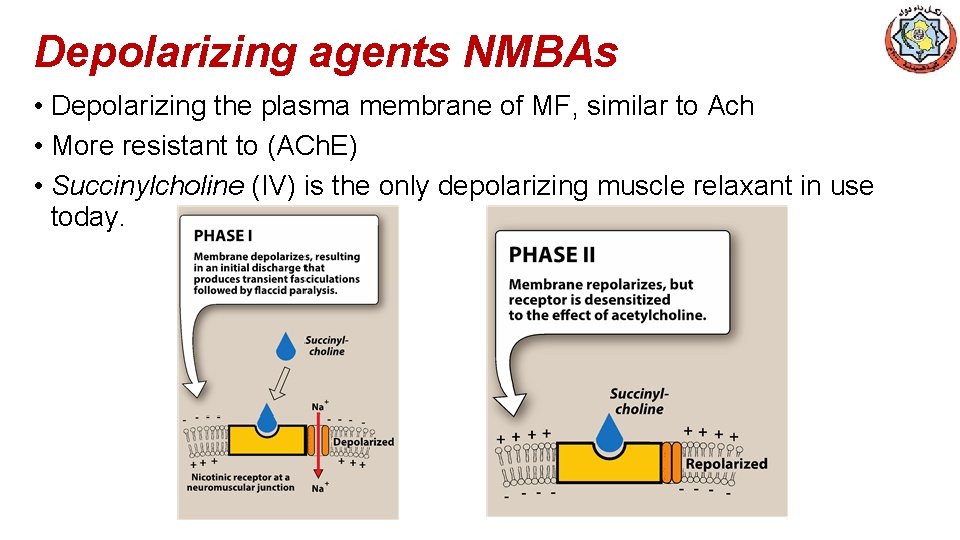
Depolarizing agents NMBAs • Depolarizing the plasma membrane of MF, similar to Ach • More resistant to (ACh. E) • Succinylcholine (IV) is the only depolarizing muscle relaxant in use today.
Depolarizing agents NMBAs (cont. ) v. Respiratory Ms are paralyzed last v Succinylcholine initially produces brief M fasciculations that cause M soreness v. May be prevented by small dose of Nondepol. NMBA prior to succinylcholine v. Uses: üShort duration of action / pseudo. Ch. E / endotracheal intubation üDuring electroconvulsive shock treatment. • Adverse effects: üHyperthermia: induce malignant hyperthermia in susceptible patients ü Apnea: patient who is deficient in plasma ACh. E / prolonged apnea due to paralysis of diaphragm. . Caution in patients with electrolyte imbalances who are also receiving digoxin or diuretics üHyperkalemia: Succinylcholine increases potassium release from intracellular stores(caution in burn patients)
- Slides: 19