
Cholesterol Metabolism Biological significance of cholesterol 1 In
Cholesterol Metabolism
Biological significance of cholesterol 1. In humans and animals, cholesterol is a major constituent of the cell membranes. Cholesterol modulates physical properties of these membranes that in turn affect the function of membrane proteins such as receptors and transporters. 2. Cholesterol is the biosynthetic precursor of bile acids, which are essential for fat digestion. 3. Cholesterol is the precursor of all steroid hormones, namely, androgens, estrogens, progestins, glucocorticoids, mineralocorticoids, and calciferol (vitamin D). 4. Cholesterol also plays a major role in the pathogenesis of atherosclerosis.
STRUCTURE OF CHOLESTEROL § The structure of cholesterol consists of four fused rings (The rings in steroids are denoted by the letters A, B, C, and D. ), with the carbons numbered in the sequence, and an eight numbered, and branched hydrocarbon chain attached to the D ring. § Cholesterol contains two angular methyl groups: the C-19 methyl group is attached to C-10, and the C-18 methyl group is attached to C-13. § The C-18 and C-19 methyl groups of cholesterol lie above the plane containing the four rings.

Steroids with 8 to 10 carbon atoms in the side chain and an alcohol hydroxyl group at C-3 are classified as sterols. Much of the plasma cholesterol is in the esterified form (with a fatty acid attached at carbon 3), which makes the structure even more hydrophobic.

SOURCES OF CHOLESTEROL Cholesterol is derived from: § diet, § de novo synthesis and § from the hydrolysis of cholesteryl esters. §A little more than half the cholesterol of the body arises by synthesis, and the remainder is provided by the average diet.
CHOLESTEROL BIOSYNTHESIS üSites: § Major sites are liver, adrenal cortex, testes, ovaries & intestine. § All nucleated cells can synthesize cholesterol. ü Location: § The enzymes involved in the synthesis of cholesterol are partly located in endoplasmic reticulum & partly in cytoplasm. üRate limiting enzyme: § HMG-Co. A reductase.
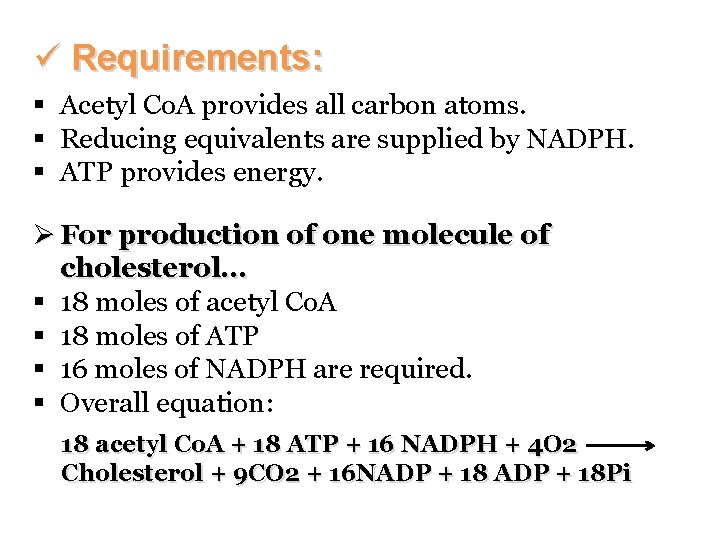
ü Requirements: § Acetyl Co. A provides all carbon atoms. § Reducing equivalents are supplied by NADPH. § ATP provides energy. Ø For production of one molecule of cholesterol… § 18 moles of acetyl Co. A § 18 moles of ATP § 16 moles of NADPH are required. § Overall equation: 18 acetyl Co. A + 18 ATP + 16 NADPH + 4 O 2 Cholesterol + 9 CO 2 + 16 NADP + 18 Pi
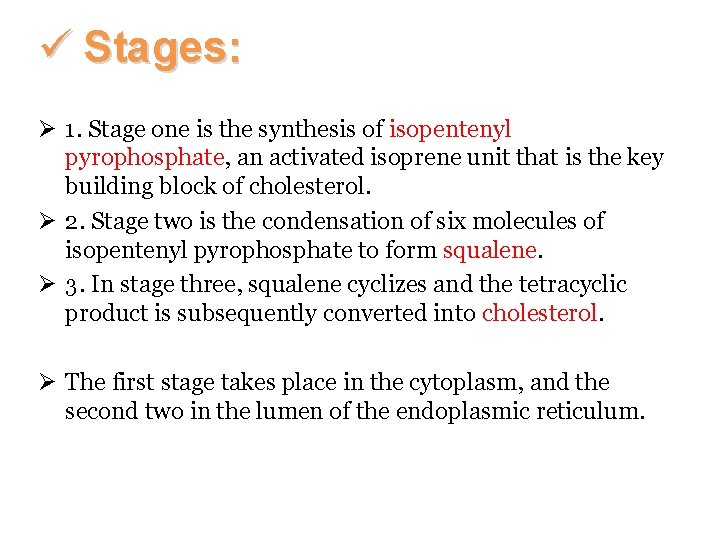
ü Stages: Ø 1. Stage one is the synthesis of isopentenyl pyrophosphate, an activated isoprene unit that is the key building block of cholesterol. Ø 2. Stage two is the condensation of six molecules of isopentenyl pyrophosphate to form squalene. Ø 3. In stage three, squalene cyclizes and the tetracyclic product is subsequently converted into cholesterol. Ø The first stage takes place in the cytoplasm, and the second two in the lumen of the endoplasmic reticulum.
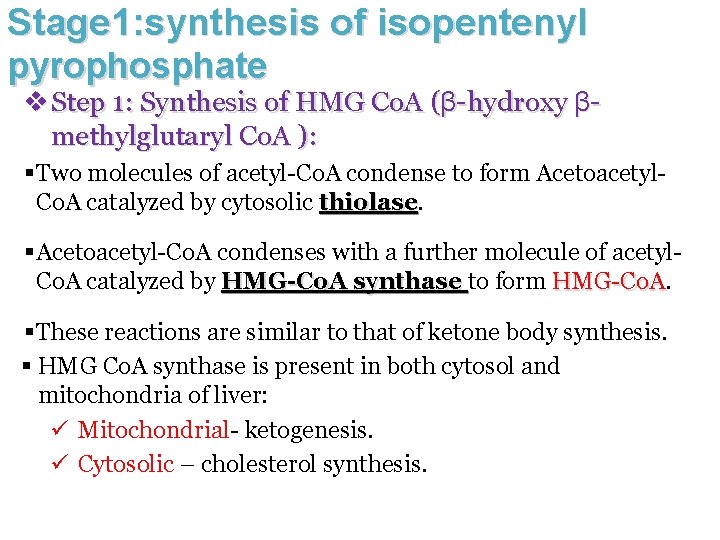
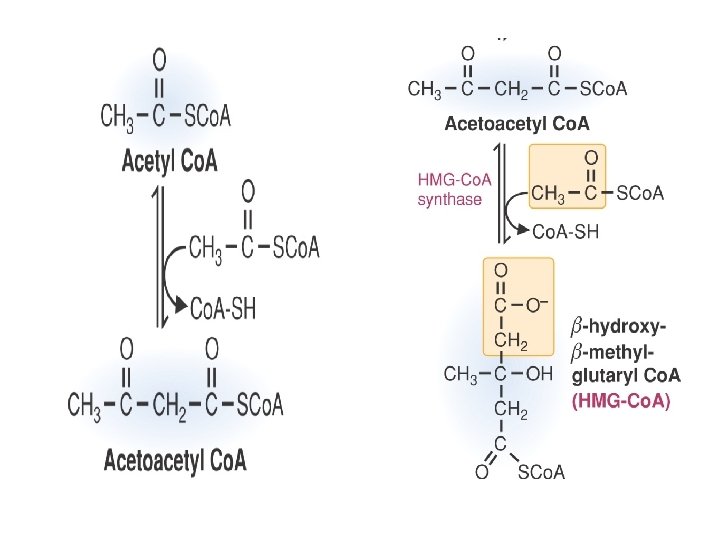
Stage 1: synthesis of isopentenyl pyrophosphate v Step 1: Synthesis of HMG Co. A (β-hydroxy βmethylglutaryl Co. A ): § Two molecules of acetyl-Co. A condense to form Acetoacetyl. Co. A catalyzed by cytosolic thiolase § Acetoacetyl-Co. A condenses with a further molecule of acetyl. Co. A catalyzed by HMG-Co. A synthase to form HMG-Co. A § These reactions are similar to that of ketone body synthesis. § HMG Co. A synthase is present in both cytosol and mitochondria of liver: ü Mitochondrial- ketogenesis. ü Cytosolic – cholesterol synthesis.
v. Step 2: formation of mevalonate: § The synthesis of mevalonate is the committed step in cholesterol formation. § The enzyme catalyzing this irreversible step, 3 -hydroxy-3 methylglutaryl Co. A reductase (HMG-Co. A reductase), is an important control site in cholesterol biosynthesis. § HMG-Co. A Reductase is an integral protein of endoplasmic reticulum membranes. § The carboxyl group of hydroxy methylglutaryl that is in ester linkage to the thiol of coenzyme A is reduced first to an aldehyde and then to an alcohol. § NADPH serves as reductant in the 2 -step reaction.
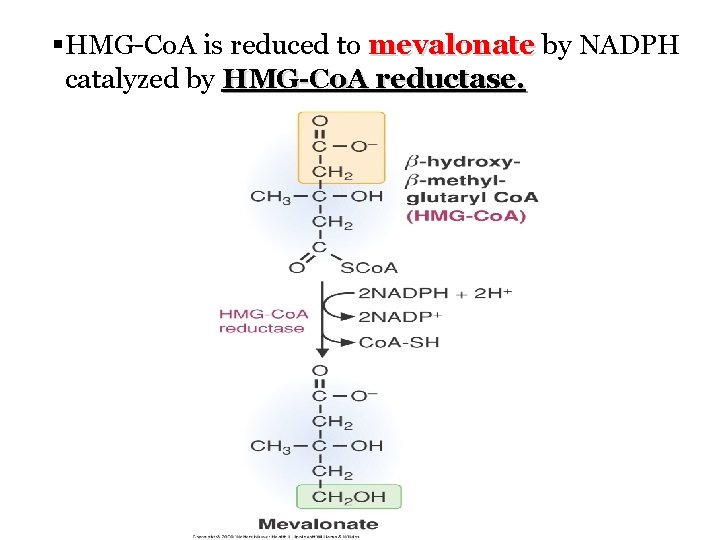
§HMG-Co. A is reduced to mevalonate by NADPH catalyzed by HMG-Co. A reductase.
v. Step 3: Production of activated isoprenoids units § Mevalonate is converted into 3 -isopentenyl pyrophosphate in three consecutive reactions requiring ATP. § The three step reactions catalyzed by kinases § Transfer 3 ATP to Mevalonate in order to activate C 5 & OH-group of C 3 § Phosphate group at C 3 & Carboxyl group of C 1 leave, which produces a double bound. § Decarboxylation yields Isopentenyl pyrophosphate(IPP), an activated isoprene unit that is a key building block for many important biomolecules. § It is isomerizes to dimethylallyl pyrophosphate (DMPP). § IPP & DPP are activated 5 -carbon isoprenoid units.
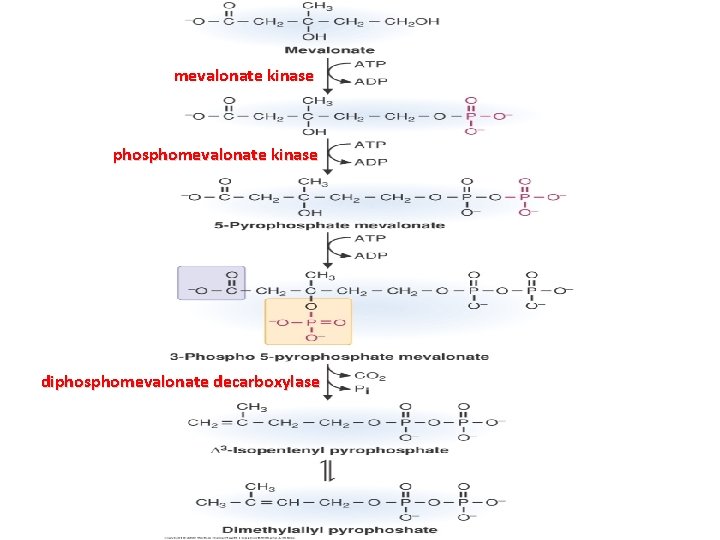
mevalonate kinase phosphomevalonate kinase diphosphomevalonate decarboxylase
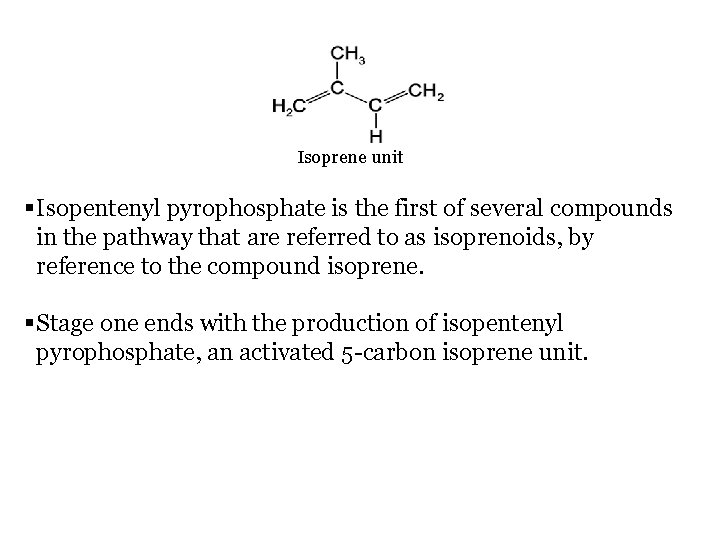
Isoprene unit § Isopentenyl pyrophosphate is the first of several compounds in the pathway that are referred to as isoprenoids, by reference to the compound isoprene. § Stage one ends with the production of isopentenyl pyrophosphate, an activated 5 -carbon isoprene unit.
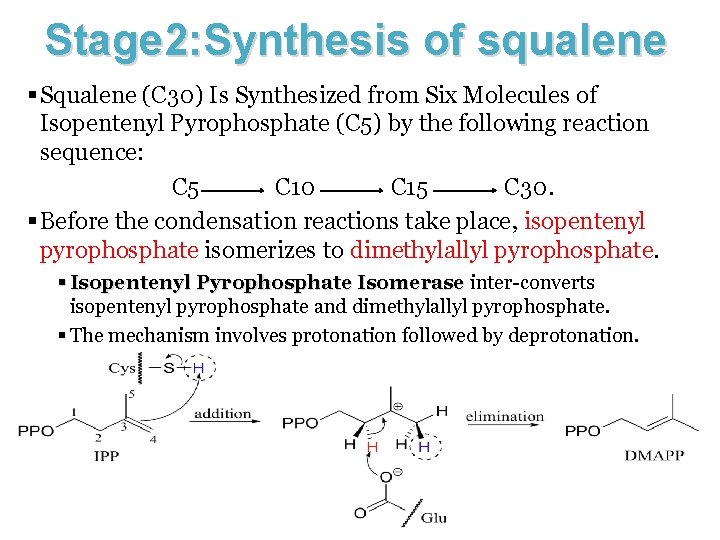
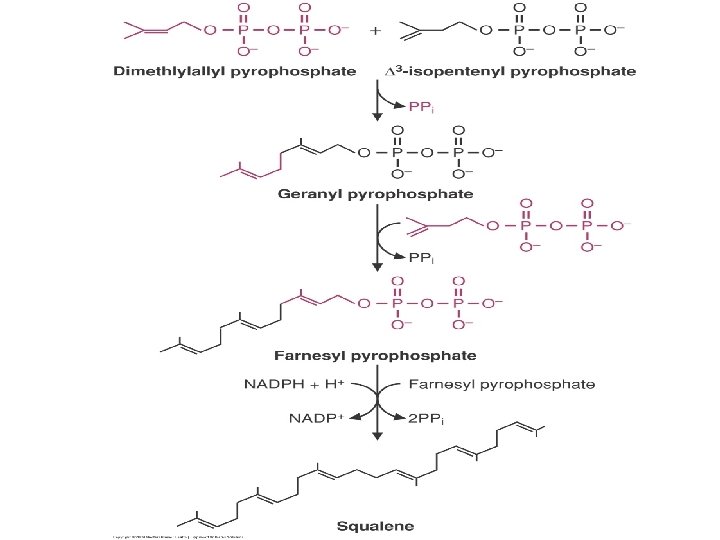
Stage 2: Synthesis of squalene § Squalene (C 30) Is Synthesized from Six Molecules of Isopentenyl Pyrophosphate (C 5) by the following reaction sequence: C 5 C 10 C 15 C 30. § Before the condensation reactions take place, isopentenyl pyrophosphate isomerizes to dimethylallyl pyrophosphate. § Isopentenyl Pyrophosphate Isomerase inter-converts isopentenyl pyrophosphate and dimethylallyl pyrophosphate. § The mechanism involves protonation followed by deprotonation.
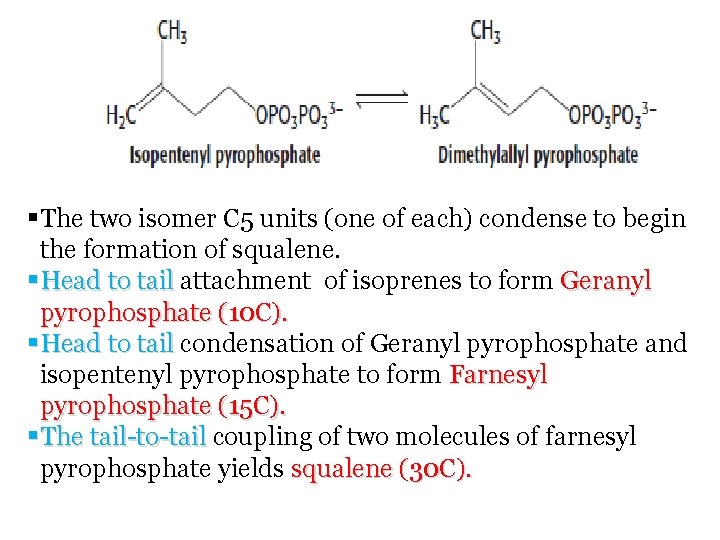
§The two isomer C 5 units (one of each) condense to begin the formation of squalene. §Head to tail attachment of isoprenes to form Geranyl pyrophosphate (10 C). §Head to tail condensation of Geranyl pyrophosphate and isopentenyl pyrophosphate to form Farnesyl pyrophosphate (15 C). §The tail-to-tail coupling of two molecules of farnesyl pyrophosphate yields squalene (30 C).
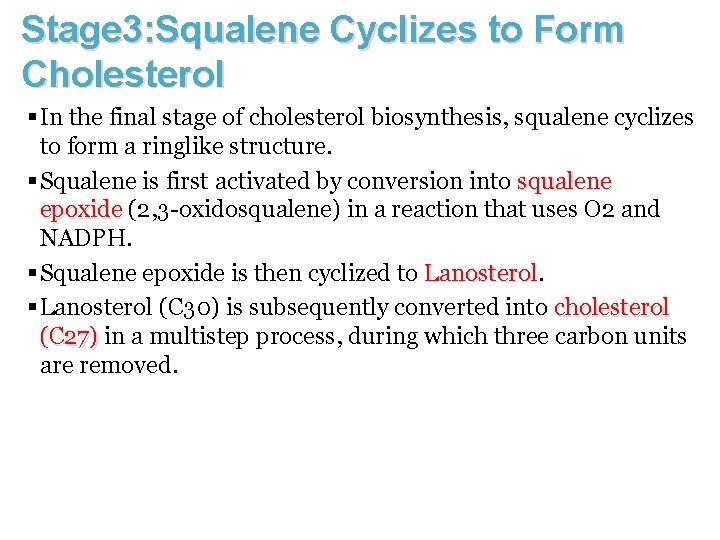
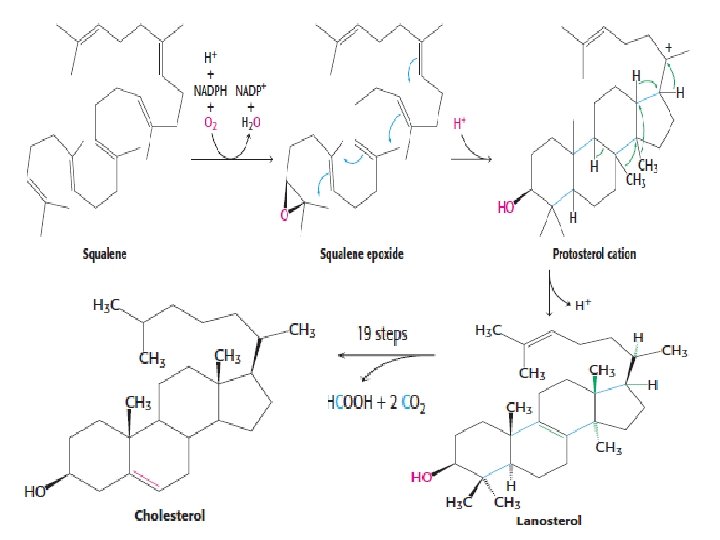
Stage 3: Squalene Cyclizes to Form Cholesterol § In the final stage of cholesterol biosynthesis, squalene cyclizes to form a ringlike structure. § Squalene is first activated by conversion into squalene epoxide (2, 3 -oxidosqualene) in a reaction that uses O 2 and NADPH. § Squalene epoxide is then cyclized to Lanosterol § Lanosterol (C 30) is subsequently converted into cholesterol (C 27) in a multistep process, during which three carbon units are removed.
Regulation of Cholesterol Synthesis o. HMG-Co. A Reductase, the rate-determining step on the pathway for synthesis of cholesterol, is a major control point. o. HMG Co. A reductase is controlled in multiple ways: 1. Competitive inhibition. 2. Covalent modification(Role of hormones). 3. Sterol-dependent regulation of gene expression of HMG Co. A (Feed back inhibition ). 4. Proteolytic Degradation of HMG-Co. A Reductase.
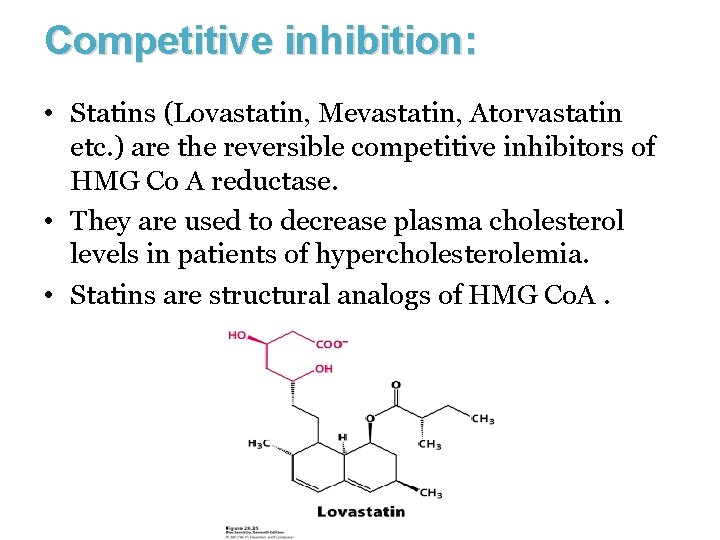
Competitive inhibition: • Statins (Lovastatin, Mevastatin, Atorvastatin etc. ) are the reversible competitive inhibitors of HMG Co A reductase. • They are used to decrease plasma cholesterol levels in patients of hypercholesterolemia. • Statins are structural analogs of HMG Co. A.
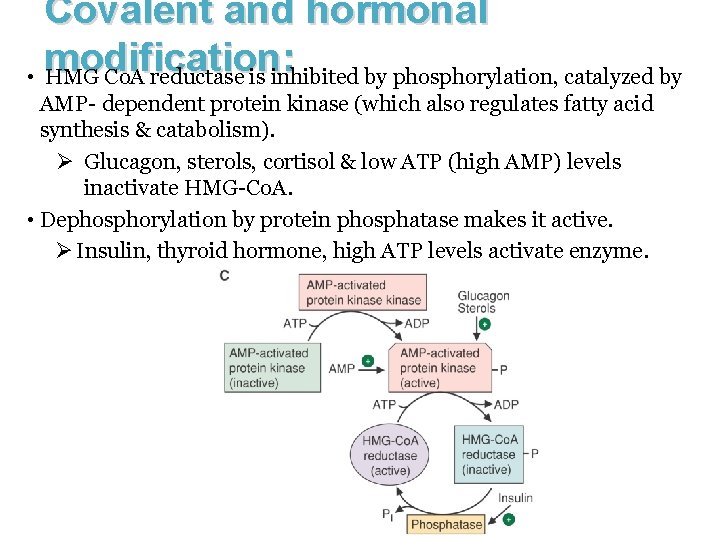
Covalent and hormonal modification: • HMG Co. A reductase is inhibited by phosphorylation, catalyzed by AMP- dependent protein kinase (which also regulates fatty acid synthesis & catabolism). Ø Glucagon, sterols, cortisol & low ATP (high AMP) levels inactivate HMG-Co. A. • Dephosphorylation by protein phosphatase makes it active. Ø Insulin, thyroid hormone, high ATP levels activate enzyme.
Sterol-dependent regulation of gene expression of HMG Co. A: • When sufficient cholesterol is present, transcription is suppressed and vice versa. • Sterol Response Element (SRE) is a recognition sequence in the DNA • SREBP (SRE binding protein) binding to SRE is essential for transcription of this gene. • SREBP cleavage activator protein (SCAP) is an intracellular cholesterol sensor.
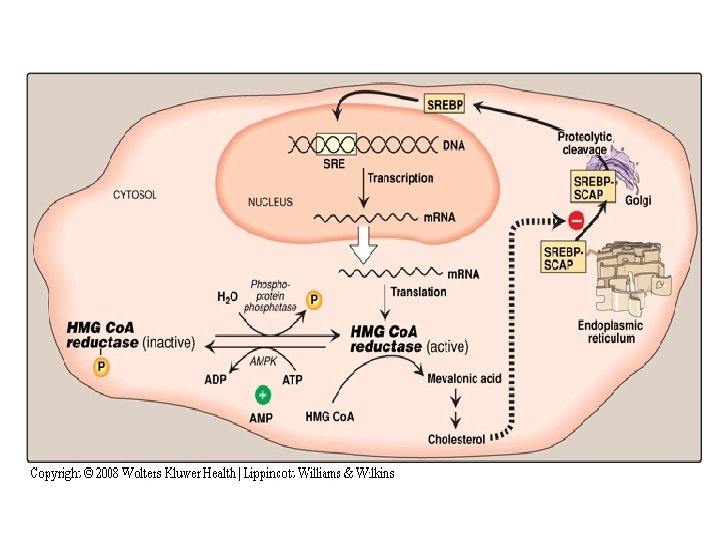
Sterol-dependent regulation Cholesterol High • SCAP binds to insigs (ER membrane proteins). • SCAP-SREBP is retained in the ER. • Downregulation of cholesterol synthesis. Cholesterol Low • SCAP escorts SREBP to Golgi bodies. • Two proteases (S 1 P and S 2 P) cleave SREBP to a soluble fragment that enters the nucleus and binds SRE. • HMG Co. A gene transcription is activated. Ø When cholesterol levels rise, the release of the SREBP is blocked, and the SREBP in the nucleus is rapidly degraded. These two events halt the transcription of the genes of the cholesterol biosynthetic pathways.
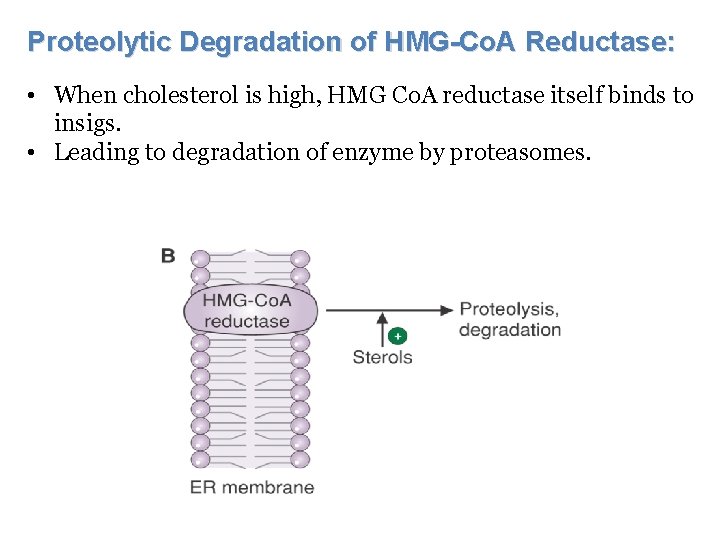
Proteolytic Degradation of HMG-Co. A Reductase: • When cholesterol is high, HMG Co. A reductase itself binds to insigs. • Leading to degradation of enzyme by proteasomes.
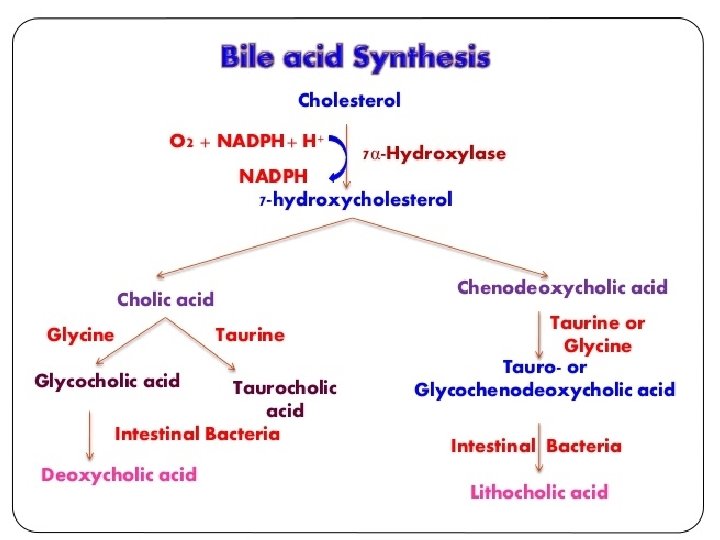
DEGRADATION OF CHOLESTEROL • SYNTHESIS OF BILE ACIDS. • SYNTHESIS OF STEROID HORMONS FROM CHOLESTEROL. • SYNTHESIS OF VITAMIN D.

SYNTHESIS OF STEROID HORMONS: Cholesterol is the precursor for the synthesis of all the five classes of steroid hormones : q Glucocorticoids (Cortisol). q Mineralocorticoides (Aldosterone). q Progestins (Progesterone). q Androgens (Testosterone. q Estrogens (Estradiol).
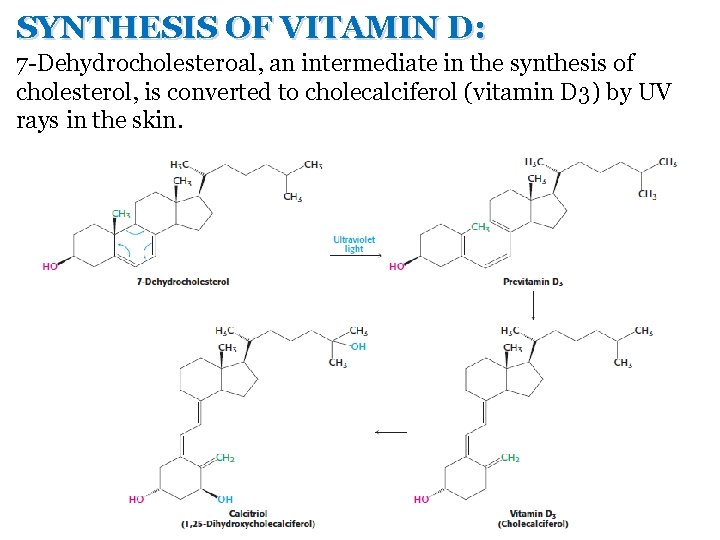
SYNTHESIS OF VITAMIN D: 7 -Dehydrocholesteroal, an intermediate in the synthesis of cholesterol, is converted to cholecalciferol (vitamin D 3) by UV rays in the skin.
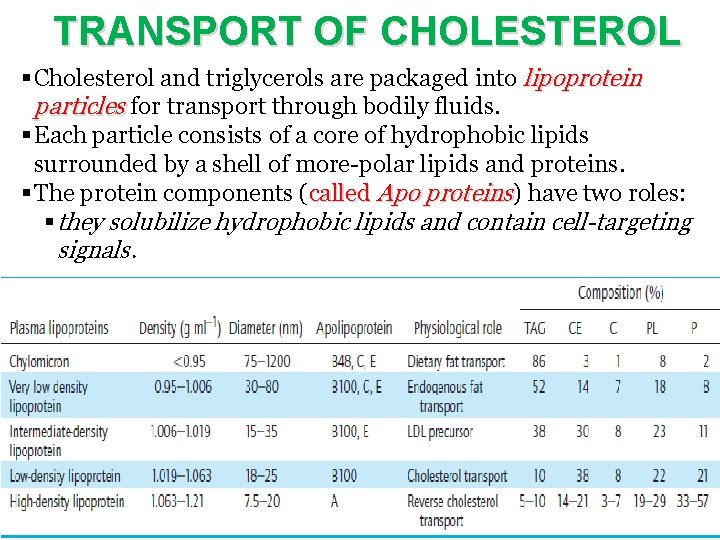
TRANSPORT OF CHOLESTEROL § Cholesterol and triglycerols are packaged into lipoprotein particles for transport through bodily fluids. § Each particle consists of a core of hydrophobic lipids surrounded by a shell of more-polar lipids and proteins. § The protein components (called Apo proteins) have two roles: § they solubilize hydrophobic lipids and contain cell-targeting signals.
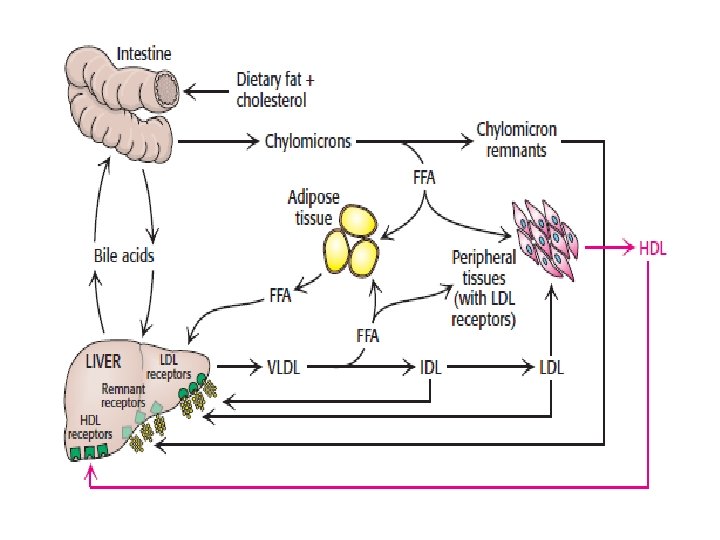

Reverse Cholesterol Transport (RCT) § HDL removes cholesterol from cells and returns it to the liver. § HDL & the enzyme LCAT are responsible for transport and elimination of cholesterol from the body. § LCAT is synthesized by the liver.
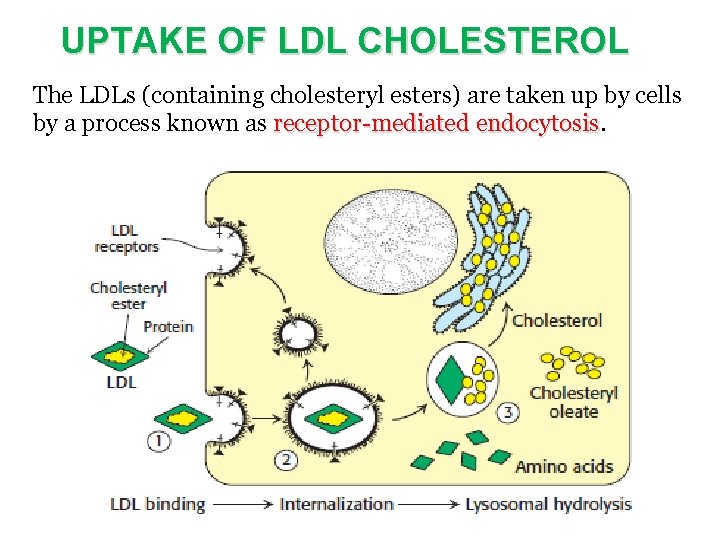
UPTAKE OF LDL CHOLESTEROL The LDLs (containing cholesteryl esters) are taken up by cells by a process known as receptor-mediated endocytosis
Hypercholesteremia • High concentration of cholesterol in blood • Leads to atherosclerosis. • Statin drugs are used to decrease the plasma cholesterol levels. • Statins are structural analogs of HMG Co. A. • Statins inhibit enzyme activity by competitive inhibition.
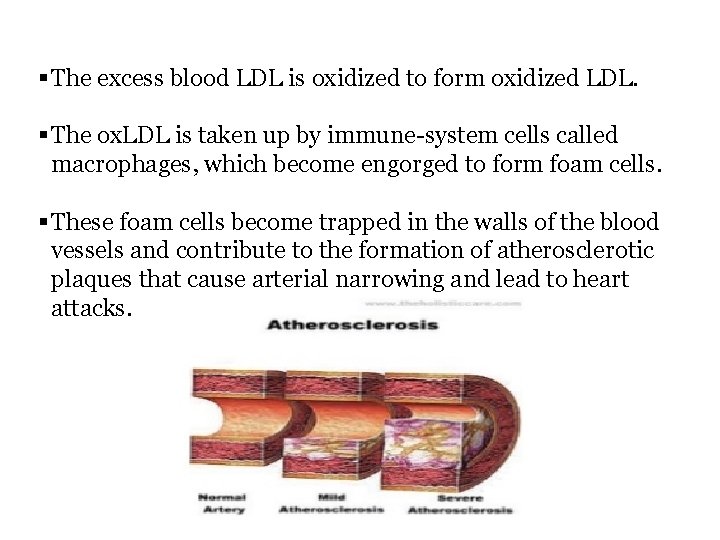
§ The excess blood LDL is oxidized to form oxidized LDL. § The ox. LDL is taken up by immune-system cells called macrophages, which become engorged to form foam cells. § These foam cells become trapped in the walls of the blood vessels and contribute to the formation of atherosclerotic plaques that cause arterial narrowing and lead to heart attacks.

- Slides: 39