
CHNG 250 APPLIED BEHAVIOR CHANGE STRATEGY PST 2

CHNG 250: APPLIED BEHAVIOR CHANGE STRATEGY PST 2, August 2015 Jordan W. , Nicole A.
TED TALK Sex, drugs and HIV—let’s get rational: http: //www. ted. com/talks/elizabeth_pisani_sex_drugs_and_hiv_let_s_get_rati onal_1? language=en
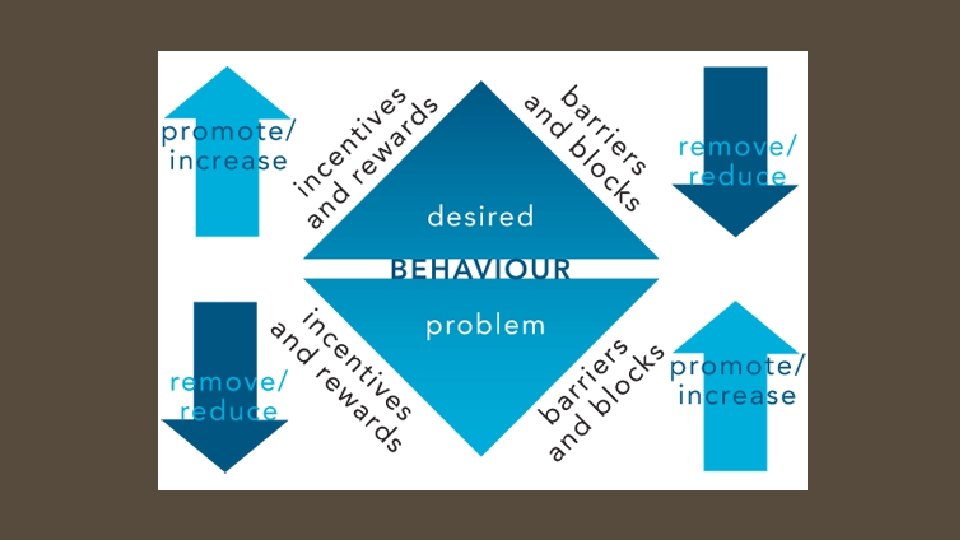

PROCESSES OF CHANGE
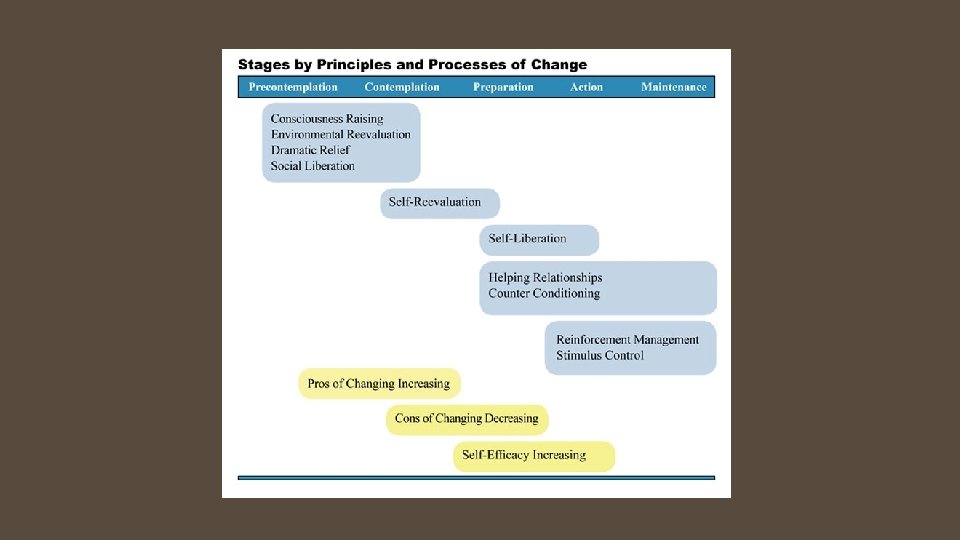
EXPERIENTIAL PROCESSES Consciousness Raising—increased awareness about the causes, consequences and cures for a particular behavior Dramatic Relief—feeling fear, anxiety, or worry because of the unhealthy behavior, or feeling inspiration and hope when they hear about how people are able to change to healthy behaviors Fear appeals** Environmental Reevaluation—realizing how the unhealthy behavior affects others and how they could have more positive effects by changing Social reappraisal Self Reevaluation—realizing the healthy behavior is a part of who they are and want to be Social Liberation—realizing society is supportive of the healthy behavior Can be in the form of environmental opportunities
BEHAVIORAL PROCESSES Self Liberation—believing in one’s ability to change and making commitments and recommitments to act on that belief Commitment to change based on belief that achievement of the healthy behavior is possible Counter Conditioning—substituting healthy behaviors and thoughts for unhealthy behaviors and thoughts Helping Relationships—finding supportive people that encourage the desired change Care groups example Reinforcement Management—increasing rewards that come from positive behavior and decreasing rewards that come from negative behavior Stimulus Control—re-engineering the environment to have reminders and cues that support and encourage the healthy behavior and remove those that encourage the unhealthy behavior

SOCIAL MARKETING
What is Social Marketing?
SOCIAL MARKETING Strategy that uses marketing concepts (product, price, design, place, communications) to influence behaviors that benefit individuals and communities Uses marketing techniques to ‘sell’ behaviors or products associated with healthy behaviors Examples Mosquito nets to keep away the mosquitoes not to protect from malaria Soap because it makes your hands smell and feel nice not because it prevents against diarrhea
SOCIAL MARKETING Situational Analysis—SWOT Audience Profile—describe a specific person you are trying to reach from your target audience Make it personal Social Marketing Intervention Components Product Price Monetary and non-monetary costs Place Promotion Messages Messengers Communication channels

DBC FRAMEWORK Putting it all together
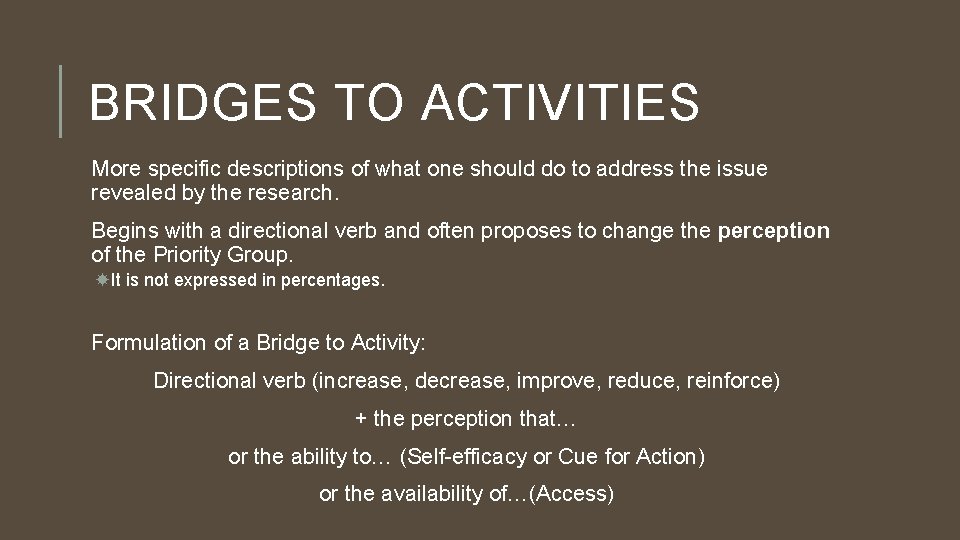
BRIDGES TO ACTIVITIES More specific descriptions of what one should do to address the issue revealed by the research. Begins with a directional verb and often proposes to change the perception of the Priority Group. It is not expressed in percentages. Formulation of a Bridge to Activity: Directional verb (increase, decrease, improve, reduce, reinforce) + the perception that… or the ability to… (Self-efficacy or Cue for Action) or the availability of…(Access)
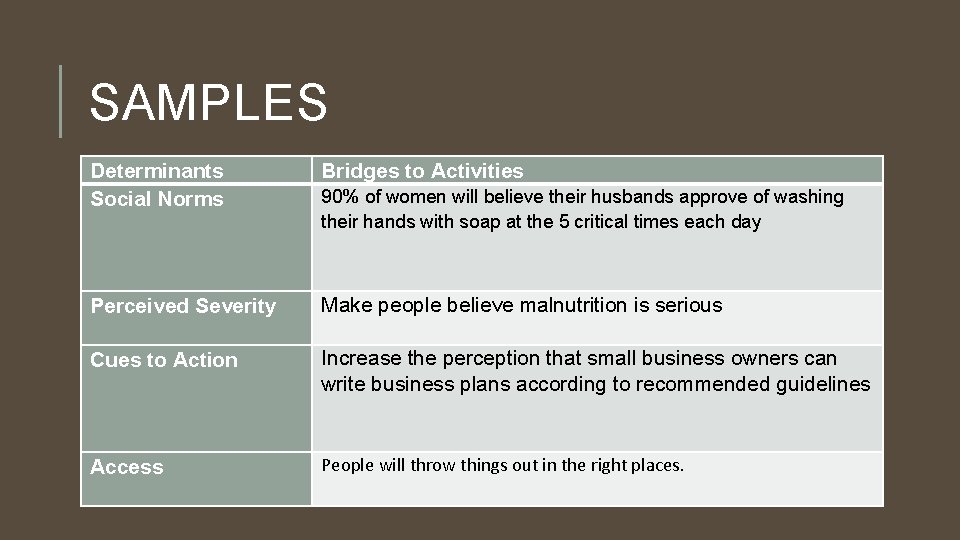
SAMPLES Determinants Social Norms Bridges to Activities Perceived Severity Make people believe malnutrition is serious Cues to Action Increase the perception that small business owners can write business plans according to recommended guidelines Access People will throw things out in the right places. 90% of women will believe their husbands approve of washing their hands with soap at the 5 critical times each day
ACTIVITIES How to select the most appropriate activities Criteria to assess a good activity Let’s do an activity--soon!
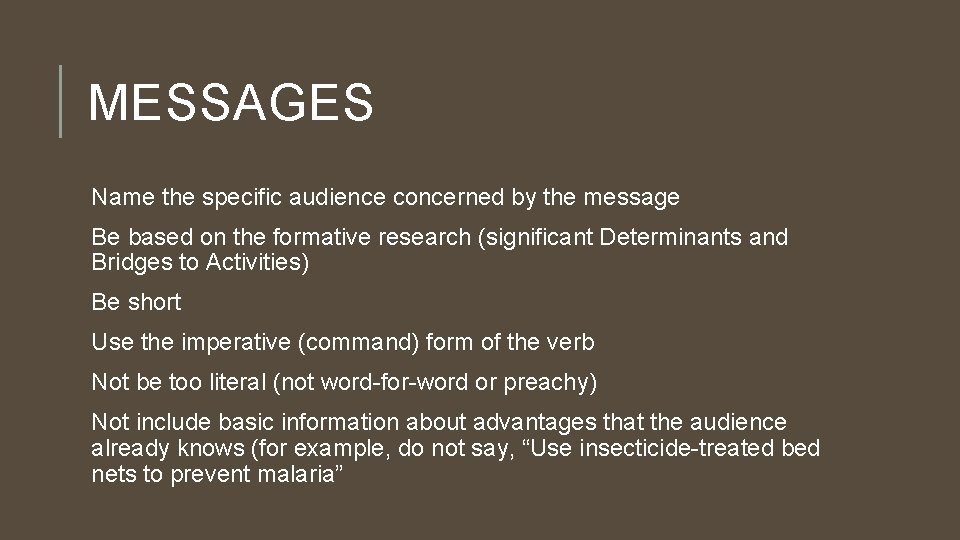
MESSAGES Name the specific audience concerned by the message Be based on the formative research (significant Determinants and Bridges to Activities) Be short Use the imperative (command) form of the verb Not be too literal (not word-for-word or preachy) Not include basic information about advantages that the audience already knows (for example, do not say, “Use insecticide-treated bed nets to prevent malaria”
QUESTIONS?
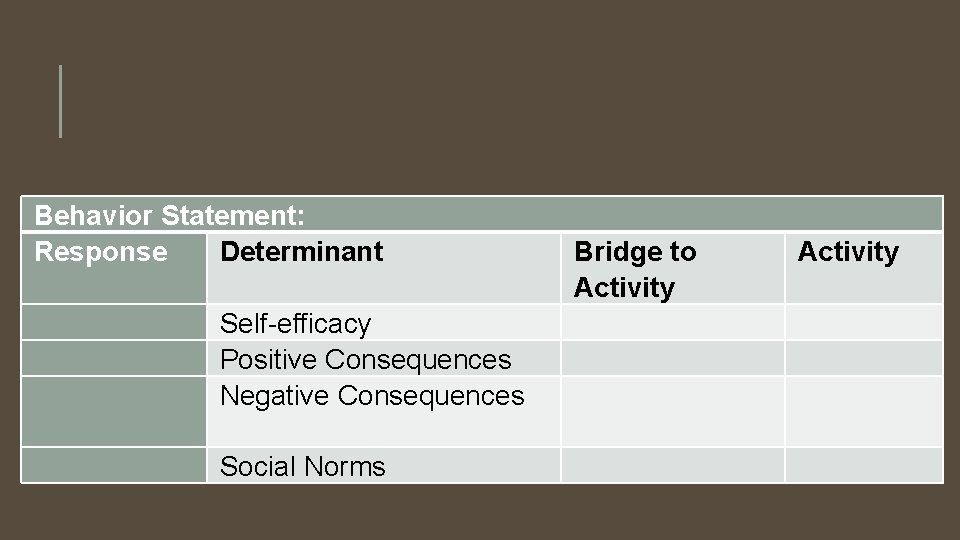
Behavior Statement: Response Determinant Self-efficacy Positive Consequences Negative Consequences Social Norms Bridge to Activity
- Slides: 18