
CHM 1045 General Chemistry and Qualitative Analysis Unit
- Slides: 59
CHM 1045: General Chemistry and Qualitative Analysis Unit 8: Periodic Properties of the Elements Dr. Jorge L. Alonso Miami-Dade College – Kendall Campus Miami, FL Textbook Reference: • Chapter #6 • Module #10 Periodic Properties of the Elements
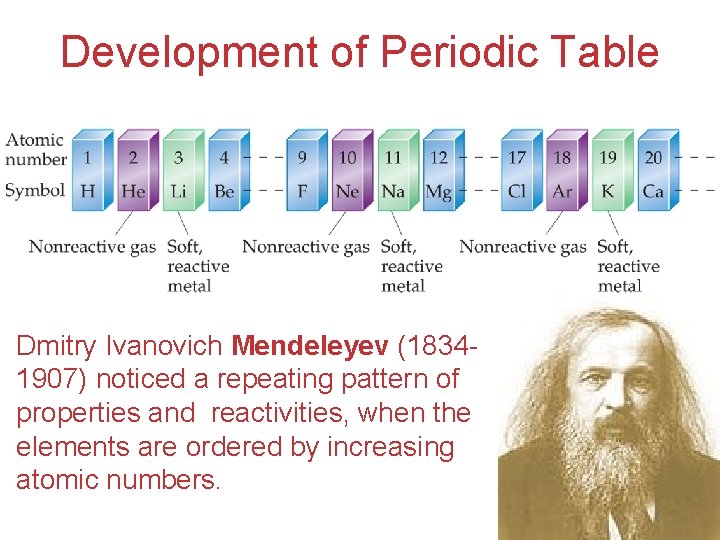
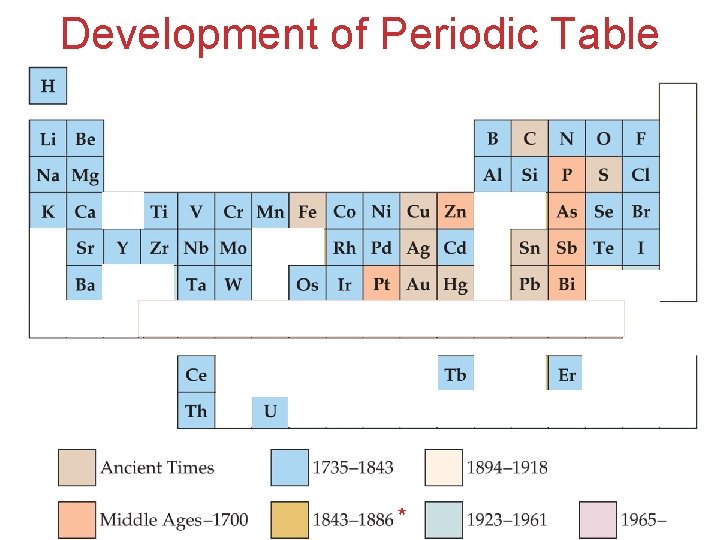
Development of Periodic Table Dmitry Ivanovich Mendeleyev (18341907) noticed a repeating pattern of properties and reactivities, when the elements are ordered by increasing atomic numbers. Periodic Properties of the Elements
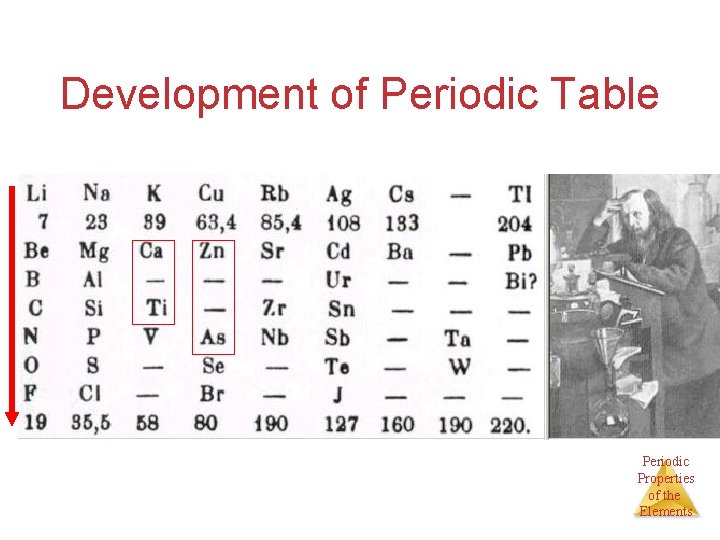
Development of Periodic Table Periodic Properties of the Elements
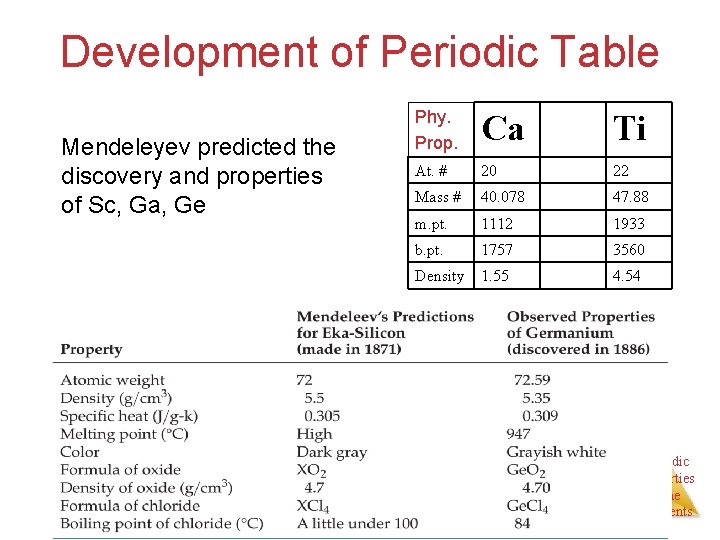
Development of Periodic Table Mendeleyev predicted the discovery and properties of Sc, Ga, Ge Phy. Prop. Ca Sc Ti At. # 20 21 22 Mass # 40. 078 44. 956 47. 88 m. pt. 1112 1814 1933 b. pt. 1757 3104 3560 Density 1. 55 2. 99 4. 54 Periodic Properties of the Elements
Development of Periodic Table * Periodic Properties of the Elements
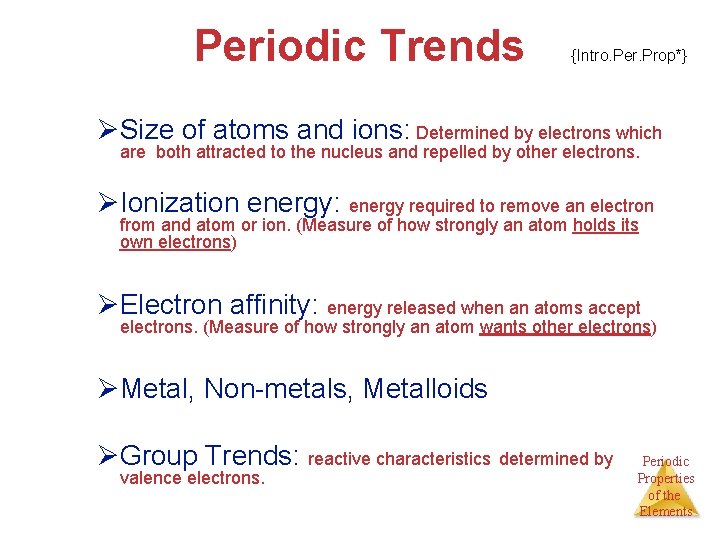
Periodic Trends {Intro. Per. Prop*} ØSize of atoms and ions: Determined by electrons which are both attracted to the nucleus and repelled by other electrons. ØIonization energy: energy required to remove an electron from and atom or ion. (Measure of how strongly an atom holds its own electrons) ØElectron affinity: energy released when an atoms accept electrons. (Measure of how strongly an atom wants other electrons) ØMetal, Non-metals, Metalloids ØGroup Trends: reactive characteristics determined by valence electrons. Periodic Properties of the Elements
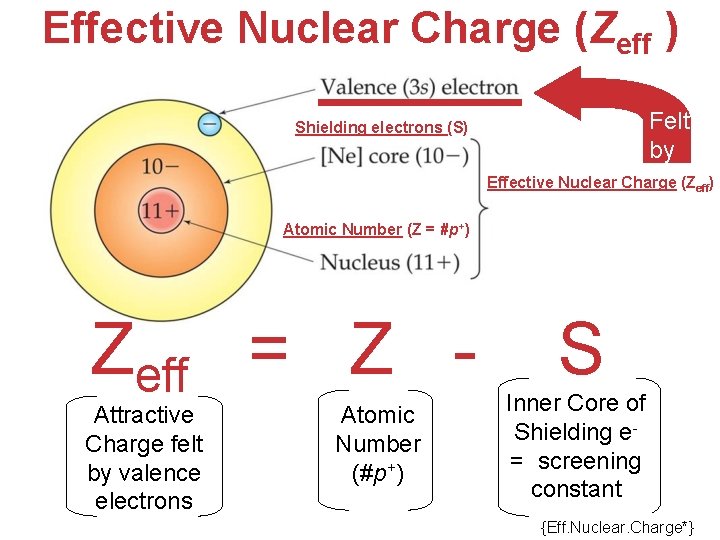
Effective Nuclear Charge (Zeff ) Felt by Shielding electrons (S) Effective Nuclear Charge (Zeff) Atomic Number (Z = #p+) Zeff = Z - Attractive Charge felt by valence electrons Atomic Number (#p+) S Inner Core of Shielding e= screening Periodic Properties constant of the Elements {Eff. Nuclear. Charge*}
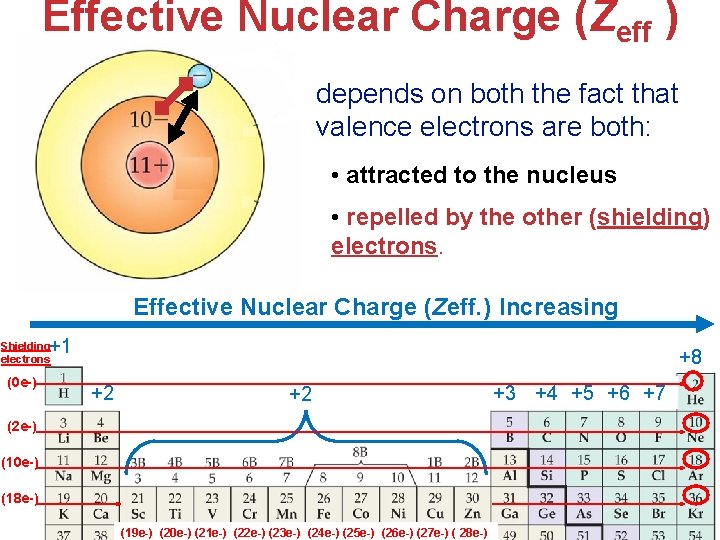
Effective Nuclear Charge (Zeff ) depends on both the fact that valence electrons are both: • attracted to the nucleus • repelled by the other (shielding) electrons. Effective Nuclear Charge (Zeff. ) Increasing +1 Shielding electrons (0 e-) +8 +2 +2 +3 +4 +5 +6 +7 (2 e-) Periodic Properties of the Elements (10 e-) (18 e-) (19 e-) (20 e-) (21 e-) (22 e-) (23 e-) (24 e-) (25 e-) (26 e-) (27 e-) ( 28 e-)
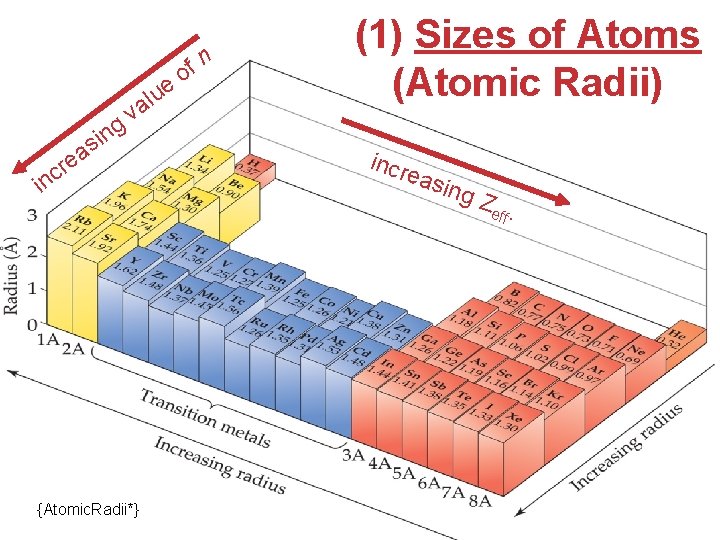
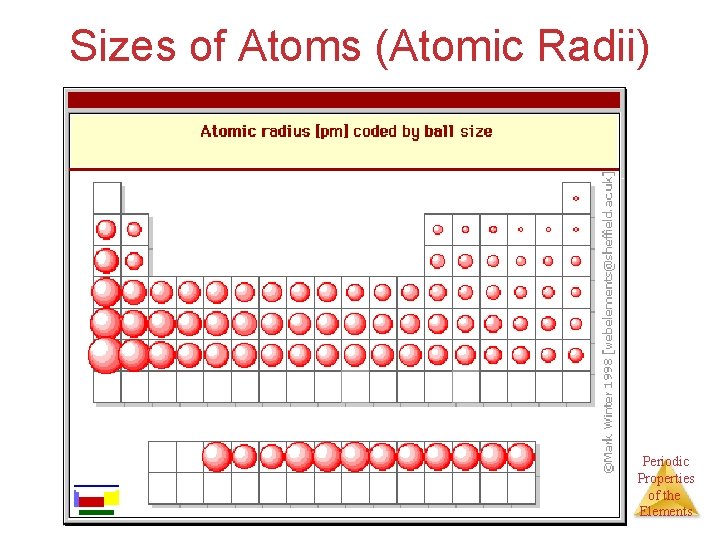
ing (1) Sizes of Atoms n f o. Bonding atomic radius tends to… e (Atomic Radii) u l a v s a e r c in {Atomic. Radii*} …decrease from left to right across a row d increasing Zeff inc. r eas ng bottom …increase from top ito of a column Ze. ff increasing value of n Periodic Properties of the Elements
Sizes of Atoms (Atomic Radii) Periodic Properties of the Elements
Periodic Properties of the Elements
Periodic Properties of the Elements
Periodic Properties of the Elements
Periodic Properties of the Elements
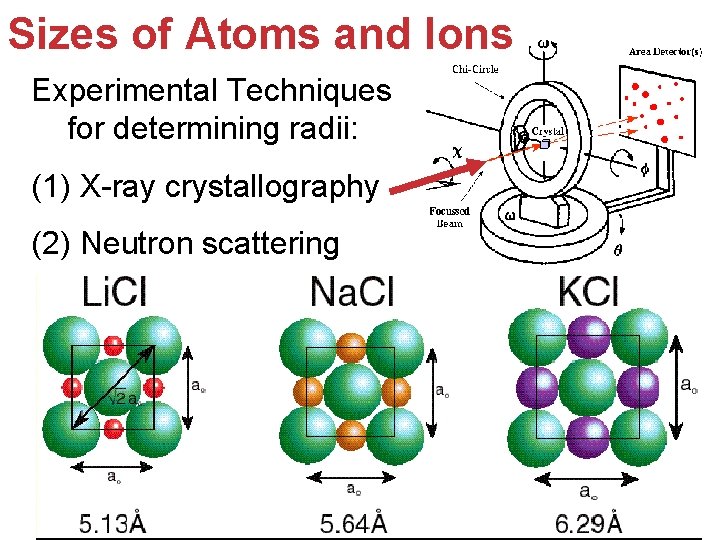
Sizes of Atoms and Ions Experimental Techniques for determining radii: (1) X-ray crystallography (2) Neutron scattering Periodic Properties of the Elements
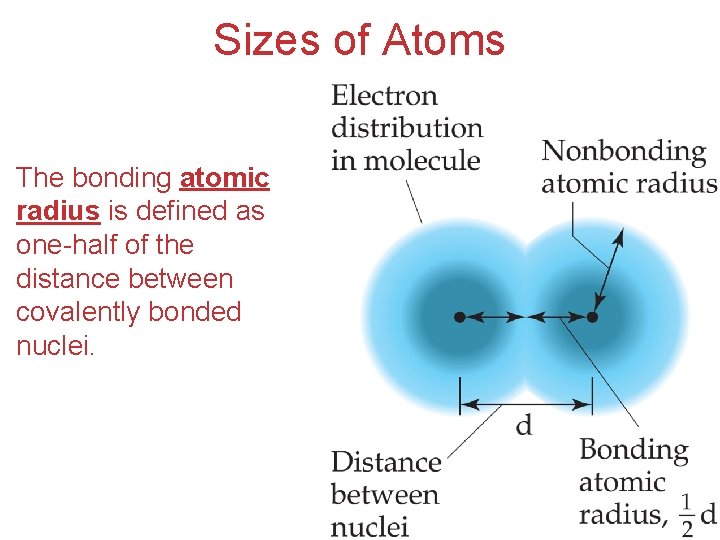
Sizes of Atoms The bonding atomic radius is defined as one-half of the distance between covalently bonded nuclei. Periodic Properties of the Elements
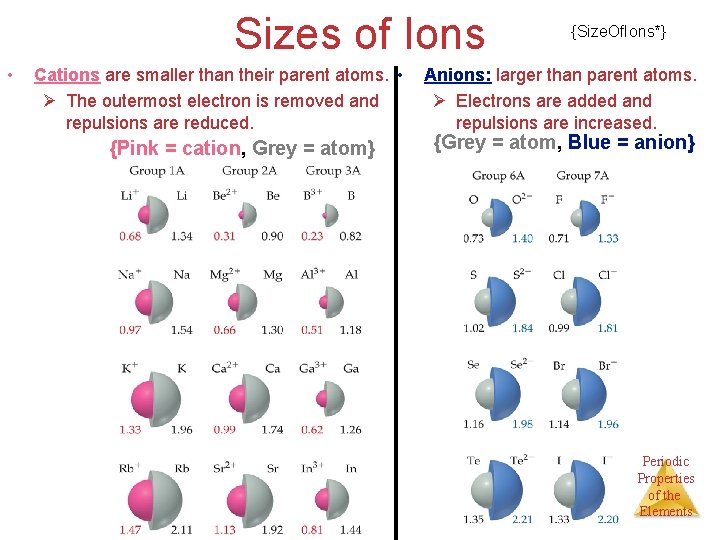
Sizes of Ions • Cations are smaller than their parent atoms. • Ø The outermost electron is removed and repulsions are reduced. {Pink = cation, Grey = atom} {Size. Of. Ions*} Anions: larger than parent atoms. Ø Electrons are added and repulsions are increased. {Grey = atom, Blue = anion} Periodic Properties of the Elements
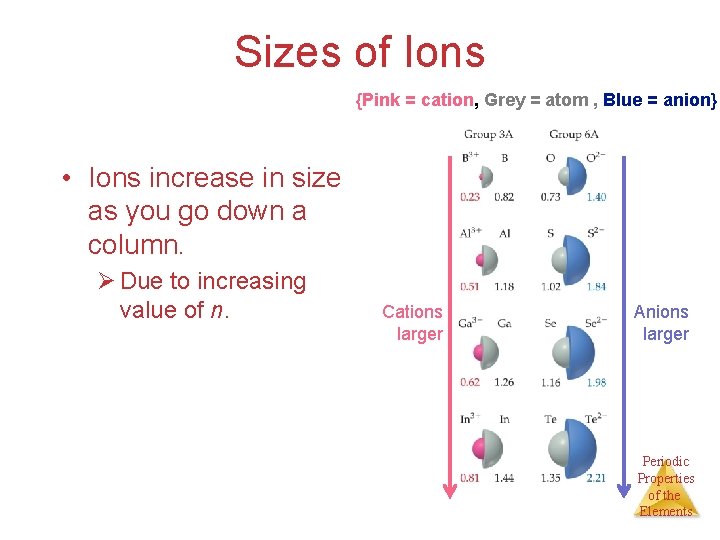
Sizes of Ions {Pink = cation, Grey = atom , Blue = anion} • Ions increase in size as you go down a column. Ø Due to increasing value of n. Cations larger Anions larger Periodic Properties of the Elements
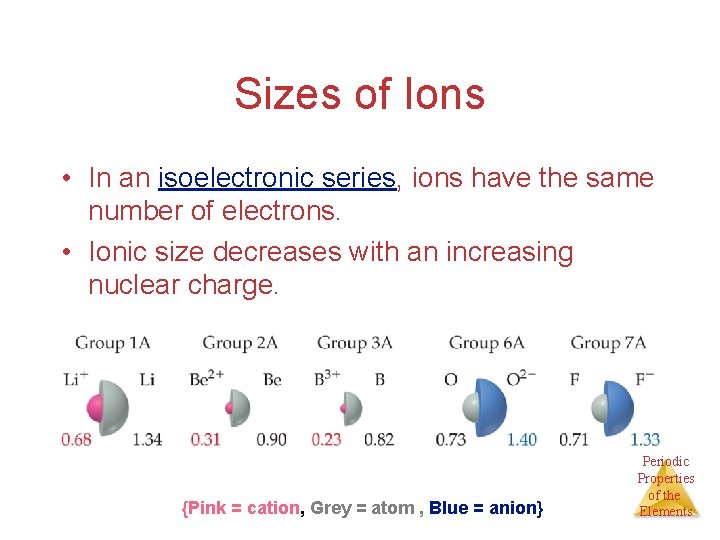
Sizes of Ions • In an isoelectronic series, ions have the same number of electrons. • Ionic size decreases with an increasing nuclear charge. {Pink = cation, Grey = atom , Blue = anion} Periodic Properties of the Elements
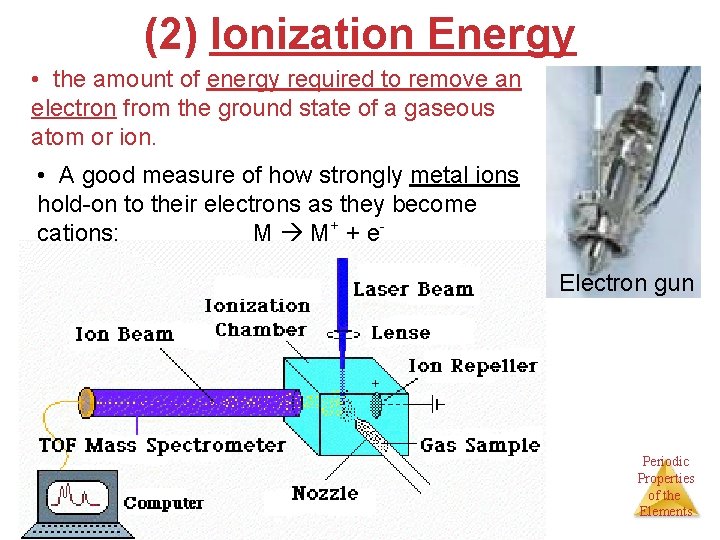
(2) Ionization Energy • the amount of energy required to remove an electron from the ground state of a gaseous atom or ion. • A good measure of how strongly metal ions hold-on to their electrons as they become cations: M M+ + e Electron gun Periodic Properties of the Elements
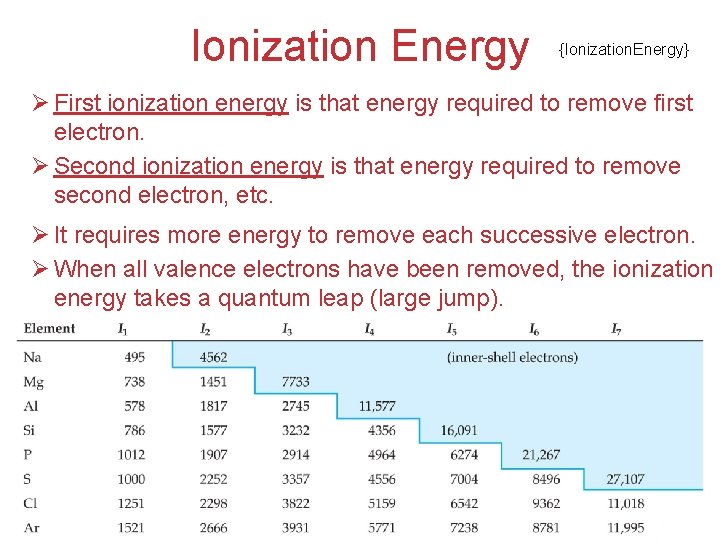
Ionization Energy {Ionization. Energy} Ø First ionization energy is that energy required to remove first electron. Ø Second ionization energy is that energy required to remove second electron, etc. Ø It requires more energy to remove each successive electron. Ø When all valence electrons have been removed, the ionization energy takes a quantum leap (large jump). Periodic Properties of the Elements
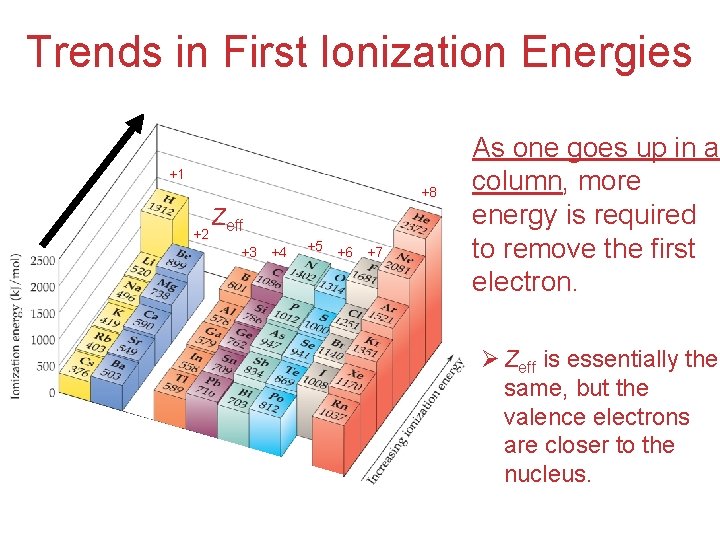
Trends in First Ionization Energies +1 +2 Zeff +3 +4 +5 +6 +7 • As one goes up in a column, more +8 energy is required to remove the first electron. Ø Zeff is essentially the same, but the valence electrons are closer to the Periodic nucleus. Properties of the Elements
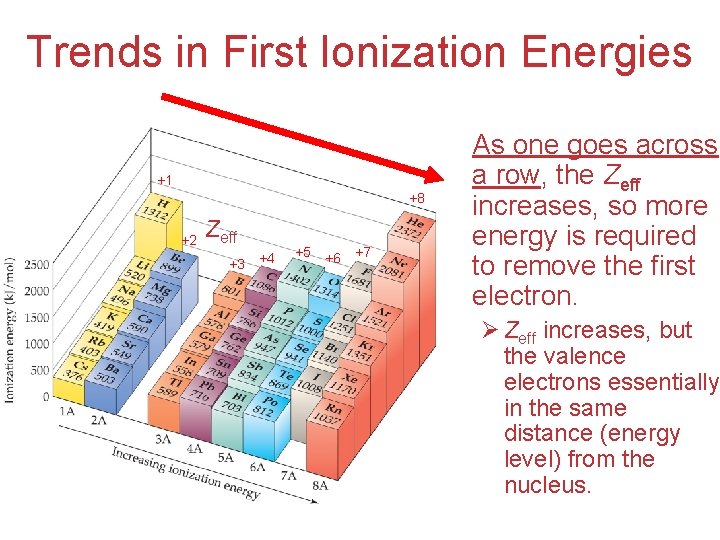
Trends in First Ionization Energies +1 +8 +2 Zeff +3 +4 +5 +6 +7 • As one goes across a row, the Zeff increases, so more energy is required to remove the first electron. Ø Zeff increases, but the valence electrons essentially in the same distance (energy Periodic level) from the Properties nucleus. of the Elements
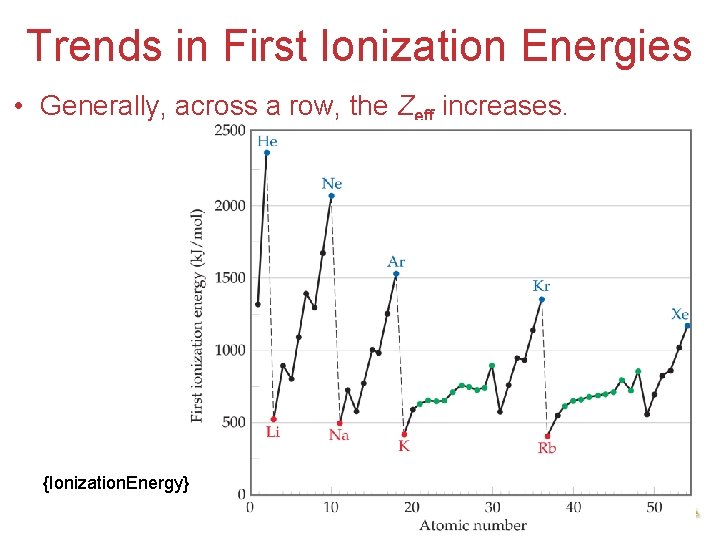
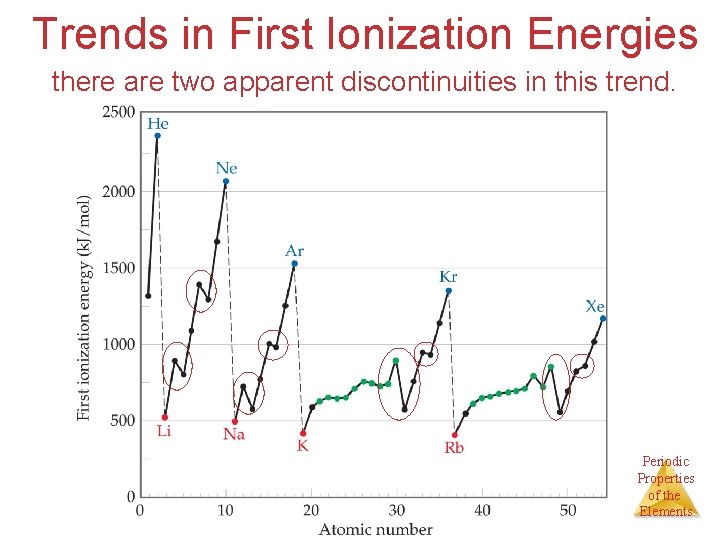
Trends in First Ionization Energies • Generally, across a row, the Zeff increases. {Ionization. Energy} Periodic Properties of the Elements
Trends in First Ionization Energies there are two apparent discontinuities in this trend. Periodic Properties of the Elements
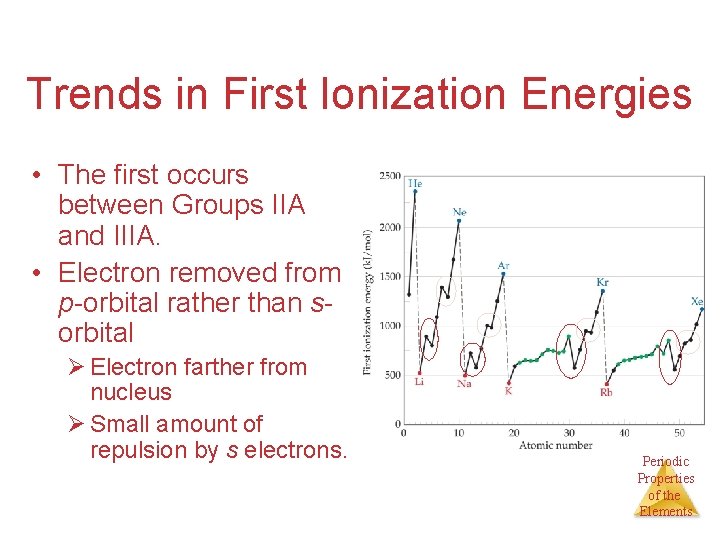
Trends in First Ionization Energies • The first occurs between Groups IIA and IIIA. • Electron removed from p-orbital rather than sorbital Ø Electron farther from nucleus Ø Small amount of repulsion by s electrons. Periodic Properties of the Elements
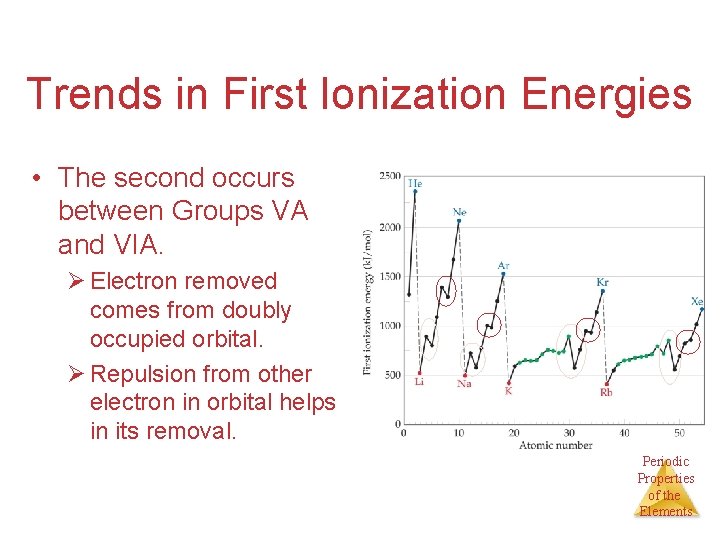
Trends in First Ionization Energies • The second occurs between Groups VA and VIA. Ø Electron removed comes from doubly occupied orbital. Ø Repulsion from other electron in orbital helps in its removal. Periodic Properties of the Elements
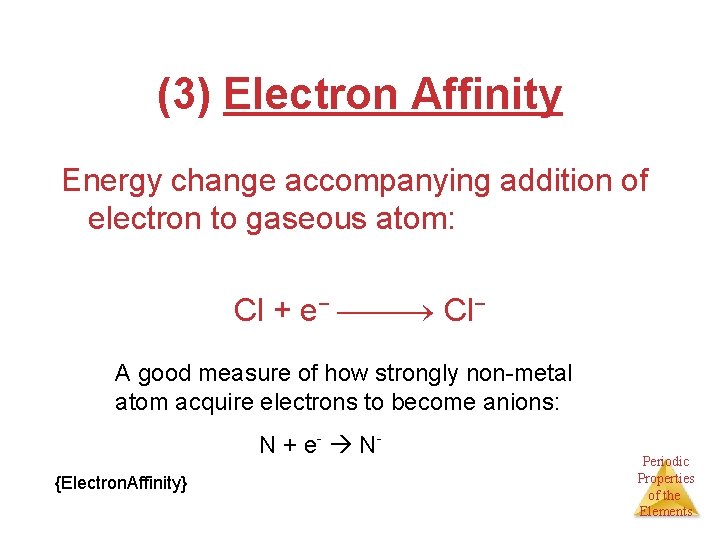
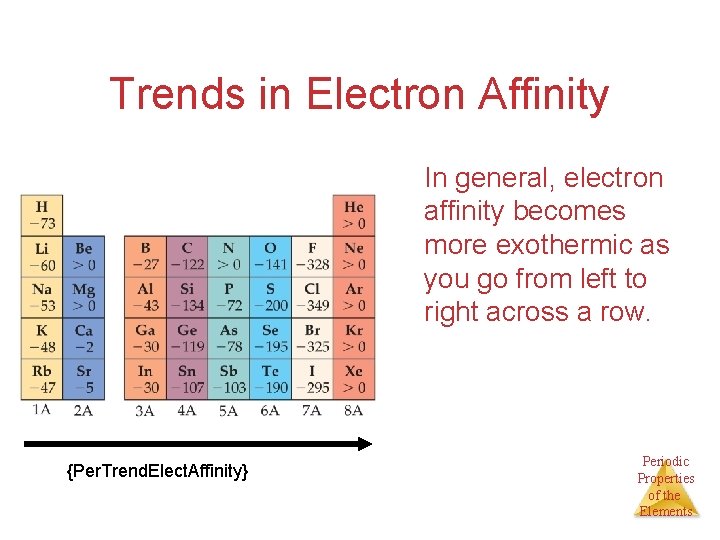
(3) Electron Affinity Energy change accompanying addition of electron to gaseous atom: Cl + e− Cl− A good measure of how strongly non-metal atom acquire electrons to become anions: N + e - N{Electron. Affinity} Periodic Properties of the Elements
Trends in Electron Affinity In general, electron affinity becomes more exothermic as you go from left to right across a row. {Per. Trend. Elect. Affinity} Periodic Properties of the Elements
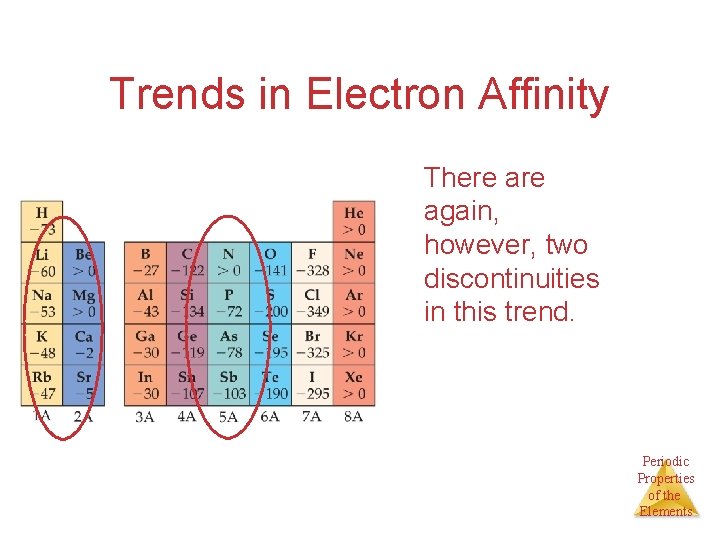
Trends in Electron Affinity There again, however, two discontinuities in this trend. Periodic Properties of the Elements
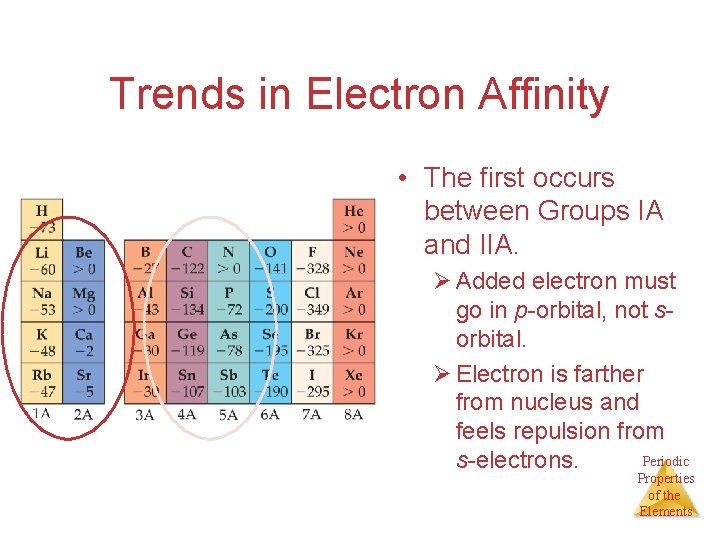
Trends in Electron Affinity • The first occurs between Groups IA and IIA. Ø Added electron must go in p-orbital, not sorbital. Ø Electron is farther from nucleus and feels repulsion from Periodic s-electrons. Properties of the Elements
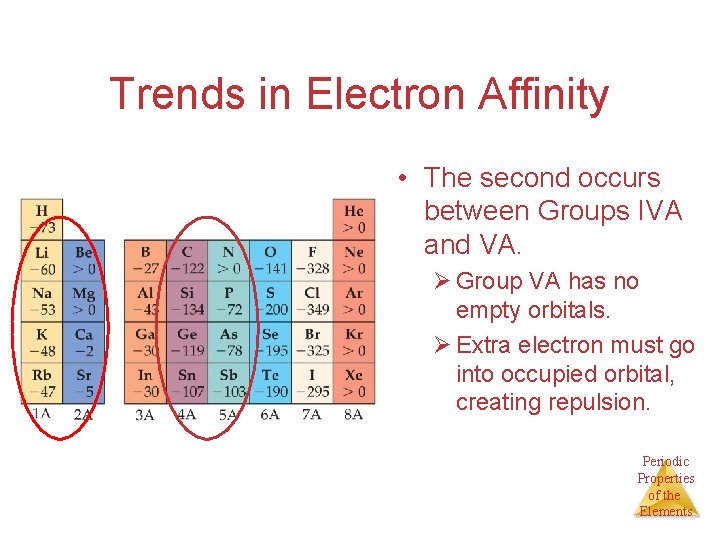
Trends in Electron Affinity • The second occurs between Groups IVA and VA. Ø Group VA has no empty orbitals. Ø Extra electron must go into occupied orbital, creating repulsion. Periodic Properties of the Elements
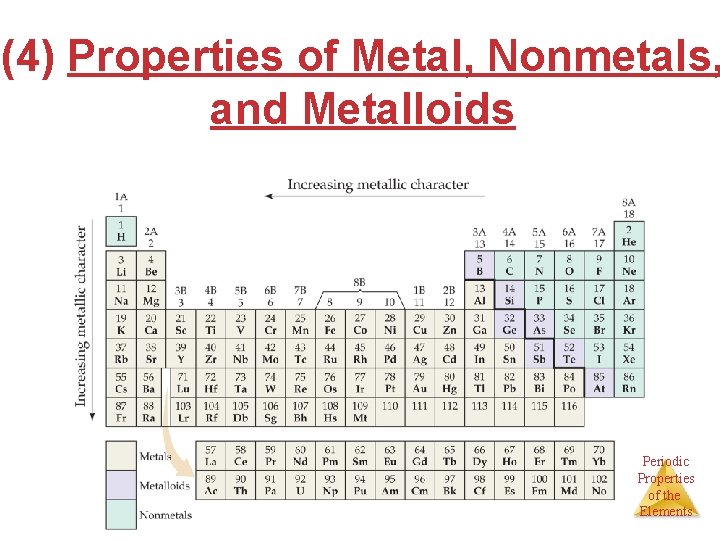
(4) Properties of Metal, Nonmetals, and Metalloids Periodic Properties of the Elements
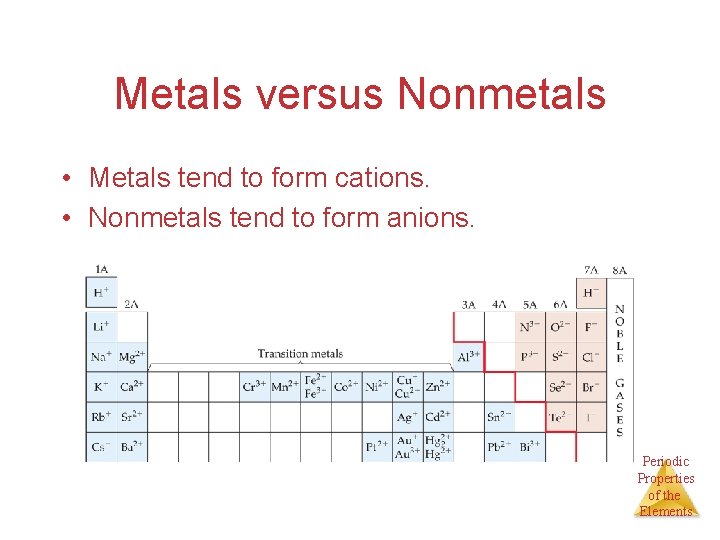
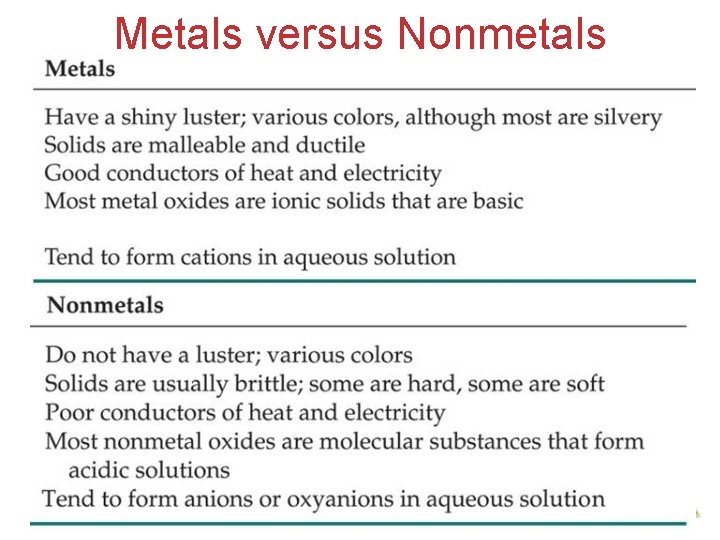
Metals versus Nonmetals • Metals tend to form cations. • Nonmetals tend to form anions. Periodic Properties of the Elements
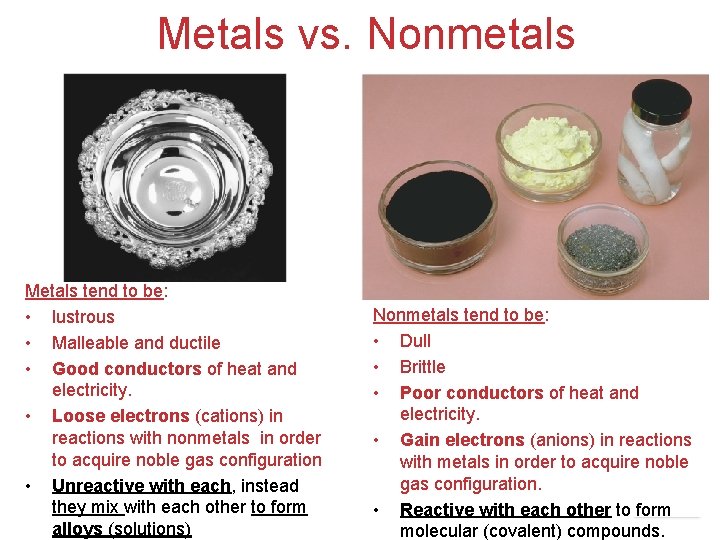
Metals vs. Nonmetals Metals tend to be: • lustrous • Malleable and ductile • Good conductors of heat and electricity. • Loose electrons (cations) in reactions with nonmetals in order to acquire noble gas configuration • Unreactive with each, instead they mix with each other to form alloys (solutions) Nonmetals tend to be: • Dull • Brittle • Poor conductors of heat and electricity. • Gain electrons (anions) in reactions with metals in order to acquire Periodic noble Properties gas configuration. of the • Reactive with each other to form Elements molecular (covalent) compounds.
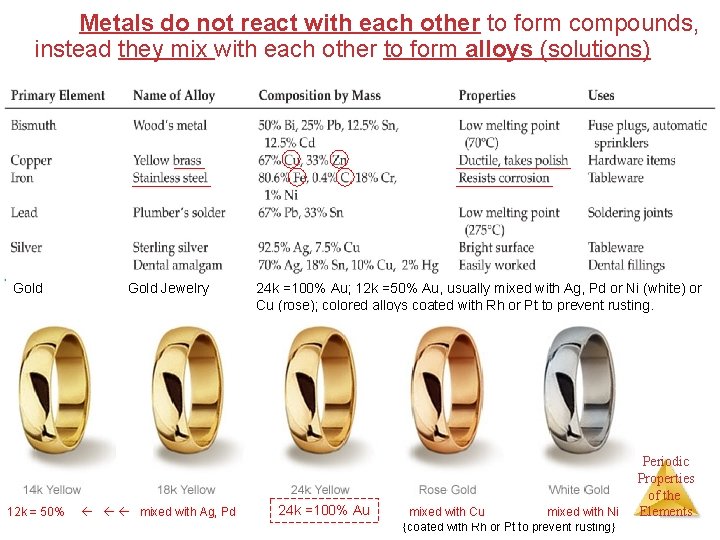
Metals do not react with each other to form compounds, instead they mix with each other to form alloys (solutions) Gold 12 k = 50% Gold Jewelry mixed with Ag, Pd 24 k =100% Au; 12 k =50% Au, usually mixed with Ag, Pd or Ni (white) or Cu (rose); colored alloys coated with Rh or Pt to prevent rusting. 24 k =100% Au mixed with Cu mixed with Ni {coated with Rh or Pt to prevent rusting} Periodic Properties of the Elements
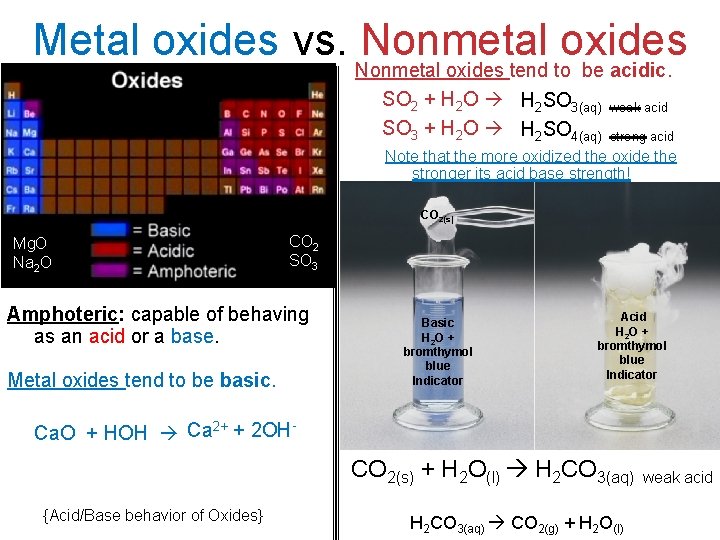
Metal oxides vs. Nonmetal oxides tend to be acidic. SO 2 + H 2 O H 2 SO 3(aq) SO 3 + H 2 O H 2 SO 4(aq) weak acid strong acid Note that the more oxidized the oxide the stronger its acid base strength! CO 2(s) Mg. O Na 2 O CO 2 SO 3 Amphoteric: capable of behaving as an acid or a base. Metal oxides tend to be basic. Basic H 2 O + bromthymol blue Indicator Acid H 2 O + bromthymol blue Indicator Ca. O + HOH Ca 2+ + 2 OH Periodic CO 2(s) + H 2 O(l) H 2 CO 3(aq) Properties weak acid {Acid/Base behavior of Oxides} H 2 CO 3(aq) CO 2(g) + H 2 O(l) of the Elements
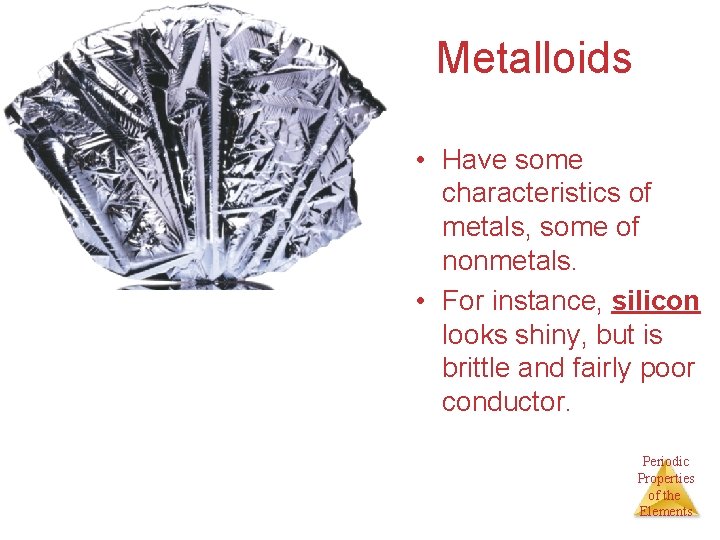
Metalloids • Have some characteristics of metals, some of nonmetals. • For instance, silicon looks shiny, but is brittle and fairly poor conductor. Periodic Properties of the Elements
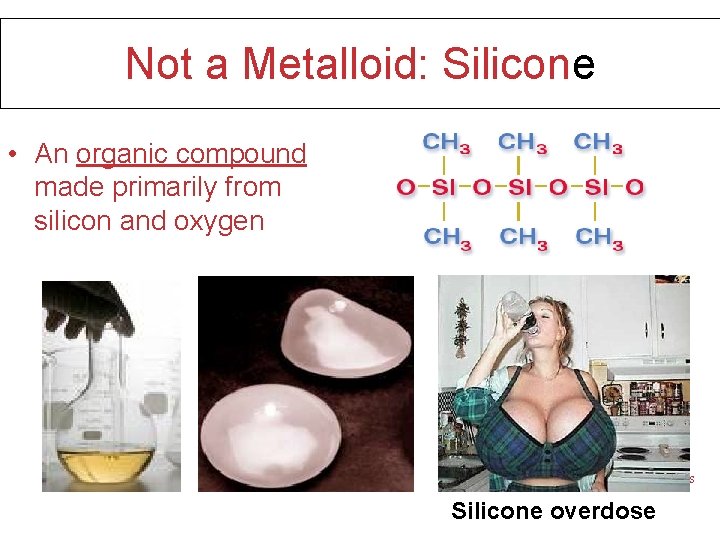
Not a Metalloid: Silicone • An organic compound made primarily from silicon and oxygen Periodic Properties of the Elements Silicone overdose
Periodic Properties of the Elements
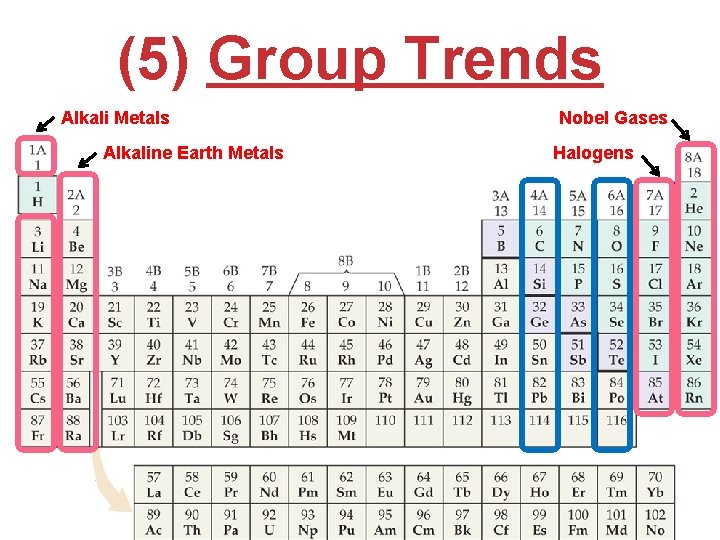
(5) Group Trends Alkali Metals Alkaline Earth Metals Nobel Gases Halogens Periodic Properties of the Elements
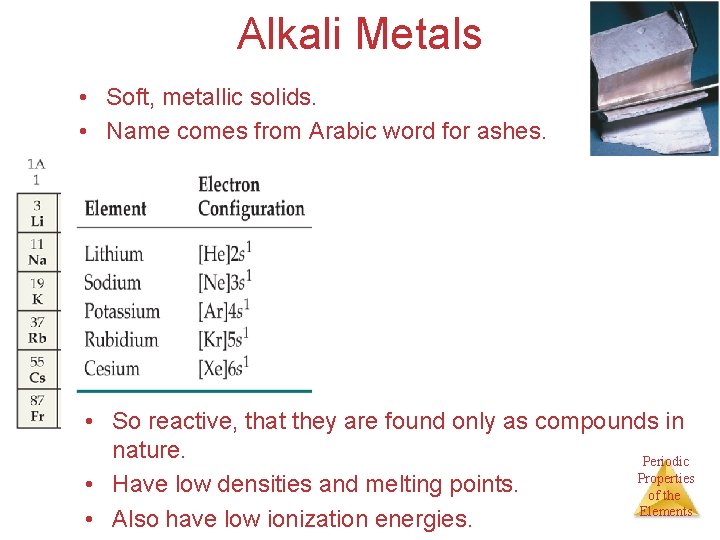
Alkali Metals • Soft, metallic solids. • Name comes from Arabic word for ashes. • So reactive, that they are found only as compounds in nature. Periodic Properties • Have low densities and melting points. of the Elements • Also have low ionization energies.
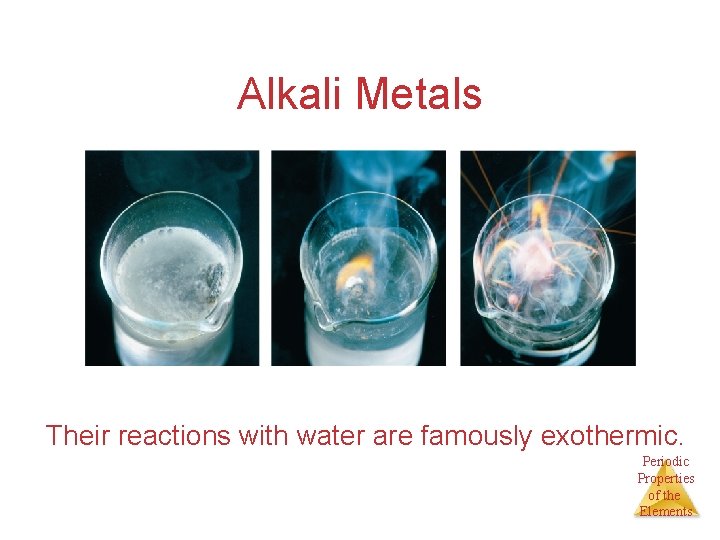
Alkali Metals Their reactions with water are famously exothermic. Periodic Properties of the Elements
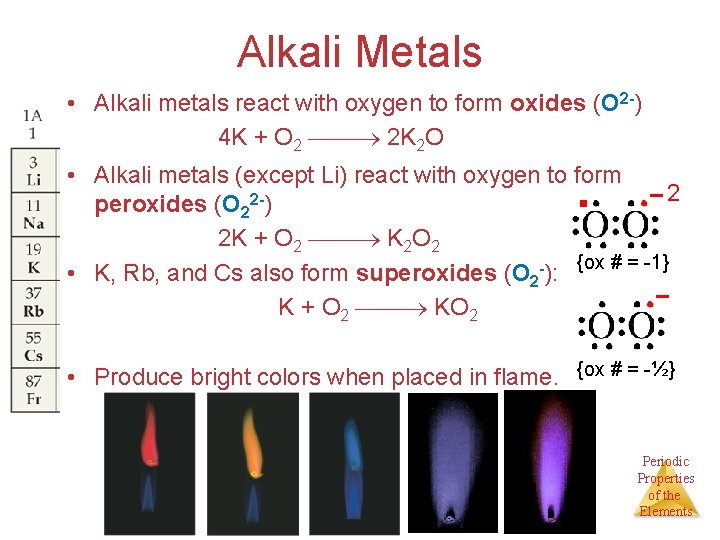
Alkali Metals • Alkali metals react with oxygen to form oxides (O 2 -) 4 K + O 2 2 K 2 O • Alkali metals (except Li) react with oxygen to form 2 peroxides (O 22 -) 2 K + O 2 K 2 O 2 • K, Rb, and Cs also form superoxides (O 2 -): {ox # = -1} K + O 2 KO 2 . • Produce bright colors when placed in flame. {ox # = -½} Periodic Properties of the Elements
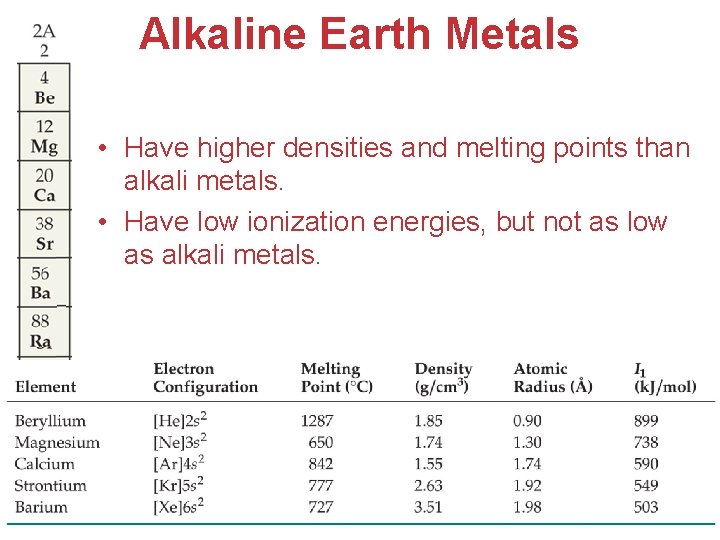
Alkaline Earth Metals • Have higher densities and melting points than alkali metals. • Have low ionization energies, but not as low as alkali metals. Periodic Properties of the Elements
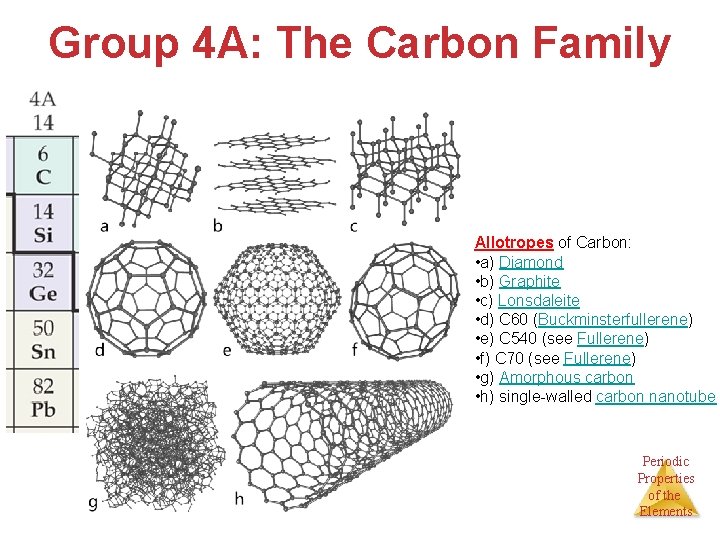
Group 4 A: The Carbon Family Allotropes of Carbon: • a) Diamond • b) Graphite • c) Lonsdaleite • d) C 60 (Buckminsterfullerene) • e) C 540 (see Fullerene) • f) C 70 (see Fullerene) • g) Amorphous carbon • h) single-walled carbon nanotube Periodic Properties of the Elements
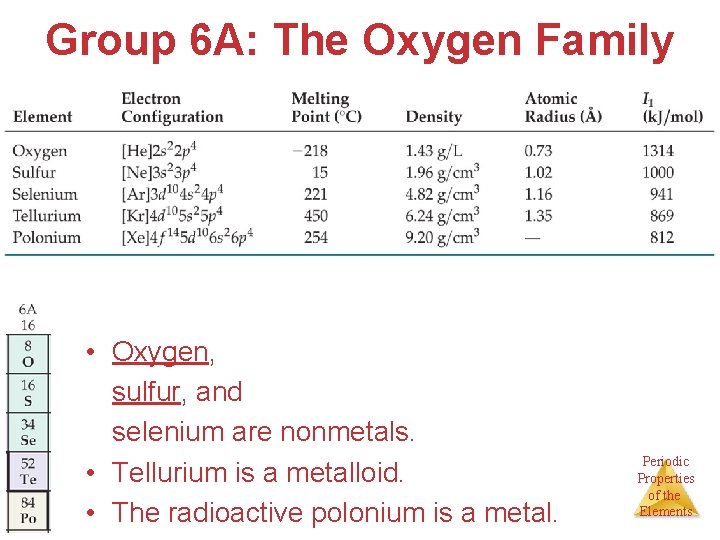
Group 6 A: The Oxygen Family • Oxygen, sulfur, and selenium are nonmetals. • Tellurium is a metalloid. • The radioactive polonium is a metal. Periodic Properties of the Elements
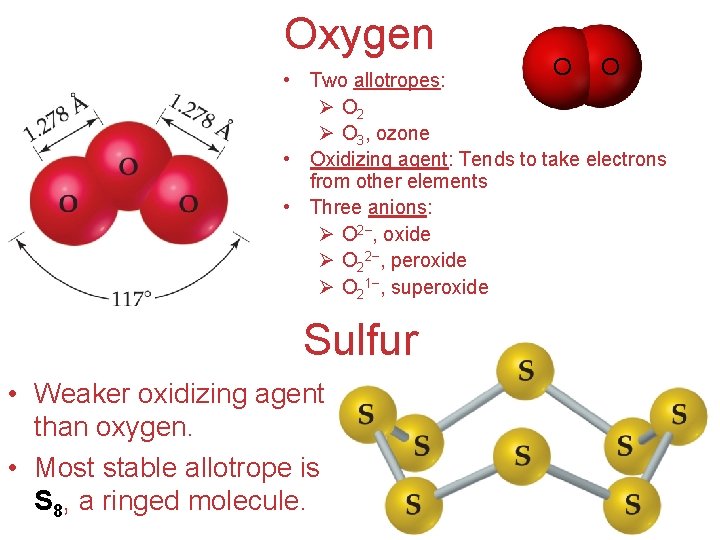
Oxygen O O • Two allotropes: Ø O 2 Ø O 3, ozone • Oxidizing agent: Tends to take electrons from other elements • Three anions: Ø O 2−, oxide Ø O 22−, peroxide Ø O 21−, superoxide Sulfur • Weaker oxidizing agent than oxygen. • Most stable allotrope is S 8, a ringed molecule. Periodic Properties of the Elements
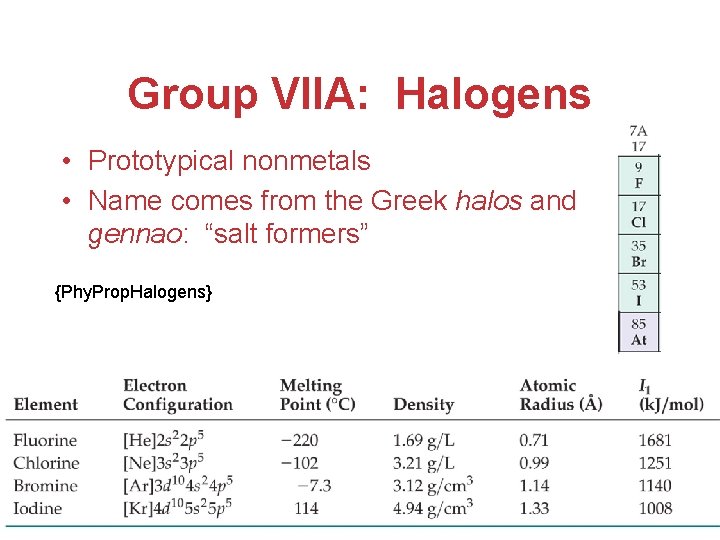
Group VIIA: Halogens • Prototypical nonmetals • Name comes from the Greek halos and gennao: “salt formers” {Phy. Prop. Halogens} Periodic Properties of the Elements
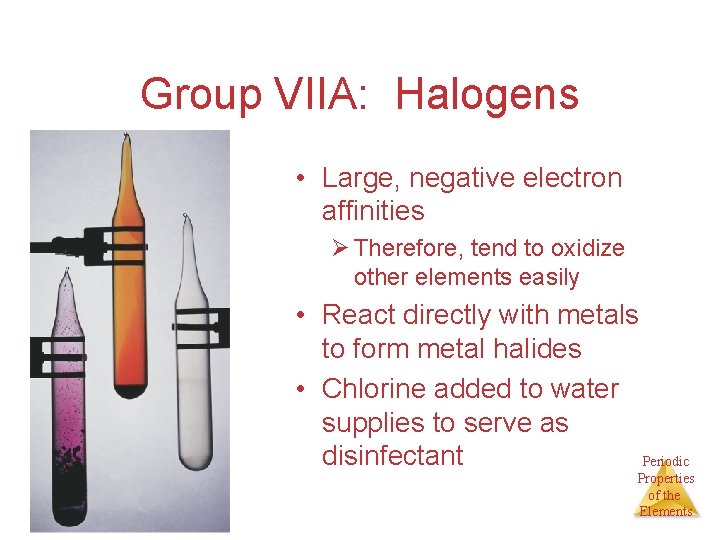
Group VIIA: Halogens • Large, negative electron affinities Ø Therefore, tend to oxidize other elements easily • React directly with metals to form metal halides • Chlorine added to water supplies to serve as disinfectant Periodic Properties of the Elements
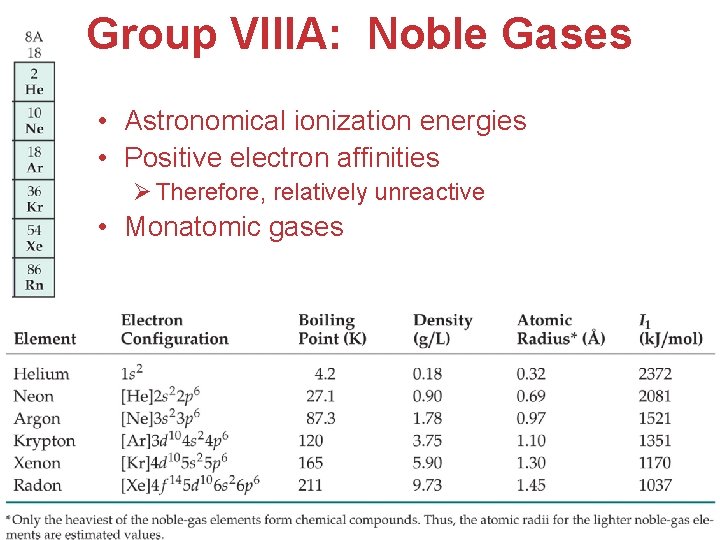
Group VIIIA: Noble Gases • Astronomical ionization energies • Positive electron affinities Ø Therefore, relatively unreactive • Monatomic gases Periodic Properties of the Elements
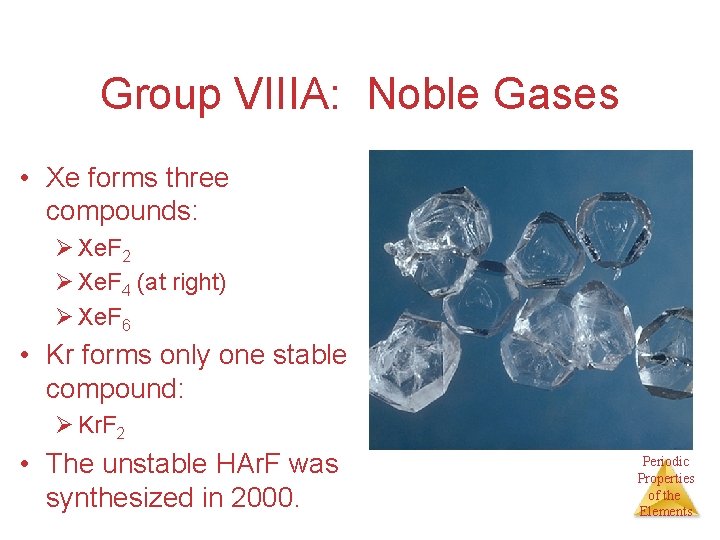
Group VIIIA: Noble Gases • Xe forms three compounds: Ø Xe. F 2 Ø Xe. F 4 (at right) Ø Xe. F 6 • Kr forms only one stable compound: Ø Kr. F 2 • The unstable HAr. F was synthesized in 2000. Periodic Properties of the Elements
Metals versus Nonmetals Periodic Properties of the Elements
2006 (B) Periodic Properties of the Elements
Periodic Properties of the Elements
2006 (A) Periodic Properties of the Elements
Periodic Properties of the Elements
2007 (B) Periodic Properties of the Elements
Periodic Properties of the Elements