
CHLOROPLASTS Photosynthesis factories for plants and algae Contain
- Slides: 5
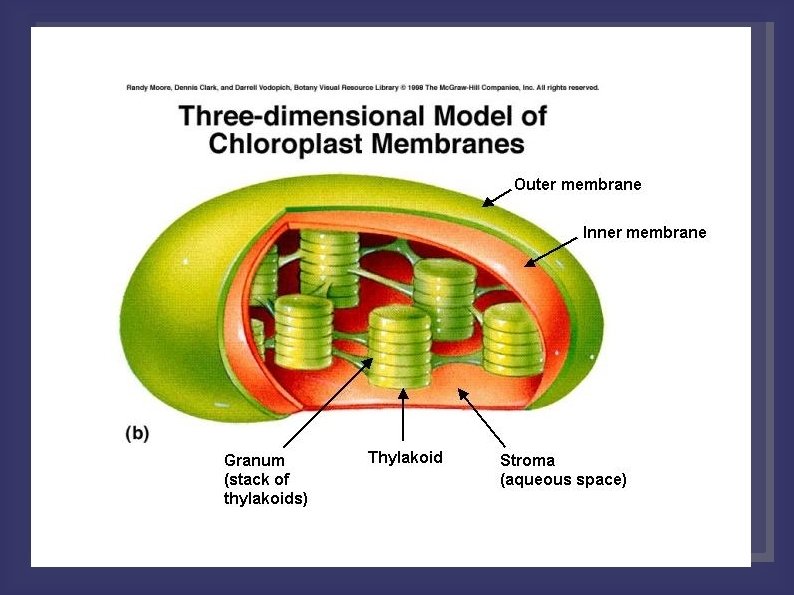
CHLOROPLASTS Photosynthesis factories for plants and algae Contain own DNA and ribosomes so they can reproduce themselves Store excess glucose as starch 2 membranes (like mitoch. ) Interior space filled with stroma (protein-rich fluid) In the stroma are thylakoids (membrane bound sacs) Grana: stack of thylakoids (~60 grana per chloroplast with 30 -50 thylakoids) Lamellae: unstacked thylakoids that link grana together. Thylakoid Membrane contains light gathering pigments and ETCs for photosynthesis Lumen: interior of the thylakoid, water- filled
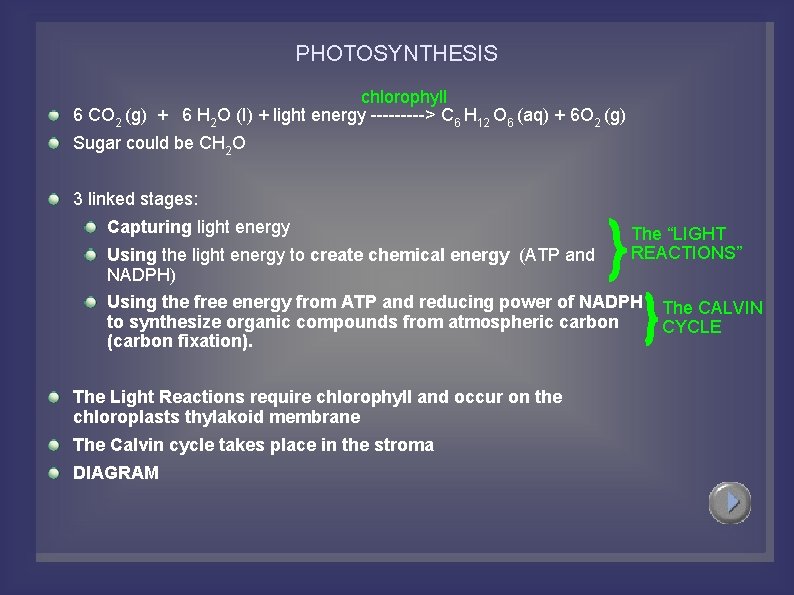
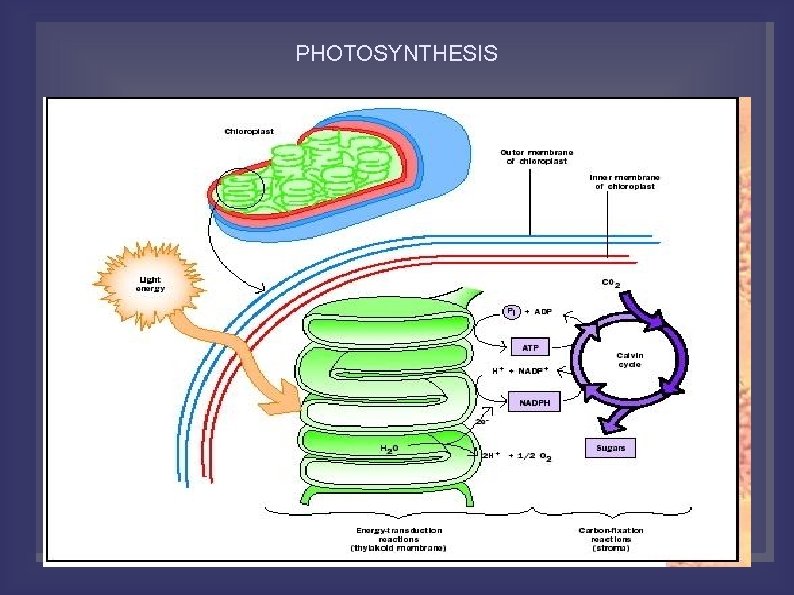
PHOTOSYNTHESIS chlorophyll 6 CO 2 (g) + 6 H 2 O (I) + light energy -----> C 6 H 12 O 6 (aq) + 6 O 2 (g) Sugar could be CH 2 O 3 linked stages: Capturing light energy Using the light energy to create chemical energy (ATP and NADPH) The “LIGHT REACTIONS” Using the free energy from ATP and reducing power of NADPH to synthesize organic compounds from atmospheric carbon (carbon fixation). The Light Reactions require chlorophyll and occur on the chloroplasts thylakoid membrane The Calvin cycle takes place in the stroma DIAGRAM The CALVIN CYCLE
PHOTOSYNTHESIS
LIGHT Only 5% of the light that hits earth's surface is converted to organic compounds by photosynthesis. Light travels in wave packets called photons and light from the sun is a mixture of photons of different energies. Clusters of photosynthetic pigments, called photosystems absorb particular wavelengths of light. Photosystems are located in the thylakoid membranes. Chlorophyll is located in these photosystems.