
Chloroplasts Erin Hodges Basic Function Chlorophyll is a
Chloroplasts Erin Hodges
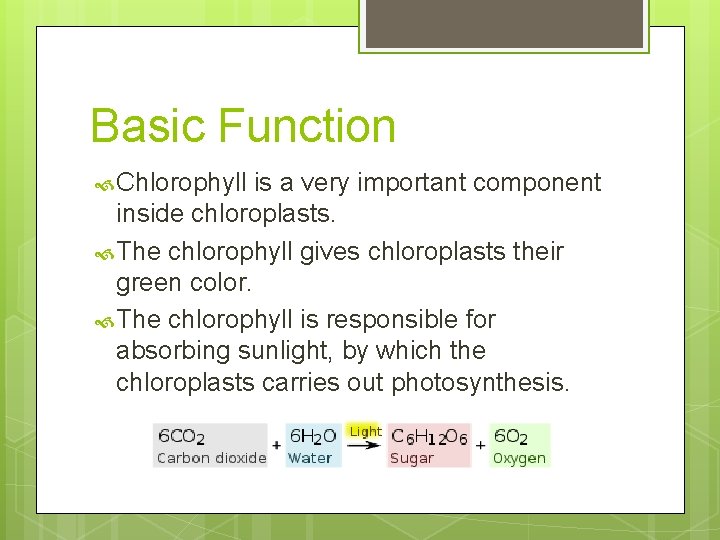
Basic Function Chlorophyll is a very important component inside chloroplasts. The chlorophyll gives chloroplasts their green color. The chlorophyll is responsible for absorbing sunlight, by which the chloroplasts carries out photosynthesis.
Where? Chloroplasts are found in plant cells and in eukaryotic algae. Chloroplasts are mostly found in the leaves of plants where they will receive a large amount of sunlight for photosynthesis. A typical plant cell contains anywhere from 10 -100 chloroplasts.
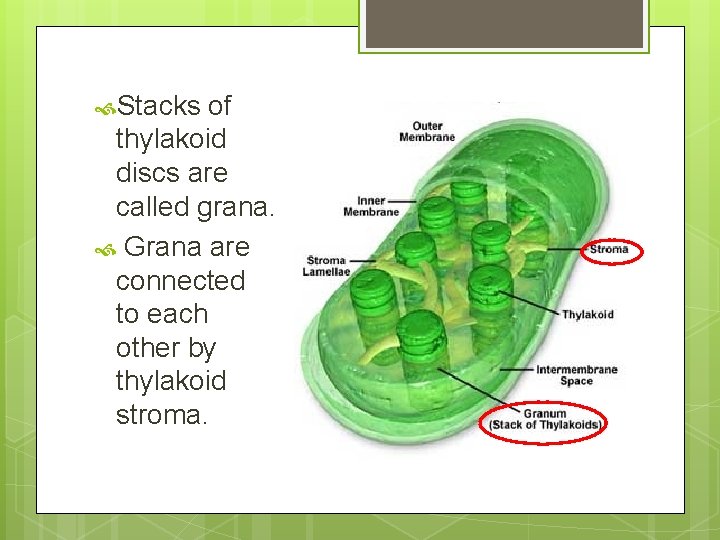
Stacks of thylakoid discs are called grana. Grana are connected to each other by thylakoid stroma.
Discovery 1818 - P. J. Pelletier along with J. B. Caventou named the green substance in the cell “chlorophyll” 1885 - Andreas Franz Wihelm Schimper recognized the chloroplast to be a combination of grana and stroma. 1905 - Russian botanist, Konstantin Mereschkowsky, discovered the chloroplast was the site of photosynthesis.
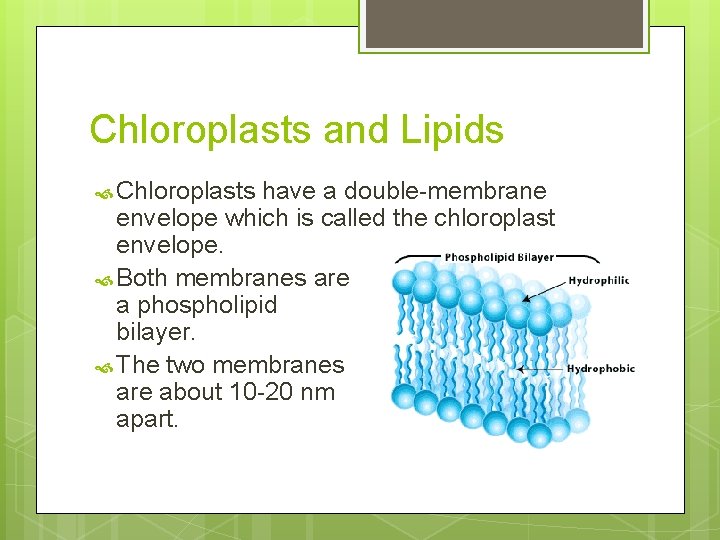
Chloroplasts and Lipids Chloroplasts have a double-membrane envelope which is called the chloroplast envelope. Both membranes are a phospholipid bilayer. The two membranes are about 10 -20 nm apart.
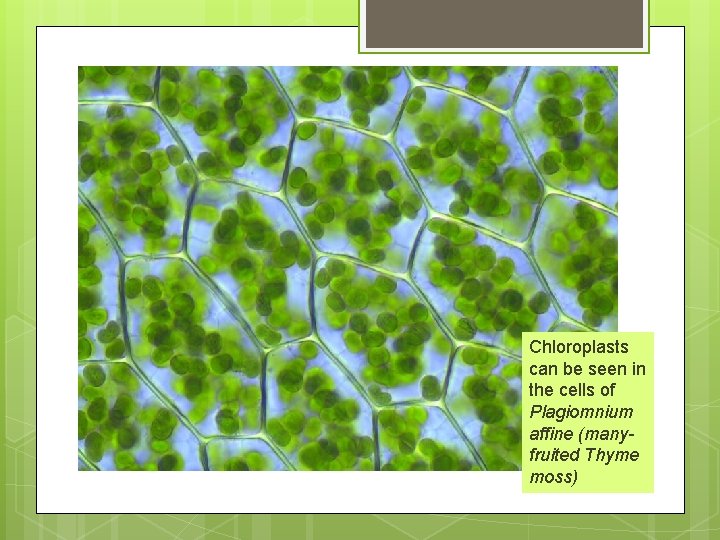
Chloroplasts can be seen in the cells of Plagiomnium affine (manyfruited Thyme moss)
Analogy Chloroplast: Plants : : Solar Panel: Humans Like chloroplasts, solar panels convert sunlight into usable energy. Chloroplasts convert it into chemical energy.
- Slides: 8