
Chlamydia Screening Webinar Harold C Wiesenfeld MD CM
Chlamydia Screening Webinar Harold C. Wiesenfeld MD, CM Department of Obstetrics, Gynecology and Reproductive Sciences University of Pittsburgh School of Medicine
Overview • Overview of Chlamydia and Gonorrhea – National data – New Jersey data – Importance of these STDs to reproductive health • Screening tests: – Screening recommendations – Specimen types and performance – Specimen collection • Do parents want their adolescent child screened for STDs? • Disclosures: NONE

The Impact of STDs on Women’s Health “A variety of women’s health problems, including infertility, ectopic pregnancy, and chronic pelvic pain, result from unrecognized or untreated STDs” Institute of Medicine 1997
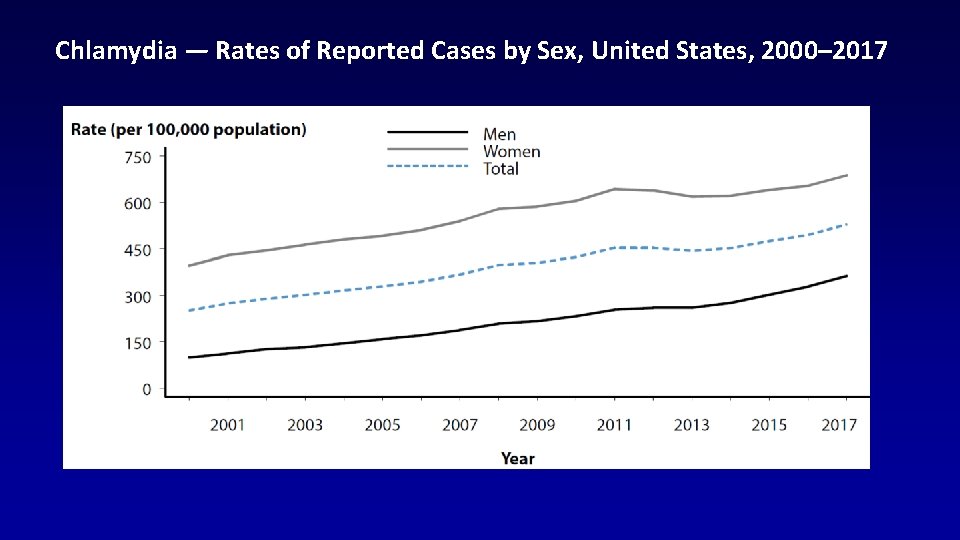
Chlamydia — Rates of Reported Cases by Sex, United States, 2000– 2017
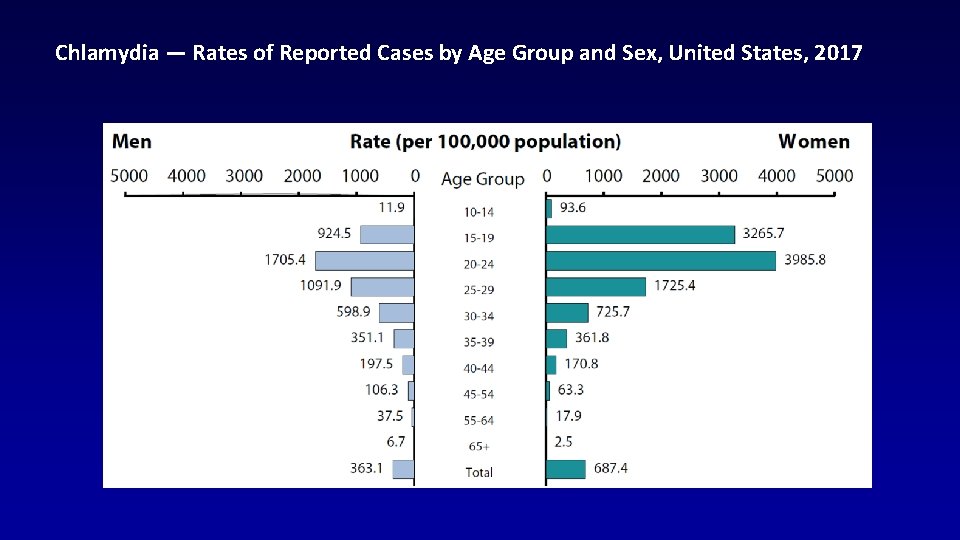
Chlamydia — Rates of Reported Cases by Age Group and Sex, United States, 2017
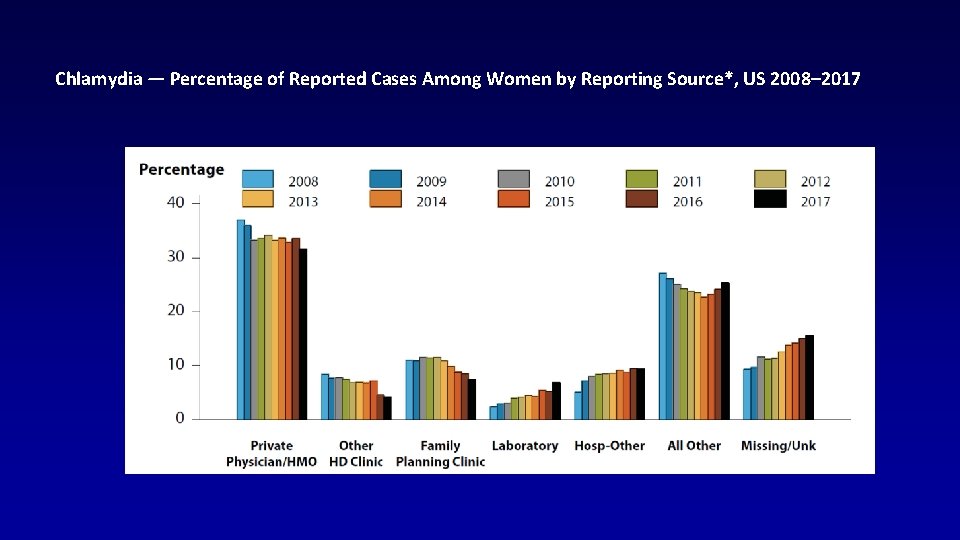
Chlamydia — Percentage of Reported Cases Among Women by Reporting Source*, US 2008– 2017
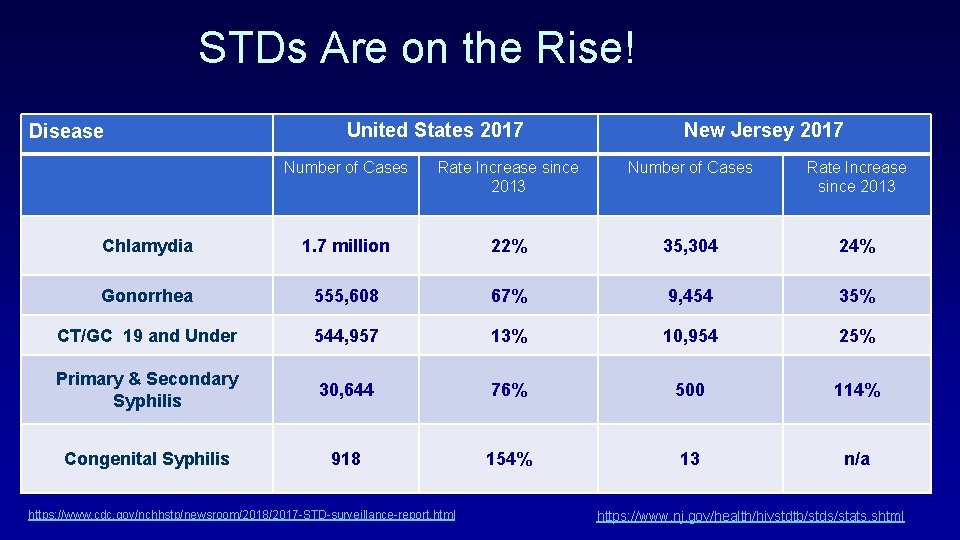
STDs Are on the Rise! Disease United States 2017 New Jersey 2017 Number of Cases Rate Increase since 2013 Chlamydia 1. 7 million 22% 35, 304 24% Gonorrhea 555, 608 67% 9, 454 35% CT/GC 19 and Under 544, 957 13% 10, 954 25% Primary & Secondary Syphilis 30, 644 76% 500 114% Congenital Syphilis 918 154% 13 n/a https: //www. cdc. gov/nchhstp/newsroom/2018/2017 -STD-surveillance-report. html https: //www. nj. gov/health/hivstdtb/stds/stats. shtml
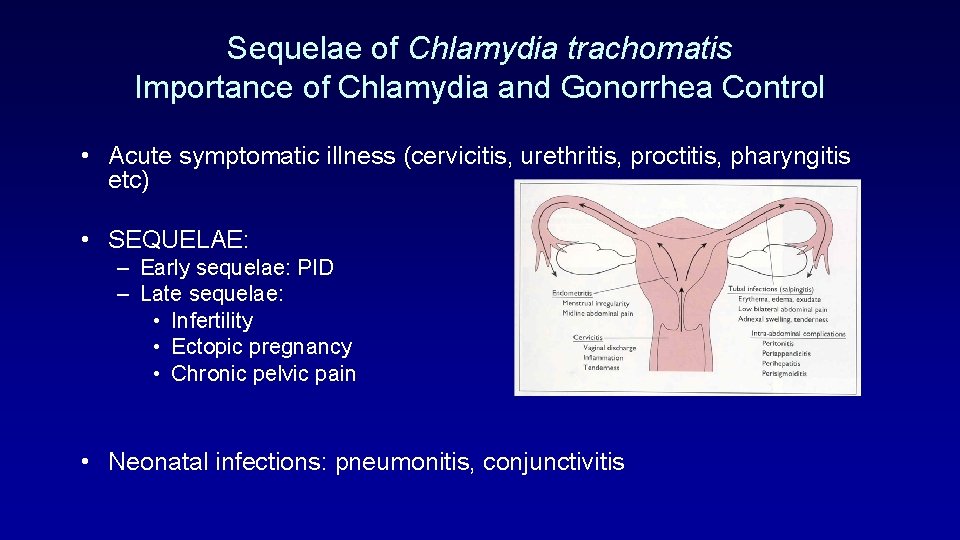
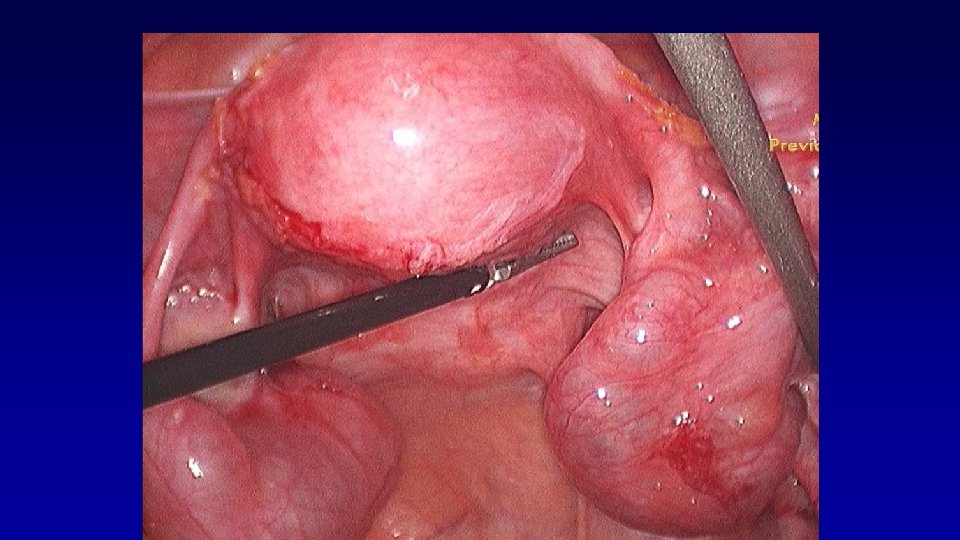
Sequelae of Chlamydia trachomatis Importance of Chlamydia and Gonorrhea Control • Acute symptomatic illness (cervicitis, urethritis, proctitis, pharyngitis etc) • SEQUELAE: – Early sequelae: PID – Late sequelae: • Infertility • Ectopic pregnancy • Chronic pelvic pain • Neonatal infections: pneumonitis, conjunctivitis
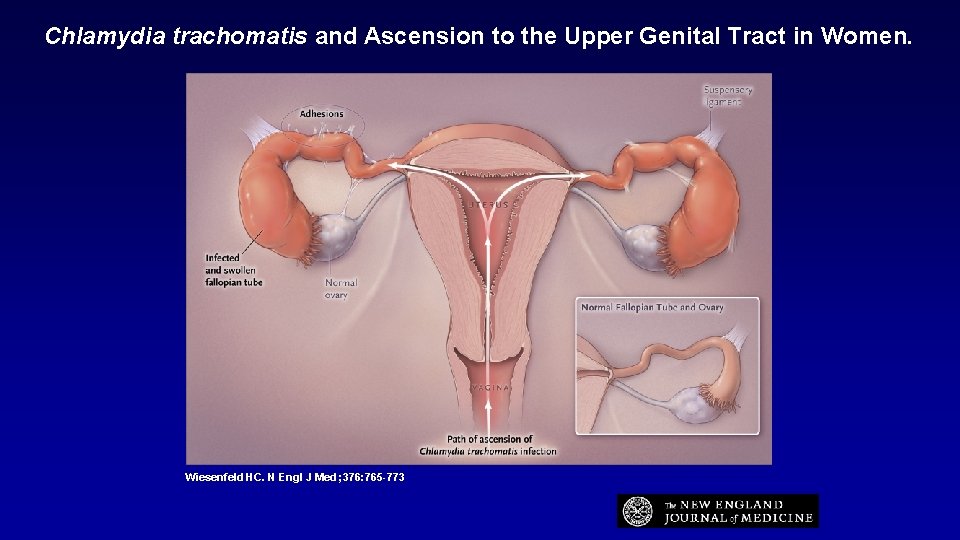
Chlamydia trachomatis and Ascension to the Upper Genital Tract in Women. Wiesenfeld HC. N Engl J Med ; 376: 765 -773
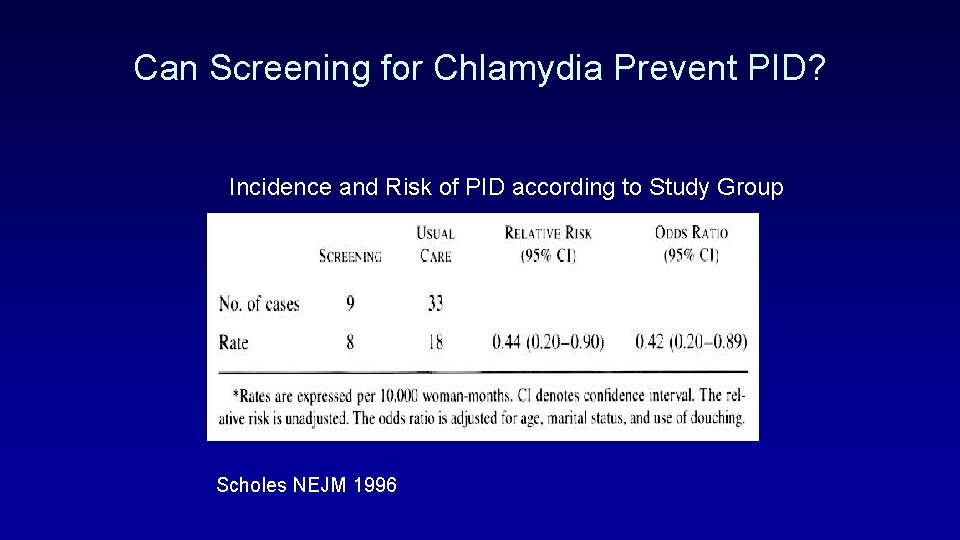
Can Screening for Chlamydia Prevent PID? Incidence and Risk of PID according to Study Group Scholes NEJM 1996
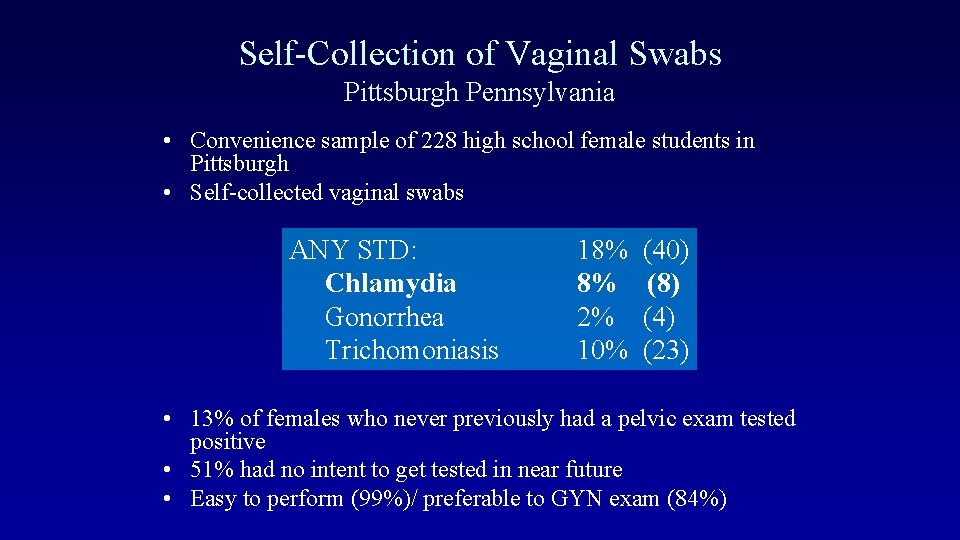
Self-Collection of Vaginal Swabs Pittsburgh Pennsylvania • Convenience sample of 228 high school female students in Pittsburgh • Self-collected vaginal swabs ANY STD: Chlamydia Gonorrhea Trichomoniasis 18% 8% 2% 10% (40) (8) (4) (23) • 13% of females who never previously had a pelvic exam tested positive • 51% had no intent to get tested in near future • Easy to perform (99%)/ preferable to GYN exam (84%)
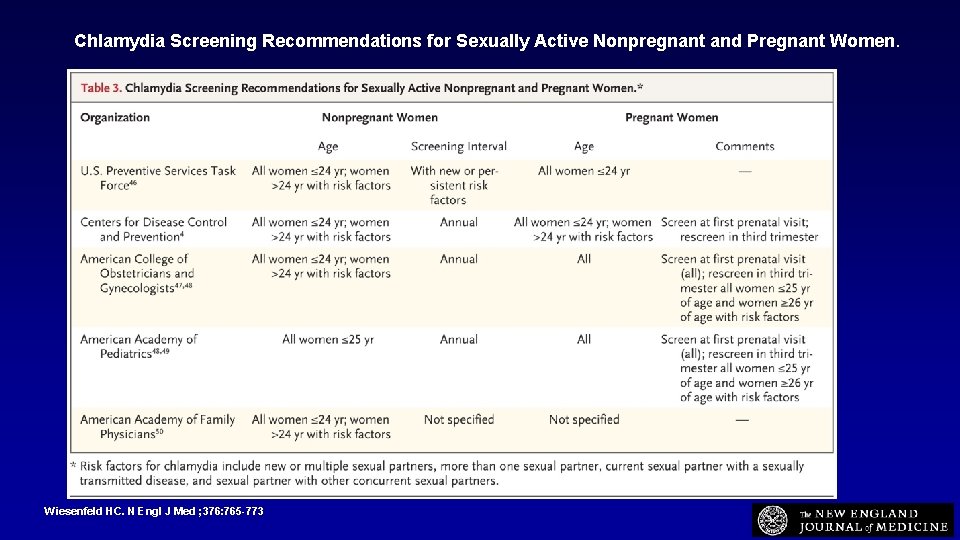
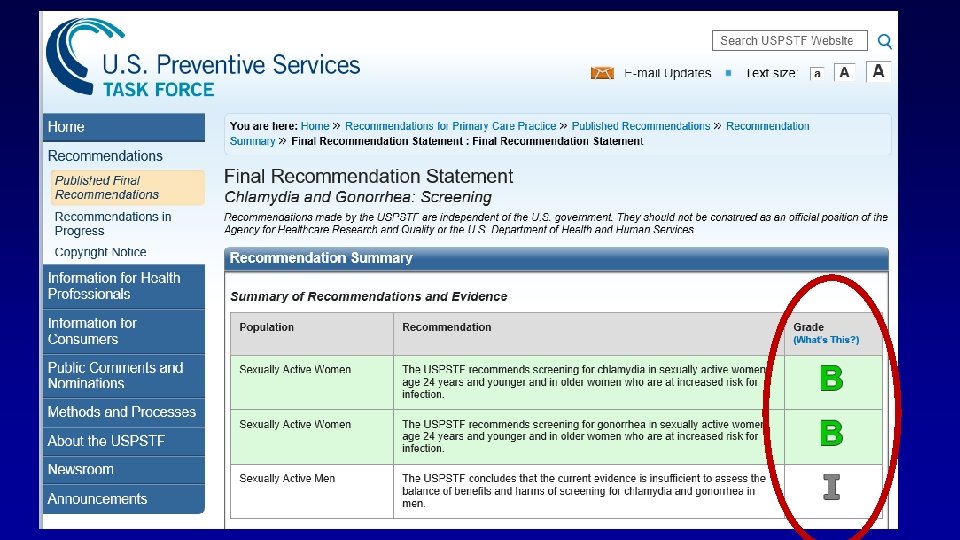
Chlamydia Screening Recommendations for Sexually Active Nonpregnant and Pregnant Women. Wiesenfeld HC. N Engl J Med ; 376: 765 -773

WHAT SPECIMEN SHOULD I OBTAIN FOR STD SCREENING?
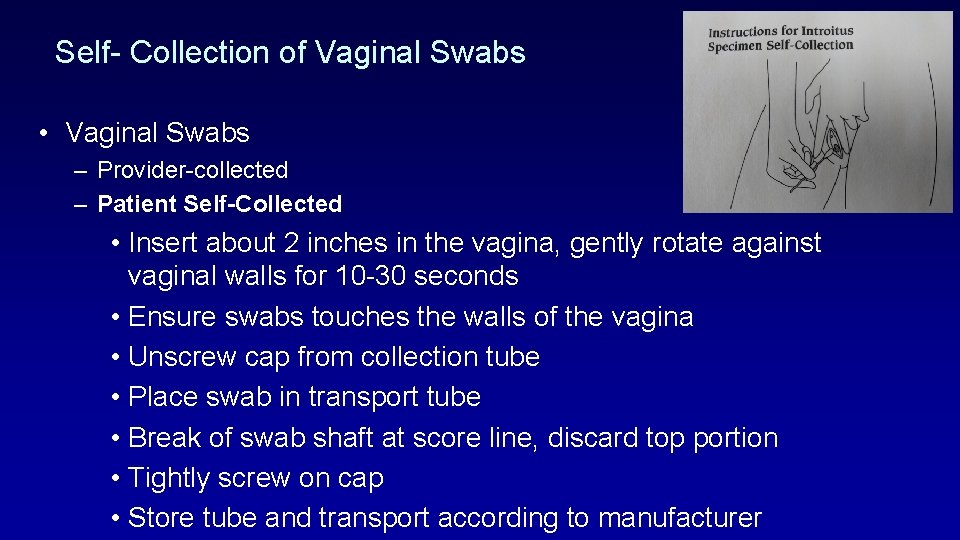
Self- Collection of Vaginal Swabs • Vaginal Swabs – Provider-collected – Patient Self-Collected • Insert about 2 inches in the vagina, gently rotate against vaginal walls for 10 -30 seconds • Ensure swabs touches the walls of the vagina • Unscrew cap from collection tube • Place swab in transport tube • Break of swab shaft at score line, discard top portion • Tightly screw on cap • Store tube and transport according to manufacturer
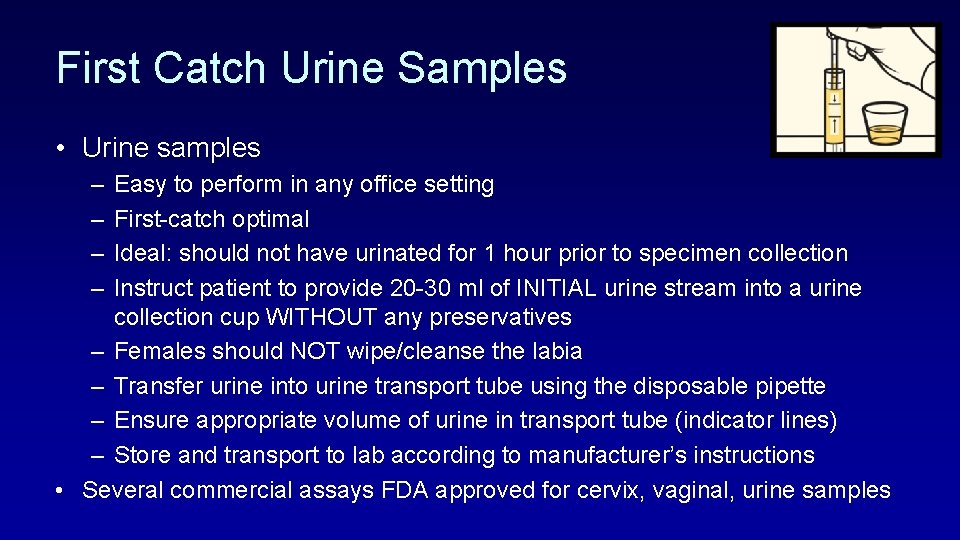
First Catch Urine Samples • Urine samples – – Easy to perform in any office setting First-catch optimal Ideal: should not have urinated for 1 hour prior to specimen collection Instruct patient to provide 20 -30 ml of INITIAL urine stream into a urine collection cup WITHOUT any preservatives – Females should NOT wipe/cleanse the labia – Transfer urine into urine transport tube using the disposable pipette – Ensure appropriate volume of urine in transport tube (indicator lines) – Store and transport to lab according to manufacturer’s instructions • Several commercial assays FDA approved for cervix, vaginal, urine samples
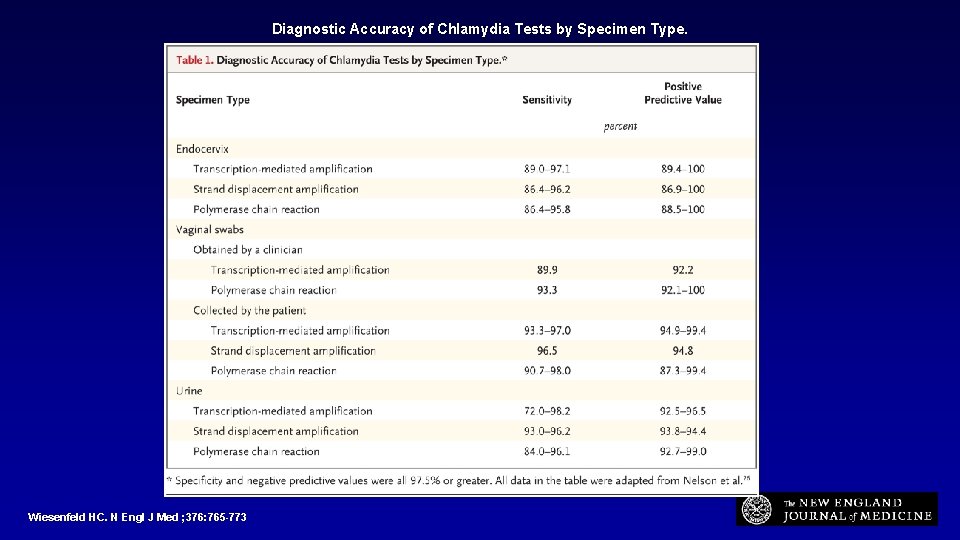
Diagnostic Accuracy of Chlamydia Tests by Specimen Type. Wiesenfeld HC. N Engl J Med ; 376: 765 -773
POSITIVE CHLAMYDIA OR GONORRHEA TEST Chlamydia: – – Azithromycin 1 gram orally single dose Doxycycline 100 mg bid orally for 7 days (nonpregnant) Partner treatment Expedited Partner treatment Gonorrhea: – Ceftriaxone 250 mg IM single dose + Azithromycin 1 gram PO single dose – Partner treatment – ? ? Expedited partner treatment Screen for HIV and syphilis Abstain from intercourse for one week following treatment Safer sexual counseling Test of Reinfection in approximately 3 months
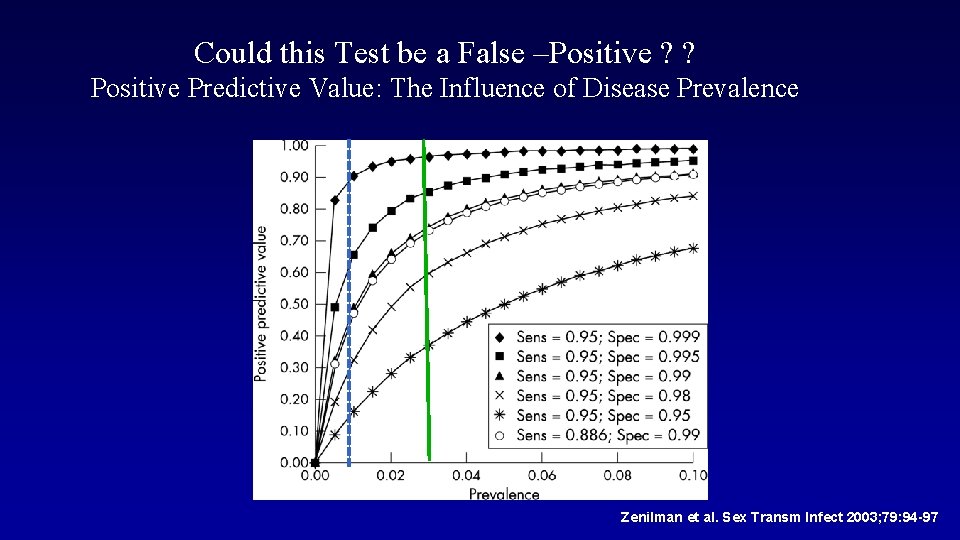
Could this Test be a False –Positive ? ? Positive Predictive Value: The Influence of Disease Prevalence Zenilman et al. Sex Transm Infect 2003; 79: 94 -97

Parental Acceptance of STD Screening at the Pediatrician’s Office Katherine Lane, Elizabeth Miller, MD, Ph. D, Laura Kisloff, MD, and Harold Wiesenfeld, MD
Background • Pediatricians are well positioned to provide screening for their adolescent patients • Few sexually-active adolescents were screened for chlamydia and gonorrhea at pediatric well visits • Many provider barriers have been identified (e. g. , a lack of request from parents, awkwardness) • Providers may be more likely to offer screening if they knew parents were accepting
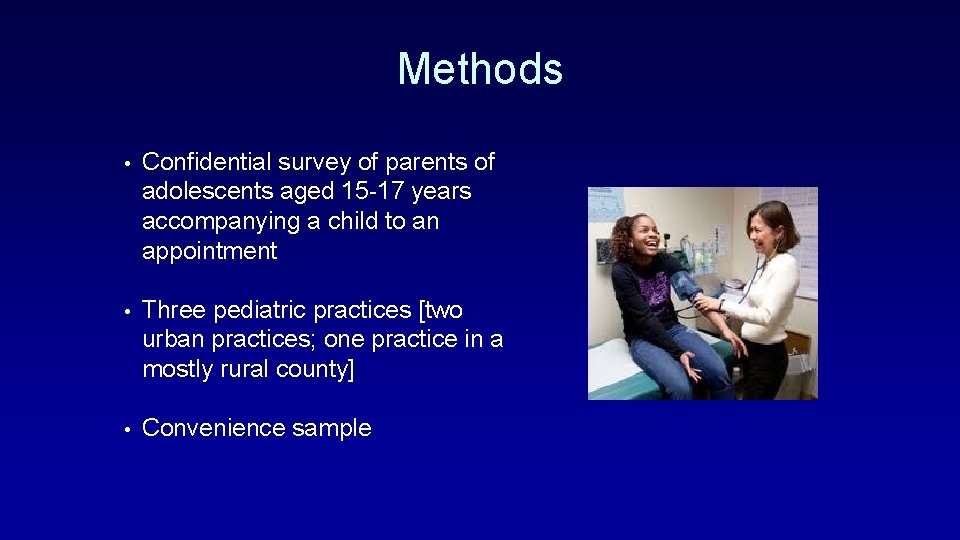
Methods • Confidential survey of parents of adolescents aged 15 -17 years accompanying a child to an appointment • Three pediatric practices [two urban practices; one practice in a mostly rural county] • Convenience sample
Methods • Primary Outcome: parent willingness to have their adolescent screened for chlamydia and gonorrhea • Defined as annual testing of all adolescents age 15 and older regardless of whether or not they have had sex (unless declined by patient or parent) • Described as collecting a urine sample to test for gonorrhea and chlamydia
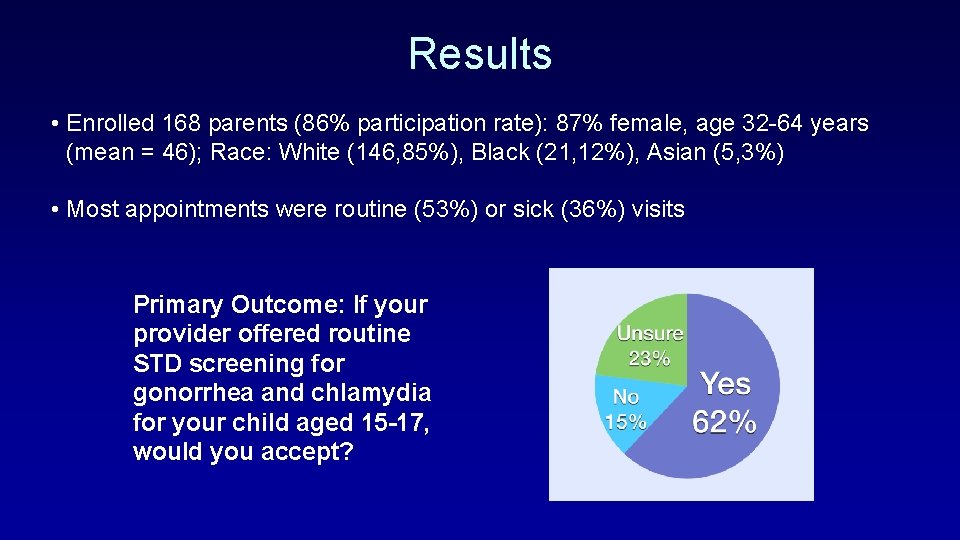
Results • Enrolled 168 parents (86% participation rate): 87% female, age 32 -64 years (mean = 46); Race: White (146, 85%), Black (21, 12%), Asian (5, 3%) • Most appointments were routine (53%) or sick (36%) visits Primary Outcome: If your provider offered routine STD screening for gonorrhea and chlamydia for your child aged 15 -17, would you accept?
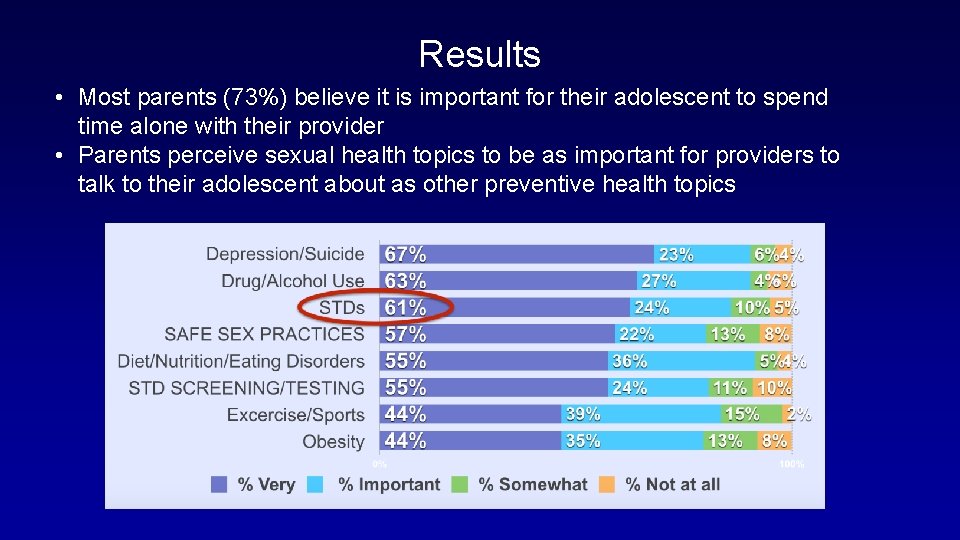
Results • Most parents (73%) believe it is important for their adolescent to spend time alone with their provider • Parents perceive sexual health topics to be as important for providers to talk to their adolescent about as other preventive health topics
SUMMARY • Screen all sexually active adolescents for chlamydia and gonorrhea at least annually • Most parents accept STD screening and STD counseling for their adolescent • Urine samples (first catch) or self-collected vaginal swabs – Special equipment or skills not needed – Can be incorporated in most offices – Opportunities to best integrate into office flow • Routinely offered to all patients • Opt-Out counseling (similar to HIV screening in pregnant women) • Best practice initiative
- Slides: 27