
ChiSquare Analysis AP Biology CHI SQUARE ANALYSIS AP

Chi-Square Analysis AP Biology
CHI SQUARE ANALYSIS AP BIOLOGY

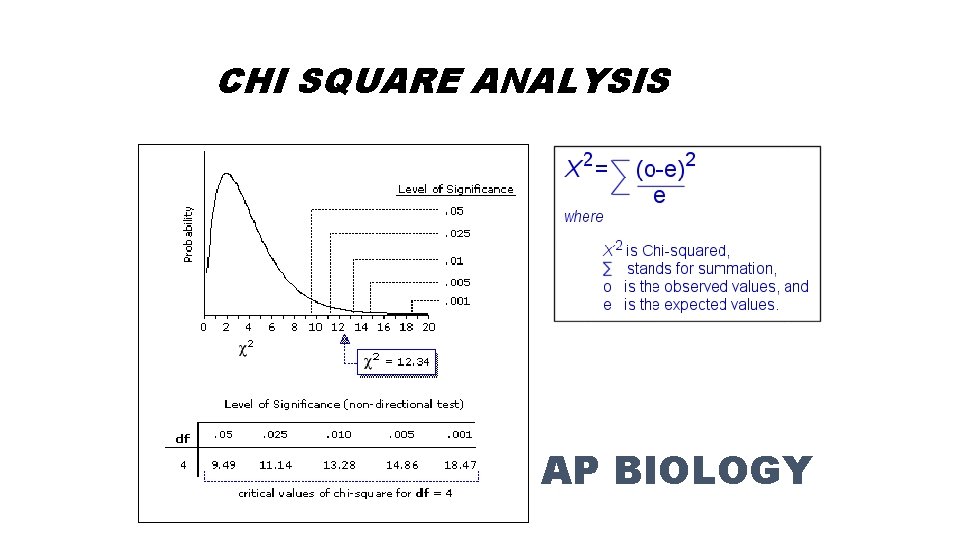
CHI SQUARE ANALYSIS: • The chi square analysis allows you to use statistics to determine if your data is “good” or “non-biased” or if the data is “bad” or “biased” • If statistics show the data is biased this means that somehow the data is far different from what you expected and something is causing the difference beyond just normal chance occurrences.
CHI SQUARE FORMULA:
NULL HYPOTHESIS: • The hypothesis is termed the null hypothesis which states • That there is NO substantial statistical deviation (difference) between observed values and the expected values. • In other words, the results or differences that do exist between observed and expected are totally random and occurred by chance alone.

Step 1: Calculating 2 • First, determine what your expected and observed values are. • Observed (Actual) values: That should be something you get from data– usually no calculations • Expected values: based on probability • Suggestion: make a table with the expected and actual values
Step 1: Example • Observed (actual) values: Suppose you have 90 tongue rollers and 10 nonrollers • Expected: Suppose the parent genotypes were both Rr using a punnett square, you would expect 75% tongue rollers, 25% nonrollers • This translates to 75 tongue rollers, 25 nonrollers (since the population you are dealing with is 100 individuals)
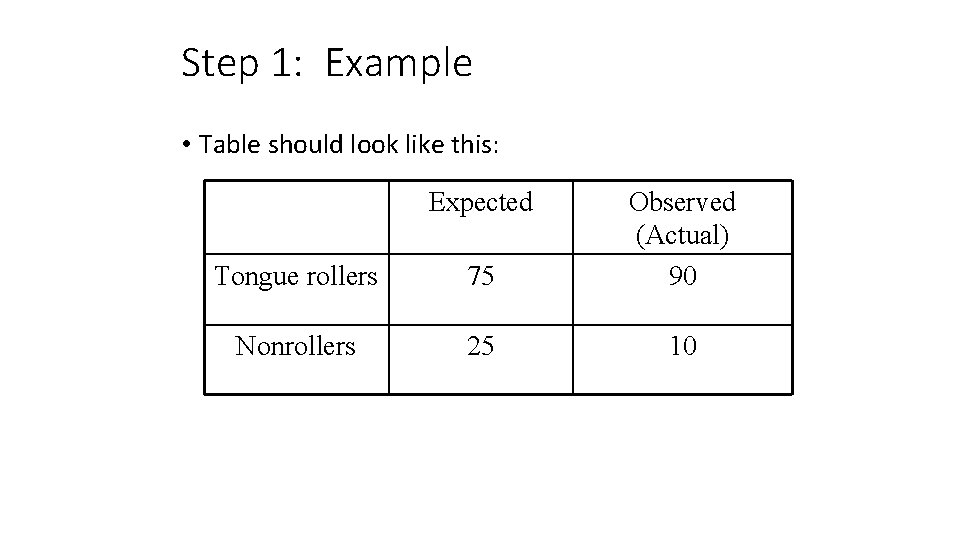
Step 1: Example • Table should look like this: Expected Tongue rollers 75 Observed (Actual) 90 Nonrollers 25 10
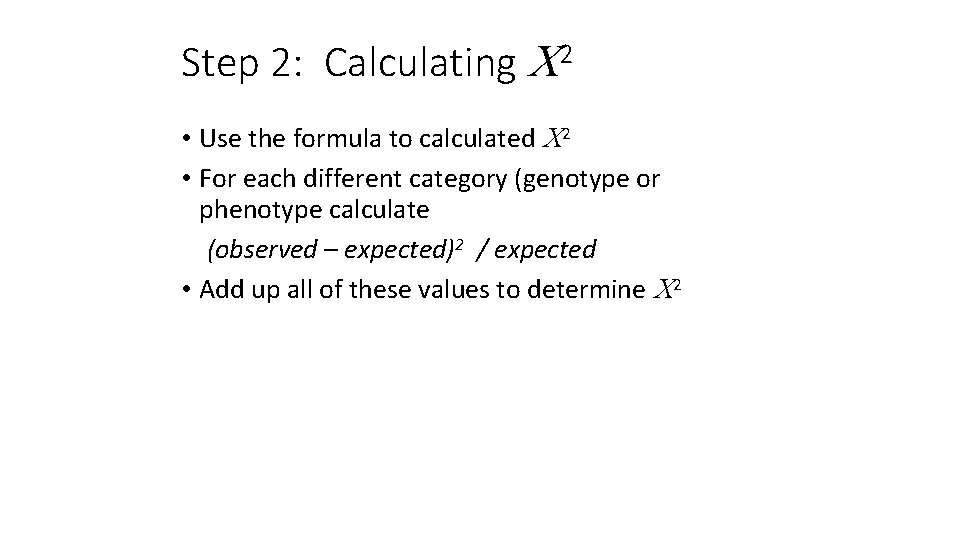
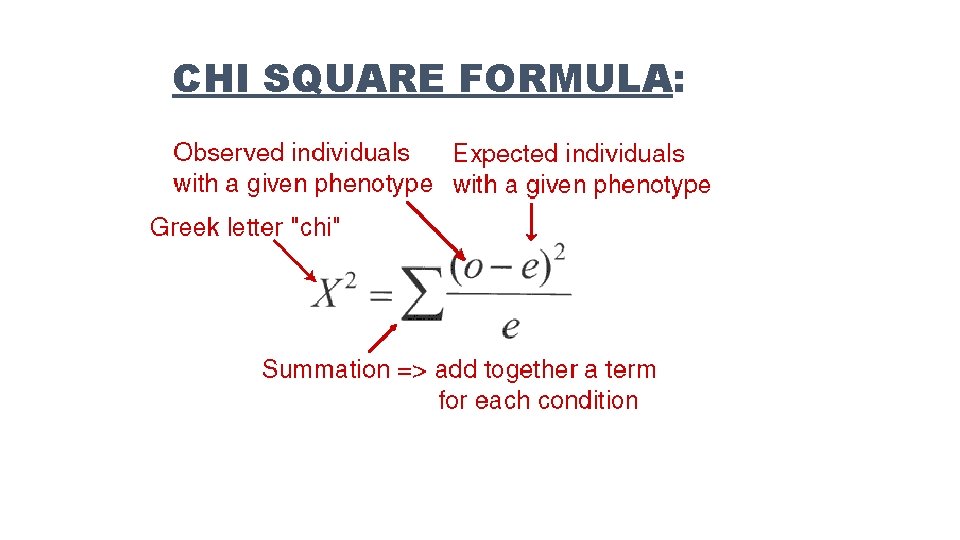
Step 2: Calculating 2 • Use the formula to calculated 2 • For each different category (genotype or phenotype calculate (observed – expected)2 / expected • Add up all of these values to determine 2

Step 2: Calculating 2
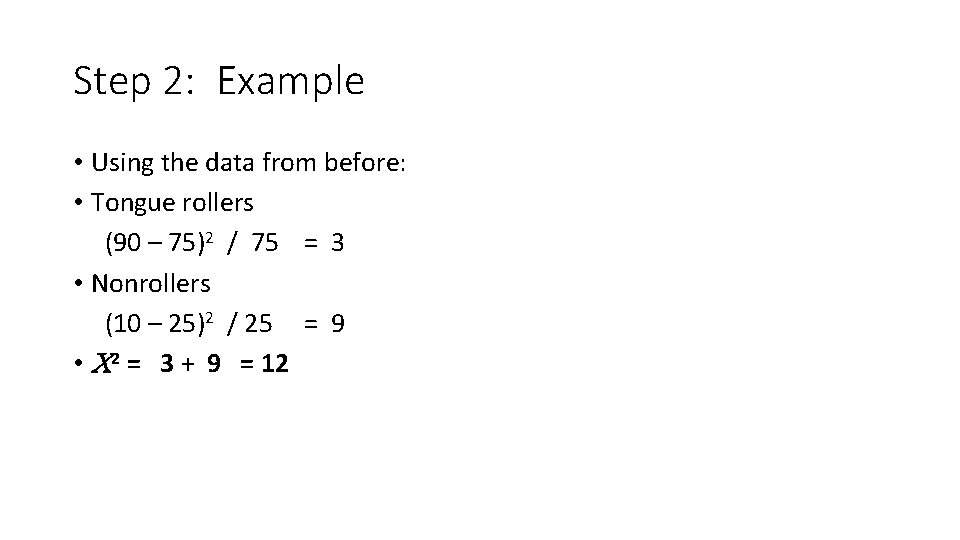
Step 2: Example • Using the data from before: • Tongue rollers (90 – 75)2 / 75 = 3 • Nonrollers (10 – 25)2 / 25 = 9 • 2 = 3 + 9 = 12
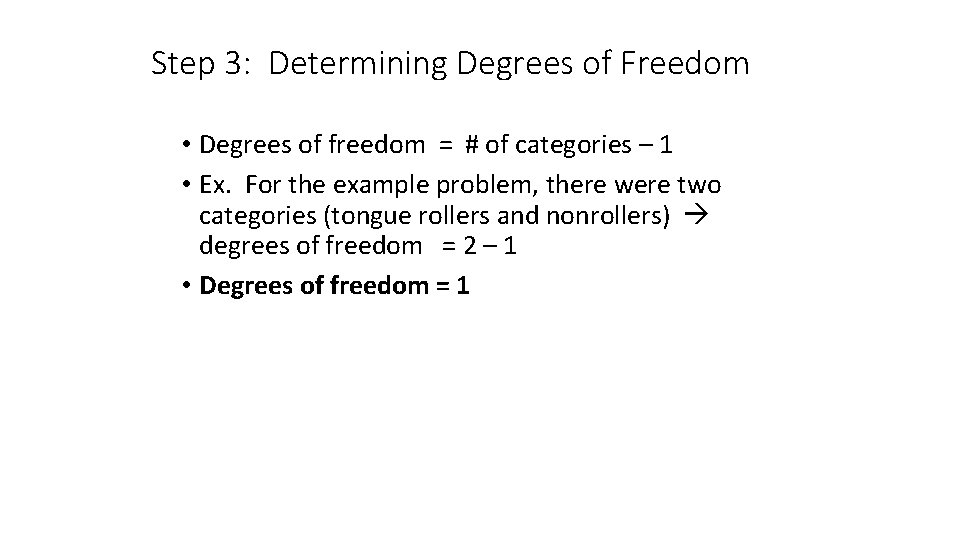
Step 3: Determining Degrees of Freedom • Degrees of freedom = # of categories – 1 • Ex. For the example problem, there were two categories (tongue rollers and nonrollers) degrees of freedom = 2 – 1 • Degrees of freedom = 1
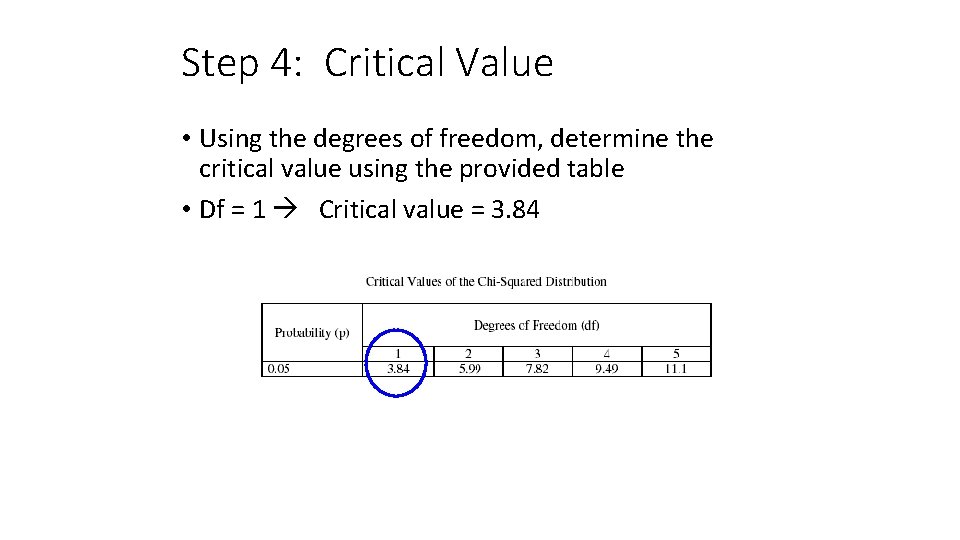
Step 4: Critical Value • Using the degrees of freedom, determine the critical value using the provided table • Df = 1 Critical value = 3. 84
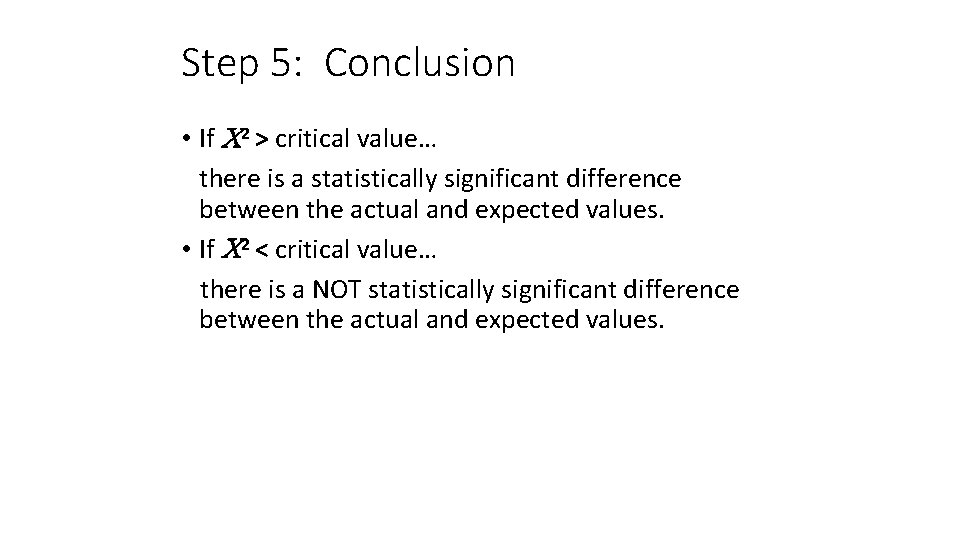
Step 5: Conclusion • If 2 > critical value… there is a statistically significant difference between the actual and expected values. • If 2 < critical value… there is a NOT statistically significant difference between the actual and expected values.
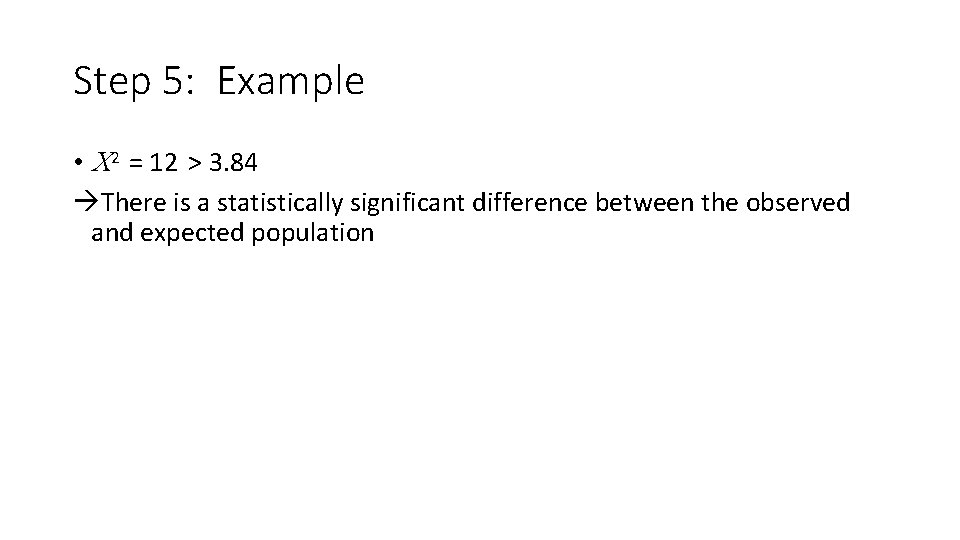
Step 5: Example • 2 = 12 > 3. 84 There is a statistically significant difference between the observed and expected population

Expected ratio Observed # Expected # O-E (O-E)2/E
- Slides: 16