
Chiropractic for Horses Dr XYZ 1 www IVCA

- Slides: 50
Chiropractic for Horses Dr. XYZ 1 ©www. I-V-C-A. com
Content ■ Introduction ■ What is chiropractic? ■ What is a chiropractic subluxation? ■ How subluxations are treated? ■ Causes for subluxations ■ Possible symptoms 2 ©www. I-V-C-A. com
Back problems in horses ■ Many patients with back problems have no pathological structural changes which can be diagnosed to explain the symptoms ■ There are often few correlations between radiological findings and clinical symptoms 3 ©www. I-V-C-A. com
History ■ Manual therapy since > 5000 years ■ 1895 First Chiropractic College USA ■ 1982 First postgraduate program school for animal chiropractic was founded in Illinois, USA ■ Today there are three schools for animal chiropractic in the USA ■ Two animal chiropractic schools in Germany 4 ©www. I-V-C-A. com
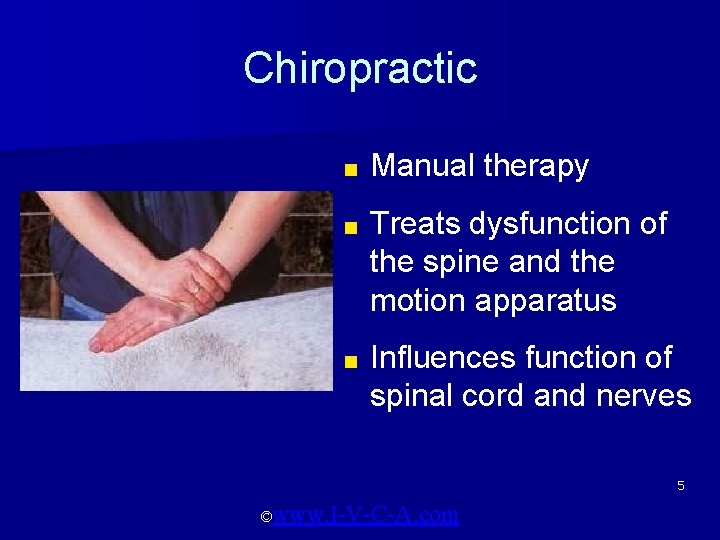
Chiropractic ■ Manual therapy ■ Treats dysfunction of the spine and the motion apparatus ■ Influences function of spinal cord and nerves 5 ©www. I-V-C-A. com
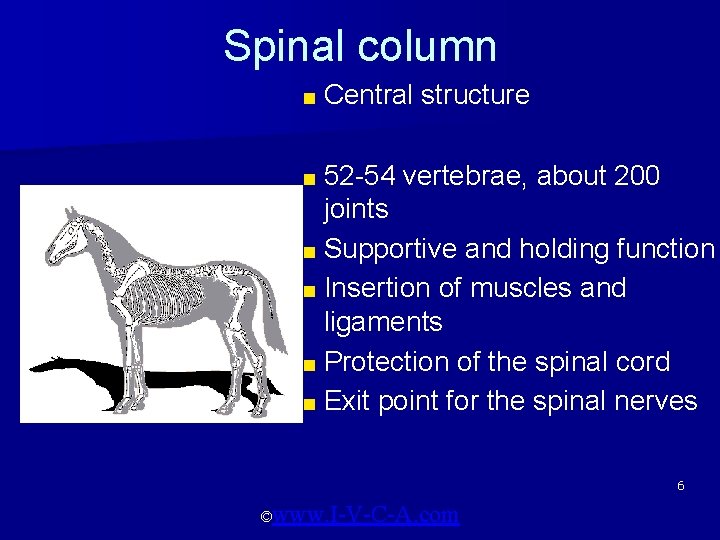
Spinal column ■ Central ■ 52 -54 structure vertebrae, about 200 joints ■ Supportive and holding function ■ Insertion of muscles and ligaments ■ Protection of the spinal cord ■ Exit point for the spinal nerves 6 ©www. I-V-C-A. com
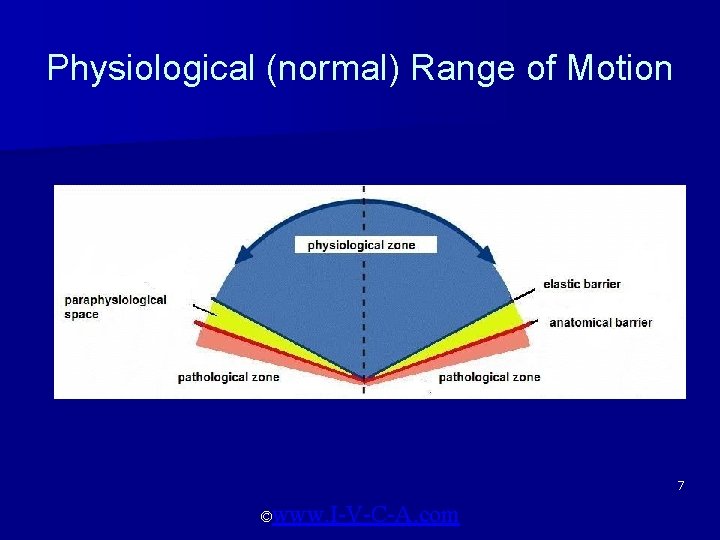
Physiological (normal) Range of Motion 7 ©www. I-V-C-A. com
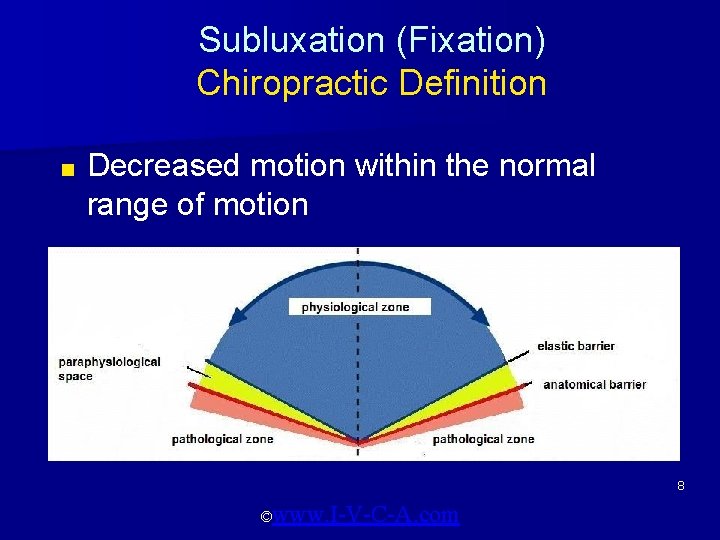
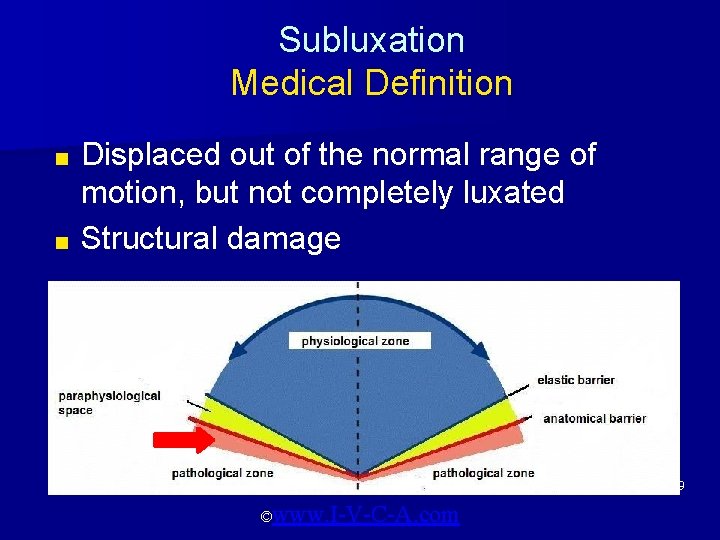
Subluxation (Fixation) Chiropractic Definition ■ Decreased motion within the normal range of motion 8 ©www. I-V-C-A. com
Subluxation Medical Definition Displaced out of the normal range of motion, but not completely luxated ■ Structural damage ■ 9 ©www. I-V-C-A. com
Subluxation ■ Decreased motion within the normal range of motion ■ Reduced mobility of the facet joints ■ Hypomobility uni-/bilateral ■ Effecting of neural structures 10 ©www. I-V-C-A. com
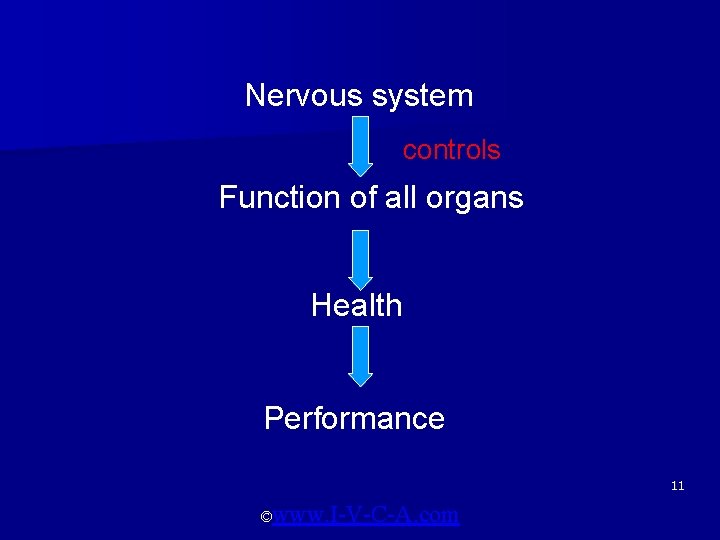
Nervous system controls Function of all organs Health Performance 11 ©www. I-V-C-A. com
Traditional Medical Approach ■ Diagnosis and treatment of structural pathologies Chiropractic Approach ■ Diagnosis and treatment of dysfunction 12 ©www. I-V-C-A. com
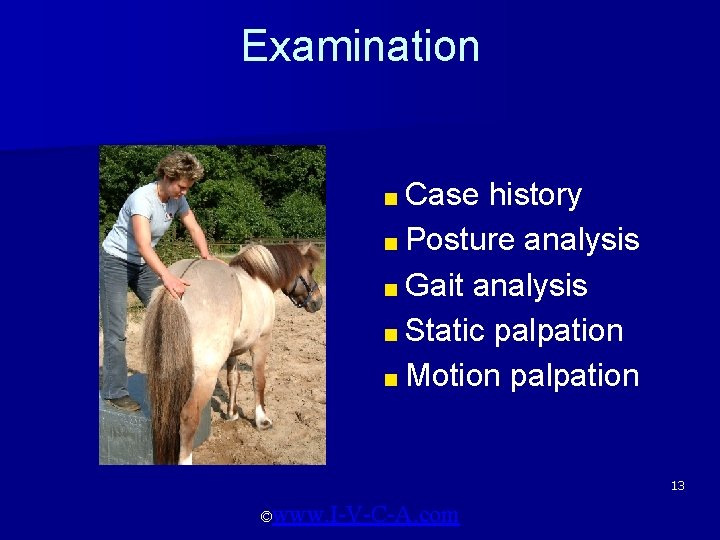
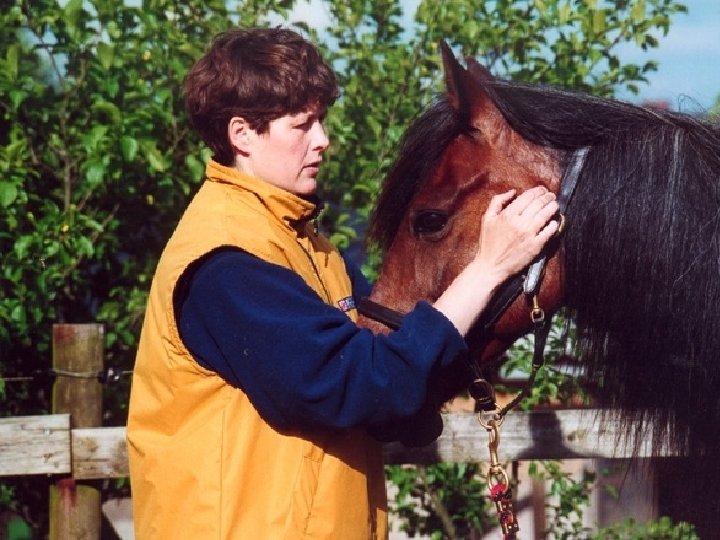
Examination ■ Case history ■ Posture analysis ■ Gait analysis ■ Static palpation ■ Motion palpation 13 ©www. I-V-C-A. com
Examination If necessary: ■ Examination while being lunged or ridden ■ Referral for other diagnostic procedures: XRay, dental, neurological, rectal exams, … ■ Integrative diagnostics 14 ©www. I-V-C-A. com
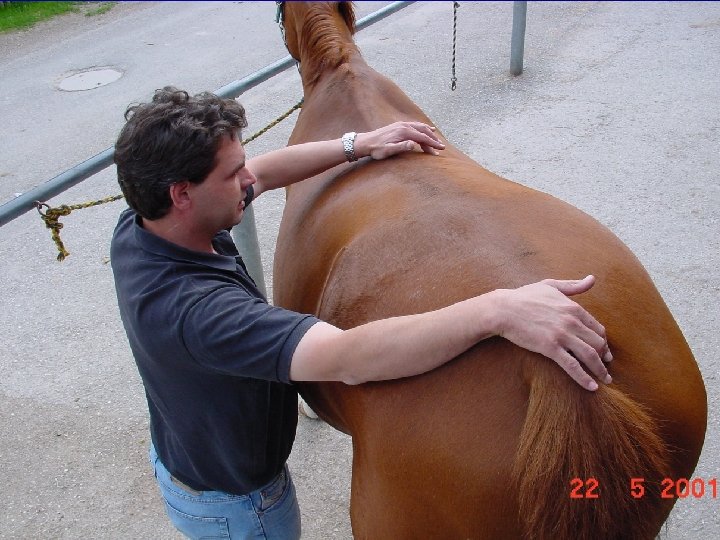
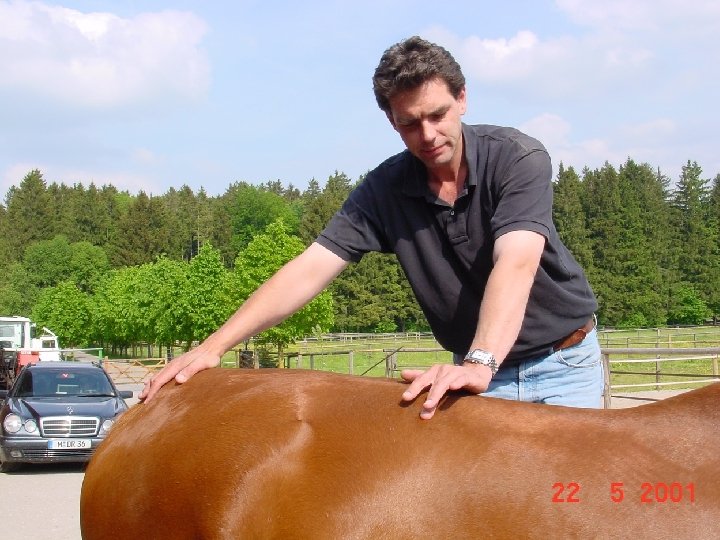
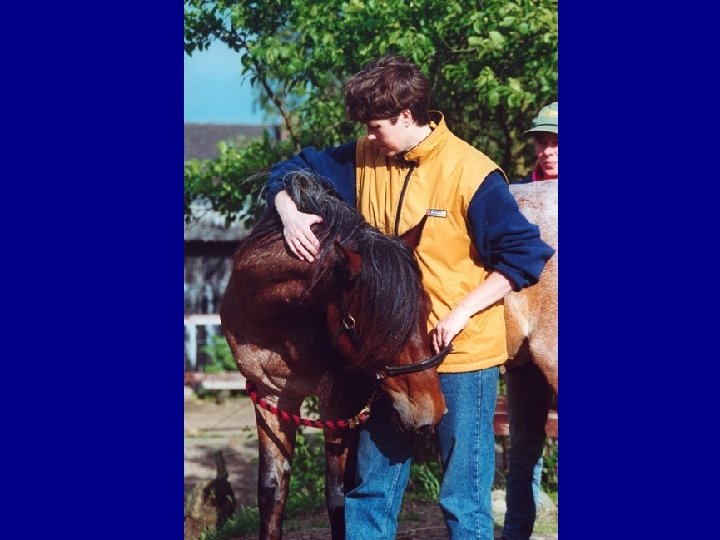
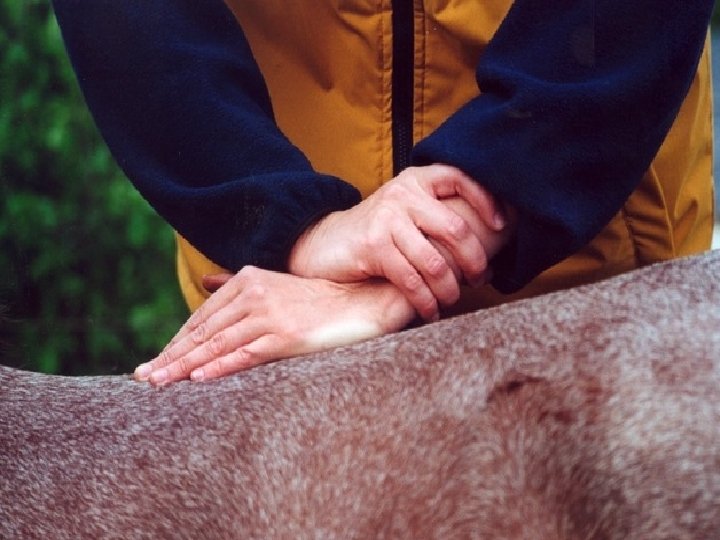
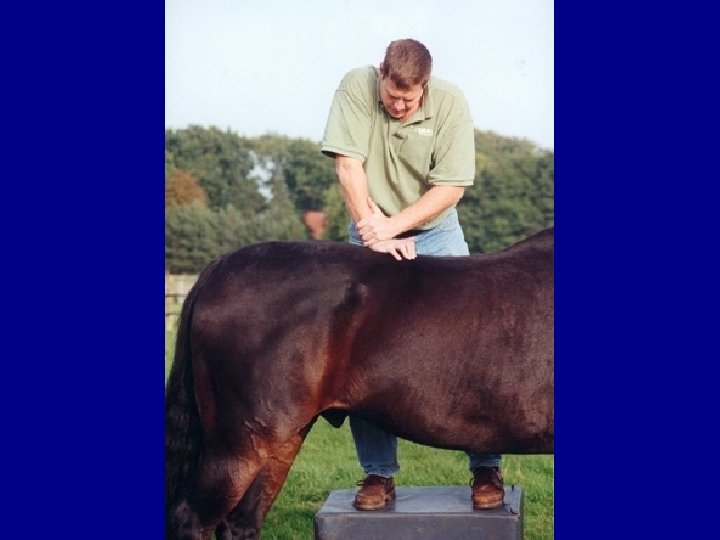
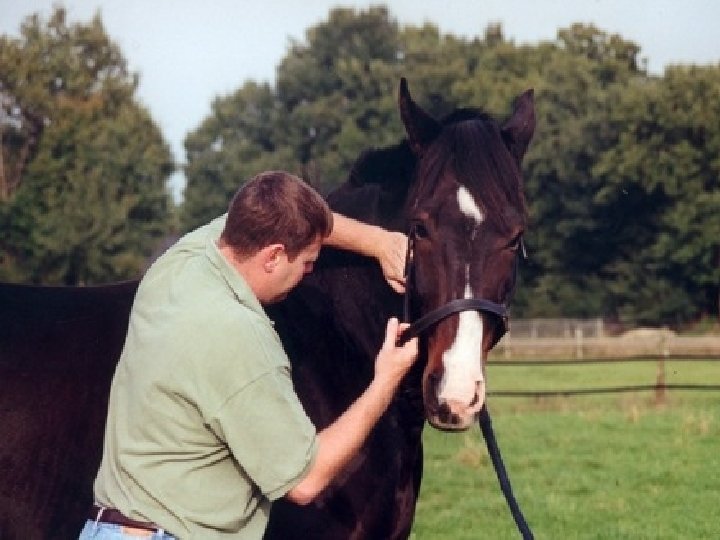
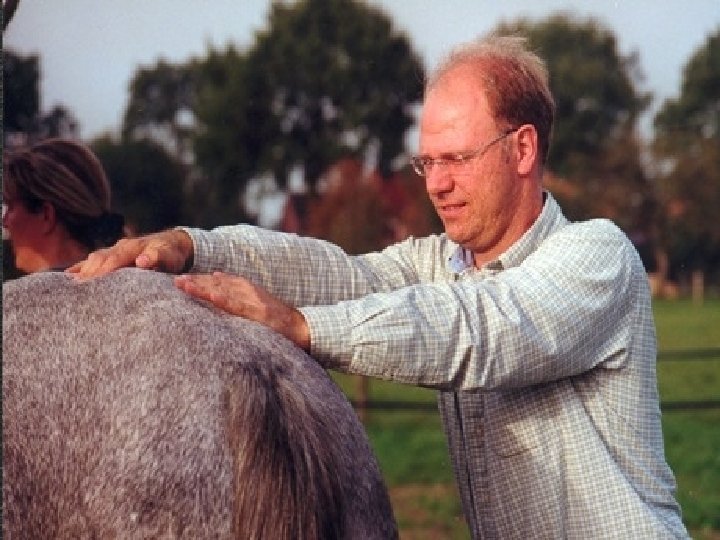
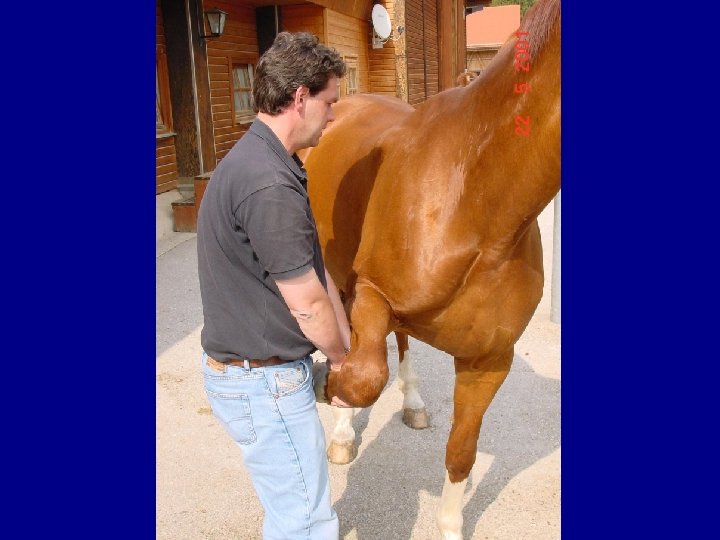
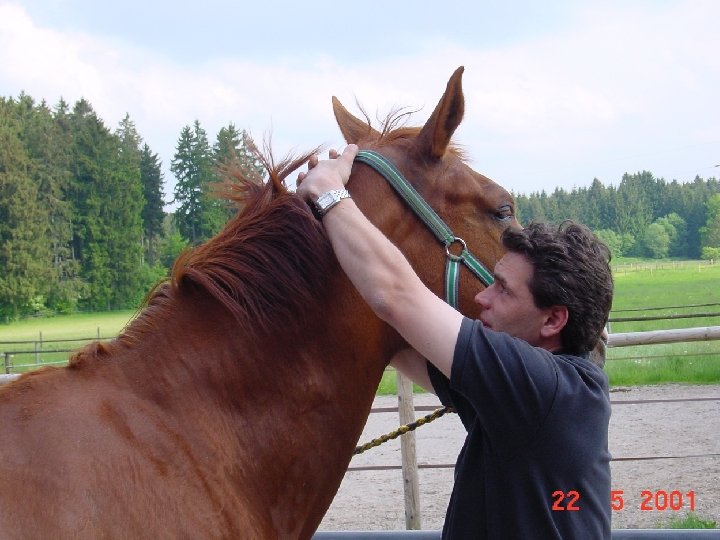
The chiropractic manipulation = “Adjustment” Controlled thrust ■ Specific in direction, low force, low amplitude, high speed ■ As close as possible to the affected joint ■ Mobilization of the joint without exceeding the anatomical barrier ■ 15 ©www. I-V-C-A. com
16 www. I-V-C-A. com
17 www. I-V-C-A. com
18 www. I-V-C-A. com
25 www. I-V-C-A. com
26 www. I-V-C-A. com
Chiropractic is not. . . 27 ©www. I-V-C-A. com
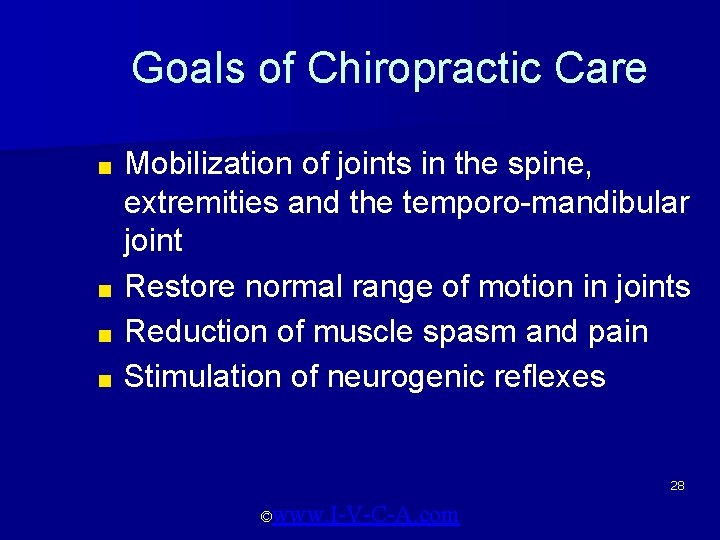
Goals of Chiropractic Care Mobilization of joints in the spine, extremities and the temporo-mandibular joint ■ Restore normal range of motion in joints ■ Reduction of muscle spasm and pain ■ Stimulation of neurogenic reflexes ■ 28 ©www. I-V-C-A. com
Aftercare Don’t work the horse for two days. Hand walk the horse or easy lunge work is recommended ■ When possible: turn-out on pasture or paddock if horse is used to it ■ Horse might be muscle-sore for a few days, especially after first treatment ■ Timing and kind of training has to be worked out individually ■ 29 ©www. I-V-C-A. com
Follow-up treatments Chiropractic follow-up treatment if necessary after 2 – 6 weeks ■ Consider adding otherapeutic measures to the treatment plan: Medical treatment, dental exam/treatment, saddle fit, physiotherapy, shoeing/trimming changes, trainings measures for the horse and rider ■ 30 ©www. I-V-C-A. com
Possible Causes for Subluxations? 31 ©www. I-V-C-A. com
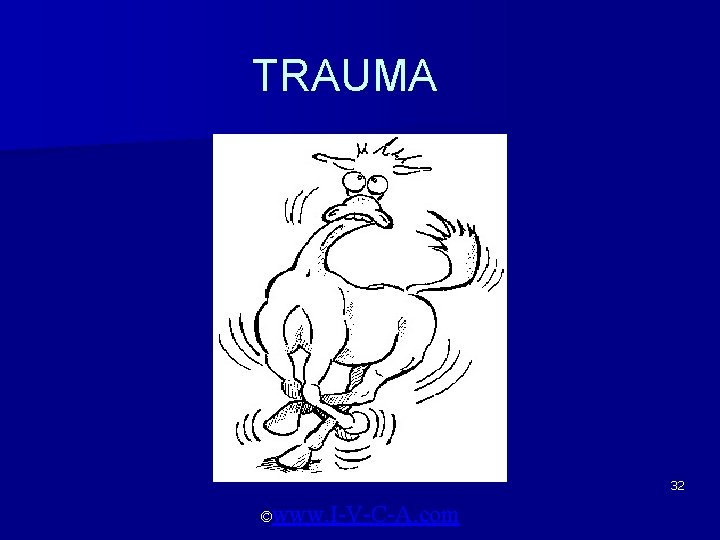
TRAUMA 32 ©www. I-V-C-A. com
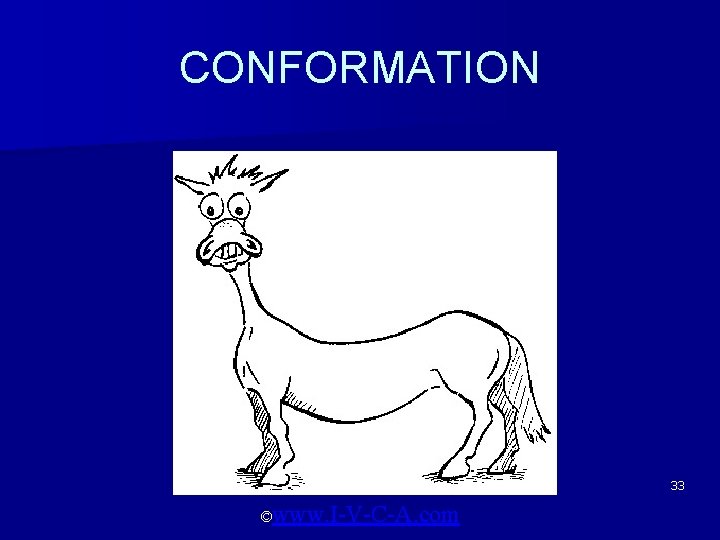
CONFORMATION 33 ©www. I-V-C-A. com
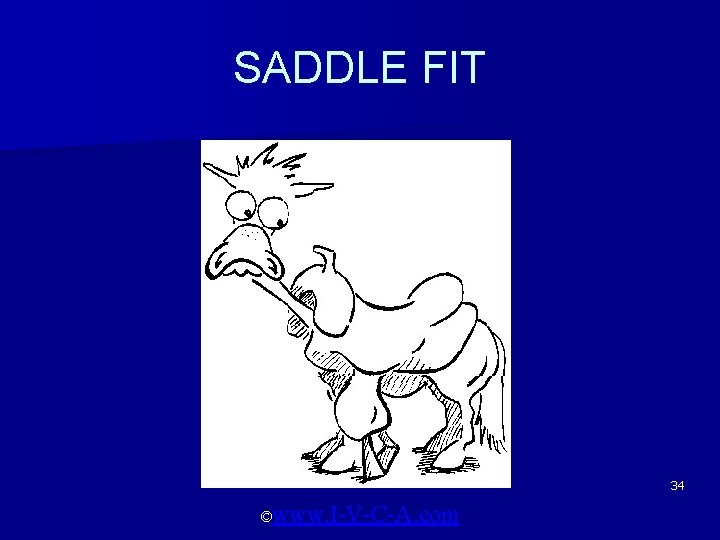
SADDLE FIT 34 ©www. I-V-C-A. com
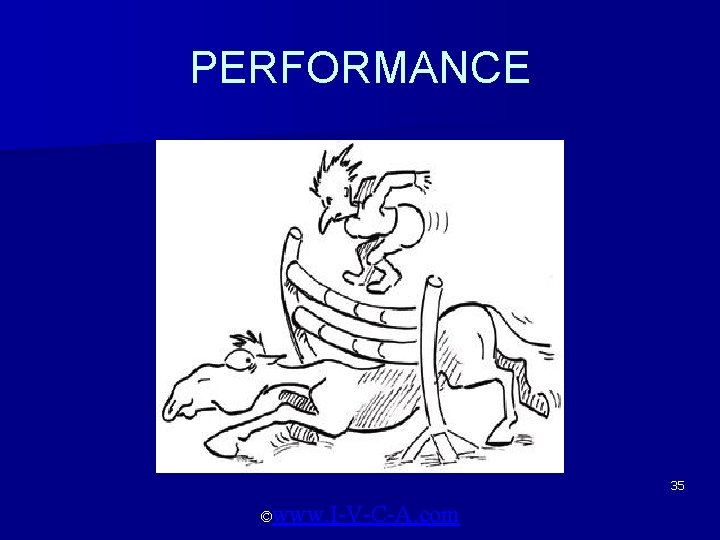
PERFORMANCE 35 ©www. I-V-C-A. com
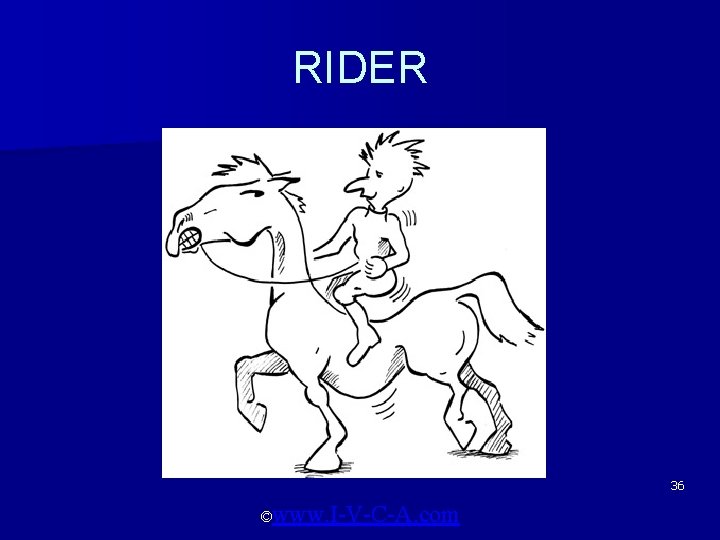
RIDER 36 ©www. I-V-C-A. com
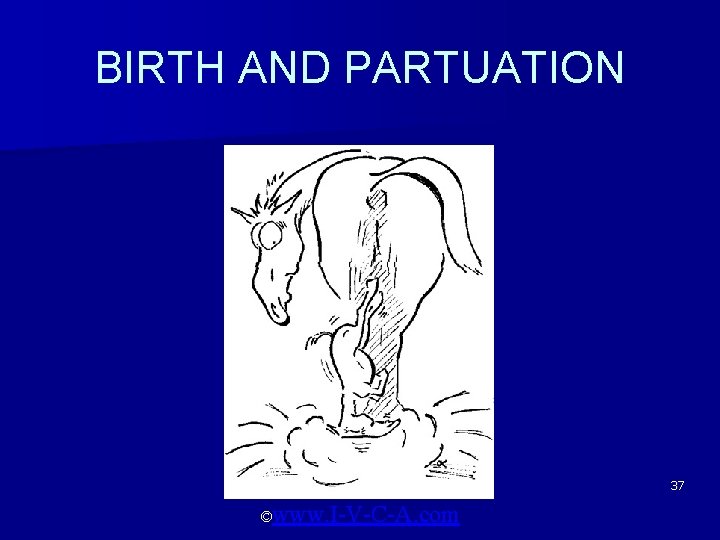
BIRTH AND PARTUATION 37 ©www. I-V-C-A. com
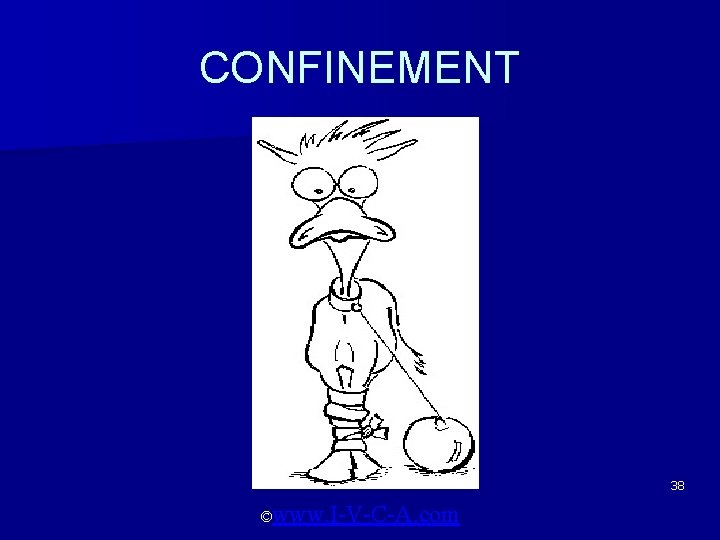
CONFINEMENT 38 ©www. I-V-C-A. com
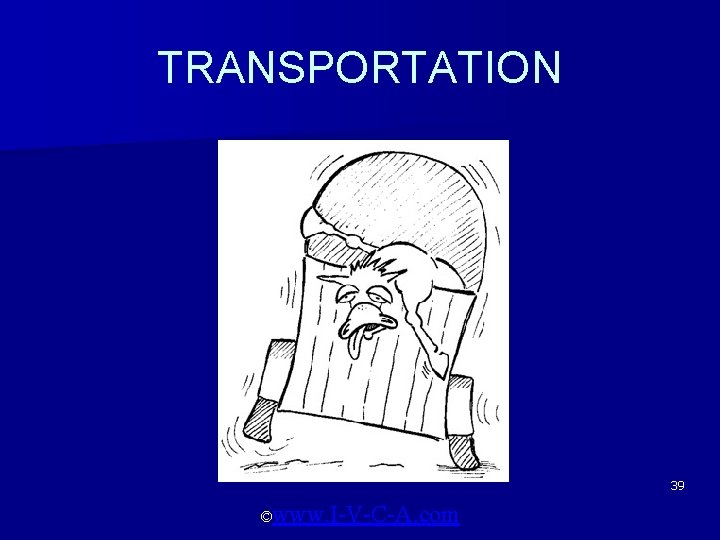
TRANSPORTATION 39 ©www. I-V-C-A. com
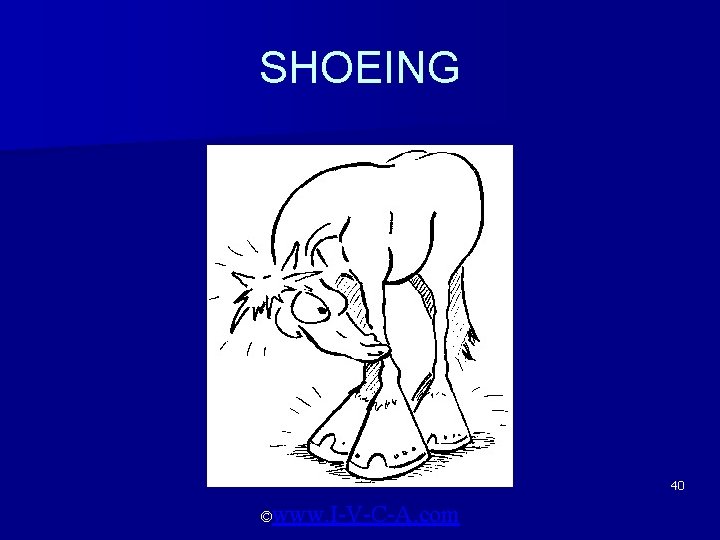
SHOEING 40 ©www. I-V-C-A. com
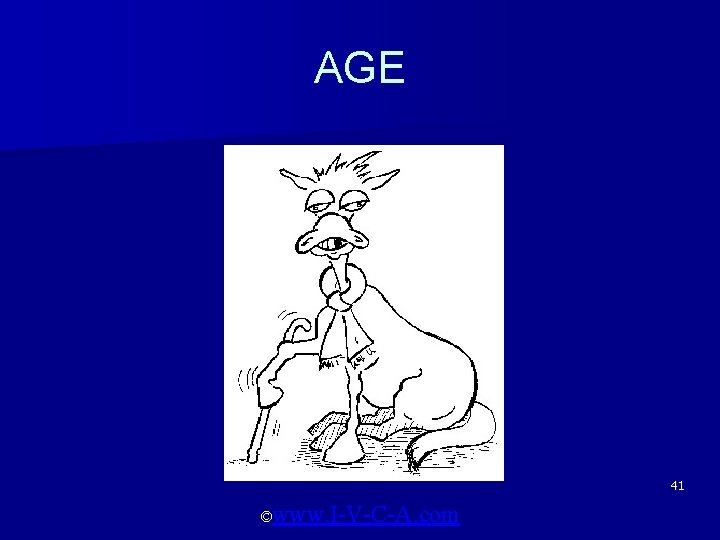
AGE 41 ©www. I-V-C-A. com
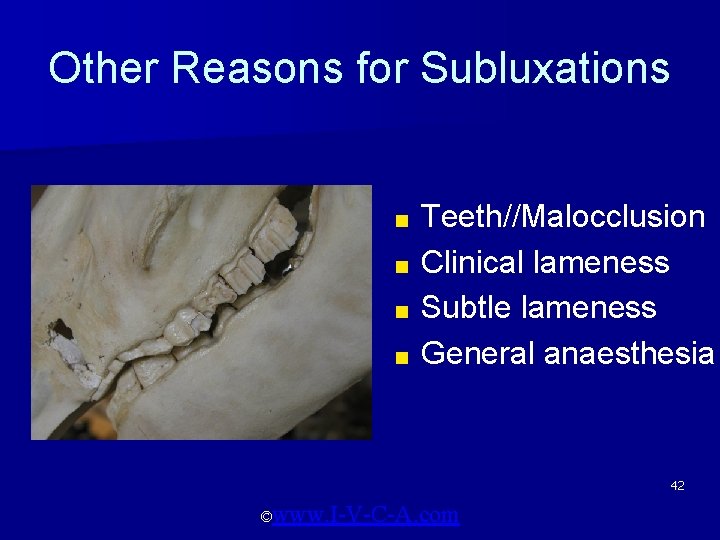
Other Reasons for Subluxations Teeth//Malocclusion ■ Clinical lameness ■ Subtle lameness ■ General anaesthesia ■ 42 ©www. I-V-C-A. com
Possible Symptoms ■ Discomfort when saddling ■ Discomfort when riding: Extending the head, hollowing the back, wringing the tail ■ Reluctance or refusal to jump ■ Refusal or resistance in performing lateral or collected movements 43 ©www. I-V-C-A. com
Possible Symptoms ■ Difficulty in flexing at the poll ■ Problems engaging the hindquarters ■ Difficulty in working “long and low” ■ Stiffness in lateral flexion of neck or back 44 ©www. I-V-C-A. com
Possible Symptoms ■ Reduced performance ■ Oversensitive back ■ Muscle atrophy ■ Changes in behavior ■ Sensitivity to touch 45 ©www. I-V-C-A. com
Possible Symptoms ■ Lack of coordination in gaits, stiffness, decreased extension in front or rear stride, short-strided gait ■ Subtle lamenesses ■ Unusual body or tail rubbing ■ Asymmetrical sweating or lack of sweating 46 ©www. I-V-C-A. com
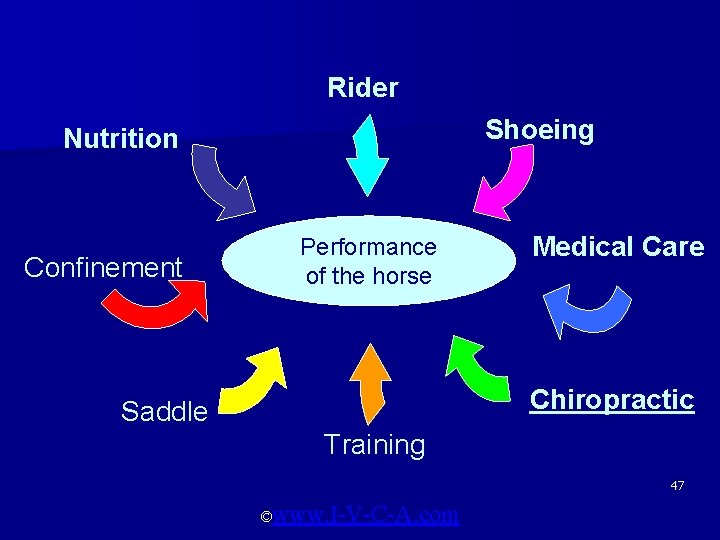
Rider Shoeing Nutrition Confinement Performance of the horse Medical Care Chiropractic Saddle Training 47 ©www. I-V-C-A. com
48 ©www. I-V-C-A. com
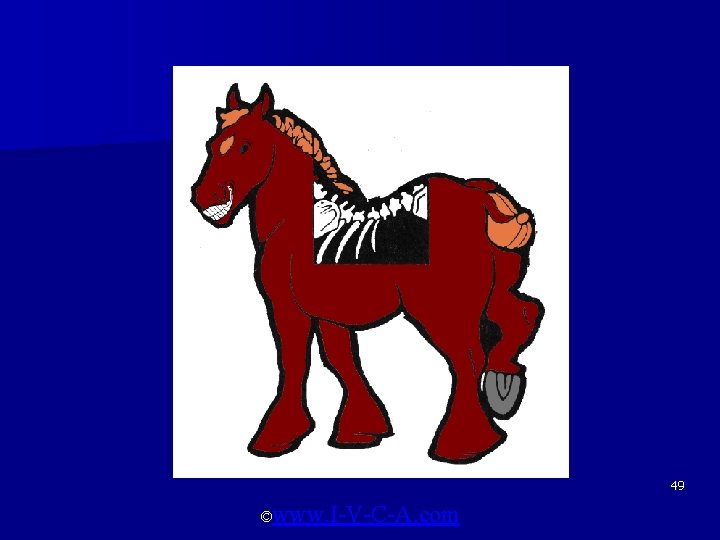
49 ©www. I-V-C-A. com
50 ©www. I-V-C-A. com