
CHINESE INTERNAL MIGRATION 2008 PRESENT NATIONAL PERMANENT VOLUNTARY
- Slides: 3
CHINESE INTERNAL MIGRATION 2008 -PRESENT NATIONAL, PERMANENT, VOLUNTARY
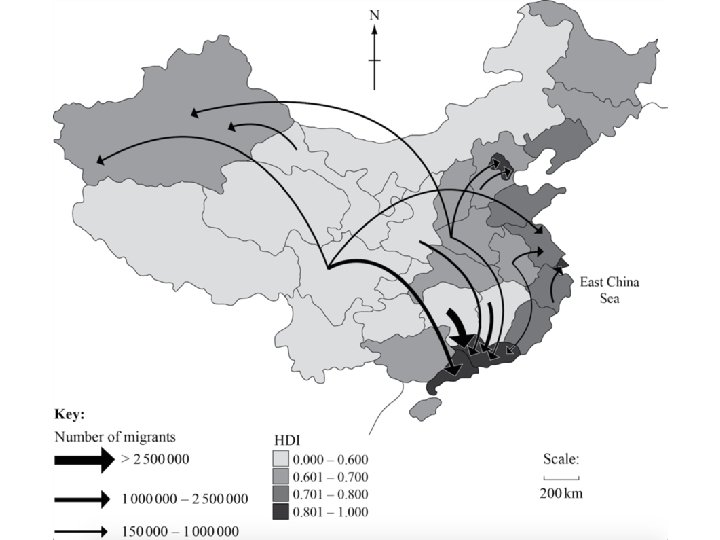
In China, there is a clear pattern of internal migration from the rural areas to the urban areas and, with the exception of Xinjiang (in the extreme west), from the central provinces to the eastern provinces. Chinese internal migration has been the biggest movement of people anywhere on earth in the last 100 years. It is estimated that China has over 150 million official internal migrants and the urban population is growing by between 15 -20 million each year. People migrate to improve their lifestyles and because they are encouraged to do so by their government. In China many more people want to migrate within the nation than the government will allow. The migrants are attracted to the big cities mainly because in almost every measurable aspect of life it is better to live in a Chinese city than in the country. Some examples of the pull factors involved are: • Life expectancy is higher in cities than in rural areas. • 34% of rural children under one year of age die compared to only 14% in the cities • 14% of children in rural areas are malnourished compared to only 3% in cities • Annual household income in the rural areas is almost half that of the cities The update of modern farming methods across China has also resulted in a massive oversupply of workers. Millions of people in the country districts are either unemployed or (more commonly) underemployed. Lacking work at home, and unable to increase their income, they look to migration to the cities as an answer. When populations migrate, there is a changed demand on infrastructure in both the place they emigrate from and the place they immigrate to. There are shifts in demands for roads, hospitals, doctors, amusement parks, schools, public transport, housing, child care, power generation, shops, police, telephones and employment. The Chinese are attempting to plan the growth of their major cities and so have laws which limit internal migration.