
Chinas Twelfth Five Years Plan on Air Pollution
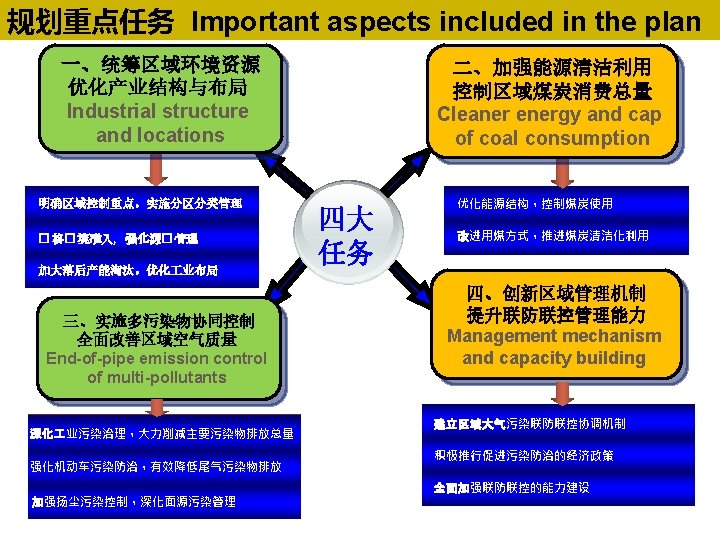
- Slides: 25
重点区域大气污染防治 “十二五”规划 China’s Twelfth Five Years Plan on Air Pollution Prevention and Control in Key Regions , BEIJING YANG, Jintian Chinese Academy for Environmental Planning Disclaimer: The views expressed in this document are those of the author, and do not necessarily reflect the views and policies of the Asian Development Bank (ADB), its Board of Directors, or the governments they represent. ADB does not guarantee the accuracy of the data included in this document, and accept no responsibility for any consequence of their use. By making any designation or reference to a particular territory or geographical area, or by using the term “country” in this document, ADB does not intend to make any judgments as to the legal or other status of any territory or area.
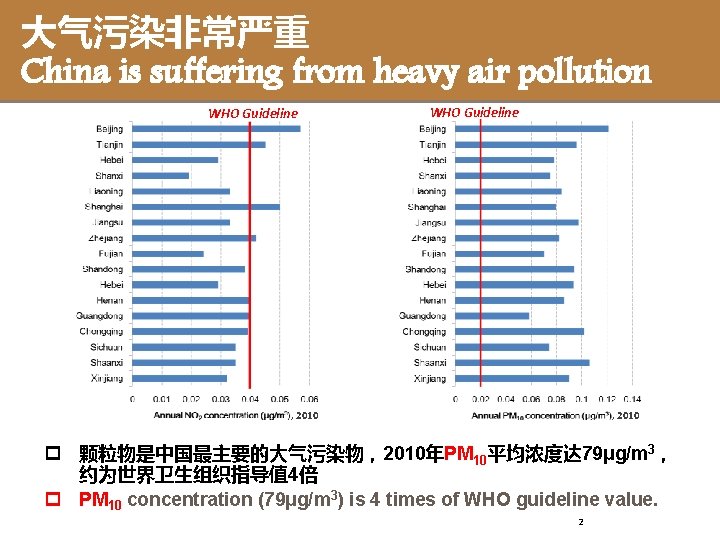
大气污染非常严重 China is suffering from heavy air pollution WHO Guideline , 2010 p 颗粒物是中国最主要的大气污染物,2010年PM 10平均浓度达 79μg/m 3, 约为世界卫生组织指导值 4倍 p PM 10 concentration (79μg/m 3) is 4 times of WHO guideline value. 2
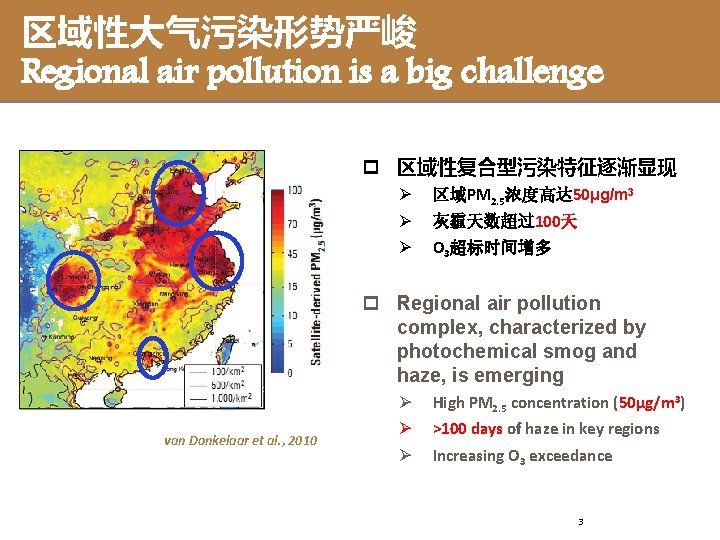
区域性大气污染形势严峻 Regional air pollution is a big challenge p 区域性复合型污染特征逐渐显现 Ø 区域PM 2. 5浓度高达 50μg/m 3 Ø 灰霾天数超过100天 Ø O 3超标时间增多 p Regional air pollution complex, characterized by photochemical smog and haze, is emerging van Donkelaar et al. , 2010 Ø High PM 2. 5 concentration (50μg/m 3) Ø >100 days of haze in key regions Ø Increasing O 3 exceedance 3
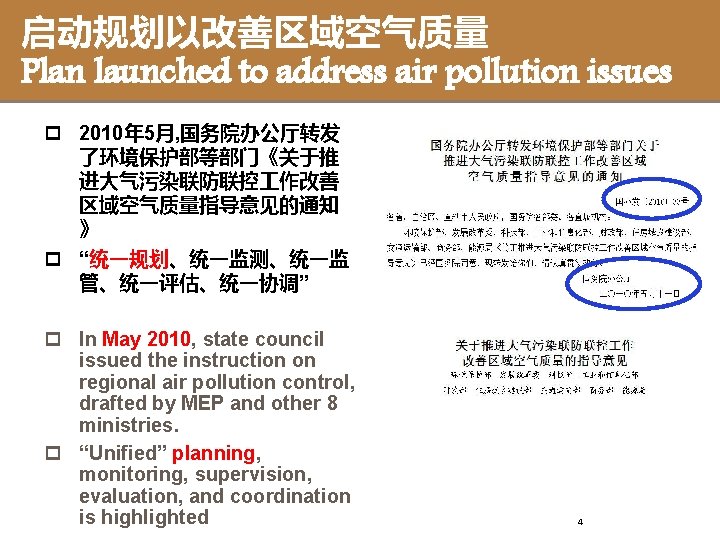
启动规划以改善区域空气质量 Plan launched to address air pollution issues p 2010年 5月, 国务院办公厅转发 了环境保护部等部门《关于推 进大气污染联防联控 作改善 区域空气质量指导意见的通知 》 p “统一规划、统一监测、统一监 管、统一评估、统一协调” p In May 2010, state council issued the instruction on regional air pollution control, drafted by MEP and other 8 ministries. p “Unified” planning, monitoring, supervision, evaluation, and coordination is highlighted 4
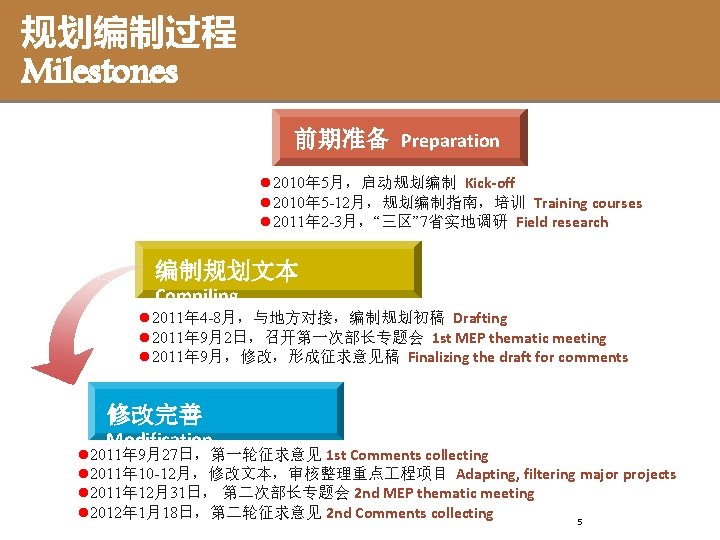
规划编制过程 Milestones 前期准备 Preparation l 2010年 5月,启动规划编制 Kick-off l 2010年 5 -12月,规划编制指南,培训 Training courses l 2011年 2 -3月,“三区” 7省实地调研 Field research 编制规划文本 Compiling l 2011年 4 -8月,与地方对接,编制规划初稿 Drafting l 2011年 9月2日,召开第一次部长专题会 1 st MEP thematic meeting l 2011年 9月,修改,形成征求意见稿 Finalizing the draft for comments 修改完善 Modification l 2011年 9月27日,第一轮征求意见 1 st Comments collecting l 2011年 10 -12月,修改文本,审核整理重点 程项目 Adapting, filtering major projects l 2011年 12月31日, 第二次部长专题会 2 nd MEP thematic meeting l 2012年 1月18日,第二轮征求意见 2 nd Comments collecting 5
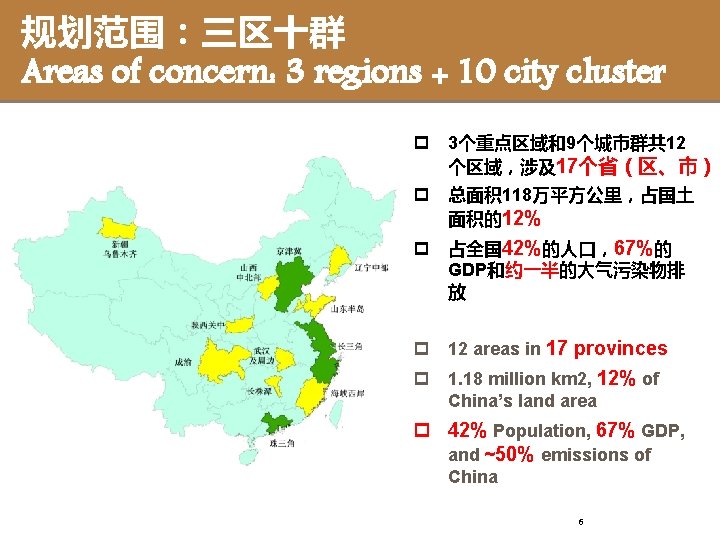
规划范围:三区十群 Areas of concern: 3 regions + 10 city cluster p 3个重点区域和9个城市群共 12 个区域,涉及17个省(区、市) p 总面积 118万平方公里,占国土 面积的12% p 占全国 42%的人口,67%的 GDP和约一半的大气污染物排 放 p 12 areas in 17 provinces p 1. 18 million km 2, 12% of China’s land area p 42% Population, 67% GDP, and ~50% emissions of China 6
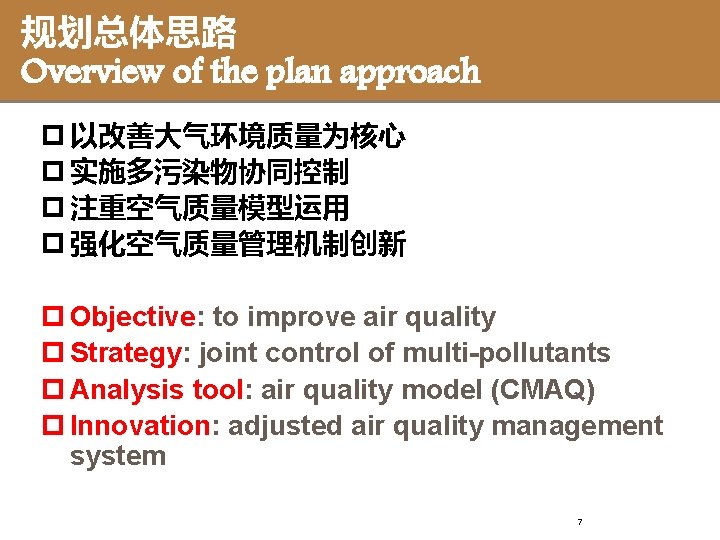
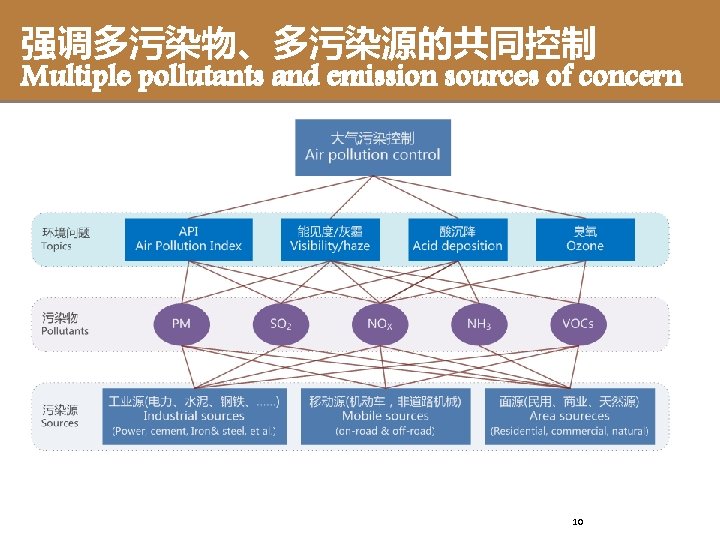
规划总体思路 Overview of the plan approach p 以改善大气环境质量为核心 p 实施多污染物协同控制 p 注重空气质量模型运用 p 强化空气质量管理机制创新 p Objective: to improve air quality p Strategy: joint control of multi-pollutants p Analysis tool: air quality model (CMAQ) p Innovation: adjusted air quality management system 7
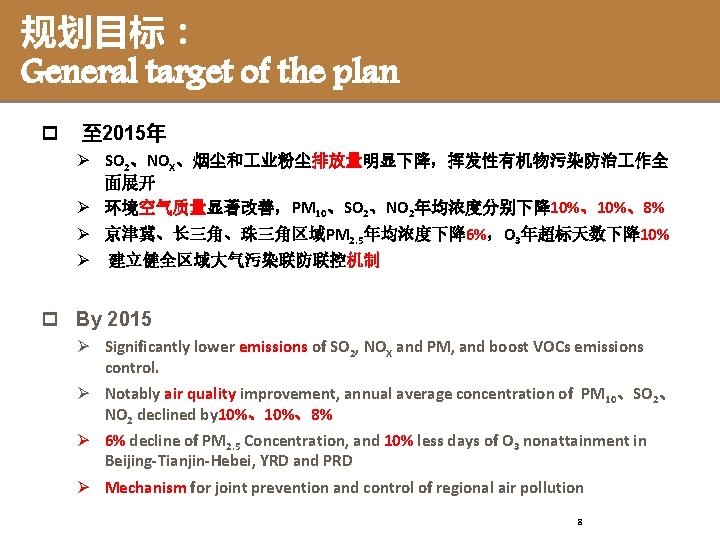
规划目标: General target of the plan p 至 2015年 Ø SO 2、NOX、烟尘和 业粉尘排放量明显下降,挥发性有机物污染防治 作全 面展开 Ø 环境空气质量显著改善,PM 10、SO 2、NO 2年均浓度分别下降10%、8% Ø 京津冀、长三角、珠三角区域PM 2. 5年均浓度下降6%,O 3年超标天数下降10% Ø 建立健全区域大气污染联防联控机制 p By 2015 Ø Significantly lower emissions of SO 2, NOX and PM, and boost VOCs emissions control. Ø Notably air quality improvement, annual average concentration of PM 10、SO 2、 NO 2 declined by 10%、8% Ø 6% decline of PM 2. 5 Concentration, and 10% less days of O 3 nonattainment in Beijing-Tianjin-Hebei, YRD and PRD Ø Mechanism for joint prevention and control of regional air pollution 8
强调多污染物、多污染源的共同控制 Multiple pollutants and emission sources of concern 10
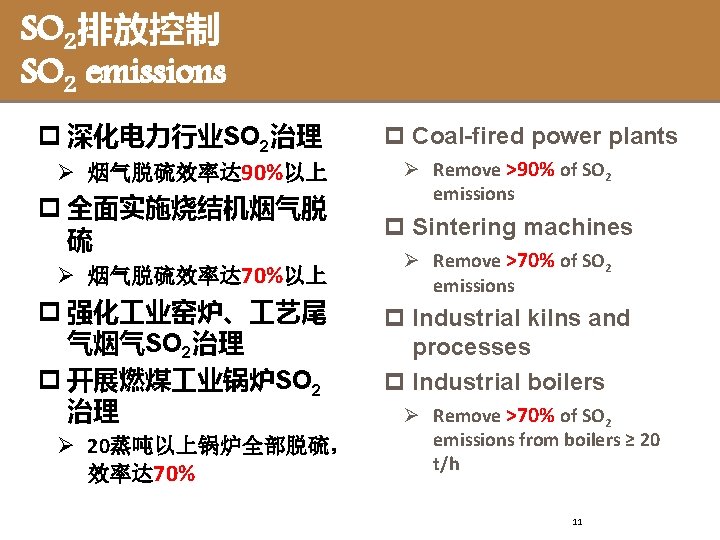
SO 2排放控制 SO 2 emissions p 深化电力行业SO 2治理 Ø 烟气脱硫效率达 90%以上 p 全面实施烧结机烟气脱 硫 Ø 烟气脱硫效率达 70%以上 p 强化 业窑炉、 艺尾 气烟气SO 2治理 p 开展燃煤 业锅炉SO 2 治理 Ø 20蒸吨以上锅炉全部脱硫, 效率达 70% p Coal-fired power plants Ø Remove >90% of SO 2 emissions p Sintering machines Ø Remove >70% of SO 2 emissions p Industrial kilns and processes p Industrial boilers Ø Remove >70% of SO 2 emissions from boilers ≥ 20 t/h 11
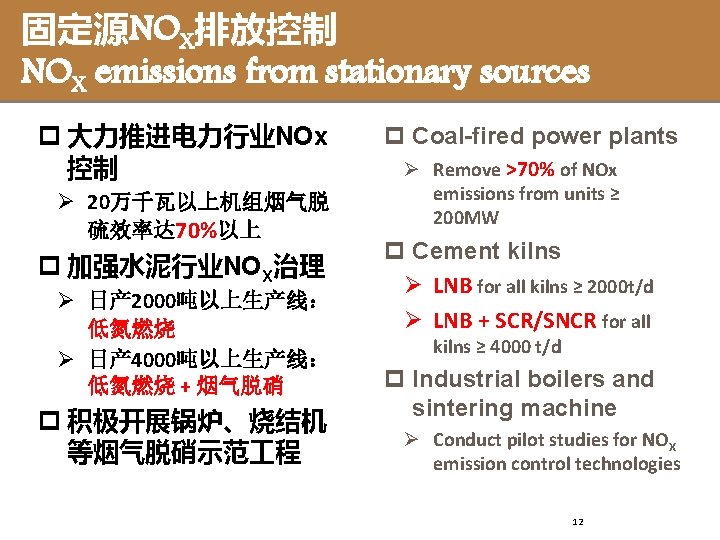
固定源NOX排放控制 NOX emissions from stationary sources p 大力推进电力行业NOx 控制 Ø 20万千瓦以上机组烟气脱 硫效率达 70%以上 p 加强水泥行业NOX治理 Ø 日产 2000吨以上生产线: 低氮燃烧 Ø 日产 4000吨以上生产线: 低氮燃烧 + 烟气脱硝 p 积极开展锅炉、烧结机 等烟气脱硝示范 程 p Coal-fired power plants Ø Remove >70% of NOx emissions from units ≥ 200 MW p Cement kilns Ø LNB for all kilns ≥ 2000 t/d Ø LNB + SCR/SNCR for all kilns ≥ 4000 t/d p Industrial boilers and sintering machine Ø Conduct pilot studies for NOX emission control technologies 12
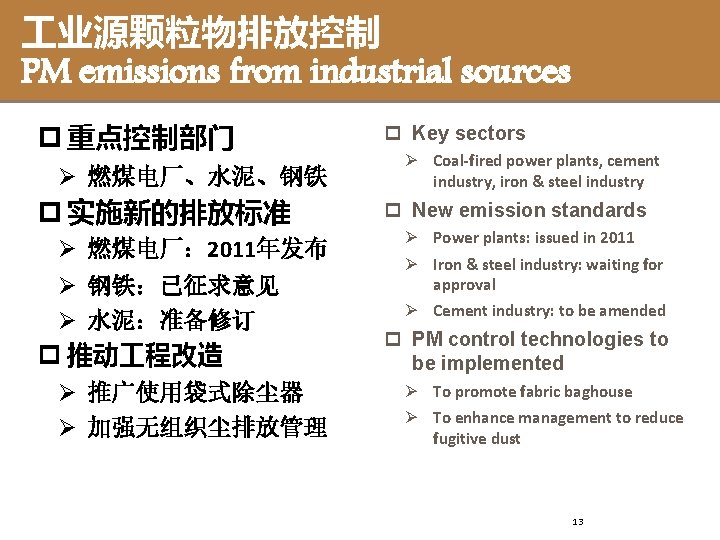
业源颗粒物排放控制 PM emissions from industrial sources p 重点控制部门 Ø 燃煤电厂、水泥、钢铁 p 实施新的排放标准 Ø 燃煤电厂: 2011年发布 Ø 钢铁:已征求意见 Ø 水泥:准备修订 p 推动 程改造 Ø 推广使用袋式除尘器 Ø 加强无组织尘排放管理 p Key sectors Ø Coal-fired power plants, cement industry, iron & steel industry p New emission standards Ø Power plants: issued in 2011 Ø Iron & steel industry: waiting for approval Ø Cement industry: to be amended p PM control technologies to be implemented Ø To promote fabric baghouse Ø To enhance management to reduce fugitive dust 13
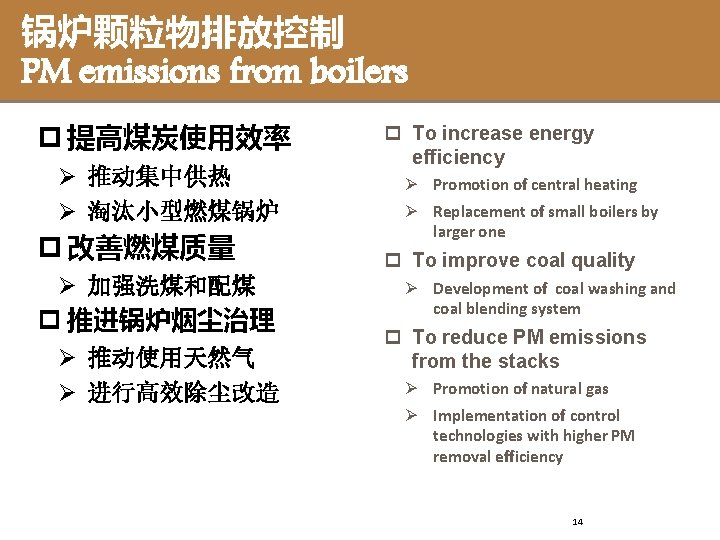
锅炉颗粒物排放控制 PM emissions from boilers p 提高煤炭使用效率 Ø 推动集中供热 Ø 淘汰小型燃煤锅炉 p 改善燃煤质量 Ø 加强洗煤和配煤 p 推进锅炉烟尘治理 Ø 推动使用天然气 Ø 进行高效除尘改造 p To increase energy efficiency Ø Promotion of central heating Ø Replacement of small boilers by larger one p To improve coal quality Ø Development of coal washing and coal blending system p To reduce PM emissions from the stacks Ø Promotion of natural gas Ø Implementation of control technologies with higher PM removal efficiency 14
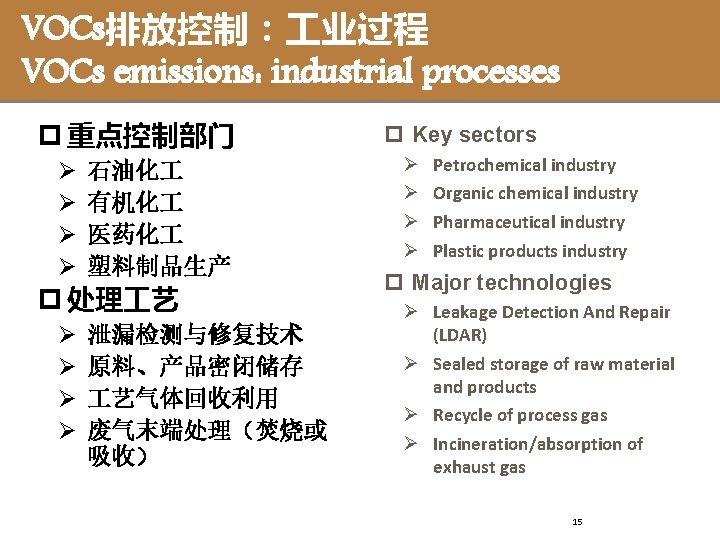
VOCs排放控制: 业过程 VOCs emissions: industrial processes p 重点控制部门 Ø Ø 石油化 有机化 医药化 塑料制品生产 p 处理 艺 Ø Ø 泄漏检测与修复技术 原料、产品密闭储存 艺气体回收利用 废气末端处理(焚烧或 吸收) p Key sectors Ø Ø Petrochemical industry Organic chemical industry Pharmaceutical industry Plastic products industry p Major technologies Ø Leakage Detection And Repair (LDAR) Ø Sealed storage of raw material and products Ø Recycle of process gas Ø Incineration/absorption of exhaust gas 15
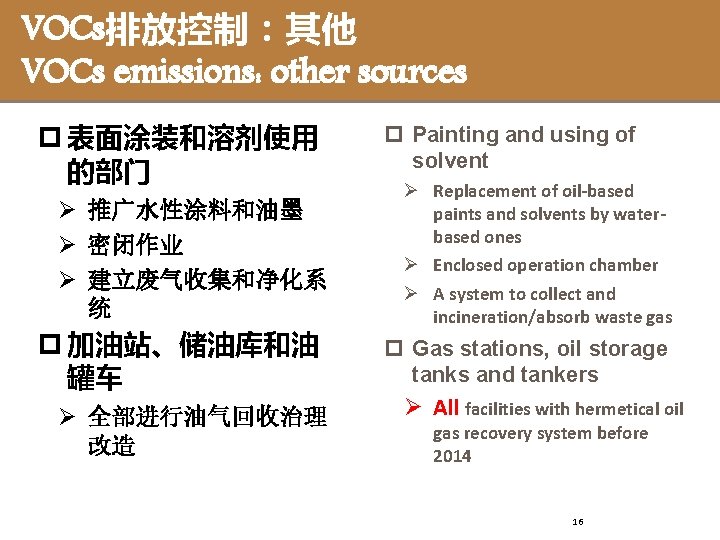
VOCs排放控制:其他 VOCs emissions: other sources p 表面涂装和溶剂使用 的部门 Ø 推广水性涂料和油墨 Ø 密闭作业 Ø 建立废气收集和净化系 统 p 加油站、储油库和油 罐车 Ø 全部进行油气回收治理 改造 p Painting and using of solvent Ø Replacement of oil-based paints and solvents by waterbased ones Ø Enclosed operation chamber Ø A system to collect and incineration/absorb waste gas p Gas stations, oil storage tanks and tankers Ø All facilities with hermetical oil gas recovery system before 2014 16
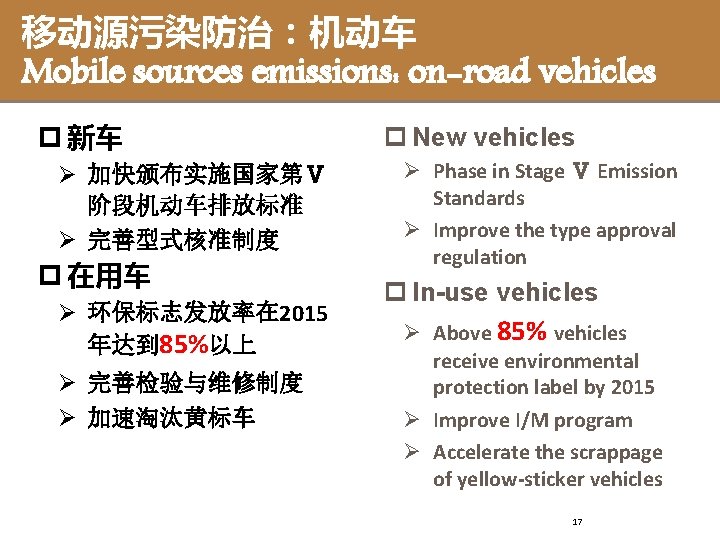
移动源污染防治:机动车 Mobile sources emissions: on-road vehicles p 新车 Ø 加快颁布实施国家第Ⅴ 阶段机动车排放标准 Ø 完善型式核准制度 p 在用车 Ø 环保标志发放率在 2015 年达到 85%以上 Ø 完善检验与维修制度 Ø 加速淘汰黄标车 p New vehicles Ø Phase in Stage Ⅴ Emission Standards Ø Improve the type approval regulation p In-use vehicles Ø Above 85% vehicles receive environmental protection label by 2015 Ø Improve I/M program Ø Accelerate the scrappage of yellow-sticker vehicles 17
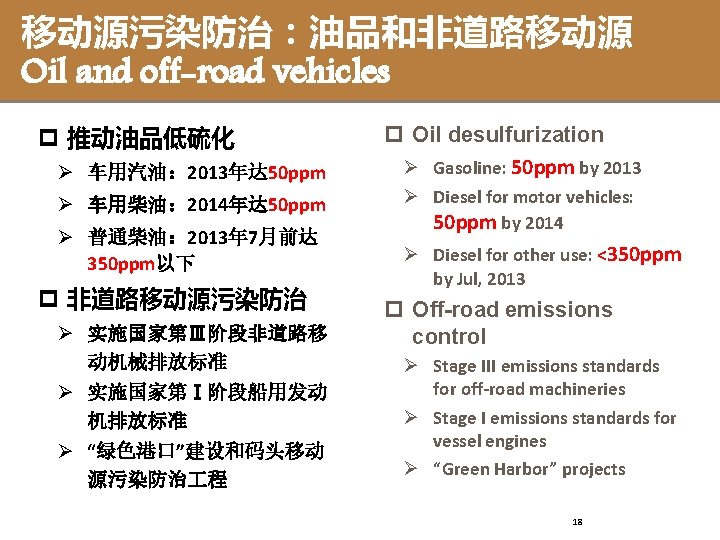
移动源污染防治:油品和非道路移动源 Oil and off-road vehicles p 推动油品低硫化 Ø 车用汽油: 2013年达 50 ppm Ø 车用柴油: 2014年达 50 ppm Ø 普通柴油: 2013年 7月前达 350 ppm以下 p 非道路移动源污染防治 Ø 实施国家第Ⅲ阶段非道路移 动机械排放标准 Ø 实施国家第Ⅰ阶段船用发动 机排放标准 Ø “绿色港口”建设和码头移动 源污染防治 程 p Oil desulfurization Ø Gasoline: 50 ppm by 2013 Ø Diesel for motor vehicles: 50 ppm by 2014 Ø Diesel for other use: <350 ppm by Jul, 2013 p Off-road emissions control Ø Stage III emissions standards for off-road machineries Ø Stage I emissions standards for vessel engines Ø “Green Harbor” projects 18
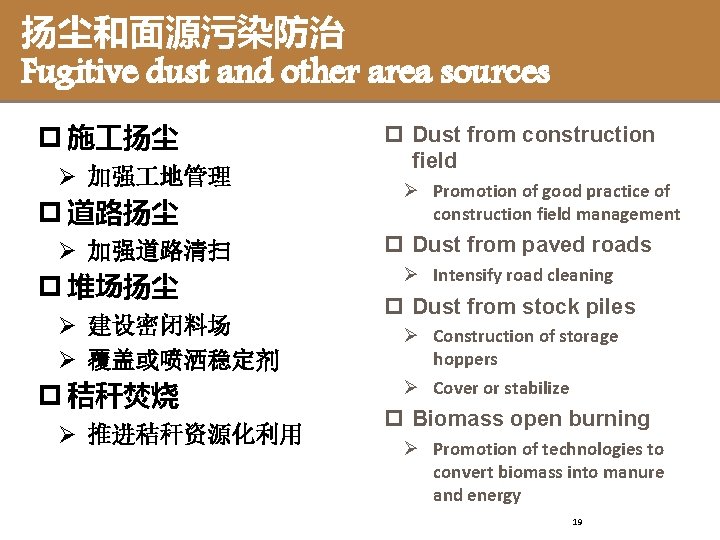
扬尘和面源污染防治 Fugitive dust and other area sources p 施 扬尘 Ø 加强 地管理 p 道路扬尘 Ø 加强道路清扫 p 堆场扬尘 Ø 建设密闭料场 Ø 覆盖或喷洒稳定剂 p 秸秆焚烧 Ø 推进秸秆资源化利用 p Dust from construction field Ø Promotion of good practice of construction field management p Dust from paved roads Ø Intensify road cleaning p Dust from stock piles Ø Construction of storage hoppers Ø Cover or stabilize p Biomass open burning Ø Promotion of technologies to convert biomass into manure and energy 19
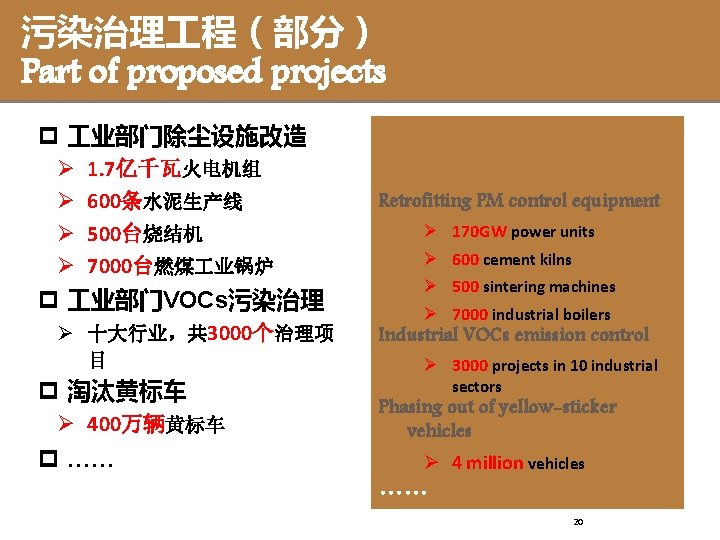
污染治理 程(部分) Part of proposed projects p 业部门除尘设施改造 Ø Ø 1. 7亿千瓦火电机组 600条水泥生产线 500台烧结机 7000台燃煤 业锅炉 p 业部门VOCs污染治理 Ø 十大行业,共 3000个治理项 目 p 淘汰黄标车 Ø 400万辆黄标车 p …… Retrofitting PM control equipment Ø Ø 170 GW power units 600 cement kilns 500 sintering machines 7000 industrial boilers Industrial VOCs emission control Ø 3000 projects in 10 industrial sectors Phasing out of yellow-sticker vehicles Ø 4 million vehicles …… 20
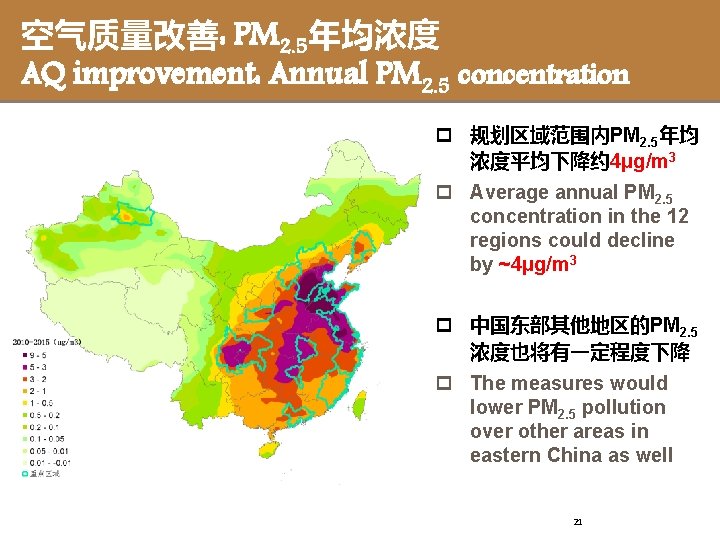
空气质量改善: PM 2. 5年均浓度 AQ improvement: Annual PM 2. 5 concentration p 规划区域范围内PM 2. 5年均 浓度平均下降约 4μg/m 3 p Average annual PM 2. 5 concentration in the 12 regions could decline by ~4μg/m 3 p 中国东部其他地区的PM 2. 5 浓度也将有一定程度下降 p The measures would lower PM 2. 5 pollution over other areas in eastern China as well 21
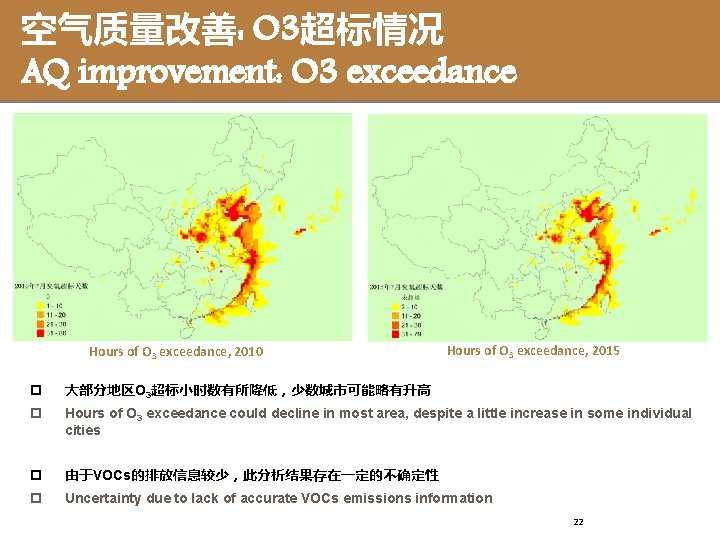
空气质量改善: O 3超标情况 AQ improvement: O 3 exceedance Hours of O 3 exceedance, 2010 Hours of O 3 exceedance, 2015 p 大部分地区O 3超标小时数有所降低,少数城市可能略有升高 p Hours of O 3 exceedance could decline in most area, despite a little increase in some individual cities p 由于VOCs的排放信息较少,此分析结果存在一定的不确定性 p Uncertainty due to lack of accurate VOCs emissions information 22
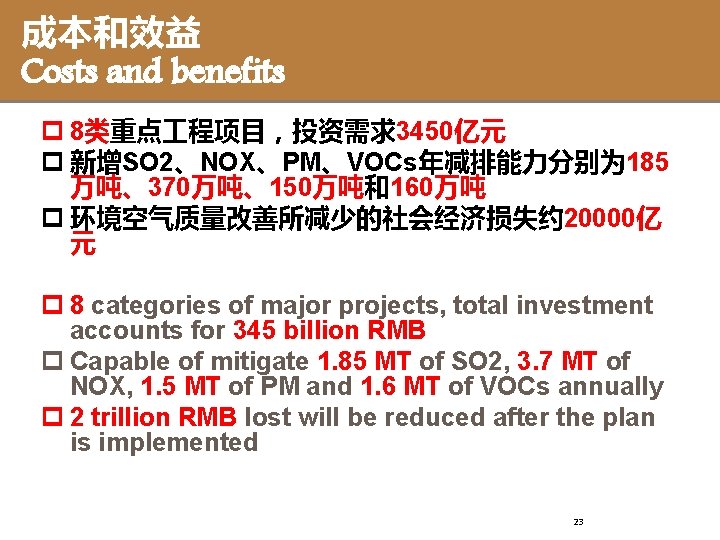
成本和效益 Costs and benefits p 8类重点 程项目,投资需求3450亿元 p 新增SO 2、NOX、PM、VOCs年减排能力分别为 185 万吨、370万吨、150万吨和160万吨 p 环境空气质量改善所减少的社会经济损失约 20000亿 元 p 8 categories of major projects, total investment accounts for 345 billion RMB p Capable of mitigate 1. 85 MT of SO 2, 3. 7 MT of NOX, 1. 5 MT of PM and 1. 6 MT of VOCs annually p 2 trillion RMB lost will be reduced after the plan is implemented 23
进一步的 作 Future efforts p 增强污染物排放信息的统计能力 Ø VOCs,非道路移动源,扬尘…… p 进一步研究VOCs控制技术和政策 p 增强环境监测和污染物排放在线监测能力建设 p More accurate emissions information Ø VOCs, off-road mobile sources, fugitive dust, . . . p Measures to control VOCs emissions p Air quality monitor and CEMS 24
谢谢! Thank you! YANG, Jintian Deputy chief engineer Chinese Academy for Environmental Planning yangjt@caep. org. cn 25