
Chinas Mandate of Heaven European Imperialism in China
- Slides: 18
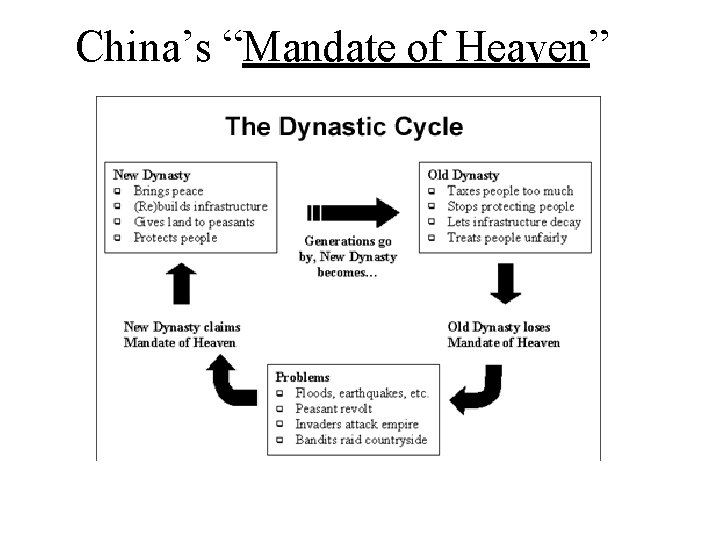
China’s “Mandate of Heaven”
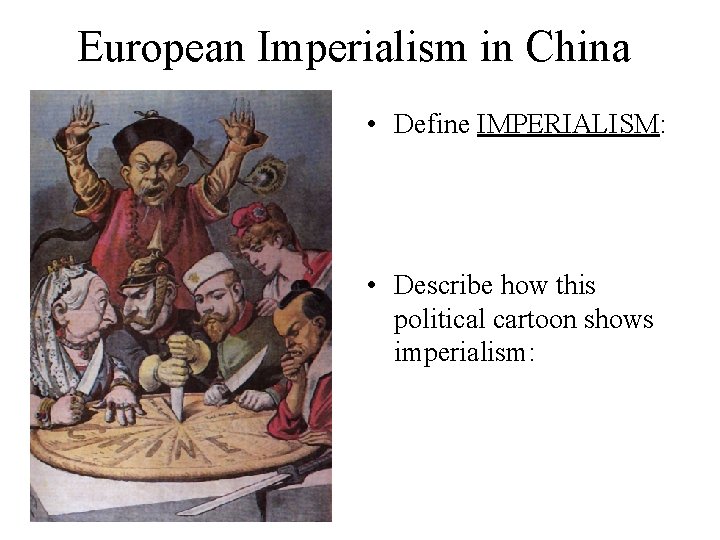
European Imperialism in China • Define IMPERIALISM: • Describe how this political cartoon shows imperialism:
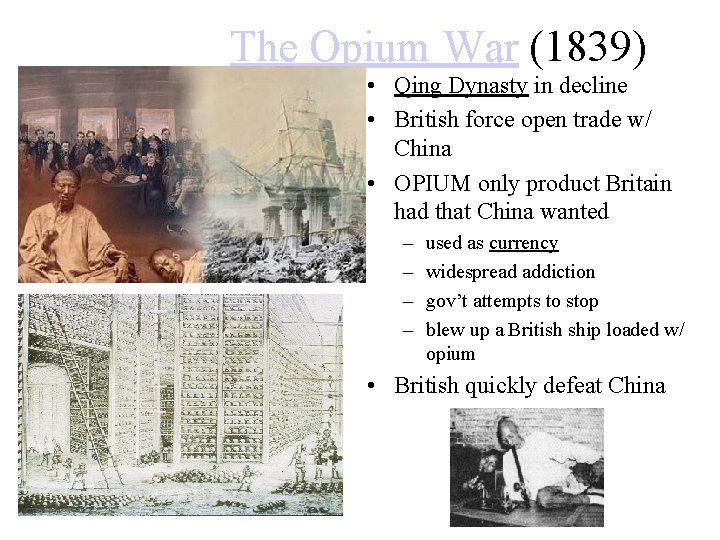
The Opium War (1839) • Qing Dynasty in decline • British force open trade w/ China • OPIUM only product Britain had that China wanted – – used as currency widespread addiction gov’t attempts to stop blew up a British ship loaded w/ opium • British quickly defeat China
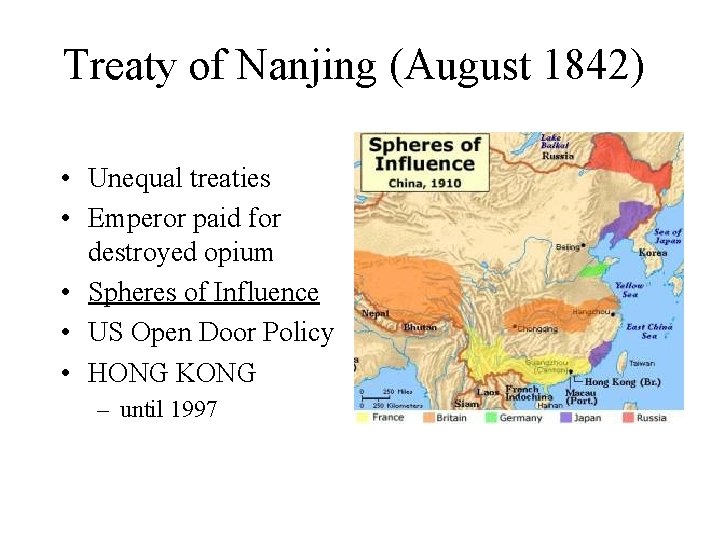
Treaty of Nanjing (August 1842) • Unequal treaties • Emperor paid for destroyed opium • Spheres of Influence • US Open Door Policy • HONG KONG – until 1997
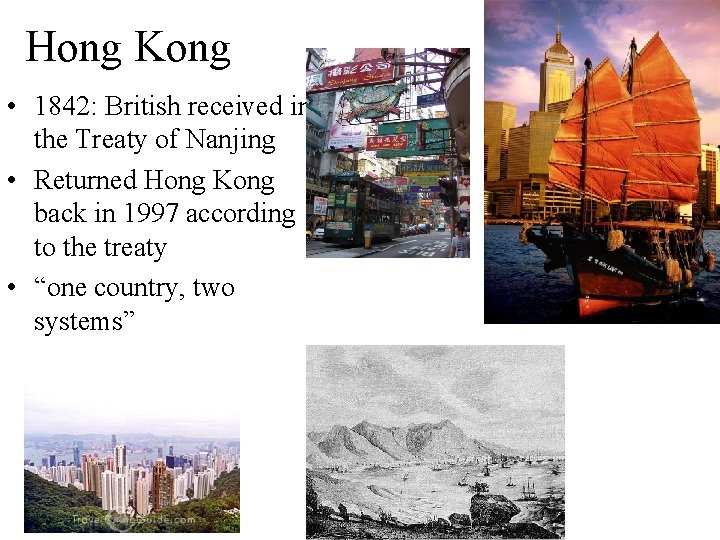
Hong Kong • 1842: British received in the Treaty of Nanjing • Returned Hong Kong back in 1997 according to the treaty • “one country, two systems”
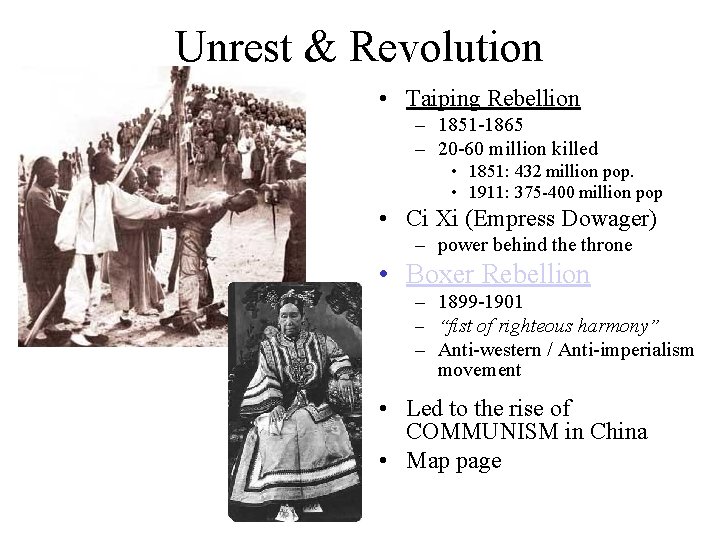
Unrest & Revolution • Taiping Rebellion – 1851 -1865 – 20 -60 million killed • 1851: 432 million pop. • 1911: 375 -400 million pop • Ci Xi (Empress Dowager) – power behind the throne • Boxer Rebellion – 1899 -1901 – “fist of righteous harmony” – Anti-western / Anti-imperialism movement • Led to the rise of COMMUNISM in China • Map page
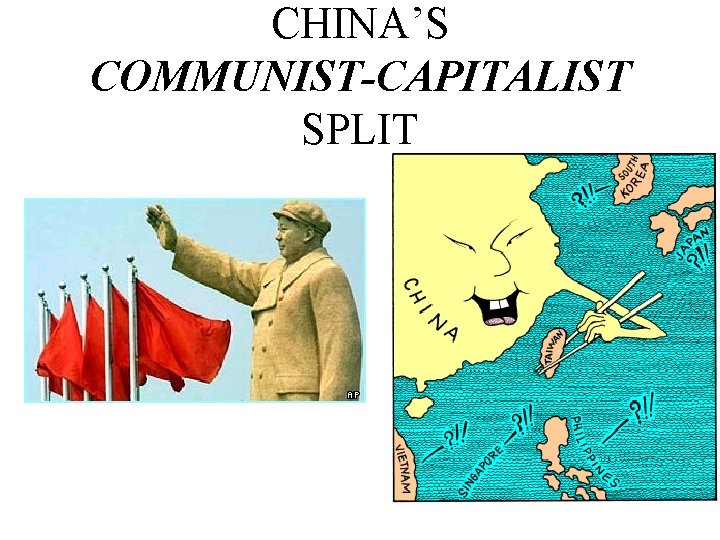
CHINA’S COMMUNIST-CAPITALIST SPLIT
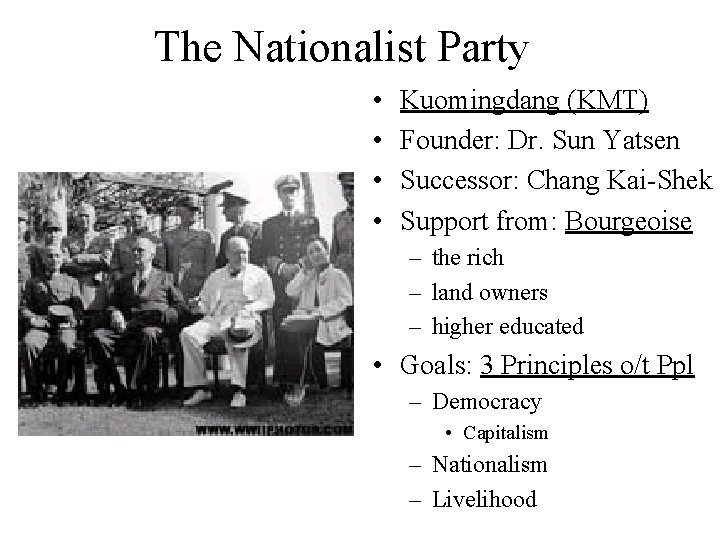
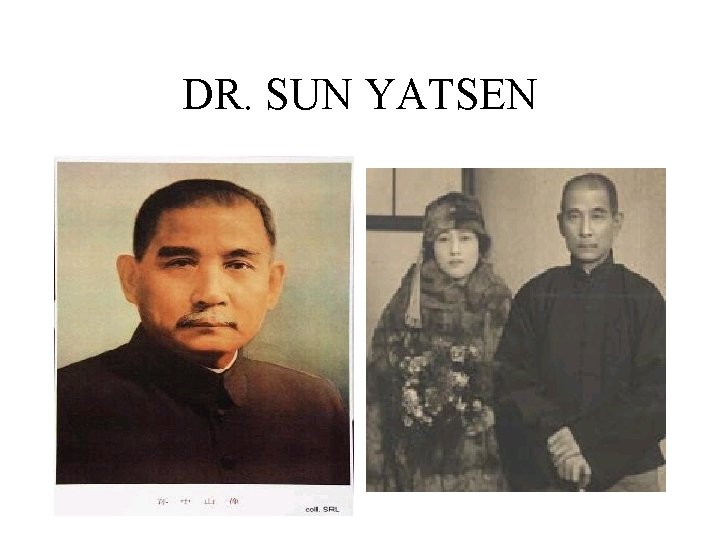
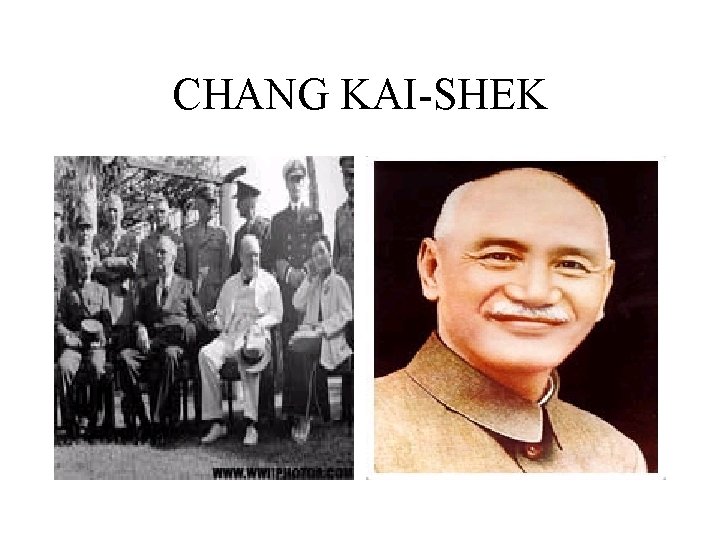
The Nationalist Party • • Kuomingdang (KMT) Founder: Dr. Sun Yatsen Successor: Chang Kai-Shek Support from: Bourgeoise – the rich – land owners – higher educated • Goals: 3 Principles o/t Ppl – Democracy • Capitalism – Nationalism – Livelihood
DR. SUN YATSEN
CHANG KAI-SHEK
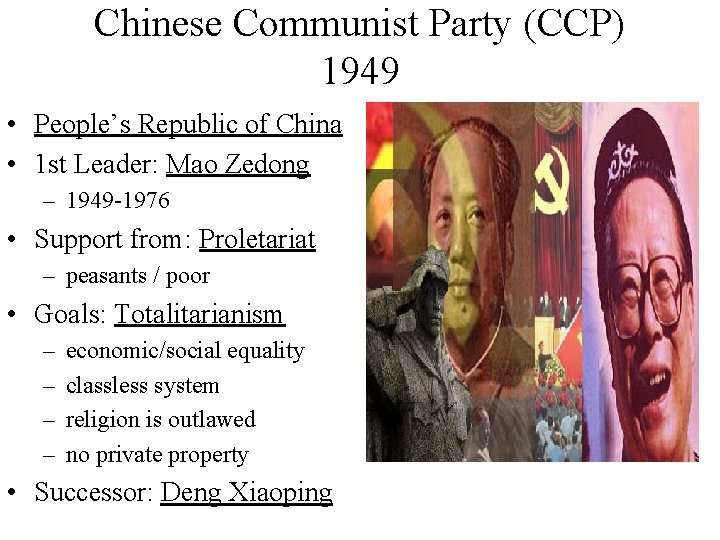
Chinese Communist Party (CCP) 1949 • People’s Republic of China • 1 st Leader: Mao Zedong – 1949 -1976 • Support from: Proletariat – peasants / poor • Goals: Totalitarianism – – economic/social equality classless system religion is outlawed no private property • Successor: Deng Xiaoping
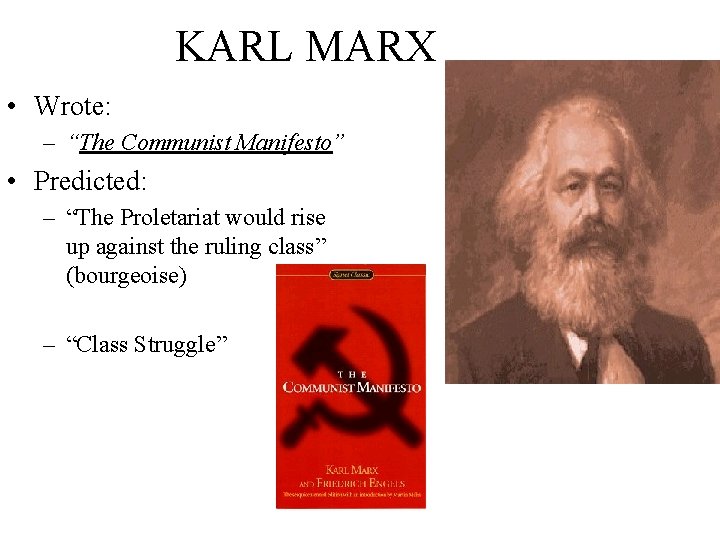
KARL MARX • Wrote: – “The Communist Manifesto” • Predicted: – “The Proletariat would rise up against the ruling class” (bourgeoise) – “Class Struggle”
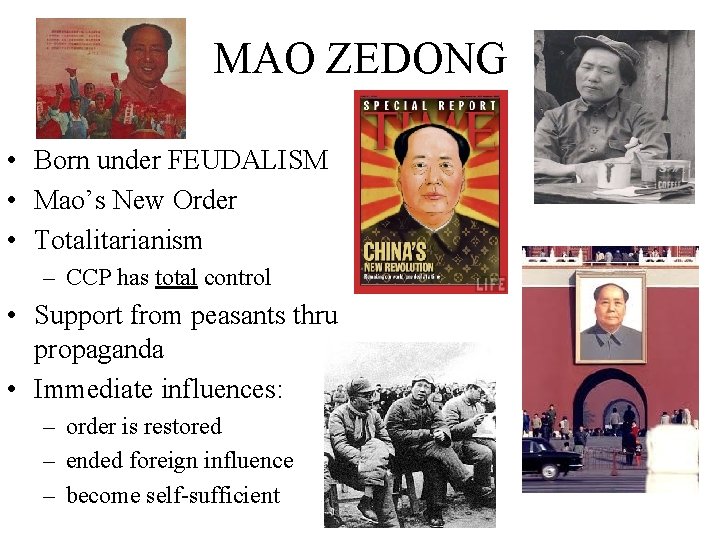
MAO ZEDONG • Born under FEUDALISM • Mao’s New Order • Totalitarianism – CCP has total control • Support from peasants thru propaganda • Immediate influences: – order is restored – ended foreign influence – become self-sufficient
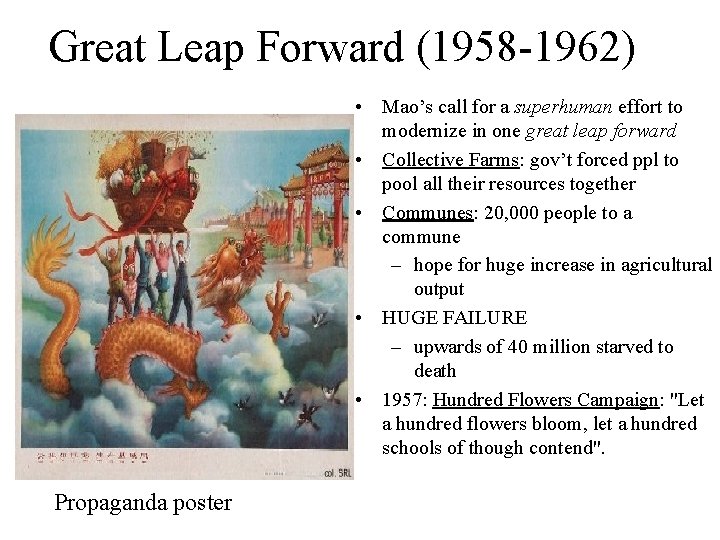
Great Leap Forward (1958 -1962) • Mao’s call for a superhuman effort to modernize in one great leap forward • Collective Farms: gov’t forced ppl to pool all their resources together • Communes: 20, 000 people to a commune – hope for huge increase in agricultural output • HUGE FAILURE – upwards of 40 million starved to death • 1957: Hundred Flowers Campaign: "Let a hundred flowers bloom, let a hundred schools of though contend". Propaganda poster
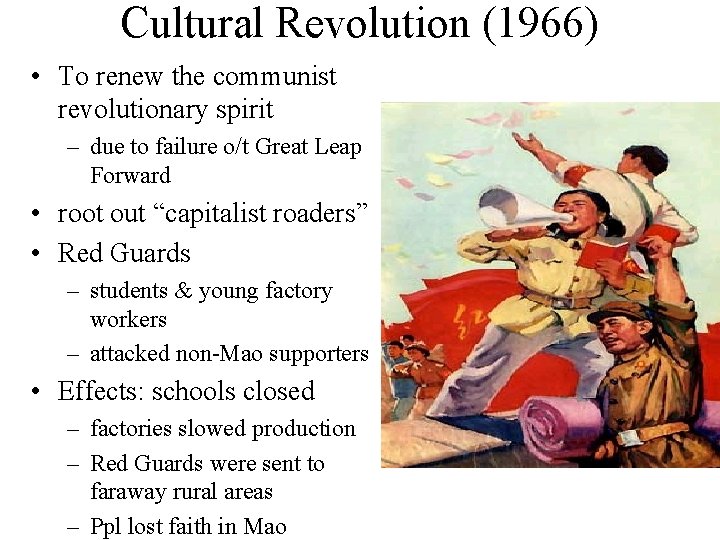
Cultural Revolution (1966) • To renew the communist revolutionary spirit – due to failure o/t Great Leap Forward • root out “capitalist roaders” • Red Guards – students & young factory workers – attacked non-Mao supporters • Effects: schools closed – factories slowed production – Red Guards were sent to faraway rural areas – Ppl lost faith in Mao
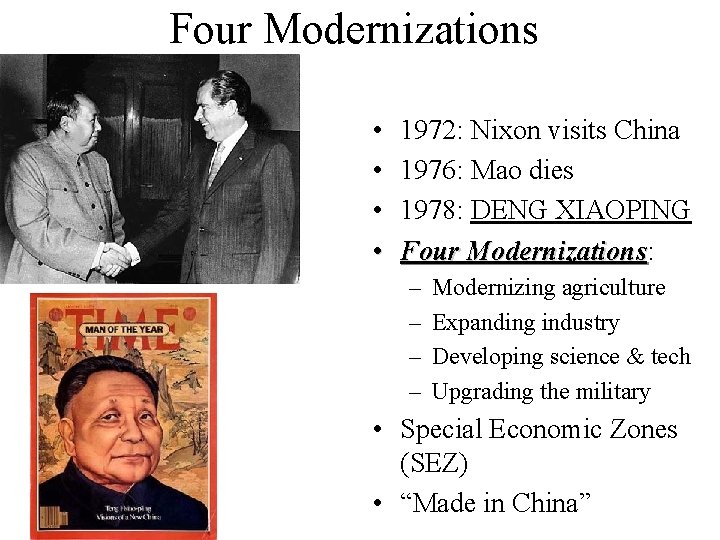
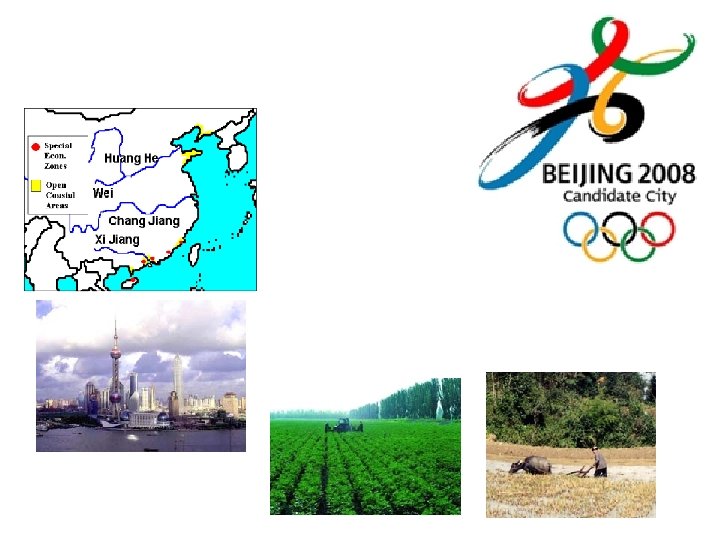
Four Modernizations • • 1972: Nixon visits China 1976: Mao dies 1978: DENG XIAOPING Four Modernizations: Modernizations – – Modernizing agriculture Expanding industry Developing science & tech Upgrading the military • Special Economic Zones (SEZ) • “Made in China”
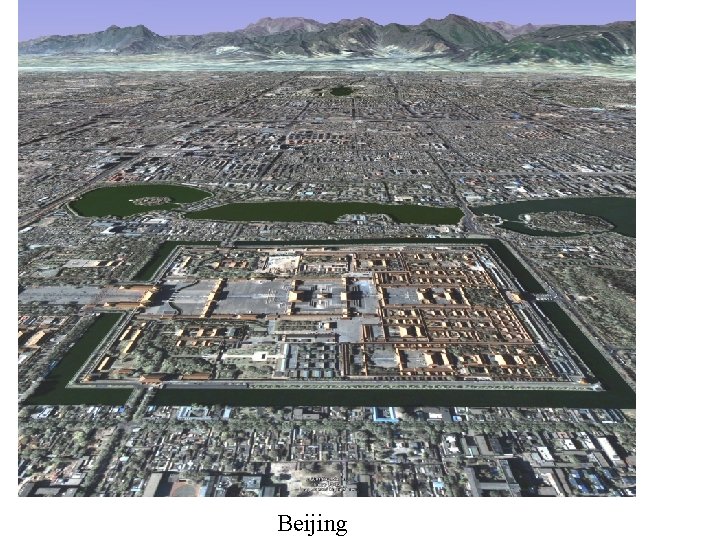
Beijing