
China is one of the oldest civilisations of
- Slides: 16
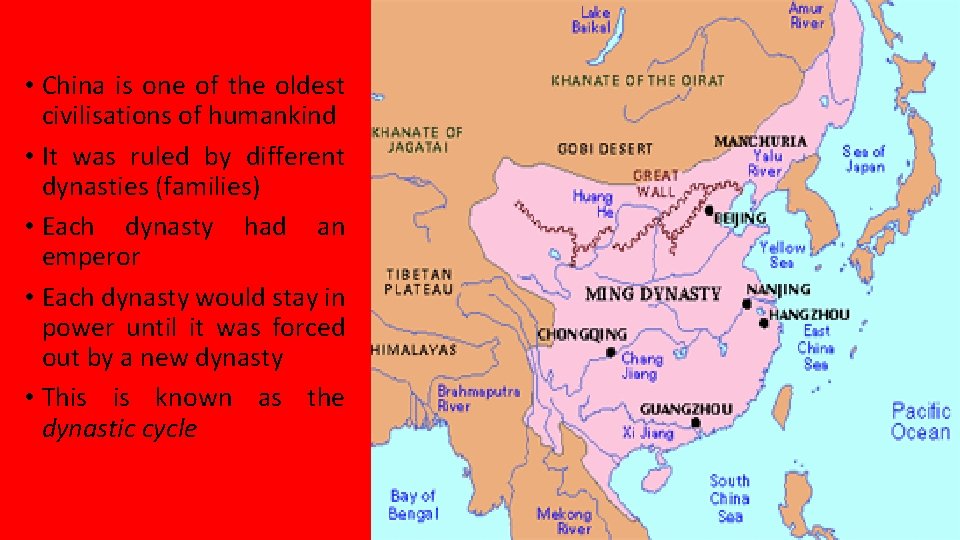
• China is one of the oldest civilisations of humankind • It was ruled by different dynasties (families) • Each dynasty had an emperor • Each dynasty would stay in power until it was forced out by a new dynasty • This is known as the dynastic cycle
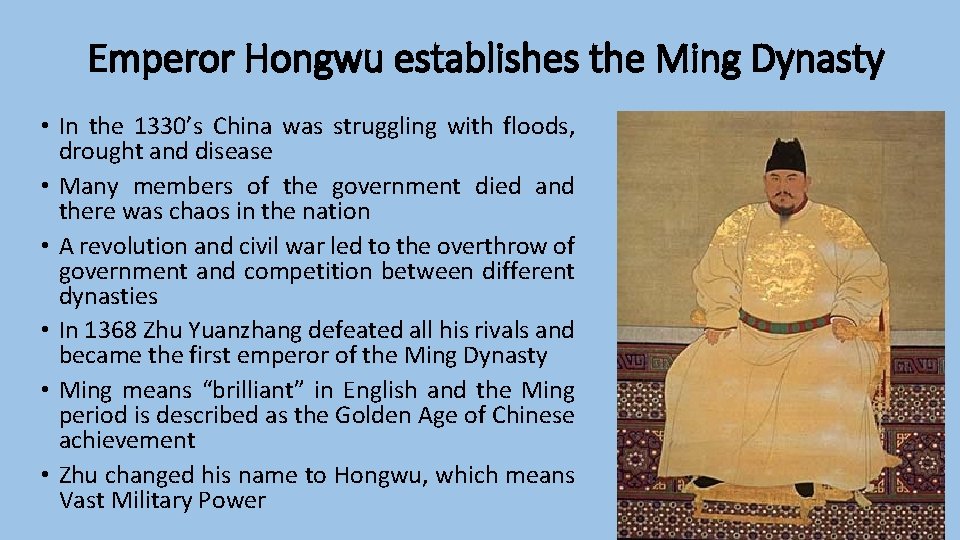
Emperor Hongwu establishes the Ming Dynasty • In the 1330’s China was struggling with floods, drought and disease • Many members of the government died and there was chaos in the nation • A revolution and civil war led to the overthrow of government and competition between different dynasties • In 1368 Zhu Yuanzhang defeated all his rivals and became the first emperor of the Ming Dynasty • Ming means “brilliant” in English and the Ming period is described as the Golden Age of Chinese achievement • Zhu changed his name to Hongwu, which means Vast Military Power
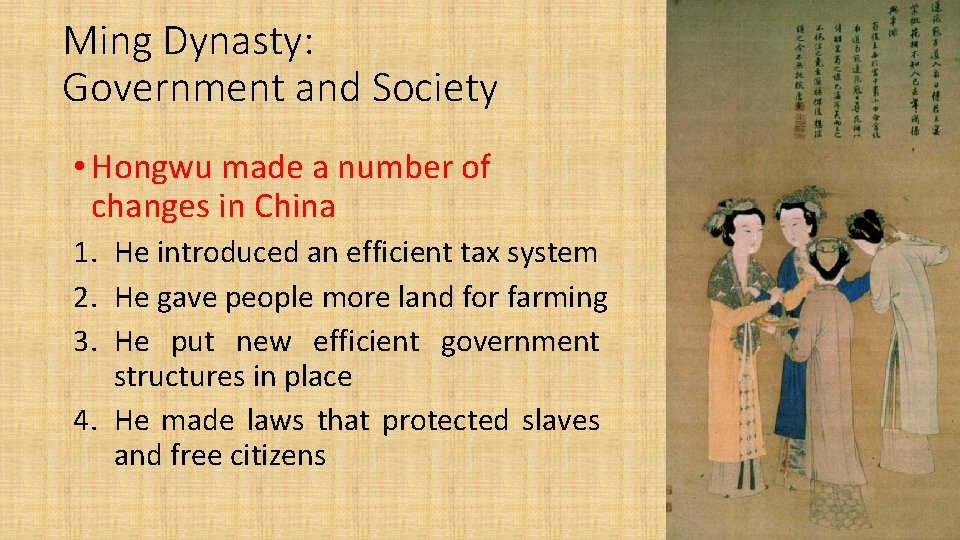
Ming Dynasty: Government and Society • Hongwu made a number of changes in China 1. He introduced an efficient tax system 2. He gave people more land for farming 3. He put new efficient government structures in place 4. He made laws that protected slaves and free citizens
• The new government was efficient but autocratic • Autocratic – a type of ruler who has absolute power and allows no opposition • Hongwu did not give his government officials (Mandarins) independence • He became paranoid and believed they were plotting against him • As a result, 30, 000 officials were executed • Hongwu was succeeded by Emperor Yongle, which means perpetual happiness
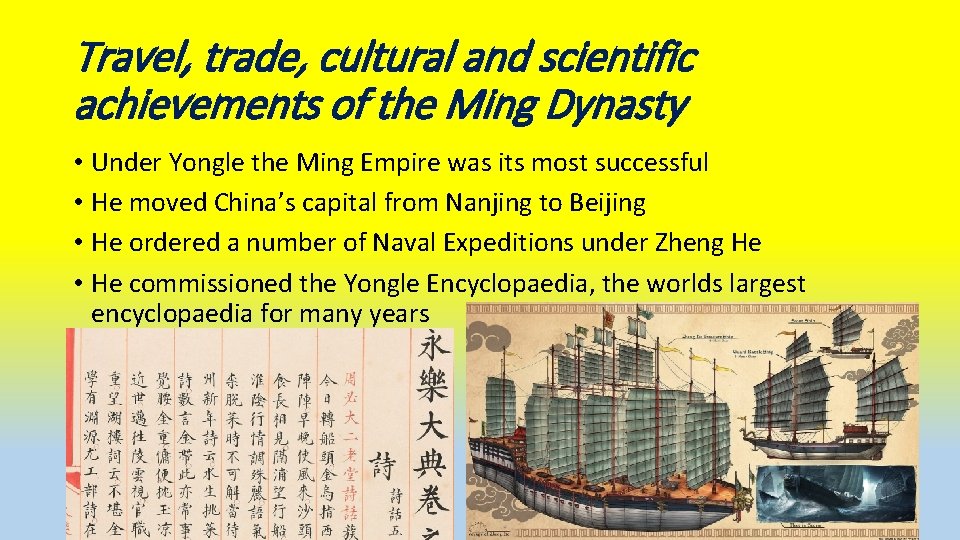
Travel, trade, cultural and scientific achievements of the Ming Dynasty • Under Yongle the Ming Empire was its most successful • He moved China’s capital from Nanjing to Beijing • He ordered a number of Naval Expeditions under Zheng He • He commissioned the Yongle Encyclopaedia, the worlds largest encyclopaedia for many years
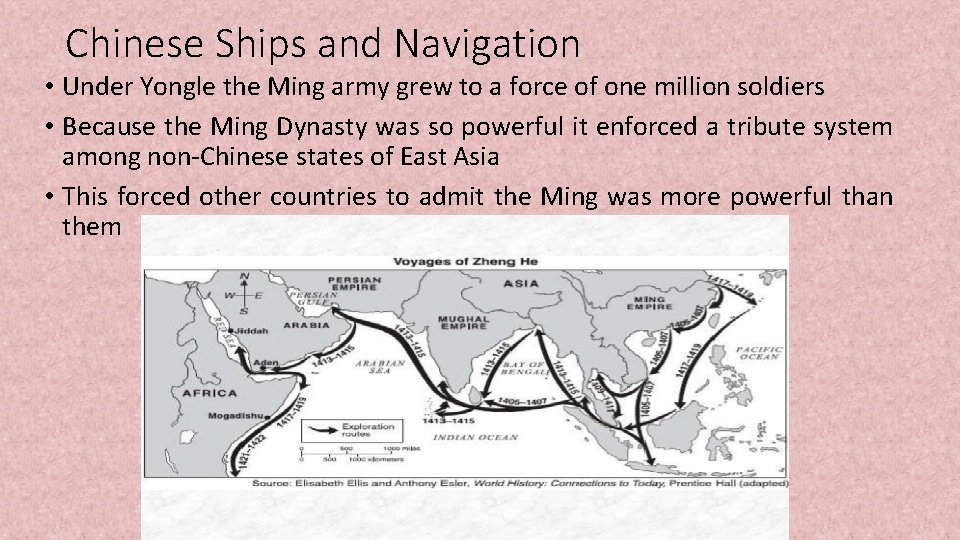
Chinese Ships and Navigation • Under Yongle the Ming army grew to a force of one million soldiers • Because the Ming Dynasty was so powerful it enforced a tribute system among non-Chinese states of East Asia • This forced other countries to admit the Ming was more powerful than them
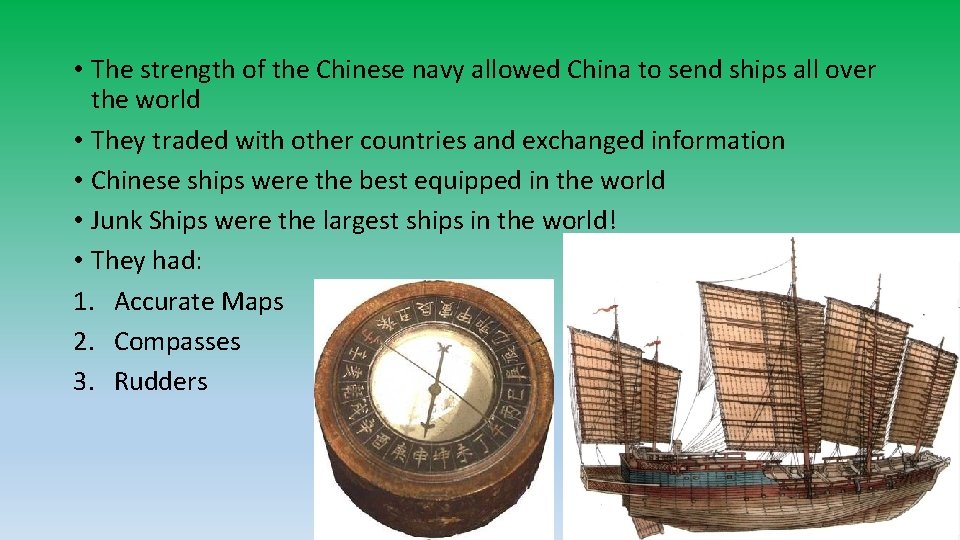
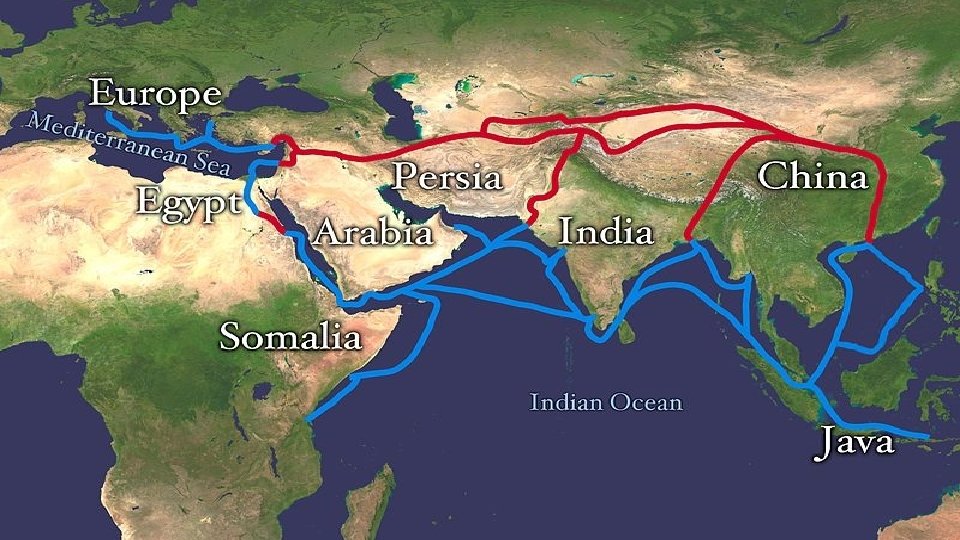
• The strength of the Chinese navy allowed China to send ships all over the world • They traded with other countries and exchanged information • Chinese ships were the best equipped in the world • Junk Ships were the largest ships in the world! • They had: 1. Accurate Maps 2. Compasses 3. Rudders
The Sea Journeys of Zheng He • In 1405 Zheng He began his incredible journeys • They lasted 28 years and visited over 30 different countries • Zheng He began his great trips 100 years before any European sailors could do the same • The Ming Navy was bigger than all the other navies of Europe combined! • Zheng He’s Junk Ship was 10 times the size of the ship that Christopher Columbus used to sail to the Americas
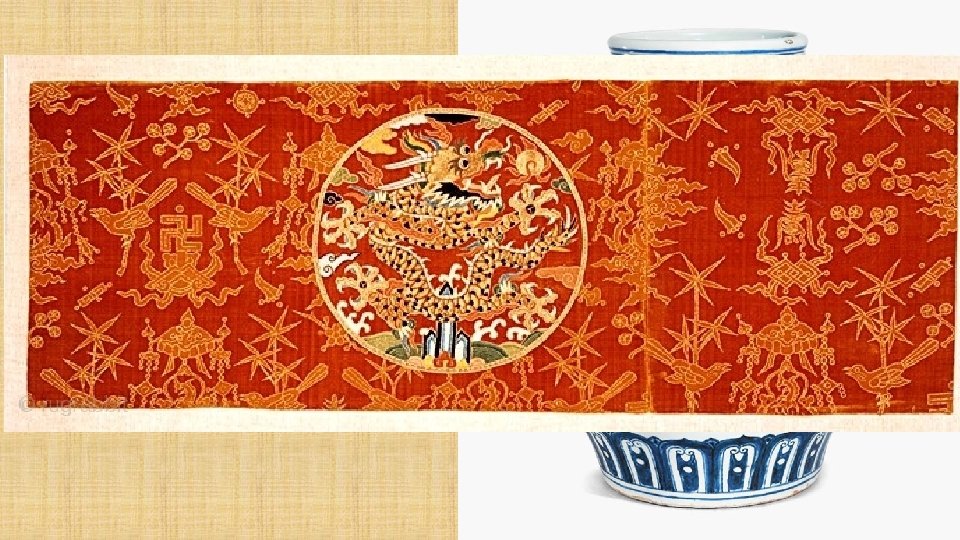
Trade and Influence along the Asian Sea Routes • By the 16 th Century the Ming dynasty was trading with the Portuguese, Spanish, Dutch and Japanese • Chinas major exports were silk and porcelain • The DEIC handled the trade of 6 million porcelain items from China to Europe between 1602 and 1682 • China mostly imported silver but also sweet potatoes, maize and peanuts from the Spanish colonies
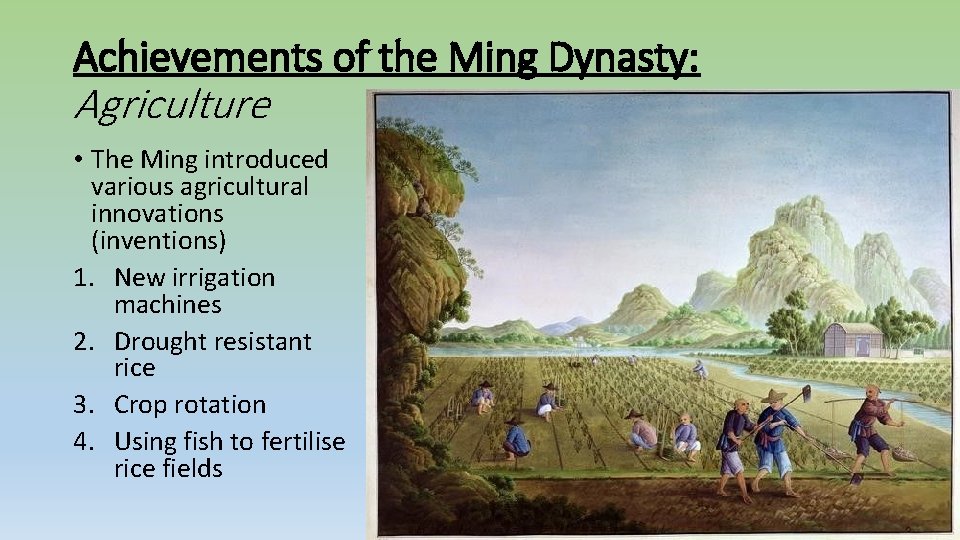
Achievements of the Ming Dynasty: Agriculture • The Ming introduced various agricultural innovations (inventions) 1. New irrigation machines 2. Drought resistant rice 3. Crop rotation 4. Using fish to fertilise rice fields
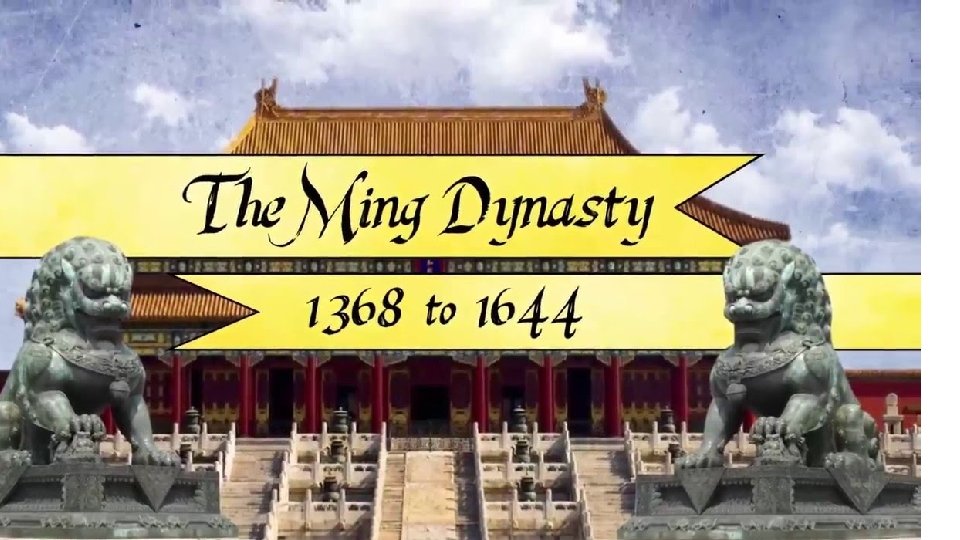
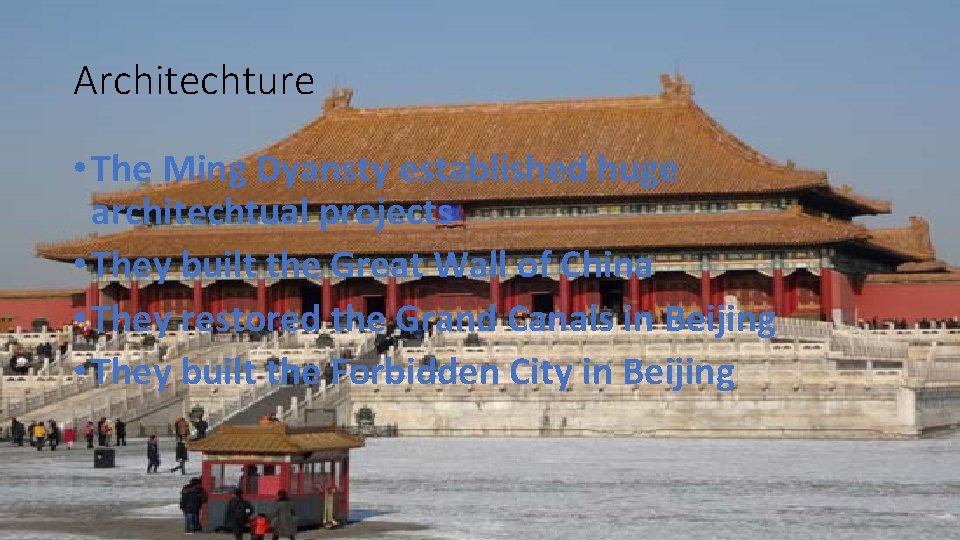
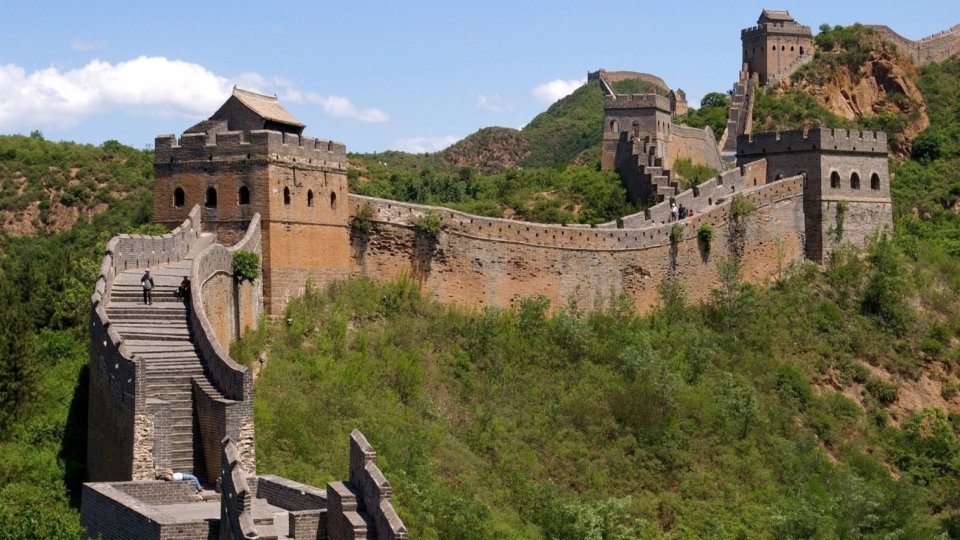
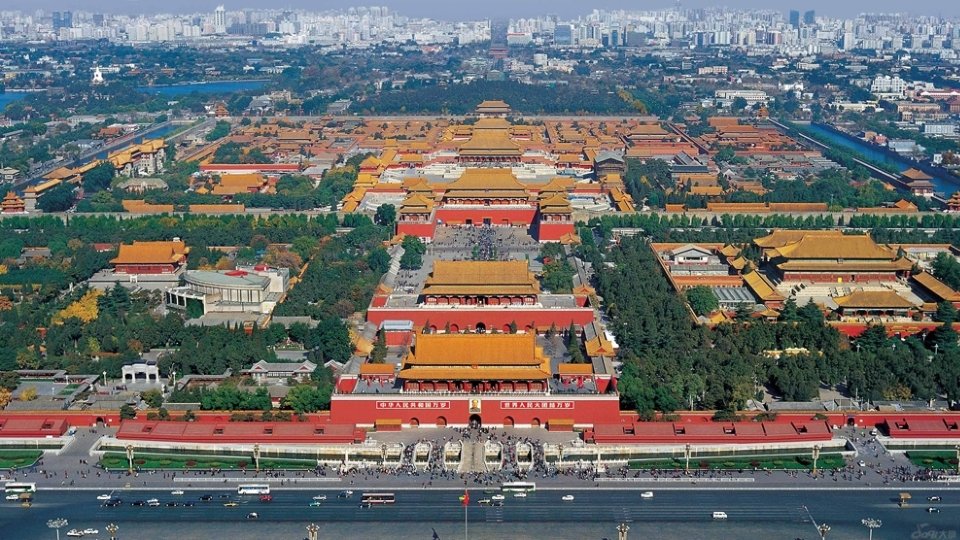
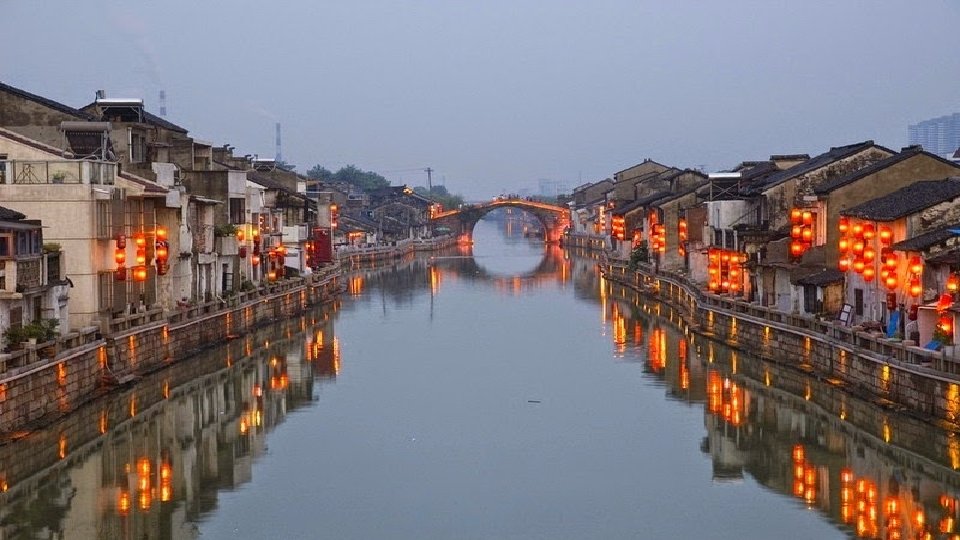
Architechture • The Ming Dyansty established huge architechtual projects • They built the Great Wall of China • They restored the Grand Canals in Beijing • They built the Forbidden City in Beijing
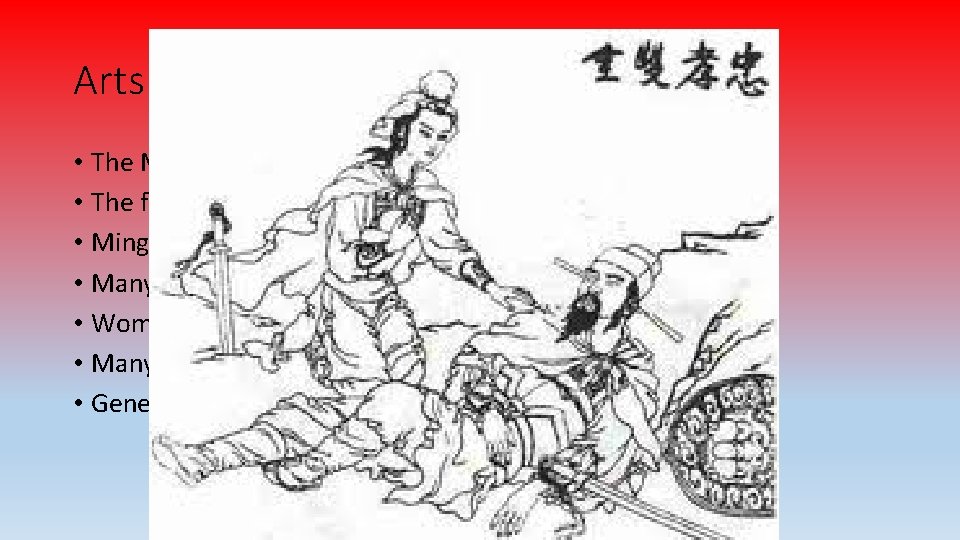
Arts and Literature • The Ming Dynasty is known for its art and literature • The first Chinese novels were published at this time • Ming pottery became incredibly popular around the world • Many women achieved high levels of education • Women writers and artists did exceptionally well • Many women also joined the military and rose to high ranks • General Shen Yunying and Commander-in-Chief Qin Liangyu