
China and the World 500 1300 Edited By
China and the World 500 - 1300 Edited By: Mr. Barkhau Shameless stolen from: http: //conaapwh. weebly. com/class-powerpoints. html
China after the Han Dynasty § Political disunity following the collapse of the Han dynasty § During this time, many Chinese people began to migrate south § Partly a natural migration § Partly due to the nomads from the north creeping in § Result = by 1000 CE, about 60% of China’s population was in southern China § Result = the Chinese destroyed forests and land in southern China as they brought their intense agriculture with them
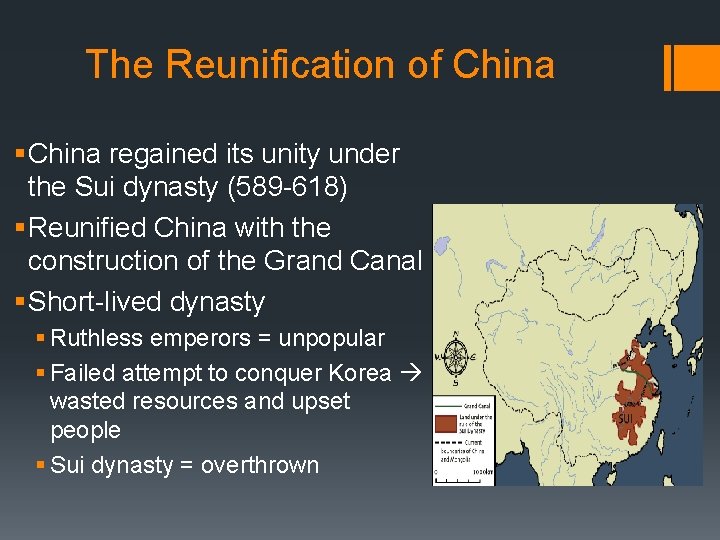
The Reunification of China § China regained its unity under the Sui dynasty (589 -618) § Reunified China with the construction of the Grand Canal § Short-lived dynasty § Ruthless emperors = unpopular § Failed attempt to conquer Korea wasted resources and upset people § Sui dynasty = overthrown
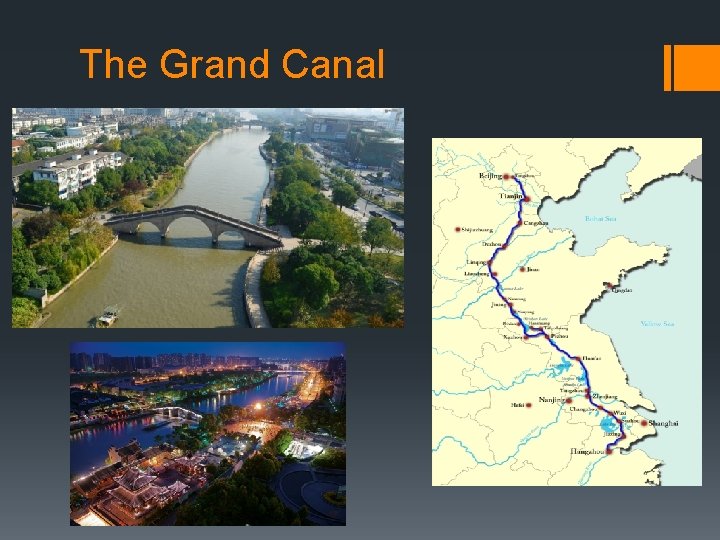
The Grand Canal
The Reunification of China § Sui dynasty was followed by: the Tang dynasty (618907) and the Song dynasty (960 -1279) § Both used the same state structure: § Centralized government § 6 major departments = personnel, finance, rites, army, justice, and public works § Censorate = agency that watched over the rest of government to make sure everything ran smoothly § Government officials chosen based on a revived Confucianbased examination system
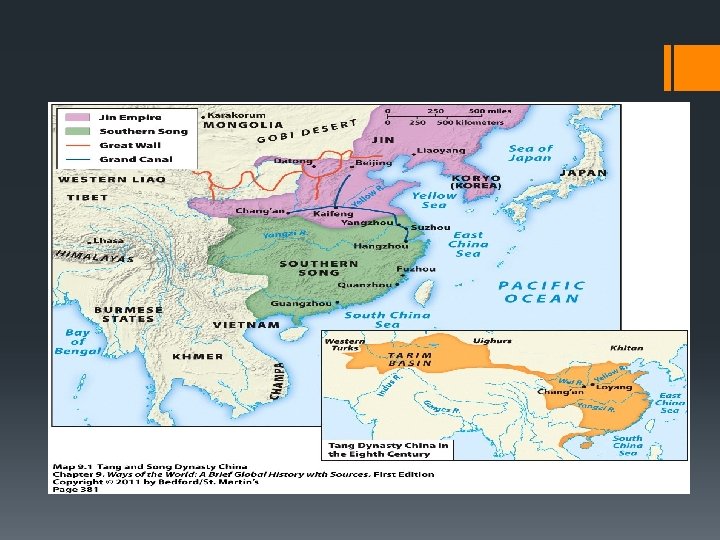
Tang and Song Dynasties
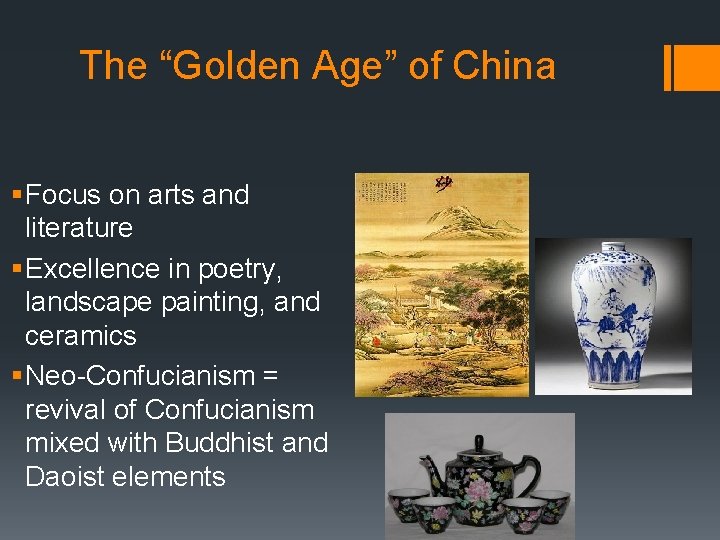
The “Golden Age” of China § Focus on arts and literature § Excellence in poetry, landscape painting, and ceramics § Neo-Confucianism = revival of Confucianism mixed with Buddhist and Daoist elements
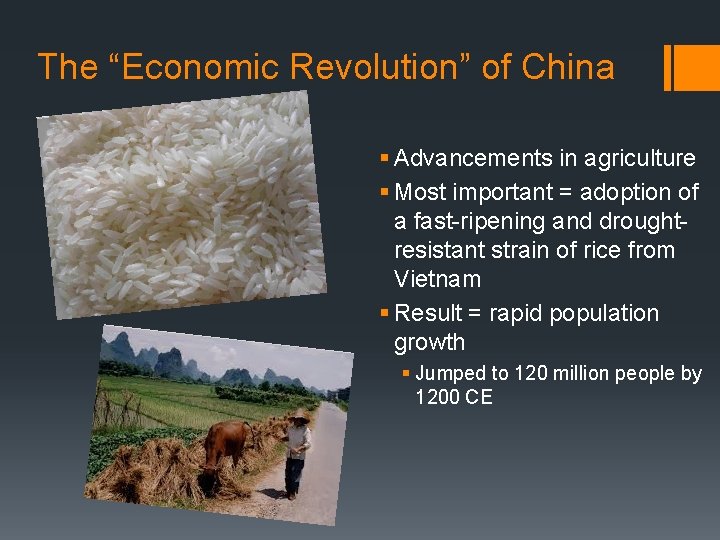
The “Economic Revolution” of China § Advancements in agriculture § Most important = adoption of a fast-ripening and droughtresistant strain of rice from Vietnam § Result = rapid population growth § Jumped to 120 million people by 1200 CE
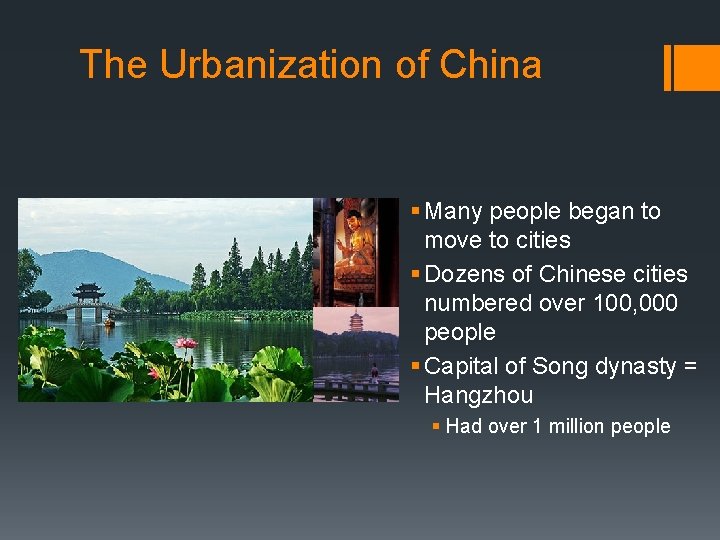
The Urbanization of China § Many people began to move to cities § Dozens of Chinese cities numbered over 100, 000 people § Capital of Song dynasty = Hangzhou § Had over 1 million people
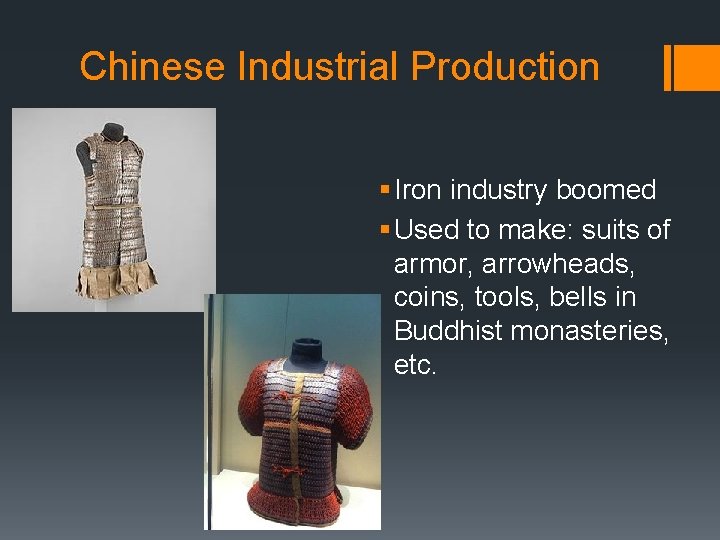
Chinese Industrial Production § Iron industry boomed § Used to make: suits of armor, arrowheads, coins, tools, bells in Buddhist monasteries, etc.
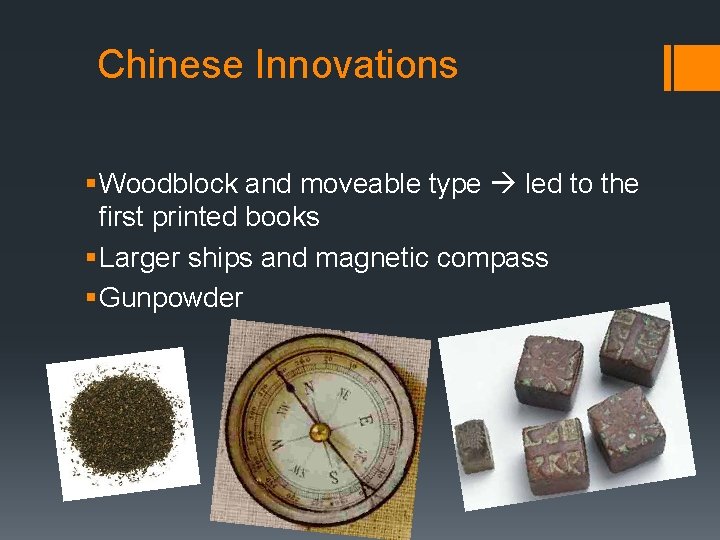
Chinese Innovations § Woodblock and moveable type led to the first printed books § Larger ships and magnetic compass § Gunpowder
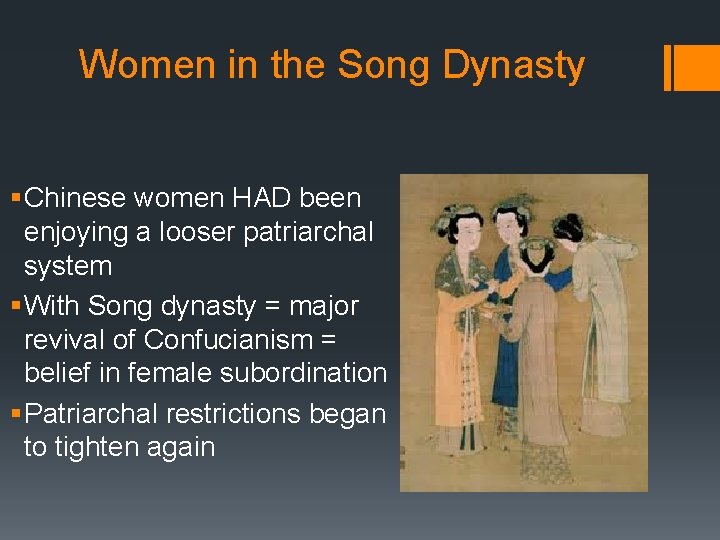
Women in the Song Dynasty § Chinese women HAD been enjoying a looser patriarchal system § With Song dynasty = major revival of Confucianism = belief in female subordination § Patriarchal restrictions began to tighten again
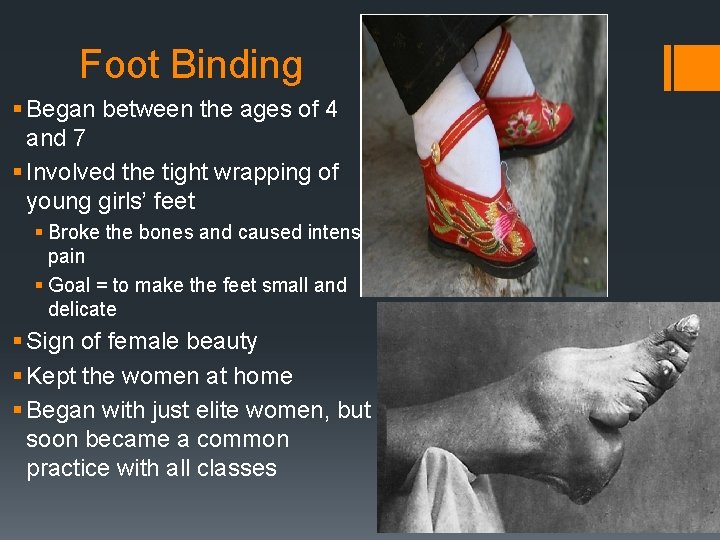
Foot Binding § Began between the ages of 4 and 7 § Involved the tight wrapping of young girls’ feet § Broke the bones and caused intense pain § Goal = to make the feet small and delicate § Sign of female beauty § Kept the women at home § Began with just elite women, but soon became a common practice with all classes
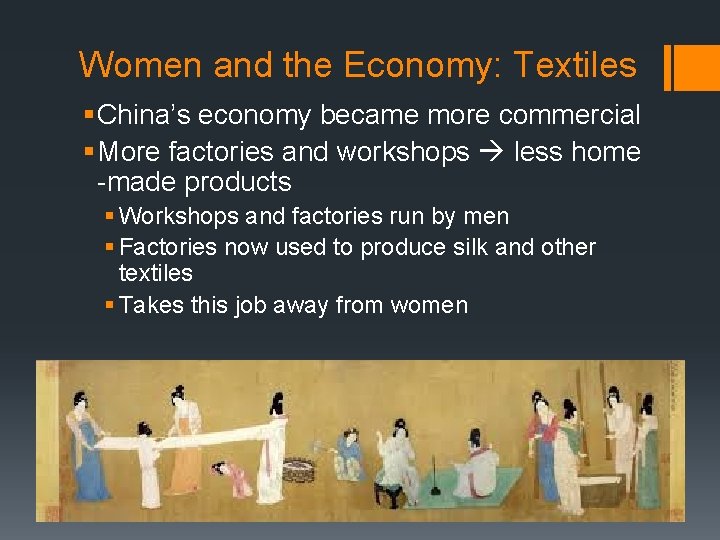
Women and the Economy: Textiles § China’s economy became more commercial § More factories and workshops less home -made products § Workshops and factories run by men § Factories now used to produce silk and other textiles § Takes this job away from women
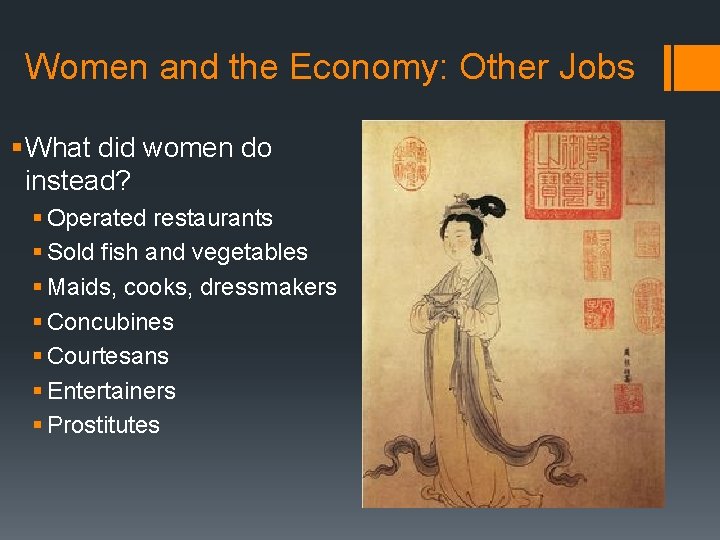
Women and the Economy: Other Jobs § What did women do instead? § Operated restaurants § Sold fish and vegetables § Maids, cooks, dressmakers § Concubines § Courtesans § Entertainers § Prostitutes
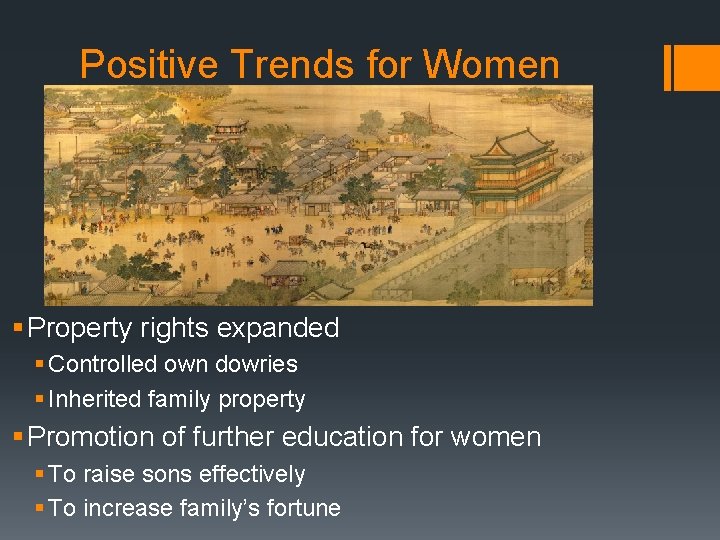
Positive Trends for Women § Property rights expanded § Controlled own dowries § Inherited family property § Promotion of further education for women § To raise sons effectively § To increase family’s fortune
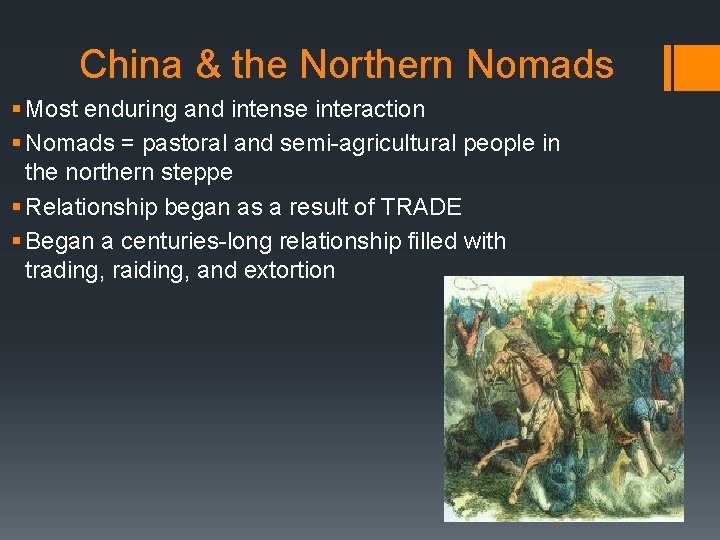
China & the Northern Nomads § Most enduring and intense interaction § Nomads = pastoral and semi-agricultural people in the northern steppe § Relationship began as a result of TRADE § Began a centuries-long relationship filled with trading, raiding, and extortion
The Nomads’ Point of View § Nomads thought the Chinese were a threat § Built the Great Wall to keep them out § Directed their military towards them occasionally § Made trading more difficult than it had to be § In reality: the Chinese needed the nomads § Needed horses for their military § Needed other goods like: furs, hides, amber § Many important parts of the Silk Road network were in nomad territories
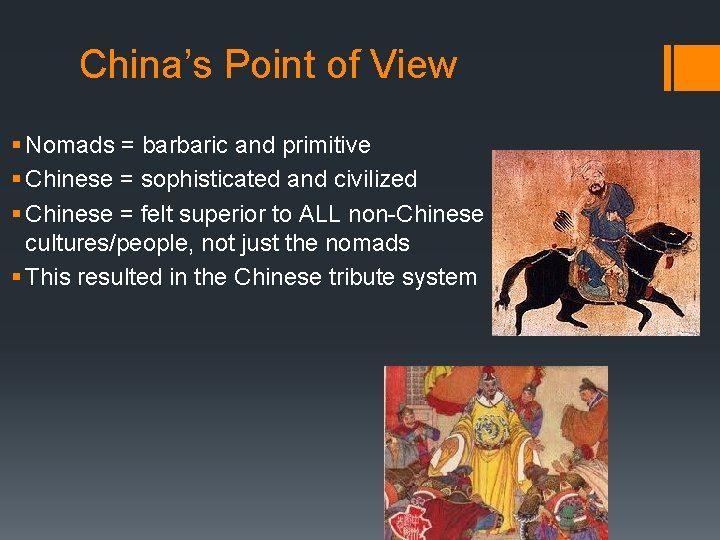
China’s Point of View § Nomads = barbaric and primitive § Chinese = sophisticated and civilized § Chinese = felt superior to ALL non-Chinese cultures/people, not just the nomads § This resulted in the Chinese tribute system
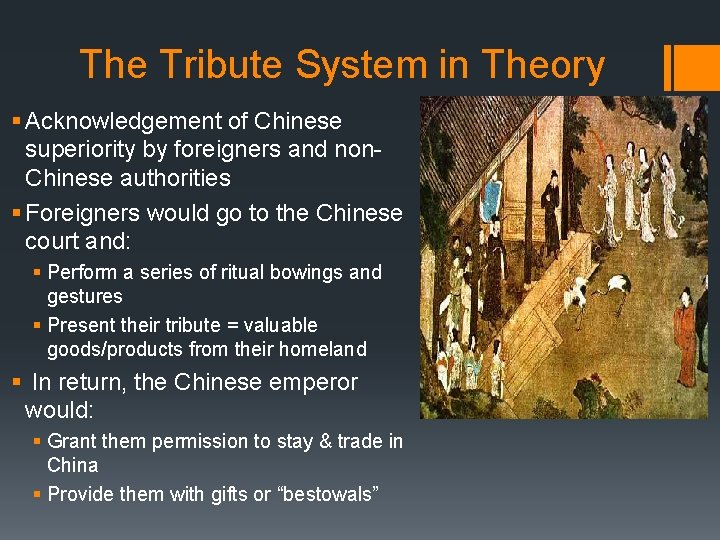
The Tribute System in Theory § Acknowledgement of Chinese superiority by foreigners and non. Chinese authorities § Foreigners would go to the Chinese court and: § Perform a series of ritual bowings and gestures § Present their tribute = valuable goods/products from their homeland § In return, the Chinese emperor would: § Grant them permission to stay & trade in China § Provide them with gifts or “bestowals”
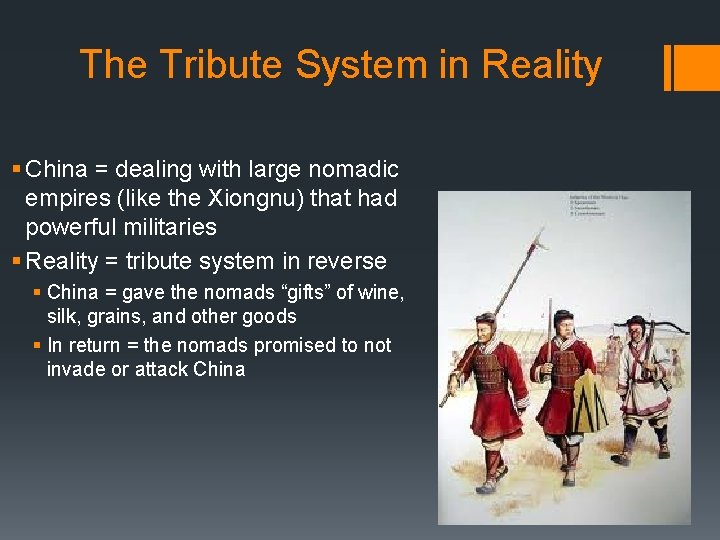
The Tribute System in Reality § China = dealing with large nomadic empires (like the Xiongnu) that had powerful militaries § Reality = tribute system in reverse § China = gave the nomads “gifts” of wine, silk, grains, and other goods § In return = the nomads promised to not invade or attack China
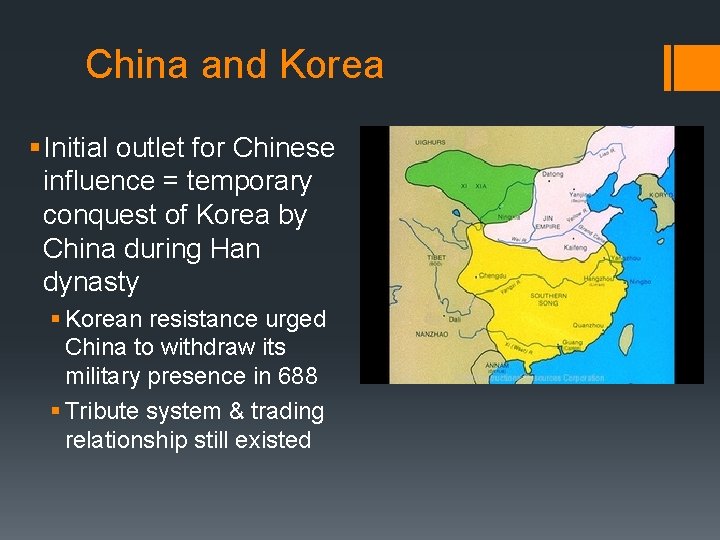
China and Korea § Initial outlet for Chinese influence = temporary conquest of Korea by China during Han dynasty § Korean resistance urged China to withdraw its military presence in 688 § Tribute system & trading relationship still existed
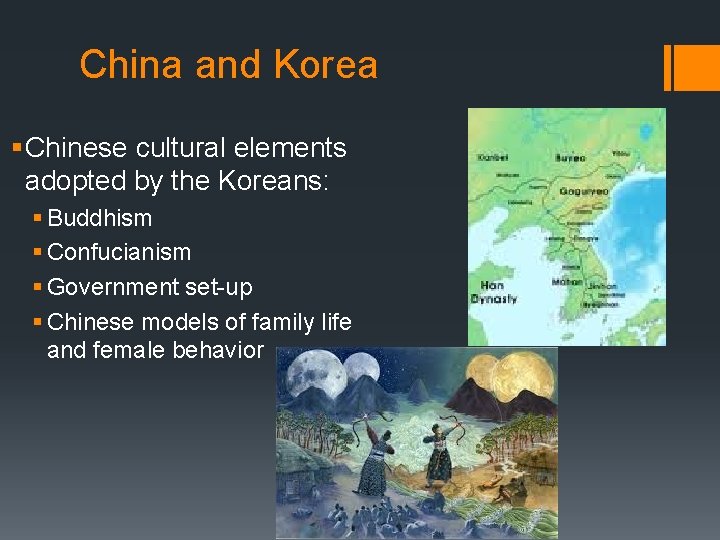
China and Korea § Chinese cultural elements adopted by the Koreans: § Buddhism § Confucianism § Government set-up § Chinese models of family life and female behavior
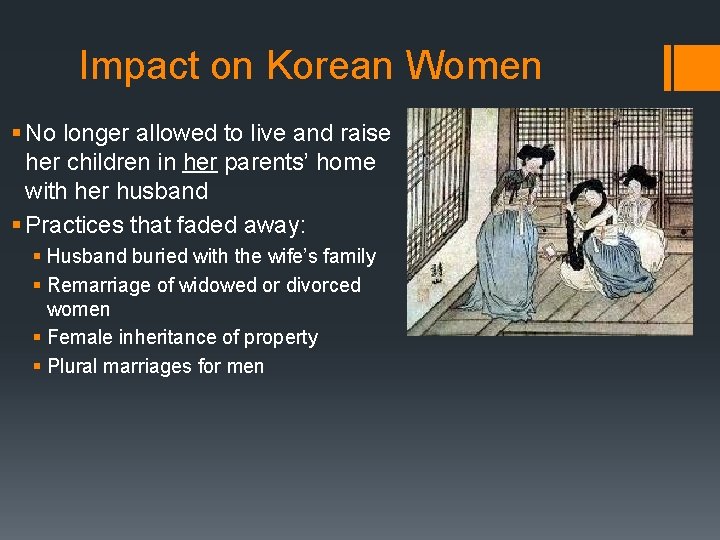
Impact on Korean Women § No longer allowed to live and raise her children in her parents’ home with her husband § Practices that faded away: § Husband buried with the wife’s family § Remarriage of widowed or divorced women § Female inheritance of property § Plural marriages for men
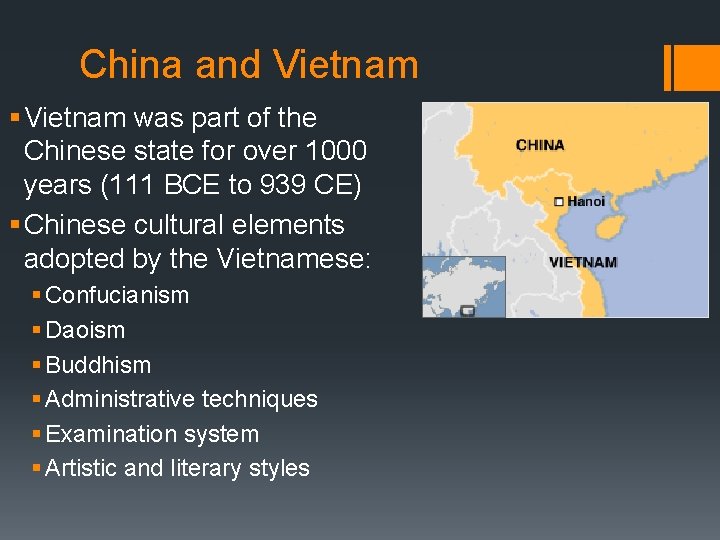
China and Vietnam § Vietnam was part of the Chinese state for over 1000 years (111 BCE to 939 CE) § Chinese cultural elements adopted by the Vietnamese: § Confucianism § Daoism § Buddhism § Administrative techniques § Examination system § Artistic and literary styles
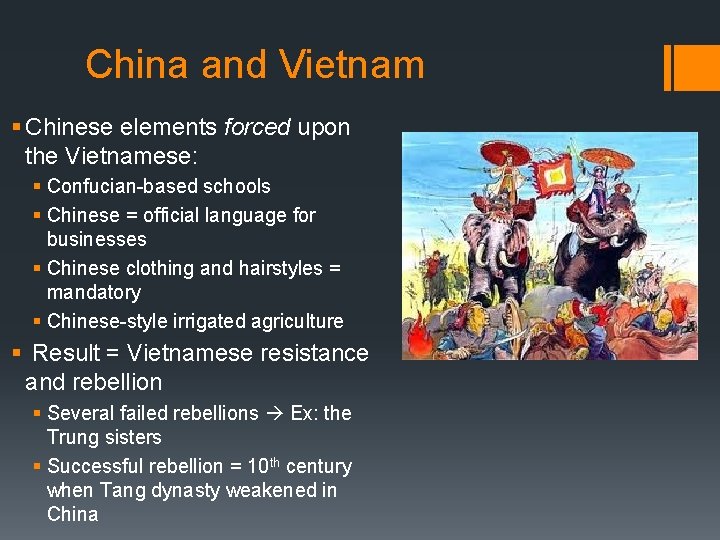
China and Vietnam § Chinese elements forced upon the Vietnamese: § Confucian-based schools § Chinese = official language for businesses § Chinese clothing and hairstyles = mandatory § Chinese-style irrigated agriculture § Result = Vietnamese resistance and rebellion § Several failed rebellions Ex: the Trung sisters § Successful rebellion = 10 th century when Tang dynasty weakened in China
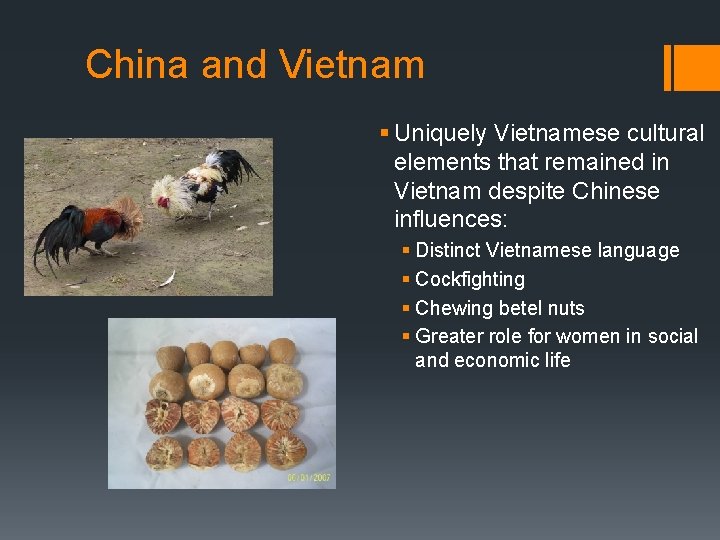
China and Vietnam § Uniquely Vietnamese cultural elements that remained in Vietnam despite Chinese influences: § Distinct Vietnamese language § Cockfighting § Chewing betel nuts § Greater role for women in social and economic life
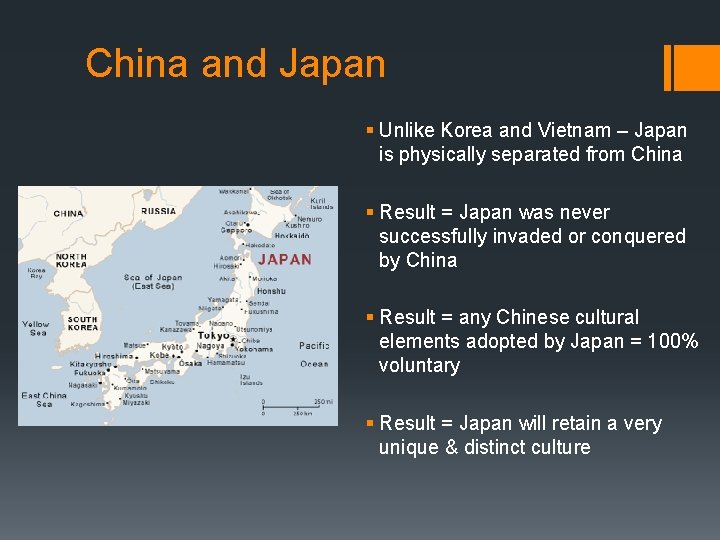
China and Japan § Unlike Korea and Vietnam – Japan is physically separated from China § Result = Japan was never successfully invaded or conquered by China § Result = any Chinese cultural elements adopted by Japan = 100% voluntary § Result = Japan will retain a very unique & distinct culture
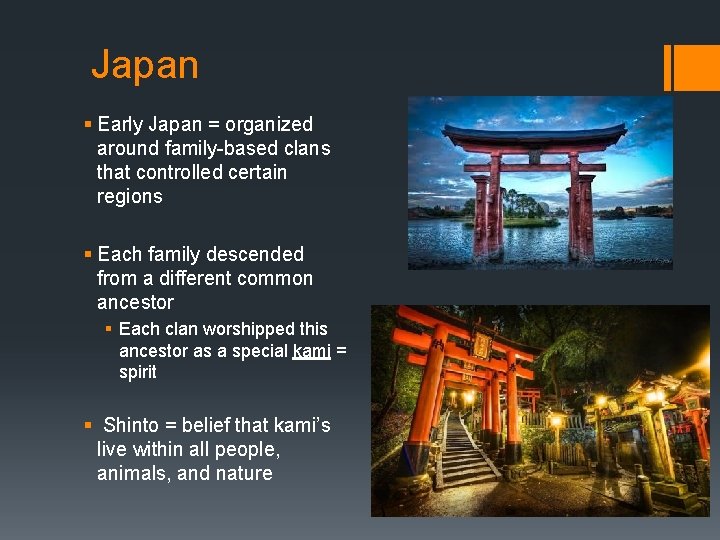
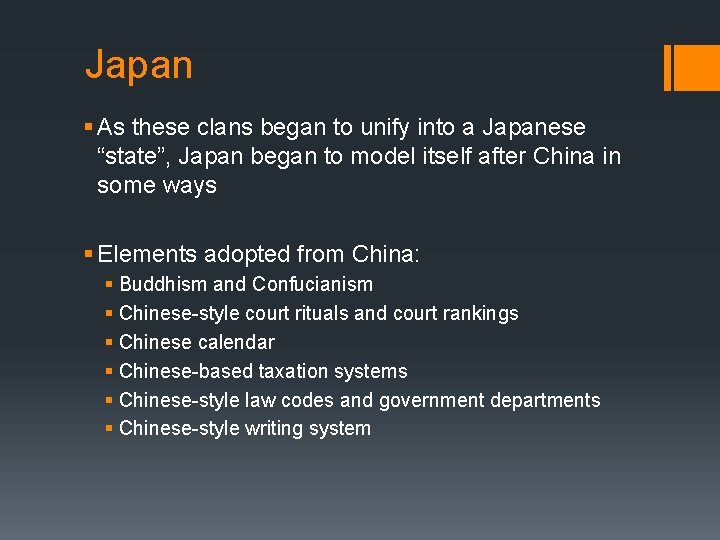
Japan § Early Japan = organized around family-based clans that controlled certain regions § Each family descended from a different common ancestor § Each clan worshipped this ancestor as a special kami = spirit § Shinto = belief that kami’s live within all people, animals, and nature
Japan § As these clans began to unify into a Japanese “state”, Japan began to model itself after China in some ways § Elements adopted from China: § Buddhism and Confucianism § Chinese-style court rituals and court rankings § Chinese calendar § Chinese-based taxation systems § Chinese-style law codes and government departments § Chinese-style writing system
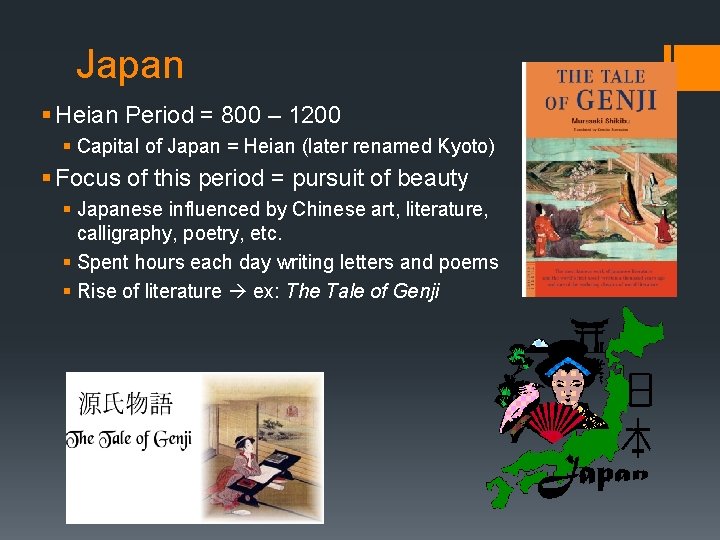
Japan § Heian Period = 800 – 1200 § Capital of Japan = Heian (later renamed Kyoto) § Focus of this period = pursuit of beauty § Japanese influenced by Chinese art, literature, calligraphy, poetry, etc. § Spent hours each day writing letters and poems § Rise of literature ex: The Tale of Genji
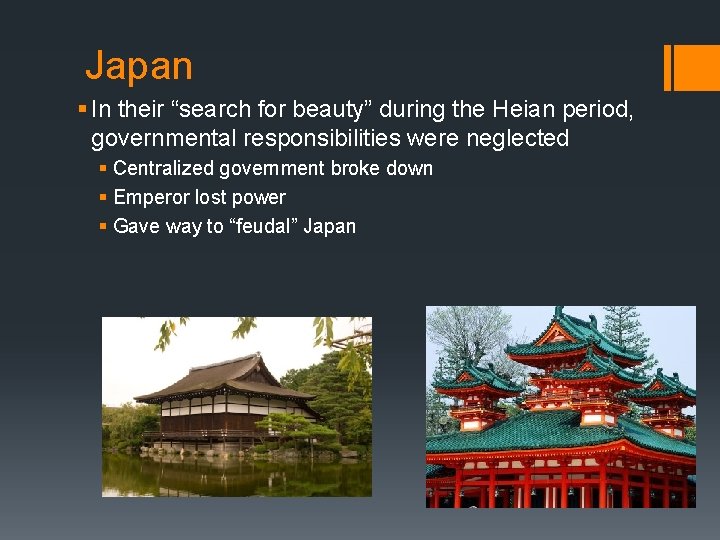
Japan § In their “search for beauty” during the Heian period, governmental responsibilities were neglected § Centralized government broke down § Emperor lost power § Gave way to “feudal” Japan
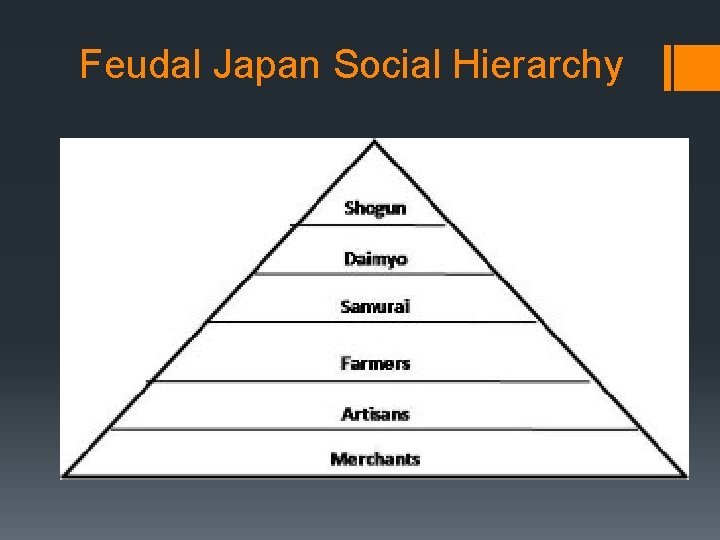
Feudal Japan Social Hierarchy
Feudal Japan Social Hierarchy § Mikado = Emperor, very little power, figurehead § Shoguns = generals and powerful lords, held most political and military power § Daimyos = local lords, owned estates, had private armies, fought each other for power § Samurai = warriors, soldiers, trained with swords, spears, bows and were capable both on foot or horseback, followed the code of bushido § Peasants/Farmers = worked the land, paid heavy taxes, received protection in return. § Artisans = made clothing, swords, other necessary goods, lived in serrate districts in in towns. § Merchants = lowest part of society as they made a profit off of the hard work and skill of others.
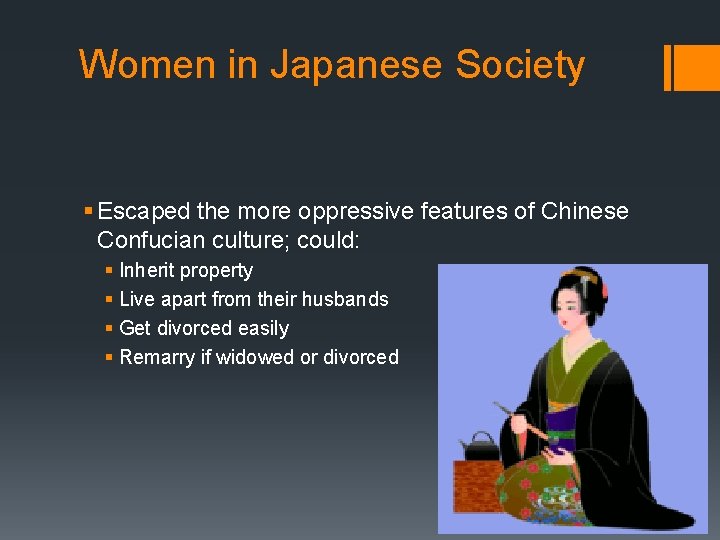
Women in Japanese Society § Escaped the more oppressive features of Chinese Confucian culture; could: § Inherit property § Live apart from their husbands § Get divorced easily § Remarry if widowed or divorced
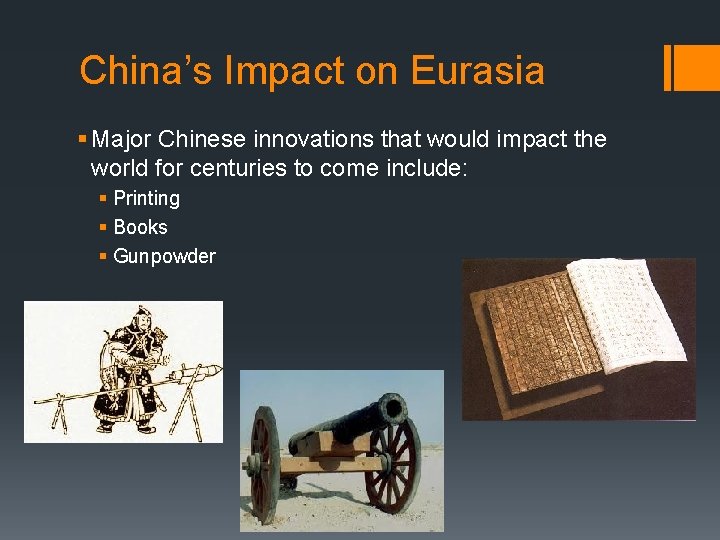
China’s Impact on Eurasia § Major Chinese innovations that would impact the world for centuries to come include: § Printing § Books § Gunpowder
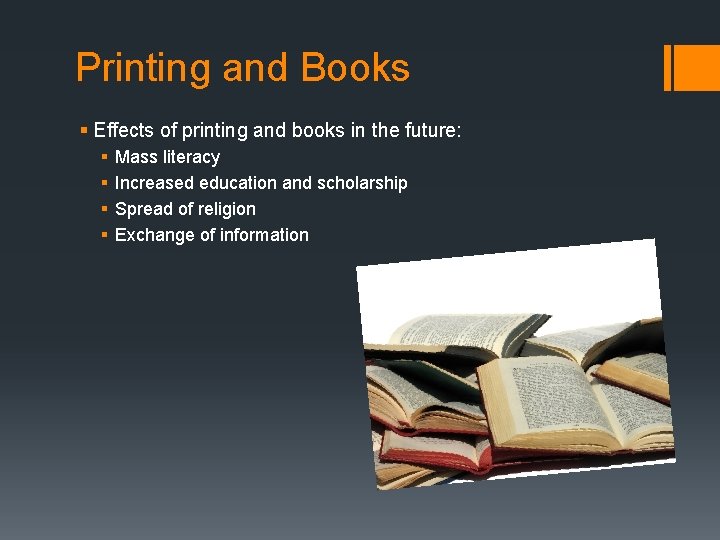
Printing and Books § Effects of printing and books in the future: § § Mass literacy Increased education and scholarship Spread of religion Exchange of information
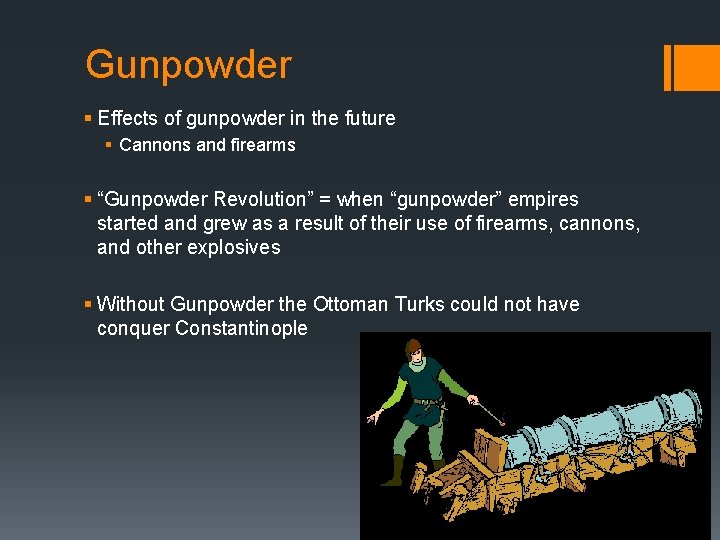
Gunpowder § Effects of gunpowder in the future § Cannons and firearms § “Gunpowder Revolution” = when “gunpowder” empires started and grew as a result of their use of firearms, cannons, and other explosives § Without Gunpowder the Ottoman Turks could not have conquer Constantinople
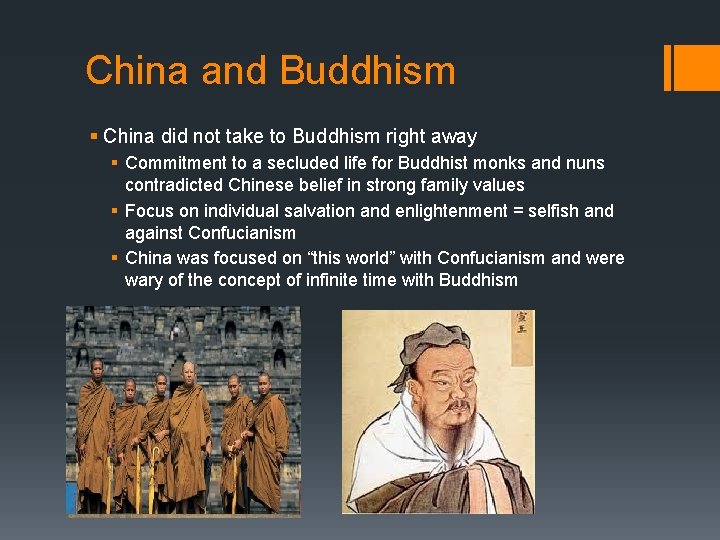
China and Buddhism § China did not take to Buddhism right away § Commitment to a secluded life for Buddhist monks and nuns contradicted Chinese belief in strong family values § Focus on individual salvation and enlightenment = selfish and against Confucianism § China was focused on “this world” with Confucianism and were wary of the concept of infinite time with Buddhism
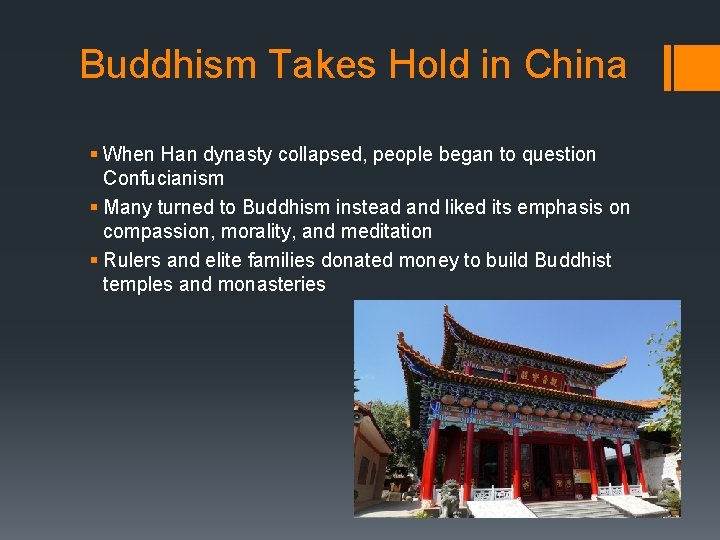
Buddhism Takes Hold in China § When Han dynasty collapsed, people began to question Confucianism § Many turned to Buddhism instead and liked its emphasis on compassion, morality, and meditation § Rulers and elite families donated money to build Buddhist temples and monasteries
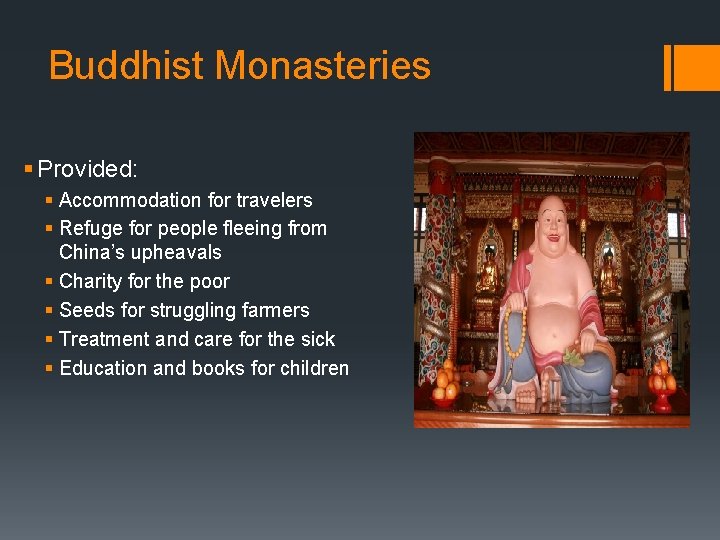
Buddhist Monasteries § Provided: § Accommodation for travelers § Refuge for people fleeing from China’s upheavals § Charity for the poor § Seeds for struggling farmers § Treatment and care for the sick § Education and books for children
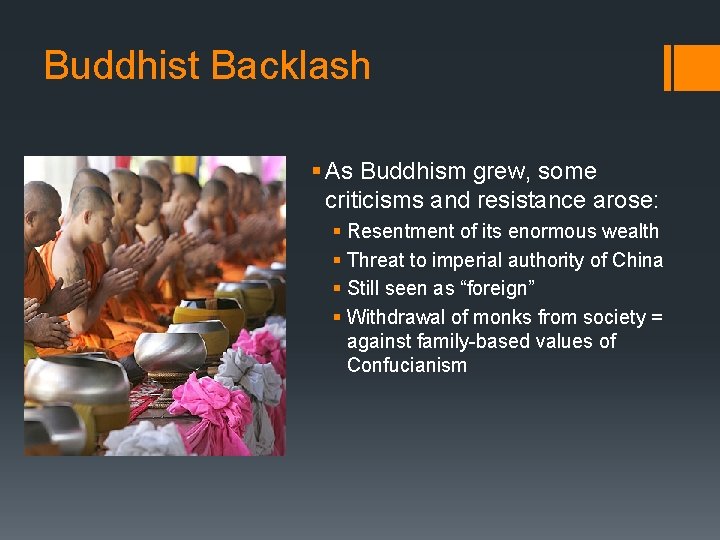
Buddhist Backlash § As Buddhism grew, some criticisms and resistance arose: § Resentment of its enormous wealth § Threat to imperial authority of China § Still seen as “foreign” § Withdrawal of monks from society = against family-based values of Confucianism
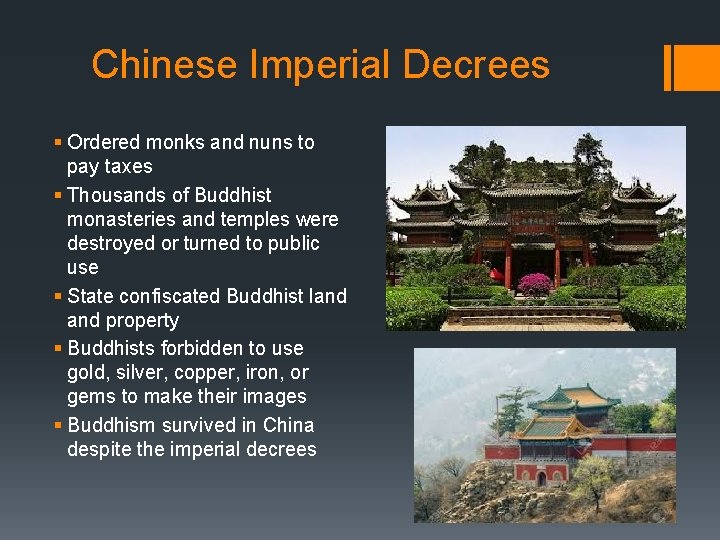
Chinese Imperial Decrees § Ordered monks and nuns to pay taxes § Thousands of Buddhist monasteries and temples were destroyed or turned to public use § State confiscated Buddhist land property § Buddhists forbidden to use gold, silver, copper, iron, or gems to make their images § Buddhism survived in China despite the imperial decrees
- Slides: 43