
CHINA AFTER MAO Essential Question How did China
- Slides: 37
CHINA AFTER MAO
Essential Question: How did China evolve in the years after Mao Zedong’s death?
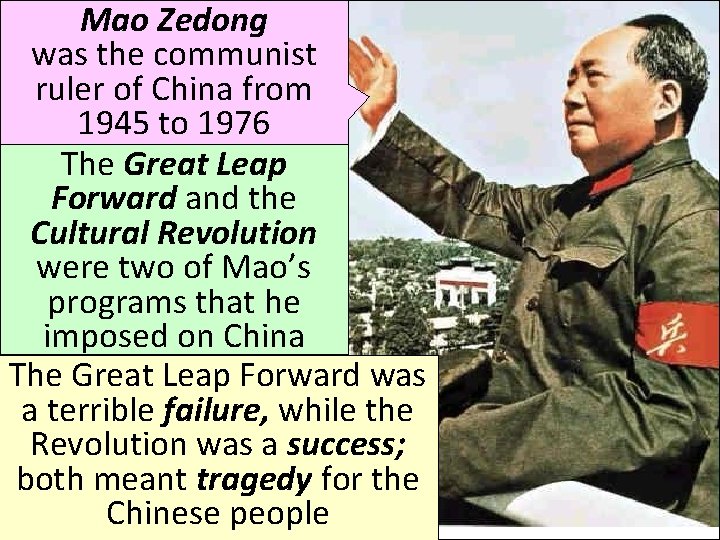
Mao Zedong was the communist ruler of China from 1945 to 1976 The Great Leap Forward and the Cultural Revolution were two of Mao’s programs that he imposed on China The Great Leap Forward was a terrible failure, while the Revolution was a success; both meant tragedy for the Chinese people
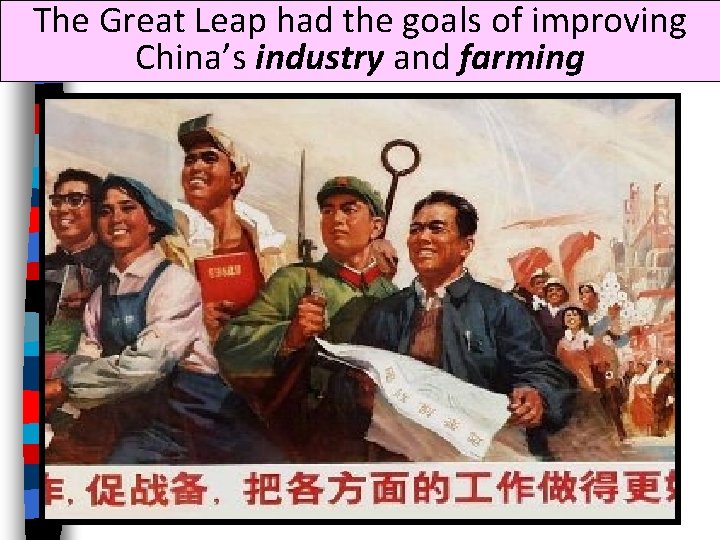
The Great Leap had the goals of improving China’s industry and farming
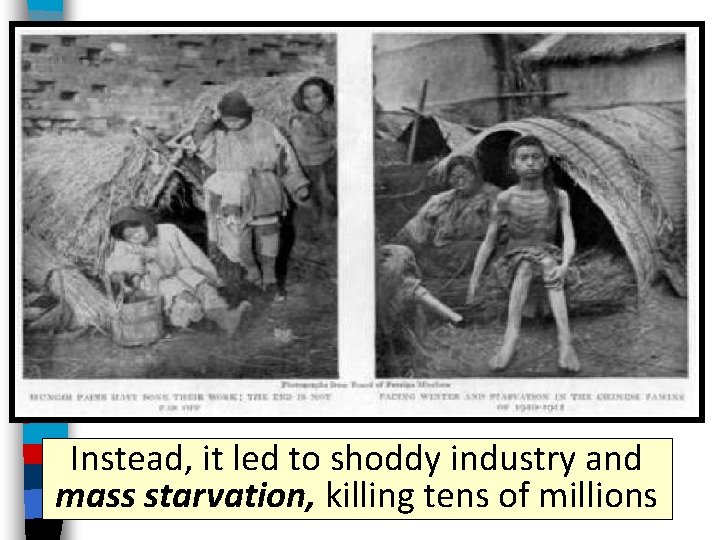
Instead, it led to shoddy industry and mass starvation, killing tens of millions
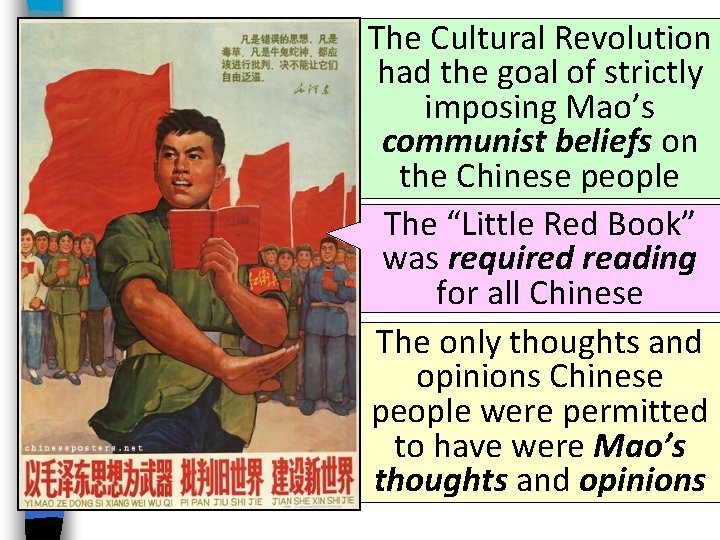
The Cultural Revolution had the goal of strictly imposing Mao’s communist beliefs on the Chinese people The “Little Red Book” was required reading for all Chinese The only thoughts and opinions Chinese people were permitted to have were Mao’s thoughts and opinions
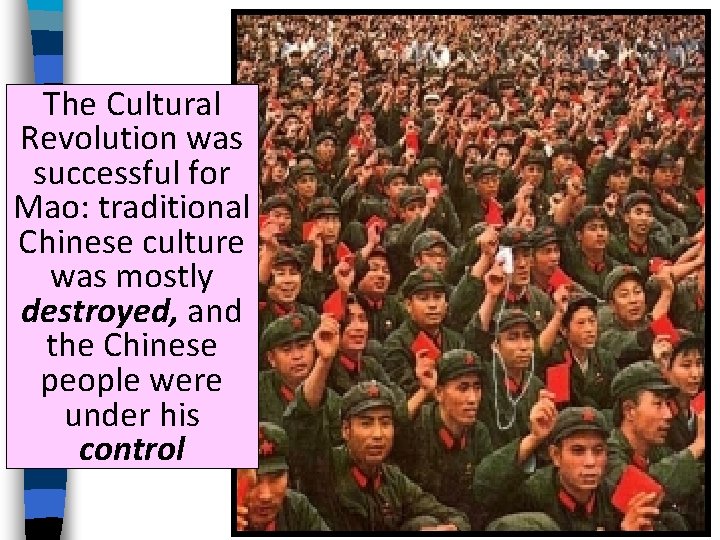
The Cultural Revolution was successful for Mao: traditional Chinese culture was mostly destroyed, and the Chinese people were under his control
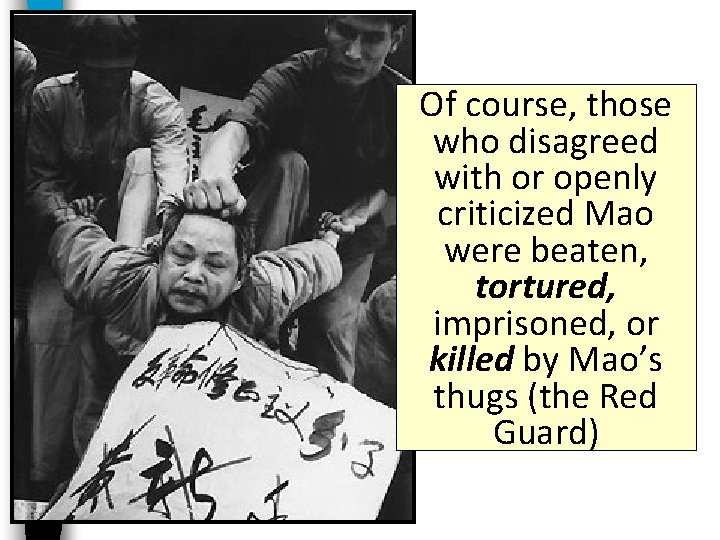
Of course, those who disagreed with or openly criticized Mao were beaten, tortured, imprisoned, or killed by Mao’s thugs (the Red Guard)
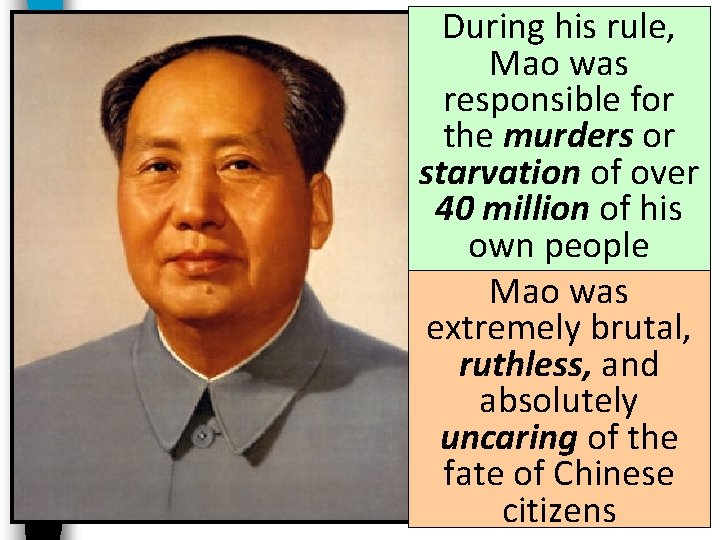
During his rule, Mao was responsible for the murders or starvation of over 40 million of his own people Mao was extremely brutal, ruthless, and absolutely uncaring of the fate of Chinese citizens
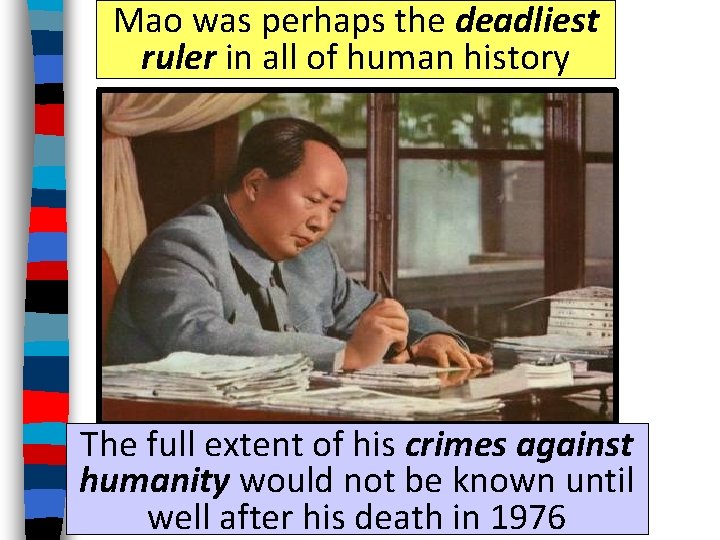
Mao was perhaps the deadliest ruler in all of human history The full extent of his crimes against humanity would not be known until well after his death in 1976
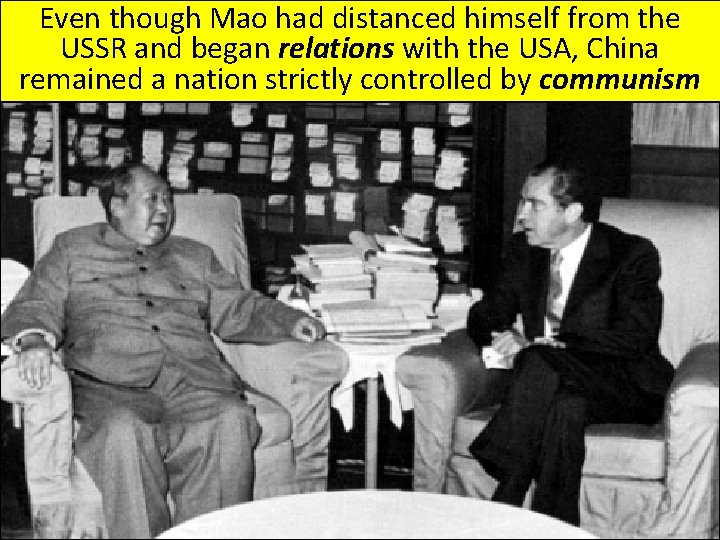
Even though Mao had distanced himself from the USSR and began relations with the USA, China remained a nation strictly controlled by communism
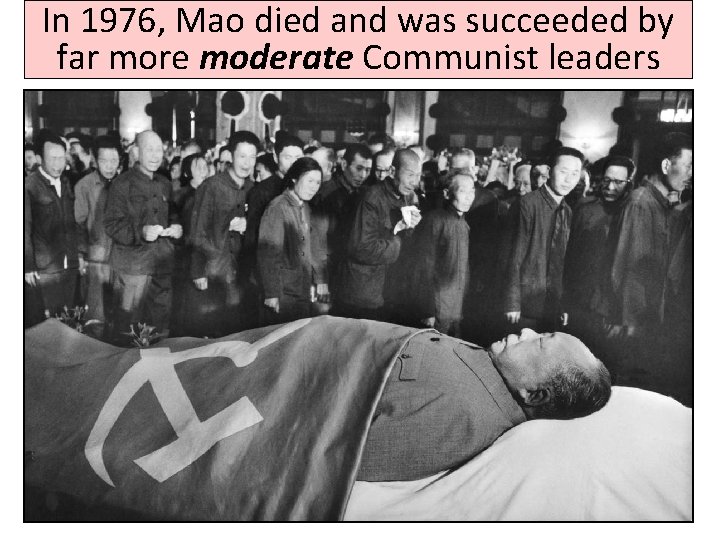
In 1976, Mao died and was succeeded by far more moderate Communist leaders
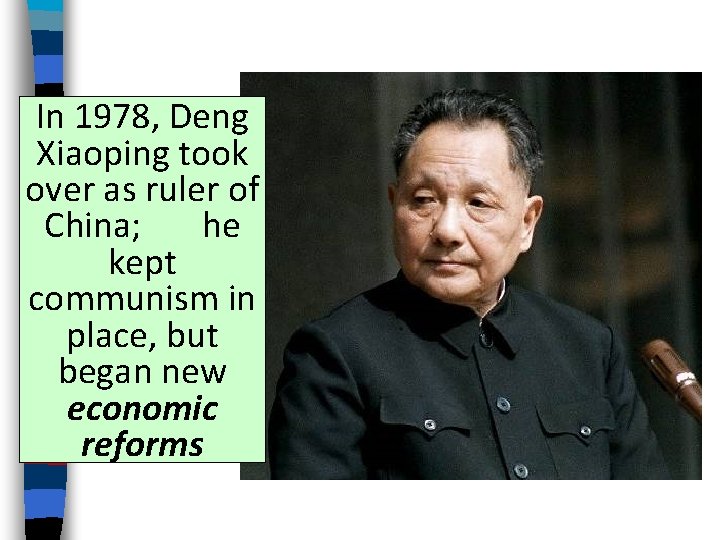
In 1978, Deng Xiaoping took over as ruler of China; he kept communism in place, but began new economic reforms
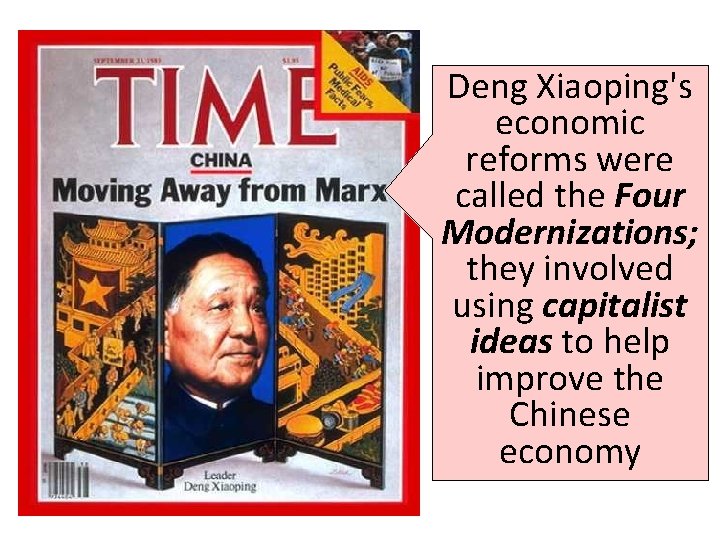
Deng Xiaoping's economic reforms were called the Four Modernizations; they involved using capitalist ideas to help improve the Chinese economy
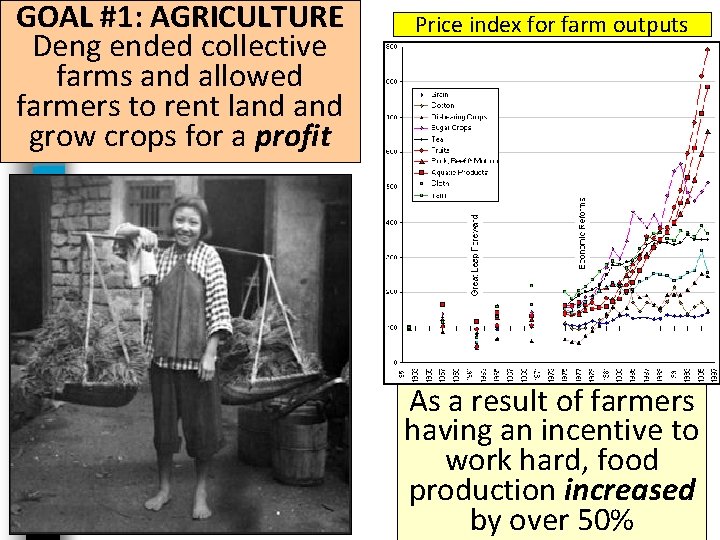
GOAL #1: AGRICULTURE Deng ended collective farms and allowed farmers to rent land grow crops for a profit Price index for farm outputs As a result of farmers having an incentive to work hard, food production increased by over 50%
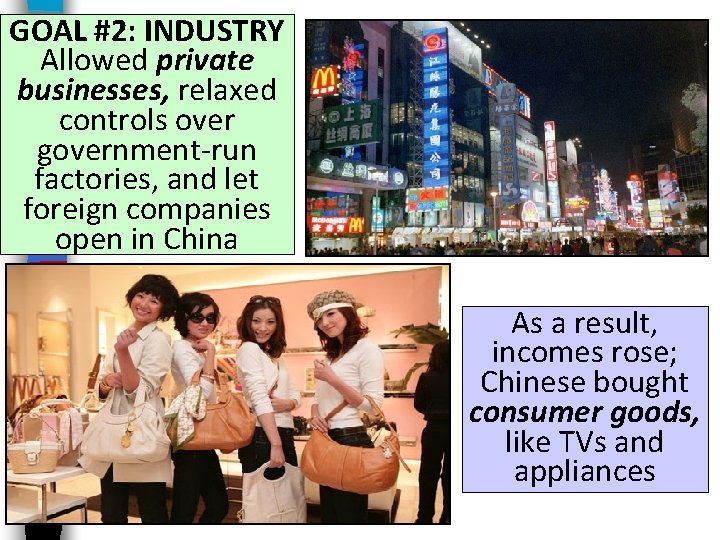
GOAL #2: INDUSTRY Allowed private businesses, relaxed controls over government-run factories, and let foreign companies open in China As a result, incomes rose; Chinese bought consumer goods, like TVs and appliances
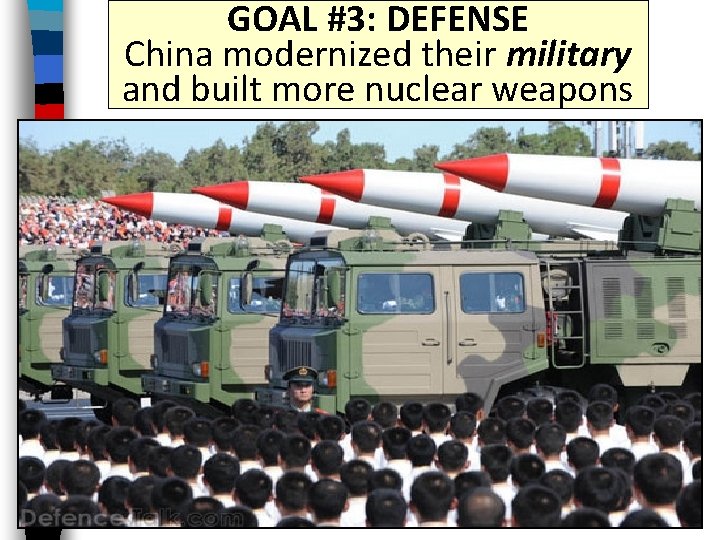
GOAL #3: DEFENSE China modernized their military and built more nuclear weapons
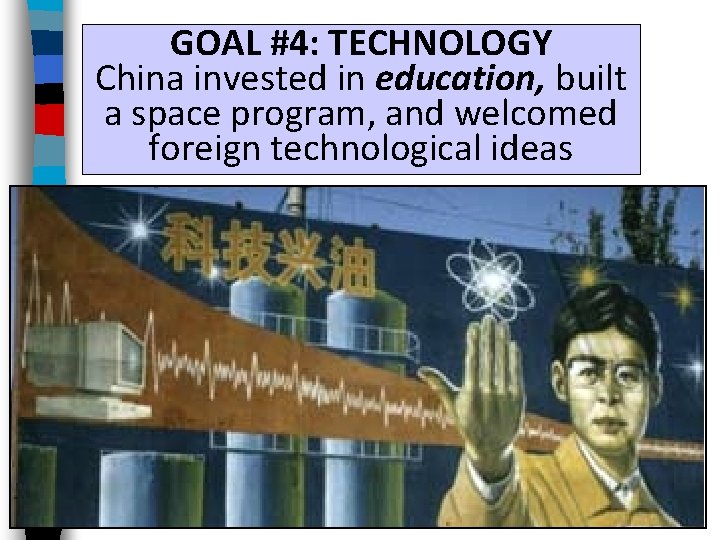
GOAL #4: TECHNOLOGY China invested in education, built a space program, and welcomed foreign technological ideas
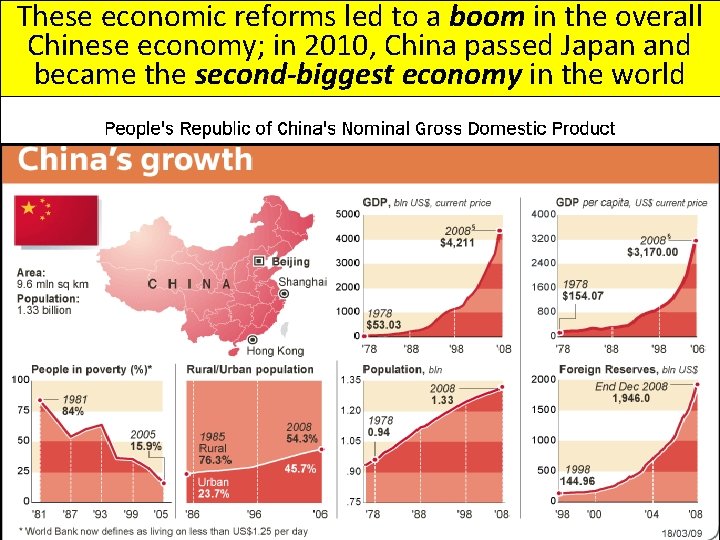
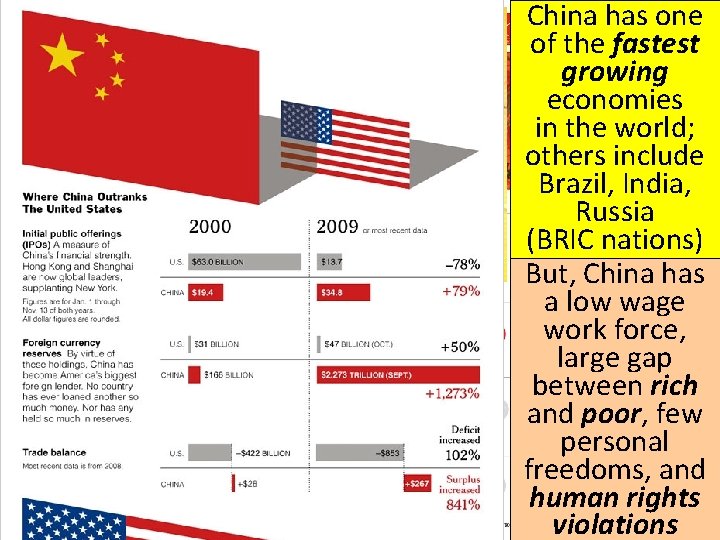
These economic reforms led to a boom in the overall Chinese economy; in 2010, China passed Japan and became the second-biggest economy in the world
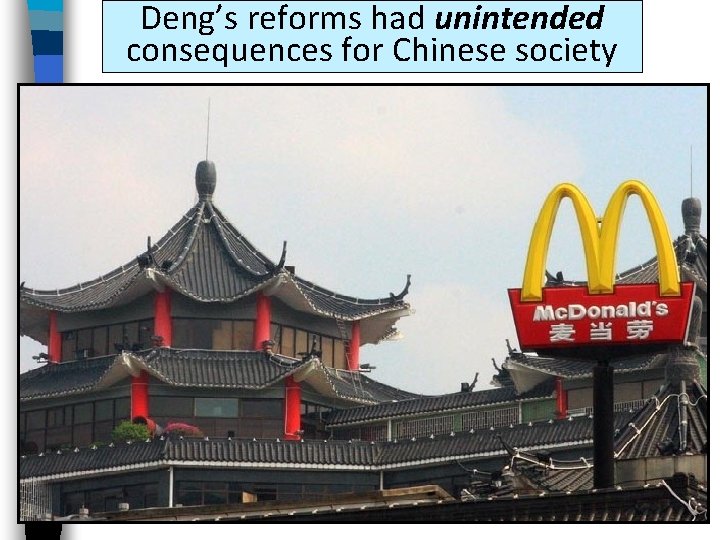
Deng’s reforms had unintended consequences for Chinese society
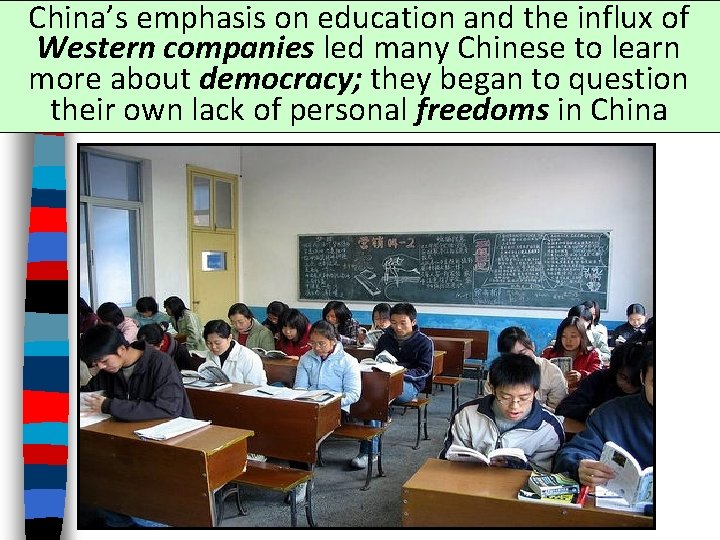
China’s emphasis on education and the influx of Western companies led many Chinese to learn more about democracy; they began to question their own lack of personal freedoms in China
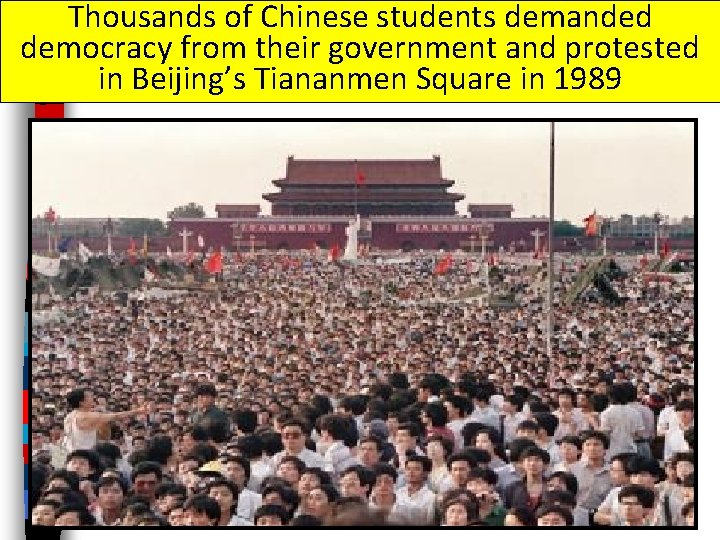
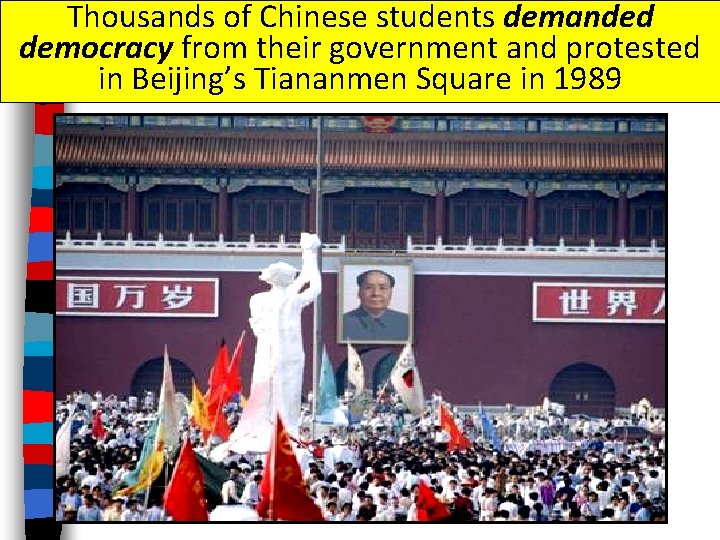
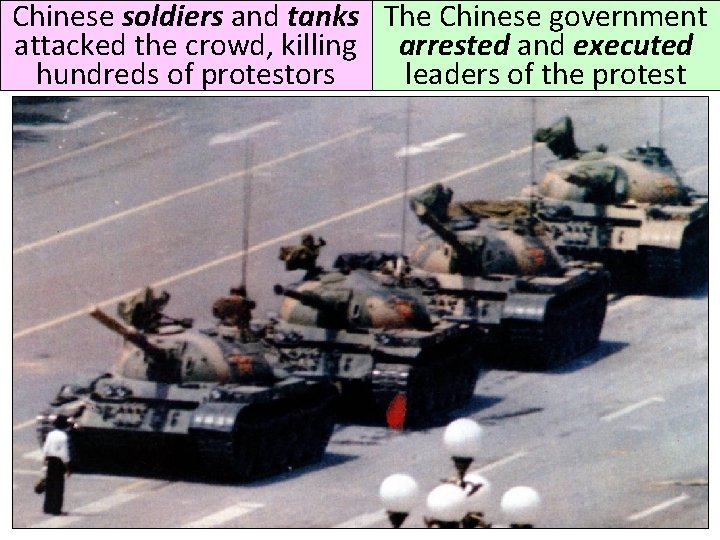
Thousands of Chinese students demanded democracy from their government and protested in Beijing’s Tiananmen Square in 1989
Thousands of Chinese students demanded democracy from their government and protested in Beijing’s Tiananmen Square in 1989
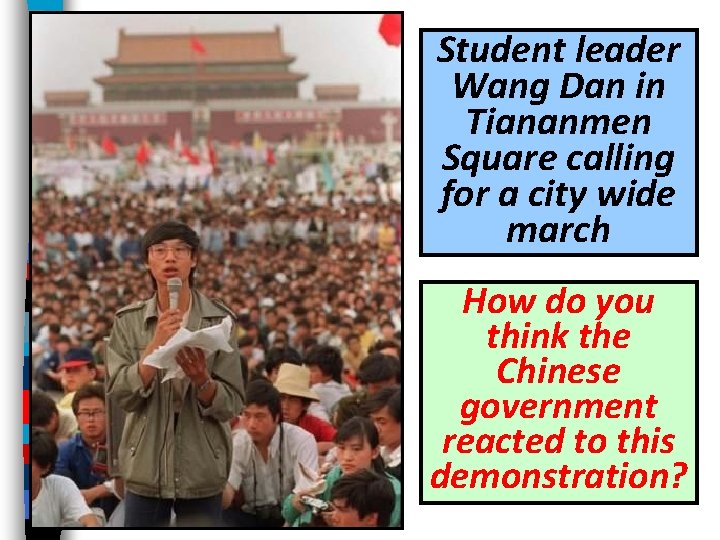
Student leader Wang Dan in Tiananmen Square calling for a city wide march How do you think the Chinese government reacted to this demonstration?
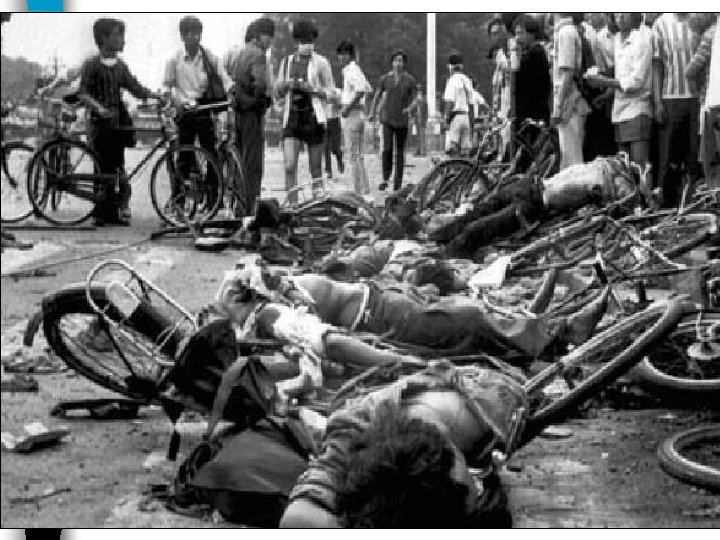
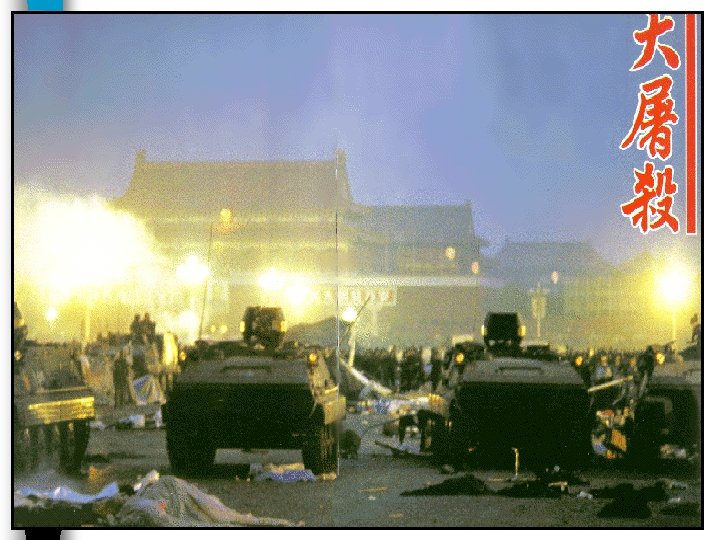
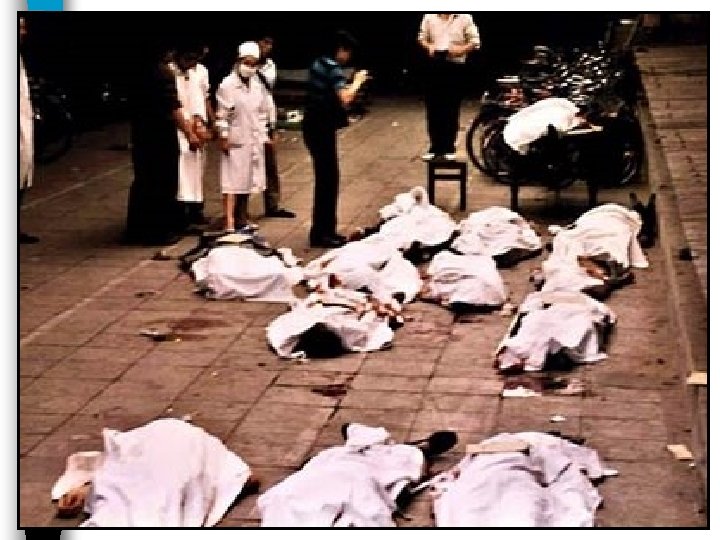
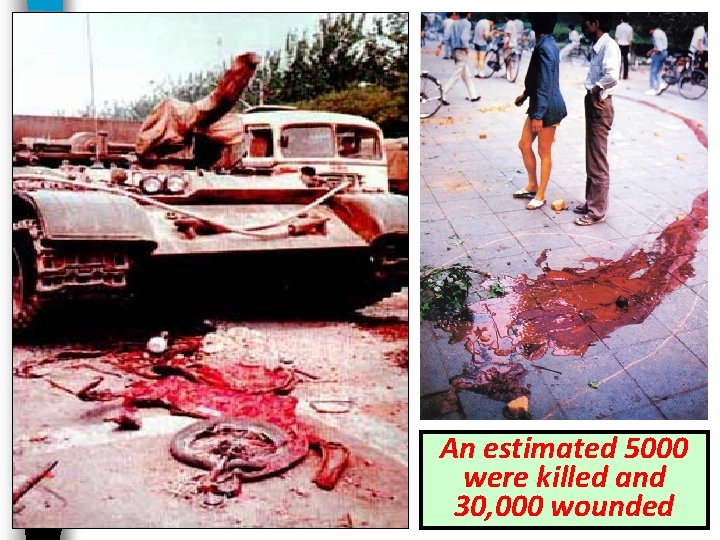
Chinese and tanks The Chinese government Check outsoldiers this fun link to see what web sites the are censored in china attacked crowd, killing arrested and executed http: //www. greatfirewallofchina. org hundreds of protestors leaders of the protest
An estimated 5000 were killed and 30, 000 wounded
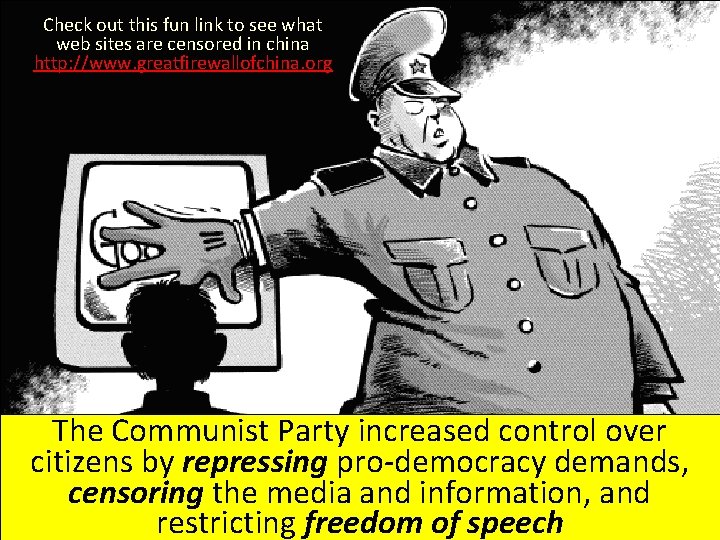
Check out this fun link to see what web sites are censored in china http: //www. greatfirewallofchina. org The Communist Party increased control over citizens by repressing pro-democracy demands, censoring the media and information, and restricting freedom of speech
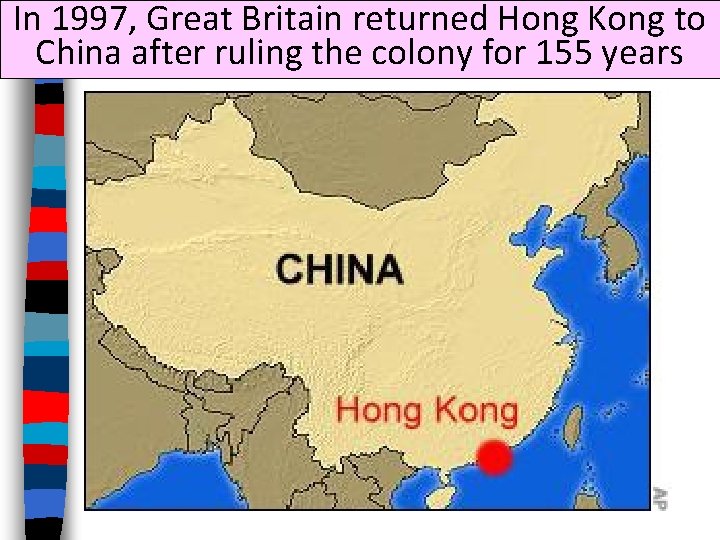
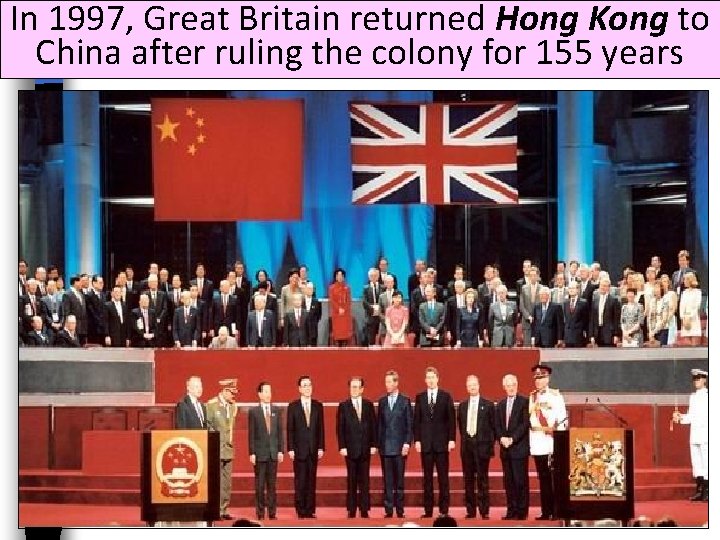
In 1997, Great Britain returned Hong Kong to China after ruling the colony for 155 years
In 1997, Great Britain returned Hong Kong to China after ruling the colony for 155 years
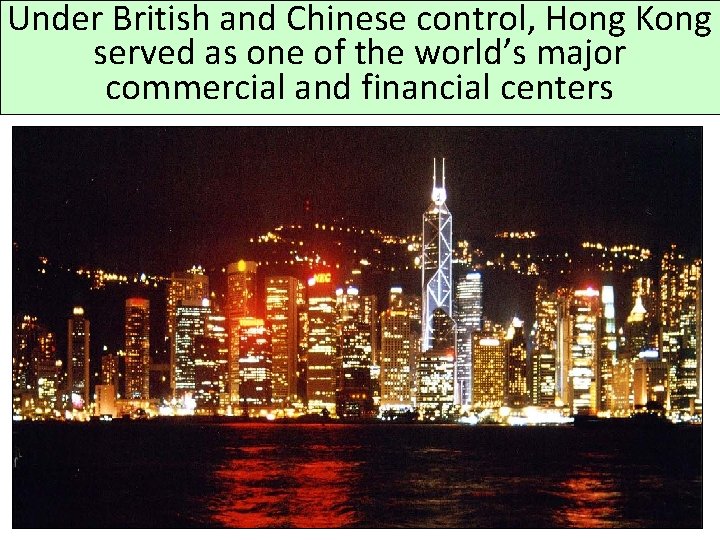
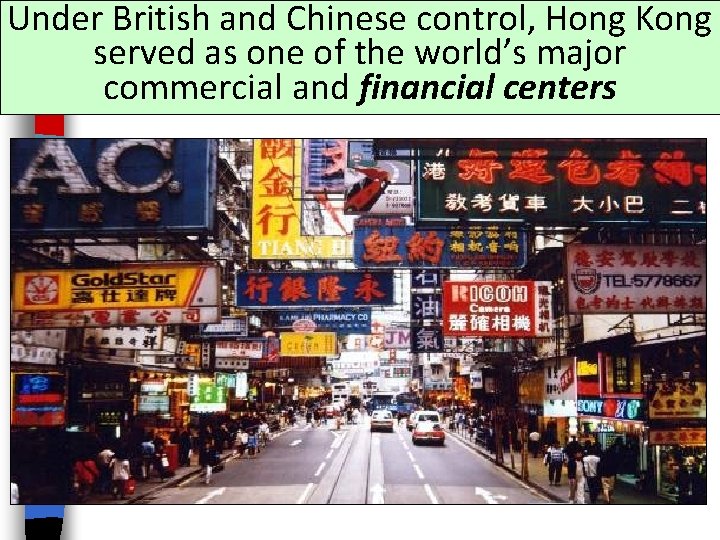
Under British and Chinese control, Hong Kong served as one of the world’s major commercial and financial centers
Under British and Chinese control, Hong Kong served as one of the world’s major commercial and financial centers
China has one of the fastest growing economies in the world; others include Brazil, India, Russia (BRIC nations) But, China has a low wage work force, large gap between rich and poor, few personal freedoms, and human rights violations
China Today Introduction to Diane Sawyer’s report on the “Stunning Economic Growth of China” (5: 37) Diane Sawyer’s full report on the “Stunning Economic Growth of China” (20: 00) Video on “Manufacturing & China’s Economic Growth” (2. 41)