
Children with a Fever Dr Julia Thomson Paediatric


- Slides: 24
Children with a Fever Dr Julia Thomson Paediatric Consultant with an interest in Emergency Paediatrics September 2016
www. paediatricpearls. co. uk
Objectives • • What is a fever? Assessment of a child with a fever Management of a child with a fever Discharge advice and safety netting
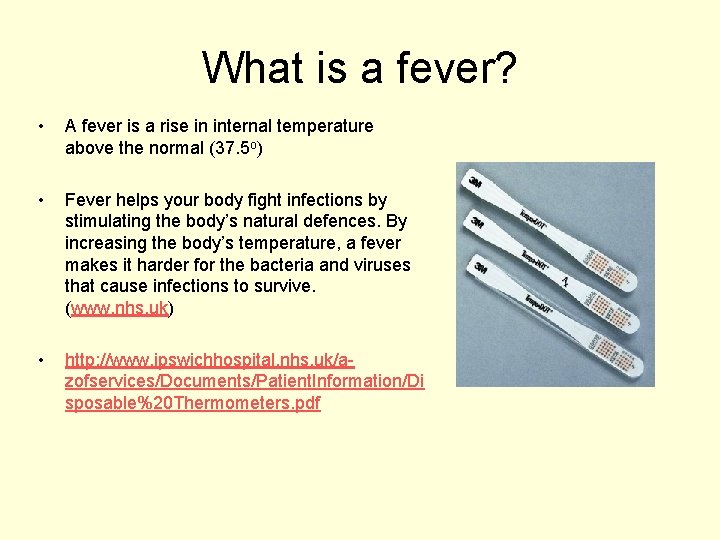
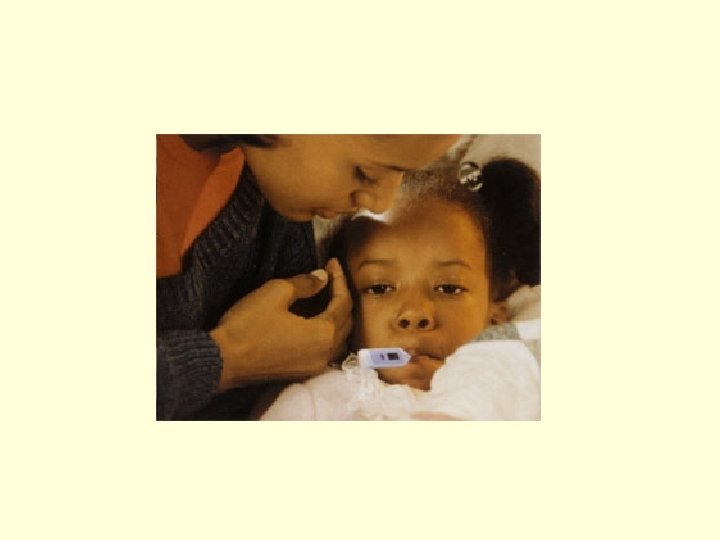
What is a fever? • A fever is a rise in internal temperature above the normal (37. 5 o) • Fever helps your body fight infections by stimulating the body’s natural defences. By increasing the body’s temperature, a fever makes it harder for the bacteria and viruses that cause infections to survive. (www. nhs. uk) • http: //www. ipswichhospital. nhs. uk/azofservices/Documents/Patient. Information/Di sposable%20 Thermometers. pdf
Background: why the NICE guideline on feverish illness in the under 5 s matters Feverish illness in children: • is the most common reason for children to be taken to the doctor • is a cause of concern for parents and carers • can be a result of a simple self-limiting infection or a life-threatening infection • can have no apparent source CG 160, May 2013
The Traffic Light System • Tool for identifying the likelihood of serious illness • Children with only symptoms and signs in the ‘green’ column are at low risk • Children with one or more symptom or sign in the ‘amber’ column are at intermediate risk • Children with one or more symptom or sign in the ‘red’ column are at high risk
Clinical assessment • Check for any immediately life-threatening features. • Use traffic light system to check for symptoms and signs that predict the risk of serious illness. • Look for a source of fever and check symptoms and signs associated with specific diseases. • Measure and record temperature, heart rate, respiratory rate, capillary refill time and assess for dehydration.
Summary of key messages • Assess children with learning disabilities using the traffic light table, taking into account their disability • Children who are assessed as low risk‘green’ can be cared for at home with appropriate advice • If any ‘amber’ features are present and no diagnosis has been reached, provide parents or carers with a ‘safety net’ or refer to specialist paediatric care for further assessment • Children assessed remotely with ‘red’ features should be sent for urgent referral • Antipyretics should not be used with the sole aim of reducing fever
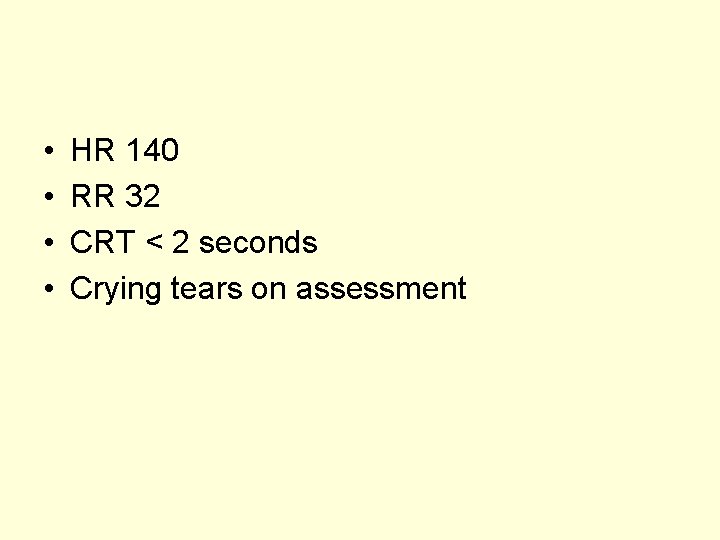
An 18 month old child is brought to the urgent care centre by her mother. She has a temperature of 39. 70 C and a blanching rash and she screams loudly every time you try and go near her. Her mother thinks she has meningitis.
• • HR 140 RR 32 CRT < 2 seconds Crying tears on assessment
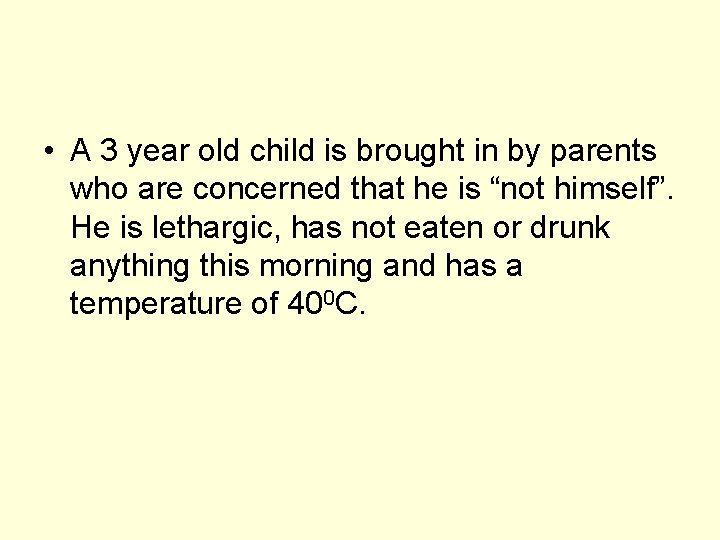
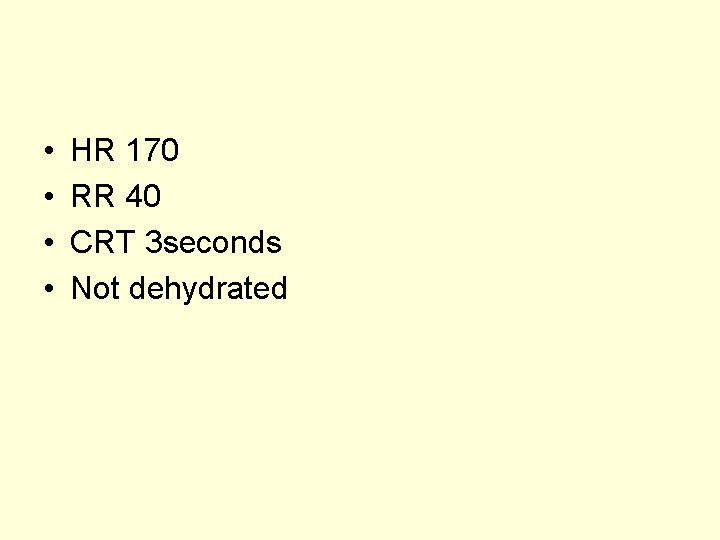
• A 3 year old child is brought in by parents who are concerned that he is “not himself”. He is lethargic, has not eaten or drunk anything this morning and has a temperature of 400 C.
• • HR 170 RR 40 CRT 3 seconds Not dehydrated
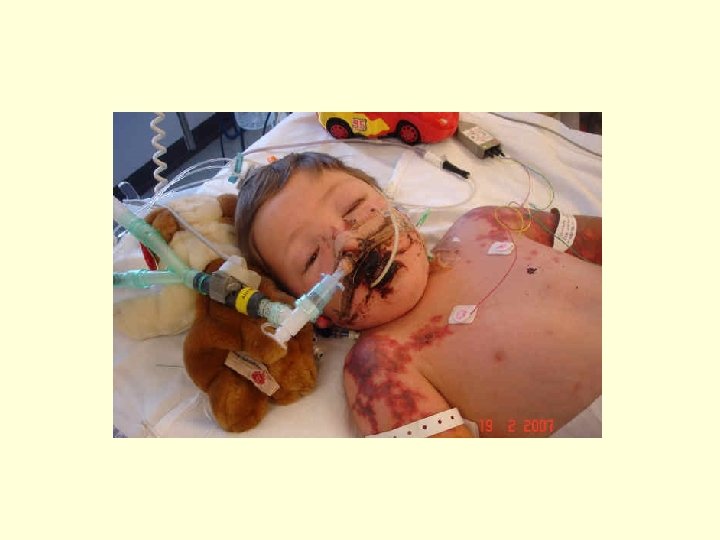
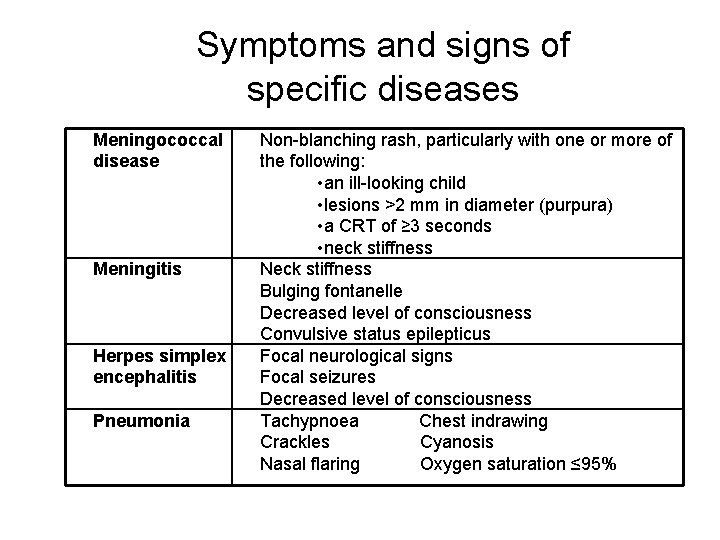
Symptoms and signs of specific diseases Meningococcal disease Meningitis Herpes simplex encephalitis Pneumonia Non-blanching rash, particularly with one or more of the following: • an ill-looking child • lesions >2 mm in diameter (purpura) • a CRT of ≥ 3 seconds • neck stiffness Neck stiffness Bulging fontanelle Decreased level of consciousness Convulsive status epilepticus Focal neurological signs Focal seizures Decreased level of consciousness Tachypnoea Chest indrawing Crackles Cyanosis Nasal flaring Oxygen saturation ≤ 95%
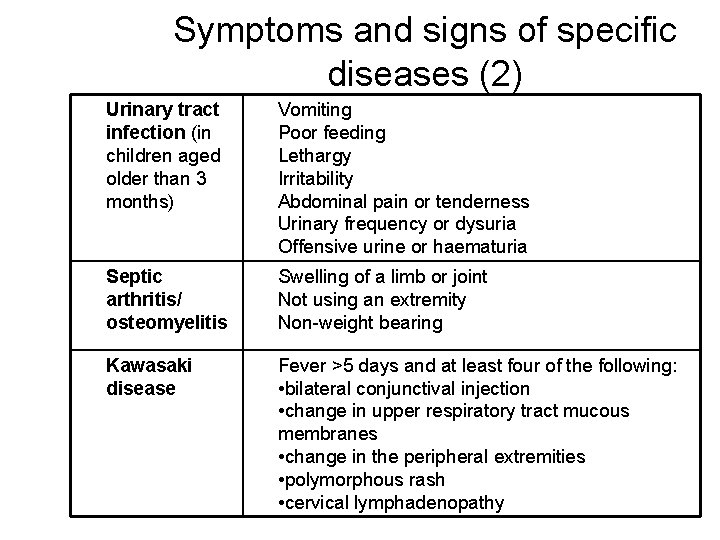
Symptoms and signs of specific diseases (2) Urinary tract infection (in children aged older than 3 months) Vomiting Poor feeding Lethargy Irritability Abdominal pain or tenderness Urinary frequency or dysuria Offensive urine or haematuria Septic arthritis/ osteomyelitis Swelling of a limb or joint Not using an extremity Non-weight bearing Kawasaki disease Fever >5 days and at least four of the following: • bilateral conjunctival injection • change in upper respiratory tract mucous membranes • change in the peripheral extremities • polymorphous rash • cervical lymphadenopathy
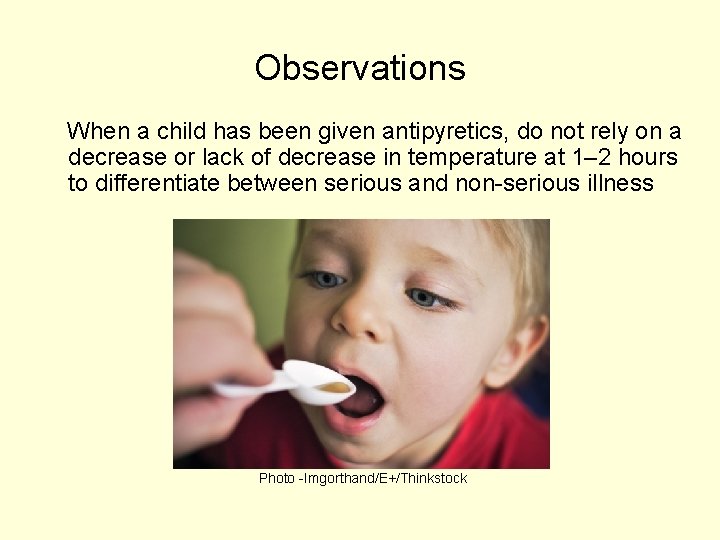
Antipyretics • Antipyretics do not prevent febrile convulsions and should not be used specifically for this purpose. • Do not routinely give antipyretic drugs to a child with fever with the sole aim of reducing body temperature • Do not administer paracetamol and ibuprofen at the same time but consider using the alternative agent if the child does not respond to the first drug.
Observations When a child has been given antipyretics, do not rely on a decrease or lack of decrease in temperature at 1– 2 hours to differentiate between serious and non-serious illness Photo -Imgorthand/E+/Thinkstock
The safety net • The safety net should be one or more of the following: – verbal and/or written information on warning symptoms and how further healthcare can be accessed – arranging further follow-up – liaising with other healthcare professionals, including out-of-hours providers, to ensure direct access for the child if required.
On-line learning • https: //www. spottingthesickchild. com/symptoms/fever/ke y-background-information/facts-and-figures/42 • http: //n 3. learning. bmj. com/learning/module-intro/feverishillness-young-children-paediatricpractitioners. html? locale=en_GB&module. Id=6053765
Questions?
Summary • • • What a fever is www. nice. org. uk Assessment of a child with a fever Management of a child with a fever Discharge advice and safety netting
www. paediatricpearls. co. uk