
Children and food advertising effects When are they

- Slides: 26
Children and food advertising effects: When are they old enough to resist? Jennifer L. Harris October 22, 2008
“Food marketing works” (IOM, 2006) • Brand recall • Brand preferences • Requests to parents
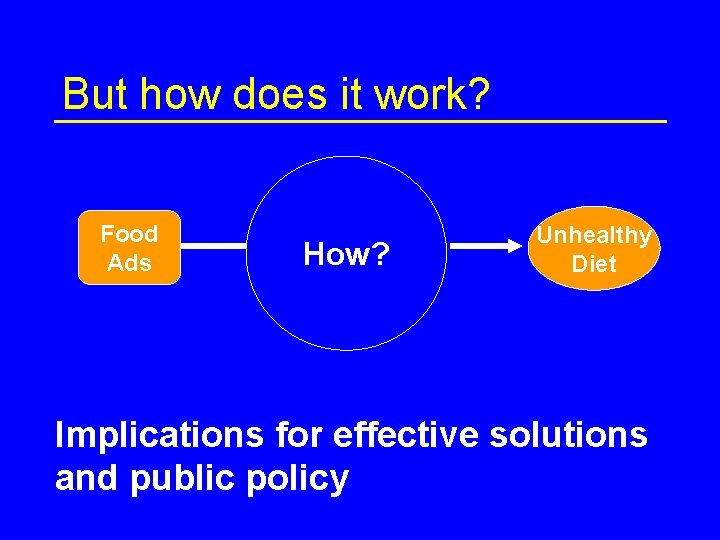
But how does it work? Food Ads How? Unhealthy Diet Implications for effective solutions and public policy
Outline of discussion • Psychology of advertising effects – Intended effects – “Side effects” • Developmental differences • Potential solutions
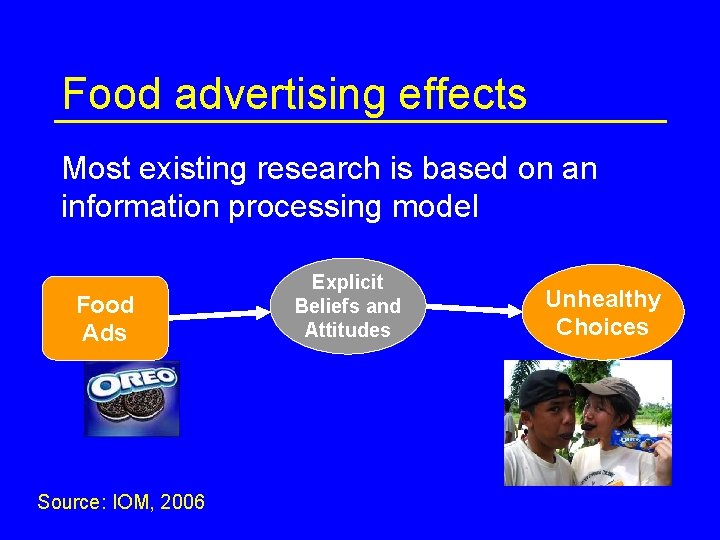
Food advertising effects Most existing research is based on an information processing model Food Ads Source: IOM, 2006 Explicit Beliefs and Attitudes Unhealthy Choices
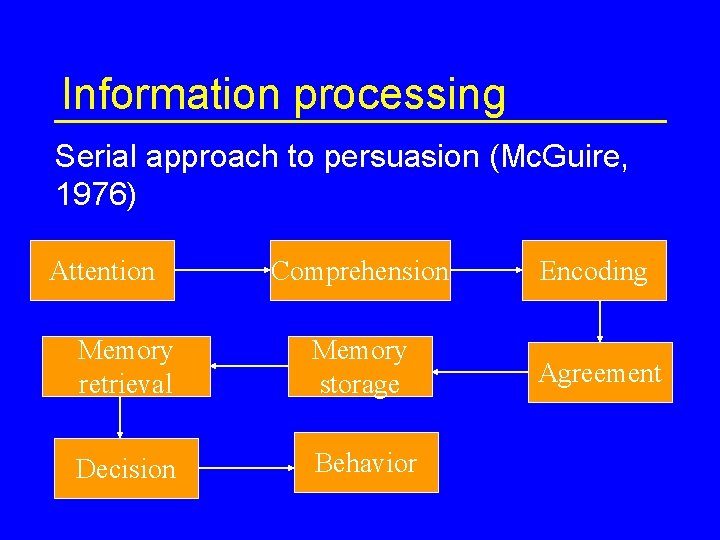
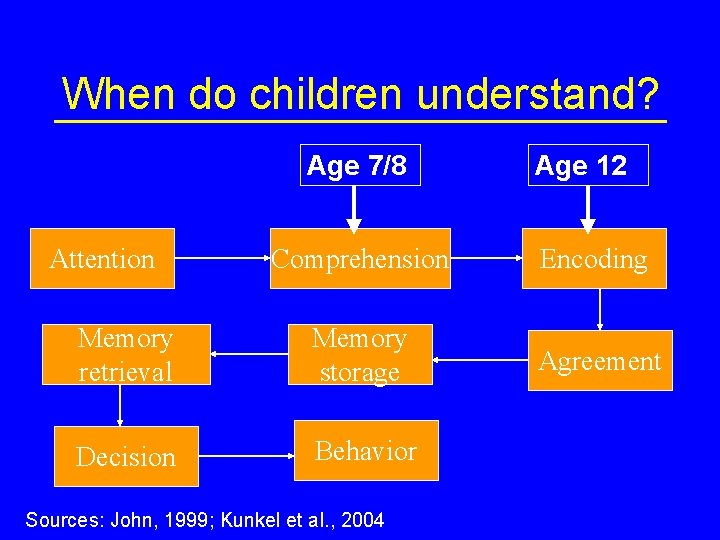
Information processing Serial approach to persuasion (Mc. Guire, 1976) Attention Comprehension Encoding Memory retrieval Memory storage Agreement Decision Behavior
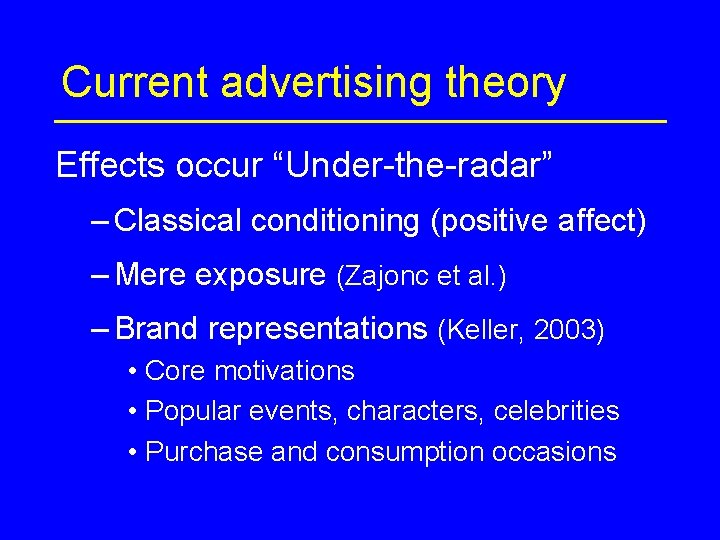
Current advertising theory Effects occur “Under-the-radar” – Classical conditioning (positive affect) – Mere exposure (Zajonc et al. ) – Brand representations (Keller, 2003) • Core motivations • Popular events, characters, celebrities • Purchase and consumption occasions
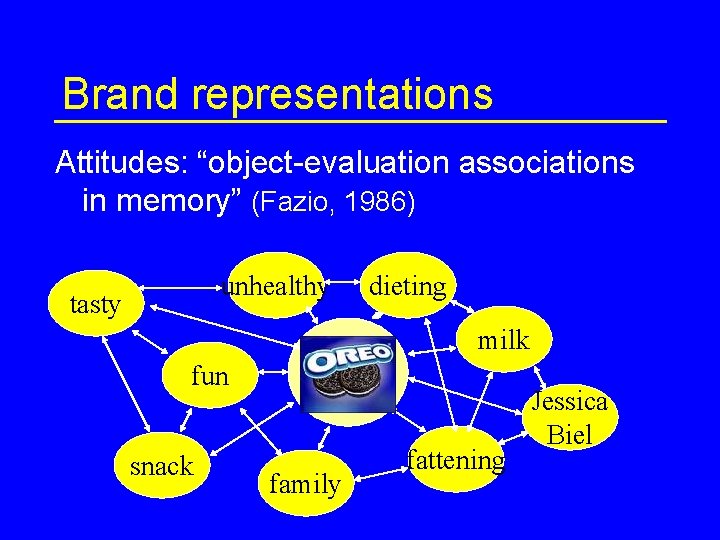
Brand representations Attitudes: “object-evaluation associations in memory” (Fazio, 1986) unhealthy tasty fun snack dieting Oreos family milk fattening Jessica Biel
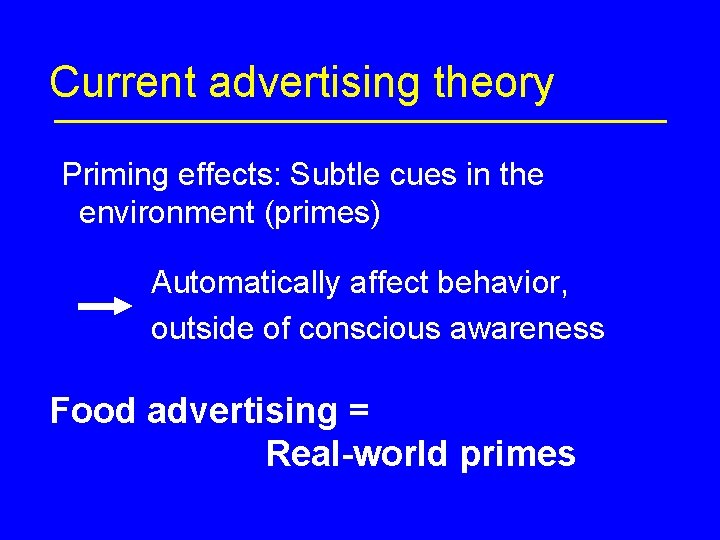
Current advertising theory Priming effects: Subtle cues in the environment (primes) Automatically affect behavior, outside of conscious awareness Food advertising = Real-world primes
When do children understand? Age 7/8 Attention Age 12 Comprehension Encoding Memory retrieval Memory storage Agreement Decision Behavior Sources: John, 1999; Kunkel et al. , 2004
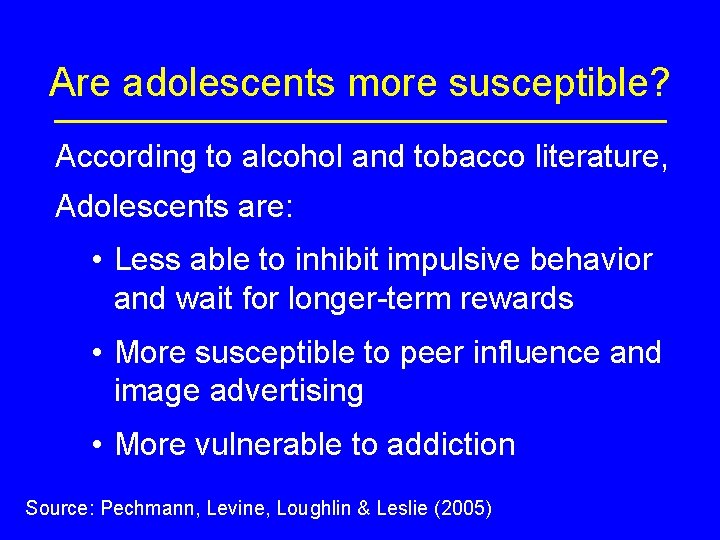
Are adolescents more susceptible? According to alcohol and tobacco literature, Adolescents are: • Less able to inhibit impulsive behavior and wait for longer-term rewards • More susceptible to peer influence and image advertising • More vulnerable to addiction Source: Pechmann, Levine, Loughlin & Leslie (2005)
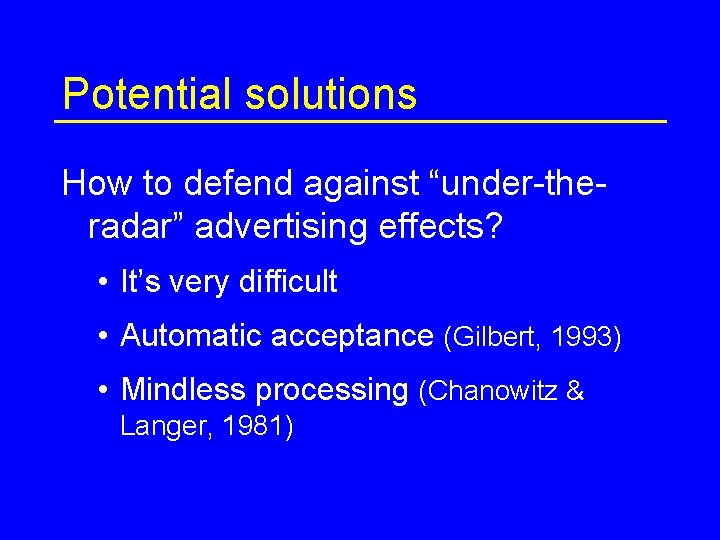
Potential solutions How to defend against “under-theradar” advertising effects? • It’s very difficult • Automatic acceptance (Gilbert, 1993) • Mindless processing (Chanowitz & Langer, 1981)
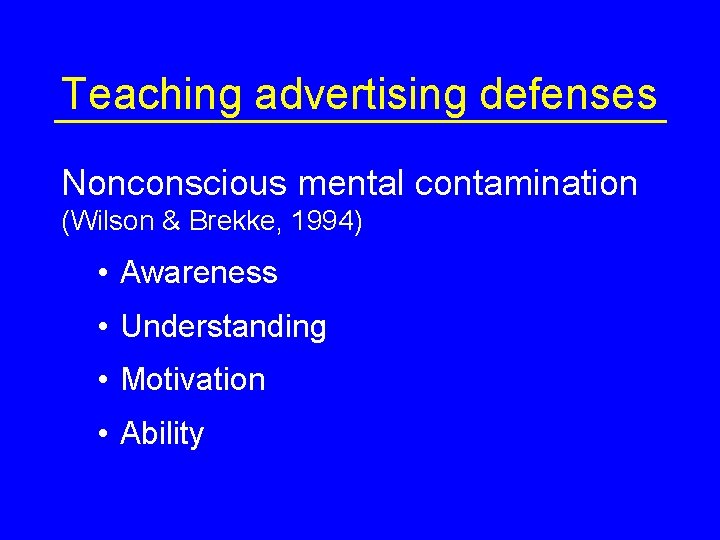
Teaching advertising defenses Nonconscious mental contamination (Wilson & Brekke, 1994) • Awareness • Understanding • Motivation • Ability
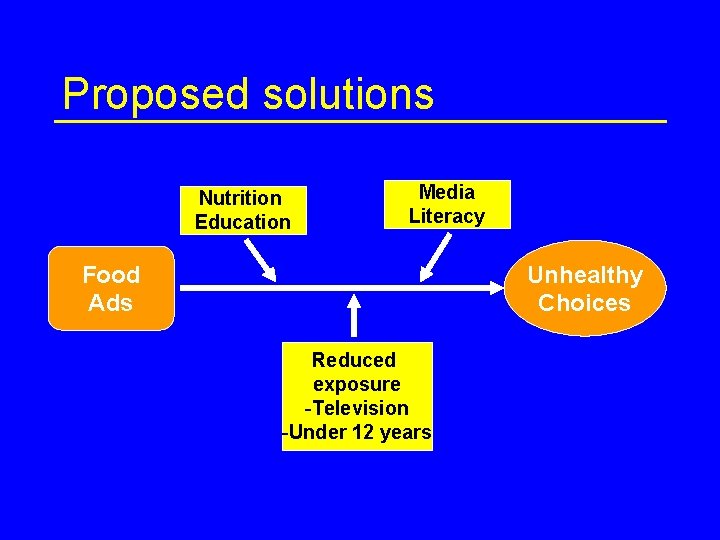
Proposed solutions Nutrition Education Media Literacy Food Ads Unhealthy Choices Reduced exposure -Television -Under 12 years
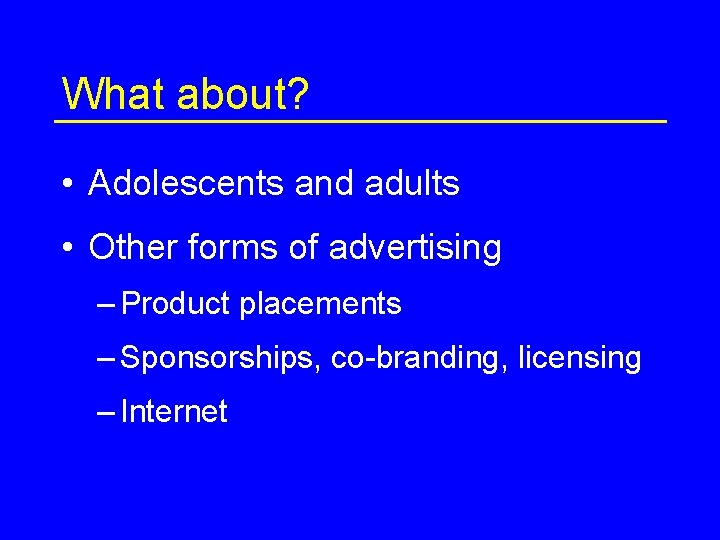
What about? • Adolescents and adults • Other forms of advertising – Product placements – Sponsorships, co-branding, licensing – Internet
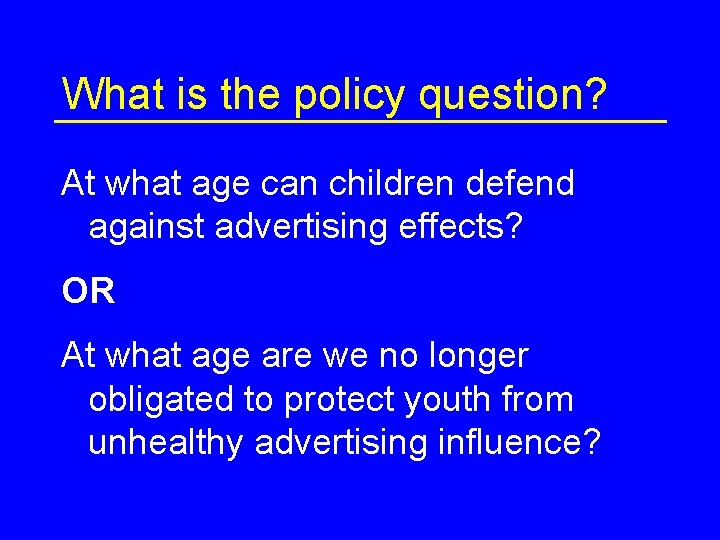
What is the policy question? At what age can children defend against advertising effects? OR At what age are we no longer obligated to protect youth from unhealthy advertising influence?
Thank you! www. yaleruddcenter. org
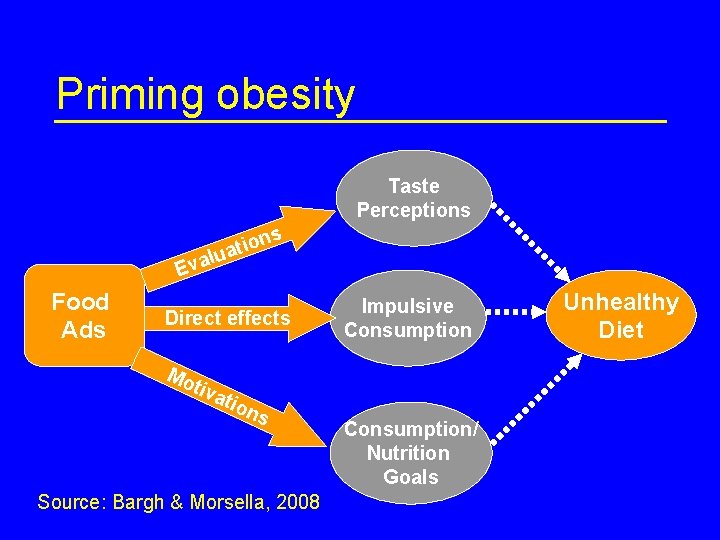
Priming obesity Taste Perceptions s ion t a lu Eva Food Ads Direct effects Mo ti Impulsive Consumption vat io ns Source: Bargh & Morsella, 2008 Consumption/ Nutrition Goals Unhealthy Diet
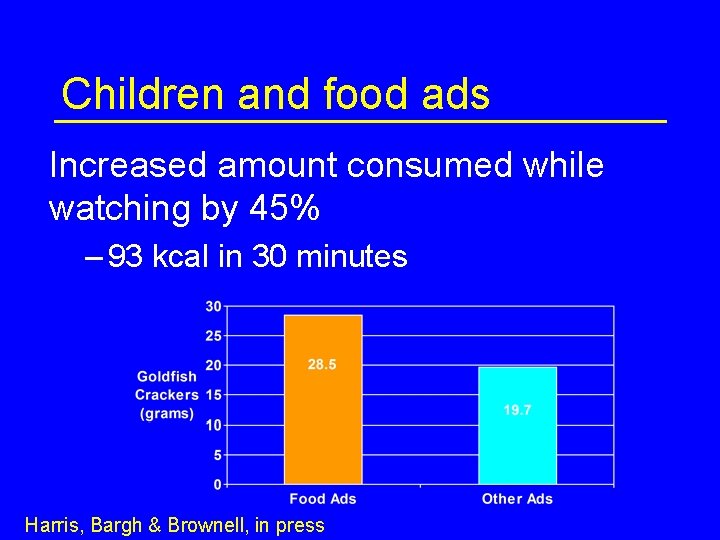
Children and food ads Increased amount consumed while watching by 45% – 93 kcal in 30 minutes Harris, Bargh & Brownell, in press
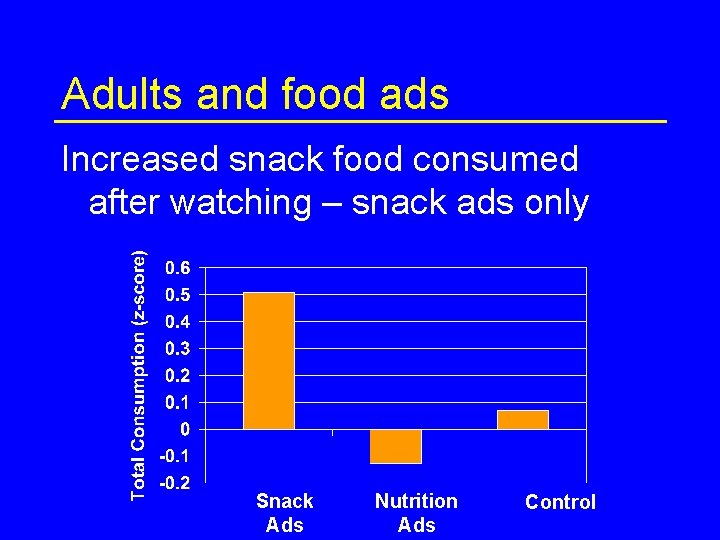
Adults and food ads Increased snack food consumed after watching – snack ads only Snack Ads Nutrition Ads Control
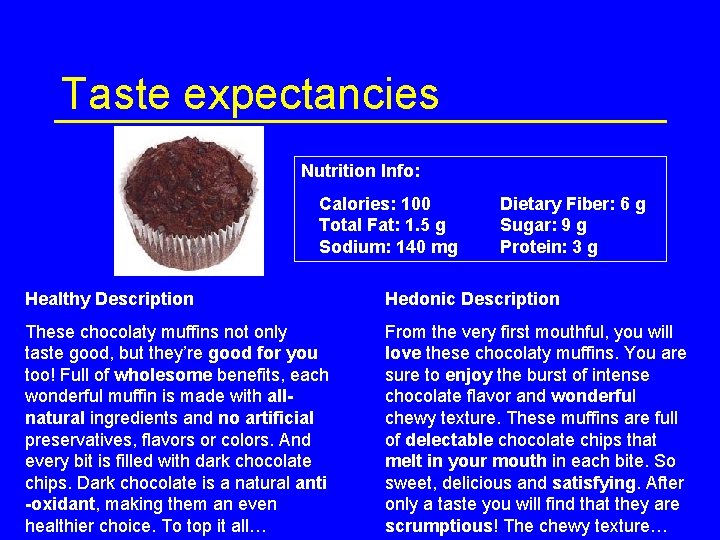
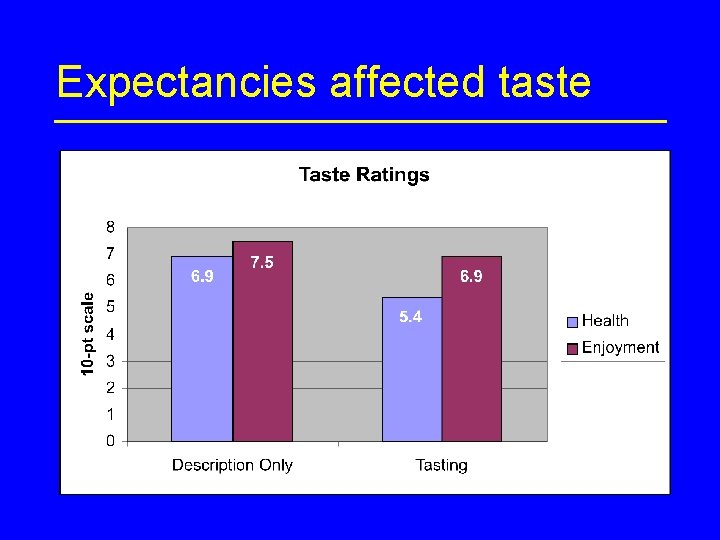
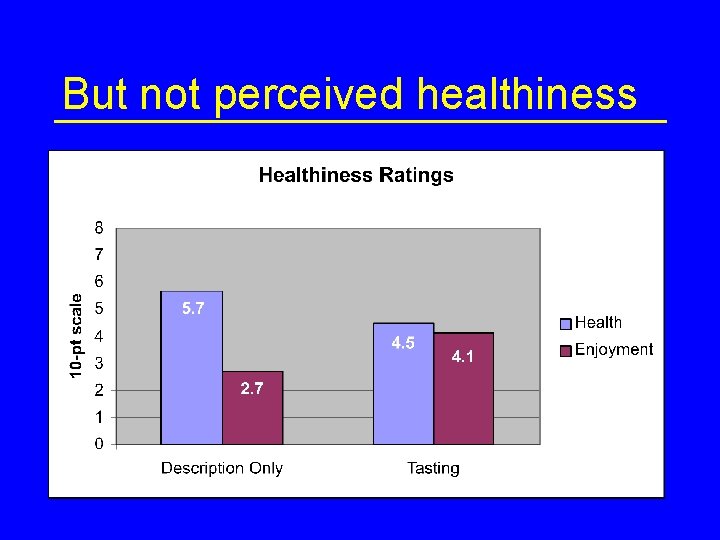
Taste expectancies Nutrition Info: Calories: 100 Total Fat: 1. 5 g Sodium: 140 mg Dietary Fiber: 6 g Sugar: 9 g Protein: 3 g Healthy Description Hedonic Description These chocolaty muffins not only taste good, but they’re good for you too! Full of wholesome benefits, each wonderful muffin is made with allnatural ingredients and no artificial preservatives, flavors or colors. And every bit is filled with dark chocolate chips. Dark chocolate is a natural anti -oxidant, making them an even healthier choice. To top it all… From the very first mouthful, you will love these chocolaty muffins. You are sure to enjoy the burst of intense chocolate flavor and wonderful chewy texture. These muffins are full of delectable chocolate chips that melt in your mouth in each bite. So sweet, delicious and satisfying. After only a taste you will find that they are scrumptious! The chewy texture…
Expectancies affected taste
But not perceived healthiness
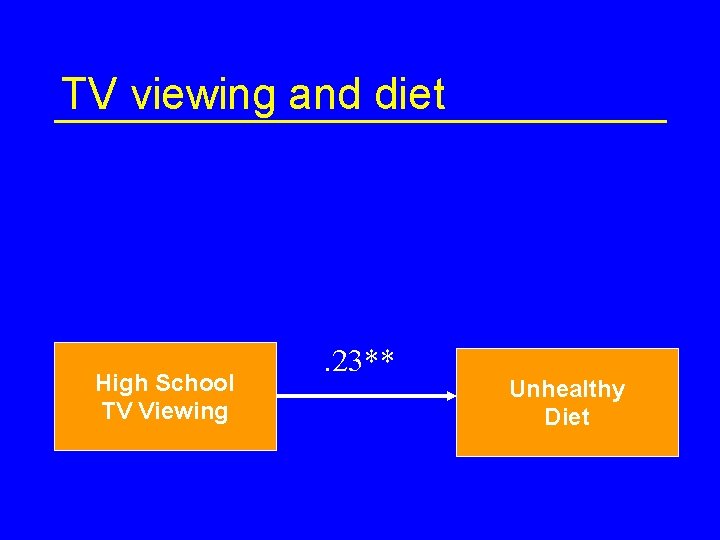
TV viewing and diet High School TV Viewing . 23** Unhealthy Diet
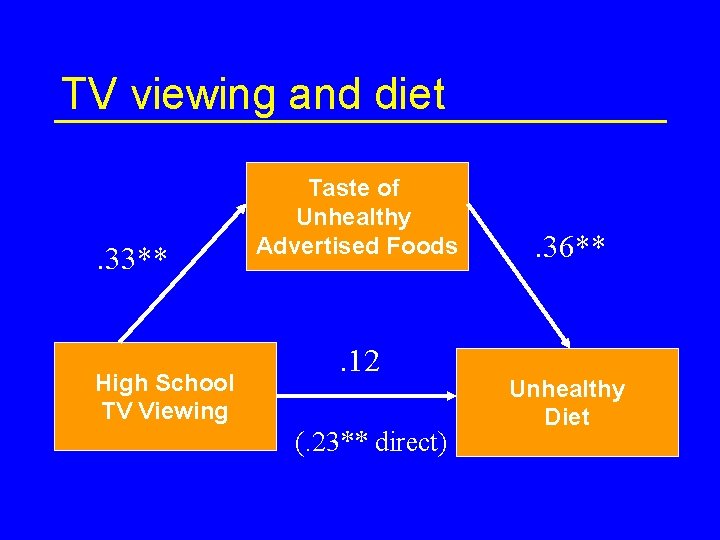
TV viewing and diet . 33** High School TV Viewing Taste of Unhealthy Advertised Foods . 12 (. 23** direct) . 36** Unhealthy Diet
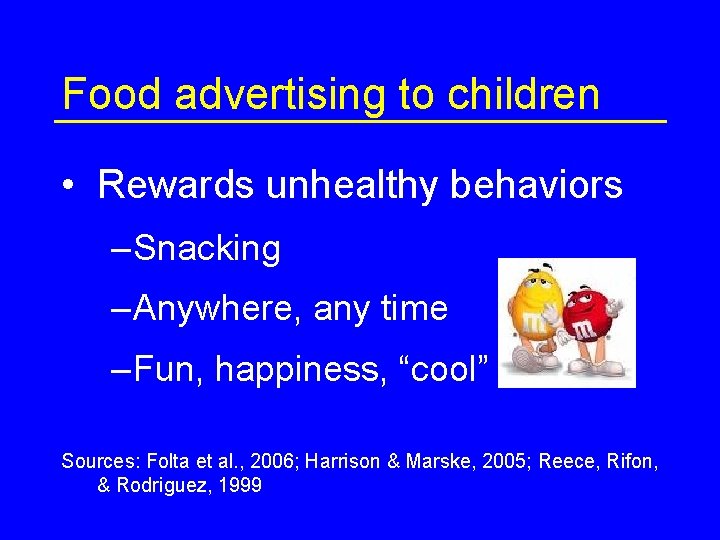
Food advertising to children • Rewards unhealthy behaviors – Snacking – Anywhere, any time – Fun, happiness, “cool” Sources: Folta et al. , 2006; Harrison & Marske, 2005; Reece, Rifon, & Rodriguez, 1999