
CHILDHOOD ONSET SCHIZOPHRENIA A presentation for future health
- Slides: 25
CHILDHOOD ONSET SCHIZOPHRENIA A presentation for future health care workers
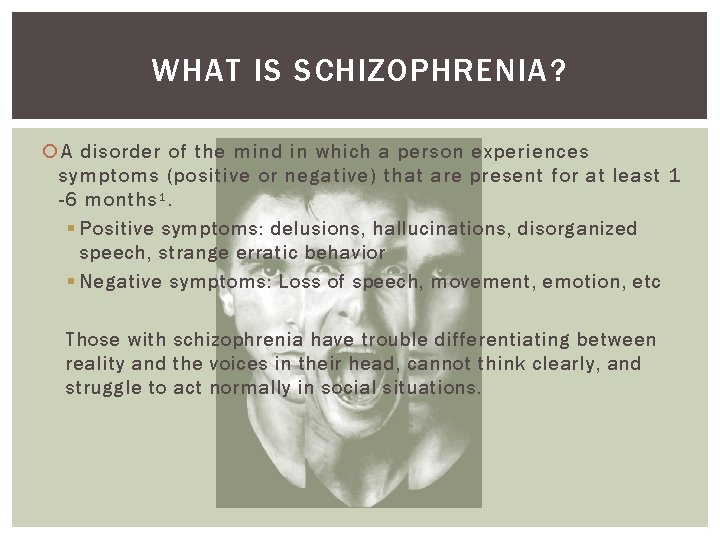
WHAT IS SCHIZOPHRENIA? A disorder of the mind in which a person experiences symptoms (positive or negative) that are present for at least 1 -6 months 1. § Positive symptoms: delusions, hallucinations, disorganized speech, strange erratic behavior § Negative symptoms: Loss of speech, movement, emotion, etc Those with schizophrenia have trouble differentiating between reality and the voices in their head, cannot think clearly, and struggle to act normally in social situations.
COMMON SCHIZOPHRENIA SYMPTOMS AMONG CHILDREN Language delays Late crawling or walking Abnormal motor skill use (arm flapping, rocking, flailing legs) Imaginary friends Hearing voices Lack of or inappropriate emotion Illogical thinking Incoherent speech Decreased self care (brushing hair, teeth, etc)
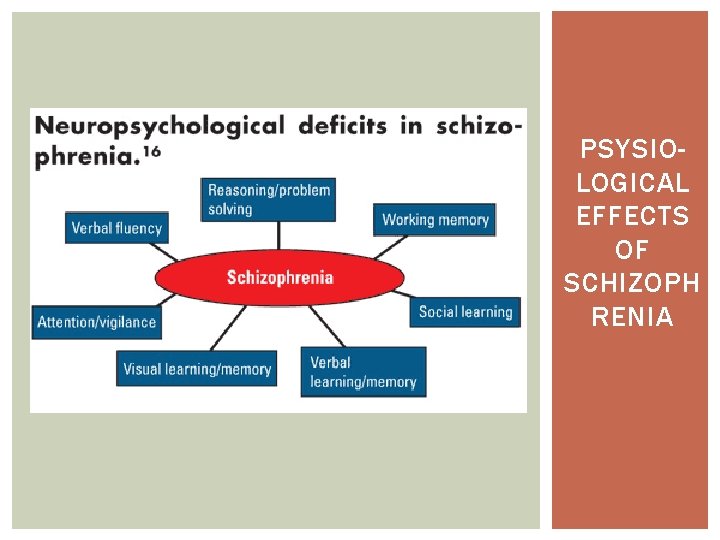
PSYSIOLOGICAL EFFECTS OF SCHIZOPH RENIA
TYPES OF SCHIZOPHRENIA Paranoid-extreme feelings of suspicion, mistrust, and persecution Disorganized- inappropriate thoughts, speech, and behavior Catatonic- coma like daze, unresponsive Residual- individuals with symptoms who are found to no longer be psychotic after experiencing a psychotic episode Undifferentiated-the presence of psychotic symptoms but otherwise unclassifiable
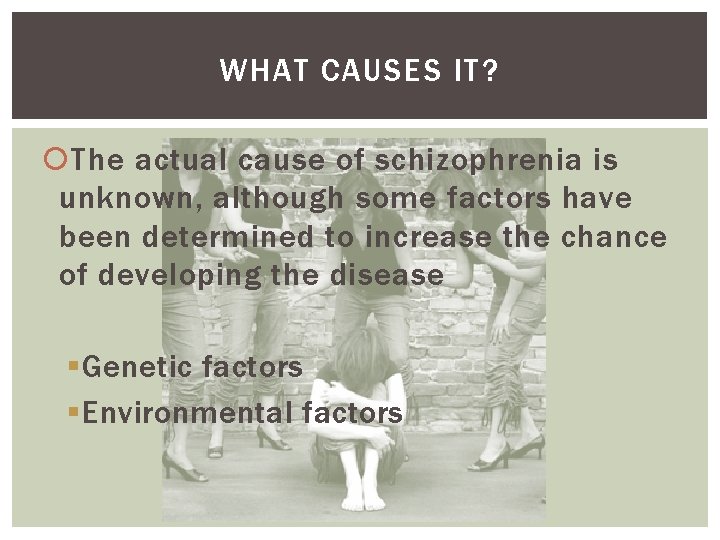
WHAT CAUSES IT? The actual cause of schizophrenia is unknown, although some factors have been determined to increase the chance of developing the disease § Genetic factors § Environmental factors
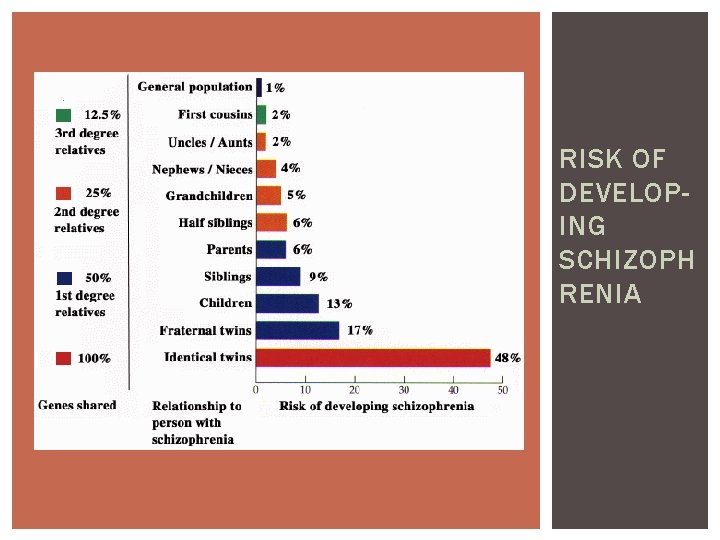
GENETIC AND ENVIRONMENTAL FACTORS Greatest risk of developing found with having a firstdegree relative with the disease. A child of 2 parents with schizophrenia has a 46% chance of developing the disorder 2. Significant overlap has been found in the genetics of schizophrenia and bipolar disorder. Living in an urban environment increases risk by a factor of two 3. Social isolation, poor housing conditions, racial discrimination, family dysfunction, and other stressors play an important role also.
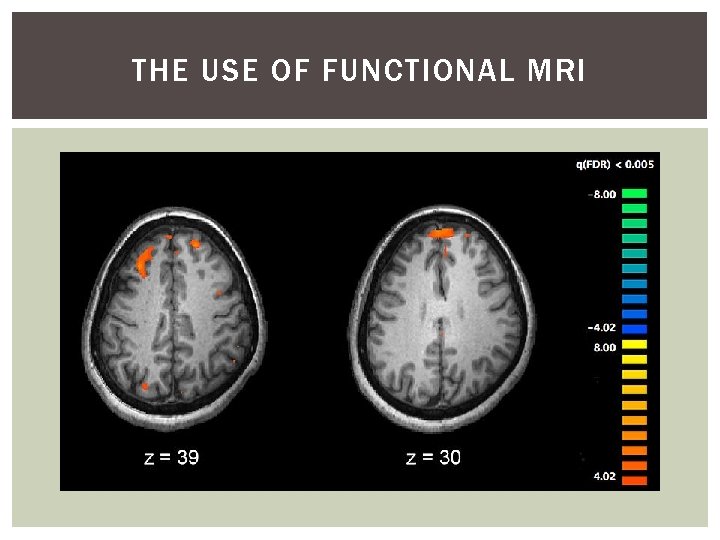
NEUROLOGICAL EXPLANATION Associated with slight differences in brain structure and chemistry during psychotic states. Differences seem to be most commonly found in frontal and temporal lobes and the hippocampus. Use of drugs to block dopamine functions during psychotic breaks have led to speculations of the influence of dopamine on schizophrenia.
PSYCHOLOGICAL EXPLANATION § Many alternative reality’s have been found in those with the diagnosis § Directly related to current and past stressors § Despite general appearance, those with schizophrenia are emotionally responsive, sometimes even with increased sensitivity.
THE USE OF FUNCTIONAL MRI
WHO DOES IT EFFECT? Schizophrenia effects both men and women equally It occurs at similar rates in all ethnic groups Symptoms typically appear between ages 16 and 30 Men tend to experience symptoms at a younger age Difficult to diagnose in children and teens
RISK OF DEVELOPING SCHIZOPH RENIA
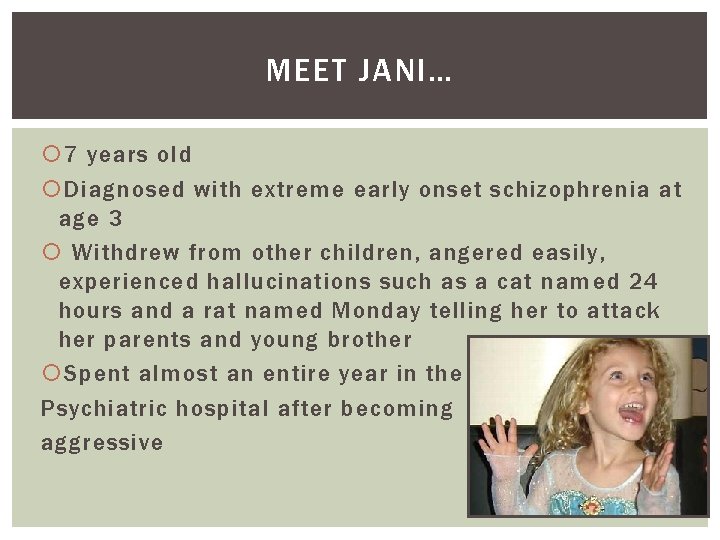
MEET JANI… 7 years old Diagnosed with extreme early onset schizophrenia at age 3 Withdrew from other children, angered easily, experienced hallucinations such as a cat named 24 hours and a rat named Monday telling her to attack her parents and young brother Spent almost an entire year in the Psychiatric hospital after becoming aggressive
MEET JANI… The family was forced to rent two- one bedroom apartments to protect the safety of their son, and split their time between the two In 2011 the family was finally able to move back into one apartment after Jani’s symptoms were controllable. Bodhi was recently diagnosed with an autism spectrum disorder. Jani has become rather protective of her brother because she understands he too has problems.
HISTORY OF THE DISEASE In the late 19 th century, children were rarely diagnosed with psychosis, but were diagnosed with “pubescent insanity” Those with mental illnesses were thought of as cursed and crazy In 1950, childhood psychosis became more and more common, many psychiatrists began studying common symptoms.
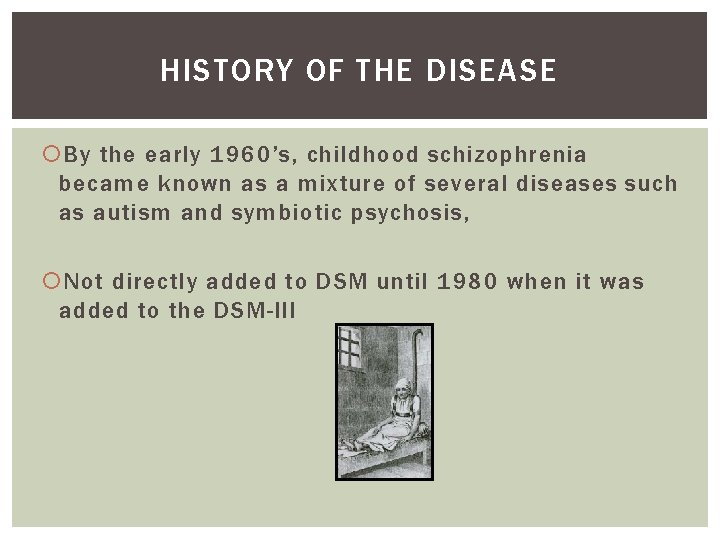
HISTORY OF THE DISEASE By the early 1960’s, childhood schizophrenia became known as a mixture of several diseases such as autism and symbiotic psychosis, Not directly added to DSM until 1980 when it was added to the DSM-III
DIFFICULTY WITH DIAGNOSIS Symptoms may only be observed by family or friends Symptoms are typically confused with other developmental disorders Many parents in denial of children’s symptoms Symptoms typically have a gradual onset
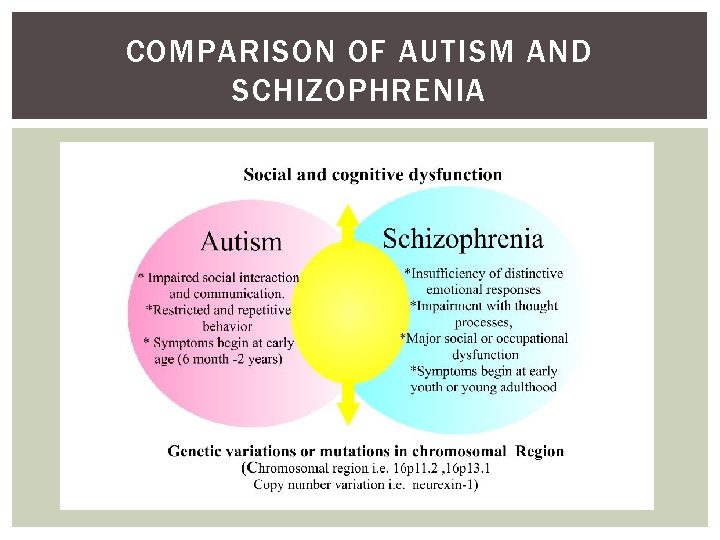
COMPARISON OF AUTISM AND SCHIZOPHRENIA
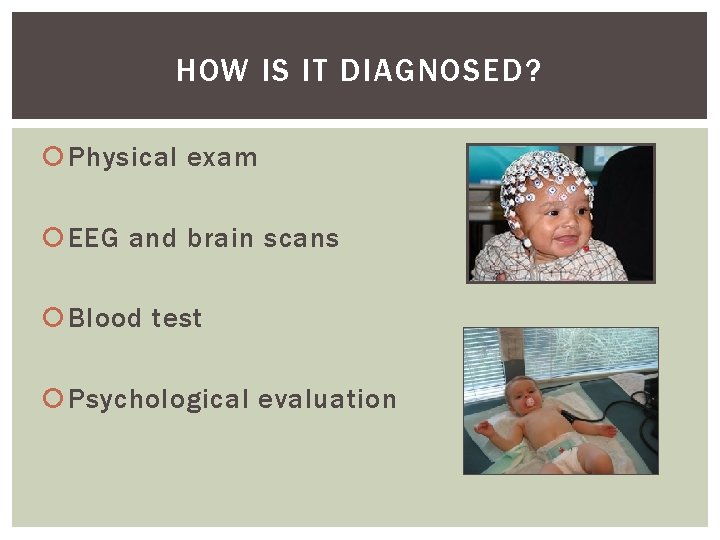
HOW IS IT DIAGNOSED? Physical exam EEG and brain scans Blood test Psychological evaluation
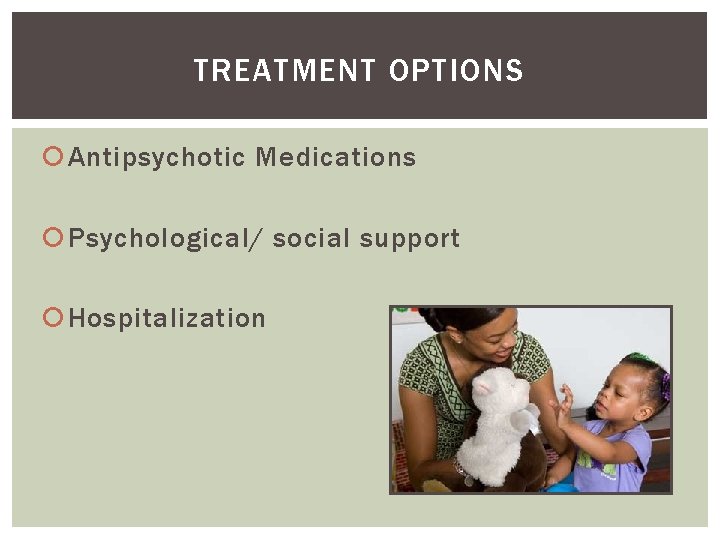
TREATMENT OPTIONS Antipsychotic Medications Psychological/ social support Hospitalization
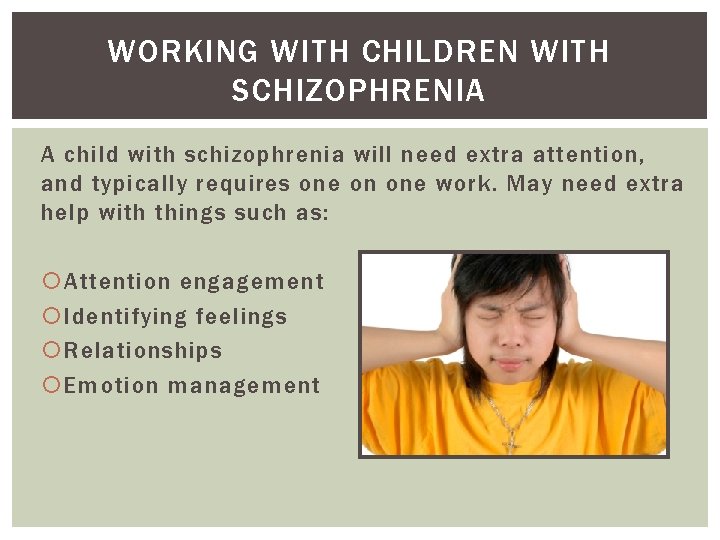
WORKING WITH CHILDREN WITH SCHIZOPHRENIA A child with schizophrenia will need extra attention, and typically requires one on one work. May need extra help with things such as: Attention engagement Identifying feelings Relationships Emotion management
GENERAL PROGNOSIS Schizophrenia typically results in a decreased life expectancy by 12 -15 years due to association with obesity, sedentary lifestyles, and suicide 3. 16. 7 million people around the globe are deemed to have moderate to severe disability from the condition 4. Most people with schizophrenia can live independently with the support of family and community members.
NOTABLE PEOPLE WITH SCHIZOPHRENIA John Nash § Mathematician who made major advances in multiple fields. Awarded the Nobel Prize in 1994 Tom Harrell § Musician and composer who was a notable figure in the jazz world. Composed over 24 albums. Elyn Saks § Law expert who focuses on mental health law. Saks kept her illness under cover until she announced her suffering in her 2007 memoir.
RESOURCES Mental Health Association of Southwest Ohio § http: //www. mhaswoh. org/ International Schizophrenia Foundation § http: //www. orthomed. org/isf. html Jani Foundation § http: //www. janifoundation. org/ Greater Cincinnati Behavioral Health Services § http: //www. gcbhs. com/resources_sch. php
WORKS CITED - American psyc hol og ic al asso ciation. Schizophrenia Treatment(2011. ). http : //www. apa. or g/t opi cs/schiz /treatment. aspx -Cold Sp ring Har bor La bor at or y. (2009. ). http : // www. dnalc. org/vi ew/899 -DSM-IV-Criteria -for-Schizophrenia. ht ml -Chudl er, E. (20 09. ). Schizophr enia. http : // faculty. washington. edu/chudler/schiz. html -Healthw ise Staf f. (2 01 1, A ug ust 16). Types of schizophrenia. http : //www. sanfo rdheal th. or g/healthinformation/healthwise/topic/aa 48032 -Mathe rs , C. , & Fa t, D. M. (2 008). The global burden of disease: 2004 update. Sw itzerland : W or ld Heal th O rg anization. -Merrill , D. Schi zo phreniz a Types. Medlineplus, 2011. http : // w ww. nlm. ni h. g ov /medlineplus/ency/article/000937. htm -Pulver , D. A. Wha t i s Schi zo phrenia (2007) The John Hopkins. http : //www. ho pki nsmedic ine. org /epigen/szwhatis. htm -Schact er , D. L. , Gil bert , D. T. , & Wegner, D. M. (2010). Psychology. (2 nd ed. ). New York: Worth Pu b. -Treatment Adv oc ac y Center. Schizophrenia Fact Sheet (2011. ). http : //www. treat menta dvo ca cycenter. org/problem/consequences-of-nontreatment/schizophr enia -Van Os J. Kapur S. Sc hiz ophr enia. Lancet. 2009; 374(9690): 635– 45.