
Childhood Nephrotic Syndrome By Brent Lee Lechner D
Childhood Nephrotic Syndrome By Brent Lee Lechner, D. O. MAJ, MC, USA
Case #1 • 4 month old child • Symptoms: – Irritability – Intermittent puffy eyes – Poor Appetite • Normal, uncomplicated pregnancy, labor and delivery
Case #1 • Physical Exam: – – • Length: 60 cm • Weight: 8. 0 kg • BP: 90/60 HEENT: Negative Chest: Clear; RSR without murmur ABD: liver palpable, kidneys not felt Ext: 2+ pedal and periorbital edema
Case # 1 Urine • Urinanalysis: – – – – p. H: 6. 0 SG: 1. 030 Blood (-) Glucose (-) Ketones (-) Protein (3+) LE(-) Nitrite (-) Microscopy: 2 -3 RBCs/hpf 20+ Granular Casts

Case #1: Questions • What additional historic information would be helpful? – Congenital infections or maternal infection history including: VDRL screen, STD, etc – Large Placenta – Birth Weight and Prematurity – Elevated Alpha Fetal Protein during pregnancy – Newborn screen: Elevated TSH, VDRL, etc
Case #1: Questions • What additional laboratory data? – Serum Total Protein and Albumin – Serum Cholesterol – Screen for congenital infections: VDRL, RPR, CMV serologies, toxoplasmosis, hepatitis and HIV screen • Third world Countries: Peripheral Smear for malaria – Complete Thyroid Studies – Urine Protein/Creatinine Ratio – SLE serologies: C 3, C 4, ANA – very rare
Case 1: Questions • What is the most likely diagnosis? Infantile Nephrotic Syndrome • What are the causes?
Congenital Nephrotic Syndrome Differential Diagnosis 1. Genetic 2. Infections 3. Idiopathic
Genetic Causes • Finnish Type – NPHS 1 mutation (Nephrin) – Autosomal recessive disease • Generalized edema, abdominal distention, ascites, umbilical hernias and widened cranial sutures and fontanelles • Hypotonia • TSH and T 4 • NPHS 2 mutation (Podocin) • Associated with focal segmental glomerulosclerosis (FSGS) • Usually presents at older age
Genetic Causes • Denys-Drash Syndrome (WT 1 gene mutation) • Male pseudohermaphroditism (XY) – Ambiguous external or internal genitalia • Wilm’s Tumor Association • Renal Failure by age 4 -5 years • Galloway-Mowat Syndrome (autosomal recessive) – Anomalies (CNS and brain, ocular, limb, cardiac and diaphragmatic defects along with dysmorphic facies)
Infections • Congenital Syphilis (GN + interstitial nephritis) – Hematuria often present – Penicillin: Curative • • • Toxoplasmosis Congenital rubella (membranous GN) Cytomegalovirus (CMV) HIV Hepatitis B (membranous GN)
Idiopathic • Diffuse Mesangial Sclerosis (DMS) – Older infant (3 -4 months out) • Membranous nephropathy • Infantile Systemic Lupus Erythematous (SLE) – Diffuse proliferative GN (6 weeks-6 months) – Low complement and ANA (+) – Very Rare
Case #2 • 30 month old child • Symptoms: – Swollen Eyes ten days after URI – Previously well and without problems – Irritability, poor appetite and protuberant abdomen
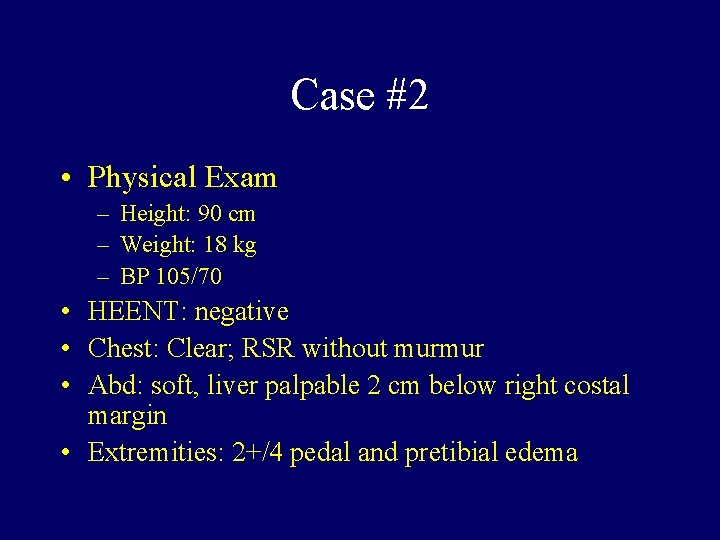
Case #2 • Physical Exam – Height: 90 cm – Weight: 18 kg – BP 105/70 • HEENT: negative • Chest: Clear; RSR without murmur • Abd: soft, liver palpable 2 cm below right costal margin • Extremities: 2+/4 pedal and pretibial edema
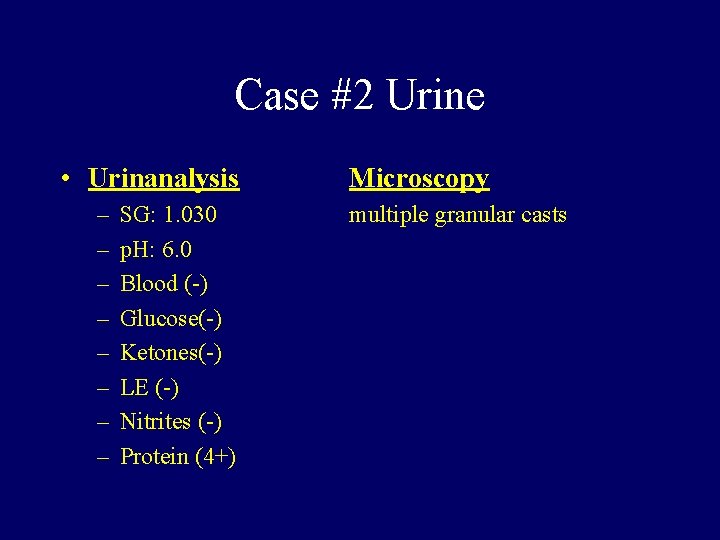
Case #2 Urine • Urinanalysis – – – – SG: 1. 030 p. H: 6. 0 Blood (-) Glucose(-) Ketones(-) LE (-) Nitrites (-) Protein (4+) Microscopy multiple granular casts

Case #2: Questions • What additional laboratory data would be helpful ? – Serum Total Protein and Albumin – Urine Protein to Creatinine ratio – Serum Cholestrol
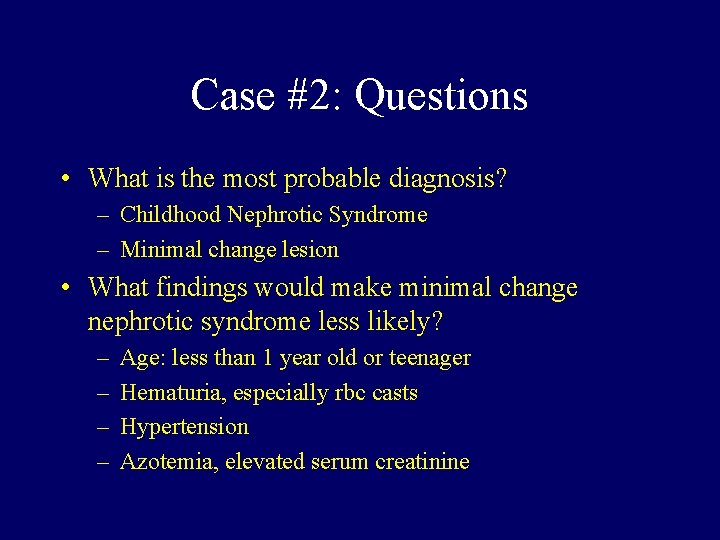
Case #2: Questions • What is the most probable diagnosis? – Childhood Nephrotic Syndrome – Minimal change lesion • What findings would make minimal change nephrotic syndrome less likely? – – Age: less than 1 year old or teenager Hematuria, especially rbc casts Hypertension Azotemia, elevated serum creatinine
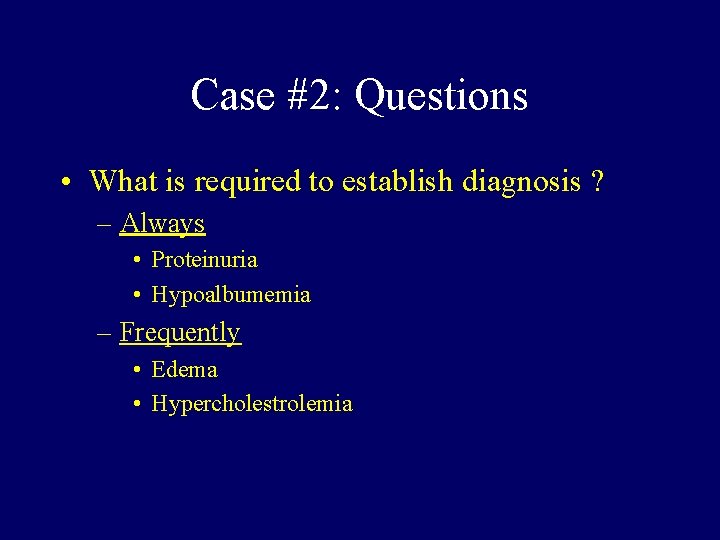
Case #2: Questions • What is required to establish diagnosis ? – Always • Proteinuria • Hypoalbumemia – Frequently • Edema • Hypercholestrolemia
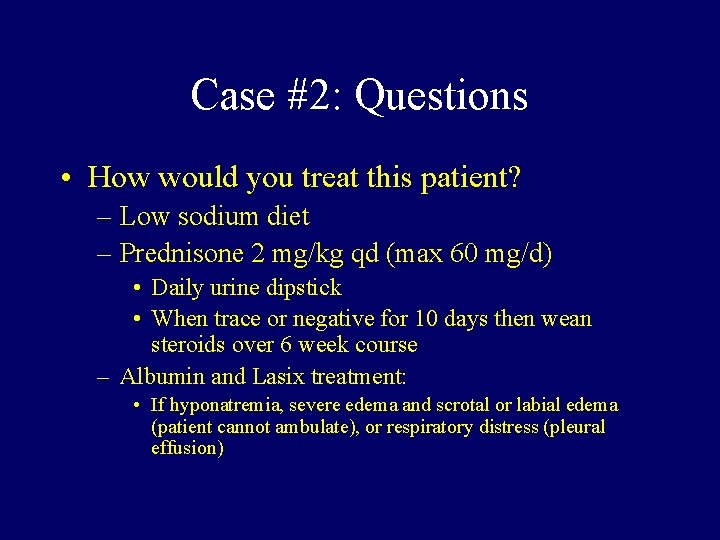
Case #2: Questions • How would you treat this patient? – Low sodium diet – Prednisone 2 mg/kg qd (max 60 mg/d) • Daily urine dipstick • When trace or negative for 10 days then wean steroids over 6 week course – Albumin and Lasix treatment: • If hyponatremia, severe edema and scrotal or labial edema (patient cannot ambulate), or respiratory distress (pleural effusion)
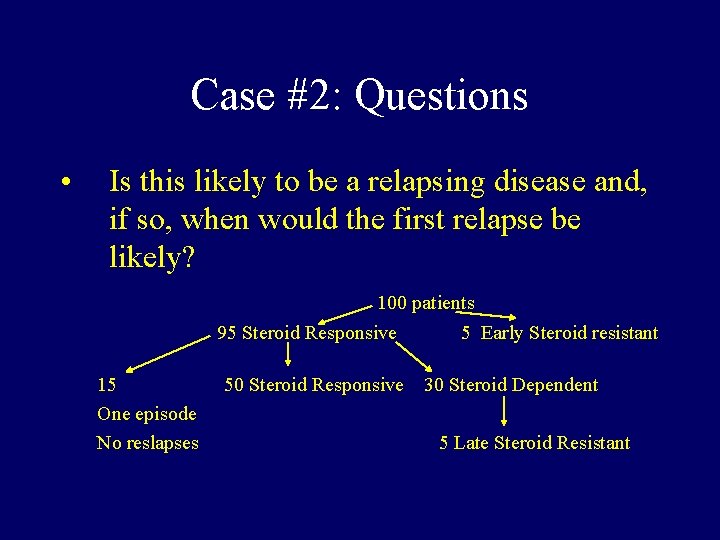
Case #2: Questions • Is this likely to be a relapsing disease and, if so, when would the first relapse be likely? 100 patients 95 Steroid Responsive 15 One episode No reslapses 50 Steroid Responsive 5 Early Steroid resistant 30 Steroid Dependent 5 Late Steroid Resistant
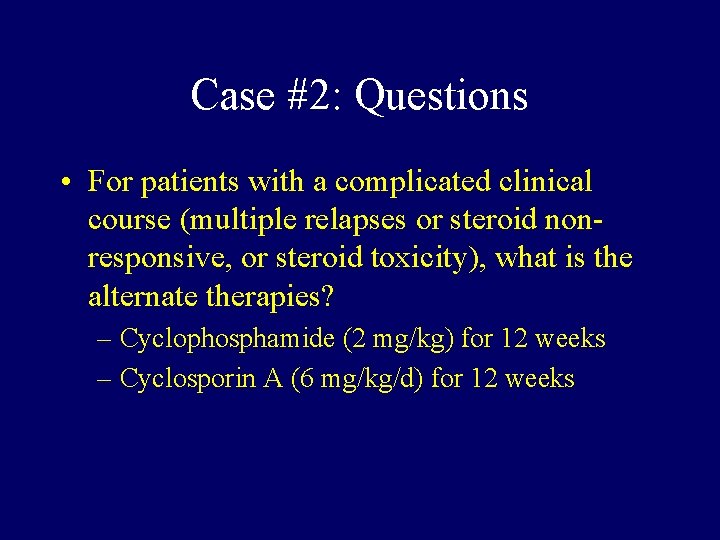
Case #2: Questions • For patients with a complicated clinical course (multiple relapses or steroid nonresponsive, or steroid toxicity), what is the alternate therapies? – Cyclophosphamide (2 mg/kg) for 12 weeks – Cyclosporin A (6 mg/kg/d) for 12 weeks
Case #2: Questions • What is the long-term prognosis? – Very favorable prognosis – 90% full remission by age 21 years old
- Slides: 22