
CHILDHOOD DIABETES JACLYN GAYLIS OBJECTIVES What is Diabetes

CHILDHOOD DIABETES JACLYN GAYLIS
OBJECTIVES • What is Diabetes? • Pathophysiology • Risk Factors for Type 1 Diabetes • Genes • Environment • • • Clinical Presentation Problems that Occur with Type 1 Diabetes Tests and Diagnosis Treatment How to Manage and Live With Diabetes • Medical Therapy • Nutrition • Exercise
WHAT IS DIABETES? • Diabetes Mellitus (DM) is characterized by high levels of blood glucose resulting from defects in insulin production, insulin action, or both • Diabetes Mellitus Type 1: • “Insulin-dependent diabetes mellitus” (IDDM) or “juvenile-onset diabetes” • Usually affects children and young adults, although disease onset can occur at any age • Autoimmune disorder—destruction of insulin-producing beta cells of the pancreas • Results in total insulin deficiency • Daily insulin replacement is necessary for treatment • Cannot be prevented and no way to predict who will get it
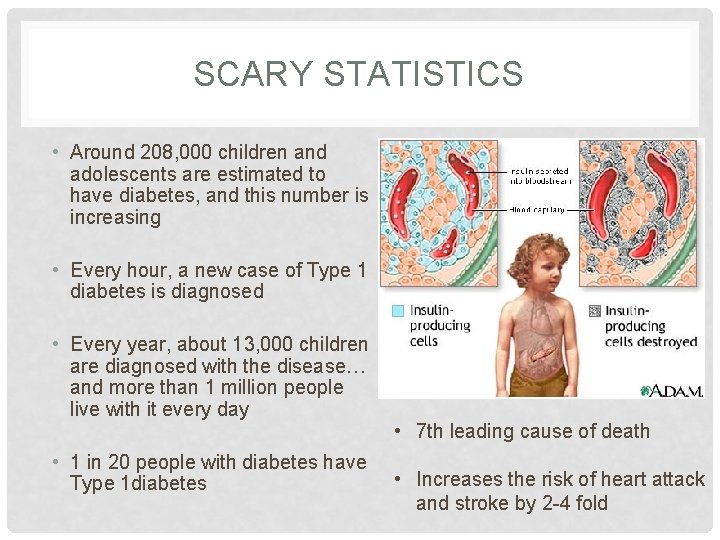
SCARY STATISTICS • Around 208, 000 children and adolescents are estimated to have diabetes, and this number is increasing • Every hour, a new case of Type 1 diabetes is diagnosed • Every year, about 13, 000 children are diagnosed with the disease… and more than 1 million people live with it every day • 1 in 20 people with diabetes have Type 1 diabetes • 7 th leading cause of death • Increases the risk of heart attack and stroke by 2 -4 fold
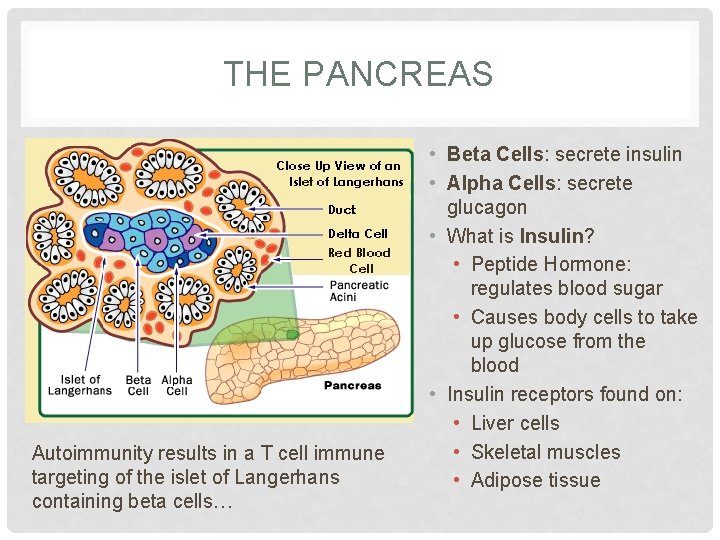
THE PANCREAS Autoimmunity results in a T cell immune targeting of the islet of Langerhans containing beta cells… • Beta Cells: secrete insulin • Alpha Cells: secrete glucagon • What is Insulin? • Peptide Hormone: regulates blood sugar • Causes body cells to take up glucose from the blood • Insulin receptors found on: • Liver cells • Skeletal muscles • Adipose tissue
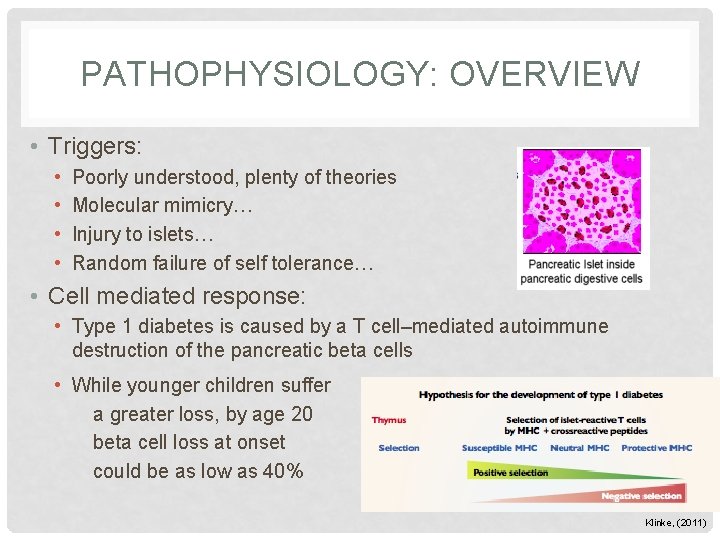
PATHOPHYSIOLOGY: OVERVIEW • Triggers: • • Poorly understood, plenty of theories Molecular mimicry… Injury to islets… Random failure of self tolerance… • Cell mediated response: • Type 1 diabetes is caused by a T cell–mediated autoimmune destruction of the pancreatic beta cells • While younger children suffer a greater loss, by age 20 beta cell loss at onset could be as low as 40% Klinke, (2011)
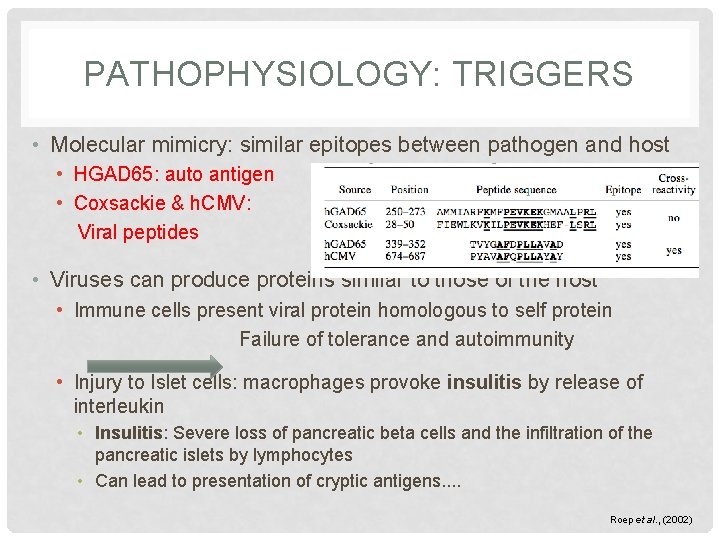
PATHOPHYSIOLOGY: TRIGGERS • Molecular mimicry: similar epitopes between pathogen and host • HGAD 65: auto antigen • Coxsackie & h. CMV: Viral peptides • Viruses can produce proteins similar to those of the host • Immune cells present viral protein homologous to self protein Failure of tolerance and autoimmunity • Injury to Islet cells: macrophages provoke insulitis by release of interleukin • Insulitis: Severe loss of pancreatic beta cells and the infiltration of the pancreatic islets by lymphocytes • Can lead to presentation of cryptic antigens. . Roep et al. , (2002)
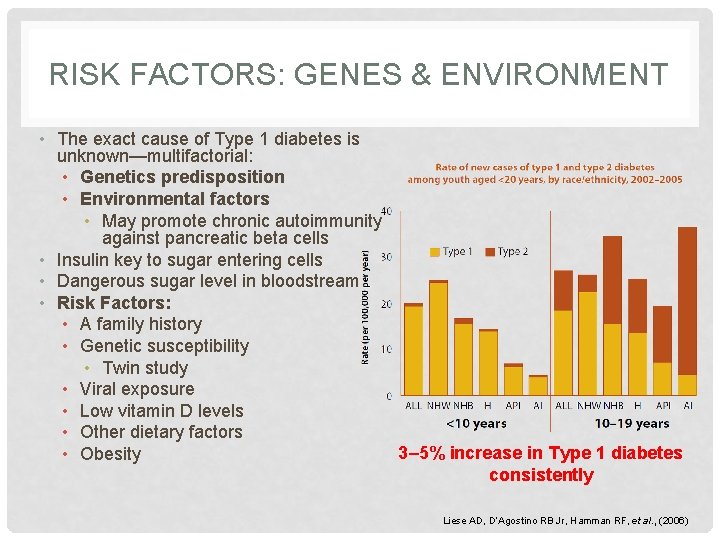
RISK FACTORS: GENES & ENVIRONMENT • The exact cause of Type 1 diabetes is unknown—multifactorial: • Genetics predisposition • Environmental factors • May promote chronic autoimmunity against pancreatic beta cells • Insulin key to sugar entering cells • Dangerous sugar level in bloodstream • Risk Factors: • A family history • Genetic susceptibility • Twin study • Viral exposure • Low vitamin D levels • Other dietary factors 3– 5% increase in Type 1 diabetes • Obesity consistently Liese AD, D’Agostino RB Jr, Hamman RF, et al. , (2006)
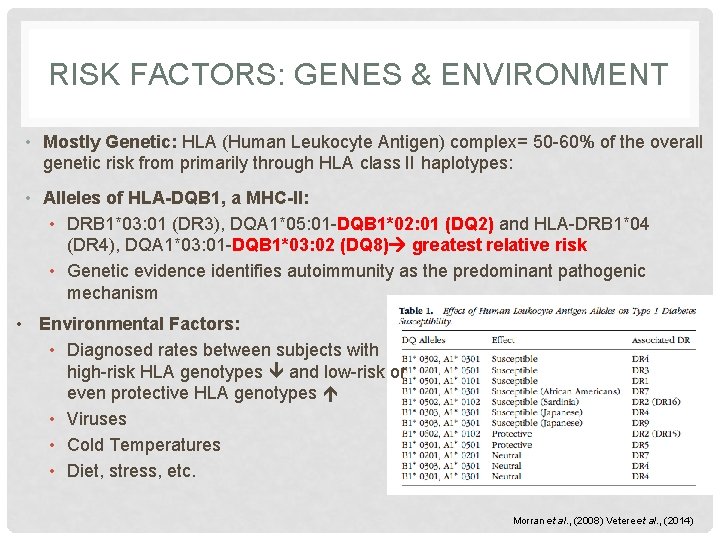
RISK FACTORS: GENES & ENVIRONMENT • Mostly Genetic: HLA (Human Leukocyte Antigen) complex= 50 -60% of the overall genetic risk from primarily through HLA class II haplotypes: • Alleles of HLA-DQB 1, a MHC-II: • DRB 1*03: 01 (DR 3), DQA 1*05: 01 -DQB 1*02: 01 (DQ 2) and HLA-DRB 1*04 (DR 4), DQA 1*03: 01 -DQB 1*03: 02 (DQ 8) greatest relative risk • Genetic evidence identifies autoimmunity as the predominant pathogenic mechanism • Environmental Factors: • Diagnosed rates between subjects with high-risk HLA genotypes and low-risk or even protective HLA genotypes • Viruses • Cold Temperatures • Diet, stress, etc. Morran et al. , (2008) Vetere et al. , (2014)
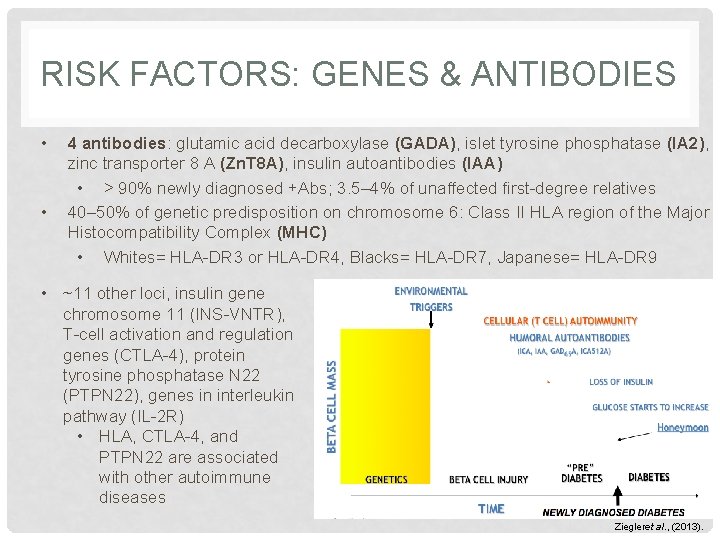
RISK FACTORS: GENES & ANTIBODIES • • 4 antibodies: glutamic acid decarboxylase (GADA), islet tyrosine phosphatase (IA 2), zinc transporter 8 A (Zn. T 8 A), insulin autoantibodies (IAA) • > 90% newly diagnosed +Abs; 3. 5– 4% of unaffected first-degree relatives 40– 50% of genetic predisposition on chromosome 6: Class II HLA region of the Major Histocompatibility Complex (MHC) • Whites= HLA-DR 3 or HLA-DR 4, Blacks= HLA-DR 7, Japanese= HLA-DR 9 • ~11 other loci, insulin gene chromosome 11 (INS-VNTR), T-cell activation and regulation genes (CTLA-4), protein tyrosine phosphatase N 22 (PTPN 22), genes in interleukin pathway (IL-2 R) • HLA, CTLA-4, and PTPN 22 are associated with other autoimmune diseases Ziegleret al. , (2013).
RISK FACTORS: ENVIRONMENT Enteroviruses: infects thymus and impair thymic selection maternal or early life enterovirus infections may disrupt central tolerance and synergize with the genetic mechanisms Study in U. K. • Showed infections could repeatedly or chronically trigger autoimmune responses over time • Collection of pancreata from newly diagnosed patients showed viral protein in a high proportion of Type 1 diabetes pancreata • Enteroviruses may induce functional changes in beta cells and influence beta cell replication in human pancreata Lin et al. , (2014), Laitinen et al. , (2014), Richardson et al. , (2009) Study in Taiwan • Young people who have had an enterovirus infection are 50% more likely to develop Type 1 diabetes • Scientists propose that when immune system attacks enteroviruses, it may infect and destroy pancreatic beta cells • No one has yet shown that a viral infection occurs before the immune system begins to turn on the pancreas • Which comes first, the virus or the immune attack, is still unknown…

CLINICAL PRESENTATION • The signs and symptoms of Type 1 diabetes in children usually develop quickly, over a period of weeks: • • • Polyuria: Excessive Urine Polydipsia: Excessive Thirst Polyphagia: Excessive Hunger Weight loss Loss of energy Diabetic ketoacidosis (DKA) • Emergency condition of nausea, vomiting, dehydration and can lead to coma • Hyperglycemia: high blood glucose • Glycosuria: Sugar in the urine • Lipidemia: Lack of insulin starves body of glucose, body begins metabolizing fatty acids as energy source • Ketoacidoses: Ketones build up in blood, dropping p. H • Ketouria: Ketones in urine
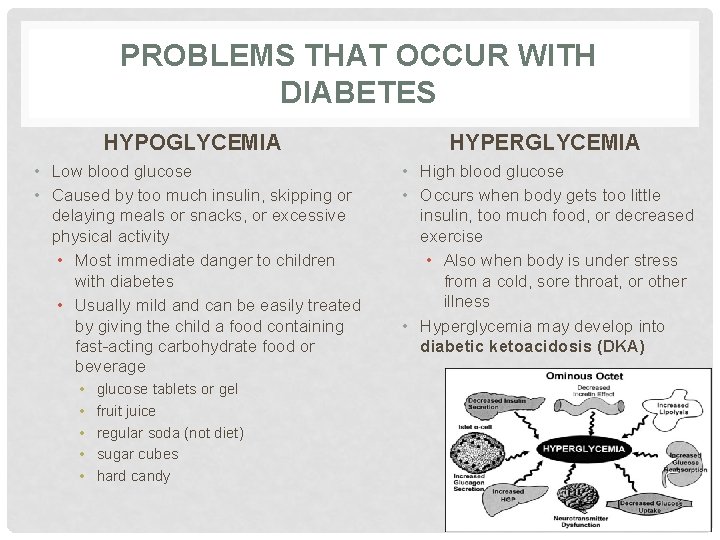
PROBLEMS THAT OCCUR WITH DIABETES HYPOGLYCEMIA • Low blood glucose • Caused by too much insulin, skipping or delaying meals or snacks, or excessive physical activity • Most immediate danger to children with diabetes • Usually mild and can be easily treated by giving the child a food containing fast-acting carbohydrate food or beverage • • • glucose tablets or gel fruit juice regular soda (not diet) sugar cubes hard candy HYPERGLYCEMIA • High blood glucose • Occurs when body gets too little insulin, too much food, or decreased exercise • Also when body is under stress from a cold, sore throat, or other illness • Hyperglycemia may develop into diabetic ketoacidosis (DKA)
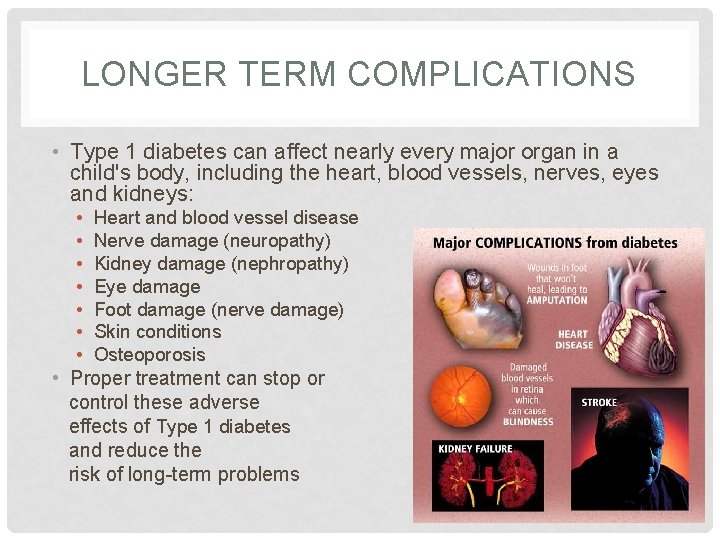
LONGER TERM COMPLICATIONS • Type 1 diabetes can affect nearly every major organ in a child's body, including the heart, blood vessels, nerves, eyes and kidneys: • Heart and blood vessel disease • Nerve damage (neuropathy) • Kidney damage (nephropathy) • Eye damage • Foot damage (nerve damage) • Skin conditions • Osteoporosis • Proper treatment can stop or control these adverse effects of Type 1 diabetes and reduce the risk of long-term problems
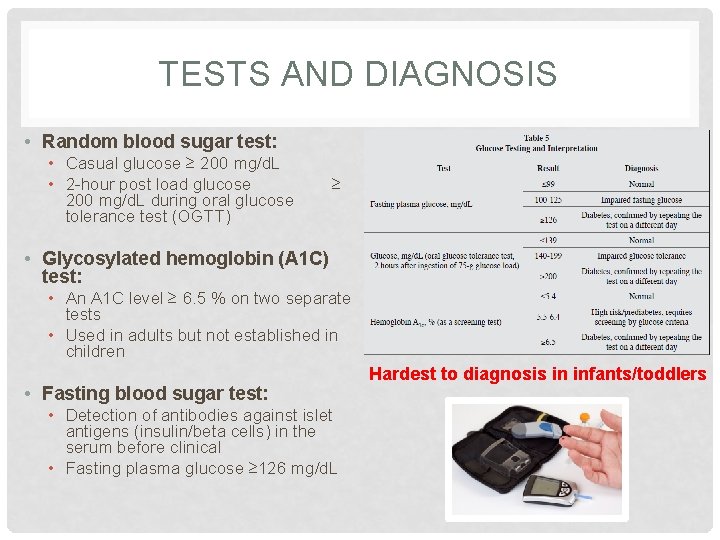
TESTS AND DIAGNOSIS • Random blood sugar test: • Casual glucose ≥ 200 mg/d. L • 2 -hour post load glucose ≥ 200 mg/d. L during oral glucose tolerance test (OGTT) • Glycosylated hemoglobin (A 1 C) test: • An A 1 C level ≥ 6. 5 % on two separate tests • Used in adults but not established in children • Fasting blood sugar test: • Detection of antibodies against islet antigens (insulin/beta cells) in the serum before clinical • Fasting plasma glucose ≥ 126 mg/d. L Hardest to diagnosis in infants/toddlers
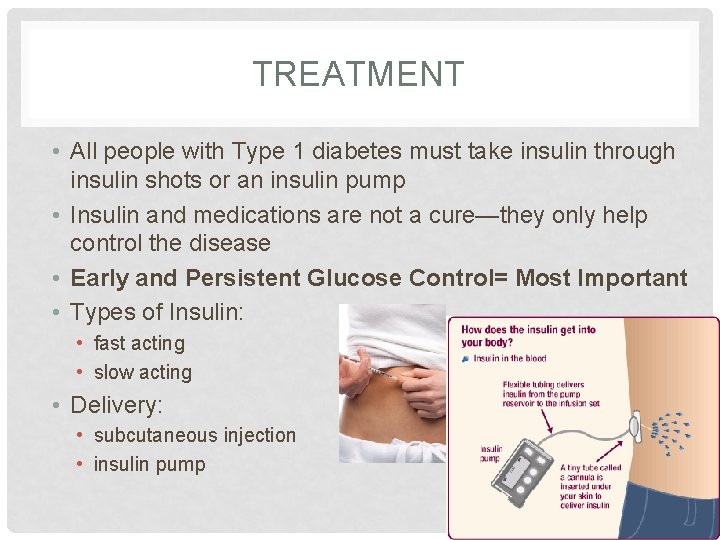
TREATMENT • All people with Type 1 diabetes must take insulin through insulin shots or an insulin pump • Insulin and medications are not a cure—they only help control the disease • Early and Persistent Glucose Control= Most Important • Types of Insulin: • fast acting • slow acting • Delivery: • subcutaneous injection • insulin pump
MANAGING AND LIVING WITH T 1 D Main goal= control blood glucose levels • Blood glucose monitoring • Check few times a day • Medications: Insulin • Injections or insulin pump/pen • Medical Nutritional Therapy • Balancing food: Timing of meals and managing amount of sugar and CHOs • Physical activity • Help control blood sugar levels • Education • Work closely with doctor and diabetes health care team New tools include: • Intensive insulin therapy • New medications • Blood glucose self-monitoring devise • Continuous blood glucose monitoring • Psychological intervention • Inclusion and education for family and support persons • Insulin/food adjustment for exercise • State of the art medical nutritional therapy
MEDICAL NUTRITIONAL THERAPY (MNT) • Main goal: provide adequate energy to ensure normal growth and development, integrate insulin regimens into usual eating and PA habits • Individualized MNT is best provided by a registered dietitian • Insulin therapy should be integrated into an individual’s dietary and PA pattern • Adjust the meal and snack insulin doses based on the CHO content of the meals and snacks ABCs (A 1 C, Blood pressure and Cholesterol): • Diet and PA are critically important • CHO counting= 60 -70% energy intake • Whole grains, fruits, vegetables and low-fat milk • Glycemic effects of CHO • Total amount of CHO in meals/snacks is more important than the source/type • Sucrose should be substituted for other CHO sources or, if added, covered with insulin • Premeal insulin should be adjusted for the CHO content of meal • High fiber (40 -50 g/day) • Positive effects on glycemia
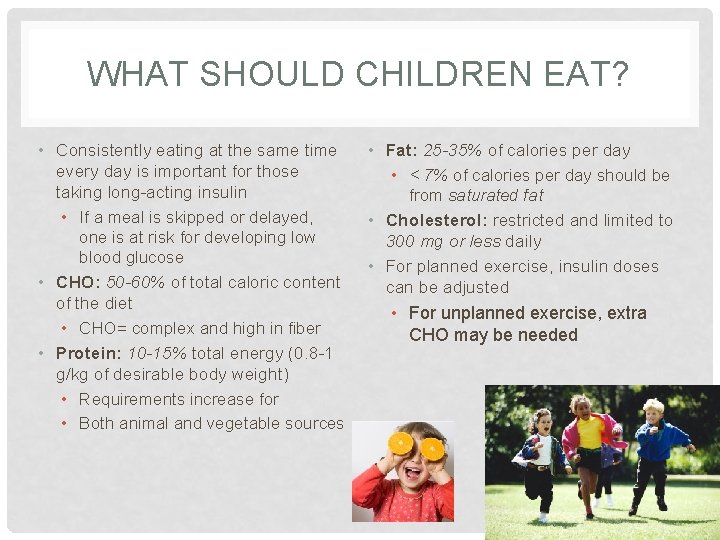
WHAT SHOULD CHILDREN EAT? • Consistently eating at the same time every day is important for those taking long-acting insulin • If a meal is skipped or delayed, one is at risk for developing low blood glucose • CHO: 50 -60% of total caloric content of the diet • CHO= complex and high in fiber • Protein: 10 -15% total energy (0. 8 -1 g/kg of desirable body weight) • Requirements increase for • Both animal and vegetable sources • Fat: 25 -35% of calories per day • < 7% of calories per day should be from saturated fat • Cholesterol: restricted and limited to 300 mg or less daily • For planned exercise, insulin doses can be adjusted • For unplanned exercise, extra CHO may be needed

DIABETES MEDICAL MANAGEMENT PLAN • A Diabetes Medical Management Plan (DMMP) should be implemented for every student with diabetes—developed by the American Diabetes Association • DMMP is: • Developed by the student’s personal health care team and family and signed by a member of student’s personal health care team • Implemented collaboratively by the school diabetes team, including: • • School nurse Student Parents/guardians Other school personnel
A FUTURE CURE? • Type 1 diabetes is currently non-preventable but can be well managed with appropriate… • Drugs? • Diet? … Mostly in experimental stages…Further research is required • Pancreas transplantation? Some success in mice • Islet cell transplantation? • Steps to Lower the Risk of Diabetes Complications: • Blood glucose monitoring Hgb A 1 C < 6. 5 % • Blood pressure < 140/80 mm HG • Cholesterol (LDL) < 100 mg/d. L statin therapy for high risk • Make healthy food choices and be active • Get recommended screenings and early treatment for complications

QUESTIONS? ? ? THANK YOU!
REFERENCES • • • • American Diabetes Association. "Type 1 Diabetes. " American Diabetes Association. Web. 11 Feb. 2015. Diabetes Research Institute Foundation. "What Is Type 1 Diabetes? ” Web. 24 Feb. 2015. Klinke DJ. Age-corrected beta cell mass following onset of type 1 diabetes mellitus correlates with plasma C-peptide in humans. PLo. S One 6(11): e 26873, 2011. Laitinen OH, Honkanen H, Pakkanen O, Oikarinen S, Hankaniemi MM, Huhtala H, Ruokoranta T, Lecouturier V, Andre P, Harju R, Virtanen SM, Lehtonen J, Almond JW, Simell T, Simell O, Ilonen J, Veijola R, Knip M, Hyoty H. Coxsackievirus B 1 Is Associated With Induction of beta-Cell Autoimmunity That Portends Type 1 Diabetes 63(2): 446 -455, 2014. Lin, H. C. , Wang, C. H. , Tsai, F. J. , Hwang, K. P. , Chen, W. , Lin, C. C. , & Li, T. C. (2015). Enterovirus infection is associated with an increased risk of childhood type 1 diabetes in Taiwan: a nationwide population-based cohort study. Diabetologia, 58(1), 79 -86. doi: 10. 1007/s 00125 -014 -3400 -z Morran MP, Omenn GS, and Pietropaolo M. 2008. Immunology and Genetics of Type 1 Diabetes. Mount Sinai Journal of Medicine. 75: 314 -327. Pear-Yafe M, Kaminitz A, Yolcu E, Yanic I, Stein J, and Askenasy N. 2007. Pancreatic Islets Under Attack: Cellular and Molecular Effectors. Current Pharmaceutical Design. 13: 749 -760. Richardson SJ, Leete P, Bone AJ, Foulis AK, Morgan NG. Expression of the enteroviral capsid protein VP 1 in the islet cells of patients with type 1 diabetes is associated with induction of protein kinase R and downregulation of Mcl-1. Diabetologia 56(1): 185 -193, 2013. Roep BO, Hiemstra HS, Schloot NC, De Vries RRP, Chaudhuri A, Behan PO, and Drijfhout JW. 2002. Molecular Mimicry in Type 1 Diabetes. Annals of New York Academy of Sciences. 958: 163 -165. SEARCH for Diabetes in Youth Study Group; Liese AD, D’Agostino RB Jr, Hamman RF, et al. The burden of diabetes mellitus among US youth: prevalence estimate from the SEARCH for Diabetes in Youth Study. Pediatrics. 2006; 118(4): 1510– 1518 Silverstein J, Klingensmith G, Copeland K, et al. Care of children and adolescents with type 1 diabetes: a statement of the American Diabetes Association. Diabetes Care. 2005; 28(1): 186– 212. Vetere A, Choudhary A, Burns SM, Wagner BK. Targeting the pancreatic beta-cell to treat diabetes. Nat Rev Drug Discov 13(4): 278 -289, 2014. Wucherpenning KW, AND Eisenbarth G. 2001. Type 1 diabetes. Nature Publishing Group. News & Views: 1 -2. (http: //www. nature. com/immuno/index. html) Ziegler AG, Rewers M, Simell O, Simell T, Lempainen J, Steck A, Winkler C, Ilonen J, Veijola R, Knip M, Bonifacio E, Eisenbarth GS. Seroconversion to multiple islet autoantibodies and risk of progression to diabetes in children. JAMA 309(23): 2473 -2479, 2013.
- Slides: 23