
Childhood and Adolescent Obesity Kathryn Camp MS RD
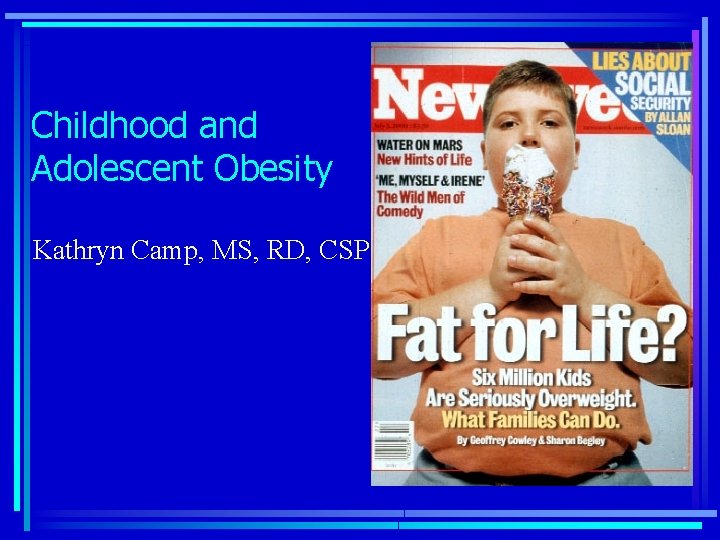
Childhood and Adolescent Obesity Kathryn Camp, MS, RD, CSP
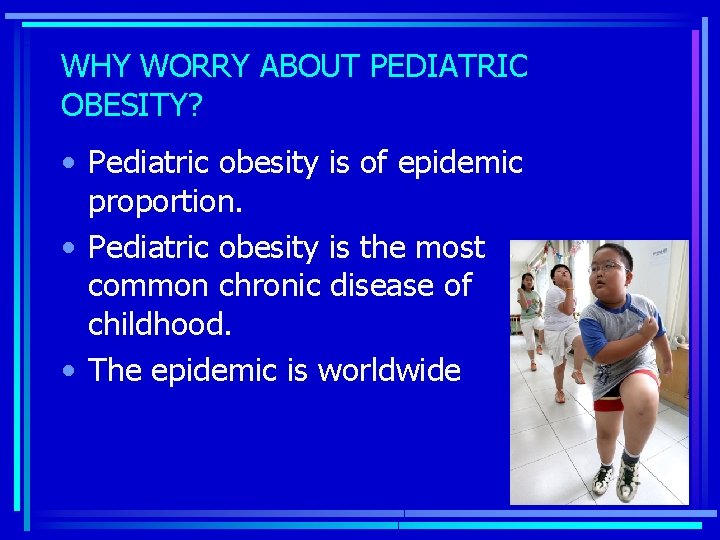
WHY WORRY ABOUT PEDIATRIC OBESITY? • Pediatric obesity is of epidemic proportion. • Pediatric obesity is the most common chronic disease of childhood. • The epidemic is worldwide
Some Scary Stats • 300, 000 Americans died from obesityrelated causes in 2000 (Surgeon General Report) – $117 billion in obesity-related economic costs • Cost of caring for obese patients is 35% greater than normal weight
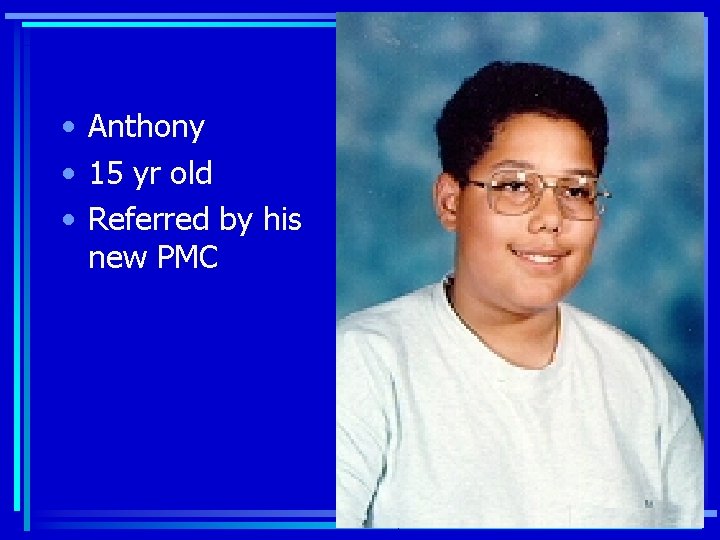
• Anthony • 15 yr old • Referred by his new PMC
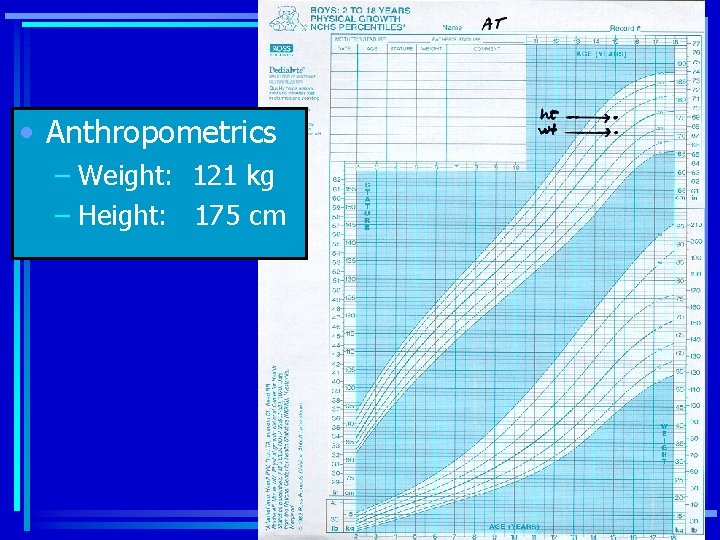
• Anthropometrics – Weight: 121 kg – Height: 175 cm
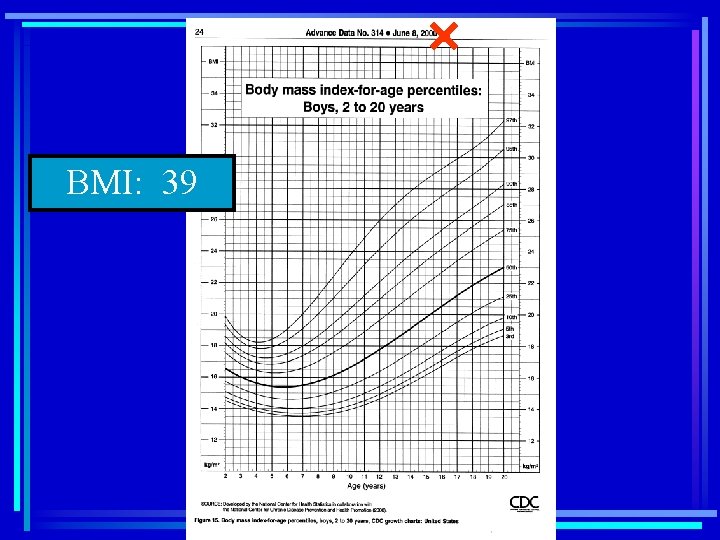
BMI: 39
How Do We Define Overweight in Children and Adolescents?
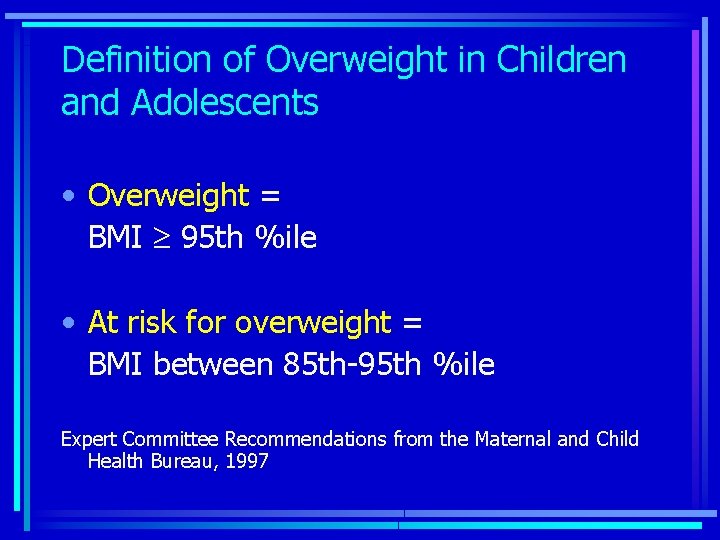
Definition of Overweight in Children and Adolescents • Overweight = BMI 95 th %ile • At risk for overweight = BMI between 85 th-95 th %ile Expert Committee Recommendations from the Maternal and Child Health Bureau, 1997
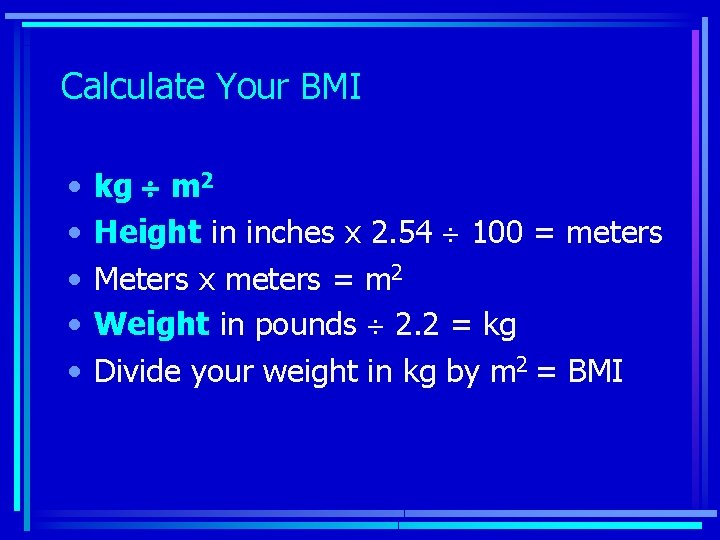
Calculate Your BMI • • • kg m 2 Height in inches x 2. 54 100 = meters Meters x meters = m 2 Weight in pounds 2. 2 = kg Divide your weight in kg by m 2 = BMI
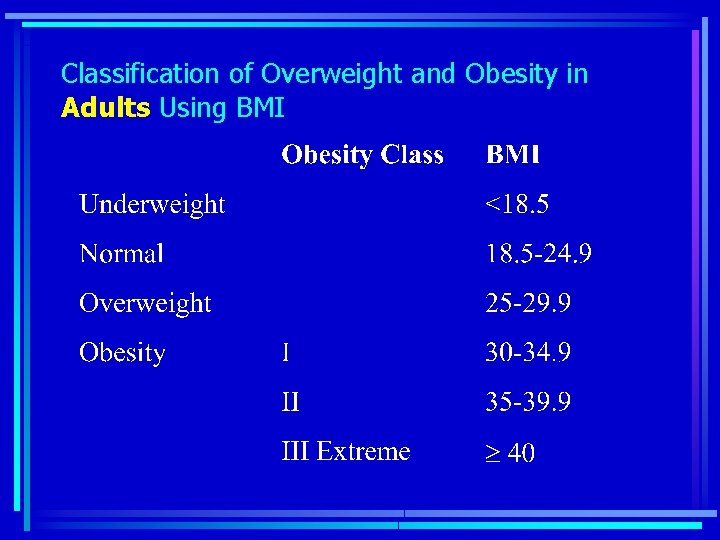
Classification of Overweight and Obesity in Adults Using BMI
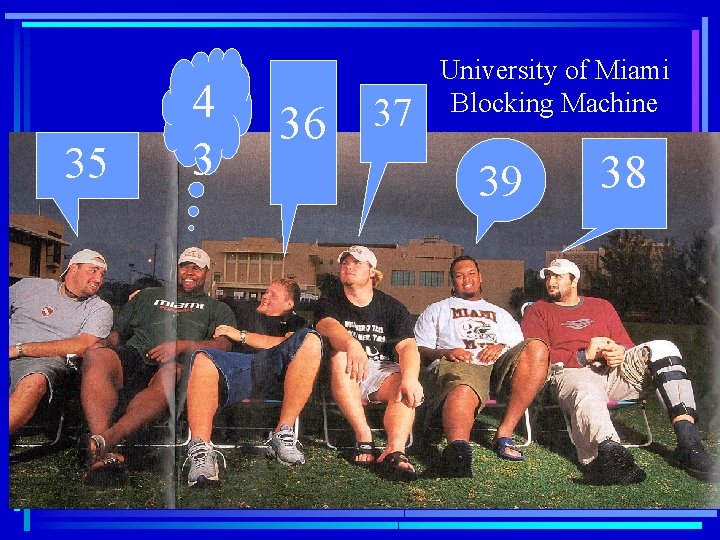
35 4 3 36 37 University of Miami Blocking Machine 39 38
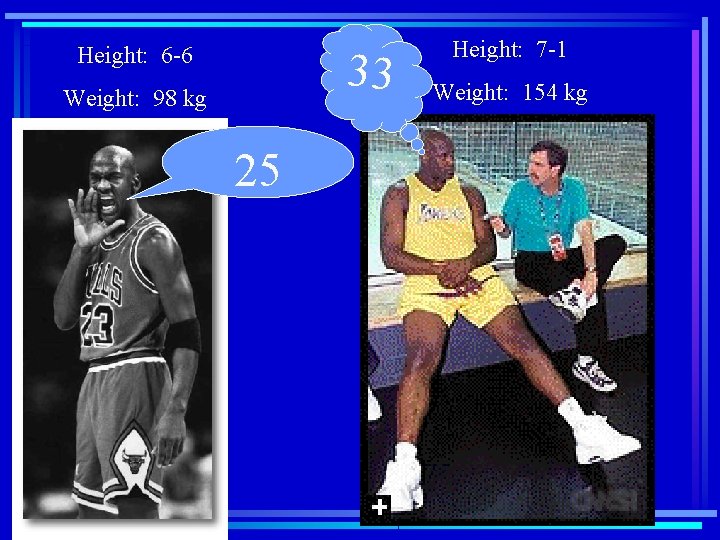
Height: 6 -6 33 Weight: 98 kg 25 Height: 7 -1 Weight: 154 kg
BMI is Age Specific in Children and Adolescents
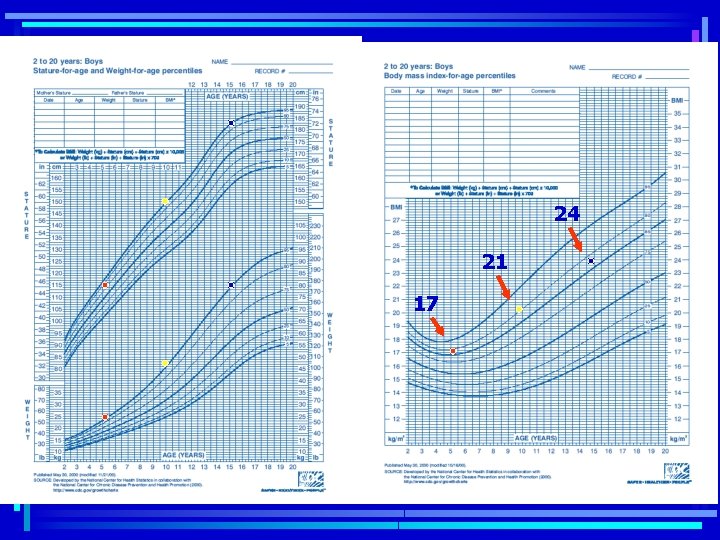
24 21 17
Increasing Incidence of Overweight in Children and Adolescents
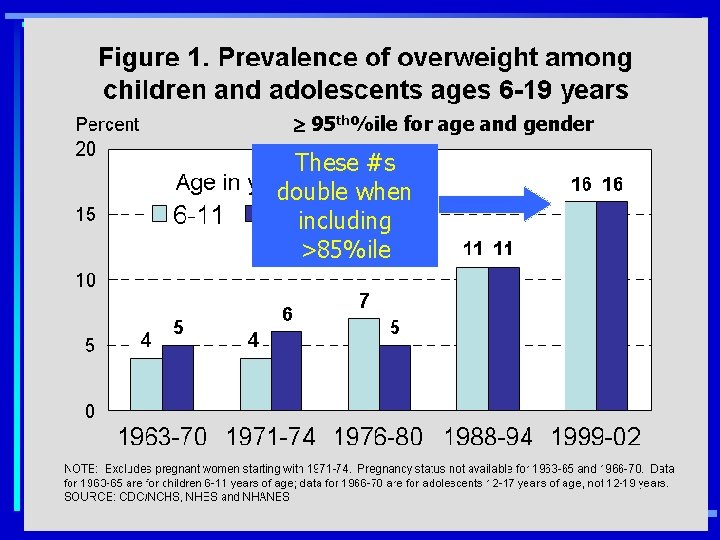
95 th%ile for age and gender These #s double when including >85%ile
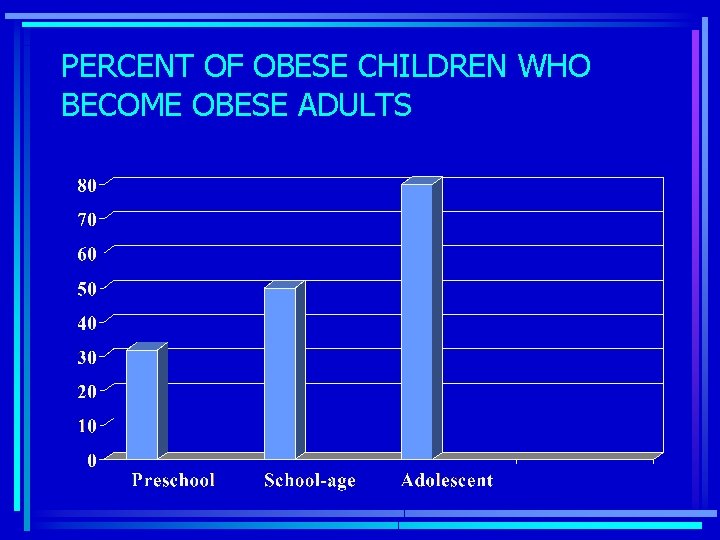
PERCENT OF OBESE CHILDREN WHO BECOME OBESE ADULTS
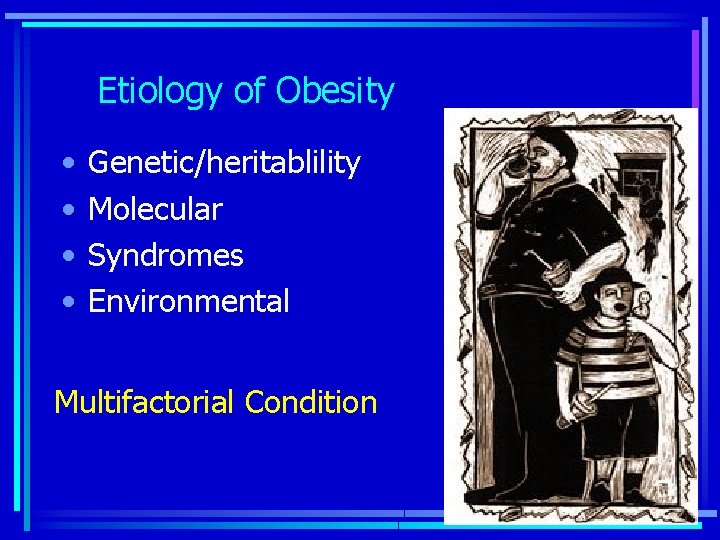
Etiology of Obesity • • Genetic/heritablility Molecular Syndromes Environmental Multifactorial Condition
Heritability • Survival advantage to conserve energy as fat through human evolution • Humans enriched for genes that promote energy intake and storage and minimize expenditure. • Enhance female fertility and ability to breastfeed offspring

• In modern industrial environment – easy access to calorically dense foods – encourages sedentary lifestyle • Metabolic consequences of these genes are maladaptive
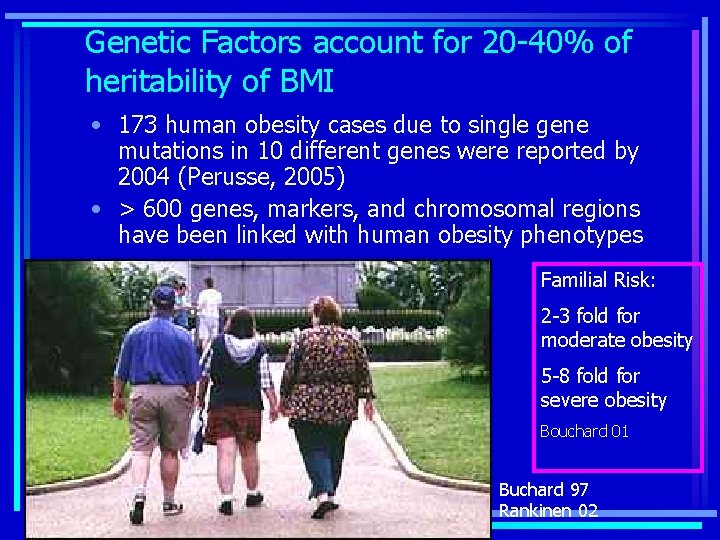
Genetic Factors account for 20 -40% of heritability of BMI • 173 human obesity cases due to single gene mutations in 10 different genes were reported by 2004 (Perusse, 2005) • > 600 genes, markers, and chromosomal regions have been linked with human obesity phenotypes Familial Risk: 2 -3 fold for moderate obesity 5 -8 fold for severe obesity Bouchard 01 Buchard 97 Rankinen 02
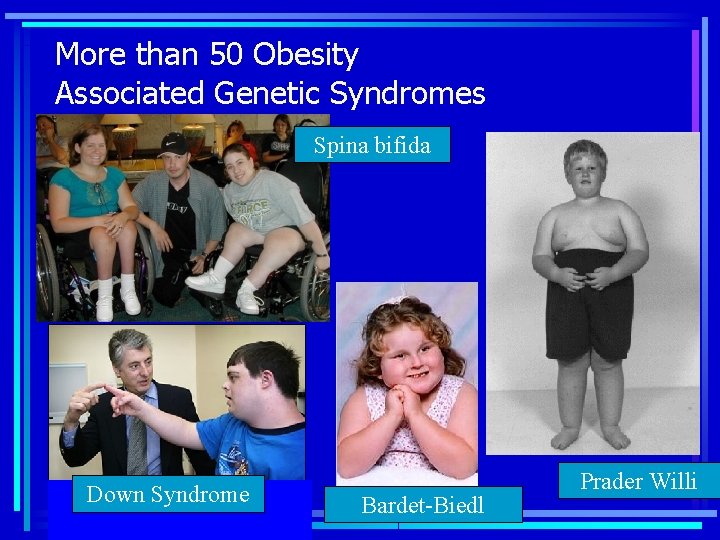
More than 50 Obesity Associated Genetic Syndromes Spina bifida Down Syndrome Bardet-Biedl Prader Willi

Hormones, Neurotransmitters, Enzyme defects? ? ? • Obesity is not well understood at the molecular level. • Discovery of leptin was hoped to revolutionize the field but its role has remained obscure • Role of other hormones, neurotransmitters, etc remains unknown
• But doctor, my child must have a low metabolism…. – Little evidence that metabolic rate is different (Baker, 05) – Obese adolescents have a higher total daily energy expenditure and REE (Bandini, 90) – There may be small differences in metabolic efficiency but these are hard to measure

What is Causing this Marked Increase in Overweight? ?
Obesity is not a genetic shift, rather it is an environmental shift
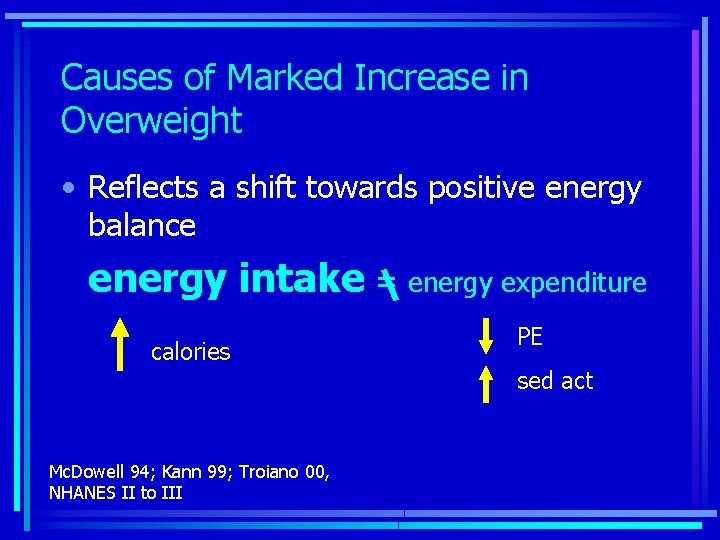
Causes of Marked Increase in Overweight • Reflects a shift towards positive energy balance energy intake = energy expenditure calories Mc. Dowell 94; Kann 99; Troiano 00, NHANES II to III PE sed act
Increased Energy Intake • Kids are – Eating more away from home – Eating more fast food and snack foods – Drinking more sodas • 100 kcal/day above needs = 10 pound weight gain per year
Physical Activity • Daily participation in PE declined from 42% to 29% between 1991 and 1999 (www. cdc. gov/Healthy. Youth) • Walking and bicycling dropped 40% in kids aged 5 -15 between 1977 and 1995 • What constitutes “active” these days?
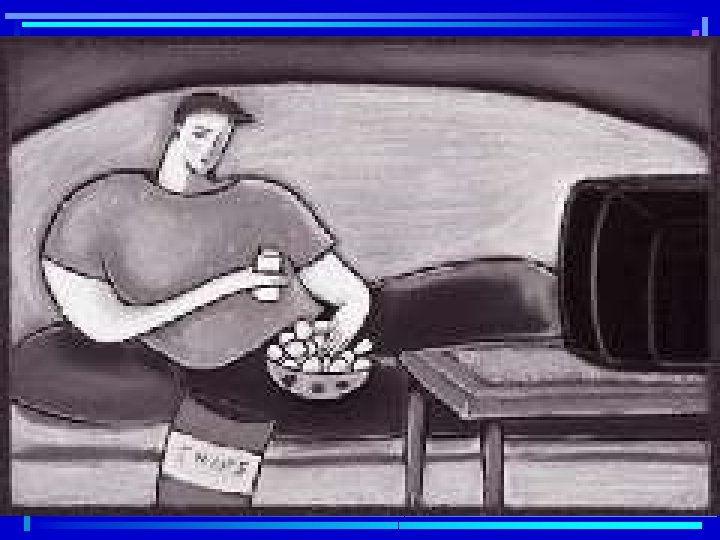
Increase in Sedentary Activity • Excessive TV watching– – The average child spent 6 hr/day watching TV or playing on computers. – Encourages overeating while viewing • Influences food choices – 80% of commercials on children’s programs are for food • Lower resting metabolic rate compared to at rest (Klesges 1993) • Reduces time available for more active pursuits
Other Contributors to Sedentary Lifestyles • Video and computer games • Parental work schedules • Unsafe neighborhoods – discourage parents from allowing children to play outdoors – force parents to drive children to school • Lack of recreational facilities in lowincome neighborhoods
Medical Consequences of Overweight
Cardiovascular • 60% of OW children have 1 or more CVD risk factors • Hyperlipidemia-- LDL and TG, HDL – 90% of children with elevated TGs are overweight • Hypertension – Low frequency in children • 60% with BP were >120% of IBW • Obtain fasting lipid profile and blood pressure on all overweight children.
Type 2 Diabetes • 95% of teens with Type 2 diabetes have a BMI >85%ile • Tremendous public health implications – Longer duration of disease, > risks of complications • Obtain fasting glucose and insulin on all overweight children, especially those with. . Dabelea 99; Vinicor 00; Richards 85
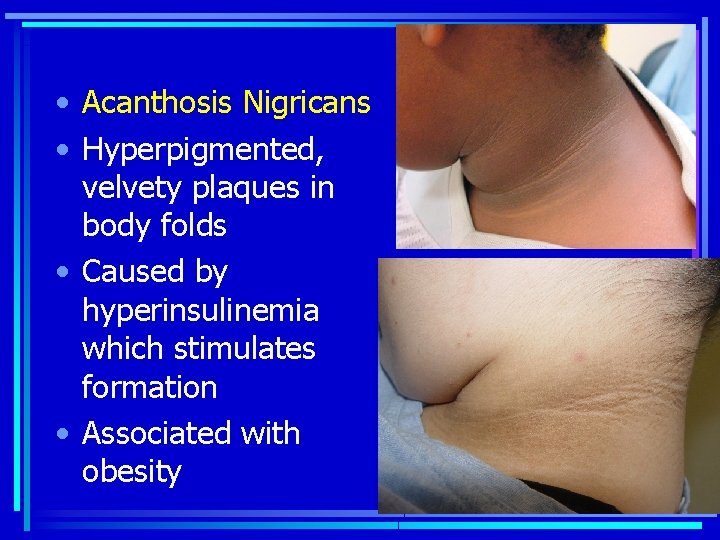
• Acanthosis Nigricans • Hyperpigmented, velvety plaques in body folds • Caused by hyperinsulinemia which stimulates formation • Associated with obesity
Other Endocrinological Issues • Growth – Taller, advanced bone age, mature earlier – Early maturation is associated with • increased fatness and truncal fat distribution in adulthood – Short, obese children should be evaluated for hypothyroidism, Cushing syndrome or Turner syndrome
More Complications • Hepatic Steatosis with elevated LFTs • Cholelithiasis – 50% of kids with cholecystitis are overweight • Orthopedic Problems
Acute Complications that Require Immediate Medical Attention • Sleep Apnea – Occurs in 17% of obese children and teens (Marcus 1996) – Deficits in learning, memory, and vocabulary (Rhodes 1995) • Obesity hypoventilation syndrome – rare, potentially fatal disorder
Psychological and Economic Consequences of Pediatric and Adolescent Obesity • Discrimination, rejection and low selfesteem (Gortmaker 93), particularly for females • Less participation in PE and sports activities • Lower college acceptance rates (Canning 1966)

Who Needs to be Evaluated?
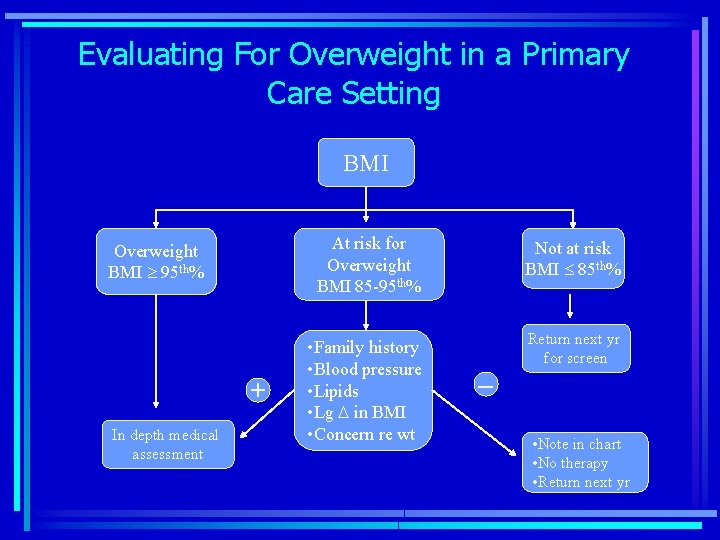
Evaluating For Overweight in a Primary Care Setting BMI Overweight BMI 95 th% + In depth medical assessment At risk for Overweight BMI 85 -95 th% Not at risk BMI 85 th% • Family history • Blood pressure • Lipids • Lg in BMI • Concern re wt Return next yr for screen • Note in chart • No therapy • Return next yr
Medical Assessment • r/o genetic syndromes, esp if associated with mental retardation • Blood pressure • Labs to include – Fasting lipid panel – Fasting glucose and insulin • OGTT – LFTs – Thyroid fx tests
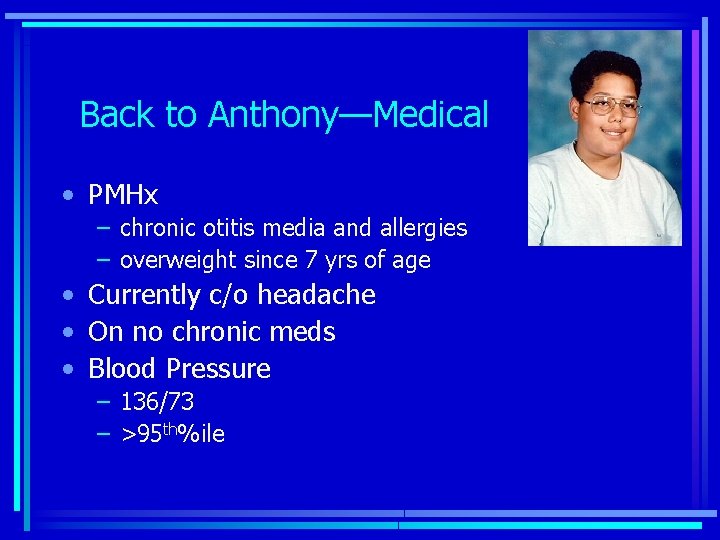
Back to Anthony—Medical • PMHx – chronic otitis media and allergies – overweight since 7 yrs of age • Currently c/o headache • On no chronic meds • Blood Pressure – 136/73 – >95 th%ile
Social hx • Only child • High school sophomore, gets good grades • No exercise or organized sports activities • Spends 6 hrs/day watching TV and playing video games
Dietary Information • Picky eater • Consumes NO fruits or vegetables • Mom prepares separate meals for him
24 -Hour Recall • Breakfast--none • Mid morning--16 oz ginger ale • Lunch--none – generally has lunch at school of chocolate milk, pizza, and french fries • Dinner--10 beef tacos, 2 cans of soda
What to Do with Anthony? • Weight goals – First step is to achieve weight maintenance – 2 -7 years of age • BMI 85 -95% – Weight maintenance • BMI >95% – No complications: weight maintenance – Complications: weight loss – 7 and above • BMI 85 -95 th% – No complications--weight maintenance – Complications—weight loss • BMI >95 th weight loss
What to Do with Anthony? • Weight goals – First step is to achieve weight maintenance – 2 -7 years of age • BMI 85 -95% – Weight maintenance • BMI >95% – No complications: weight maintenance – Complications: weight loss – 7 and above • BMI 85 -95 th% – No complications--weight maintenance – Complications—weight loss • BMI >95 th weight loss
General Treatment Goals • Behavioral goals – Promote life long healthy eating and activity behaviors • Medical goals – Prevent complications of obesity in childhood and potentially adulthood – Improve or resolve existing complications of obesity
Refer? • Formal obesity clinic--Team approach – Physician, therapist, dietitian, exercise therapist – Intensive multi-session programs • Parent and child/teen participate – Advantages • Multidisciplinary approach, frequent visits – Disadvantages • Expensive, time consuming, require parent participation
If Going It Alone… Where Do You Start? • Assess child’s and family’s willingness to change • Negotiate with child/family on specific, targeted changes • Develop realistic, achievable goals • Involve the entire family in making changes • Establish a monitoring/assessment tool
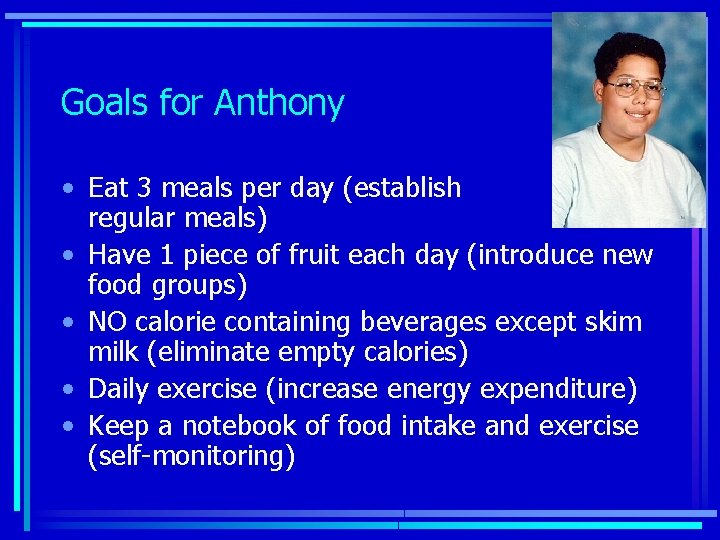
Goals for Anthony • Eat 3 meals per day (establish regular meals) • Have 1 piece of fruit each day (introduce new food groups) • NO calorie containing beverages except skim milk (eliminate empty calories) • Daily exercise (increase energy expenditure) • Keep a notebook of food intake and exercise (self-monitoring)
Follow-up • Weekly visits or as frequent as possible • lipid profile, Hgb. A 1 c, fasting insulin and glucose, blood pressure • Identify and reinforce positive changes • Set new goals based on goals achieved
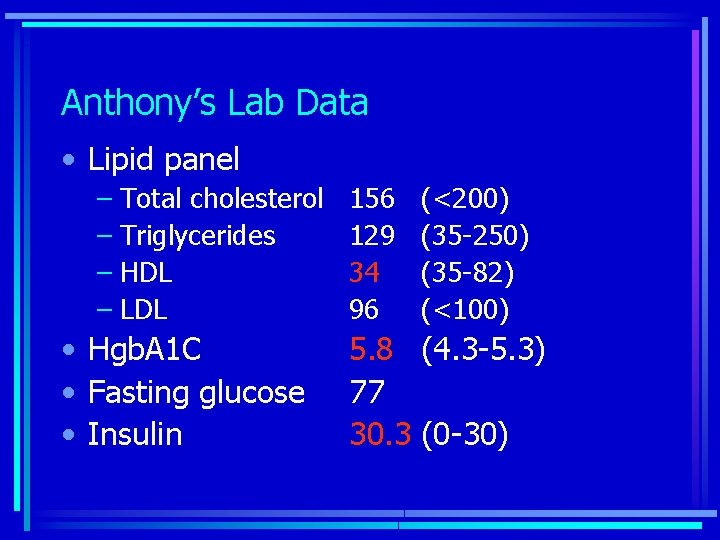
Anthony’s Lab Data • Lipid panel – Total cholesterol – Triglycerides – HDL – LDL • Hgb. A 1 C • Fasting glucose • Insulin 156 129 34 96 (<200) (35 -250) (35 -82) (<100) 5. 8 (4. 3 -5. 3) 77 30. 3 (0 -30)
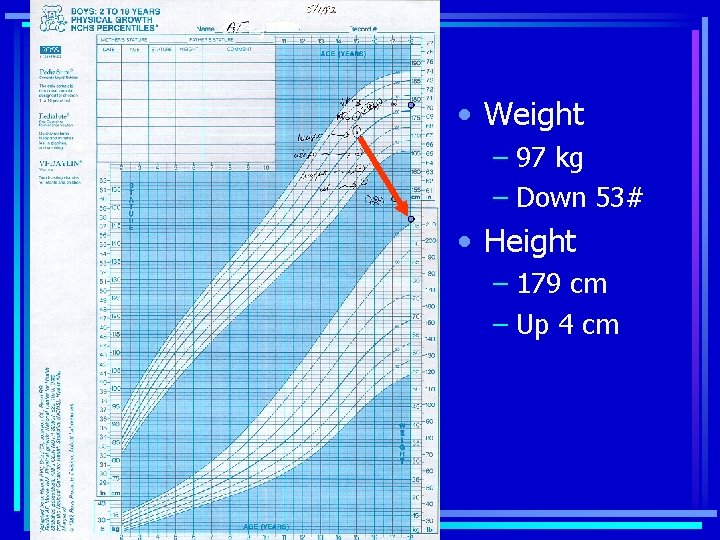
• Weight – 97 kg – Down 53# • Height – 179 cm – Up 4 cm
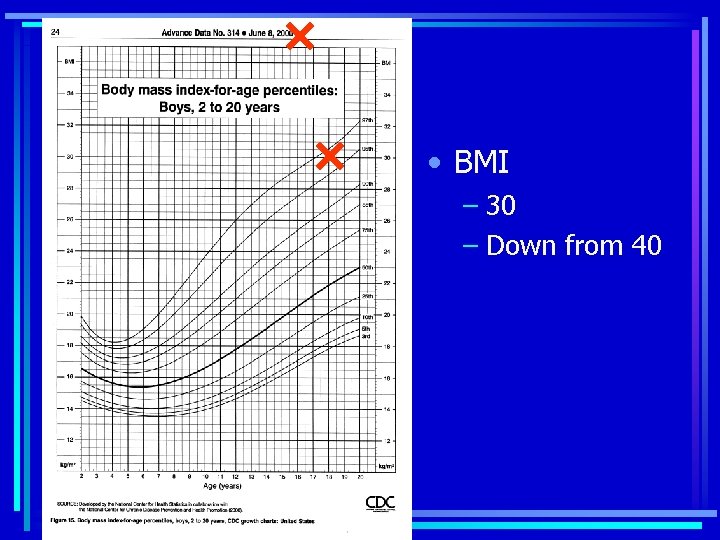
• BMI – 30 – Down from 40
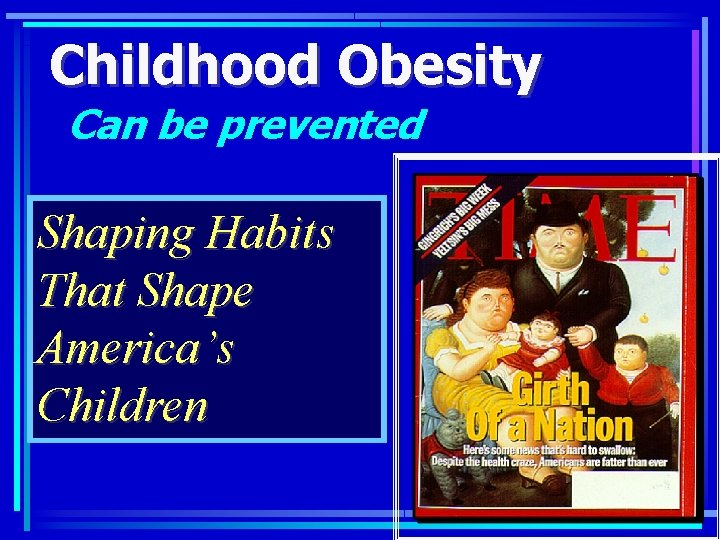
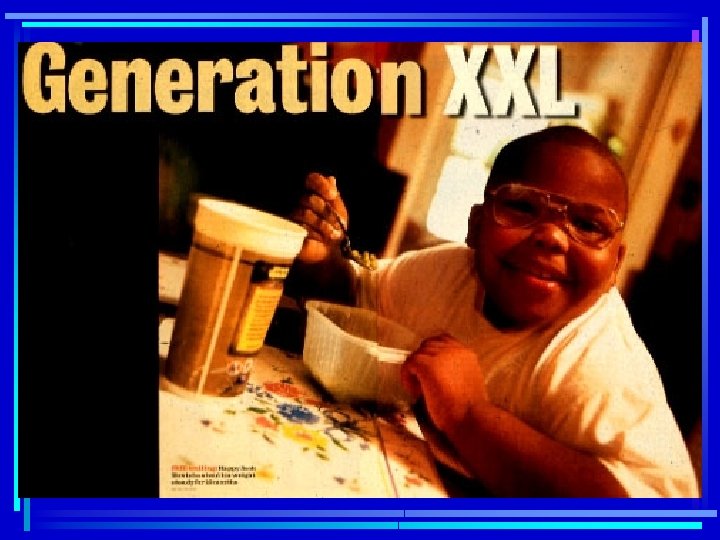
Childhood Obesity Can be prevented Shaping Habits That Shape America’s Children
PREVENTION: PRECONCEPTION • Prevention starts prior to conception – Obese adolescents have an 80% probability of being obese as adults – Today's adolescents are tomorrows parents – Parents are role models for their children – Obesity risk in a child born to obese parents is significantly increased – Educate and intervene at this time to help prevent obesity in subsequent generations
PREVENTION: POST CONCEPTION • Routine prenatal care • Achieve normal weight gain during pregnancy – LGA infants and infants of diabetic mothers have higher rates of subsequent obesity – SGA infants also at higher risk • Hediger ML et: Pediatrics 104: e 33, 1999 • Promote breast feeding
PREVENTION: SCHOOL • • Promote physical activity Provide nutritious meals Control vending machines Have nutrition education incorporated into regular school curriculum. • Encourage children to walk or bike to school safely.
PREVENTION: COMMUNITY • Have safe playgrounds • Provide safe places for bike riding and walking • Promote physical activity outside of school
PREVENTION: INSURANCE AND GOVERNMENT • Acknowledge obesity as a medical condition for which one can be reimbursed. • Provide reimbursement for anticipatory guidance for nutrition and physical activity
PREVENTION: PRIMARY CARE PROVIDER • Be an advocate • Provide anticipatory guidance to families
NUTRITION ANTICIPATORY GUIDANCE • Beverages – Encourage water intake – Limit sweet beverages • Juice, juice drinks: 120 calories / 8 oz – No nutritional need for any juice <6 months of age – 1 -6 years: 4 -6 oz – 7 -18 years: 8 -12 oz – Discourage free use of box drinks – Discourage continuous access to sippy cups • Soda: 150 calories / 12 oz
NUTRITION ANTICIPATORY GUIDANCE • • Eat 5 fruits and vegetables a day Structured meal and snack time Do not use food as a reward Know what the child is eating outside the home: school meals, day care etc.
NUTRITION ANTICIPATORY GUIDANCE • Encourage child’s autonomy in self-regulation of food intake – Parents provide, child decides! – Do not use the clean the plate rule. • Provide choice • Educate parents regarding healthy nutrition – Healthy snacks – Consider using pediatric food pyramid – Portion size: Intake of children >5 years is dependent on how much they are provided • Do not skip meals
ACTIVITY ANTICIPATORY GUIDANCE • Encourage active play for young children • Promote physical activity for school age children and teens • Encourage participation in organized sports
ACTIVITY ANTICIPATORY GUIDANCE • Decrease sedentary activity – Limit TV, video games and computer to 1 -2 hours per day • > 2 hours a day associated with higher rates of obesity and hyperlipidemia – Do not have a TV in the child’s room • Children with TVs in bedroom watch more TV
BEHAVIORAL ANTICIPATORY GUIDANCE • Encourage parents to act as role models – Nutrition – Activity • Promote parent child interaction • Have special “family time” that is physically active
BEHAVIORAL ANTICIPATORY GUIDANCE • Limit eating out – More calorically dense food – Larger portion sizes – Less intake of fruits and vegetables
BEHAVIORAL ANTICIPATORY GUIDANCE • Eat as a family – Provides “quality time” – Slows down the eating process – Parents act as role model – Parents monitor intake – Associated with lower fat intake and greater intake of fruits and vegetables
BEHAVIORAL ANTICIPATORY GUIDANCE • Do not eat in front of the TV – Associated with higher intake of fat and salt – Lower intake of fruits and vegetables – Encourages over eating • 60 -80% of commercials on during children programs are related to food • Eating without awareness
Summary • Pediatric obesity is epidemic • Overweight kids become overweight adults • Treatment is difficult • Prevention is the key
- Slides: 75