
Child Welfare Trauma Training Toolkit Version 2 0
- Slides: 72
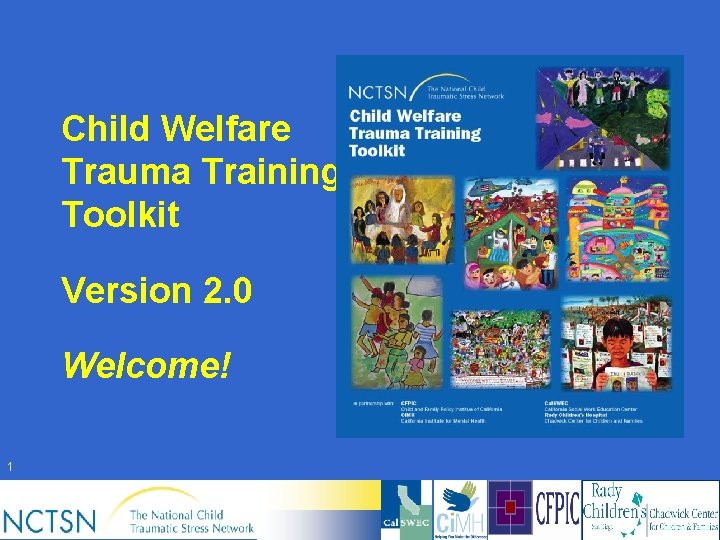
Child Welfare Trauma Training Toolkit Version 2. 0 Welcome! 1
WELCOME AND INTRODUCTIONS 2
ISSUES FOR DISCUSSION • Many children in our community have been exposed to trauma. Most involved with the child welfare system have experienced trauma. • The experience of trauma affects a child’s behavior, development, and relationships. • Those of us working with children and families have a tremendous opportunity to help reduce the short- and longterm effects of trauma by understanding how trauma impacts children and using trauma-informed practices. 3
Healing Neen 4
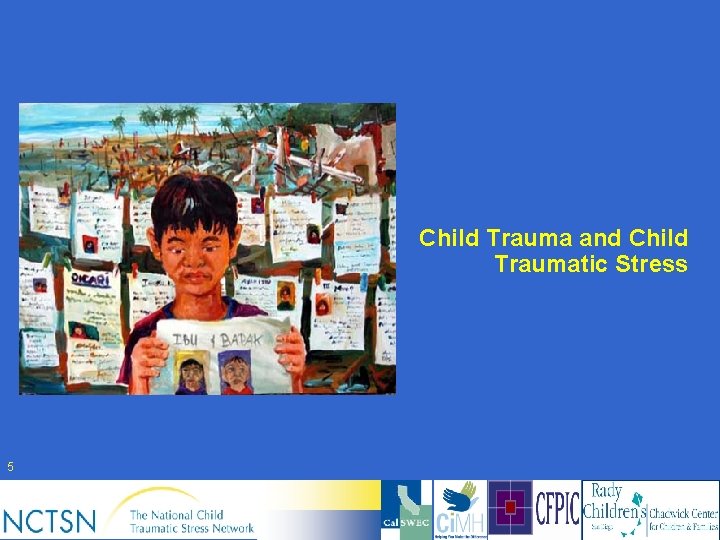
Child Trauma and Child Traumatic Stress 5
What Is Child Trauma? • Witnessing or experiencing an event that poses a real or perceived threat. • The event overwhelms the child’s ability to cope. 6
Types of Trauma 7 • Acute trauma is a single traumatic event that is limited in time. • During an acute event, children go through a variety of feelings, thoughts, and physical reactions that are frightening.
Types of Trauma (continued) • Chronic trauma refers to the experience of multiple traumatic events. • These may be multiple and varied events, such as: – the child’s being exposed to domestic violence, involved in a serious car accident, and then becoming a victim of community violence, or – longstanding trauma such as physical abuse, neglect, or war • The effects of chronic trauma are often cumulative. 8
Types of Trauma (continued) • Complex trauma describes both exposure to chronic trauma—usually caused by adults entrusted with the child’s care—and the impact of such exposure on the child. • Children who have experienced complex trauma have endured multiple interpersonal traumatic events from a very young age. • Complex trauma has profound effects on nearly every aspect of a child’s development and functioning. 9 Source: Cook, A. , Spinazzola, J. , Ford, J. , Lanktree, C. , Blaustein, M. , Cloitre, M. , . . . van der Kolk, B. (2005). Complex trauma in children and adolescents. Psychiatric Annals, 35(5), 390 -398.
Types of Trauma (continued) • Historical trauma is a personal or historical event or prolonged experience that continues to have an impact over several generations. Examples include: - Slavery - Removal from homelands - Relocation - Massacres, genocides, or ethnocides - Cultural, racial, and immigrant oppression - Forced placement in boarding schools 10
Types of Trauma: What About Neglect? • Failure to provide for a child’s basic needs • Perceived as trauma by an infant or young child who is completely dependent on adults for care • Opens the door to other traumatic events • May interfere with a child’s ability to recover from trauma 11
Medical Trauma in the Child Welfare Population • Medical trauma (related to ongoing or chronic illness or injury) is a special concern for children in foster care due to their higher rates of chronic health conditions. • Medical illness, injury, and treatment can be traumatic. • Medical exams can be invasive and may trigger past traumas or uncover conditions requiring painful or prolonged treatment. 12 Source: U. S. Department of Health and Human Services (DHHS), Administration for Children Families, Office of Planning, Research and Evaluation. (2007). NSCAW, No. 7: Special health care needs among children in child welfare, Research brief, Findings from the NSCAW study Retrieved from http: //www. acf. hhs. gov/programs/cb/laws_policies/policy/im/2012/im 1204. pdf
Other Sources of Ongoing Stress • Children in the child welfare system frequently face other sources of ongoing stress: – Poverty – Discrimination – Separations from parent/siblings – Frequent moves – School problems – Traumatic grief and loss – Refugee or immigrant experiences 13
Potentially Traumatizing Events in School • Seclusion • Restraint • In school suspension • Property searches/pat-downs • Witnessing physical altercations • Fear of being attacked by other youth • Separation from home school, family and community • ? ? Others 14 Source: National Child Traumatic Stress Network [NCTSN]. (n. d. ). The trauma-informed juvenile justice system resource. Retrieved from http: //learn. nctsn. org/course/category. php? id=6
Activity • How can we respond in a more trauma-informed manner? • What do you usually do in this situation? What would be another way? 15
• Lisa’s Video place holder 16
What Is Child Traumatic Stress? • Child traumatic stress refers to the physical and emotional responses of a child to threatening situations. • Traumatic events overwhelm a child’s capacity to cope and elicit feelings of terror, powerlessness, and out-of-control physiological arousal. 17
What Is Child Traumatic Stress? (continued) • Post-traumatic stress reactions include re-experiencing the event, avoidance, hyper-arousal, and persistent difficult thoughts and emotions. • A child’s response to a traumatic event may have a profound effect on his or her perception of self, others, the world, and the future. • Traumatic events may affect a child’s: – Ability to trust others – Sense of personal safety 18 – Effectiveness in navigating life changes
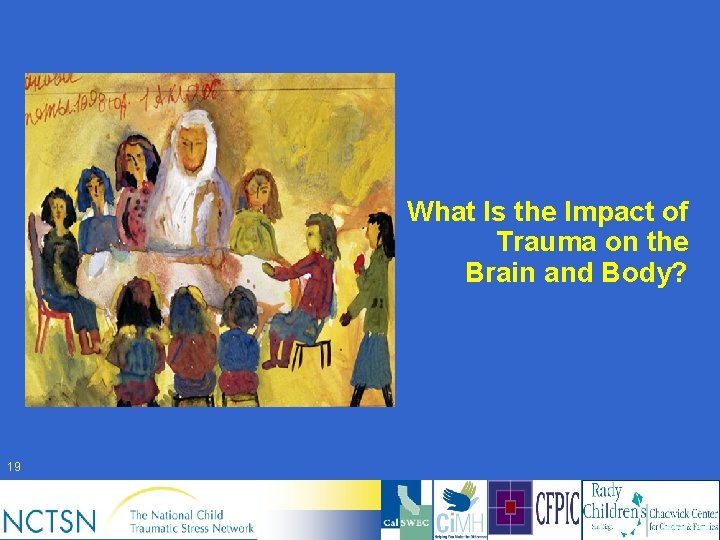
What Is the Impact of Trauma on the Brain and Body? 19
Experiences Build Brain Architecture Place Holder 20
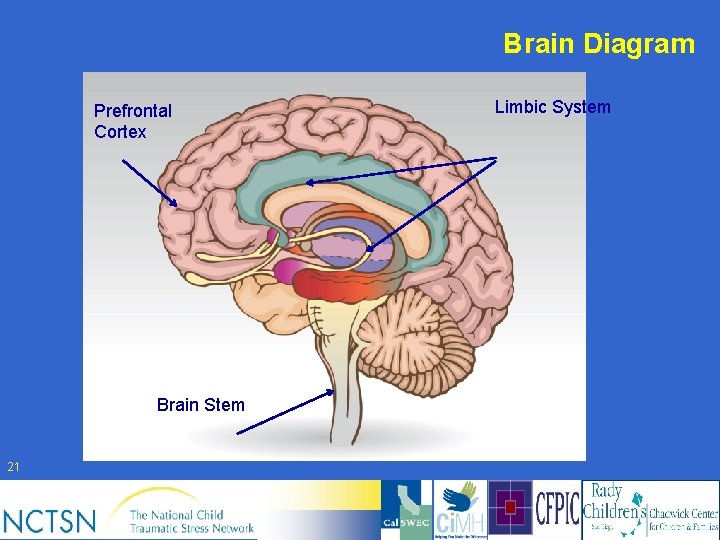
Brain Diagram Prefrontal Cortex Brain Stem 21 Limbic System
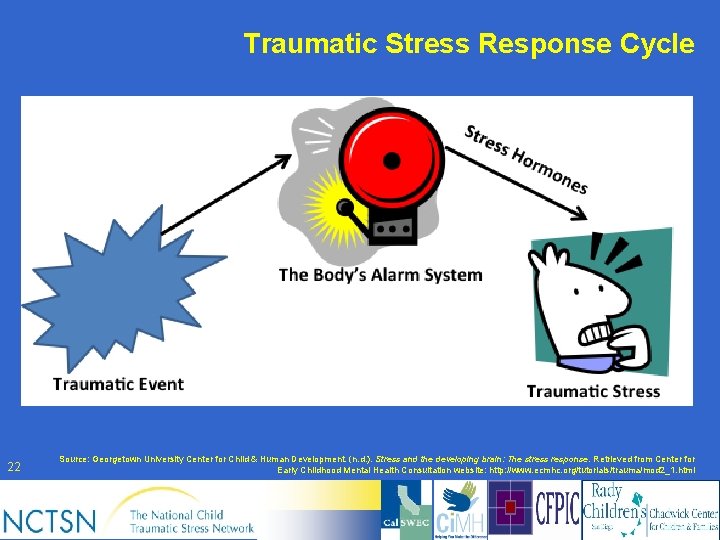
Traumatic Stress Response Cycle 22 Source: Georgetown University Center for Child & Human Development. (n. d. ). Stress and the developing brain: The stress response. Retrieved from Center for Early Childhood Mental Health Consultation website: http: //www. ecmhc. org/tutorials/trauma/mod 2_1. html
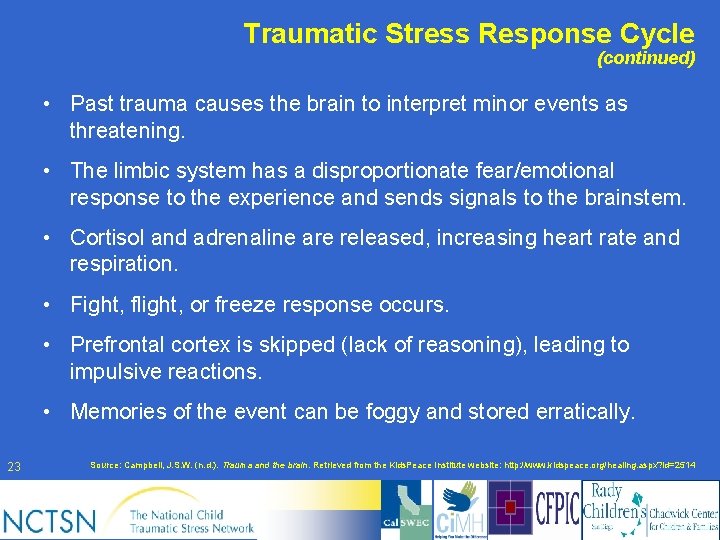
Traumatic Stress Response Cycle (continued) • Past trauma causes the brain to interpret minor events as threatening. • The limbic system has a disproportionate fear/emotional response to the experience and sends signals to the brainstem. • Cortisol and adrenaline are released, increasing heart rate and respiration. • Fight, flight, or freeze response occurs. • Prefrontal cortex is skipped (lack of reasoning), leading to impulsive reactions. • Memories of the event can be foggy and stored erratically. 23 Source: Campbell, J. S. W. (n. d. ). Trauma and the brain. Retrieved from the Kids. Peace Institute website: http: //www. kidspeace. org/healing. aspx? id=2514
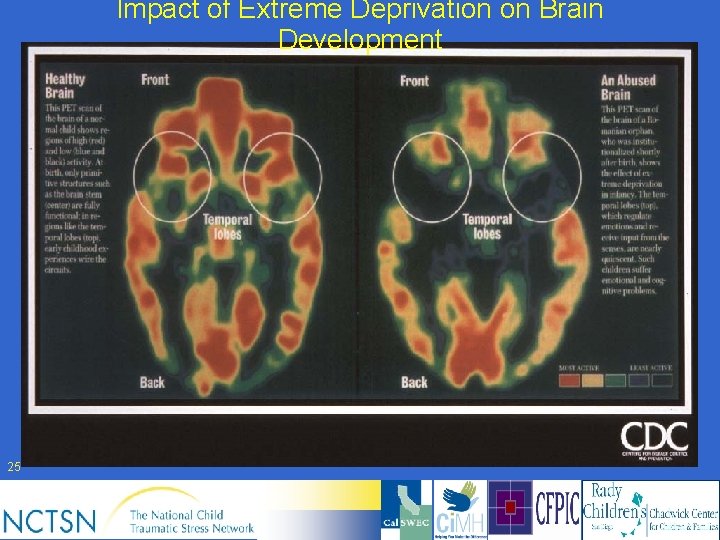
Trauma and the Brain • Trauma can have serious consequences for the brain. • Trauma-induced alterations in biological stress systems can adversely affect brain development. • Trauma-exposed children and adolescents display changes in their levels of stress hormones similar to those seen in combat veterans. • Plasticity means the brain continues to change in response to repeated stimulation. – Risk and opportunity: impact of trauma but also corrective experiences 24 Source: Pynoos, R. S. , Steinberg, A. M. , Ornitz, E. M. , & Goenjian, A. K. (1997). Issues in the developmental neurobiology of traumatic stress. Annals of the New York Academy of Sciences, 821, 176 -193.
Impact of Extreme Deprivation on Brain Development 25
Activity • How can we meet students where they are and meet their needs? • Can you think of an example of a time when you have successfully tailored a lesson to a particular child’s or group of children’s needs? 26 Source: National Child Traumatic Stress Network [NCTSN]. (n. d. ). The trauma-informed juvenile justice system resource. Retrieved from http: //learn. nctsn. org/course/category. php? id=6
What Is the Influence of Trauma on Developmental Stage? 27
The Influence of Developmental Stage: School-Age Children • School-age children with a history of trauma may: – Experience unwanted and intrusive thoughts and images – Become preoccupied with frightening moments from the traumatic experience – Replay the traumatic event in their minds in order to figure out what could have been prevented or how it could have been different – Develop intense, specific new fears linking back to the original danger 28
The Influence of Developmental Stage: School-Age Children (continued) • School-age children may also: – Alternate between shy/withdrawn behavior and unusually aggressive behavior – Become so fearful of recurrence that they avoid previously enjoyable activities – Have thoughts of revenge – Experience sleep disturbances that may interfere with daytime concentration and attention 29
The Influence of Developmental Stage: Adolescents • In response to trauma, adolescents may feel: – That they are weak, strange, childish, or “going crazy” – Embarrassed by their bouts of fear or exaggerated physical responses – That they are unique and alone in their pain and suffering – Anxiety and depression – Intense anger – Low self-esteem and helplessness 30
The Influence of Developmental Stage: Adolescents (continued) • These trauma reactions may in turn lead to: 31 – Aggressive or disruptive behavior – Sleep disturbances masked by late-night studying, television watching, or partying – Drug and alcohol use as a coping mechanism to deal with stress – Self-harm (e. g. , cutting) – Over- or under-estimation of danger – Expectations of maltreatment or abandonment – Difficulties with trust – Increased risk of revictimization, especially if the adolescent has lived with chronic or complex trauma
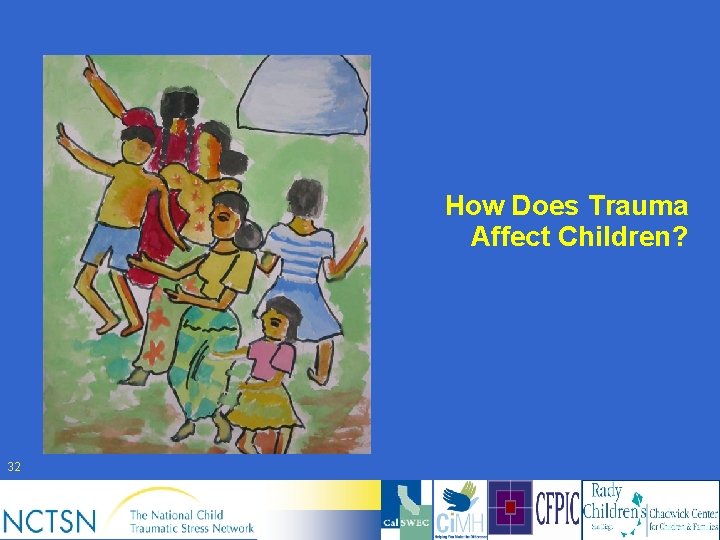
How Does Trauma Affect Children? 32
Effects of Trauma Exposure • Attachment • Biology • Mood regulation • Dissociation • Behavioral control • Cognition • Self-concept • Development 33
Variability in Responses to Stressors and Traumatic Events • The impact of a potentially traumatic event is determined by both: – The objective nature of the event – The child’s subjective response to it • Something that is traumatic for one child may not be traumatic for another. 34
Variability in Responses to Stressors and Traumatic Events (continued) • The impact of a potentially traumatic event depends on several factors, including: – The child’s age and developmental stage – The child’s perception of the danger faced – Whether the child was the victim or a witness – The child’s relationship to the victim or perpetrator – The child’s past experience with trauma – The adversities the child faces following the trauma – The presence/availability of adults who can offer help and protection 35
Trauma and Overwhelming Emotion • Trauma can elicit such intense fear, anger, shame, and helplessness that the child feels overwhelmed. • Overwhelming emotion may interfere with the development of age-appropriate self-regulation. • Emotions experienced prior to language development may be very real for the child but difficult to express or communicate verbally. • Trauma may be “stored” in the body in the form of physical tension or health complaints. 36
Overwhelming Emotion and Behavior • Trauma-exposed children may also exhibit: – Over-controlled behavior in an unconscious attempt to counteract feelings of helplessness and impotence – Under-controlled behavior due to cognitive delays or deficits in planning, organizing, delaying gratification, and exerting control over behavior 37
Overwhelming Emotion and Behavior (continued) • Maladaptive coping strategies can lead to behaviors including: – Sleeping, eating, or elimination problems – High activity levels, irritability, or acting out – Emotional detachment, unresponsiveness, distance, or numbness – Hyper-vigilance, or feeling that danger is present even when it is not – Increased mental health issues (e. g. depression, anxiety) 38 – An unexpected and exaggerated response when told “no”
Target Symptoms of Trauma-Exposed Children and Teens • Affective arousal (irritable or angry mood) • Sleep problems • Fear and anxiety • Depression and sadness • Aggression • Impulsivity and attention problems 39
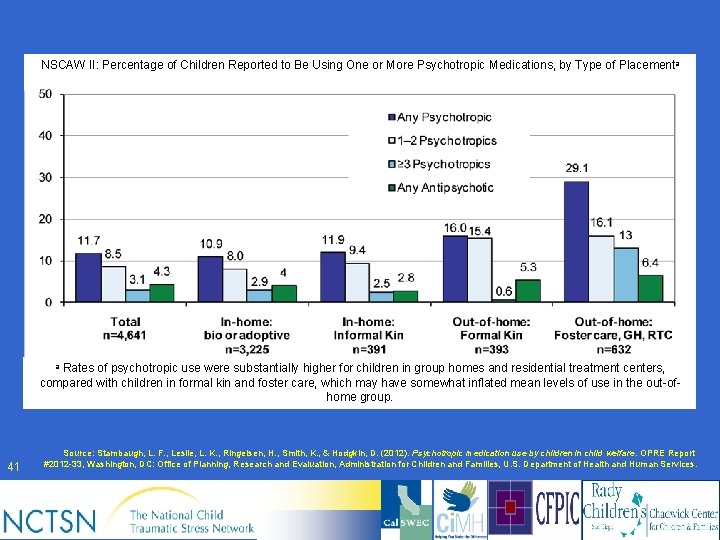
Trauma and Psychotropic Medication Among Children in Child Welfare • Higher rates of psychotropic medication 1 • Higher rates of medication among older children, boys, those with behavior problems, and children in group homes 1 • Children with complex needs may be prescribed multiple medications and/or higher than recommended dosages 2 • There may be increased rates of psychotropic use with young children, especially those in foster care 3 Raghavan, R. , Zima, B. T. , Anderson, R. M. , Leibowitz, A. A. , Schuster, M. A. , & Landsverk, J. (2005). Psychotropic medication use in a national probability sample of children in the child welfare system. Journal of Child and Adolescent Psychopharmacology, 15(1), 97. 2 Raghavan, R. , & Mc. Millen, J. C. (2008). Use of multiple psychotropic medications among adolescents aging out of foster care. Psychiatric Services, 59(9), 10521055. 3 U. S. Government Accountability Office. (2011). Foster children: HHS guidance could help states improve oversight of psychotropic prescriptions. Retrieved from http: //www. gao. gov/assets/590/586570. pdf 1 40
NSCAW II: Percentage of Children Reported to Be Using One or More Psychotropic Medications, by Type of Placementa Rates of psychotropic use were substantially higher for children in group homes and residential treatment centers, compared with children in formal kin and foster care, which may have somewhat inflated mean levels of use in the out-ofhome group. a 41 Source: Stambaugh, L. F. , Leslie, L. K. , Ringeisen, H. , Smith, K. , & Hodgkin, D. (2012). Psychotropic medication use by children in child welfare. OPRE Report #2012 -33, Washington, DC: Office of Planning, Research and Evaluation, Administration for Children and Families, U. S. Department of Health and Human Services.
Long-Term Effects of Childhood Trauma • High-risk or destructive coping behaviors • These behaviors place children at risk for a range of serious mental and physical health problems, including: – Alcoholism – Drug abuse – Depression – Suicide attempts – Sexually transmitted diseases (due to high risk activity with multiple partners) – Heart disease, cancer, chronic lung disease, skeletal fractures, and liver disease 42 Source: Felitti, V. J. , Anda, R. F. , Nordenberg, D. , Williamson, D. F. , Spitz, A. M. , Edwards, V. , . . . Marks, J. S. (1998). Relationship of childhood abuse and household dysfunction to many of the leading causes of death in adults: The Adverse Childhood Experiences (ACE) study. American Journal of Preventive Medicine, 14, 245 -258.
Adverse Childhood Experiences • Emotional abuse • Physical abuse • Sexual abuse • Emotional neglect • Physical neglect 43 Household dysfunction: • Mother treated violently • Household substance abuse • Household mental illness • Parental separation/divorce • Incarcerated household member Source: Felitti, V. J. , Anda, R. F. , Nordenberg, D. , Williamson, D. F. , Spitz, A. M. , Edwards, V. , . . . Marks, J. S. (1998). Relationship of childhood abuse and household dysfunction to many of the leading causes of death in adults: The Adverse Childhood Experiences (ACE) study. American Journal of Preventive Medicine, 14, 245 -258.
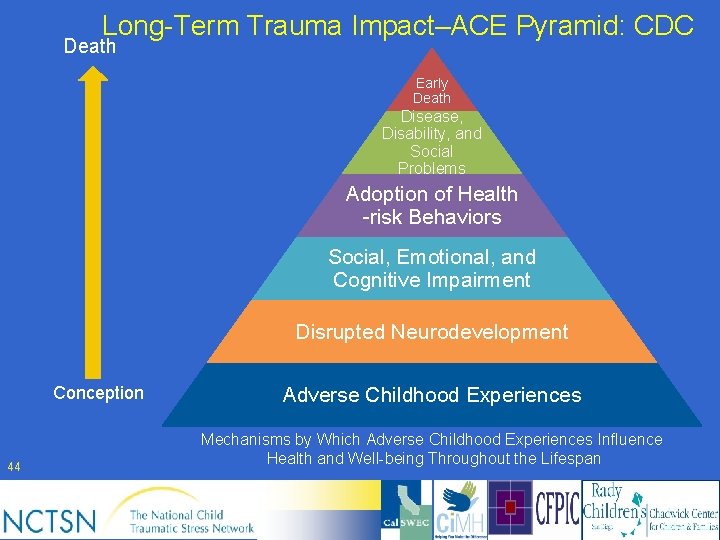
Long-Term Trauma Impact–ACE Pyramid: CDC Death Early Death Disease, Disability, and Social Problems Adoption of Health -risk Behaviors Social, Emotional, and Cognitive Impairment Disrupted Neurodevelopment Conception 44 Adverse Childhood Experiences Mechanisms by Which Adverse Childhood Experiences Influence Health and Well-being Throughout the Lifespan
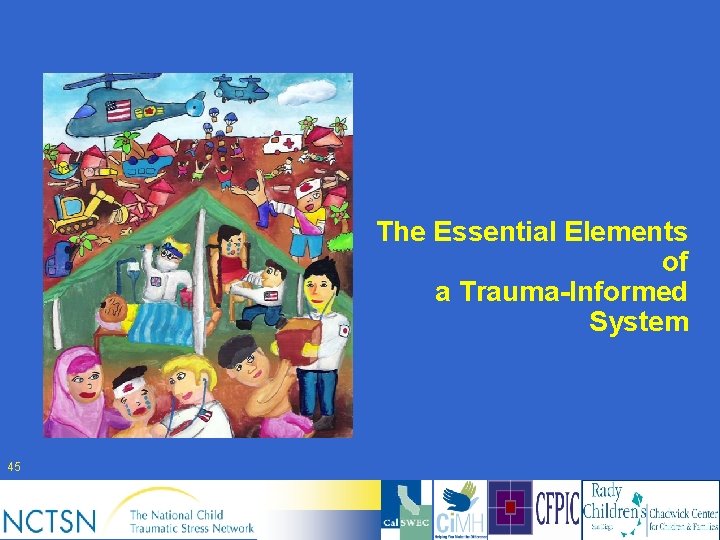
The Essential Elements of a Trauma-Informed System 45
Element #1: Maximize Physical and Psychological Safety for Children and Families Safety is a priority for all of our child and family serving organizations. Sometimes families and children who have experienced trauma may still feel unsafe even when they are no longer in a dangerous situation. We want to help children and families feel psychologically safe. 46 Maxim Physic ize Psycho al and lo Safety gical Childre for na Familie nd s
Maximizing Safety: Understanding Children’s and Families’ Responses • Children and families who have experienced trauma often exhibit challenging behaviors and reactions. • We are tempted to label these behaviors as “good” or “bad, ” forgetting that an individual’s behavior is reflective of his or her experience. • Many of the most challenging behaviors are strategies that, in the past, may have helped the individual survive in the presence of abusive or neglectful caregivers. 47
Maximizing Safety: Understanding Trauma Reminders • Trauma reminders: – When faced with people, situations, places, or things that remind them of traumatic events, children and parents may experience intense and disturbing feelings tied to the original trauma. – These “trauma reminders” can lead to behaviors that seem out of place, but were appropriate—and perhaps even helpful—at the time of the original traumatic event. • Reenactment behaviors in children and parents: – Are familiar and helped them survive in other relationships – “Prove” their negative beliefs and expectations – Help them vent frustration, anger, and anxiety – Give them a sense of mastery over the old traumas 48
REMOVED 49
How Can We Promote Psychological Safety? • Let children and families know what will happen next. • Give children control over some aspects of their lives. • Help children maintain connections. • Give a safety message. • Pay attention to trauma reminders and get help from treatment providers to develop plans to help the child cope • Help caregivers manage emotional “hot spots”: – Food and mealtime – Sleep and bedtime – Physical boundaries 50 Source: Grillo, C. A. , Lott, D. A. , & Foster Care Subcommittee of the Child Welfare Committee, National Child Traumatic Stress Network. (2010). Caring for children who have experienced trauma: A workshop for resource parents – Facilitator’s guide. Los Angeles, CA & Durham, NC: National Center for Child Traumatic Stress. Retrieved from http: //nctsn. org/products/caring-for-children-who-have-experienced-trauma
Element #2: Identify Trauma-Related Needs of Children and Families Identify a Traum eds Ne d e t a l e R dren l i h C f o ilies m a F d an • One of the first steps in helping trauma -exposed children and families is to understand how they have been impacted by trauma. • Trauma-related needs can be identified through trauma screening and assessment. • It is important to consider trauma when making service referrals and service plans. 51
Benefits of Using the Tool • Provides a structure for documenting trauma exposure and severity of traumatic stress reactions • Provides a developmental perspective on the child’s trauma history • Provides a guideline for making referral decisions, rather than arbitrary decision-making • May be used to facilitate case discussions between caseworkers and supervisors and/or professionals in other systems 52
How Can We Identify Trauma-Related Needs? • Ask other team members, including caregivers, about the possibility of trauma when discussing challenging behaviors or developmental concerns for a particular child. • Refer caregivers or other team members to the NC Child Treatment Program to identify providers rostered as having specialized training in trauma identification and treatment. https: //ncchildtreatmentprogram. org/roster. php • Meet some of the providers in our area and ask for guidance and ideas about situations in which we suspect a trauma is playing a role. 53
Element #3: Enhance Child Well-Being and Resilience • Many children are naturally resilient. • It is important for those of us working with children to recognize and build on their existing strengths. • We know the importance of supporting the continuity of children’s relationships as individuals and at the organizational level. • Those of us working with children need to ensure that children who have been traumatized have access to evidencebased trauma treatments and services. 54 Enhance C Well-Bein hild g an Resilience d
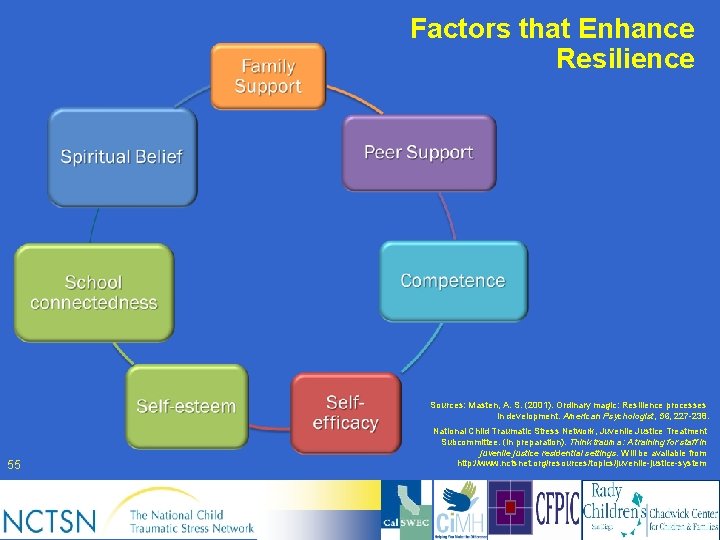
Factors that Enhance Resilience Sources: Masten, A. S. (2001). Ordinary magic: Resilience processes in development. American Psychologist, 56, 227 -238. 55 National Child Traumatic Stress Network, Juvenile Justice Treatment Subcommittee. (in preparation). Think trauma: A training for staff in juvenile justice residential settings. Will be available from http: //www. nctsnet. org/resources/topics/juvenile-justice-system
How Can We Enhance Child Well-Being and Resilience? • Notice activities that children enjoy or in which they excel and support those activities. • Be a positive and stable person in the child’s life OR support one of the people who is. • Be ready and willing to help children cope with overwhelming emotions, begin to make sense out of what happened to them, and express this to others. • Support and encourage trauma-informed treatments and services. 56
Element #4: Enhance Family Well-Being and Resilience • Families are a critical part of both protecting children from harm and enhancing their natural resilience. Family Enhance g and n i e B l l e W e Resilienc • Providing trauma-informed education and services to parents and other caregivers enhances their protective capacities. • People working with families are recognizing that caregivers themselves may have trauma histories. 57
Family Protective Factors • Nurturing and attachment • Knowledge of parenting and child development • Parental resilience • Social connections • Concrete supports for parents 58 Source: U. S. Department of Health and Human Services (DHHS), Administration for Children Families, Child Welfare Information Gateway. (n. d. ). Enhancing protective factors. Retrieved from http: //www. childwelfare. gov/preventing/promoting/protectfactors/
The Invisible Suitcase • Children who have experienced trauma often carry negative beliefs and expectations about themselves, caregivers, and the world based on their past experiences. • These negative beliefs and expectations often lead to challenging behaviors, including reenactment behaviors. • Caregivers can repack the suitcase by providing disconfirming experiences with positive replacement messages, consistency, and calm responses. • Caregivers also need support! 59 Handout: The Invisible Suitcase: Behavioral Challenges of Traumatized Children
How Can We Enhance Family Well-Being and Resilience? • We know how critical family relationships are to child development and recovery. • Provide support, encouragement, and guidance to families and caregivers so that they are better able to support and guide the child. • Siblings can experience secondary trauma and may also need support. • Encourage good self care and refer to needed resources. 60 Handout: The Invisible Suitcase: Behavioral Challenges of Traumatized Children
Element #5 - Enhance the Well-Being and Resilience of Those Working in the System Welle h t e c Enhan g and Bein of e c n e i l i Res ng in i k r o W Those ystem the S 61 • We know that many of us working in the system have experienced trauma first hand. • Further, supporting children and working with people who have experienced abuse, neglect, violence, and other trauma can cause us to develop secondary traumatic stress reactions. • Our organizations need to learn about the about trauma and secondary trauma experienced by staff, implement strategies and practices at individual and system levels that build resilience and help staff manage stress.
Impact of Working with Victims of Trauma • Trauma experienced while working in the role of helper has been described as: – Compassion fatigue – Secondary traumatic stress (STS) – Vicarious traumatization • STS is the stress of helping or wanting to help a person who has been traumatized. • Unlike other forms of job “burnout, ” STS is precipitated not by work load and institutional stress but by exposure to clients’ trauma (acute or cumulative). 62 • STS can disrupt child welfare workers’ lives, feelings, personal relationships, and overall view of the world.
STS Signs and Symptoms • Avoidance (including of certain clients) • Preoccupation with clients/client stories • Intrusive thoughts/nightmares/flashbacks • Arousal symptoms • Thoughts of violence/revenge • Feeling estranged/isolated/having no one to talk to • Feeling trapped, “infected” by trauma, hopeless, inadequate, depressed • Having difficulty separating work from personal life 63 Sound familiar?
TAKE 5 for Essential Element 5 • Options: – Relaxation exercise – Work/Life Balance Plan – Self-Care Inventory • Action Planning: – Review the STS resources and strategies in your manual. – Identify three strategies you can use to enhance your own resilience. – Write them on the worksheet in your manual. 64
How Can We Build Resiliency for Ourselves and our Colleagues? • INDIVIDUAL LEVEL: Think about TINY changes you can make RIGHT NOW that will improve your current situation, such as taking a quick break and not checking e-mail or voice mail, submitting a leave request to take a long weekend getaway, or put a coloring book or doodle pad at your desk. • ORGANIZATIONAL LEVEL: Implement simple strategies for your work team or your organization, such as posting work/life balance strategies on a bulletin board, setting an example of work/life balance if you are a leader, and creating a warm, inviting space for staff to decompress. 65
Element #6: Partner with Youth and Families • Youth and families need choices and an active voice in decision-making at every level. • Youth and family members who have been in the system have a unique perspective and can provide valuable feedback. • We know the benefits of partnerships with youth and families at all levels of the organization. 66 Partner w Youth a ith nd Familie s
How Can We Partner Better with Families? • ENGAGEMENT-We can engage families in their services and improve service utilization. • INVOLVEMENT-We can involve families at every step of the service delivery and evaluation process. 67 • PARTNERSHIP-We can value and utilize family input on par with providers within our organizations. We can ensure that families have an equal voice and input into processes that may continue after they leave.
Element #7: Partner with Agencies and Systems That Interact with Children and Families Partner with Agencies and t Systems Tha Interact with Children and Families 68 • Organizations working with children and families need strong partnerships with one another. • We need to develop some common protocols and frameworks to see the child as a whole person and prevent potentially competing priorities and messages. • Collaboration between the child welfare and mental health systems promotes cohesive care and better outcomes.
How Can We Partner Better with One Another? • Seek out training opportunities on trauma and its impact • Seek out opportunities to work with other organizations to develop protocols regarding child and family trauma and collaborative services that promote resiliency • Attend multi-disciplinary teams or Child and Family Teams • Co-location of staff in community “hubs” • Cross-system assessment tools • All systems engaged in shared outcomes • Technology used for information exchange • Get involved in the local System of Care Collaborative 69
Definition of Trauma-Informed Child- and Family. Service System A trauma-informed child- and family-service system is one in which all parties involved recognize and respond to the impact of traumatic stress on those who have contact with the system including children, caregivers, and service providers. Programs and agencies within such a system infuse and sustain trauma awareness, knowledge, and skills into their organizational cultures, practices, and policies. They act in collaboration with all those who are involved with the child, using the best available science, to facilitate and support the recovery and resiliency of the child and family. 70 Source: National Child Traumatic Stress Network. Retrieved from http: //www. nctsn. org/resources/topics/creating-trauma-informed-systems
Addressing Trauma Requires an Integrated Approach • Trauma has biological and psychological effects that impact behavioral, social, and emotional domains. • The impact of trauma can hinder development and interfere with children’s functioning in relationships, school, and life. • Complex challenges of children who have experienced trauma may not be addressed by the system and services as they are currently designed. 71 Source: U. S. Department of Health and Human Services (DHHS), Administration for Children Families, Administration on Children, Youth and Families, Children’s Bureau. (2012). Information memorandum (Log No: ACYF-CB-IM-12 -04). Available from http: //www. acf. hhs. gov/programs/cb/laws_policies/policy/im/2012/im 1204. pdf
In Closing… • Many children in our community have been exposed to trauma. Most involved with the child welfare system have experienced trauma. • The experience of trauma affects a child’s behavior, development, and relationships. • Those of us working with children and families have a tremendous opportunity to help reduce the short- and longterm effects of trauma by understanding how trauma impacts children and using trauma-informed practices. 72